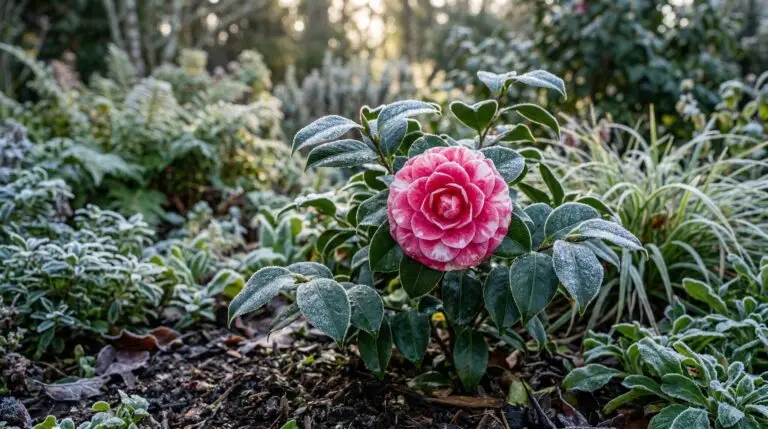
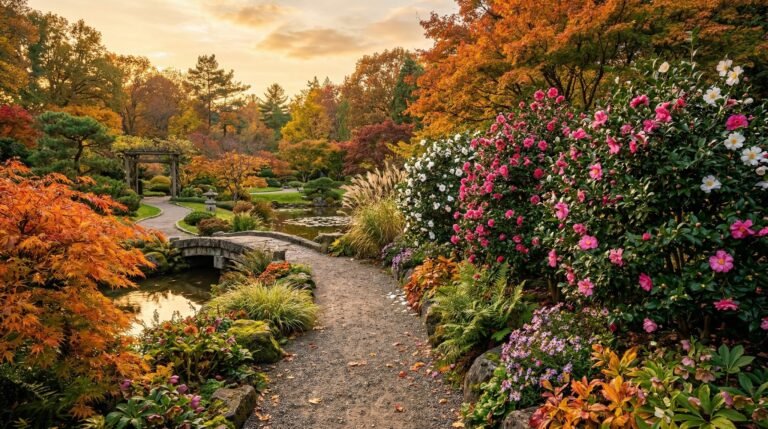
Camellia bloom time across the US
Interactive map
 See the interactive map
Drag the date and the bloom moves north across the country. Every point has its own window, and the map says where it has no records rather than guessing. Free, with nothing to sign up for. Open the camellia map.
City by city
Typical window, earliest first. Cultivars of the same flower can open days or weeks apart.
Taxonomy and origin
Camellia belongs to the genus Camellia in the tea family, Theaceae, a group of roughly 250 evergreen species native to eastern and southeastern Asia, from southern China and Japan through Korea, Vietnam, and Indonesia, where they grow as understory shrubs and small trees in forested hills. The genus is the source of tea: Camellia sinensis is the species whose young leaves make green and black tea, and camellias were grown in China and Japan for centuries for tea and seed oil before they were prized for their flowers. The name honors Georg Josef Kamel, a Jesuit missionary who catalogued Philippine plants, Latinized by Linnaeus as Camellus. Camellias reached European greenhouses in the 1700s as aristocratic novelties and arrived in the United States around 1798, taking hold across the South, where Camellia japonica is now the state flower of Alabama.
For a gardener the type matters more than the species, because flower form, sun tolerance, and cold hardiness all follow from it, and the bloom season it sets is what a buyer is really choosing. The two most planted species divide the cool half of the year between them. Camellia sasanqua opens first, from fall into early winter, on a faster, more open shrub with smaller leaves and smaller single to semi-double flowers, and it tolerates more sun than any other group, up to most of a day, which is why it trains so willingly into hedges and espaliers against a wall. Camellia japonica takes over from mid to late winter into early spring with the large flowers most people picture, formal doubles through to simple singles, carried on a slow, rounded plant with broad glossy leaves that scorches where a sasanqua would be content, so it wants genuine part shade. Both are reliably hardy outdoors in zones 7 through 9, so the choice rests on light and timing rather than cold. A garden with room in both sun and shade can hold one of each and carry flowers from October into March, and the japonica and sasanqua comparison works through that decision in more detail.
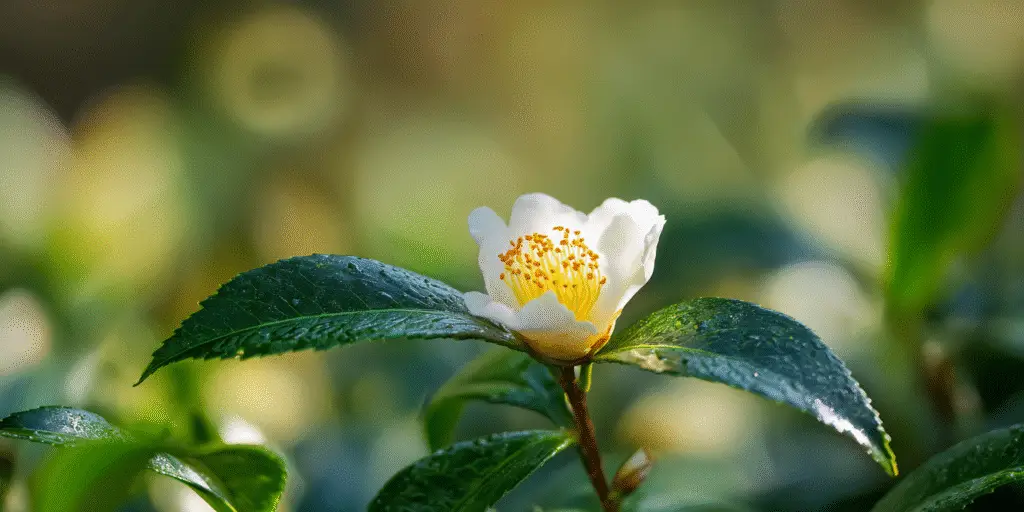
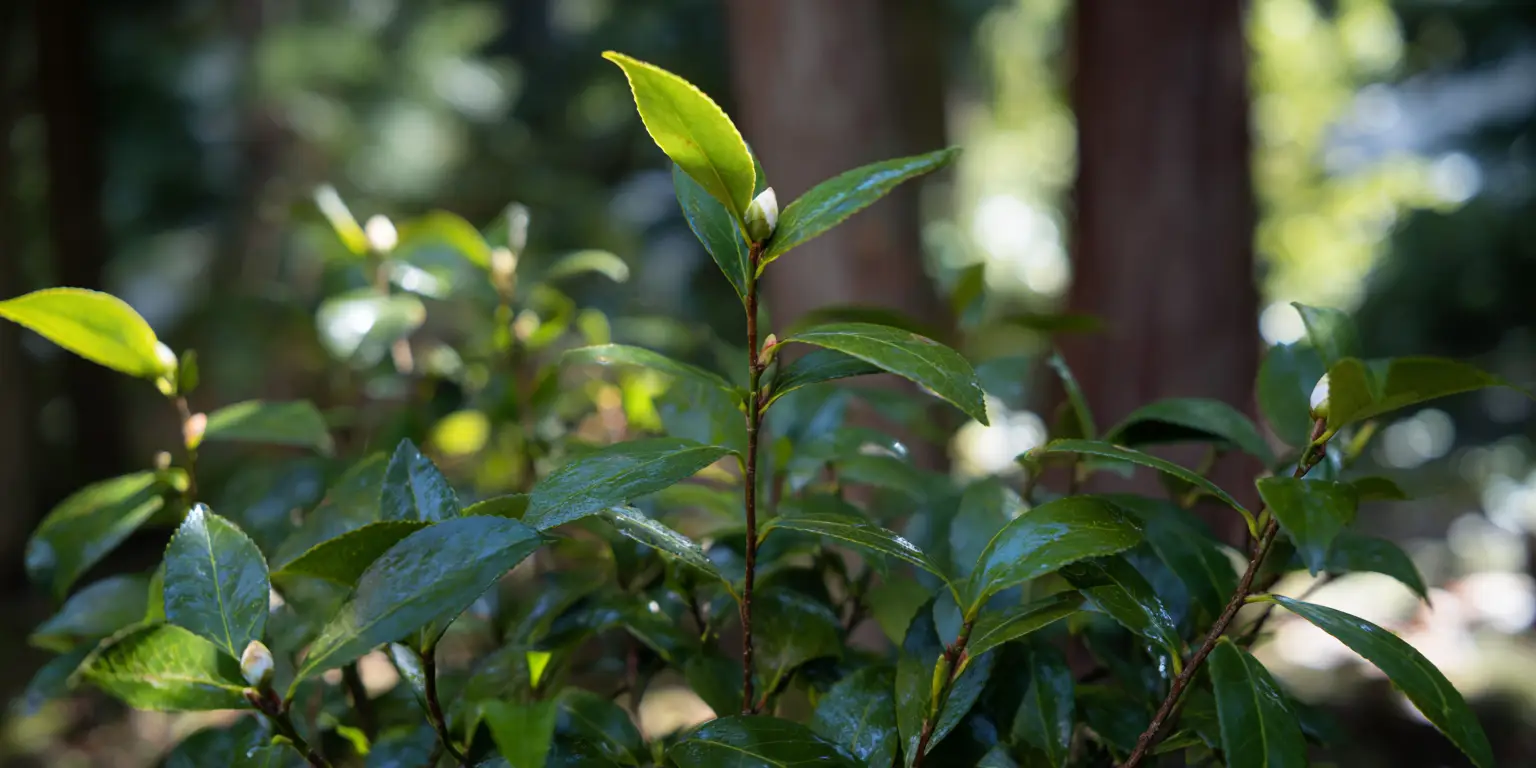
Four smaller groups fill in around that pair. The Camellia x williamsii hybrids are the free-flowering, forgiving ones, blooming winter into spring on vigorous plants that drop their own spent blooms instead of holding brown flowers, and in part shade they accept cooler, damper sites, hardy from about zone 6b through 9, which makes them the sensible pick for a cool, damp garden at the cold edge of camellia country. Camellia reticulata carries the largest flowers in the genus on an open, almost tree-like frame and blooms late winter into spring, but it is the tender one, safe only in zones 8 through 10 and needing part shade. Where winters run colder, the bred cold-hardy selections are the answer: the Ackerman hybrids sold as the "Winter" series and Ice Angels, along with the hardy "April" japonicas, hold single to semi-double flowers on compact plants, take sun through part shade, and flower in fall or in spring depending on which parent dominates, surviving to around 0 F and opening zone 6. Last is Camellia sinensis, the tea plant, hardy in zones 7 through 9 in sun or part shade and flowering in fall, though its small nodding white blooms make it a curiosity in an ornamental bed rather than a reason to plant it.
Six camellias, and which of them were bred to move north
The first real question in this page's own research is not what is wrong with my plant. It is whether the plant will survive where the reader lives: cold hardiness accounts for 89 of 890 posts, a full 10 percent, and it is the largest single theme in the corpus. That is exactly the demand two American breeding programmes were built to answer, so the badge below tracks it.
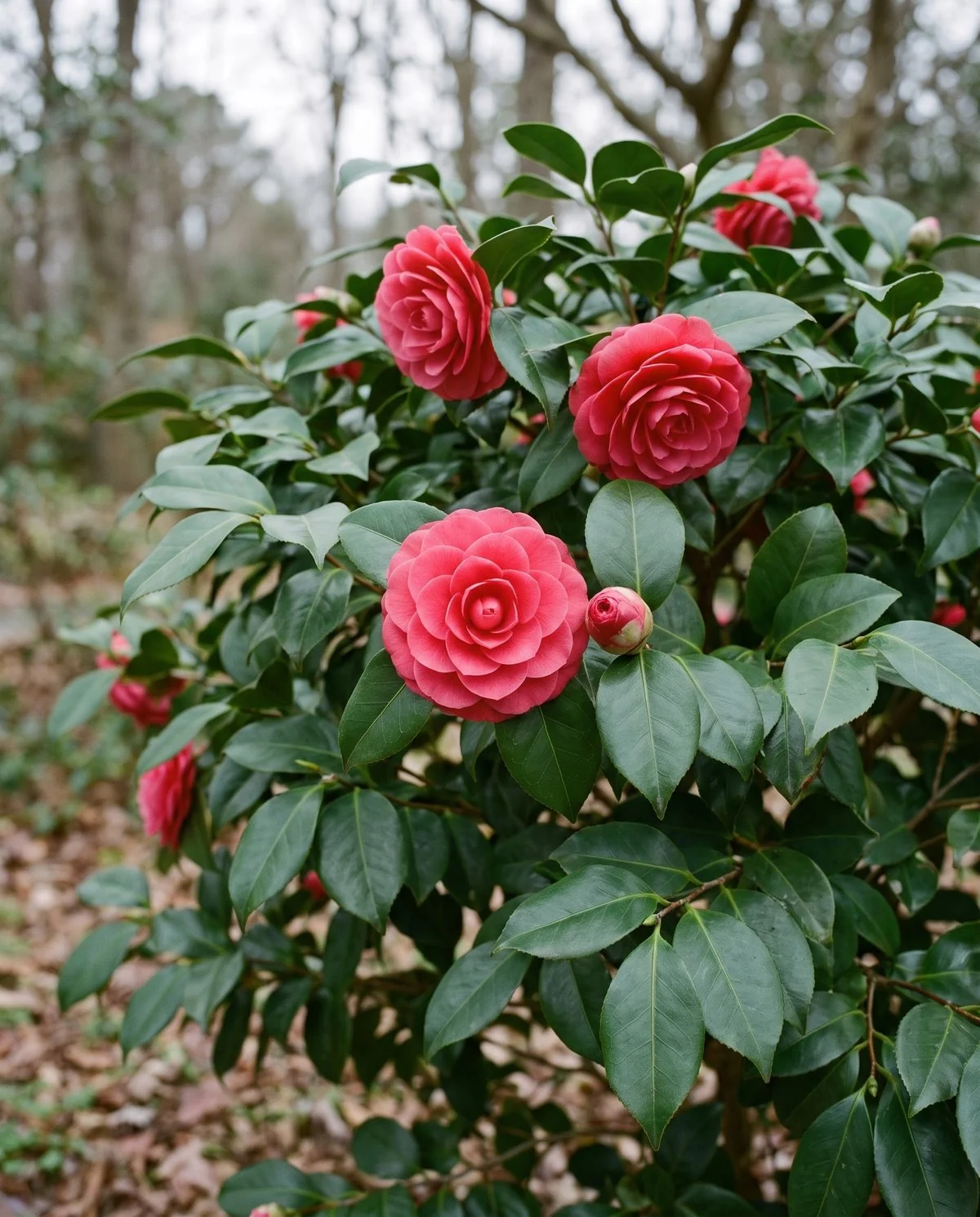
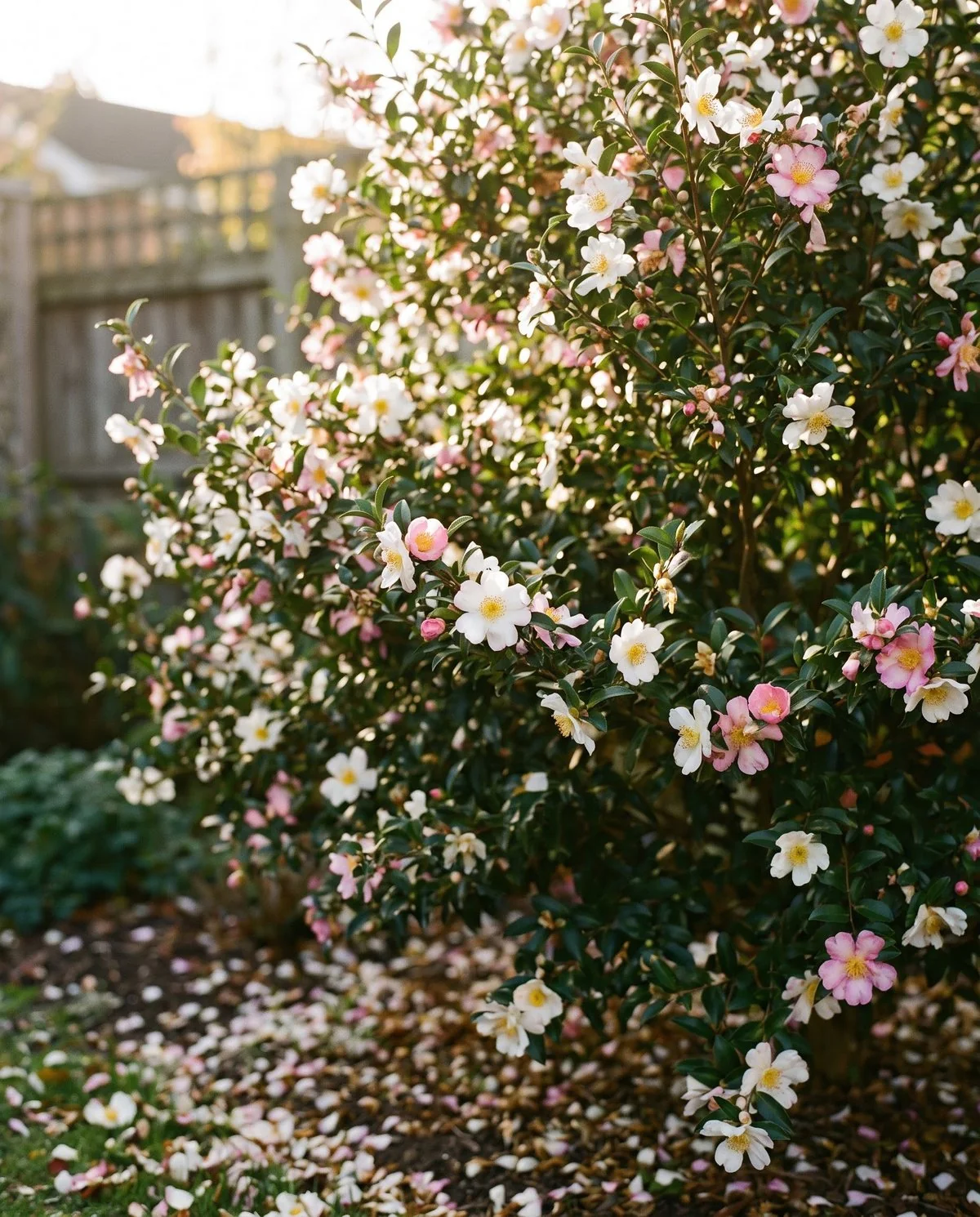
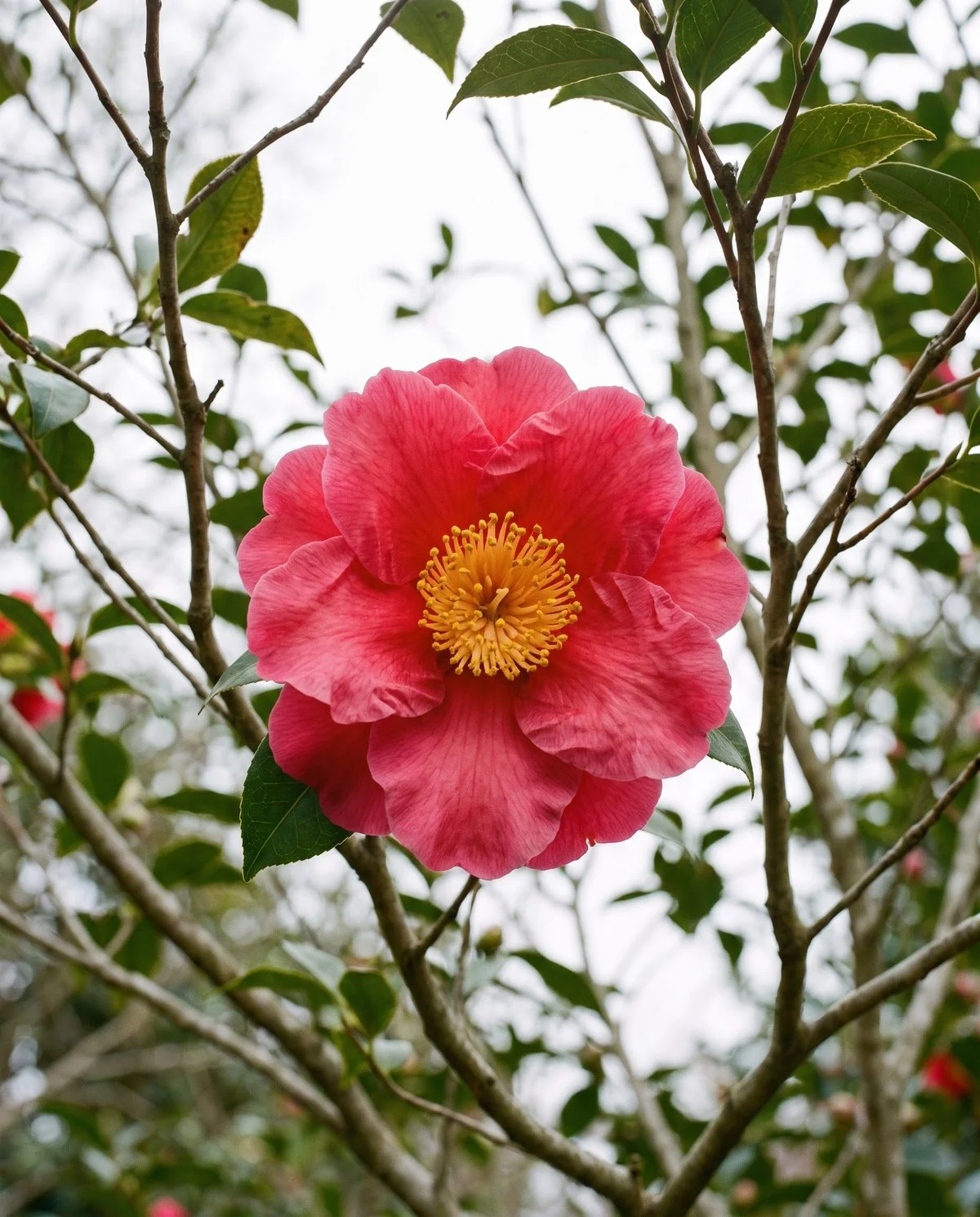
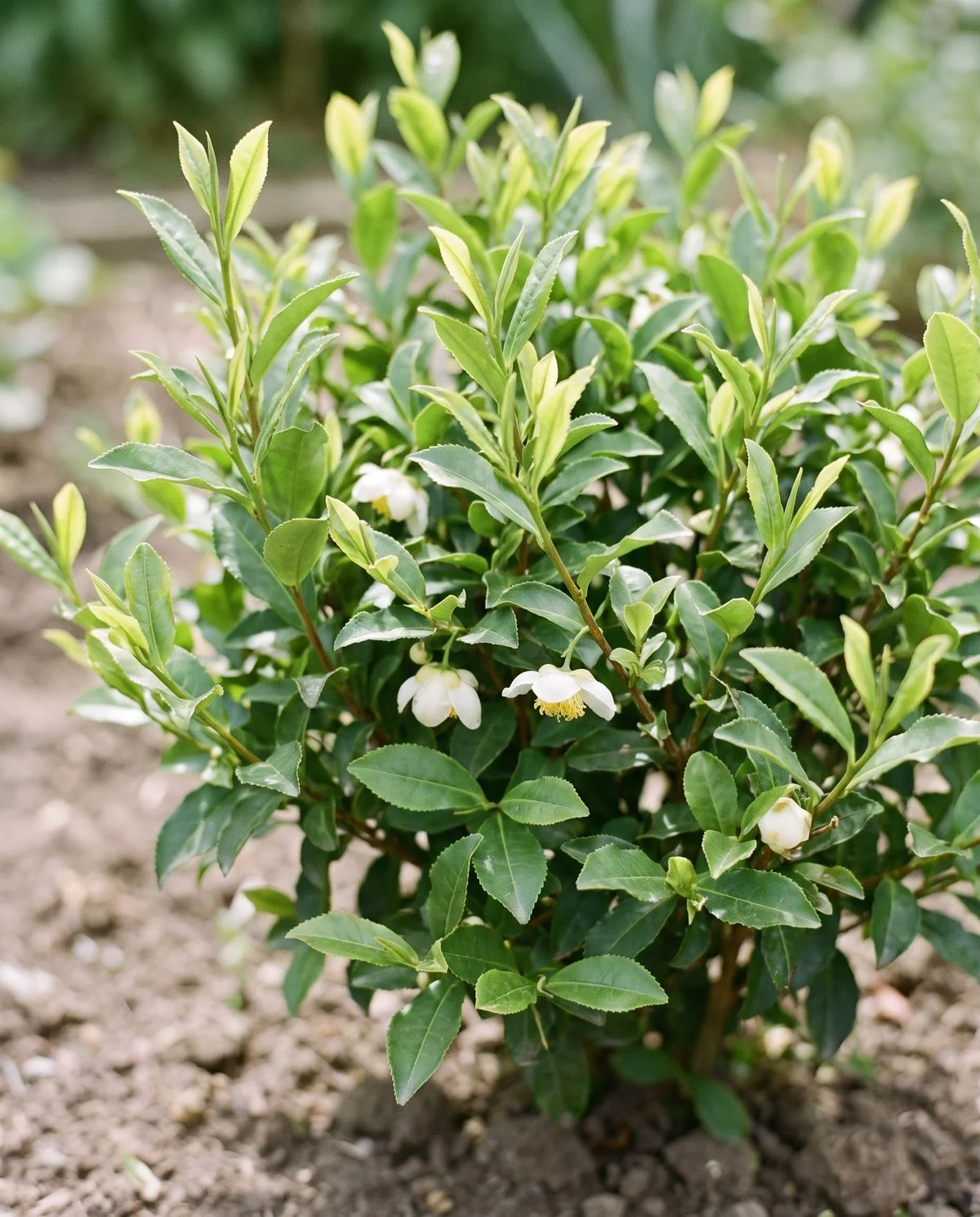
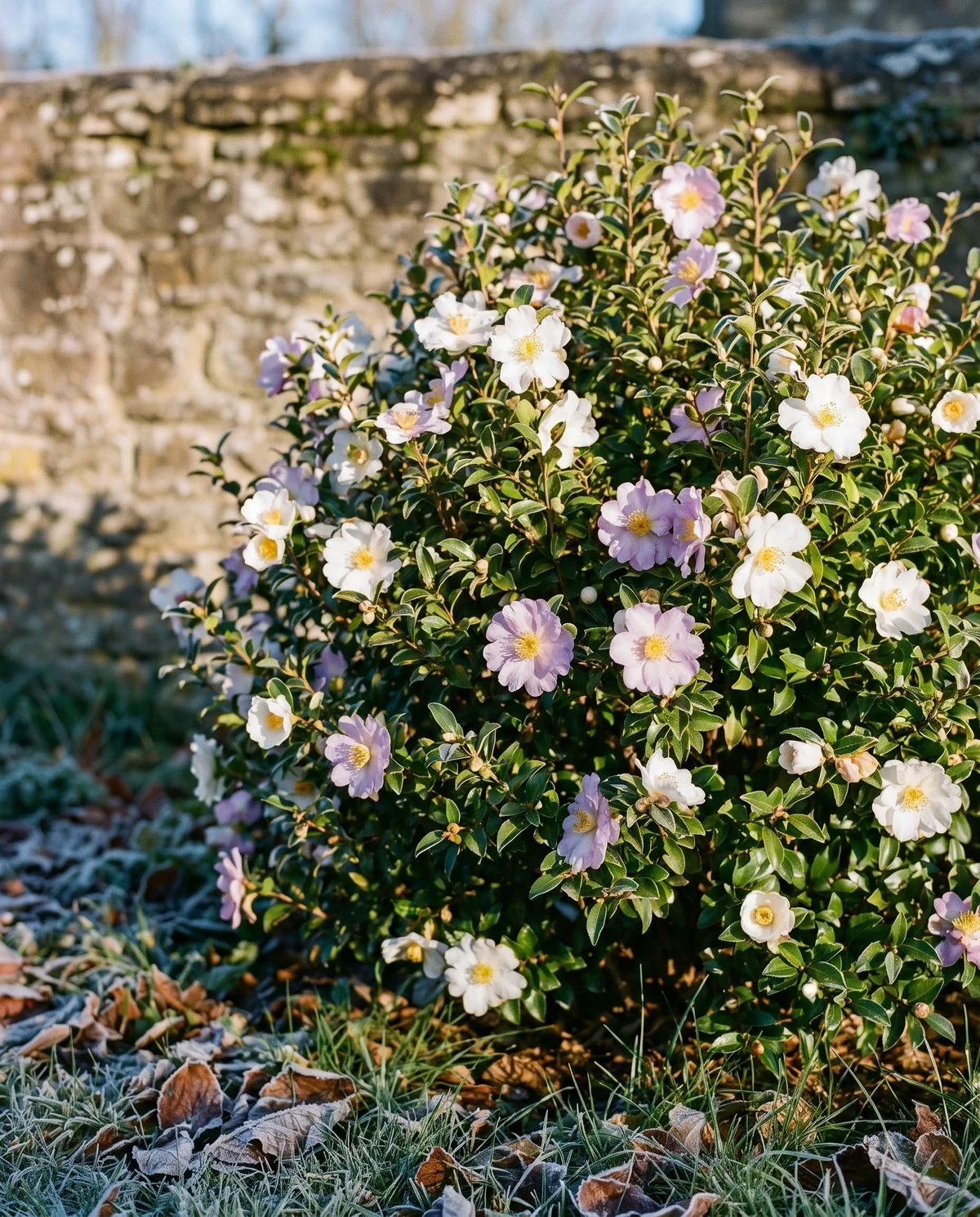
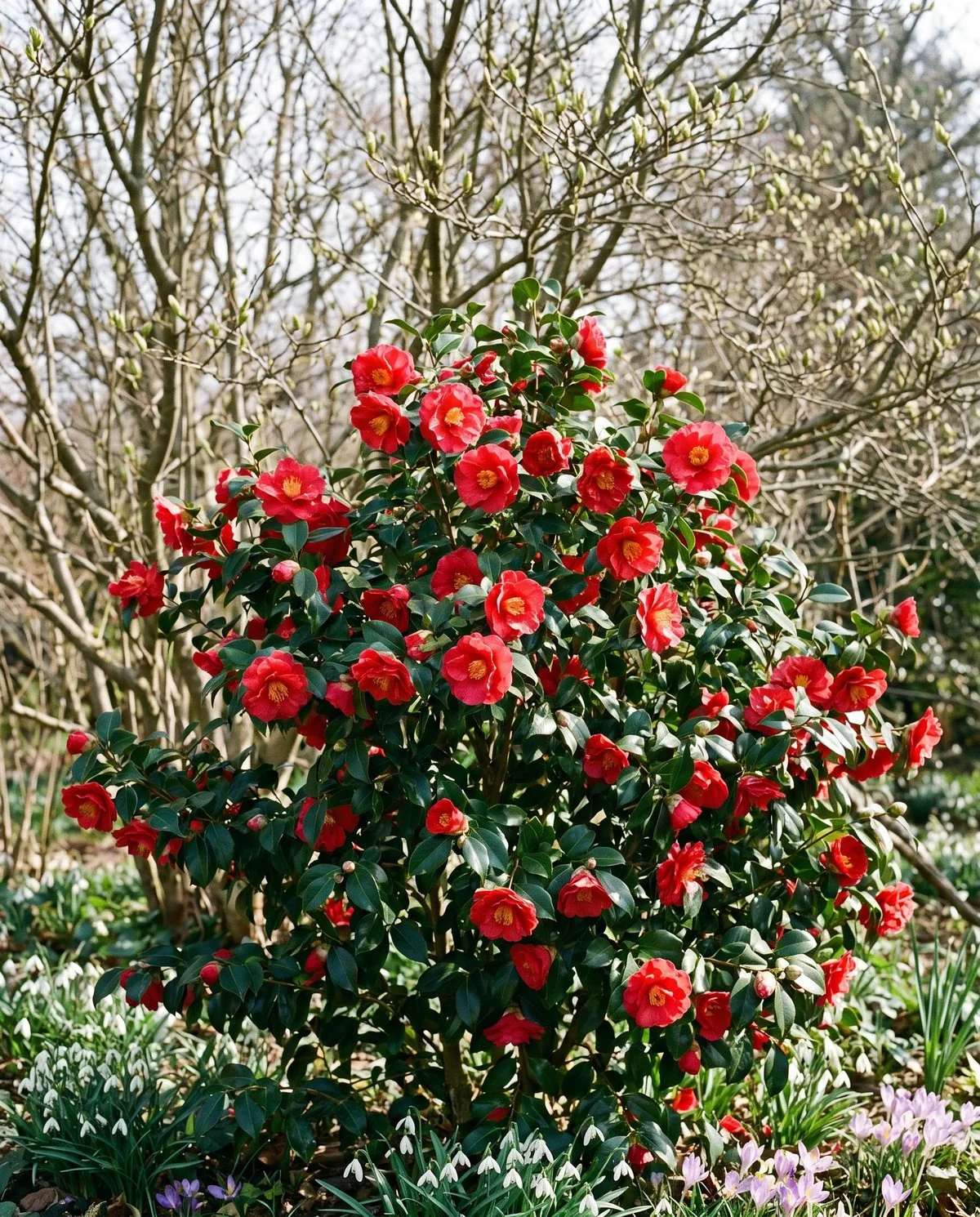
Two things sit alongside the grid. Camellia x williamsii, the cross of C. japonica and C. saluenensis raised in 1923 at Caerhays Castle in Cornwall by John Charles Williams, is named here rather than given a card: it inherited C. saluenensis's free-flowering habit and some cultivars carry an exceptionally long season, late winter through mid-spring and occasionally four to five months, but that material is garden-reference tier rather than extension-published and no hardiness figure for the group was traced this pass. And the origin of the Winter series is worth stating once: it exists because the U.S. National Arboretum's entire camellia collection was nearly lost to a series of severe winters in the late 1970s, and NC State records the resulting group as showing little or no winter injury as far north as USDA Zone 6.
Bloom time
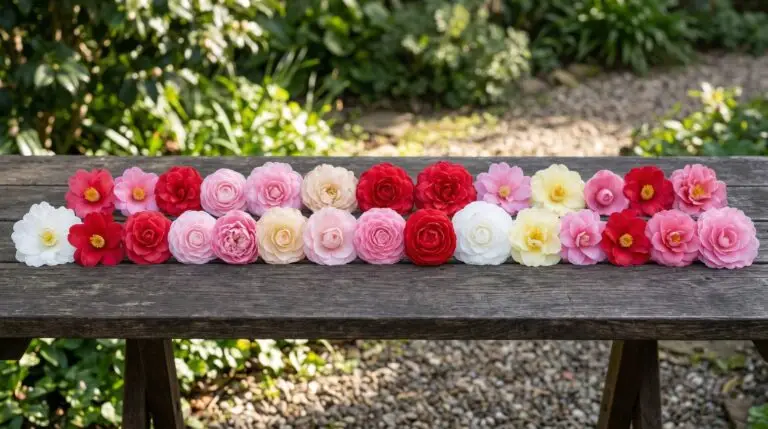
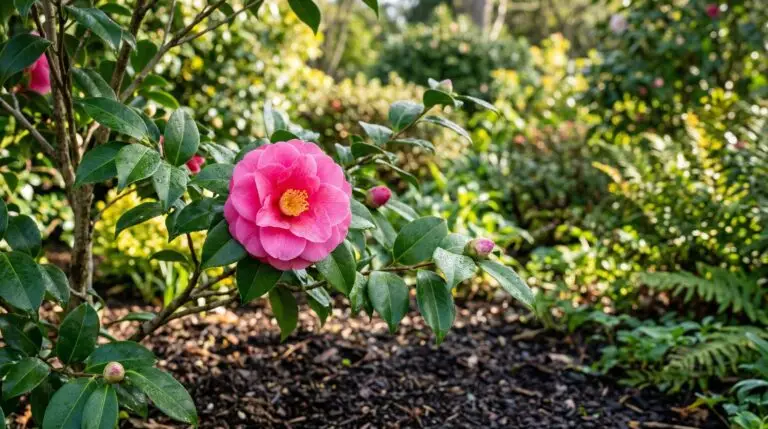
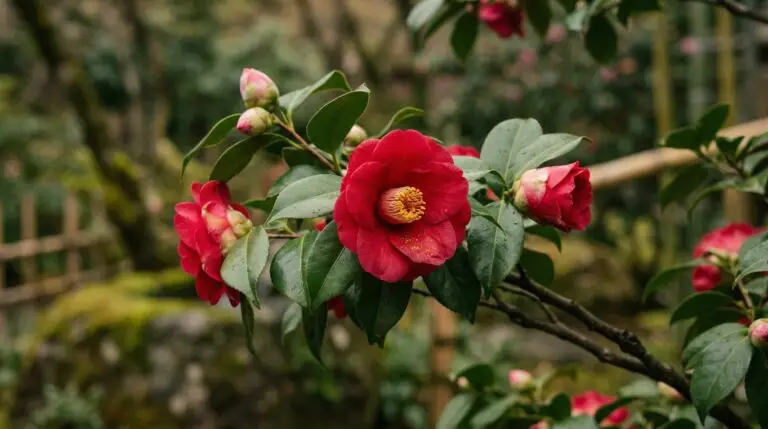
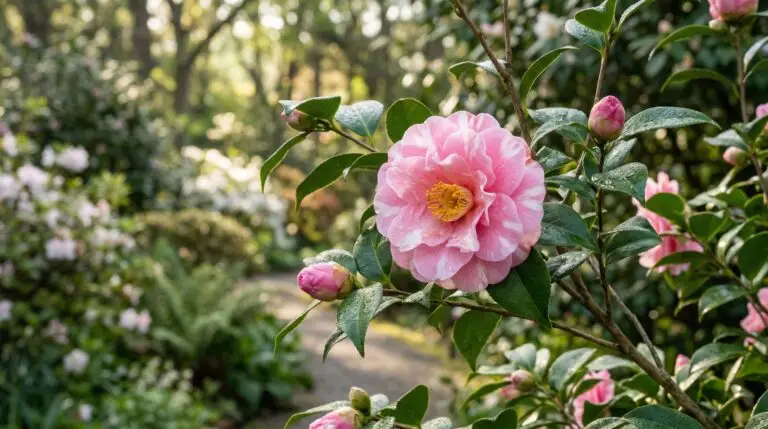
The camellia's signature is that it flowers in the cool months, giving a garden color when most shrubs stand bare. Sasanqua types open first, from October into December, carrying gardens through fall and early winter. The classic japonica follows in mid to late winter, opening from December or January and peaking from January into March in mild regions, and Camellia reticulata and some hybrids stretch the show into April. Planting a mix of early, mid, and late kinds gives an unbroken run of bloom from fall through spring, which is the whole appeal of a camellia bed. Each flower lasts about three to seven days on the plant, and because the buds open in succession rather than all at once, a mature shrub stays in flower for several weeks.
The frustration that defines camellia growing is bud drop, sometimes called bud blast, when swollen buds fall before a single one opens. It is usually a response to stress rather than a disease. Drought during the previous summer, when next season's buds are forming, is a leading cause, along with waterlogged soil, a sudden hard freeze or a warm spell that breaks dormancy too early, and low humidity on plants wintered indoors. A shrub that simply sets more buds than it can carry will also shed some, which is normal thinning. Steady water through summer, a good mulch, and shelter from temperature swings keep far more of those buds on the plant and moving toward open bloom.
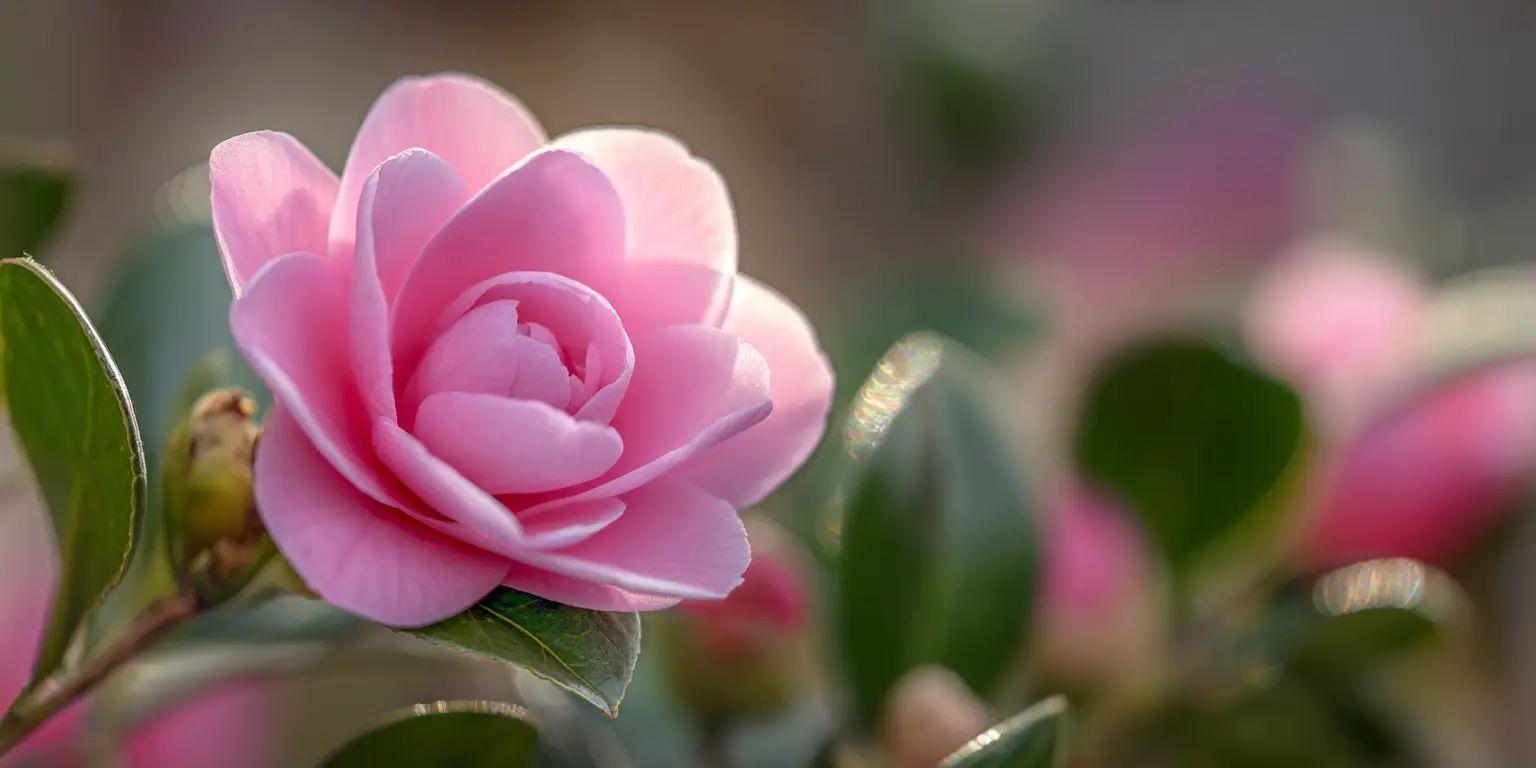
Two paths for the two ways a camellia disappoints you at bloom time
Both of these are report cards on decisions taken months earlier, which is why neither list starts with the buds. Camellia sets its flower buds in late summer or early fall, holds them through winter, and only opens them the following late fall through spring, so a bud that drops was compromised long before anyone looked at it.
Height and spread
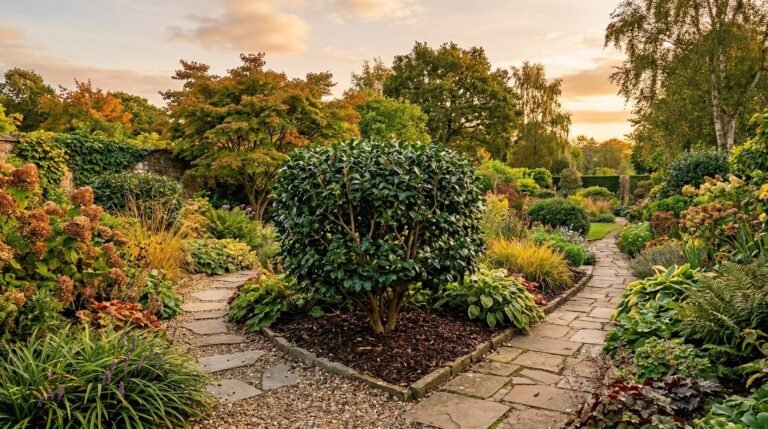
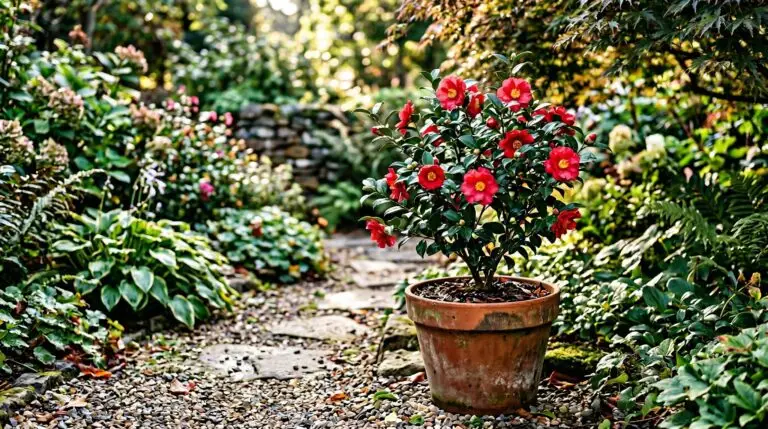
Size depends on the type, but every camellia is slow. Most japonicas grow into upright, rounded shrubs of about 6 to 12 feet with a spread of 5 to 10 feet, and given a century they can become small trees of 15 to 20 feet. Sasanquas tend to be lower and more spreading, often 4 to 10 feet, which is why they train so well into hedges, foundation plantings, and espaliers against a wall. Dwarf and compact cultivars stay under 3 to 5 feet and suit pots and small gardens. The pace is the thing to plan around: a young plant adds only a few inches to a foot of growth a year and may take a decade to reach an appreciable size. That slowness is a feature as much as a limit, since a camellia will not outgrow its spot, but it is no quick screen either. Give each shrub the room its mature spread calls for so air moves freely between plants, since crowded, still air invites the fungal trouble covered later.
Light
Camellias evolved as woodland understory plants, so they grow best in part shade or bright filtered light rather than full sun. The ideal is gentle morning sun with shade through the hot afternoon, the kind of light found on the east side of a building or under the high canopy of tall trees. Here the japonica-versus-sasanqua split matters again: sasanquas tolerate much more sun, up to most of a day in cooler regions, while japonicas want more shade and scorch more easily. Too much hot afternoon sun burns the foliage, fades the flower color, and dries buds off the stems, while deep shade leaves any camellia leggy and shy to bloom. One less obvious rule matters in cold areas: keep camellias out of direct early-morning winter sun, because a fast thaw on buds still frozen from the night turns them brown, which argues for a north or west aspect and shelter from drying wind. Camellias are among the most dependable flowers that grow in shade, which is much of their value in a planting.
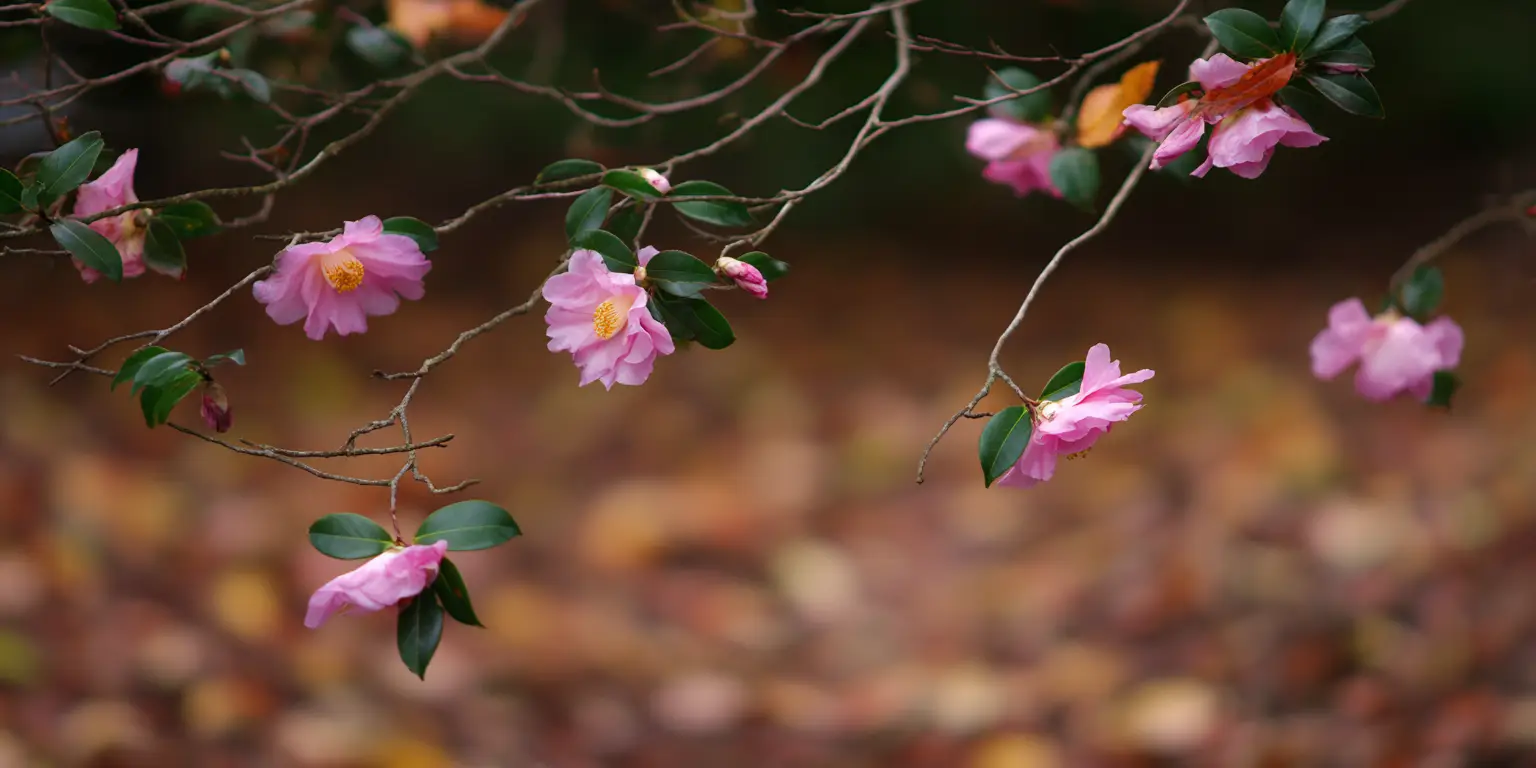
Water
Consistent moisture keeps a camellia healthy, and it matters most in summer, long before the flowers appear. The plant is shallow-rooted and does not ride out drought well when young, so keep the soil evenly moist and well-drained, watering deeply whenever the top few inches begin to dry rather than on a fixed schedule. Summer watering is really an investment in the next bloom season, because the buds set during the hot months, and a plant that goes dry then will drop those buds long before winter. A 2 to 3 inch layer of pine bark or pine straw mulch holds moisture and keeps the shallow roots cool, though it should stop short of the trunk. The opposite error is just as damaging: camellias will not stand in soggy ground, where the roots rot and the leaves yellow. Water at the base rather than over the top, ideally in the morning so any splashed foliage dries fast, since wet leaves and flowers are what fungal spores need to take hold.
Soil and pH
Soil chemistry decides whether a camellia thrives or slowly starves. These are acid-loving plants that need a pH around 5.5 to 6.5 to take up iron and other nutrients, and in neutral or alkaline ground that iron locks up, so the newest leaves turn yellow while their veins stay green, the classic sign of iron chlorosis. Soil near a concrete foundation or path is a common trouble spot, since lime leaches out and pushes the pH up. The fix is to test the soil and acidify it by working in peat, composted pine bark, leaf mold, or elemental sulfur, and to feed with a fertilizer made for acid-loving plants such as azaleas and camellias. Beyond pH, the plant wants a loose, humus-rich, well-drained soil, so heavy clay needs generous amendment or a raised bed. The single most important planting detail is depth: set the shrub high, with the top of the root ball at or slightly above the surrounding grade, never buried, because camellias are shallow-rooted and a deep planting invites stem and root rot. Finish with mulch over the root zone, kept off the stem, to conserve moisture and add gentle acidity as it breaks down.
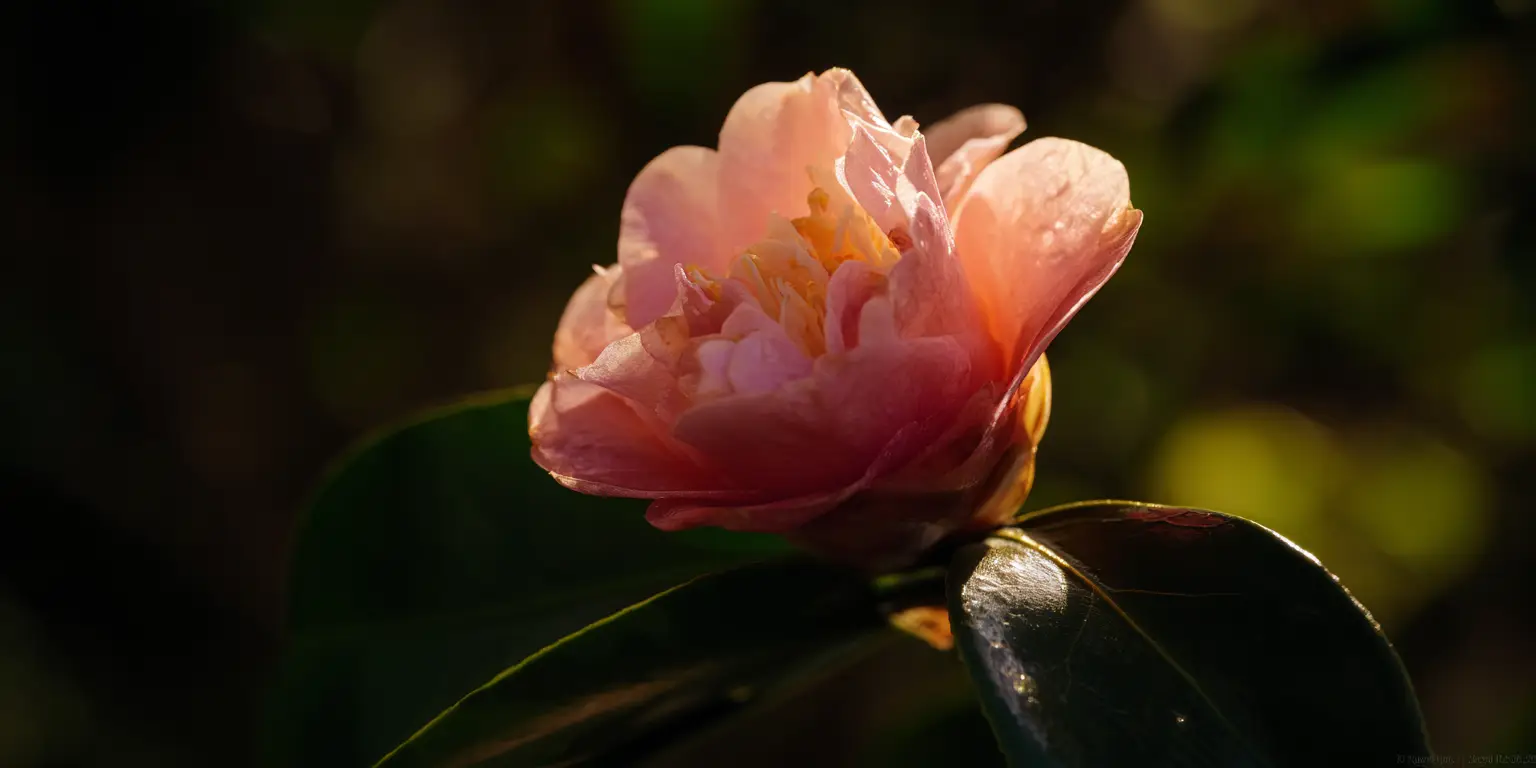
Two beliefs about camellias that come from the plant next to them
The myth: Coffee grounds will acidify the soil enough to matter for an acid-loving camellia.
The reality: Mostly false, or at best mild and temporary. Oregon State University's own reporting on this puts used, brewed coffee grounds close to pH-neutral, around 6.5 to 6.8, because brewing pulls most of the acid into the cup rather than leaving it behind in the grounds. This is the same finding that applies to azalea, which is grown in the same soil and gets the same advice, and it is the reason the acidifying step in the sources is elemental sulfur, peat or composted pine bark rather than the kitchen bin.
The myth: Azalea and camellia are basically the same plant, so what suits one suits the other.
The reality: False, and the confusion is real and documented in this page's own corpus: one gardener could not tell whether a leaf-spot problem sat on Indian Hawthorn or a camellia, and another described camellia and azalea growing 20 feet apart under the same pines while unclear which symptoms belonged to which plant. They are different genera in different families, Camellia in Theaceae and Rhododendron, which includes azalea, in Ericaceae, and they get confused precisely because they share acid soil and part shade and are so often planted together. Two practical consequences: azalea is toxic to pets and camellia is listed by the ASPCA as non-toxic to dogs, cats and horses, and azalea's bloom is overwhelmingly spring while camellia's runs fall through spring depending on the species. One more line that should not be carried across from azalea: no extension source found in this research states camellia's root depth or transplant ease, unlike azalea's clearly sourced shallow-rooted framing, so the optimism does not transfer with the growing conditions.
USDA hardiness
Most camellias are dependable outdoors in USDA zones 7 through 9, where winters are cool enough to trigger bloom but not cold enough to kill the wood. In zone 7 they take occasional freezes with little damage when planted in a sheltered spot, and in the mild zone 9 they thrive as long as they get relief from intense sun. The range now stretches further thanks to breeding: the Ackerman hybrids raised from the tough Camellia oleifera, sold as the "Winter" series and Ice Angels, survive to around 0 F and open the door to zone 6, the hardy "April" japonicas do much the same from a different parentage, and the williamsii hybrids are similarly forgiving of cold and damp. Even these want a protected microclimate, a wall that holds warmth or an evergreen canopy overhead, plus a thick winter mulch over the roots. Colder than zone 6, grow a camellia in a large container and overwinter it somewhere cool and bright, such as an unheated sunroom or garage held between about 35 and 55 F, which supplies the chill it needs to set buds; kept too warm indoors, above roughly 60 F at night, it drops those buds. At the hot end, in zone 10 and warmer, camellias struggle without deep shade and steady care.
The dated jobs and the measured thresholds, source by source
Camellia is unusually well served by extension publishing on exactly the numbers gardeners guess at: how much water, how much fertilizer, and which weeks are safe to cut. Where two universities give different windows, both are stated rather than averaged.
Propagation and longevity
Camellias can be propagated several ways, though some suit a home gardener better than others. Layering is the most reliable: a low branch is wounded, pinned to the soil, and kept moist until it roots over several months, at which point it is severed and moved, and air layering does the same job higher on the plant. Semi-hardwood cuttings taken in summer and treated with rooting hormone will root under high humidity, but camellias are slow to root and results vary without a mist bench. Nurseries sometimes graft choice cultivars onto vigorous rootstock for better cold tolerance, an advanced method, and seed is used only for species, since seedlings take years to bloom and do not come true to a named parent.
Longevity is one of the plant's quiet rewards. A well-sited camellia lives for decades and often outlives the gardener who planted it, with documented specimens in Asia reckoned at well over a hundred years old and shrubs from the 1800s still blooming in Southern gardens, which makes one worth siting as a permanent resident rather than a temporary filler. Pruning fits the same patient rhythm: the plants need very little, and the timing rule is firm. Camellias set next year's flower buds on new growth by late summer, so any shaping, thinning of crowded or dead wood, or size reduction should be done right after the shrub finishes flowering. Prune later than that and you cut off the coming season's blooms.
Four years to the show, then decades, and one lag that explains every disappointing season
The first honest number here is a slow one, and it is reported at consumer tier because no university page in this research carries it: a young camellia commonly takes around four years to reach the size and maturity that produces a full, reliable bloom display, though it can flower earlier in smaller numbers. That is meaningfully slower than azalea, where nursery stock typically arrives already carrying buds for a strong first spring, and a camellia buyer is better told to expect a multi-year wait than left to conclude that something is wrong. Growth rate itself splits by type, and UF/IFAS states the useful half of it directly: sasanqua grows faster than japonica. Bloom season splits the same way and is worth planting around rather than merely knowing, since sasanqua opens first in October through December, japonica follows from December into March, and the williamsii cultivars can hold an unusually long late-winter-through-mid-spring window, so three types in one garden genuinely carry camellia interest from autumn to spring. Beyond that the record thins out: no extension-sourced figure for camellia lifespan or age-related decline was found in this pass, and what the research does offer is the texture of its own corpus, where inherited 20-year-old and 35-year-old specimens are still described as actively blooming with their problems attributed to weather, watering or pests rather than to age. That is inference from forum evidence rather than a citation, and it should be read as such. The one mechanism worth carrying away from all of it is the lag: because buds are set in late summer or early fall of the prior year and only open the following season, any given year's bloom is a report card on the previous year's late summer, which is why so many disappointing camellia seasons have no visible cause anywhere near them in time.
Fragrance
Fragrance is where camellias surprise people, because most of them barely have any. The genus was bred over centuries for flower form and color rather than scent, and a typical Camellia japonica offers little more than a faint green note up close, which catches out anyone expecting a rose-like perfume from so full a flower. The fall-blooming sasanquas do better, many carrying a light, sweet, tea-like scent that registers on a warm day or in a sheltered corner. A handful of cultivars have been bred specifically for fragrance, with telling names like 'High Fragrance' and 'Kramer's Supreme', and these give a soft, sweet, sometimes jasmine-like scent that rewards a close visit without carrying across the garden. Anyone who wants real perfume in a camellia bed should plant it alongside a genuinely fragrant acid-lover such as a gardenia or jasmine, which enjoy the same soil, and treat any scent from the camellias themselves as a bonus rather than the reason to grow them.
Toxicity and pet safety
Camellias are a safe choice for households with pets or children. The ASPCA lists the common camellia, Camellia japonica, as non-toxic to cats, dogs, and horses, so an animal that nibbles a leaf or a fallen petal faces no risk of poisoning. As with any plant, eating a large quantity of leaves or flowers can cause mild stomach upset through simple bulk and irritation, so it is still sensible to discourage pets from grazing on garden shrubs, but there is no toxin here to worry about. The plant is gentle in other ways too, with smooth foliage and no thorns or spines to scratch a curious muzzle or a passing gardener. That safety extends to people, and the same genus produces the tea plant, Camellia sinensis, though ornamental camellias are grown for their flowers rather than the cup.
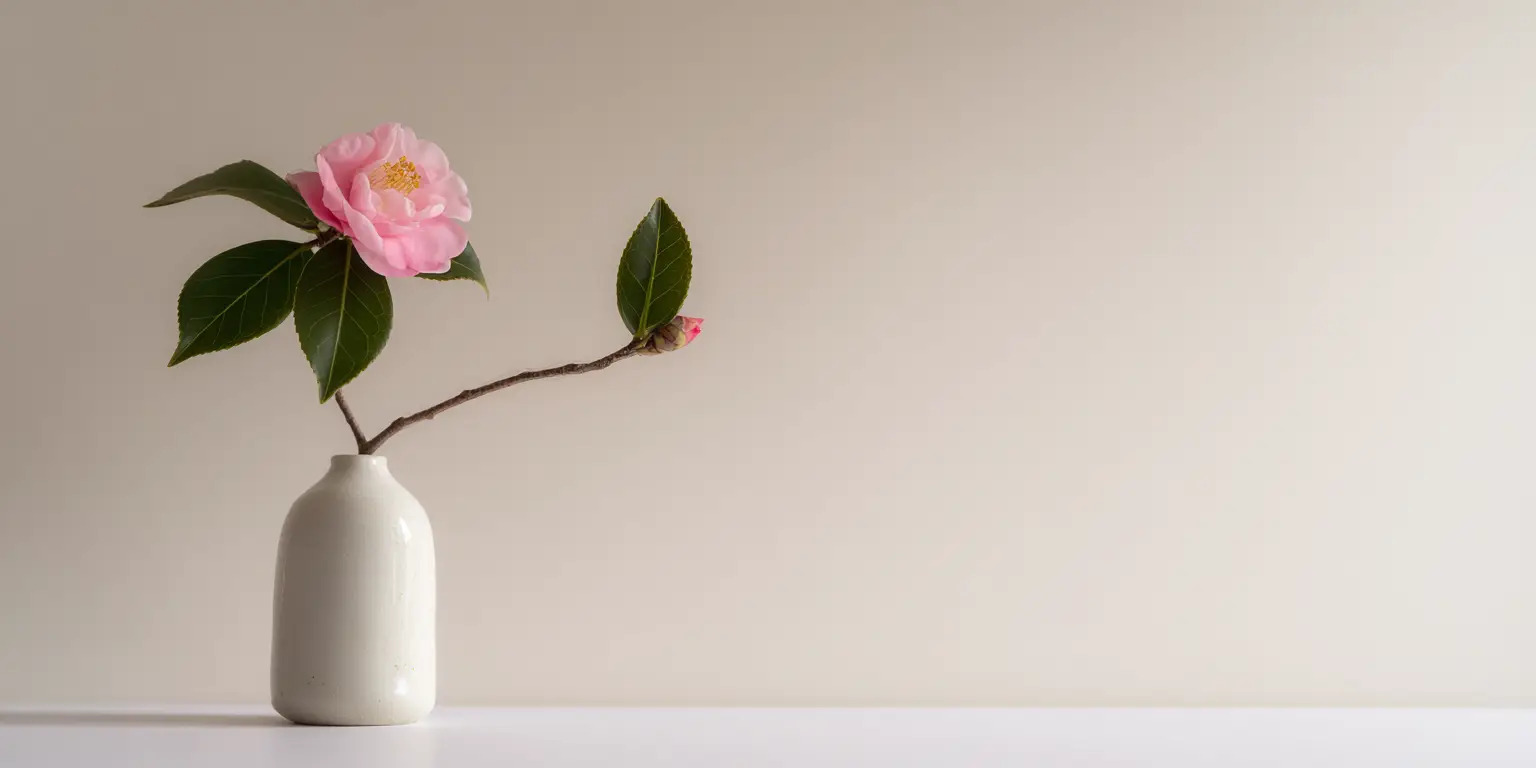
Vase life
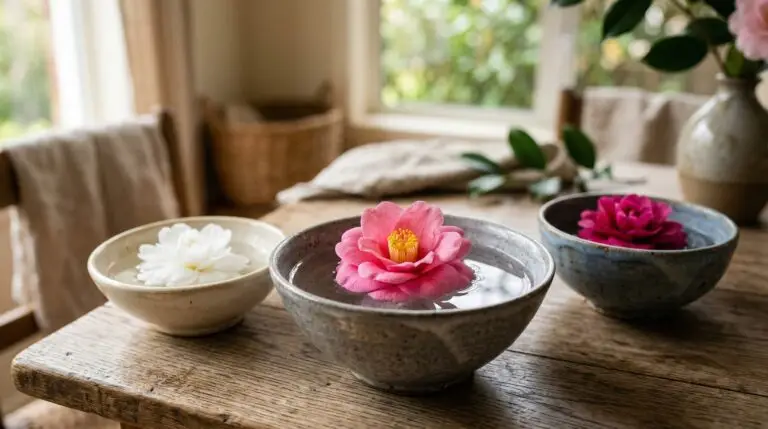
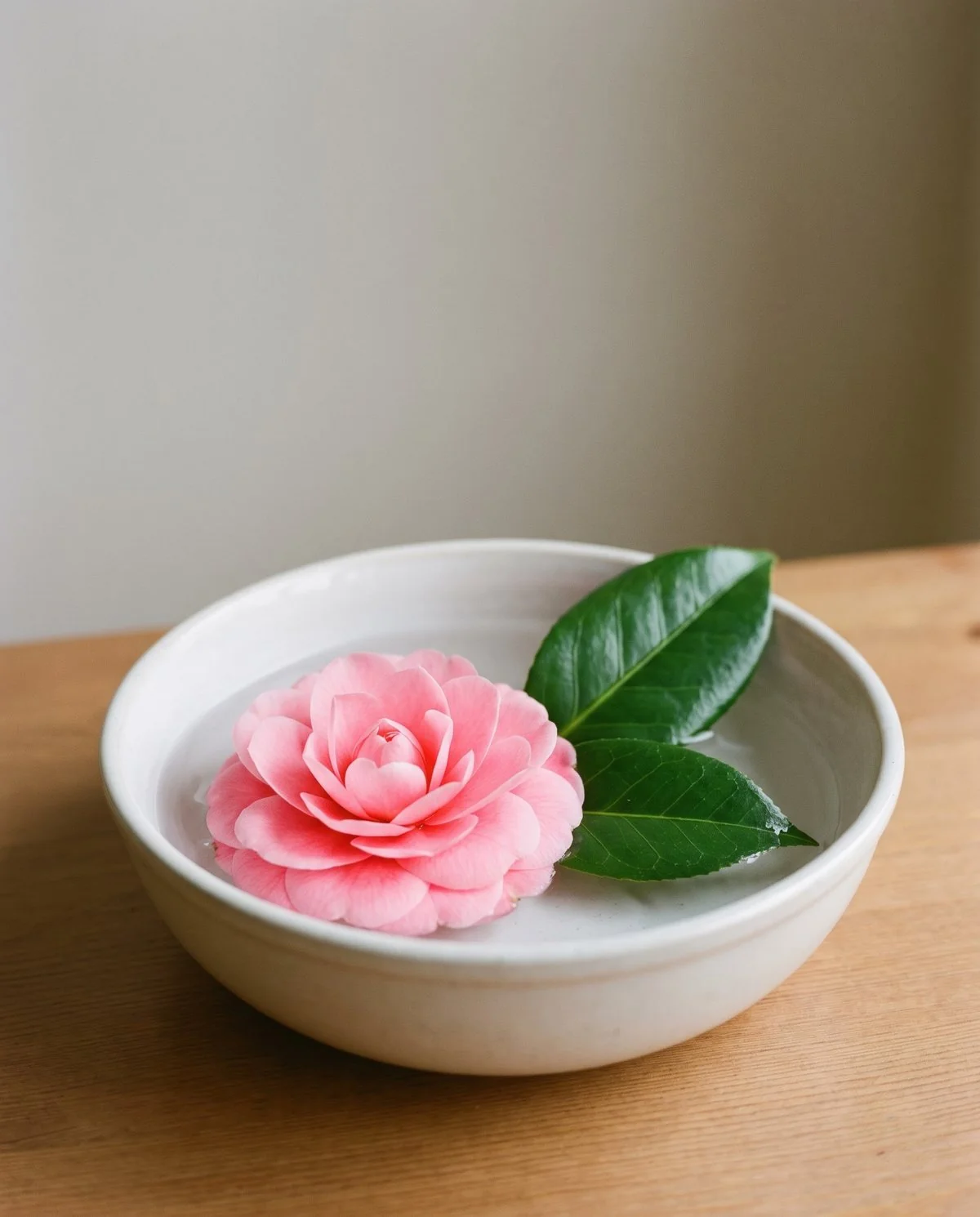
Camellias are lovely on the plant but difficult as cut flowers, so it helps to plan around their limits. A cut bloom usually holds only two to five days, and the thick, fleshy petals bruise and brown easily, with whole flower heads apt to drop rather than fade gracefully. That short life, along with the naturally short stems most camellias carry, rules them out for tall arrangements meant to last a week. The classic solution plays to the flower's strengths: cut a bloom with almost no stem and float it in a shallow bowl of water, where it stays hydrated and pristine for a day or two and makes a simple, elegant winter centerpiece. For a vase, choose buds just beginning to open, keep the arrangement cool and out of direct sun, and expect to replace the flowers every couple of days; for events, a freshly opened bloom can be wired into a corsage, best cut the same day it is needed.
Camellia is not a standing flower. It is a floating one.
This is the block where the honest answer is that the measurement does not exist, so what follows separates the convention from the data and does not dress one up as the other.
There is a camellia gift-plant tradition the way there is for azalea.
There is not, and the absence is real rather than an oversight in this research. Nothing in the sourcing or in 890 forum posts points to camellia being sold or gifted as a forced, temporary holiday houseplant the way florist azaleas, poinsettias or holiday mums are. Camellias appear consistently as permanent landscape or large-container plants.
A cut camellia will hold a tall arrangement if you handle it well.
Nothing in this research supports that. The petals bruise and brown, whole heads drop rather than fading gracefully, and the stems most camellias carry are short to begin with. The sourced alternative is the shallow bowl, not better technique.
Pests and diseases
The most common camellia pest by far is tea scale, Fiorinia theae, a tiny insect that colonizes the undersides of the leaves. It shows first as yellow blotching on the upper leaf surface, and turning a leaf over reveals the telltale crust of white and brown flecks where the scales feed. Left alone it saps the plant's vigor and causes leaf drop, so the treatment is to spray horticultural oil directly onto the lower leaf surfaces, repeating as the label directs, and to prune for an open canopy that lets spray and air reach through. Aphids gather on tender new growth and buds and drip a sticky honeydew that a black sooty mold soon colonizes, and spider mites stipple the leaves in hot, dry spells; both respond to a wash of water or an insecticidal soap. Occasional visitors like leaf gall midge and thrips distort a few buds or leaves but rarely amount to much.
Fungal diseases cause the trouble that people most often confuse with something else. Camellia petal blight, caused by the fungus Ciborinia camelliae, browns an open flower from the center outward, often with darker veining running through the discoloration, until the whole bloom turns brown and drops, and it strikes in damp spring weather. Because its resting bodies overwinter in fallen petals, the control is sanitation: gather and bin every dropped flower, refresh the mulch to bury spores, and keep water off the blooms. This is worth telling apart from simple frost damage, which browns the outer petal edges after a cold night, is cosmetic rather than spreading, and follows the weather rather than the wet. Root rot from Phytophthora follows waterlogged soil and shows as wilting and yellowing, best prevented by good drainage and shallow planting, while leaf gall, an Exobasidium fungus more common on sasanquas, thickens a few new leaves into pale fleshy galls that are unsightly but harmless and simply pulled off. The table below reads the common symptoms back to their causes, and the petal blight and tea scale guide covers treatment in more depth.
| Symptom | Likely cause | Fix |
|---|---|---|
| Flowers brown from the center out, often with darker veining, in damp spring | Petal blight (Ciborinia fungus) | Pick up and bin every fallen bloom, refresh the mulch, keep water off the flowers |
| Outer petal edges browned after a cold night | Frost or freeze damage, not disease | Site out of early-morning winter sun and drying wind; cosmetic, the plant recovers |
| Buds swell then drop before opening | Bud drop from summer drought, waterlogging, a sudden freeze or heat swing, or too many buds set | Water steadily through summer, mulch, shelter from extremes; some thinning is normal |
| Yellow leaves with green veins | Iron chlorosis from soil that is too alkaline | Lower the pH with sulfur, peat, or pine bark, feed an acid-lover fertilizer, apply chelated iron for a fast green-up |
| Yellow flecking above, white and brown crust underneath | Tea scale on the lower leaf surfaces | Spray horticultural oil on the undersides, repeat, prune to open the canopy |
| Black, sooty film on the leaves | Sooty mold growing on aphid or scale honeydew | Control the insects underneath; the mold clears once they are gone |
| Wilting and yellowing with soggy soil | Root rot (Phytophthora) in poor drainage | Improve drainage, never plant deep, water only as the topsoil dries |
Photo pairs, and the four fingerprints that wait for real photographs
Leaf colour patterns, an ordinary spent bloom, a normal new growth flush and both kinds of failed bud are safe to photograph. Four subjects here are not: petal blight's netted veining, scale insects' own bodies and their sooty-mould signature, rotted root colour, and the spore coatings of leaf gall and algal leaf spot. Each of those is a checkable fingerprint that a reader will hold their own plant up against, and an approximation is worse than no picture at all.
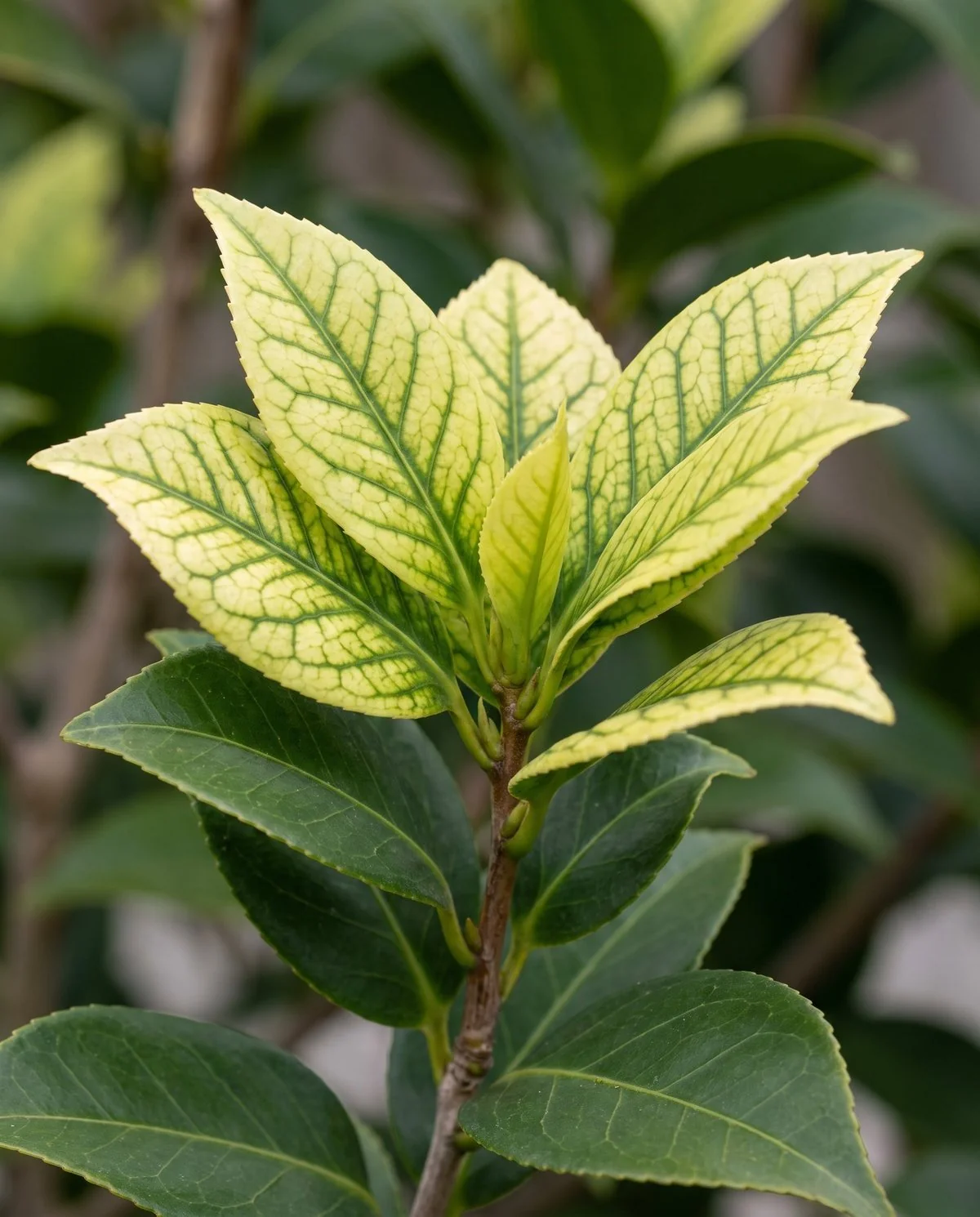
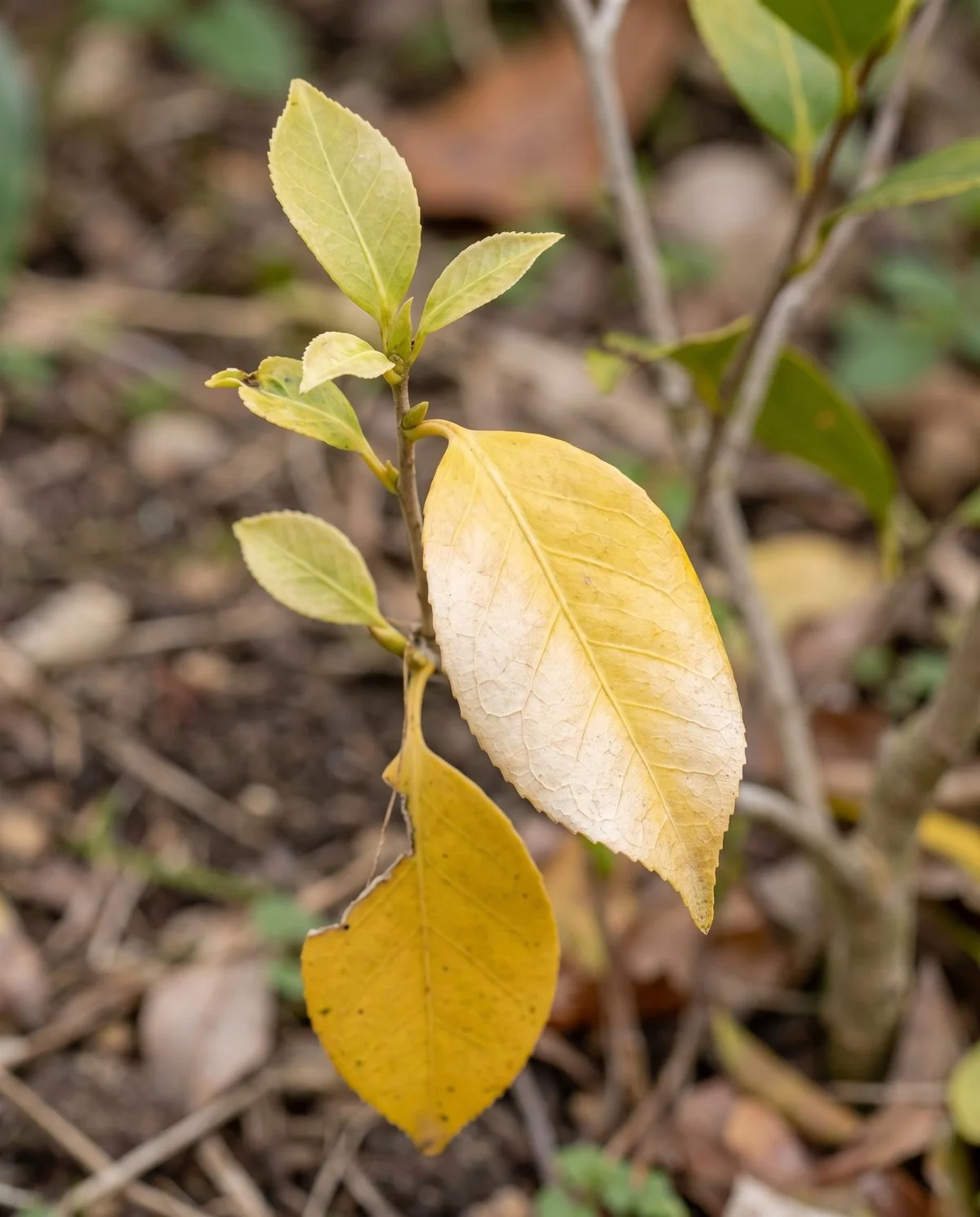
Read the pattern and then the position. Iron chlorosis is interveinal: the veins stay green while the tissue between them pales, and it shows on new growth first, driven by soil too alkaline for the plant to take up iron that may be physically present. Nitrogen shortage is uniform yellowing across the whole leaf, veins included, starting on older lower leaves and paired with generally stunted, pale growth. Real posters work at exactly this line, one asking whether the yellow leaves will green up or just drop off after a chelated iron application.
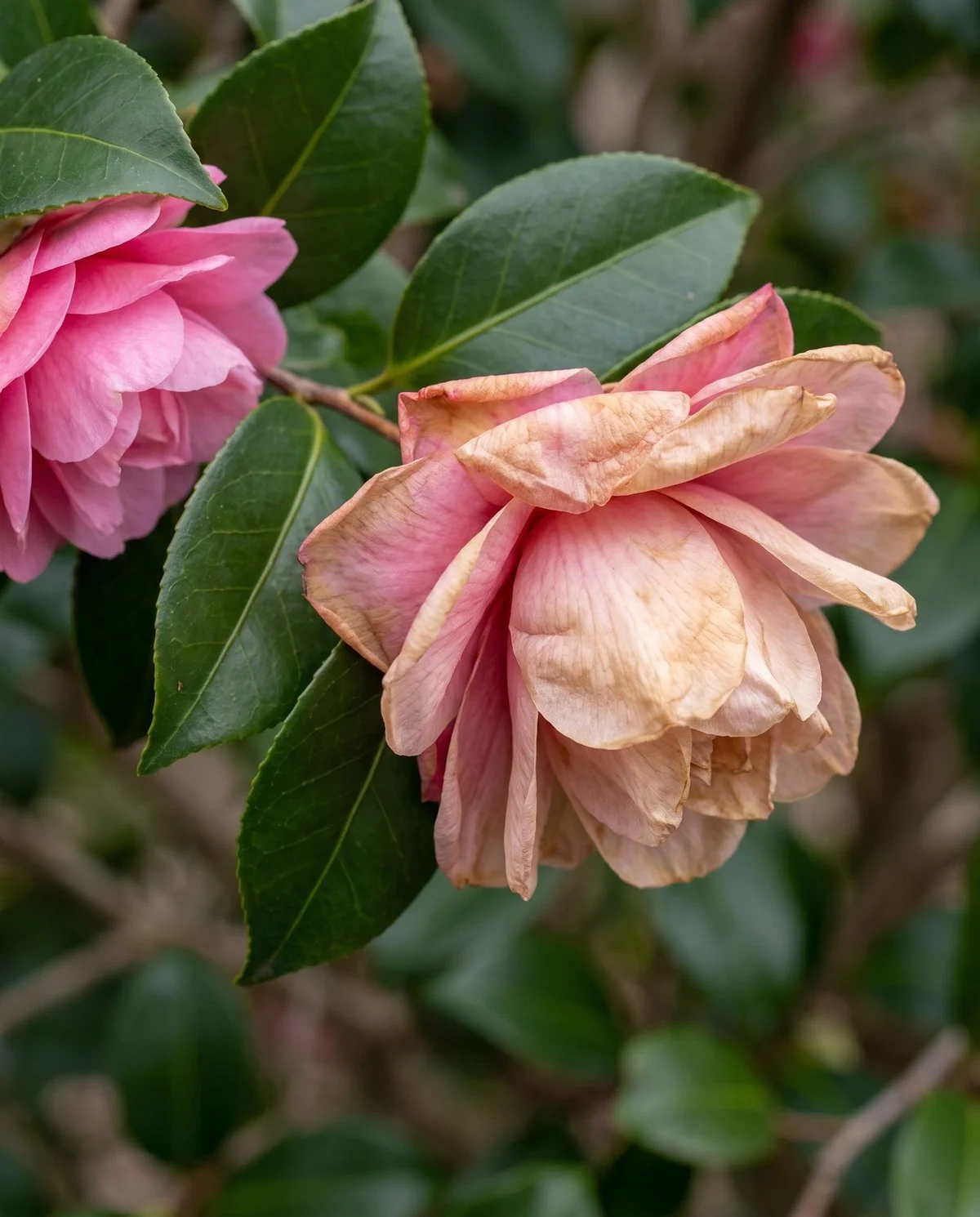
Look at where the browning starts and how fast it moves. Petal blight, Ciborinia camelliae, puts small brown spots near the centre of the flower rather than at the petal margins, then enlarges and darkens them into dark brown netted veining across the petals, and the whole bloom can brown and drop within 24 to 48 hours of visible onset. Remove the calyx and a ring of white or grey mycelium shows at the petal bases, with a hard dark flattened sclerotium forming at the flower's base, the resting structure that can persist in soil for at least 4 years. Ordinary aging fades more evenly across the whole flower, and cold or water stress browns the petal margins instead. Only the ordinary aging is photographed here.
Turn the leaf over and look for the insects themselves. Clemson calls tea scale, Fiorinia theae, the most serious scale pest on camellia: yellow splotches above, with females visible on the underside as oblong dark brown to black insects roughly one twentieth of an inch long and males white, and cottony masses under heavy infestation. Cottony camellia scale, Pulvinaria floccifera, instead gives pale green or yellow foliage plus sooty mould growing on the large amounts of sugary honeydew it secretes, with distinctive white cottony egg masses forming in early summer. Healthy foliage is uniform glossy dark green with no splotching, no stickiness and no black coating. None of it is photographed here, because telling one scale from the other is exactly the kind of insect-identification detail a rendered image gets subtly wrong.
The answer is underground, which is why this pair has no photograph. Clemson describes Phytophthora cinnamomi root rot as uniform leaf yellowing, poor growth and wilting, with infected roots running red-brown to dark-brown where healthy roots are white, and it is difficult to treat once established. A plant wilting from insufficient water delivery has white, firm roots. One poster listed the three right candidates and could not separate them from the foliage: two 35-year-old camellias side by side, one yellowing, and the question of whether it was root rot, the brutal winter just past in zone 8b, or malnutrition.
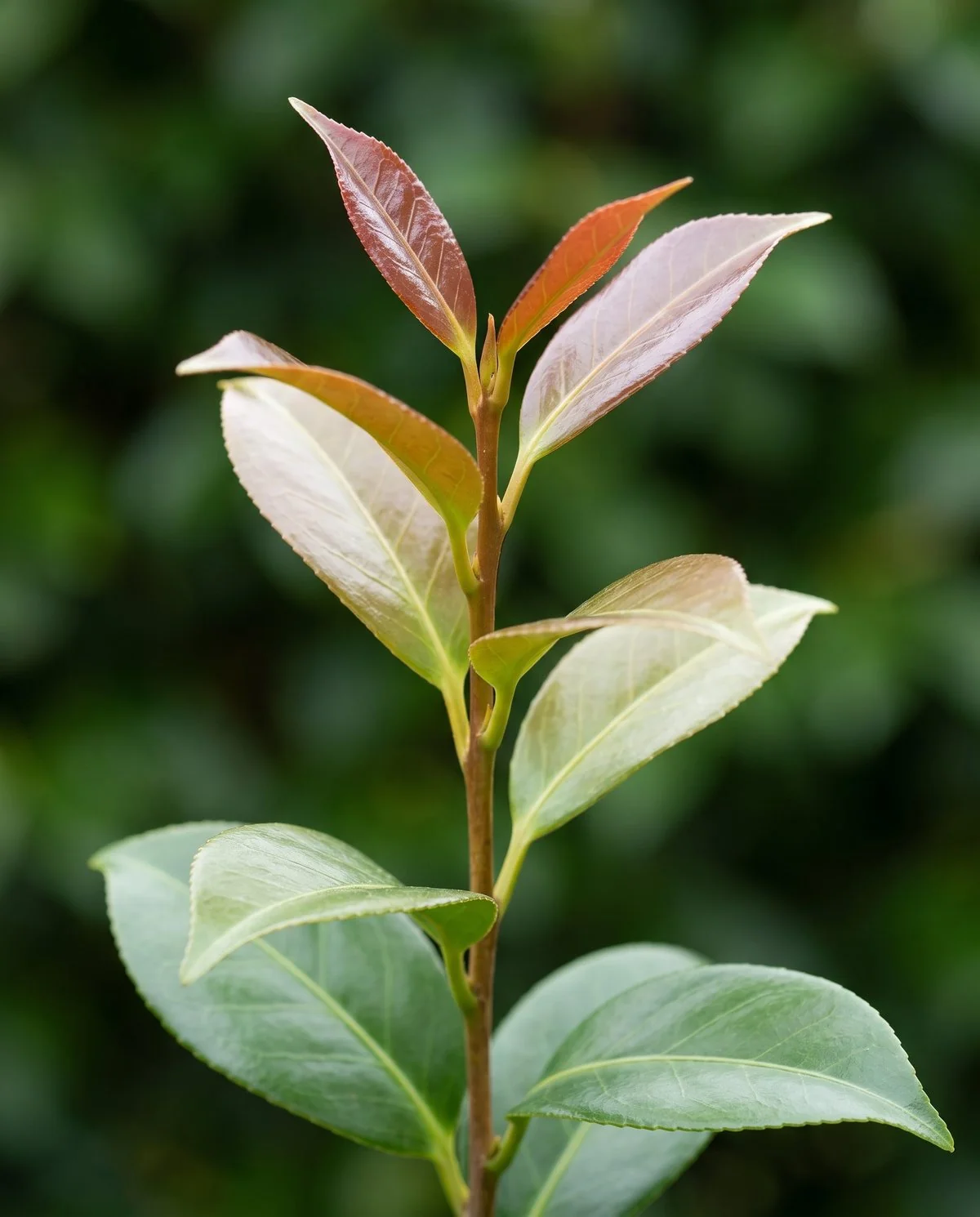
Wait a fortnight and look underneath. Leaf gall, Exobasidium camelliae, makes new shoots and leaves enlarged, thickened and fleshy, shifting toward nearly white or pink, with a whitish spore mass visible on the leaf undersides once the galls rupture. A normal camellia flush emerges bronze-red, then hardens and greens up evenly over days to weeks with no waxy swelling and no spore coating. Only the normal flush is photographed here.
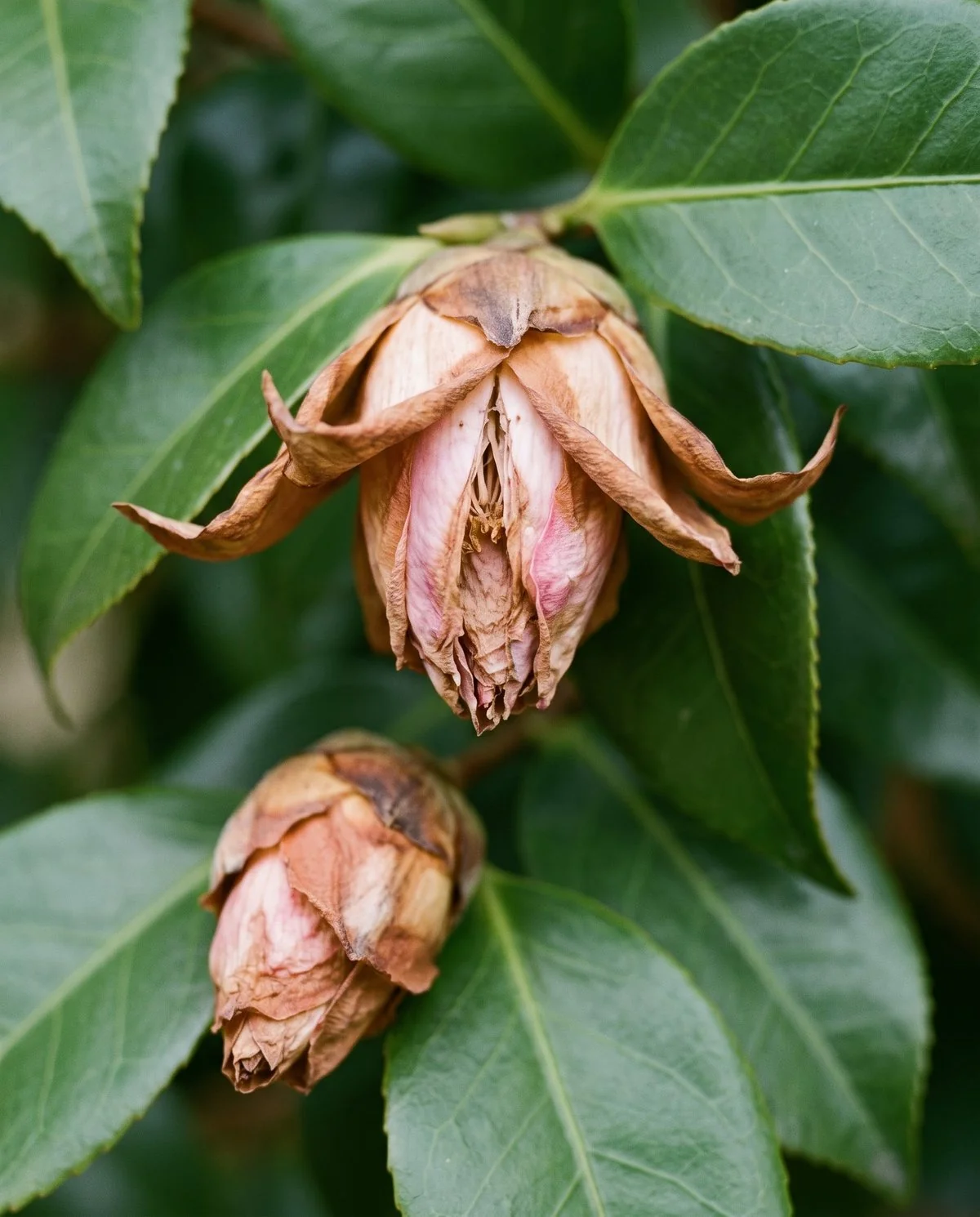
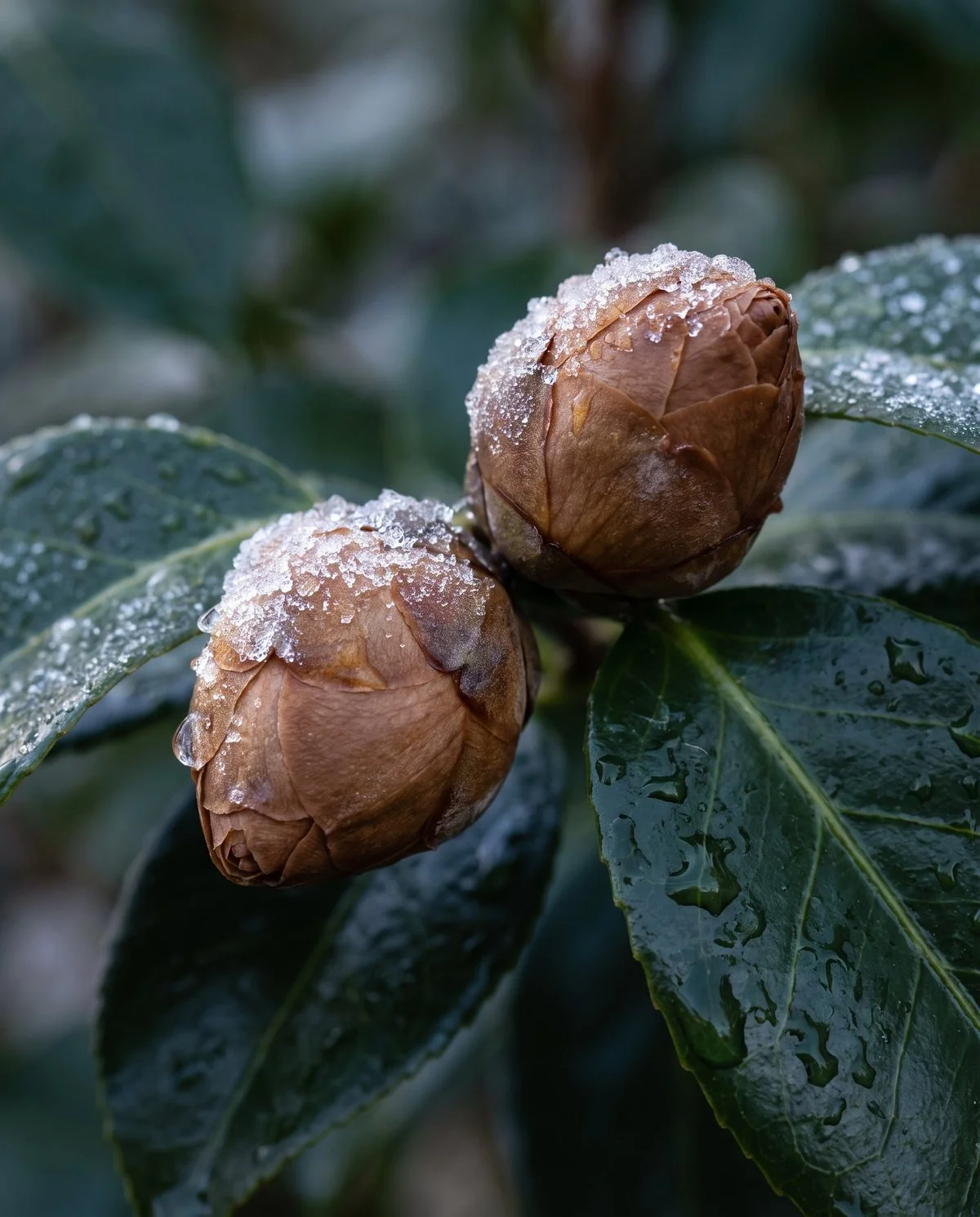
The sequence separates them. Drought-driven bud drop is gradual: buds soften, the sepal edges wither and dry, and eventually the bud splits at the tip and drops, traceable back to a dry stretch during the late summer or early fall bud-set window. Cold-snap bud blast arrives suddenly after a specific hard freeze and browns more uniformly, with no soften-then-split sequence. One poster in 9b was working through exactly this, noting dry buds with brown edges and reasoning that it could not be frost damage because their winter was warm. No single extension page was found stating this visual sequence side by side, so the pairing is a synthesis of separately sourced mechanisms and is flagged as such.
Feel whether the mark sits on top of the leaf. Algal leaf spot is caused by Cephaleuros virescens, a parasitic alga rather than a fungus, and it forms circular or blotchy, slightly raised lesions with a crusty grey-green to greenish-brown appearance, developing a velvety red-brown texture during summer spore production. A normal camellia leaf is smooth, glossy and uniformly dark green with no raised texture anywhere. It is not photographed here: the raised, velvety, colour-shifting surface is the whole diagnosis.
What camellia owners actually post about, ranked across 890 posts
890 unique camellia posts, pulled from r/gardening and r/plantclinic and including the entire history of r/Camellias at the time of the pull, deduplicated by post id. Some rows are questions rather than symptoms, and they are marked as questions, because a reader asking whether a plant will survive their winter needs a different answer from a reader looking at a spotted leaf. Themes overlap and do not add to 100.
Which camellia is actually in the pot or the ground, because the answer changes completely between a plain japonica and an Ackerman or April selection. This is the largest theme in the whole corpus, bigger than every pest and disease, and it is the reason the cold-hardy breeding programmes exist.
Whether the plant is being grown for leaves or for flowers. This is a genuine sub-audience rather than noise: tea-growing hobbyists post in the same gardening forums and often name the species in the title.
How many plants are in the question. These are frequently whole inherited gardens: one poster had photographed 19 of the 29 camellias that came with a house and had run out of what a beginner and an RHS handbook could tell them.
The soil and the drainage before the leaves. This is the most common true symptom-confusion theme in the corpus: nobody can tell from the plant which direction they got wrong, and UF/IFAS notes camellias are sensitive to overwatering and prone to root rot in poorly drained soil.
The date. Both real hesitation and real attempts are in this row, including one poster who wrote that they knew it was the worst time of year to transplant a camellia but had to, and another who opened with I think I killed a camellia after moving a six-year-old plant in heat.
The pattern and the position: interveinal on new growth, or uniform on old leaves. Camellia is grown in the same acid soil as azalea and gets the same confusion.
Whether the mark is raised. This is a visual-confusion cluster distinct from flower blight, and one of its real answers is a parasitic alga rather than a fungus.
Root colour, once the drainage has been ruled out. Clemson gives it plainly: roots infected by Phytophthora cinnamomi run red-brown to dark-brown where healthy roots are white.
Last summer rather than this winter, and then the pruning date. Both live months before the missing flowers.
Whether the soil is wet or dry, because a camellia wilts either way and the two need opposite responses.
The underside of the leaves. Clemson names tea scale, Fiorinia theae, the most serious scale pest on camellia, and cottony camellia scale is a second, distinguishable one.
Whether the reader can account for last September. Combined with the general bud-drop row, at 0.67 percent, bud drop is a substantial theme of roughly 2.1 percent, and one poster made the connection outright: while they were out of the country in September the area had prolonged heat and drought, the plants went without supplemental watering, and bud development suffered.
Read this row as the most under-told number on the page. One post in 890 asks about pruning timing, and late summer or fall pruning removes the flower buds already set for the coming season, which means the cause almost nobody self-diagnoses shows up months later inside the not-blooming and bud-drop rows instead.
Nothing, and that is the finding. Leaf gall, Exobasidium camelliae, is a real, named, extension-documented camellia disease and it produced not one post in this corpus. An honest zero, not evidence the problem does not exist: it is distinctive-looking but rarely urgent enough to drive a help post.
Also nothing, and this one is a confirming absence. The ASPCA lists Camellia japonica as non-toxic to dogs, cats and horses, and 890 posts produced no toxic-pet concern at all, which is what a genuinely non-toxic garden plant looks like in forum data.
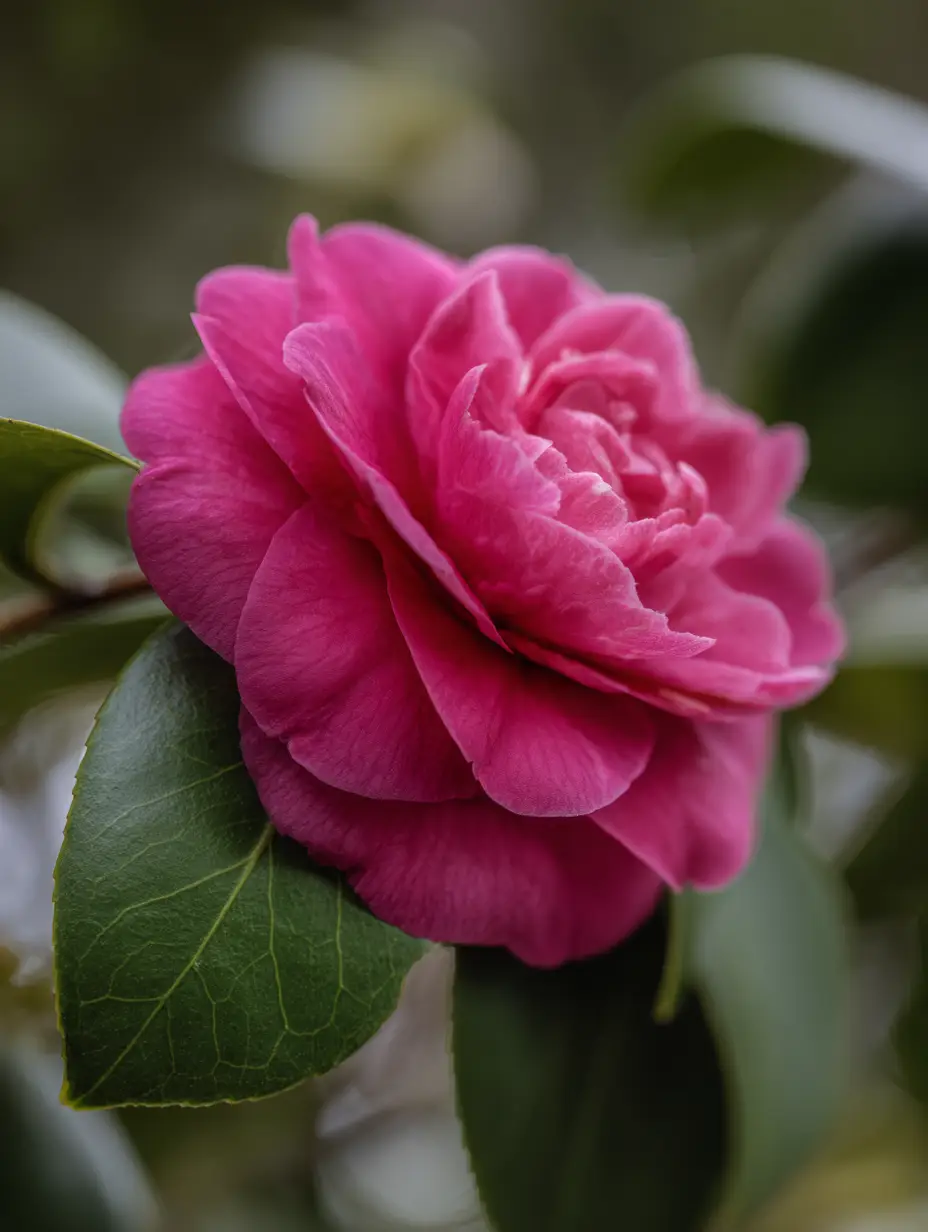
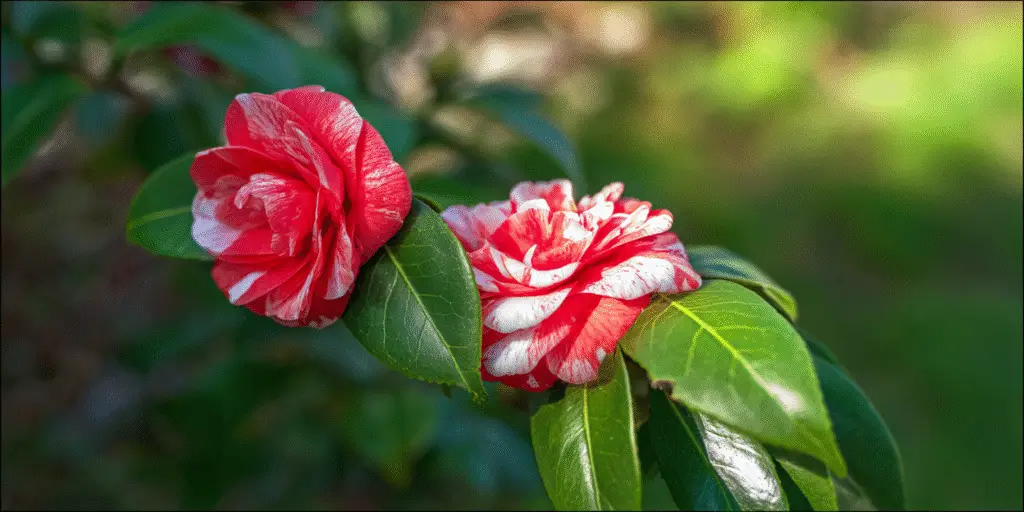
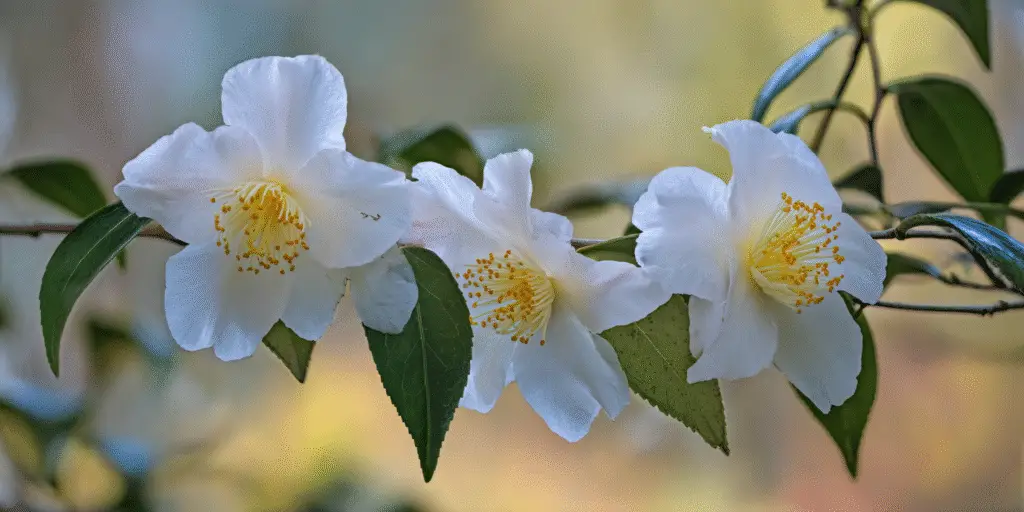
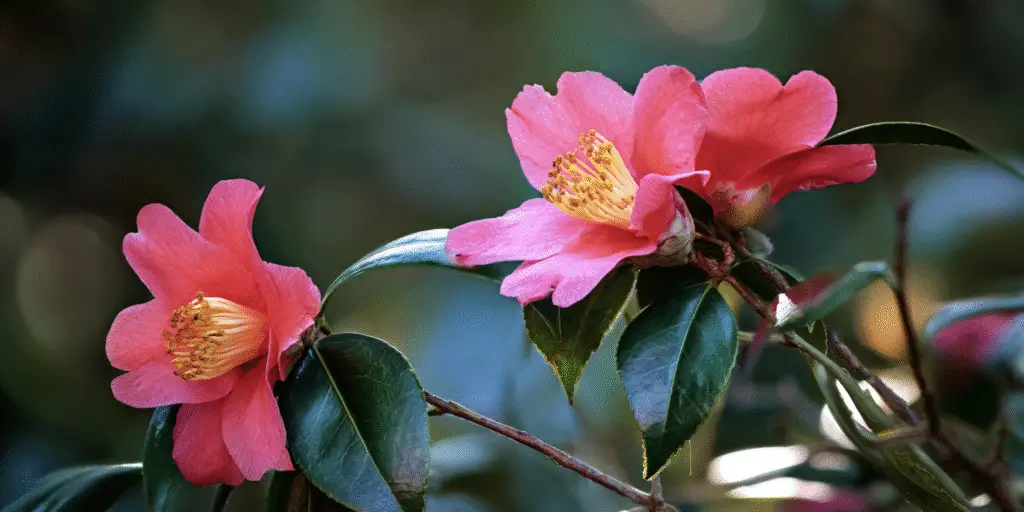
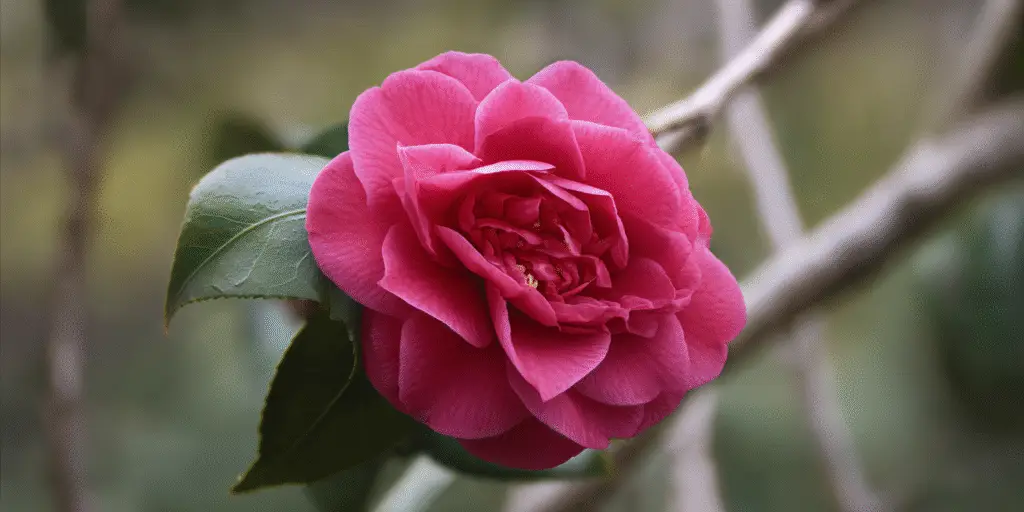
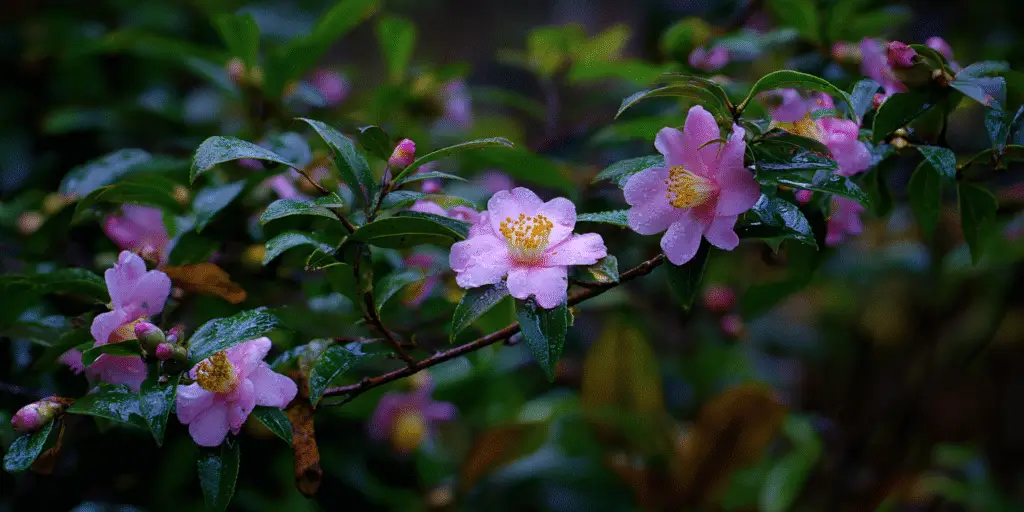
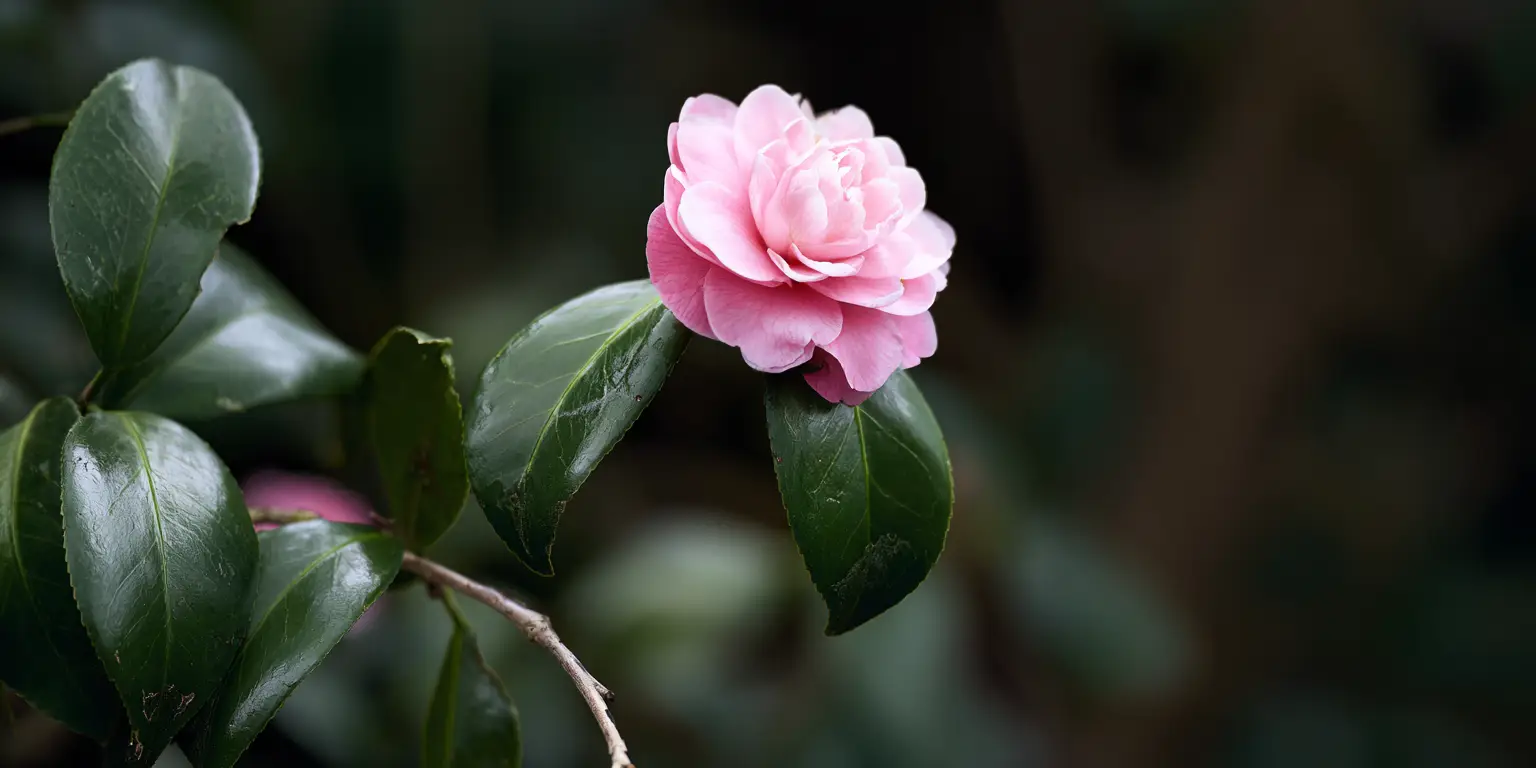
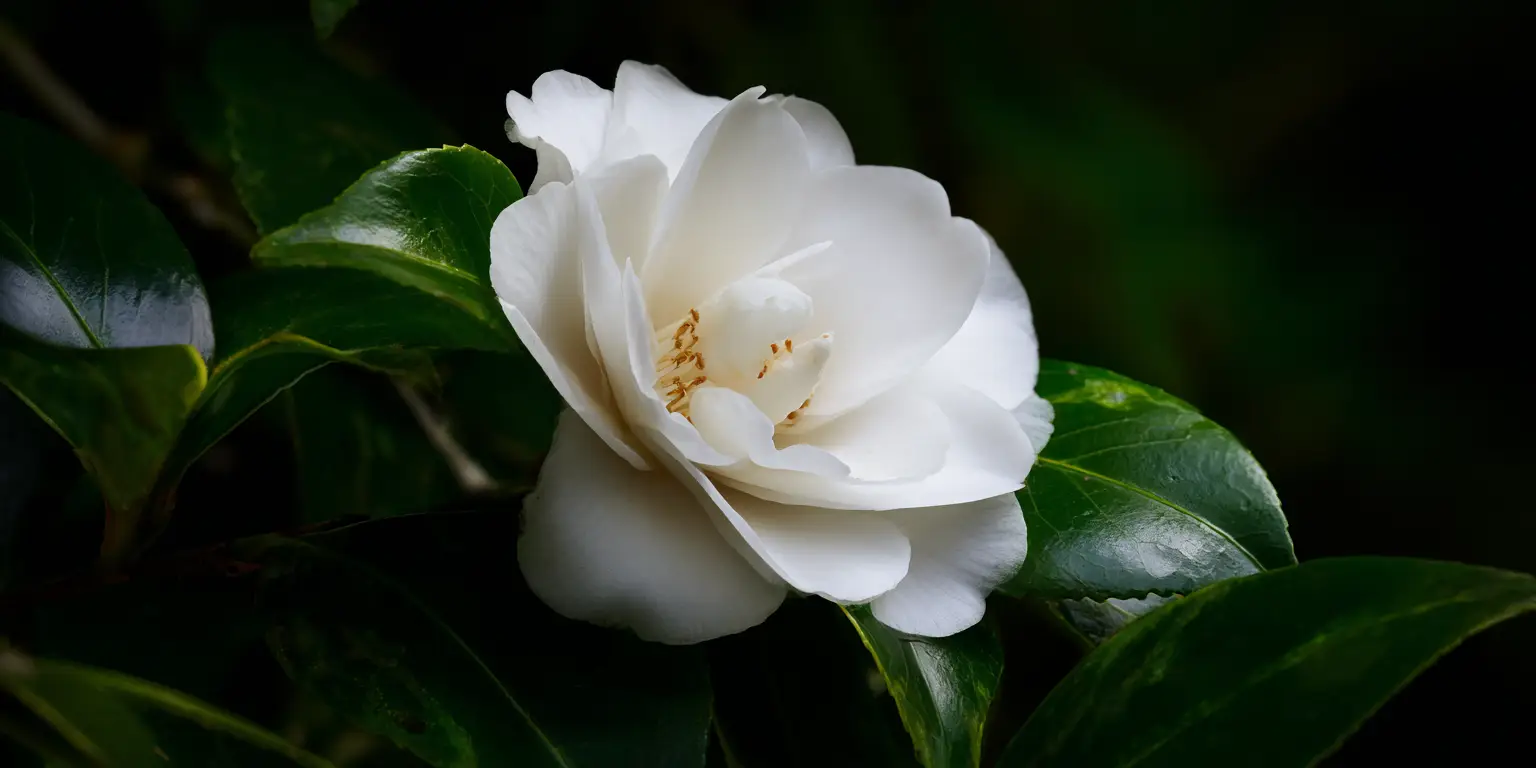
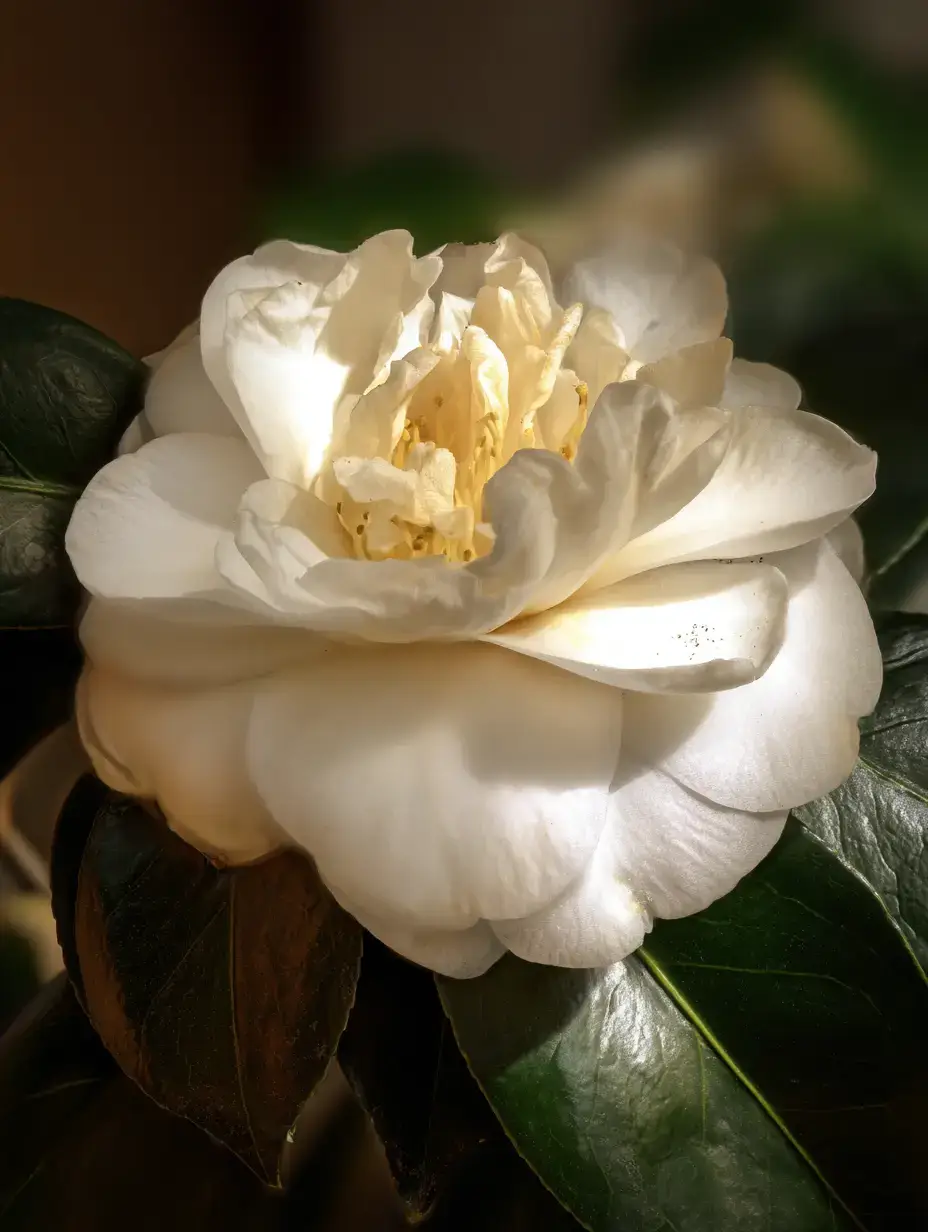
Flower photos
FAQ
Should I plant a japonica or a sasanqua camellia?
It depends on your light and your timing. Sasanquas bloom in fall to early winter, tolerate much more sun, and grow faster with an open habit that trains into hedges and espaliers, which makes them the better pick for a sunnier spot or a screen. Japonicas bloom in mid to late winter into spring, want more shade, and are slower and more formal with the large, classic flowers most people picture. Many gardeners plant both to stretch the bloom season from fall through spring.
When do camellias bloom?
In the cool half of the year, which is their whole appeal. Sasanquas open from October into December, japonicas from December or January and peaking January to March, and some reticulatas and hybrids carry into April. An individual flower lasts three to seven days, and because buds open in succession a shrub stays in bloom for several weeks.
Why are my camellia buds falling off before they open?
Bud drop is usually stress, not disease. The common triggers are drought the previous summer while the buds were forming, soggy soil, a sudden freeze or a warm spell that breaks dormancy early, and dry air on plants wintered indoors. A plant that sets too many buds also sheds some naturally. Keep the soil evenly moist through summer, mulch well, and shelter the plant from temperature swings.
Why are the flowers turning brown?
Look at where the browning starts. Petal blight, a fungus, browns the flower from the center outward, often with darker veining, in damp spring weather, and the whole bloom drops; the fix is to clear every fallen flower and refresh the mulch, since the fungus overwinters in the litter. Browning only on the outer petal edges after a cold night is frost damage instead, which is cosmetic and passes with the weather.
Why are my camellia's leaves turning yellow?
The usual cause is iron chlorosis from soil that is too alkaline, which shows as yellow leaves with green veins on the newest growth. Test the soil and lower the pH with elemental sulfur or composted pine bark, feed a fertilizer for acid-loving plants, and use chelated iron for a quick green-up. Overwatering and the normal drop of a few old leaves in spring can also yellow foliage, so check drainage too.
Do camellias need sun or shade?
Part shade or filtered light suits them best, ideally morning sun with afternoon shade: dappled light under tall trees, or an eastern exposure that gives gentle sun in the first half of the day and protection later. Sasanquas take more sun than japonicas, but hot all-day sun scorches the leaves and dries the buds on either one, while deep shade means few flowers. In cooler regions, near the edge of their hardiness, camellias take a good deal more sun than that, though even there keep them out of direct early-morning winter sun so frozen buds thaw slowly.
Are camellias safe for cats and dogs?
Yes. The ASPCA lists the common camellia as non-toxic to cats, dogs, and horses, and the plant has no thorns. Eating a lot of any plant can cause mild stomach upset, so it is still worth discouraging pets from chewing, but there is no poison to fear.
Are camellias evergreen or do they lose their leaves in winter?
Camellias are evergreen shrubs. They retain their leaves year-round, providing constant green foliage. In healthy camellias, you’ll see glossy green leaves even in winter when the plant is blooming. They will shed some older leaves occasionally (usually in spring as new growth comes in), but they do not have a complete leaf drop like deciduous plants. This evergreen nature is one reason camellias are valued in landscape design, as they offer structure and color (from both leaves and flowers) throughout the year.
How fast do camellias grow?
Camellias are slow-growing plants. On average, a camellia might grow only 6 to 12 inches of new height per year, sometimes even less. It can take a decade or more for a camellia to reach a substantial size. For example, a camellia planted as a young shrub might be only 4 feet tall after 5 or 6 years, and perhaps around 6 to 8 feet after 10 or more years (depending on the variety and conditions). Some varieties and species (like Camellia sasanqua) grow a bit faster than others, but generally camellias teach a gardener patience. Their slow, steady growth is coupled with a very long lifespan. If you’re looking for a rapid screen or hedge within a year or two, camellia is not the best choice. But if you’re in it for the long term, camellias will reward you with enduring beauty and will rarely become unruly or overgrown.
How long can a camellia live?
With proper care and suitable conditions, camellias can live for an extremely long time, easily decades and potentially centuries. Many camellias live 50+ years in gardens without issue. There are documented camellia plants in Asia (for instance, in Japan and China) that are over 100 or even 200 years old and still blooming. Some old camellias planted in the 19th century in Southern U.S. gardens are still alive today. In ideal conditions (mild climate, good soil, minimal disease or pest pressures), a camellia can become a permanent fixture, outliving the people who plant them. Their slow growth and robust woody structure contribute to this longevity. The key to a long life is to avoid severe stresses. Extremely harsh winters, being planted in the wrong spot (requiring relocation), or persistent neglect can shorten a camellia’s lifespan. But absent those, think of a camellia as a legacy plant that could be in your family or community for generations.
Can you grow camellias in pots or indoors?
Yes, camellias can be grown in containers, and doing so is a good option for people in colder climates or with alkaline soil. Use a large pot with excellent drainage and fill it with an acidic, peat or bark-based potting mix (often sold as azalea/camellia mix). Potted camellias will need regular watering since containers dry out faster. Keep the soil evenly moist but not waterlogged. They also benefit from feeding with a camellia or acid-loving plant fertilizer during the growing season. As for growing indoors, camellias are a bit tricky as houseplants because they really prefer cool, outdoor air. However, you can move potted camellias indoors to a cool, bright location to protect them from winter freezes (for example, keeping them in an unheated sunroom, garage, or greenhouse where temperatures stay between about 35-55°F in winter). They need that cool rest to set buds, if indoor temperatures are too warm (above roughly 60°F at night in winter), camellia buds may drop off. So while you wouldn’t typically keep a camellia as a year-round houseplant like a tropical foliage plant, you can definitely grow it in a pot and give it winter shelter, then bring it outside for the growing season. Many gardeners in zone 6 or colder successfully overwinter potted camellias in garages or basements where it stays chilly but not frigid.
Do camellias need acidic soil?
Yes. Camellias absolutely prefer acidic soil conditions. Ideally the soil pH should be in the range of about 5.0 to 6.5. In acidic soil, camellias are able to absorb nutrients (especially iron) efficiently, leading to healthy green leaves and good flowering. If camellias are planted in soil that is too alkaline (higher pH), they often show signs of distress, most notably yellowing leaves with green veins (a symptom of iron chlorosis). In such cases, the plant isn’t actually diseased or dying from a pest. It’s essentially malnourished because the chemistry of the soil locks up iron and other micronutrients. Gardeners with neutral or alkaline soils should take steps to acidify the soil for camellias. This can include incorporating elemental sulfur or peat moss into the soil, using fertilizers formulated for acid-loving plants, and mulching with organic materials like pine needles which break down into acidic compounds. In containers, you can buy an acid potting mix to begin with. Regular soil tests can help monitor pH. If you keep the soil on the acidic side, your camellia will greatly reward you with lush foliage and blooms. Camellias also tend to do well in the same soil conditions as azaleas (which are rhododendrons) and other ericaceous (acid-loving) plants, so they make good planting companions in the garden where an acidic bed has been prepared.
Can I grow a camellia in zone 6 or colder?
Not with a plain japonica or sasanqua, which stop reliably around Zone 7. Yes with the right named cultivar, and this is the most-asked question in the whole corpus at 89 posts. NC State Extension recommends the Ackerman Winter series, bred from crosses of C. oleifera with sasanqua, hiemalis or vernalis selections, for Zones 6a through 9b, and lists 19 named cultivars including Polar Ice, Snow Flurry and Winter's Star. The Scott Arboretum rates the separately bred April series, from Dr. Clifford Parks, to roughly Zone 6 as well. The two programmes are not interchangeable: the Winter series blooms in fall, the April series in March and April.
Is Camellia sinensis the same as my garden camellia, and can I make tea from it?
Same genus and same family, Theaceae, but a different species from the japonica and sasanqua grown for flowers, and only C. sinensis leaves are the source of true tea, white, green and black. It also tolerates more full sun than most ornamental camellias. This is not a footnote question: 69 of the 890 posts behind this page, 7.75 percent, are specifically about the tea plant, which makes tea growers a real sub-audience within camellia's own community rather than a stray search.
Can I move or transplant an established camellia?
Yes, with caveats this page will not soften. Move only during the dormant window, late fall through early spring, preserve as wide a root ball as possible, and expect an older or larger specimen to take noticeably longer to re-establish than a young one. The reason for the caution is worth stating: no extension source in this research states camellia's root depth or transplant ease at all, unlike azalea, where a shallow-rooted, easy-to-move framing is directly sourced. The forum evidence shows real anxiety and mixed outcomes at exactly this decision, including one poster who opened with I think I killed a camellia after moving a six-year-old plant in heat.
Interesting tips
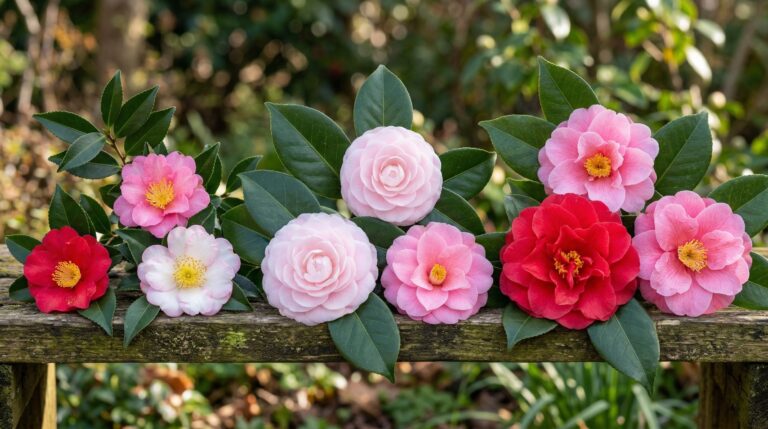
The most useful move is to plant for succession, since that is what a camellia bed does best: combine an early sasanqua for fall, a japonica for the depth of winter, and a late reticulata or hybrid for spring, and one corner of the garden carries flowers from October to April. Buy plants in bloom whenever you can, because cultivars vary enormously in form, from simple singles to formal doubles and anemone-centered flowers, and the label rarely tells the whole story. Plant high and shallow, with the root ball crown at the surface and a pine mulch over the roots but off the stem, the same way azaleas want to sit, to keep the shallow roots healthy. Make blight sanitation a yearly habit by clearing fallen blooms and renewing the mulch at season's end, which breaks the fungus that browns next year's flowers. In a borderline-cold garden, reach for the hardy oleifera hybrids, give them a sheltered wall or canopy, and mulch deeply over winter. Above all, choose the spot with care and leave the plant there, because a mature camellia resents being moved and will sulk for years after a transplant.
- Mulch with pine needles or bark: Surround your camellia with a layer of pine straw or shredded pine bark. This mulch helps retain moisture, keeps roots cool, and gradually acidifies the soil, just what camellias love. It also suppresses weeds and looks natural in the landscape.
- Protect from early morning sun in winter: If a camellia’s buds or blooms freeze overnight, direct sun at dawn can damage them further. Plant camellias where they won’t get strong early sun after a frost (for example, on the north or west side of a structure or under evergreen trees) to help buds thaw slowly and avoid bud drop or browning.
- Float blooms for display: Camellia flowers don’t last long once cut, but you can enjoy their beauty indoors by floating blossoms in a bowl of water. This simple display keeps the blooms hydrated and showcases their form. It’s a great way to create a quick centerpiece, perfect for a special occasion, even if only for a day or two.
- Prune right after flowering: Camellias usually set next year’s flower buds by late summer. If you need to prune or shape your camellia, do it immediately after it finishes blooming. Light pruning at that time will encourage branching but won’t sacrifice next season’s blooms. Generally, camellias require little pruning, but removing any dead twigs and a light trim for shape can be done annually post-bloom.
- Companion plant selection: Camellias pair well with other acid-loving plants. Consider planting them near azaleas, magnolias, or under pine trees. These companions enjoy similar soil and light conditions. For example, shallow-rooted azaleas can carpet the ground beneath a camellia, and tall magnolia trees can provide the high shade that camellias appreciate. This creates a harmonious planting with layered heights and extended seasonal interest.
- Consider new cold-hardy varieties: If you live in a borderline climate (zone 6 or a chilly part of zone 7), look for camellia hybrids bred for extra cold tolerance. Series like the Ackerman "April" series or others often have names indicating cold hardiness. These can extend the possibility of growing camellias in cooler regions. Even with hardy types, it’s wise to plant them in a protected spot and mulch well over roots in winter.
- Avoid disturbing established plants: Camellias do not like being transplanted once mature. Their roots establish a relationship with the soil and moving a big camellia can set it back severely. Choose your planting location carefully at the start. If you must transplant, do it in late winter or early spring and take as large a root ball as possible. Keep the plant well watered and shaded afterward. But in general, try to "get it right the first time" when siting a camellia. Their long life and slow growth mean they’ll stay where they’re put for many years.
- Remove spent blooms and old mulch: To prevent diseases like petal blight, regularly pick up fallen camellia blooms instead of letting them rot on the ground. At the end of the bloom season, you can also replace the mulch under the plant with a fresh layer. This helps get rid of any fungal spores that might be lingering and gives the camellia a clean start for the next year.
Related Guides & Flowers
Azaleas (Rhododendron spp.)
Acid-loving shrubs that thrive in dappled light and pair naturally with camellias in woodland borders.
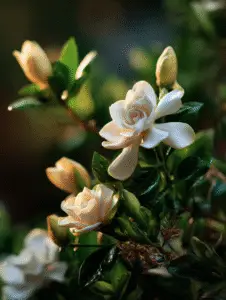
Gardenia (Gardenia jasminoides)
Glossy evergreen shrub with richly fragrant white blooms; same preference for acidic, well-drained soil.
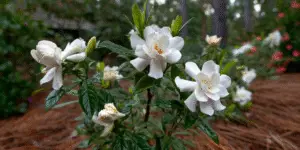
Gardenia ‘Frostproof’
Compact, cold-tolerant selection for gardeners who want fragrance plus a bit more spring frost resilience.
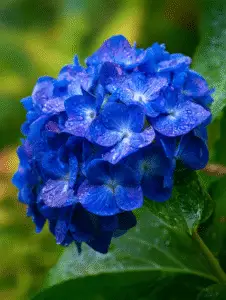
Hydrangea macrophylla
Bigleaf hydrangea for part shade; flower color shifts with soil pH, a useful companion in acid beds.
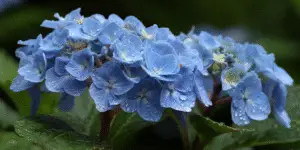
Hydrangea macrophylla ‘Nikko Blue’
Classic mophead cultivar; a recognizable anchor for shade gardens.
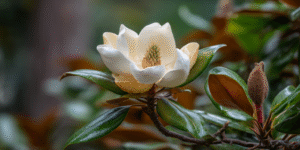
Magnolia grandiflora
Evergreen magnolia with huge, citrus-scented flowers; similar glossy foliage presence to camellias.
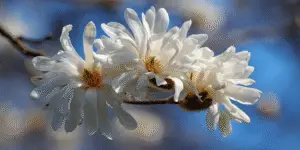
Magnolia stellata
Early-spring star magnolia for sheltered sites; elegant white flowers before leaf-out.
Tree Peony (Paeonia suffruticosa) – Woody peony with large, camellia-like blossoms; blooms before most herbaceous peonies.
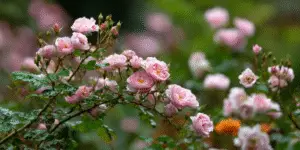
Shrub Roses
Landscape roses that deliver a formal, camellia-adjacent look with repeat bloom through the warm season.
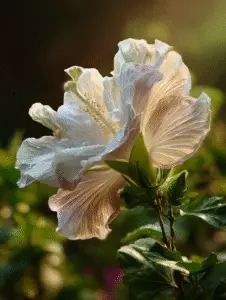
Hibiscus
Showy, glossy-leaved shrub for summer drama; a good "high-season" counterpoint to winter-spring camellias.
References
- UF/IFAS – "Camellias at a Glance." Concise cultural requirements for Florida and warm-region gardens: soil acidity, drainage, placements.
- Clemson HGIC – "Camellia." Comprehensive home-garden profile covering size, bloom season, forms, and practical care.
- NC State Plant Toolbox – Camellia japonica. Diagnostic notes, site preferences, and problem-solving tips for chlorosis and more.
- UGA Extension – "Pruning Ornamental Plants." Clear guidance that C. japonica needs little pruning; when and how to thin or reduce size.
- ASPCA – "Common Camellia." Pet safety reference indicating non-toxic to cats, dogs, and horses.
Enjoying our flower guides? Add YourFlowersGuide as a preferred source on Google. It helps more readers find us.
Add to Preferred Sources