returns in
273
days
Bloom calendar
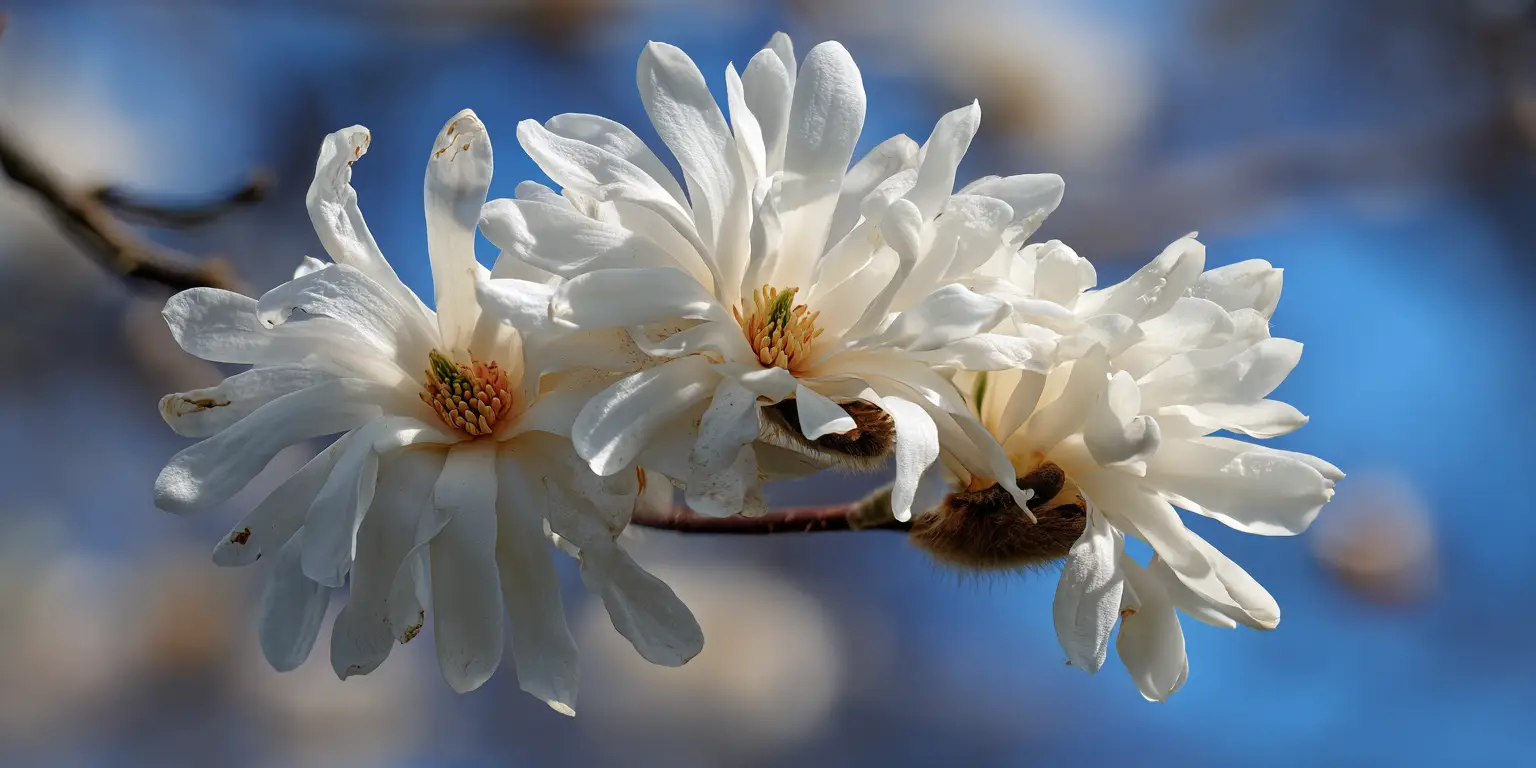
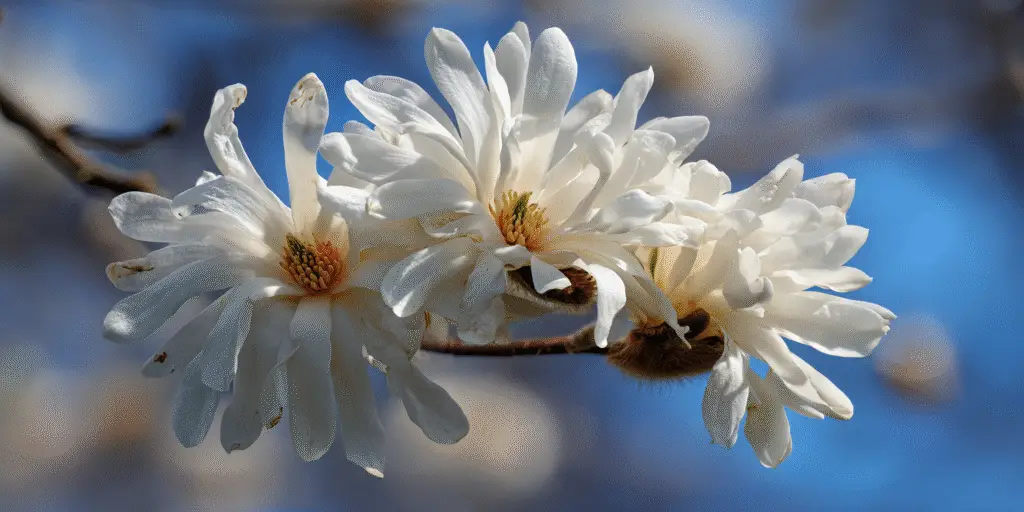
Magnolia stellata
Species (deciduous)
At‑a‑glance
- Group/Class: Species (deciduous)
- Height × spread: 15 to 20 ft × 10 to 15 ft (4.6 to 6.1 m × 3 to 4.6 m)
- Bloom window: March to early April
- Color & flower form: White; star‑shaped with many narrow tepals
- Fragrance: 2 noticeable
- USDA hardiness: Zones 4 to 8
- Breeder / Year / Origin: unknown
- Awards/registration: RHS Award of Garden Merit
- Pet safety: safe
How it differs
- Earliest to bloom among deciduous magnolias.
- Much smaller stature than typical magnolia trees.
- Distinct star‑shaped flowers with 12 to 18 strap‑like tepals.
- Tolerates clay soils better than many magnolias.
Strengths
- Cold hardy for northern gardens.
- Compact habit suits small spaces.
- Dependable early season interest before leaves.
- Fragrant blooms attract early pollinators.
Care in one minute
Site in full sun for best bloom; part shade tolerated.
Plant in moist, organically rich, well‑drained soil with slightly acidic pH.
Water during dry spells, especially in summer.
Apply mulch yearly to conserve moisture and buffer roots.
Prune only right after flowering and only to shape or remove damaged wood.
Choose a sheltered exposure to reduce frost injury.
Watch‑outs
- Flower buds and blossoms can be damaged by late frosts.
- Becomes chlorotic in alkaline soils; prefers slightly acidic soil.
- Intolerant of urban pollution and prolonged drought.
- Needs protection from strong winter and spring winds.
Best uses (tags)
Provenance note
Native to Japan and introduced to North American gardens in the 19th century; sometimes treated as a variety of Magnolia kobus.
References
- Missouri Botanical Garden Plant Finder – Magnolia stellata
- NC State Extension – Magnolia stellata
- Morton Arboretum – Star magnolia
- ASPCA – Magnolia bush (Magnolia stellata) Non‑Toxic to Dogs & Cats
Similar Flowers
Enjoying our flower guides? Add YourFlowersGuide as a preferred source on Google. It helps more readers find us.
Add to Preferred Sources