returns in
273
days
Bloom calendar
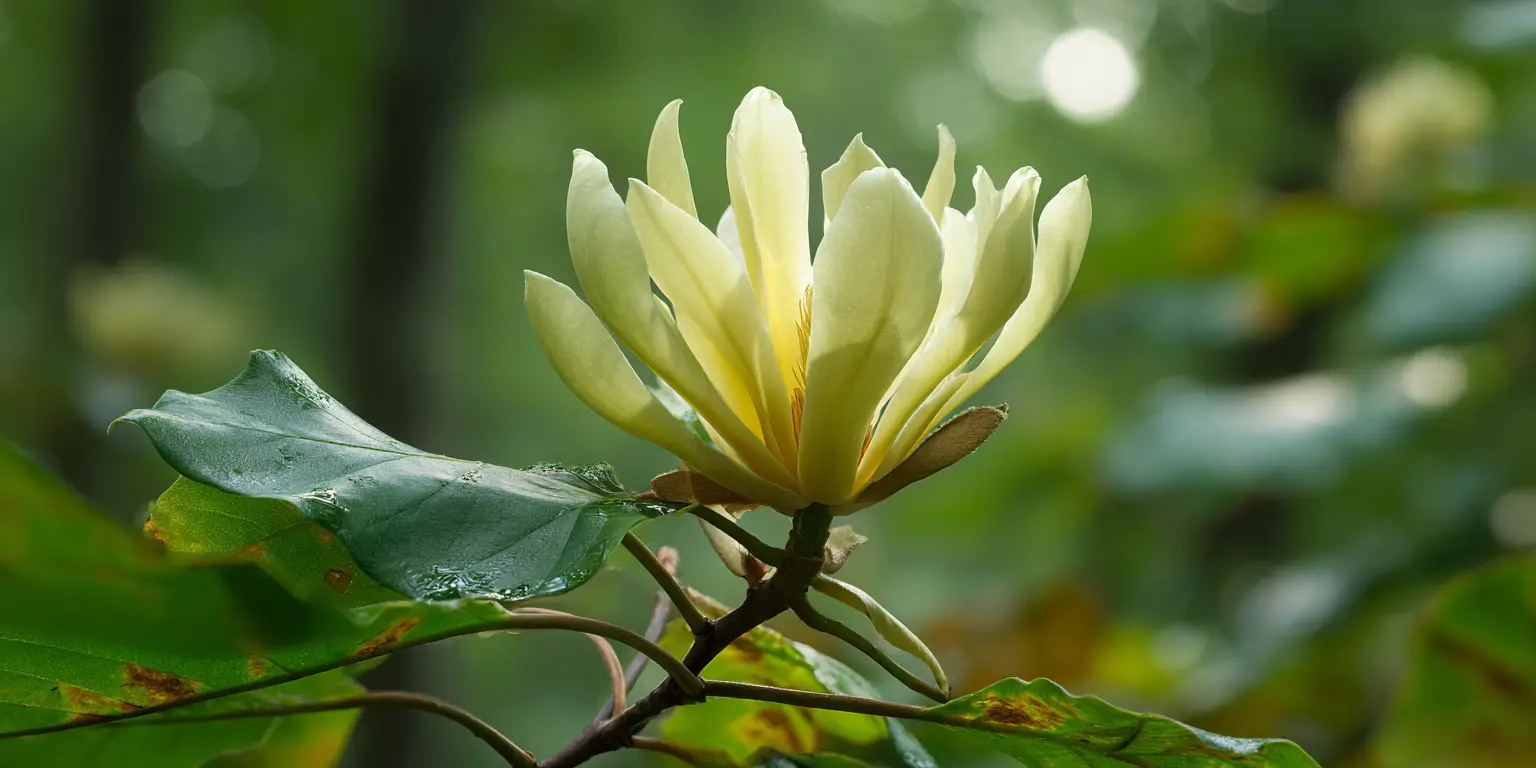
Magnolia acuminata
Species (deciduous)
At‑a‑glance
- Group/Class: Species (deciduous)
- Height × spread: 40 to 70 ft × 20 to 35 ft (12 to 21 m × 6 to 10.7 m)
- Bloom window: April to May
- Color & flower form: Greenish yellow; tulip‑like flowers
- Fragrance: 1 trace
- USDA hardiness: Zones 3 to 8
- Breeder / Year / Origin: unknown
- Pet safety: safe
How it differs
- Hardiest of the native tree‑size magnolias.
- Much larger and more upright than common garden magnolias.
- Greenish to yellow flowers are less conspicuous than pink or white species.
- Often develops better fall color than many magnolias.
Strengths
- Very cold hardy within the genus.
- Functions as a durable shade tree.
- Tolerates proximity to black walnut.
- Native to eastern North America.
Care in one minute
Plant in full sun to part shade in deep, moist, well‑drained, slightly acidic soil.
Irrigate during dry periods the first few years; maintain even moisture thereafter.
Mulch widely to protect shallow roots.
Prune minimally after bloom to remove dead or crossing branches.
Avoid transplanting older specimens; choose the final site carefully.
Watch‑outs
- May take a decade or more to begin flowering.
- Difficult to transplant once established; plant young and leave in place.
- Intolerant of urban pollution and soil extremes.
- Needs ample space for mature crown.
Best uses (tags)
Provenance note
Native to eastern North America; widely used in breeding of yellow‑flowered magnolias.
References
- Missouri Botanical Garden Plant Finder – Magnolia acuminata
- NC State Extension – Magnolia acuminata
- USDA PLANTS Profile – Magnolia acuminata
- Oregon State Landscape Plants – Magnolia acuminata
- ASPCA – Magnolia bush (Magnolia stellata) Non‑Toxic to Dogs & Cats
Similar Flowers
Enjoying our flower guides? Add YourFlowersGuide as a preferred source on Google. It helps more readers find us.
Add to Preferred Sources