returns in
273
days
Bloom calendar
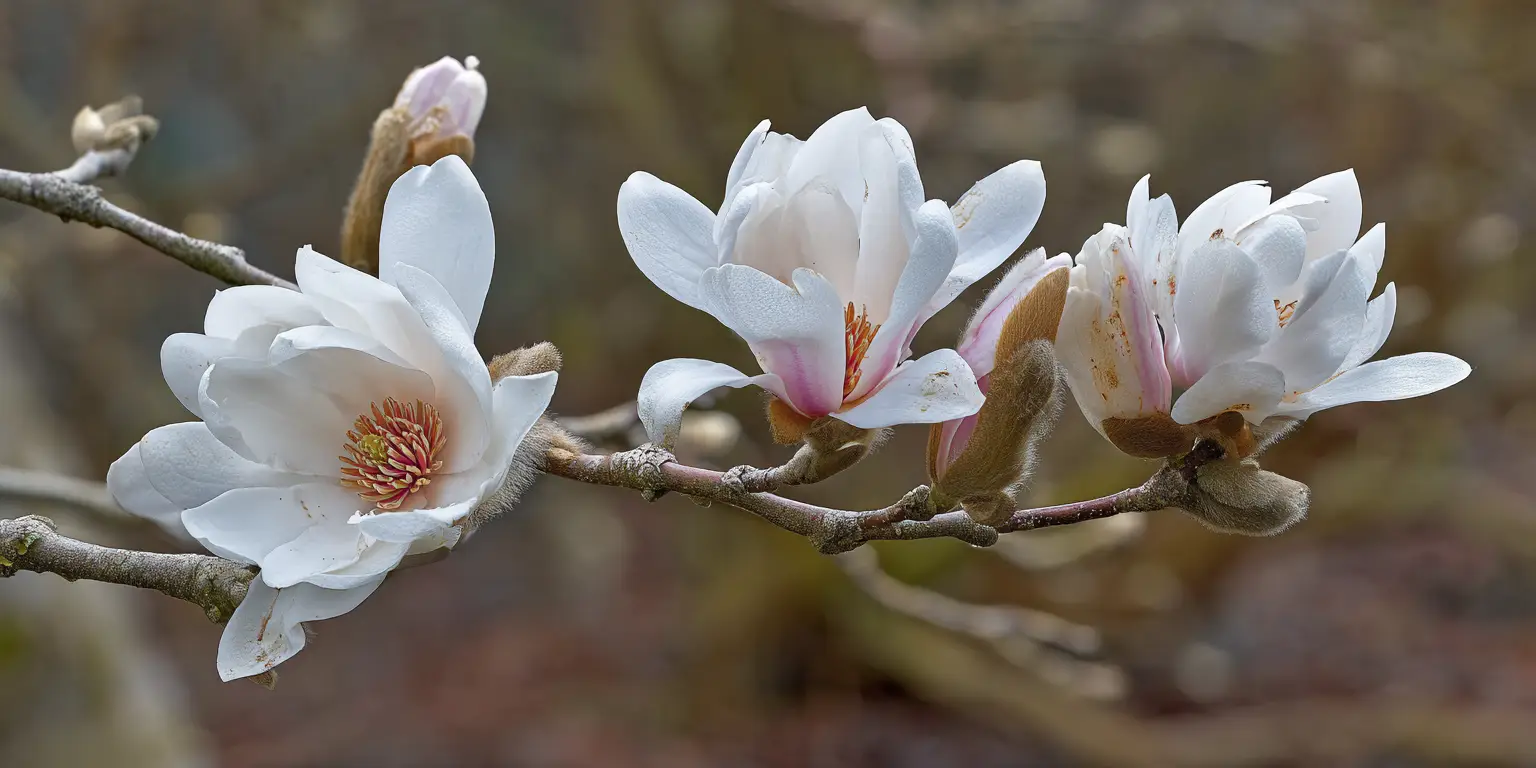
Magnolia kobus
Species (deciduous)
At‑a‑glance
- Group/Class: Species (deciduous)
- Height × spread: 25 to 30 ft × 25 to 35 ft (7.6 to 9.1 m × 7.6 to 10.7 m)
- Bloom window: March to April
- Color & flower form: White, often pink‑tinged; goblet to cup‑shaped
- Fragrance: 1 trace
- USDA hardiness: Zones 5 to 8
- Breeder / Year / Origin: unknown
- Pet safety: safe
How it differs
- Larger, more tree‑like than Magnolia stellata, though closely related.
- Among the earliest spring bloomers within the genus.
- Slow to reach peak flowering; maturity needed for best displays.
- Dense, rounded crown suitable for lawn or edge plantings.
Strengths
- Hardy and reliable once established.
- Showy early bloom before leaves.
- Attractive cone‑like fruits with red seeds for seasonal interest.
Care in one minute
Full sun to part shade; best bloom in full sun.
Moist, organically rich, well‑drained soil; avoid extremes of wet or dry.
Mulch to keep roots cool and evenly moist.
Prune minimally right after flowering; avoid heavy cuts.
Shelter from strong winds and late freezes where possible.
Watch‑outs
- Frost may damage early flowers.
- Intolerant of most urban pollutants.
- Flowers poorly when young; full effect may take decades.
Best uses (tags)
Provenance note
Native to Japan and parts of Korea; widely cultivated and sometimes considered the larger counterpart to star magnolia.
References
- Missouri Botanical Garden Plant Finder – Magnolia kobus
- Trees and Shrubs Online – Magnolia kobus
- RHS – Magnolia kobus
- ASPCA – Magnolia bush (Magnolia stellata) Non‑Toxic to Dogs & Cats
Similar Flowers
Enjoying our flower guides? Add YourFlowersGuide as a preferred source on Google. It helps more readers find us.
Add to Preferred Sources