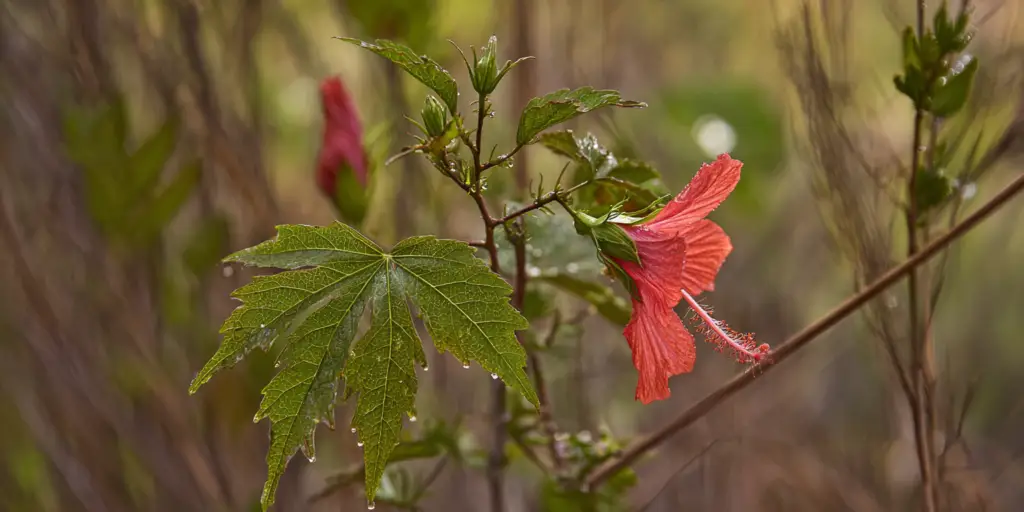
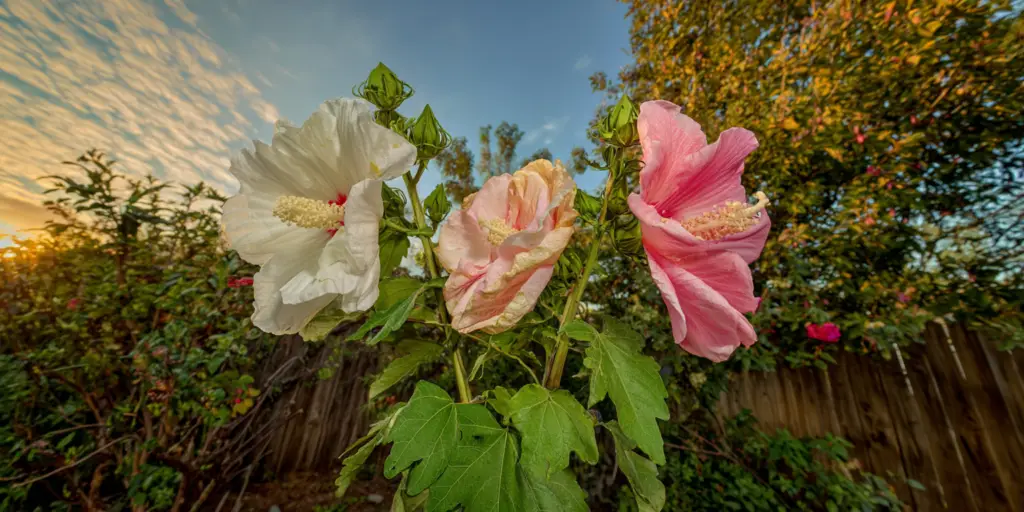
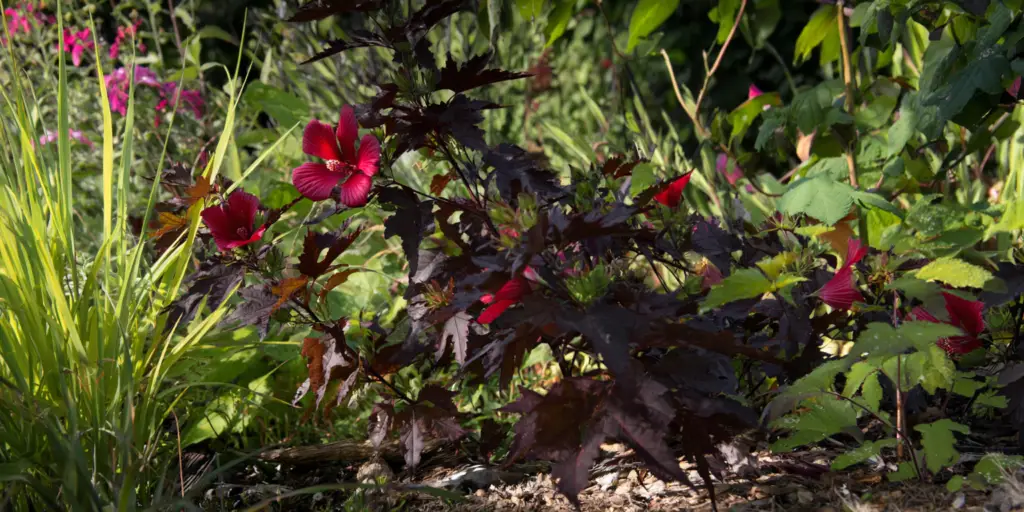
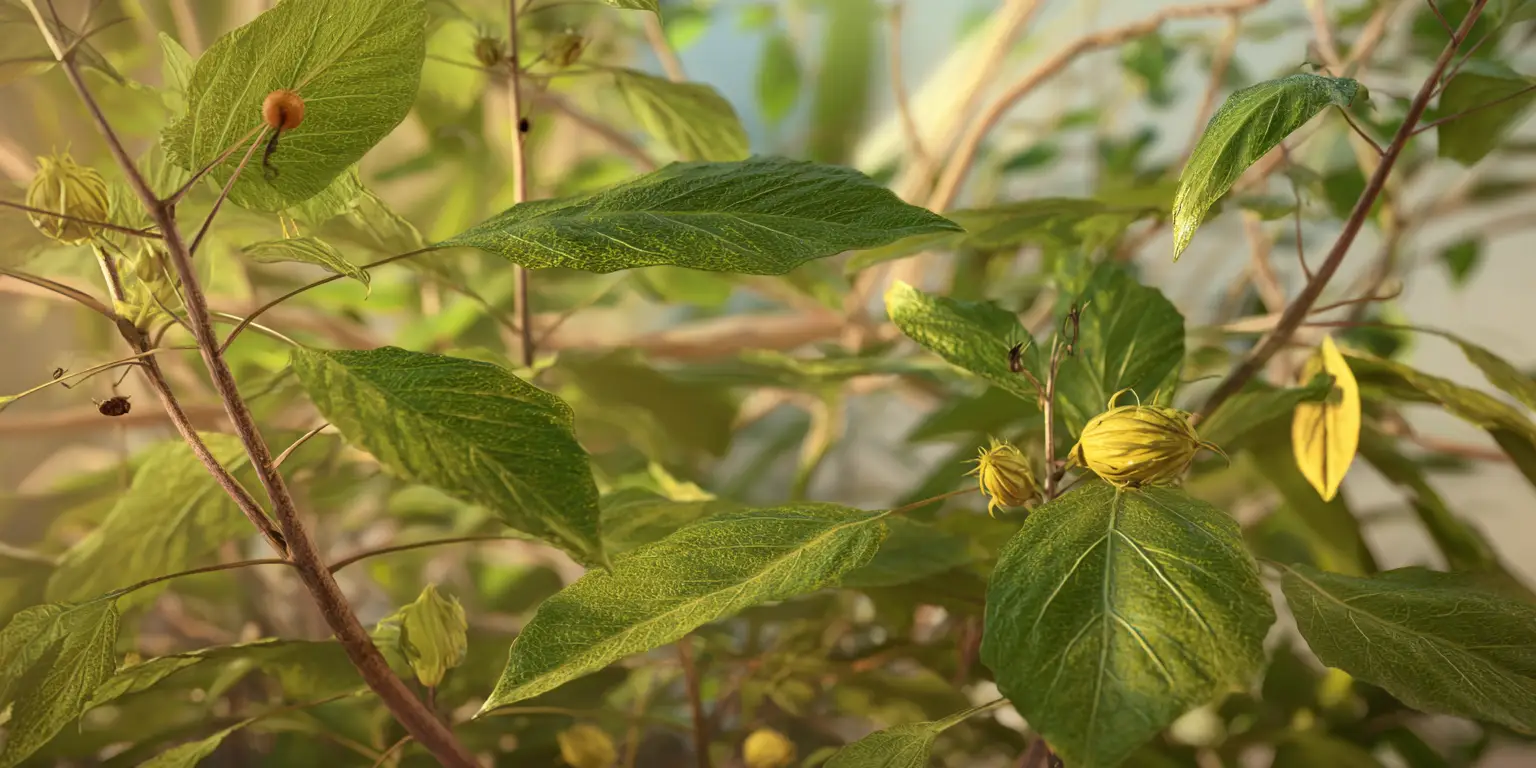
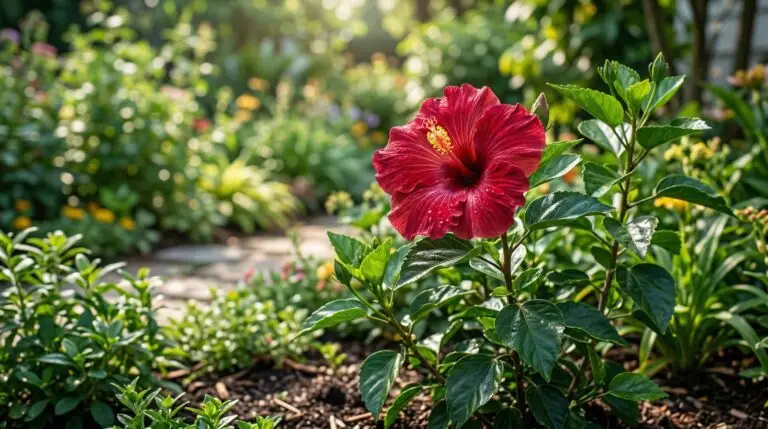
Taxonomy and origin
Hibiscus belongs to the mallow family, Malvaceae, which also holds okra, cotton, hollyhock, and cacao, the tree behind chocolate. The genus contains more than 200 species of herbs, shrubs, and small trees spread through warm temperate, subtropical, and tropical regions of Asia, Africa, the Pacific, and the Americas. The name comes from the Greek hibiskos, used by the ancient physician Dioscorides for a mallow. That botanical spread matters less to a gardener than the split between the three plants that dominate garden centers, because their origins set their cold tolerance.
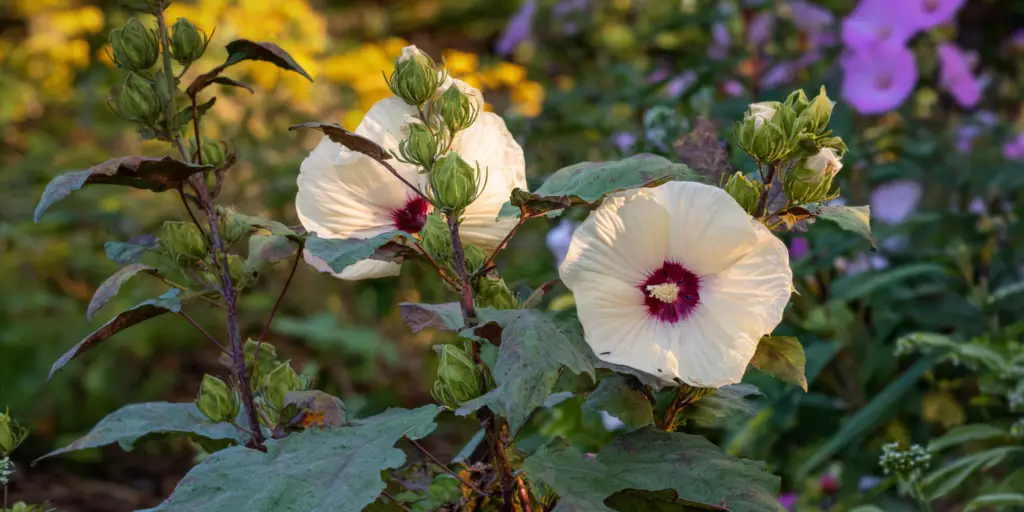
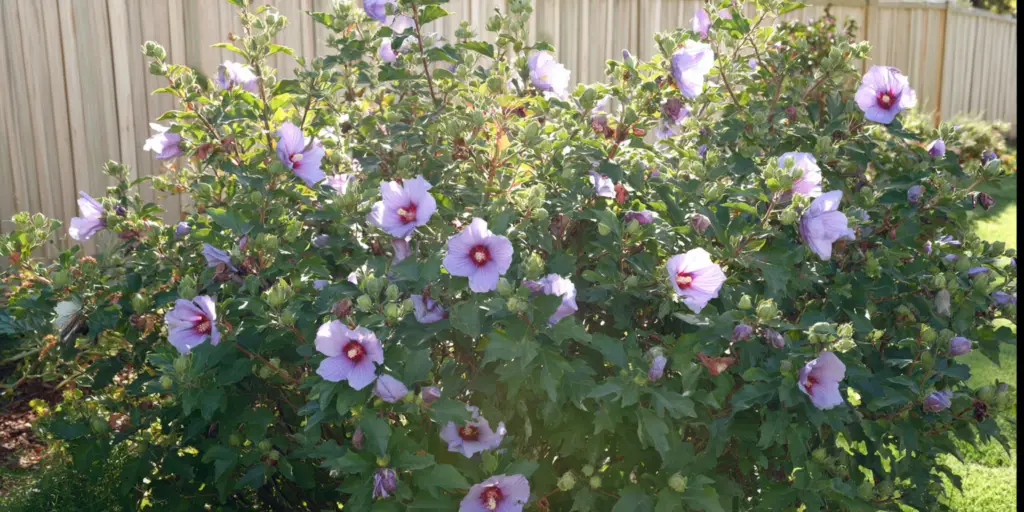
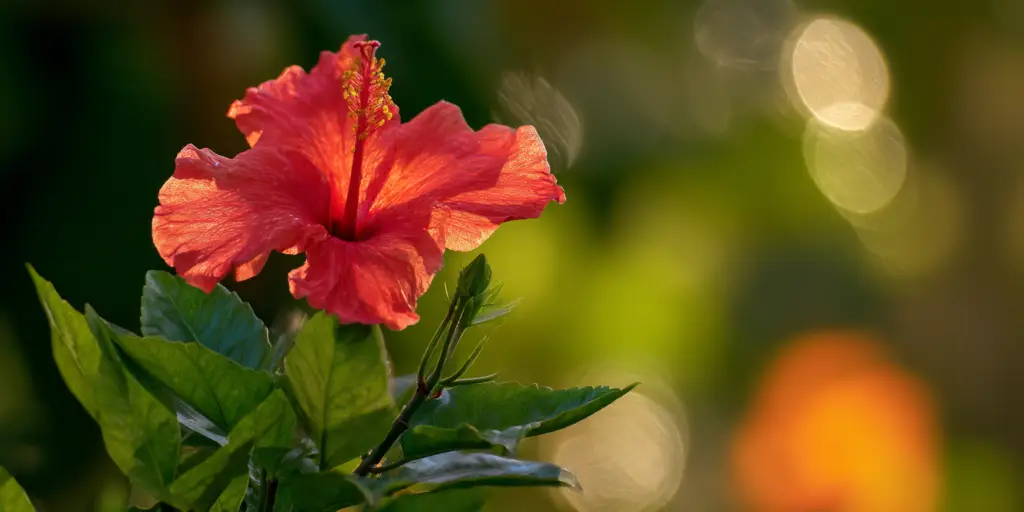
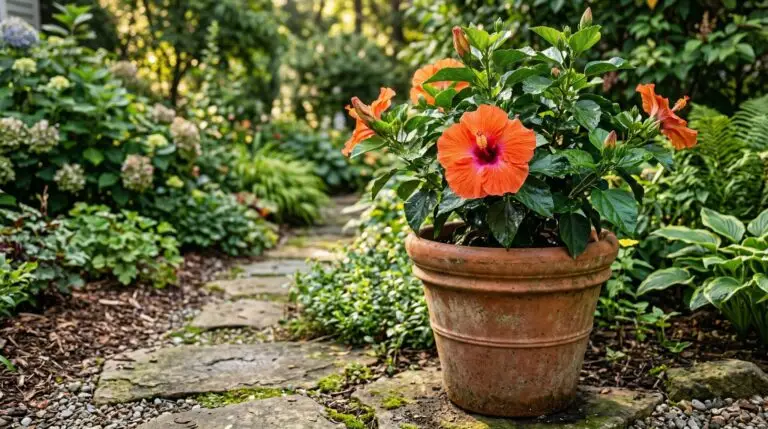
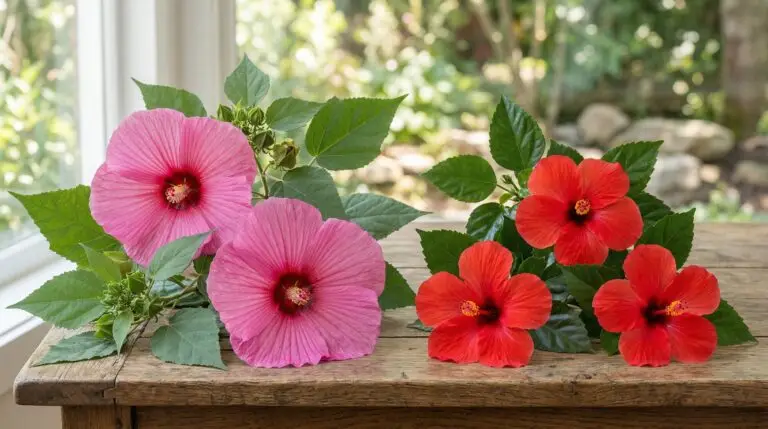
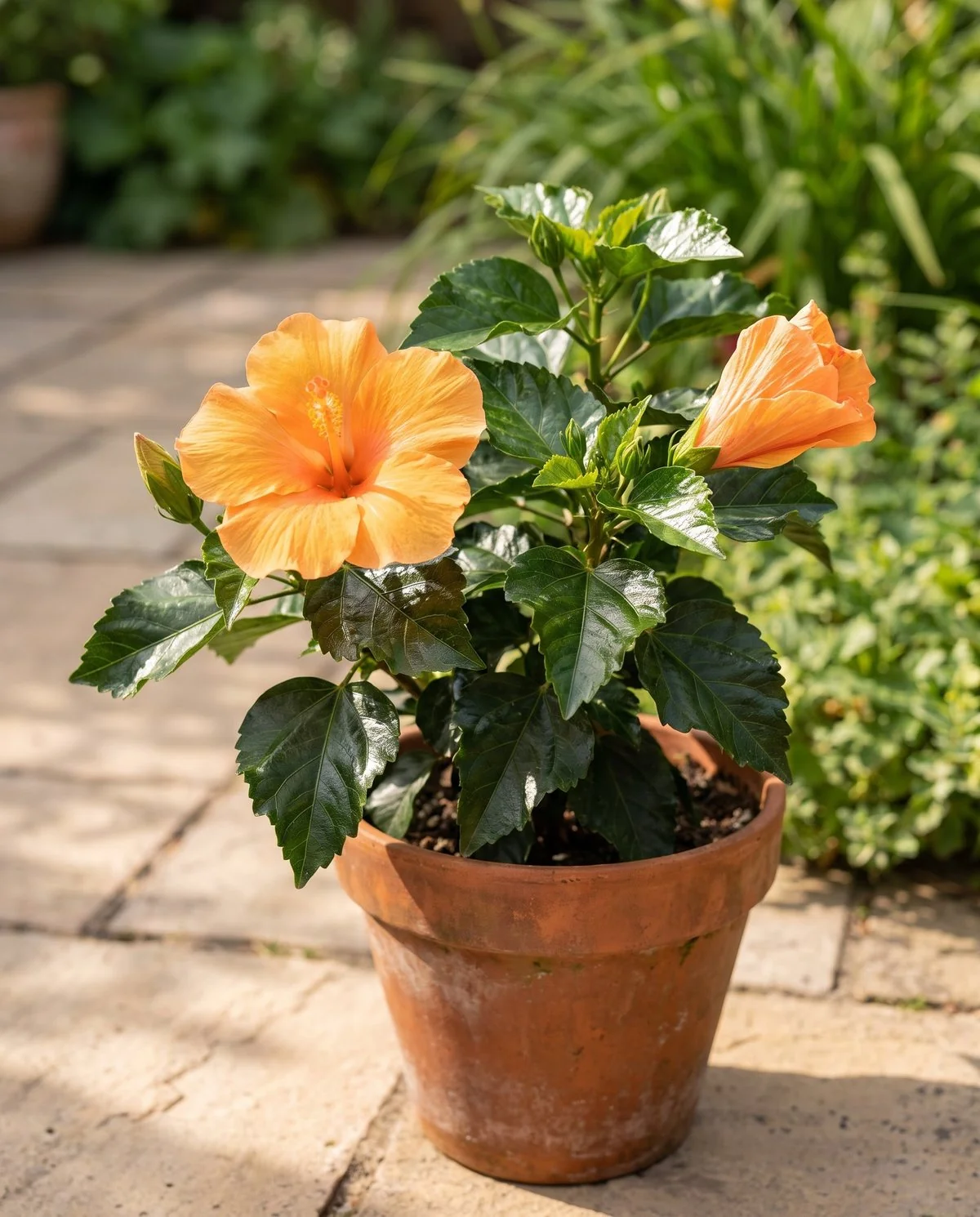
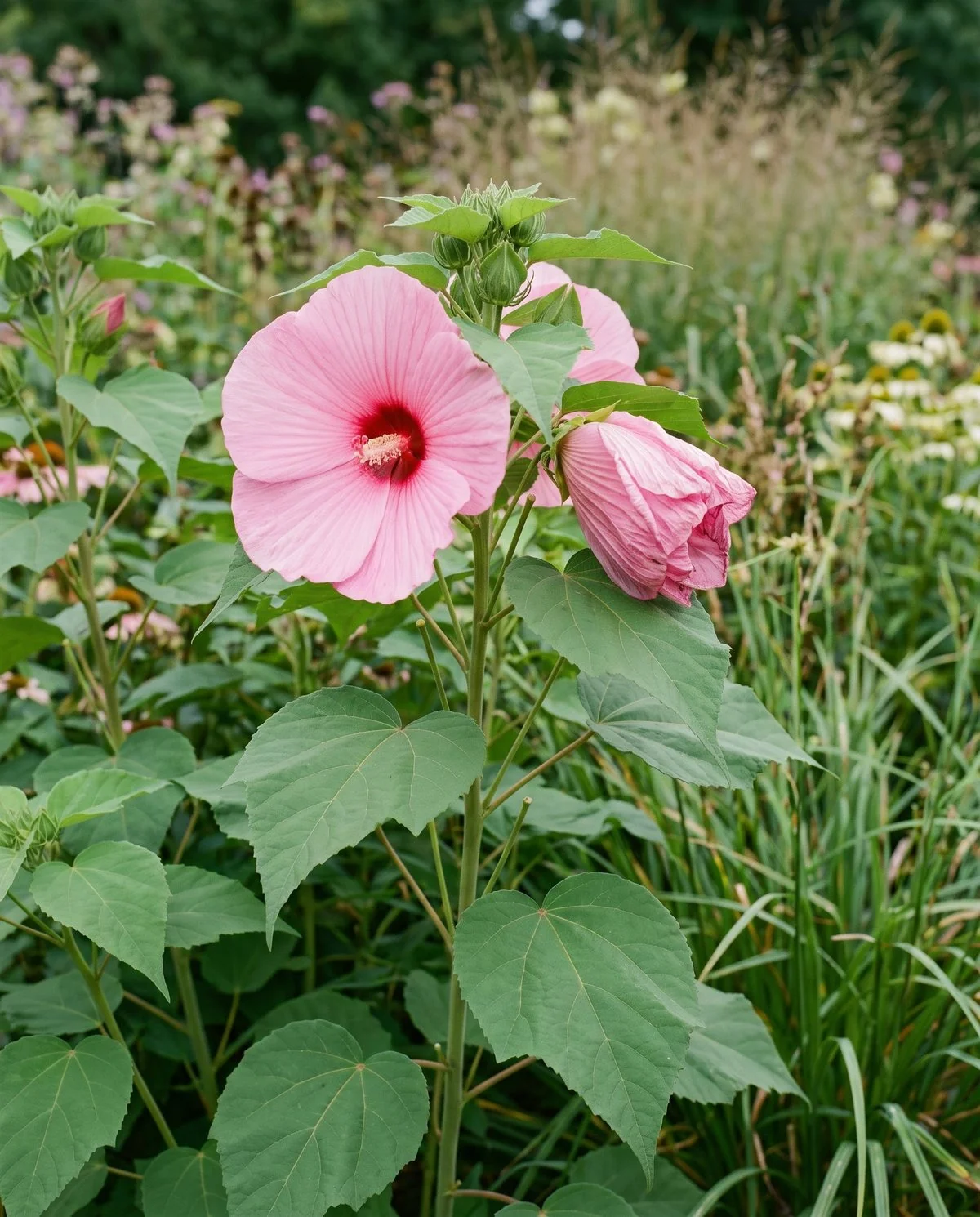
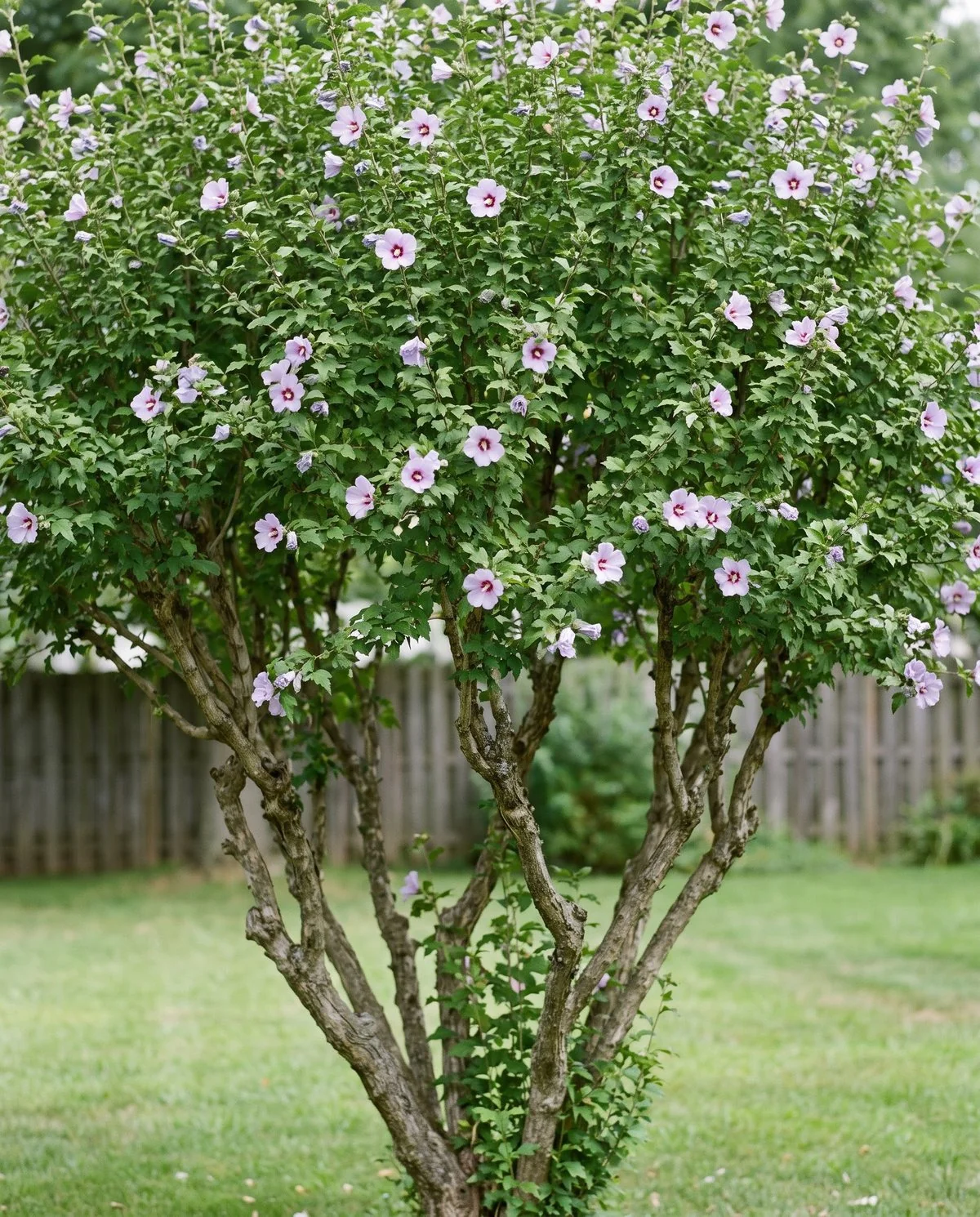
Tropical hibiscus, Hibiscus rosa-sinensis, comes from Asia and grows outdoors only where winters stay mild, so most gardeners keep it in a container. Hardy herbaceous hibiscus, usually Hibiscus moscheutos and its hybrids, is native to the wetlands and river edges of southern and eastern North America, which is why it takes heavy watering and shrugs off wet ground. Rose of Sharon, Hibiscus syriacus, is a woody shrub from East Asia that handles real winters and loses its leaves each fall. Reading the label for the botanical name is the fastest way to know which plant is in front of you, and the table below sorts them by the one thing that decides their care.
Three different plants, one name on the tag
Clemson, UMN Extension, NC State's plant toolbox and Missouri Botanical Garden all publish these three separately, and the differences are not cosmetic: they decide whether the plant winters in a pot indoors, dies to the ground and returns, or keeps a woody frame through the cold. Every figure below is attributed to the source that published it for that species.
Clemson names the Luna, Honeymoon and Disco Belle series plus the Summerific cultivar 'Perfect Storm' for hardy hibiscus specifically. For rose of Sharon, low-seed or largely sterile cultivars are widely advertised by retailers as the answer to the self-seeding problem, and that sits at commercial tier here rather than traced to a breeding programme, though ten named cultivars including 'Diana' do hold a Royal Horticultural Society Award of Garden Merit with no published breeding history attached to the listing. One more hibiscus belongs in the reader's head without belonging to this page: Hibiscus sabdariffa, roselle, grown for its fleshy calyx rather than its flower, is a fourth plant again.
Bloom time
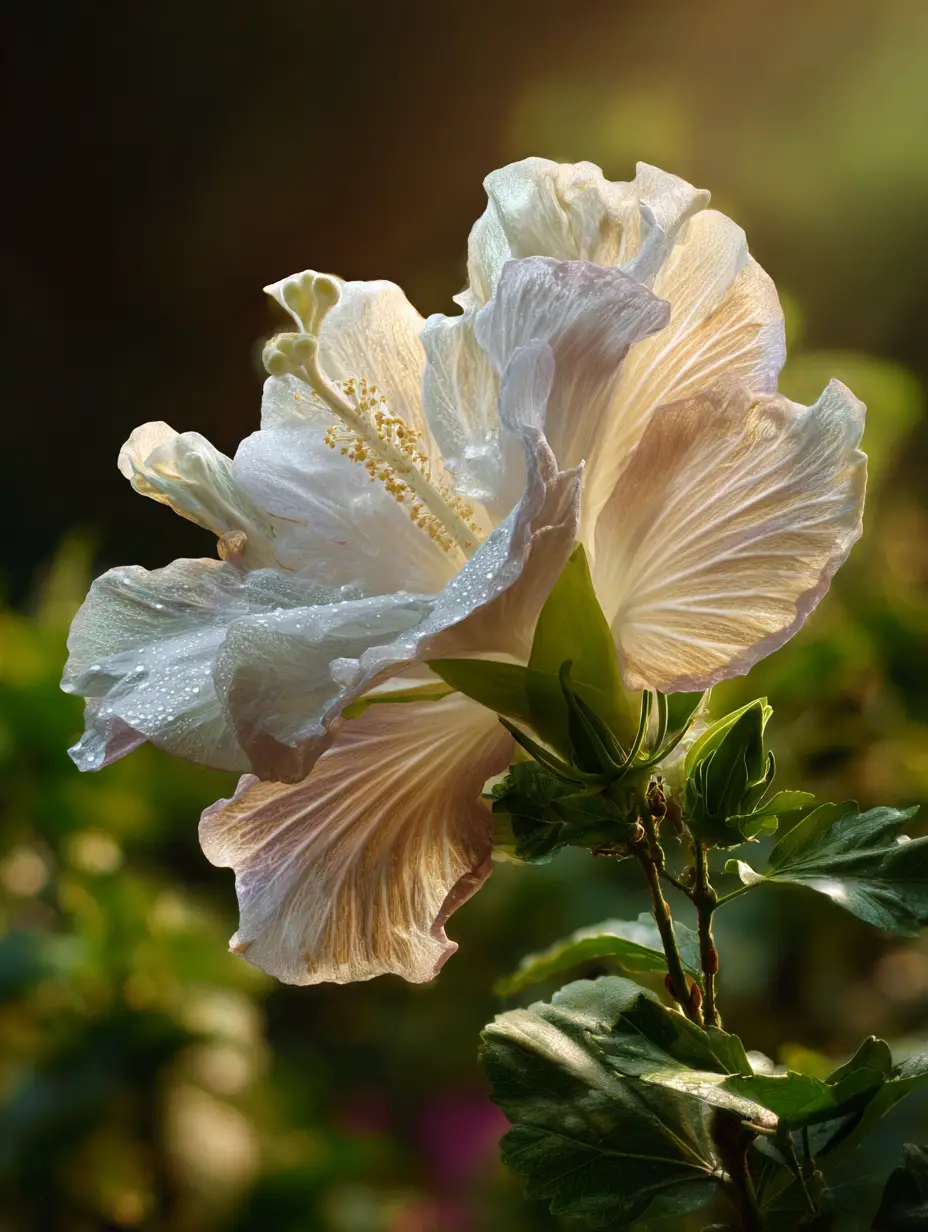
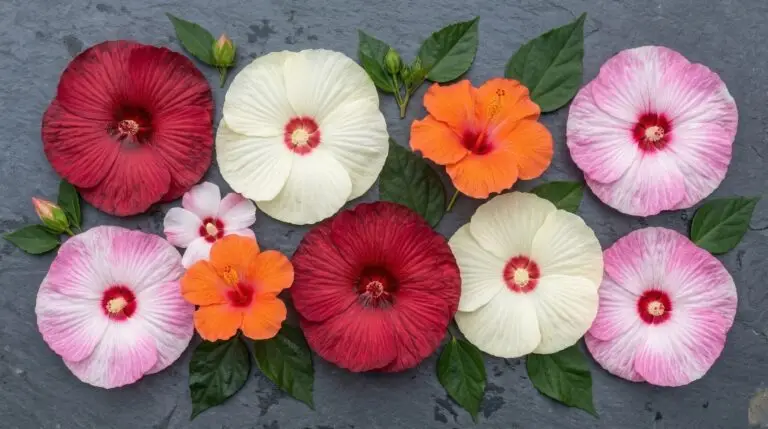
Hibiscus flowers for a long stretch of the warm season, and the exact window follows the type. Tropical hibiscus blooms nearly year-round in a frost-free climate; where a real winter arrives, it starts in late spring or early summer and runs until the weather cools, opening new flowers almost daily at its peak. Hardy herbaceous hibiscus is a summer plant, flowering from roughly July into September and carrying the largest blooms of the three, the dinner-plate flowers that can reach twelve inches across. Rose of Sharon starts in midsummer and often holds on into early fall, blooming on the current season's growth so that a mature shrub can carry dozens of flowers at once late in the season.
Whatever the type, the flowers are short-lived once open. Many unfurl in the morning and close or fall by evening, and a single bloom rarely lasts beyond a day. The plant makes up for it with a steady supply of buds, so deadheading is optional and does more for tidiness than for bloom count. Buds that yellow and fall before they ever open are a different matter, and the causes are sorted out under pests and diseases below.
- Tropical hibiscus (often called Chinese hibiscus) can bloom much of the year in truly tropical climates. Where there is a real winter, flowering usually starts in late spring or early summer and continues until temperatures cool. During peak growth, a healthy plant may open new flowers daily, and each bloom typically lasts one day.
- Hardy perennial hibiscus (including Hibiscus moscheutos hybrids) blooms in summer. In many areas, flowers begin in mid to late summer and continue into early fall. Individual blooms are short-lived, but the plant keeps opening new buds for several weeks.
- Rose of Sharon (Hibiscus syriacus) starts flowering in mid-summer and often continues into early fall. The flowers can stay open a little longer than tropical hibiscus, and the shrub blooms on new growth, so it can carry a lot of flowers at once later in summer.
The two panics this plant produces, worked in order
Both paths start with identification and with conditions rather than with a pest, because for hibiscus the species and the thermometer settle most of it before any diagnosis is needed.
Height and spread
Size tracks the type more than any other factor. Tropical hibiscus in a garden or container usually reaches 3 to 6 feet tall and 2 to 4 feet wide, larger in a frost-free climate, and it can be trained into a small standard by stripping the lower shoots. Hardy herbaceous hibiscus dies back each winter and regrows from the crown, reaching 3 to 8 feet by midsummer depending on the cultivar, with a spread of 3 to 4 feet, and its dense foliage makes a solid backdrop for the flowers. Rose of Sharon is the largest of the three in temperate gardens, commonly 8 to 12 feet tall and 6 to 10 feet wide, with dwarf cultivars that stay far smaller.
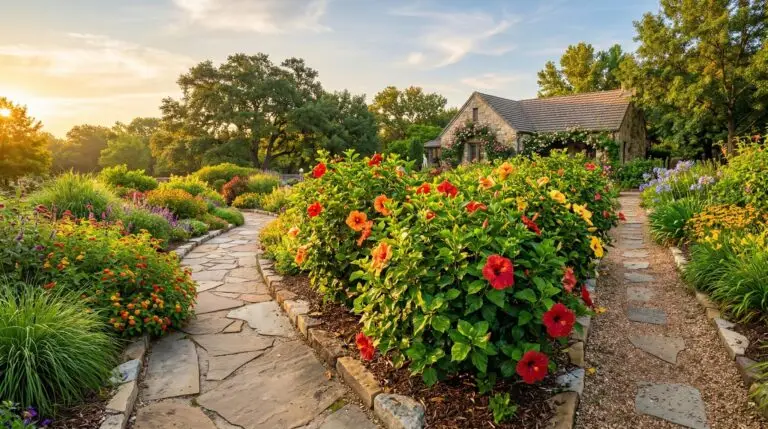
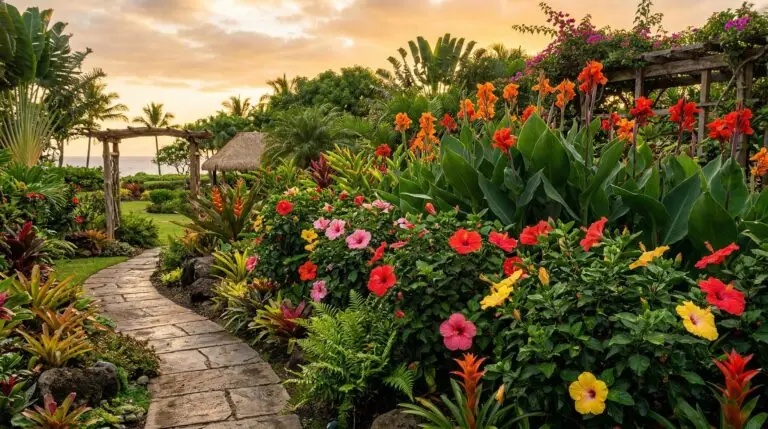
Give each plant room to reach its mature size, because crowding cuts the airflow that keeps foliage dry and disease-free. Tall hardy hibiscus belongs near the back of a border, where its late-summer bulk fills a gap other perennials have left, while a potted tropical can be moved to wherever the season needs color. The bold, upright flowers sit well against other heat-loving plants with strong shapes, such as canna lily and other broad-leaved tropicals that build a resort look in a sunny bed, and a plant confined to a pot stays smaller because its roots are restricted.
- Tropical hibiscus grown in gardens or containers usually reaches 3 to 6 feet tall (0.9 to 1.8 m) and 2 to 4 feet wide (0.6 to 1.2 m). In warm climates and with little pruning, some can grow larger. In pots, regular pruning often keeps them in the 3 to 6 foot range. They branch naturally and can also be trained into a small tree form by removing lower shoots.
- Hardy herbaceous hibiscus (perennial hibiscus such as H. moscheutos) dies back each winter and regrows from the crown in spring. Depending on the cultivar, a clump can reach 3 to 8 feet tall (0.9 to 2.4 m) by mid-summer, with a spread around 3 to 4 feet (about 1 m or more). The foliage is dense enough to act as a backdrop for the flowers.
- Rose of Sharon is often the largest hibiscus seen in temperate gardens. Mature shrubs commonly reach 8 to 12 feet tall (2.4 to 3.6 m) and 6 to 10 feet wide (1.8 to 3 m). Dwarf cultivars stay smaller, and pruning can manage size and shape.
Light
Hibiscus blooms best in full sun, meaning at least 6 hours of direct light a day, and most types flower harder with 8 hours or more. When light runs low, growth slows and the plant sets fewer buds. In the ground, choose a spot with sun from morning through early afternoon; in a climate with fierce afternoon heat, a little late-day shade eases stress without costing many flowers.
A potted tropical hibiscus wants the sunniest patio you have through summer, and the brightest window you have through winter, ideally facing south. Weak indoor light is the usual reason an overwintering plant pauses its flowering or sheds leaves, so the goal indoors is to lose as little light as possible. Hibiscus tolerates partial shade but pays for it in bloom, staying green and leaning toward the brightest direction. If a plant flowers poorly, rule out light first by moving the pot or pruning back whatever is casting shade over it.
- In the ground, choose a spot with morning through early afternoon sun. In very hot climates, a bit of late-day shade can help prevent stress, but more sun usually means more flowers. Hardy hibiscus and Rose of Sharon do well in full sun as long as the soil does not dry out.
- For container plants, set tropical hibiscus on a sunny patio outdoors. Indoors for winter, give it the brightest window you have, ideally a south-facing one. If light is weak, indoor plants may drop leaves or pause flowering.
- Hibiscus can grow in partial shade, but flowering usually decreases. In dappled light or half-day sun, the plant often stays leafy and may lean toward the brightest direction. Partial shade can help in places with intense afternoon sun and very dry air.
Water
Hibiscus wants steady moisture backed by sharp drainage, a pairing that sounds contradictory until you remember that many species grow wild along riverbanks and marsh edges. Water deeply enough to wet the whole root zone, then let the top inch of soil dry before watering again. In summer heat a potted tropical may need water every day or two and will wilt fast if the pot dries out, while an in-ground plant usually wants a deep soak once or twice a week, adjusted for rain and soil. Hardy rose mallow is the thirstiest of the three and tolerates ground that stays damp.
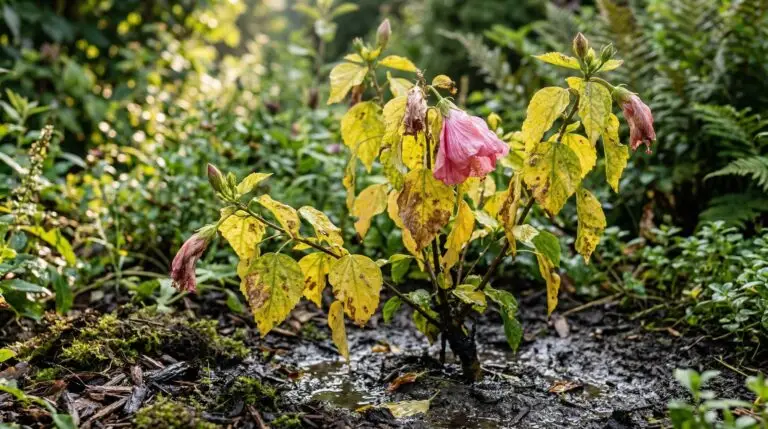
Both extremes of watering show up first in the buds and leaves, which is why watering is the place most bud-drop and yellow-leaf problems begin. When the soil runs too dry, buds and leaves droop and buds fall before they open; when it stays soggy, the roots suffocate, and the leaves yellow and drop while the soil is still wet. The two look alike from across the yard, so check the soil with a finger before deciding which is happening, and match the watering to the weather rather than to a fixed schedule, since a plant uses far less water in cool, cloudy spells. A 2 to 3 inch mulch over the root zone of an in-ground plant slows evaporation and steadies soil temperature, and a well-draining potting mix with open drainage holes does the same job in a container.
- Water deeply so moisture reaches the root zone, then let the top inch of soil dry slightly before watering again. In hot summer weather, potted plants may need water every day or two, while in-ground plants may need supplemental watering once or twice a week, depending on rain and soil type. Tropical hibiscus wilts quickly if a pot dries out.
- When a hibiscus gets too dry, leaves and buds may droop and buds can drop before opening. In summer, check containers often. A layer of mulch around in-ground plants helps slow evaporation and keeps roots cooler.
- Hibiscus does not like sitting in soggy soil. Poor drainage can lead to root rot. Use a well-draining potting mix for containers, and avoid planting in heavy clay that stays wet. Improving the soil with organic matter or using a raised bed can help where drainage is slow. After watering, excess water should drain away rather than pooling around the roots.
- Too much water can look similar to too little. Yellowing leaves and leaf drop, especially when the soil stays wet, can point to waterlogged roots. In cooler or cloudy weather, hibiscus uses less water, so adjust watering rather than following a fixed schedule.
Four beliefs about hibiscus, checked against the record
The first one was checked at the level of the database record rather than the summary, because this site has published the wrong answer to it before.
The myth: Rose of Sharon is toxic to dogs and cats
The reality: The ASPCA's own public record says otherwise, and the detail behind it is worth stating exactly. Its toxic-and-non-toxic-plants entries at the slugs for hibiscus, rose of china and rose of sharon are the same single database record: the identical scientific name, Hibiscus syriacus, the identical family, Malvaceae, and the identical classification, non-toxic to dogs, non-toxic to cats, non-toxic to horses, with the other two common names appearing only as additional common names on each page. NC State's own Extension Gardener Plant Toolbox independently lists the same non-toxic classification for Hibiscus syriacus. What does not exist is a botanically separate ASPCA record for tropical Hibiscus rosa-sinensis or for hardy Hibiscus moscheutos: direct attempts at a distinct tropical entry returned 404, so a reader who searches the ASPCA for a houseplant hibiscus finds only the rose-of-Sharon record, common-named as plain hibiscus. Secondary pet-safety sites extend the non-toxic call to the other two species by genus-level inference, which is not the same thing as a separate primary listing, and this page does not treat it as one.
The myth: My hardy hibiscus is dead, because nothing has come up by now
The reality: Test it rather than conclude it, because the test takes five seconds and the conclusion is usually wrong. Scratch a stem or the crown at soil level: green underneath means the plant is alive no matter how bare the ground looks. How common the mistake is was measured rather than assumed here. Across a 1,000-post forum sample, the no-bloom-or-is-it-dead theme accounts for only 1.0 percent, but a dedicated pass over the same corpus found 43 posts naming hardy hibiscus, rose mallow, dinner-plate or moscheutos explicitly, and hand-reading all 43 found three or four clear cases of exactly this panic, roughly 7 to 9 percent of hardy-specific traffic. One of them was still watching an empty patch in mid-July with genuine uncertainty. The honest limit: no sourced threshold separates still normal from actually dead, so no date is offered in place of the scratch test.
The myth: The flower you are looking at today was there yesterday, or will be tomorrow
The reality: One day, and three independent university sources say so about three different plants. UMN Extension on tropical hibiscus: short-lived, typically blooming for only one day, and once finished blooming, the flower will close up and drop off. NC State's own Hibiscus syriacus species page states that rose-of-Sharon flowers last one day each. Missouri Botanical Garden gives the same one-to-two-day pattern for hardy Hibiscus moscheutos, and adds the reason a healthy plant still reads as continuously flowering: new flowers open each day in rapid succession across the whole bloom period. Three species pages, three institutions, one fact, which is unusual enough to be worth naming as such.
The myth: The long-term worry with a rose of Sharon is whether the shrub will make it
The reality: The long-term work is the opposite: containing it. Rose of Sharon self-seeds, NC State's own listing calls it weedy and aggressive in some contexts, and the Invasive Plant Atlas of the United States names it invasive in Georgia, Kentucky, Virginia at Arlington County and the City of Alexandria, West Virginia, and at Tennessee's Stones River National Battlefield. Once established, its visible woody structure persists year-round and survival stops being the question, so an owner's real task shifts to the seedlings. Low-seed and largely sterile cultivars are advertised as the fix and that claim sits at retailer tier in this pack, not traced to a breeding programme or a trial.
Soil and pH
Hibiscus grows best in rich, well-draining soil worked with compost, leaf mold, or aged manure, which feeds the plant and lets sandy soil hold water and heavy clay loosen up. The target pH is slightly acidic to neutral, roughly 6.0 to 7.0. In strongly alkaline soil, iron and other nutrients lock up and the leaves yellow between green veins, a pattern that separates this kind of chlorosis from a watering problem; the simplest fix in high-pH ground is to grow the plant in a large container of fresh mix rather than fight the native soil.
Hibiscus is a heavy feeder compared with most shrubs, and a hungry plant blooms poorly, so a steady supply of nutrients through the growing season pays off in flowers. Tropical hibiscus carries one quirk worth knowing: it is sensitive to phosphorus, so a fertilizer whose middle number in the analysis is the lowest, with more nitrogen and potassium than phosphorus, suits it better than a high-bloom formula pitched at other flowers. Feed lightly and often during active growth rather than dumping one heavy dose, and ease off as growth slows in fall or when a plant moves indoors for winter. Firm green leaves and a steady run of buds are the signs the soil and feeding are right.
- Loamy, fertile soil works well, the kind that holds some moisture but still drains. Before planting, mix in compost, leaf mold, or well-rotted manure to improve structure. Organic matter helps sandy soil hold water and helps clay soil loosen up. For pots, use a quality potting mix that holds moisture without staying soggy.
- Drainage matters. Hibiscus will not tolerate standing water around the roots for long. In pots, make sure there are drainage holes and do not leave water sitting in a saucer.
- Most hibiscus prefers slightly acidic soil, roughly pH 6.0 to 7.0. In very alkaline soil, iron and other nutrients can become harder for the plant to use, which can cause yellow leaves with green veins. If your soil runs alkaline, growing hibiscus in a large container with fresh potting mix is often the simplest fix. Otherwise, choose an acidifying soil amendment labeled for garden use and follow the product directions.
- Hibiscus is a heavy feeder compared with many shrubs, so starting with nutrient-rich soil helps. Avoid extremes: very poor soil can stunt growth, while compacted or constantly wet soil can damage roots.
USDA hardiness
Cold tolerance is the whole reason it matters which hibiscus you own. Tropical hibiscus is hardy only in USDA zones 9 to 11 and cannot take frost; prolonged cold near 40 degrees Fahrenheit damages it and a hard freeze kills it, so anywhere colder it is grown in a pot and sheltered. Hardy herbaceous hibiscus is root-hardy through roughly zones 4 to 9, dying to the ground after frost and regrowing from the crown. Rose of Sharon is a woody shrub hardy in about zones 5 to 9, losing its leaves in winter and occasionally suffering some tip dieback in a brutal one before recovering.
The winter job for a tropical hibiscus is to move it indoors before nights drop toward 40 degrees Fahrenheit. A tropical brought inside almost always yellows and sheds a flush of leaves within a week or two, and that leaf drop alarms people into thinking the plant is dying or diseased when it is only reacting to the sharp fall in light and humidity. Set it in the brightest window you have, water less than you did outdoors, watch for spider mites in the dry indoor air, and leave it be; it holds through winter and pushes new growth as days lengthen. Move it back outside gradually in spring so the leaves harden to full sun instead of scorching.
The reverse worry belongs to hardy herbaceous hibiscus, which is one of the last perennials to wake. Its shoots may not break the ground until late May or even June, long after everything around it has leafed out, and every year gardeners give up a plant that is simply dormant and thriving underground. Mark the crown so you do not dig into it or overplant it, cut the old dead stems to the ground in late fall or before the new shoots rise, and give it time once the soil warms; once it starts, it grows fast.
- Tropical hibiscus (Hibiscus rosa-sinensis) is winter-hardy in USDA Zones 9 to 11. In those areas it can grow outdoors year-round. In places that get frost, it is usually grown in a container and brought inside before freezing weather. Prolonged temperatures around 40 °F (4 °C) can cause damage, and freezing temperatures can kill the plant.
- Hardy perennial hibiscus includes species and hybrids such as Hibiscus moscheutos and H. militaris. Many are root-hardy in Zones 4 to 9, depending on cultivar. They die back after frost and regrow from the roots in late spring. In colder zones, a layer of mulch after the ground freezes can help protect the crown. These plants can emerge late in spring, sometimes not until May or June in cool climates.
- Rose of Sharon (Hibiscus syriacus) is a woody, deciduous shrub typically hardy in Zones 5 to 9. It loses its leaves in winter, then leafs out and flowers on new growth. In very cold winters, branch tips can die back, but the shrub usually recovers.
One calendar per plant, because they do not share a winter
Every row below is split three ways, and where a service published nothing for one of the three, the cell is left empty rather than filled by analogy from its neighbour.
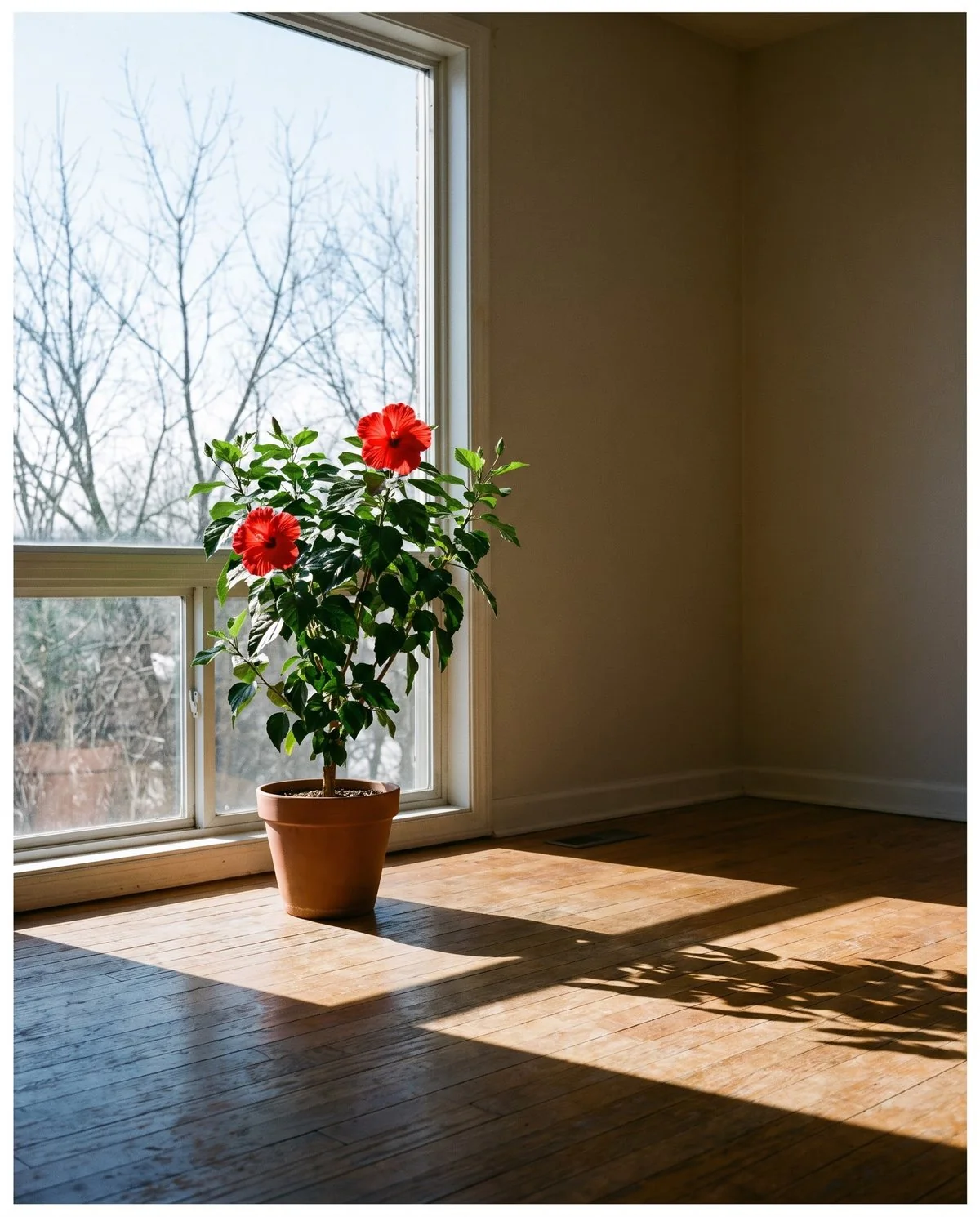
Propagation and longevity
How you make more hibiscus depends on the type. Tropical hibiscus and named cultivars are copied from cuttings: take a short, healthy stem tip, strip the lower leaves, and set it in a moist, well-draining rooting mix kept warm and humid until roots form, using rooting hormone if you like. Seed is the route for hardy hibiscus and Rose of Sharon, both of which set pods freely; sow it indoors in late winter or outdoors after the last frost, remembering that seedlings from hybrids will not match the parent. Herbaceous perennial hibiscus can be divided in early spring as the shoots appear, lifting the clump and splitting it into rooted sections, while woody Rose of Sharon is not divided. Rose of Sharon also self-sows so freely that its seedlings can become a chore to pull.
Pruning follows the same three-way logic, and cutting at the wrong time is a common way to lose a season of flowers. Tropical hibiscus takes light shaping any time and a harder cut in late winter or early spring before growth resumes. Rose of Sharon is pruned in late winter or very early spring because it blooms on new wood, so a spring trim only encourages more flowers. Hardy herbaceous hibiscus is cut to the ground, either in late fall after it dies back or in early spring before the late shoots rise. Given the right handling, all three are long-lived: a potted tropical can run for many years with occasional repotting, a hardy clump returns for a decade or more from the same roots, and a Rose of Sharon can live 20 years or longer, like many deciduous shrubs.
- Cuttings are a common way to copy tropical hibiscus and named cultivars. Take a short, healthy stem tip, remove the lower leaves, and place it in a moist, well-draining rooting mix. Warmth and humidity help. Some gardeners use rooting hormone, but it is optional. Once roots form, pot the new plant up and grow it on like any young hibiscus.
- Many hibiscus also produces seed pods. Rose of Sharon and hardy perennial hibiscus often set seed easily. You can collect ripe seed, start it indoors in late winter, or sow outdoors after the last frost. Seedlings from hybrids may not match the parent plant, but they can still make good garden plants.
- Herbaceous perennial hibiscus can sometimes be divided. Do this in early spring as new shoots start, or while the plant is still dormant. Lift the clump, divide it into sections with buds and roots, and replant right away. Woody shrubs like Rose of Sharon are not divided.
- Layering and grafting are possible but less common for home gardeners. Some nurseries graft certain hibiscus cultivars onto sturdy rootstocks.
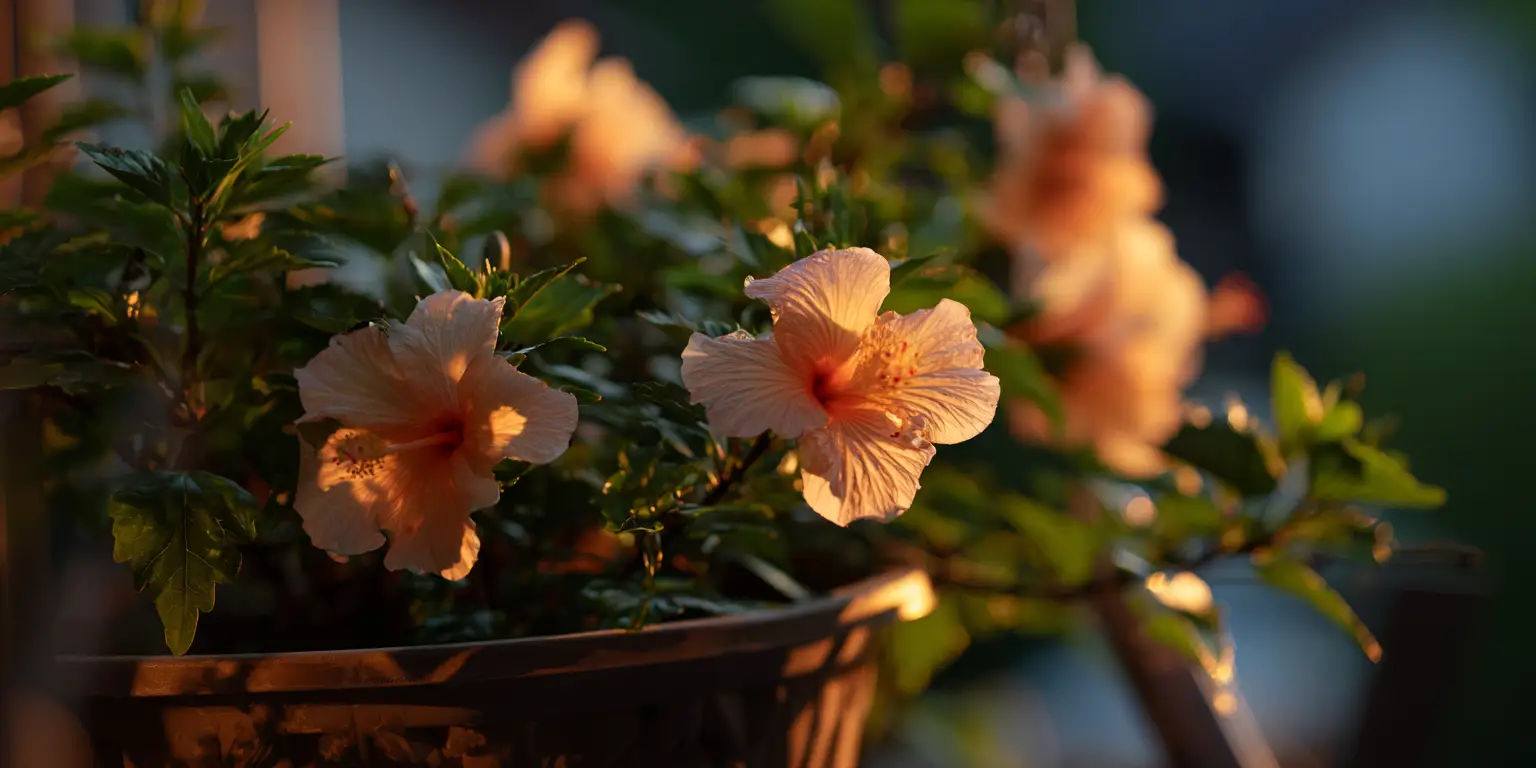
Year one for each of the three, and what nobody has measured
Bought as an already-mature nursery plant, which is how most owners acquire one, a tropical hibiscus gives near-continuous single-day bloom cycling through its first warm season provided the 65 to 75 degrees Fahrenheit bud-development window UMN names is actually met. Grown from a cutting instead, and UMN describes that route directly, 3 to 5 in cuttings with rooting hormone and 3 to 5 weeks to a usable root system, first bloom is realistically a season or more away. A hardy hibiscus planted as an established perennial flowers in its own very late July-to-September window in year one, which arrives after the spring nobody warned the owner about. From seed, which real gardeners in this pack's corpus do, collecting their own pods, first-year bloom is not guaranteed and no sourced figure for the seed-to-first-bloom timeline was found, so none is estimated here. A rose of Sharon spends its first few years building the permanent woody framework it will keep, and reaches its full 8 to 12 ft over a number of years the sourced material does not pin down; what is sourced is that after establishment the did-it-survive question retires, because the structure stays visible year-round. At the far end, the honest answer for two of the three is that nobody has published a decline curve. Tropical hibiscus has no natural decline in the sourced material at all, its life as a houseplant set by the quality of its winter care, temperature, light and pest control, rather than by an inherent ceiling. Hardy hibiscus showed no decline-curve data either, and no extension source in this pack named a blooms-well-for-only-so-many-years limit for Hibiscus moscheutos, which is recorded as a genuine not-found rather than filled in from another flower's pattern. Rose of Sharon's long-term trajectory runs the other way entirely: left unmanaged, the work is controlling what it seeds rather than worrying about the original plant.
Fragrance
Hibiscus is grown for its flowers and foliage, not its scent, and most types carry little to no fragrance at all. A few have a faint one, most notably the white Hawaiian species Hibiscus arnottianus, which can smell lightly sweet early in the day, but even those are mild and easy to miss. Anyone shopping for perfume in the garden should treat hibiscus as a purely visual plant and set fragrant companions such as jasmine, gardenia, or a scented herb nearby to supply the smell while the hibiscus supplies the color. The one aromatic detail is not in the flower but in the tissue: the leaves and stems hold a slippery sap common to the mallow family, noticeable only when you cut or prune the plant.
Toxicity and pet safety
Hibiscus is a safe choice for a home with animals. The ASPCA lists hibiscus, including Rose of Sharon, as non-toxic to dogs, cats, and horses, so a pet that mouths a petal or leaf is not at risk of poisoning. The only ordinary caveat is that eating a large amount of any plant can upset a stomach, so a dog that strips a whole shrub might drool or vomit briefly, but that is a volume problem, not a poison. Unlike a rose, hibiscus carries no thorns to worry about. For a fuller picture of which blooms are and are not safe around animals, the guide to flowers safe for cats and dogs sets hibiscus in context with its neighbors.
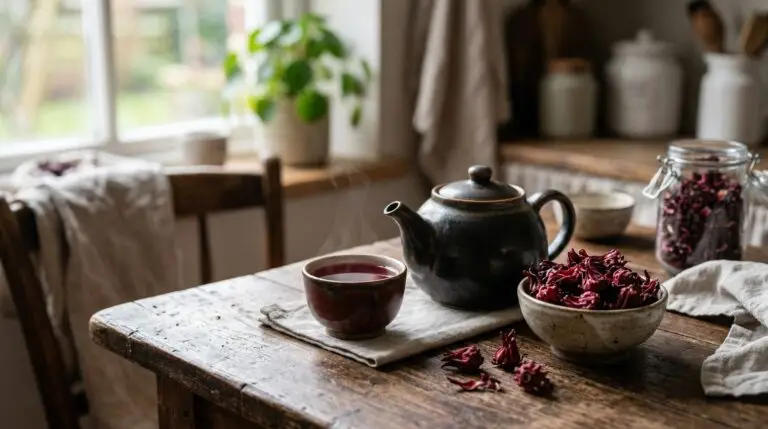
The plant's safety extends to people, and one species crosses into the kitchen. Roselle, Hibiscus sabdariffa, is grown for the fleshy red calyces that dry into the tart, ruby-colored pieces brewed as hibiscus tea, and the petals of common ornamental hibiscus are generally non-toxic and sometimes used as a mild-flavored garnish. The sensible rule for eating any flower from the garden is to use only plants that have not been sprayed with a product that is not labeled for edible use, and to try a small amount first.
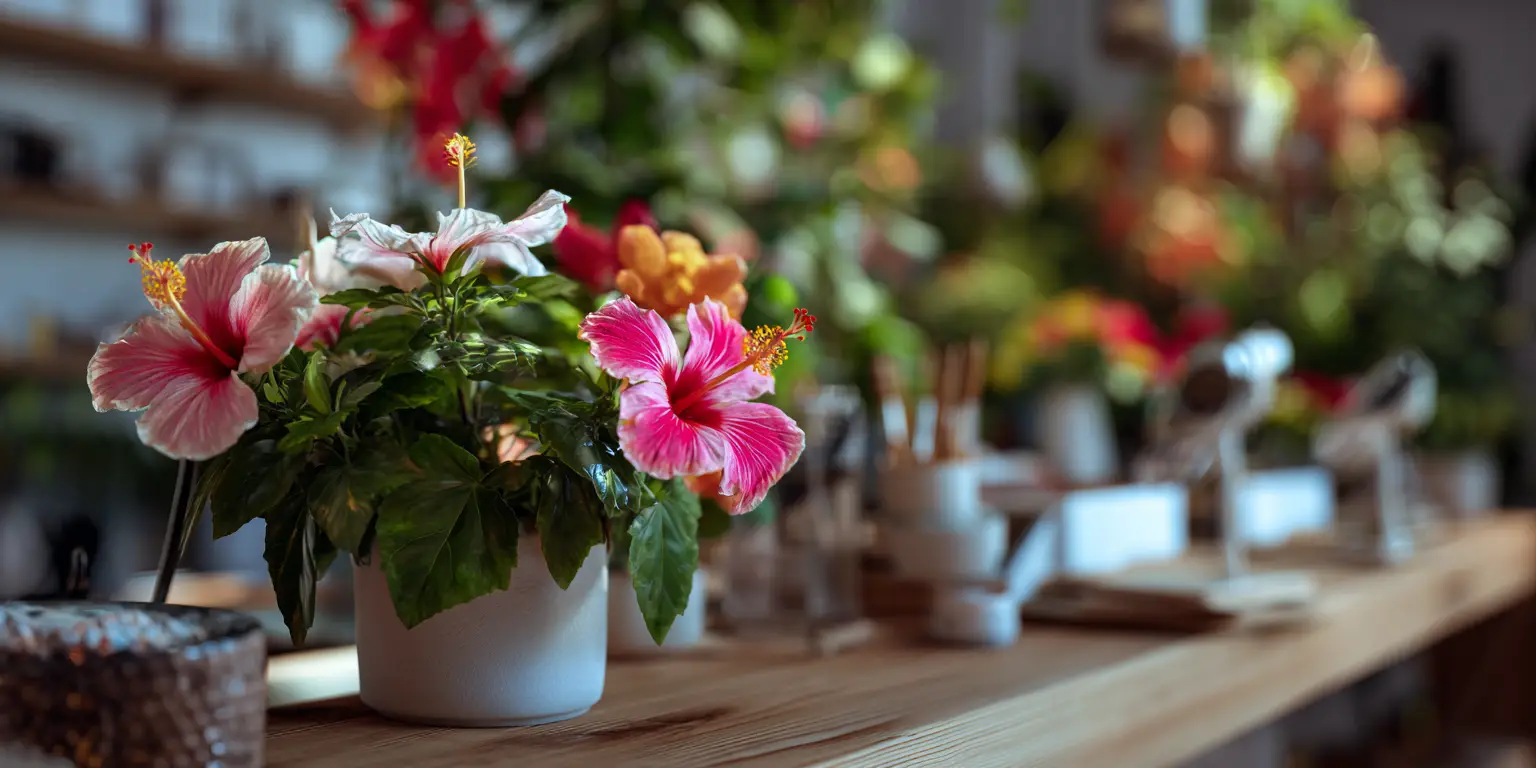
Vase life
Hibiscus is a plant to enjoy on the stem, because cut blooms last a very short time. A picked flower usually wilts within a day, which is why florists almost never build standard arrangements around it, and Rose of Sharon and hardy hibiscus behave the same way once cut.
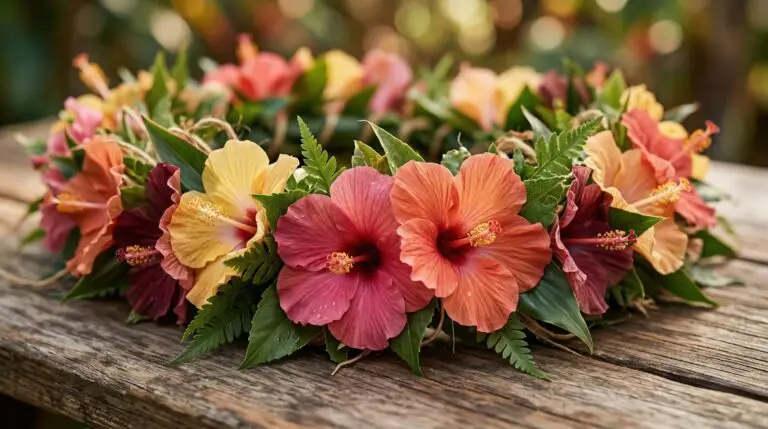
The short life still has uses. Cut blooms early in the morning as they open, set the stems in water at once, and keep them cool and out of direct heat, and a flower may hold for the day or float in a bowl through an evening. Hibiscus works as a same-day accent rather than a lasting cut flower, which is how it appears in tropical and beach wedding flowers, tucked into hair, strung into leis, or laid on a table setting and refreshed as it fades. Unopened buds can add texture and sometimes open in the vase, though that is a bonus rather than a promise.
Why there is no vase-life number here
This block is deliberately short, and the reason is the single most-sourced fact about the plant. Hibiscus is not meaningfully a cut flower, so what follows is the ceiling, the workaround, and an honest empty slot where a folk remedy would normally sit.
A florist preservative, a longer stem or a cooler room buys a hibiscus flower a second day.
Nothing in the sourced material supports it. The one-day life is confirmed by three independent university species pages and is a property of the flower rather than of the handling, so the only useful advice is to time the cut to the morning it opens.
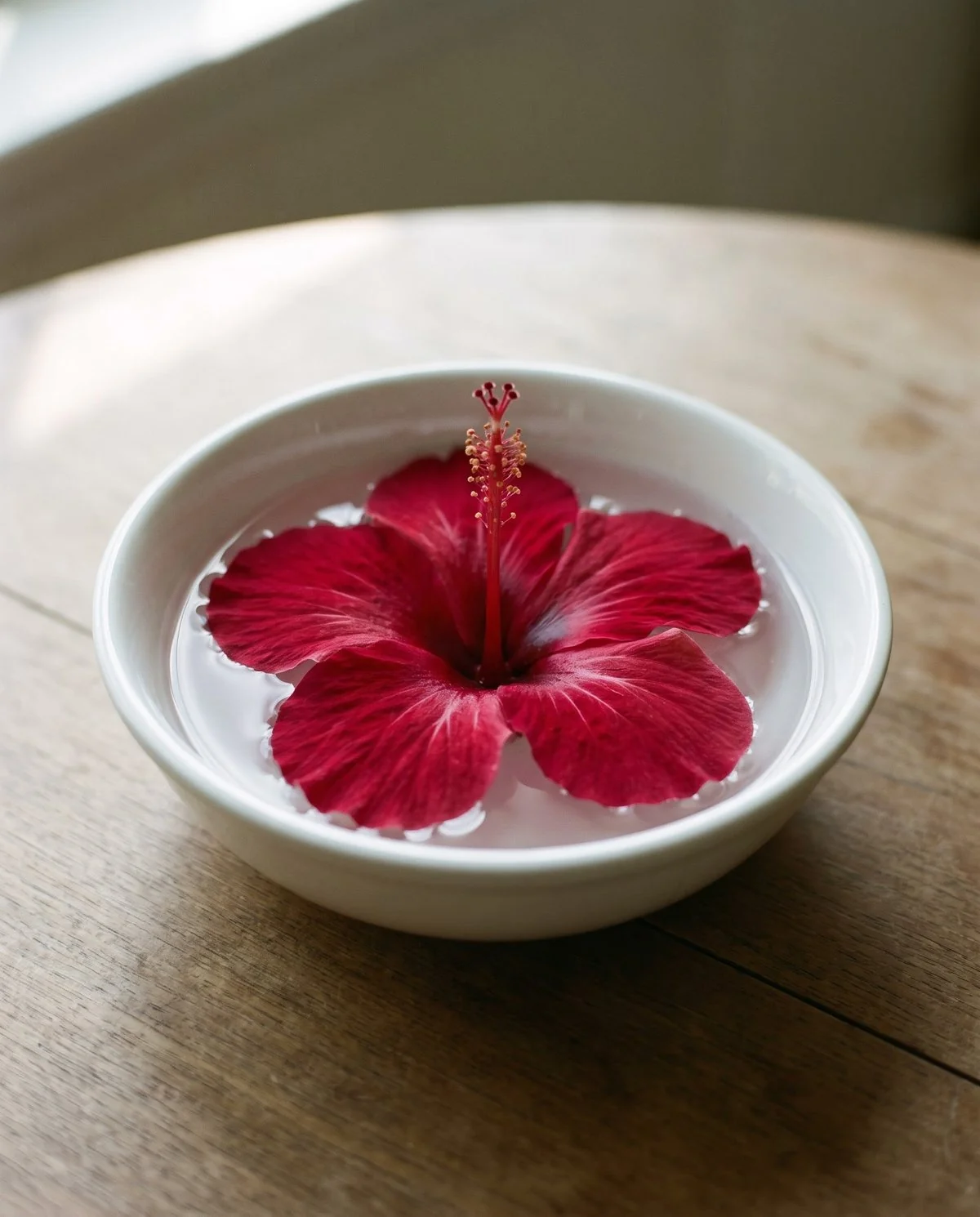
Pests and diseases
A hibiscus grown in full sun with room for air to move and a steady watering hand is fairly resilient, but a handful of pests and diseases turn up often enough to know by sight. The common insects are sap-suckers: aphids cluster on new growth and buds and leave a sticky residue, whiteflies rise in a cloud when the plant is disturbed and can trigger sooty mold, spider mites stipple the leaves and spin fine webs in hot dry air, and mealybugs sit like cotton along the stems. The single most useful pest to recognize is the hibiscus gall midge, a tiny fly whose larvae develop inside forming flower buds and cause them to yellow and drop before they open, so a plant shedding healthy-looking buds in quantity should have a few of those buds opened over a hand to check for the pale maggots inside. On the disease side, fungal leaf spots and blights mark the foliage in warm, wet conditions, powdery mildew leaves a white film on Rose of Sharon late in summer, and root rot follows soil that stays waterlogged. The table below pairs the most common complaints with what usually lies behind them.
| Problem | What you see | Likely cause | What to do |
|---|---|---|---|
| Bud drop | Buds yellow and fall before opening | Gall midge larvae in the buds, or heat, dry or soggy soil, low light, a recent move | Open a few fallen buds to check for larvae and remove infested ones; keep watering steady; stop relocating the plant |
| Yellow leaves | Leaves pale or yellow, some dropping | Overwatering or drought, a tropical just moved indoors, iron shortage in alkaline soil | Match water to the weather; ease indoor transitions; acidify or repot high-pH soil |
| Sooty black film | Dark coating over leaves | Sooty mold growing on aphid or whitefly honeydew | Control the sap-suckers, then rinse the foliage clean |
| Speckled, dull leaves | Fine stippling, sometimes webbing | Spider mites in hot, dry air | Rinse leaf undersides, raise humidity indoors |
| White coating | Powdery white film on leaves | Powdery mildew, common on Rose of Sharon in late summer | Improve airflow, remove affected leaves |
Prevention beats rescue with all of these. Water at the base rather than over the leaves, space plants so air moves through them, and clear away fallen leaves and spent flowers where pests and fungi overwinter. Check plants often, especially the undersides of leaves and the newest growth, because a few aphids or the first bud midge is easy to handle while an outbreak is not. Hibiscus is forgiving once the cause is fixed, and a plant stripped by mites usually pushes fresh growth as soon as conditions improve.
Photo pairs, and the two subjects held back for real photographs
Six of the pack's seven pairs are growth-habit, water or chew-damage states and are safe to photograph. A cut-open blackened root ball and macro-scale pest identification are not, and the last card says so rather than quietly leaving them out.
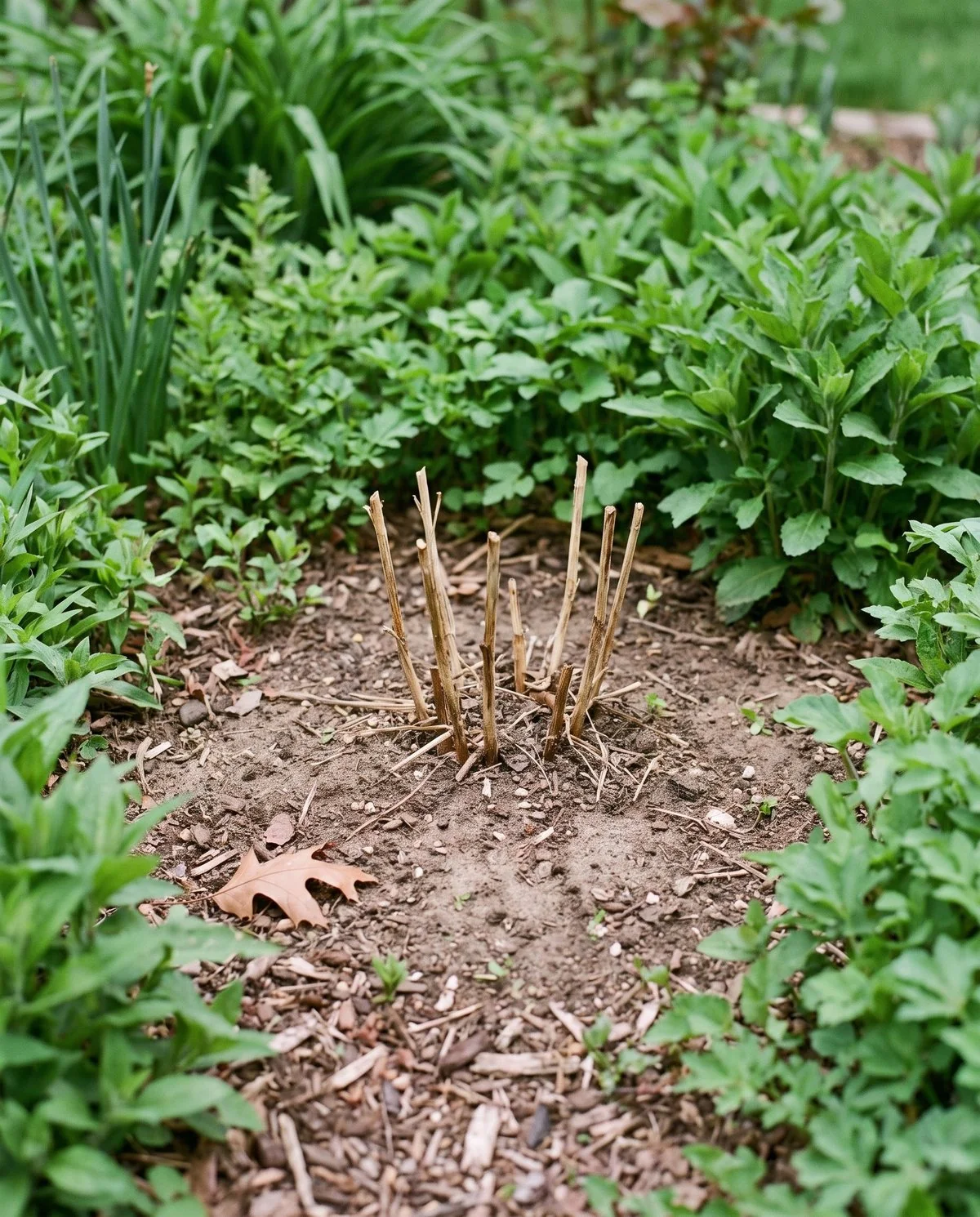
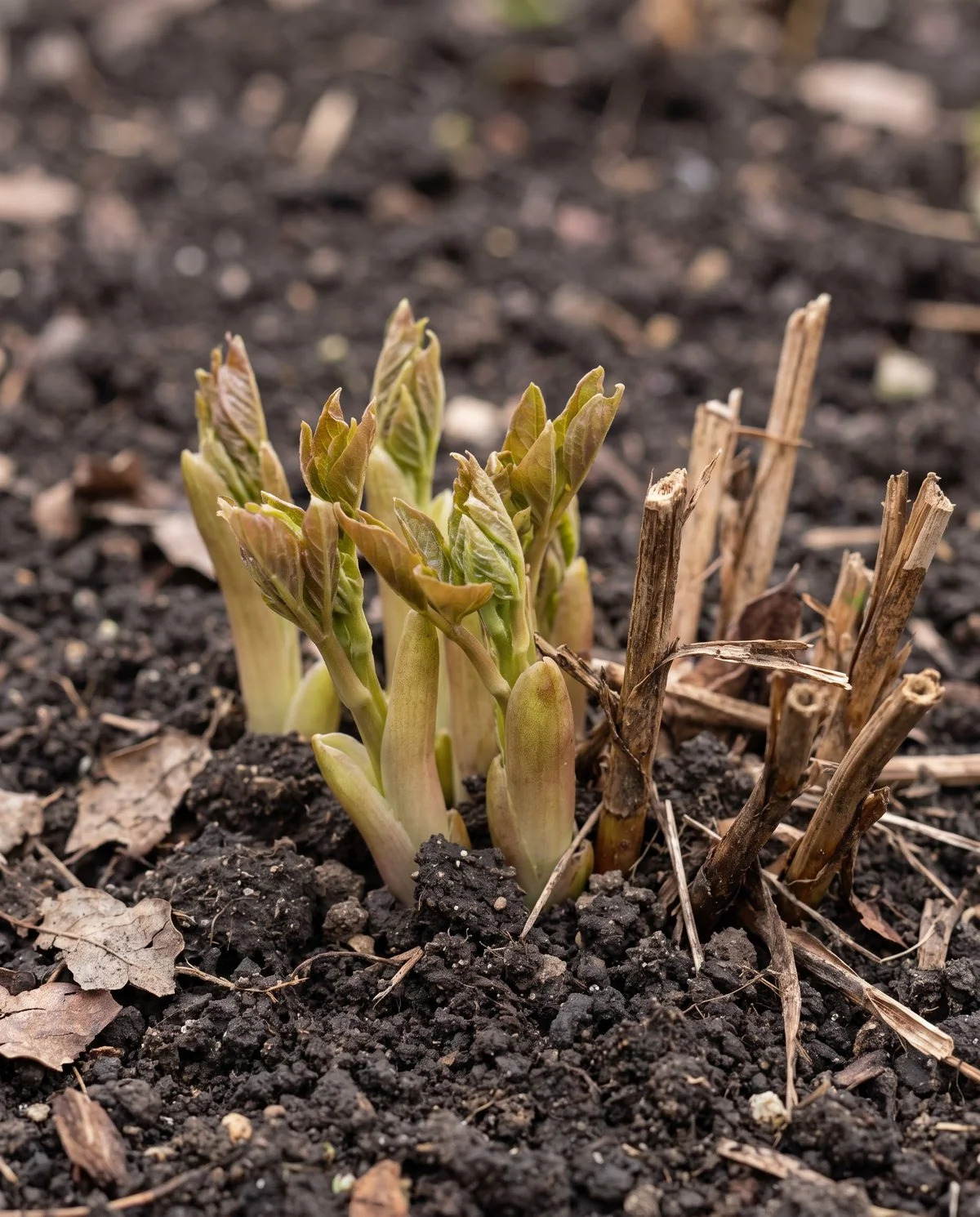
Scratch the crown at soil level rather than a stem tip. A hardy hibiscus that has not emerged yet shows last year's dead stalks or bare woody-looking stubs and zero visible green growth, sometimes into June, and the tissue under a scratch is still green. A dead crown, where the stems meet the roots at or just below soil level, is dry and brittle and shows no green when scratched, typically after a cold snap well below the plant's zone rating or after prolonged waterlogging. No sourced threshold exists for exactly how late is still normal, and this pack does not invent one: gardeners in its own corpus were still waiting, without having given up, in mid-July.
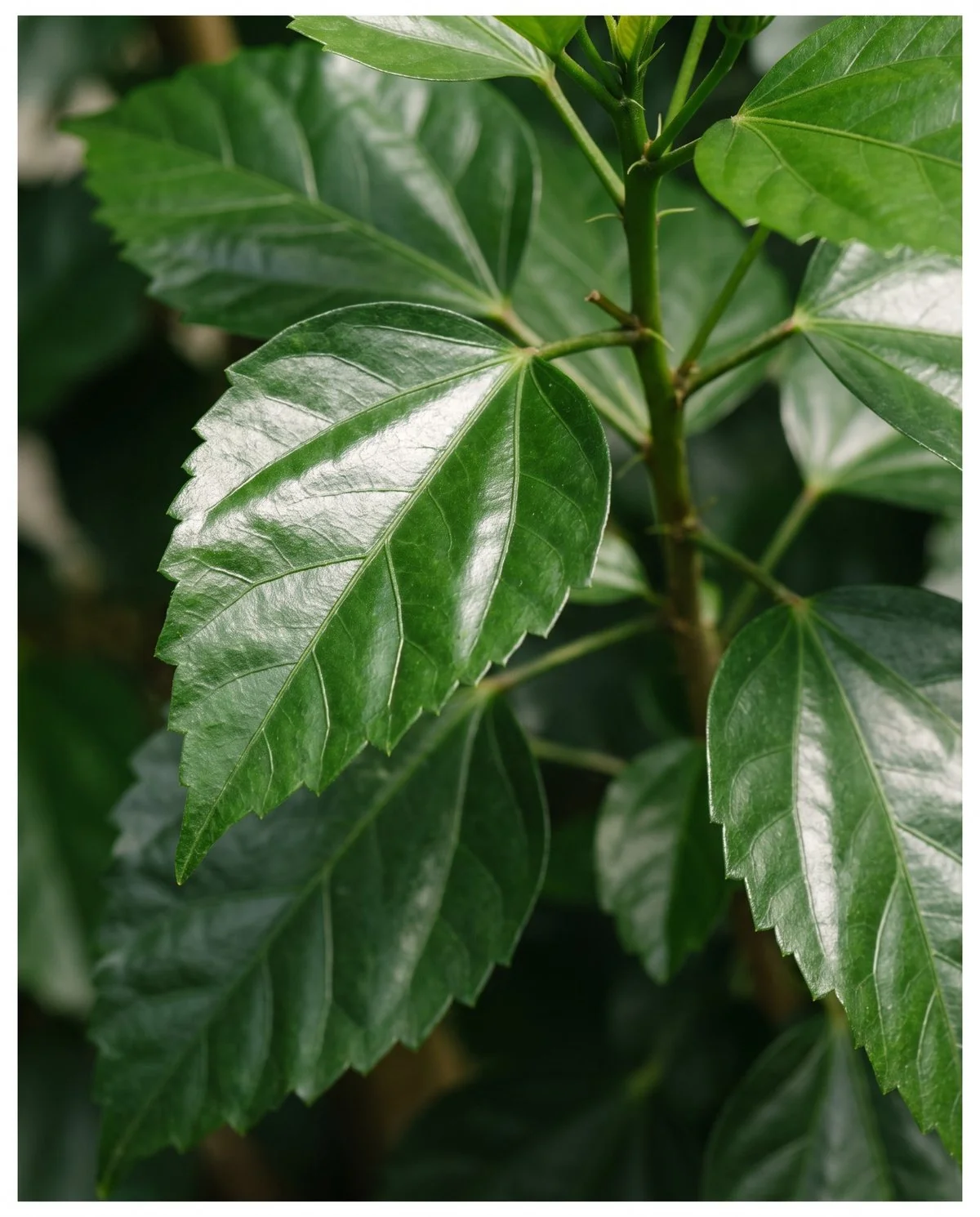
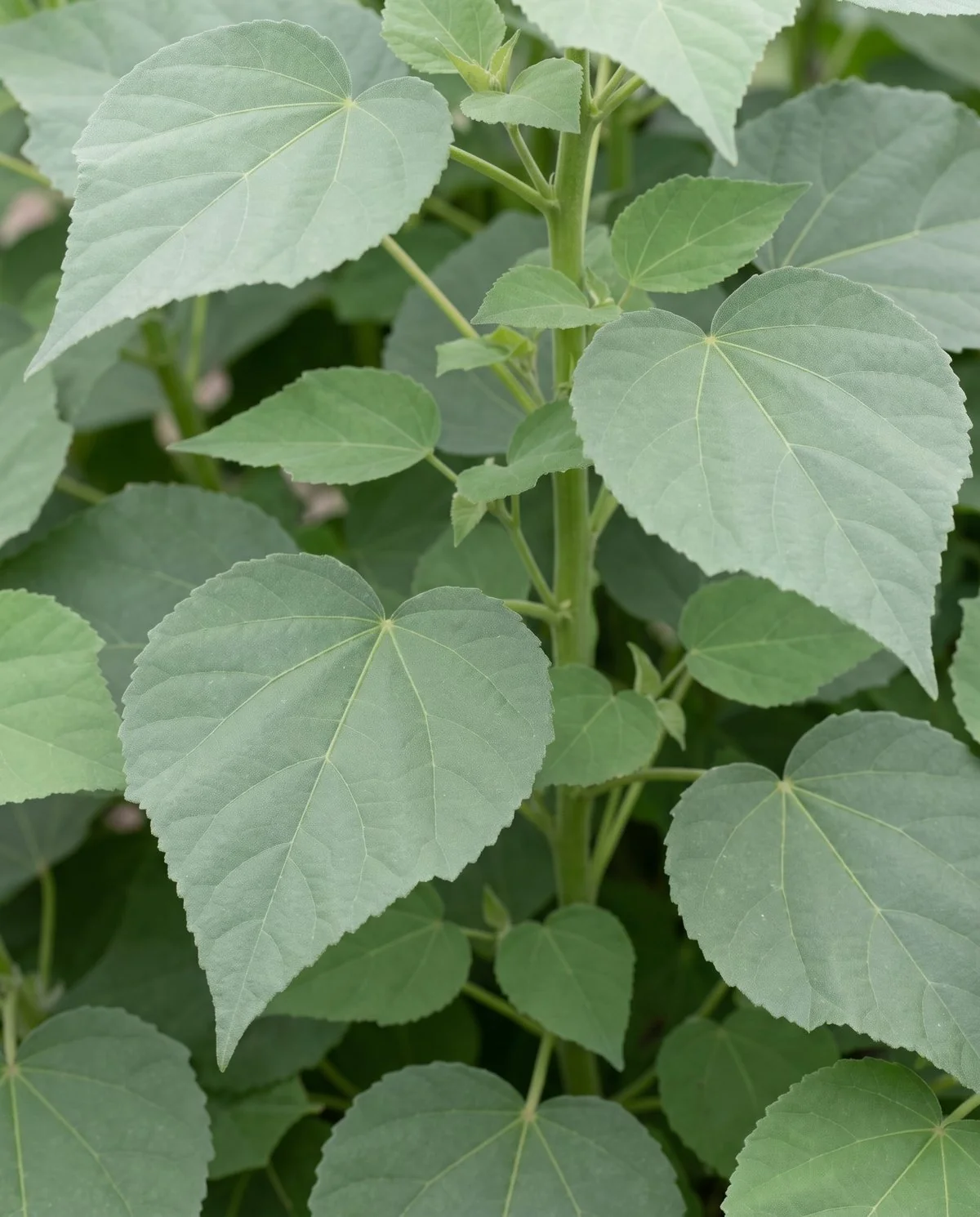
Feel the surface, and trust the leaf over the tag. The tropical leaf is glossy, leathery, toothed and dark green, and it holds year-round wherever the plant stays above freezing. The hardy leaf is matte rather than glossy, heart-shaped in most cultivars, and gone completely by winter. NC State supplies the caution that keeps this honest: leaf shape alone is not a universal rule inside the hardy group, because species relatives such as Hibiscus coccineus carry narrow lobed leaves instead, so the gloss and the winter behaviour carry more weight than the outline.
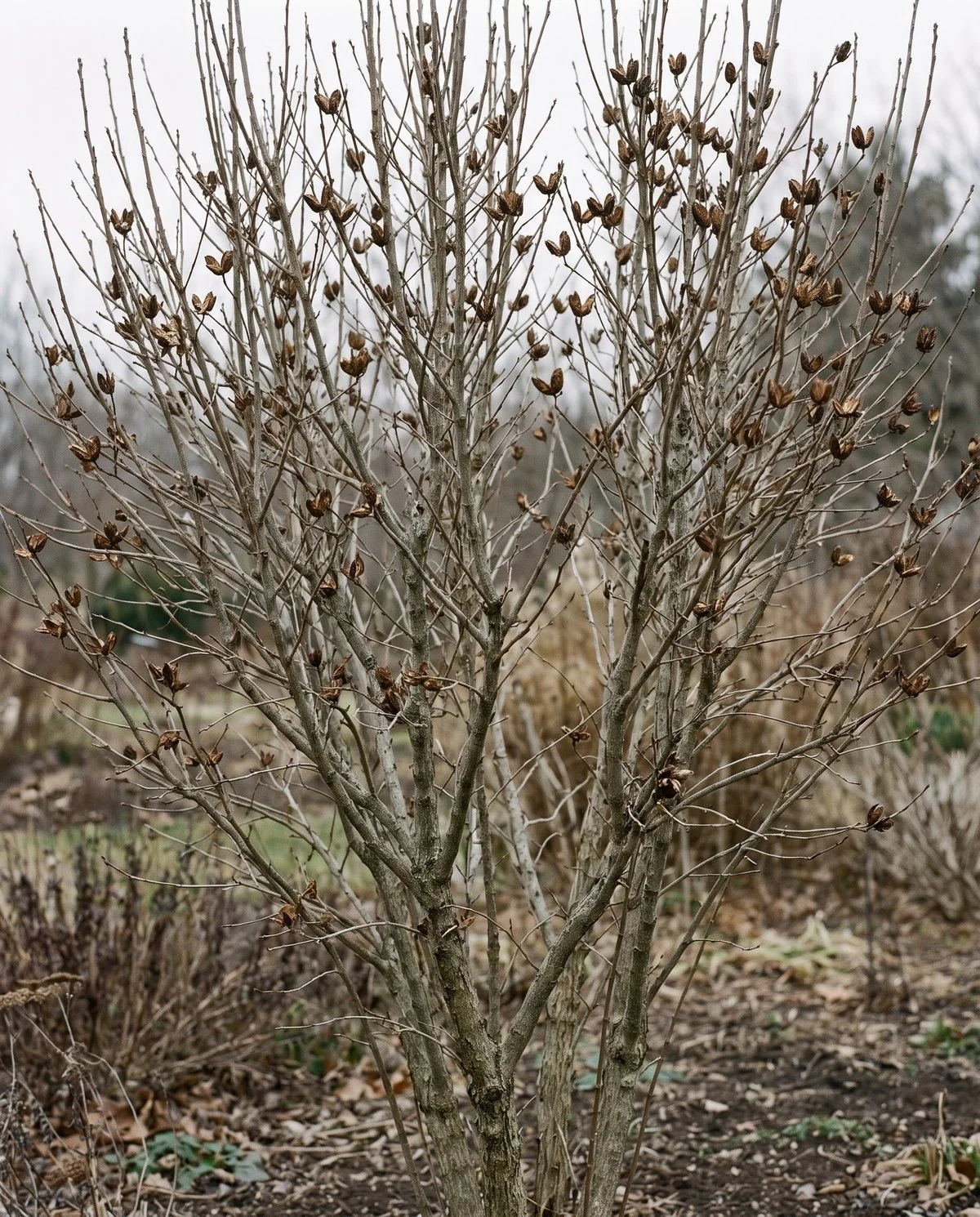
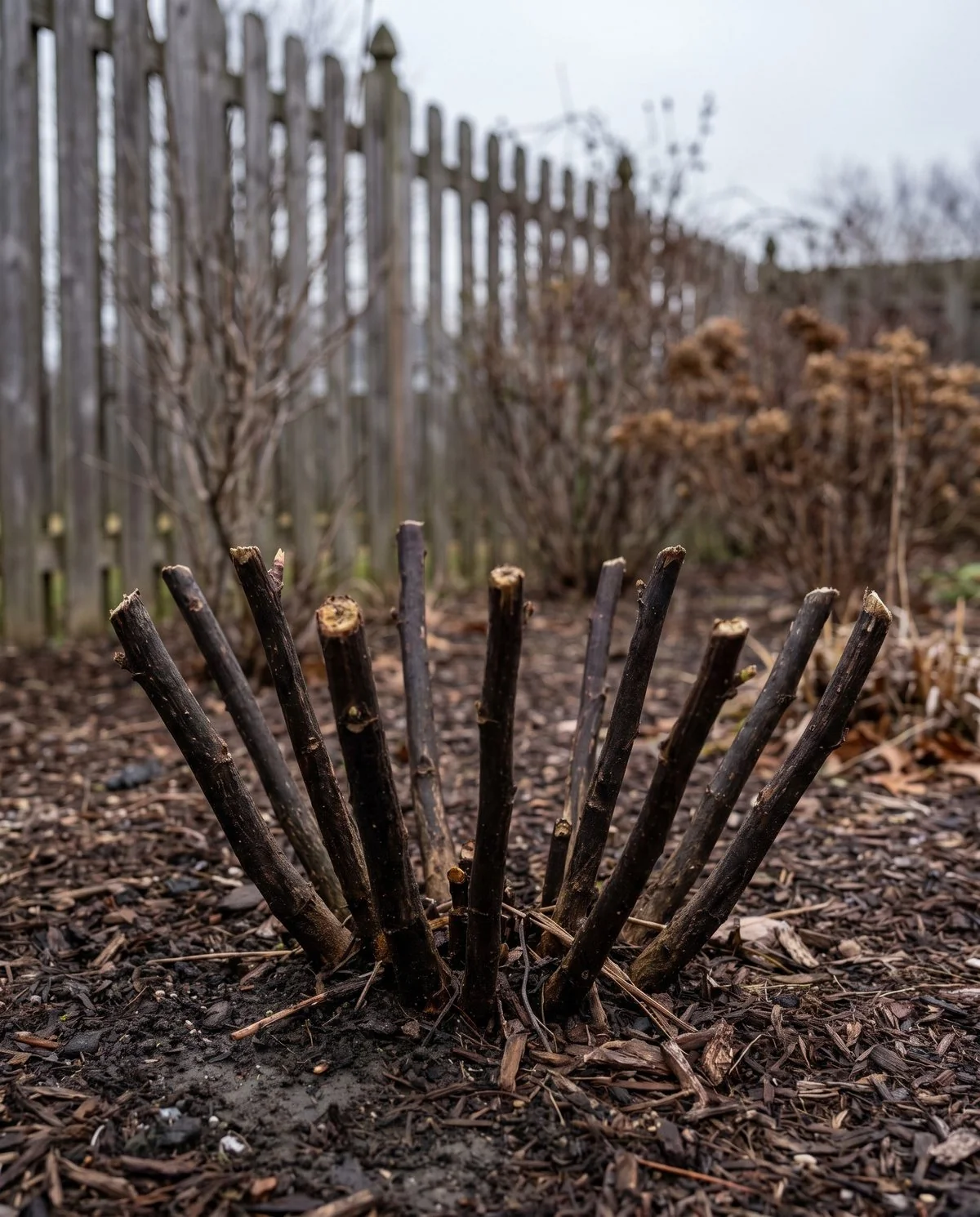
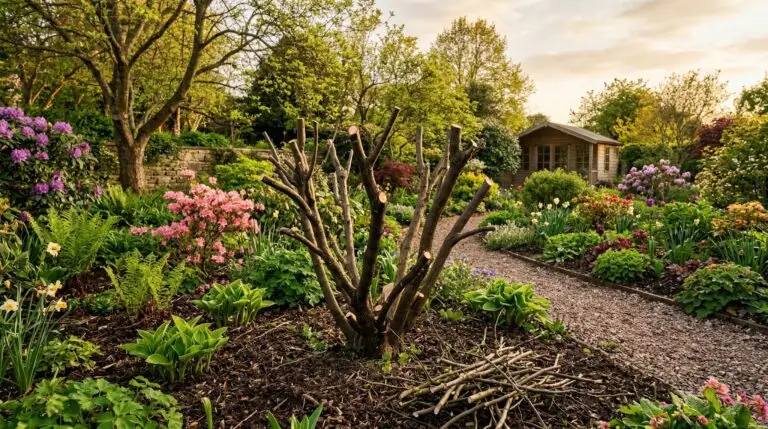
Look for wood. Rose of Sharon is a multi-stemmed woody shrub of 8 to 12 ft that keeps its whole branch structure through winter and leafs out on that same wood, carrying flowers a few inches across. Hardy hibiscus leaves nothing standing at all, then returns from the root and carries the far larger blooms. That single structural difference is why rose of Sharon is never a did-it-survive candidate the way hardy hibiscus is every spring.
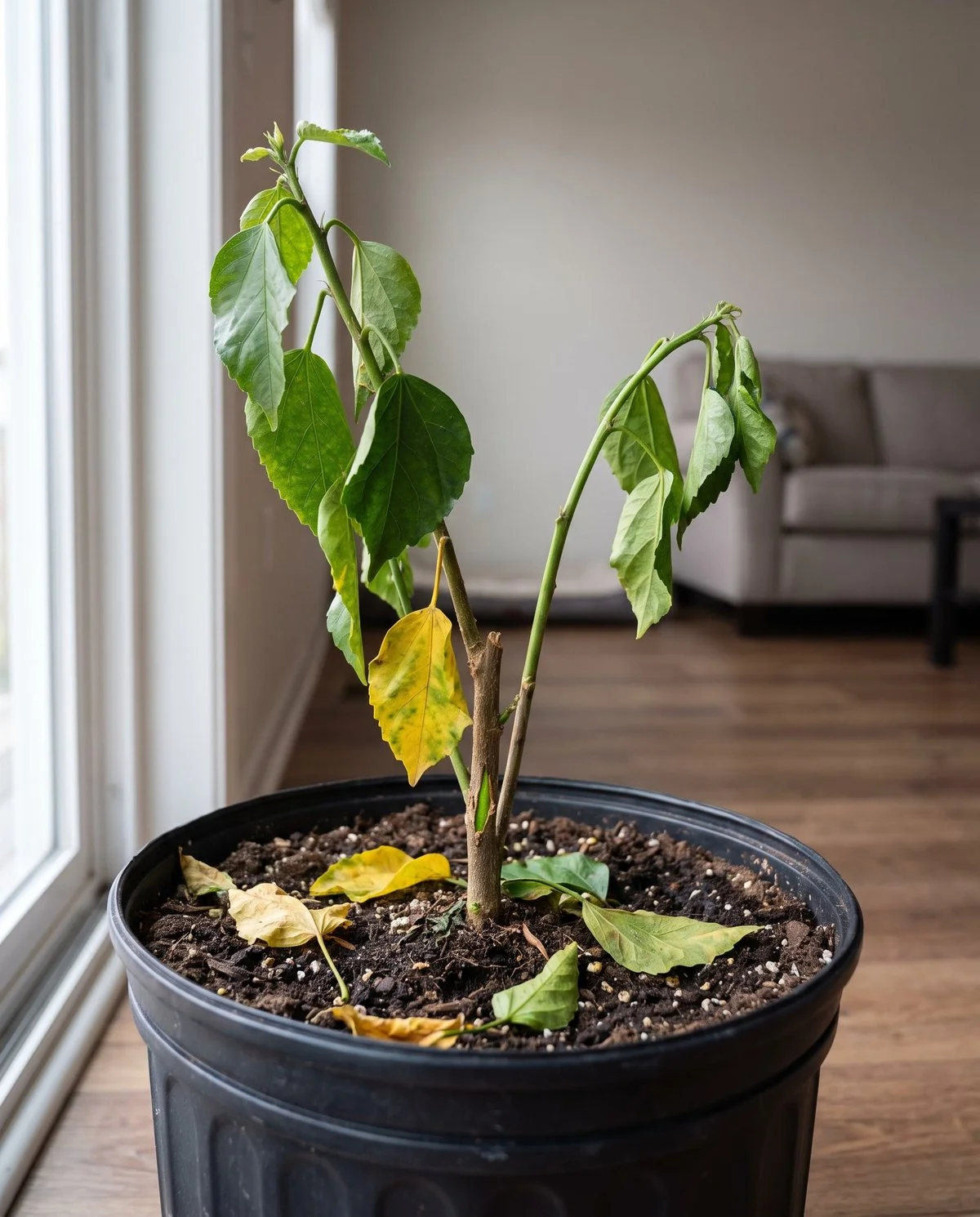
Scratch the stem, then handle the roots. Ordinary stress droops, yellows and drops some leaves in the two to four weeks after a repot or a nursery purchase while the stem stays green under the bark, and new growth eventually resumes. Root rot gives roots that are mushy, blackened and pull apart easily rather than firm and white or tan, often with a sour or rotten smell at the root ball, and it usually traces to a pot without drainage or soil that stays soggy. Only the drooping plant is photographed here.
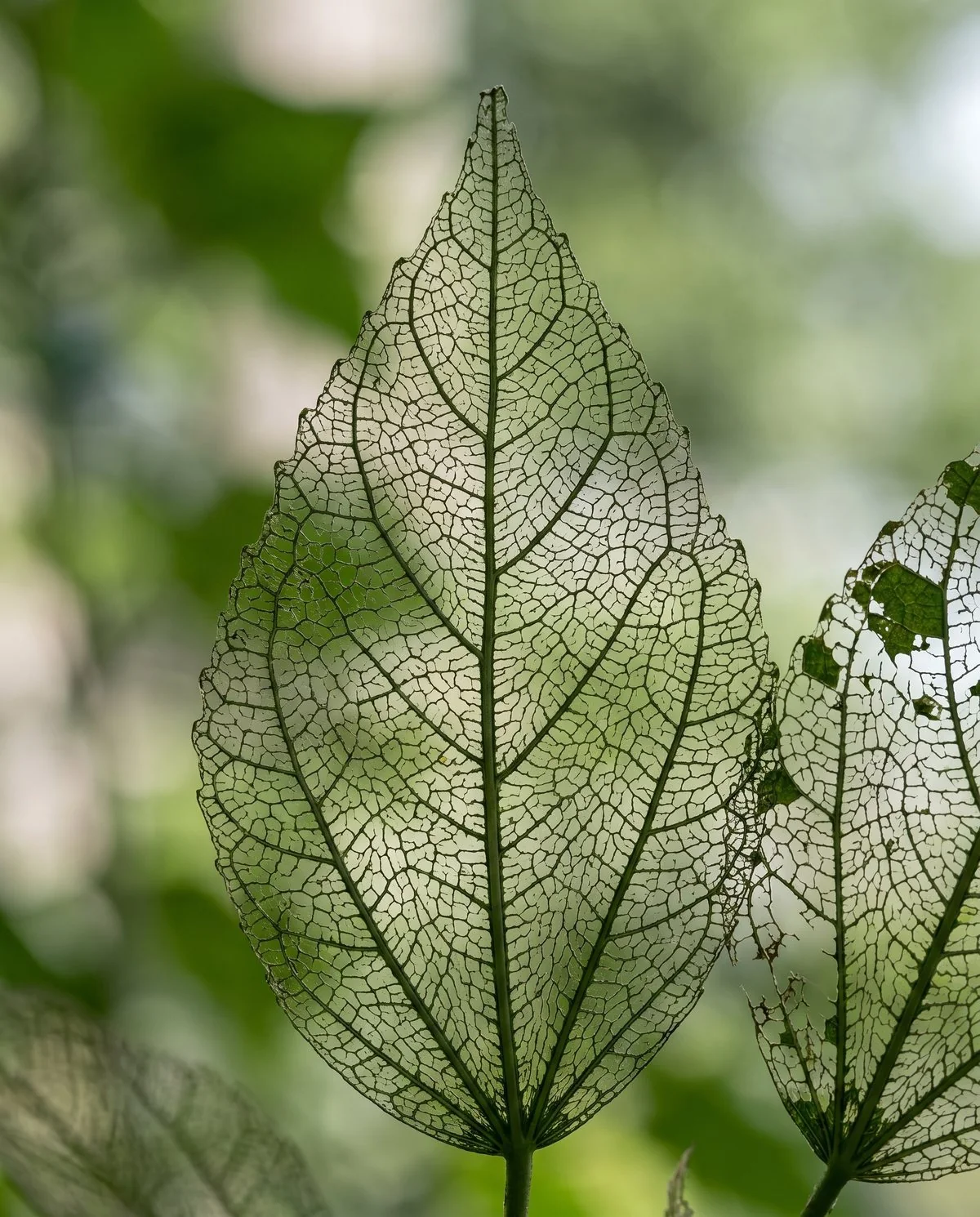
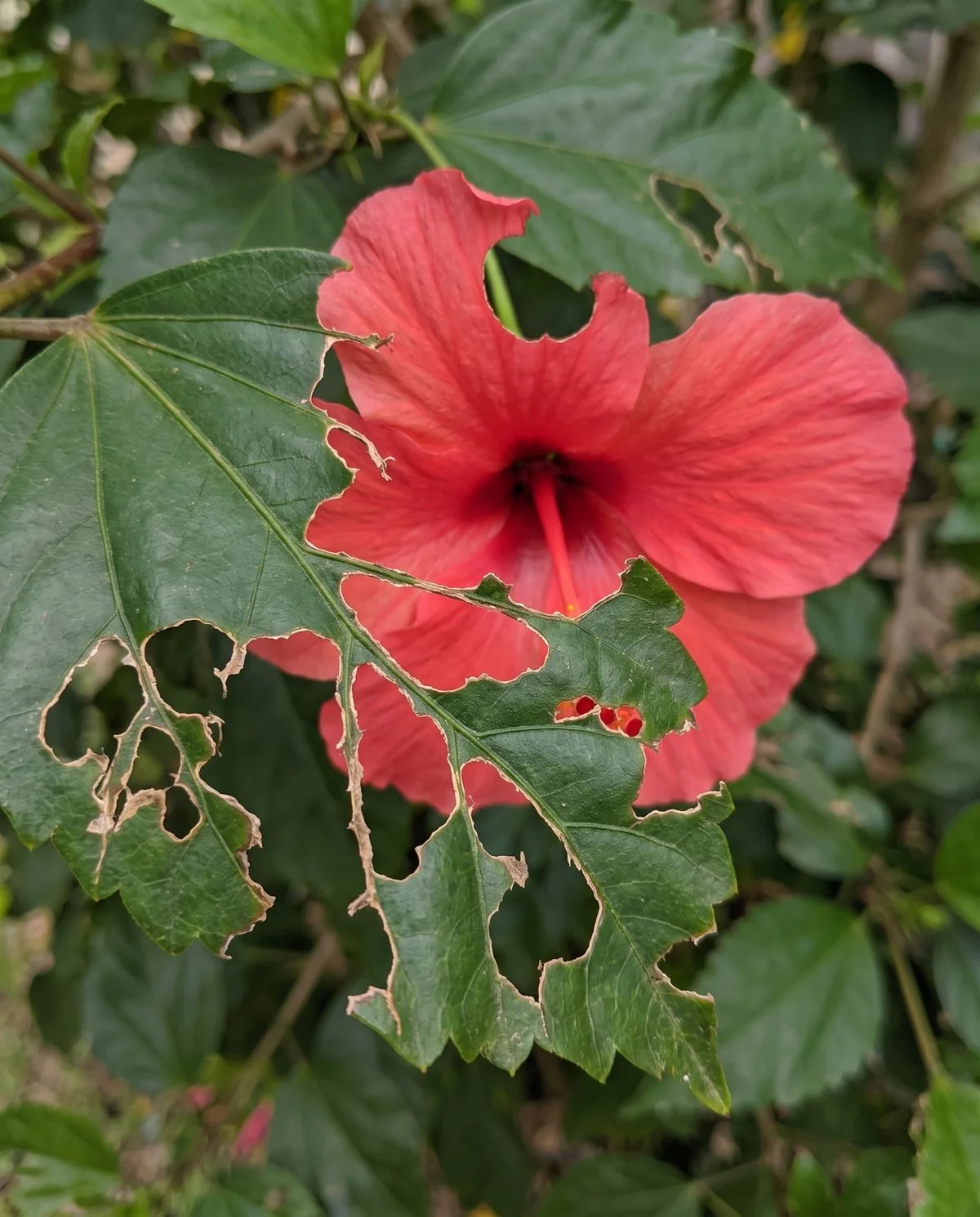
Look at whether the veins survived. NC State Extension Publications describes hibiscus sawfly larvae as sometimes completely skeletonizing the leaves, leaving a lacy network of leaf veins, with the tissue between the veins eaten away and the skeleton standing. Clemson describes Japanese beetles as feeding on leaves and flowers, which leaves ragged irregular holes straight through the leaf blade rather than a vein skeleton, and visible damage chewed into the flowers themselves.
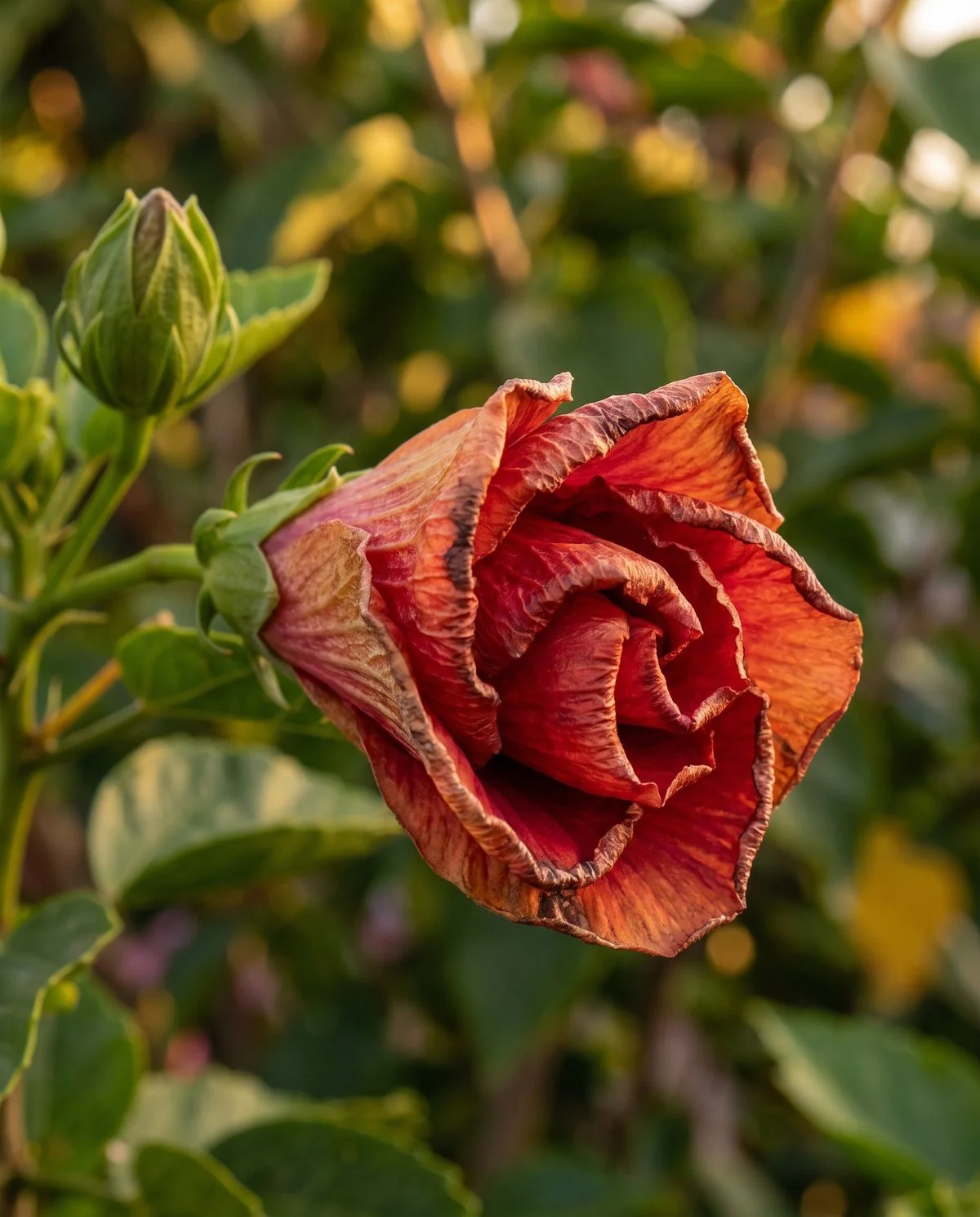
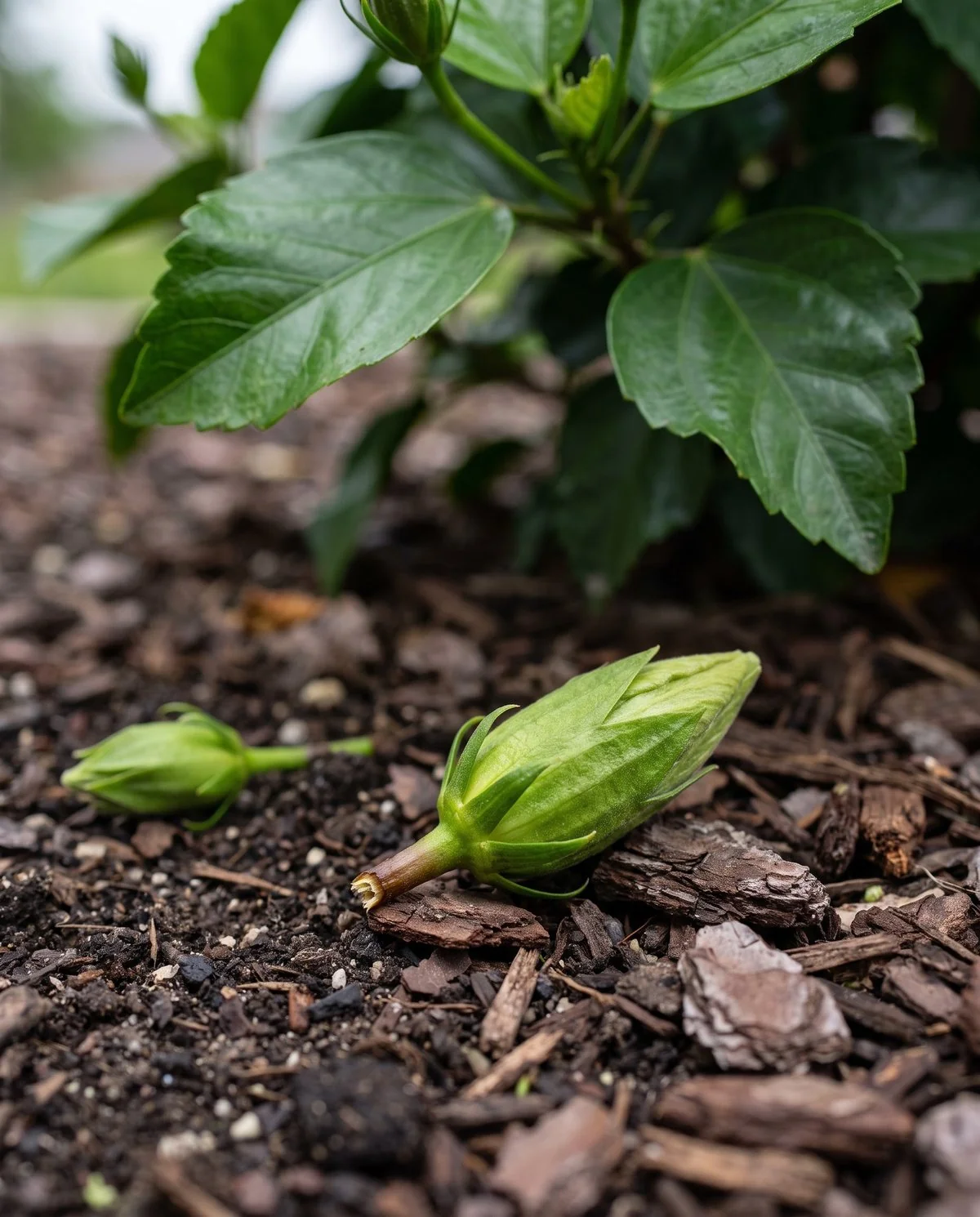
Check whether it ever showed colour. A fully opened flower that closes, browns and drops on its own is the ordinary end of every hibiscus bloom on all three species, not a symptom of anything, and it happens after a single day. A bud that falls while still green and unopened, before ever displaying colour, is the real stress signal, and UMN attributes it to the plant being too cold or too hot relative to the 65 to 75 degrees Fahrenheit daytime range it needs to develop a bud through to bloom.
Separate the two questions rather than answering both at once. A pest cluster is small clustered insects, sticky honeydew, sometimes fine webbing from spider mites or a cloud of tiny white insects when the plant is disturbed, on buds, stems and leaf undersides that are otherwise structurally normal. A disease shows discrete spotting or discolouration with a defined pattern rather than a moving population, and sooty mould specifically follows the honeydew and appears as a black wipeable film rather than a lesion in the tissue. The second question, telling aphids from young whitefly nymphs from spider-mite stippling at macro scale, is genuinely hard even for the real gardeners in this corpus, so that level of identification wants a real reference photograph and is not generated here.
What hibiscus owners actually ask about, ranked by frequency
1,000 posts, 500 from r/gardening and 500 from r/plantclinic, pulled on the title word hibiscus. Themes overlap, so the shares do not sum to 100, and the two subreddits are counted separately for a reason: the highest-scoring hibiscus posts in r/gardening are almost entirely photo showcases rather than problems, so the diagnosis signal concentrates in r/plantclinic. Both pulls hit the archive's page cap without exhausting the query, which means more history exists than was collected.
Which of the three plants it is, because the two extensions name different culprits. UMN names aphids and spider mites for tropical hibiscus; Clemson names Japanese beetles and sawfly caterpillars as causing the most damage on hardy hibiscus, eating so much of the leaves that they look skeletonized, with aphids and whiteflies also visiting. 63 of these 84 posts sit in r/plantclinic rather than r/gardening.
How recently the plant changed hands or changed pots. This theme overlaps heavily with the transplant bucket below, and 52 of its 61 posts are in r/plantclinic.
Whether the stem is still green under the bark. One poster in this corpus did exactly the right test without knowing what the result meant: when I scratch the branches, it is still green underneath. Costco, Walmart and Home Depot are named repeatedly as the point of purchase, which makes this the beginner entry point for the whole plant.
Whether an insect population came first. Aphid honeydew followed by black sooty mould is a real recurring combination in these posts, and sooty mould is a wipeable film sitting on the leaf rather than a lesion baked into the tissue.
What changed in the last few days. UMN names this its own first listed common problem for tropical hibiscus and gives the mechanism: yellow leaves are caused by abrupt changes in soil moisture, air temperature or drafts, with some yellowing normal in spring or fall when growing conditions are in transition. One poster's leaves went yellow two days after the plant came indoors.
Whether the roots are firm or mushy. Several posters in this bucket ask outright whether they are looking at too much water or too little, which is the ambiguity the photo pairs below exist to settle.
The thermometer, in two places. UMN sets the floor at no lower than 55 degrees Fahrenheit and the bud-development range at 65 to 75 degrees Fahrenheit, and says that below that range flower buds may drop off or fail to form altogether. This bucket clusters around the autumn move rather than spreading through the year.
Whether the buds are going too. The two are counted apart here because UMN gives them different mechanisms, moisture and temperature swings for the leaves and a temperature range for the buds.
Read this row as a floor. A plant that simply has not come up yet is nothing dramatic to photograph. A dedicated pass over the same corpus found 43 posts naming hardy hibiscus, rose mallow, dinner-plate or moscheutos explicitly, and hand-reading all 43 found three or four clear cases of the nothing-has-come-up panic, roughly 7 to 9 percent of hardy-specific traffic against 0.3 to 0.4 percent of the full sample.
Whether the bud ever showed colour. UMN attributes bud drop to the plant being too cold or too hot, since hibiscus needs daytime temperatures of 65 to 75 degrees Fahrenheit to develop buds. A fully opened flower that closes and drops after its single day is the ordinary cycle rather than a symptom of anything.
The leaf rather than the tag. One poster wrote that the label clearly said hardy hibiscus, but an AI was absolutely convinced that it is tropical, which is a huge difference. Low raw count, same structural reason as row nine: a reader who reads the tag correctly never posts about it.
Flower photos
FAQ
Is my hardy hibiscus dead? Nothing has come up. Almost certainly not. Hardy herbaceous hibiscus is one of the last perennials to wake in spring, and its shoots often do not appear until late May or June, long after other plants have leafed out. Mark the crown so you do not disturb it, leave it alone, and give the soil time to warm. Once it starts, it grows quickly.
Do I have a hardy or a tropical hibiscus?
Check the label for the botanical name and the plant's habit. Hibiscus rosa-sinensis is the tropical, or Chinese, type, an evergreen shrub with glossy dark leaves usually sold in a pot for zones 9 to 11. Hibiscus moscheutos is hardy herbaceous rose mallow, which dies to the ground and returns, carries the giant dinner-plate blooms, and survives zones 4 to 9. Rose of Sharon, Hibiscus syriacus, is a tall woody shrub for zones 5 to 9 that drops its leaves in winter.
Why is my hibiscus dropping buds before they open?
The most specific cause is the hibiscus gall midge, whose larvae feed inside the buds; open a few fallen buds and look for tiny pale maggots. The other causes are stress: soil too dry or too wet, a sudden heat spell, too little light, or a recent move. Keep watering steady, hold the plant in one spot, and remove infested buds to break the midge's cycle.
Why are my hibiscus leaves turning yellow?
Usually water stress, either soil staying wet too long or drying too hard, so check the soil before adjusting. Moving a tropical hibiscus indoors reliably triggers a round of yellowing and leaf drop that is normal acclimation, not disease. Yellowing between green veins points instead to an iron shortage in alkaline soil. Also check leaf undersides for spider mites.
How and when do I prune each type?
Prune tropical hibiscus lightly to shape it any time, with a harder cut in late winter or early spring. Prune Rose of Sharon in late winter or very early spring, since it blooms on new growth. Cut hardy herbaceous hibiscus to the ground in late fall or early spring before its late shoots rise. Use clean, sharp tools and remove dead, weak, or crossing stems whenever you see them.
How do I overwinter a tropical hibiscus indoors?
Bring it in before nights fall toward 40 degrees Fahrenheit. Give it the brightest window in the house, water less than you did outside, and expect it to yellow and drop some leaves as it adjusts to lower light. Watch for spider mites in dry indoor air, hold off on feeding until growth resumes, and move it back outdoors gradually in spring so the foliage does not scorch.
Is hibiscus safe for cats and dogs?
Yes. The ASPCA lists hibiscus, including Rose of Sharon, as non-toxic to cats, dogs, and horses. The only caution is the general one that a pet eating a large amount of any plant may get a brief, mild stomach upset.
Is garden hibiscus the same as hibiscus tea?
Not quite. The tart red hibiscus tea comes from roselle, Hibiscus sabdariffa, grown for its fleshy calyces. Petals from ordinary ornamental hibiscus are generally non-toxic and sometimes used as a mild garnish, but the classic tea is a specific species, and you should only eat flowers from plants that have not been sprayed.
What does the hibiscus flower symbolize?
Meanings vary by culture. Hibiscus is often associated with delicate beauty, partly because each bloom is short-lived. In some places, hibiscus is also used as a symbol of welcome and hospitality. It is the national flower of Malaysia, and Rose of Sharon is the national flower of South Korea.
Do hibiscus plants attract hummingbirds and butterflies?
Hibiscus flowers can attract hummingbirds, butterflies, and other pollinators because the blooms are large and nectar-rich. Red and orange varieties tend to draw hummingbirds, and butterflies often visit for nectar. If you need to treat pests, use methods that are labeled as pollinator-safe and avoid spraying open flowers.
How long does a hibiscus flower actually last, and is it the same for all three?
One day, for all three, and three separate institutions say so about three separate species. UMN Extension calls tropical hibiscus blooms short-lived, typically blooming for only one day, and notes that once finished blooming, the flower will close up and drop off. NC State's Hibiscus syriacus page states that its flowers last one day each. Missouri Botanical Garden gives one to two days for hardy Hibiscus moscheutos and supplies the reason a healthy plant looks continuously in flower anyway: new flowers open each day in rapid succession.
What is eating my hibiscus, and does it matter which type I have?
It decides which pest to look for. For tropical hibiscus, UMN names aphids and spider mites as the most common. For hardy hibiscus, Clemson names Japanese beetles and sawfly caterpillars as causing the most damage, eating so much of the leaves that they look skeletonized, with aphids and whiteflies also visiting. The damage pattern tells them apart: NC State Extension Publications describes sawfly larvae as sometimes completely skeletonizing the leaves, leaving a lacy network of leaf veins, while Japanese beetle damage is ragged holes straight through the blade and chewing on the flowers themselves.
How warm does a tropical hibiscus have to be kept indoors?
Two different numbers do two different jobs. UMN Extension puts the floor at no lower than 55 degrees Fahrenheit, which keeps the plant, and the bud-development range at 65 to 75 degrees Fahrenheit, which keeps the flowers, stating that below that range flower buds may drop off or fail to form altogether. Light is a third requirement rather than an afterthought: UMN asks for at least 4 to 5 hours of bright, direct light for good bloom indoors. Moving it in and out is a sequence rather than a single trip, and UMN describes its own: onto a porch, then into filtered shade under a tree, then into full sun, reversed in the fall, to prevent bud loss and minimize foliage loss.
What does the ASPCA database actually say about my houseplant hibiscus?
Less than most summaries imply, and the gap is worth knowing. The ASPCA's public toxic-plant entries at the hibiscus, rose of china and rose of sharon slugs are one and the same record, scientifically Hibiscus syriacus, family Malvaceae, classified non-toxic to dogs, cats and horses, with the other two names appearing only as additional common names. NC State's plant toolbox lists the same non-toxic classification for Hibiscus syriacus independently. A botanically separate ASPCA record for tropical Hibiscus rosa-sinensis or hardy Hibiscus moscheutos was not found, and attempts at a distinct tropical entry returned 404, so anyone searching the ASPCA's own site for a houseplant hibiscus is reading the rose-of-Sharon record under the plain name hibiscus.
Is there a fall cleanup that prevents a hibiscus pest next year?
No named one exists in this pack's sourcing. There is no fall-cleanup-prevents-a-named-pest pattern for hibiscus of the kind that exists for iris borer, and rather than invent a dated window the pack records the gap. The closest sourced practice is general sanitation, removing sooty-mould-covered debris to reduce re-infestation pressure, which is good housekeeping rather than a control window tied to a date.
Interesting tips
The most useful habit with hardy herbaceous hibiscus is patience paired with a marker: because it wakes so late, a labeled stake over the crown saves you from digging into a living plant or writing it off in May. Overwintering a tropical is easier if you prune it lightly before the move, which makes the plant smaller to carry and quicker to settle, then keep it in strong light and water sparingly until spring. Feed tropicals with a fertilizer whose phosphorus, the middle number, sits below the nitrogen and potassium, since a high-bloom formula meant for other flowers can work against them.
To pull hummingbirds to the big nectar-rich flowers, plant hibiscus among other season-long nectar sources such as bee balm, salvia, and the red spikes of scarlet sage, which stack a lower layer of color in front of the shrub. Hibiscus carries a good deal of civic pride around the world: the yellow hibiscus, Hibiscus brackenridgei, is the state flower of Hawaii, the red Chinese hibiscus is the national flower of Malaysia, and Rose of Sharon is the national flower of South Korea. One thing no breeder has managed is a true blue, so a listing for a "blue hibiscus" is either a different genus or a trick of the camera.
- Hibiscus is not a common choice for traditional bouquets because the blooms do not last long once cut. It can still work in tropical or beach weddings as a same-day accent, for example tucked into hair or used in simple table decor that is replaced as it fades.
- Hibiscus has official status in several places. The yellow hibiscus (Hibiscus brackenridgei) is the state flower of Hawaii. The red Chinese hibiscus is the national flower of Malaysia. Rose of Sharon is the national flower of South Korea.
- Hibiscus tea is usually made from Hibiscus sabdariffa, also called roselle. The plant is grown for its fleshy calyxes, which dry into the deep red pieces used for tea. In some cuisines it is also used for syrups and jams. Petals from ornamental hibiscus are sometimes used as garnish and are mild in flavor.
- If you grow tropical hibiscus in a pot and want to keep it from year to year, plan to bring it indoors before frost. A light prune can make the plant easier to move and helps keep it compact. Indoors, put it in the brightest spot you have and water less often than in summer. In spring, move it back outside gradually so the leaves do not scorch.
- Hardy perennial hibiscus often wakes up late in spring. In cooler climates, new shoots may not appear until late May or even early June. Mark the planting spot so you do not disturb it by accident, and give it time once the soil warms.
- To support hummingbirds, plant hibiscus near other nectar plants that bloom through the season. Salvia, bee balm, and trumpet vine are common companions. A mix of flower shapes and bloom times keeps nectar available longer.
- Hibiscus is part of the Malvaceae family. Relatives include hollyhock and common mallows, and even cacao, the plant that produces chocolate. It is a fun family tree, but it does not change the basic care hibiscus needs.
Related Guides & Flowers
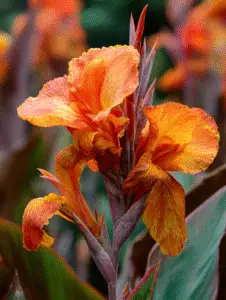
Canna Lily
Bold tropical foliage and large summer flowers that love heat and sun, often planted with hibiscus to build lush resort style borders.
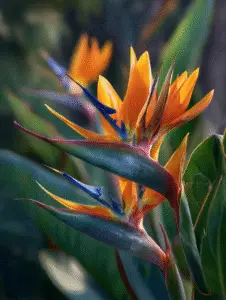
Bird of Paradise
Dramatic orange and blue flowers with a strong architectural shape that echo the exotic mood of hibiscus in poolside and patio plantings.
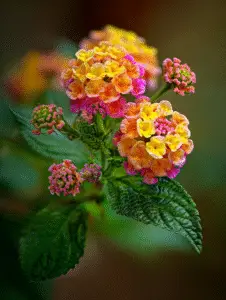
Lantana
Heat loving shrub with clusters of warm colored blooms that attract butterflies and hummingbirds and pair well with hibiscus in hot dry spots.
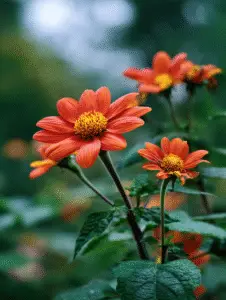
Mexican Sunflower
Tall stems with bright orange daisy like flowers that give a fiery tropical accent behind hibiscus and extend color late into the season.
Scarlet Sage
Vivid red flower spikes that draw hummingbirds and work as a lower layer in front of hibiscus shrubs in warm sunny beds.
Butterfly Weed
Compact perennial with orange flowers that support butterflies and match the hot color palette of many hibiscus cultivars in wildlife friendly gardens.
Anthurium
Glossy leaves and waxy heart shaped blooms with a tropical indoor and patio look that fits the same atmosphere as container grown hibiscus.
References
- Hibiscus care for houseplants and gardens University of Minnesota ExtensionShort description: Practical guide to hibiscus grown indoors and outdoors covering light needs, soil, pruning, temperature, and common problems.
- Hibiscus factsheet Clemson Home and Garden Information Center HGIC 1179Short description: Detailed overview of the hibiscus genus, including hardy and tropical types, growth habits, landscape use, and basic care recommendations.
- Hibiscus rosa sinensis plant profile North Carolina State ExtensionShort description: Botanical and horticultural profile of Chinese hibiscus with notes on size, flowers, landscape use, and growing conditions.
- Hibiscus and pet safety ASPCA Toxic and Non Toxic Plants listShort description: Entry for hibiscus that notes non toxic status for dogs, cats, and horses and can support a short pet safety note in the article.
- Hibiscus acetosella and hardy hibiscus articles Wisconsin Horticulture Extension Short description: Extension articles that explain ornamental uses of hibiscus species, cold hardiness, foliage interest, and landscape placement, useful for a broader context section.
Enjoying our flower guides? Add YourFlowersGuide as a preferred source on Google. It helps more readers find us.
Add to Preferred Sources