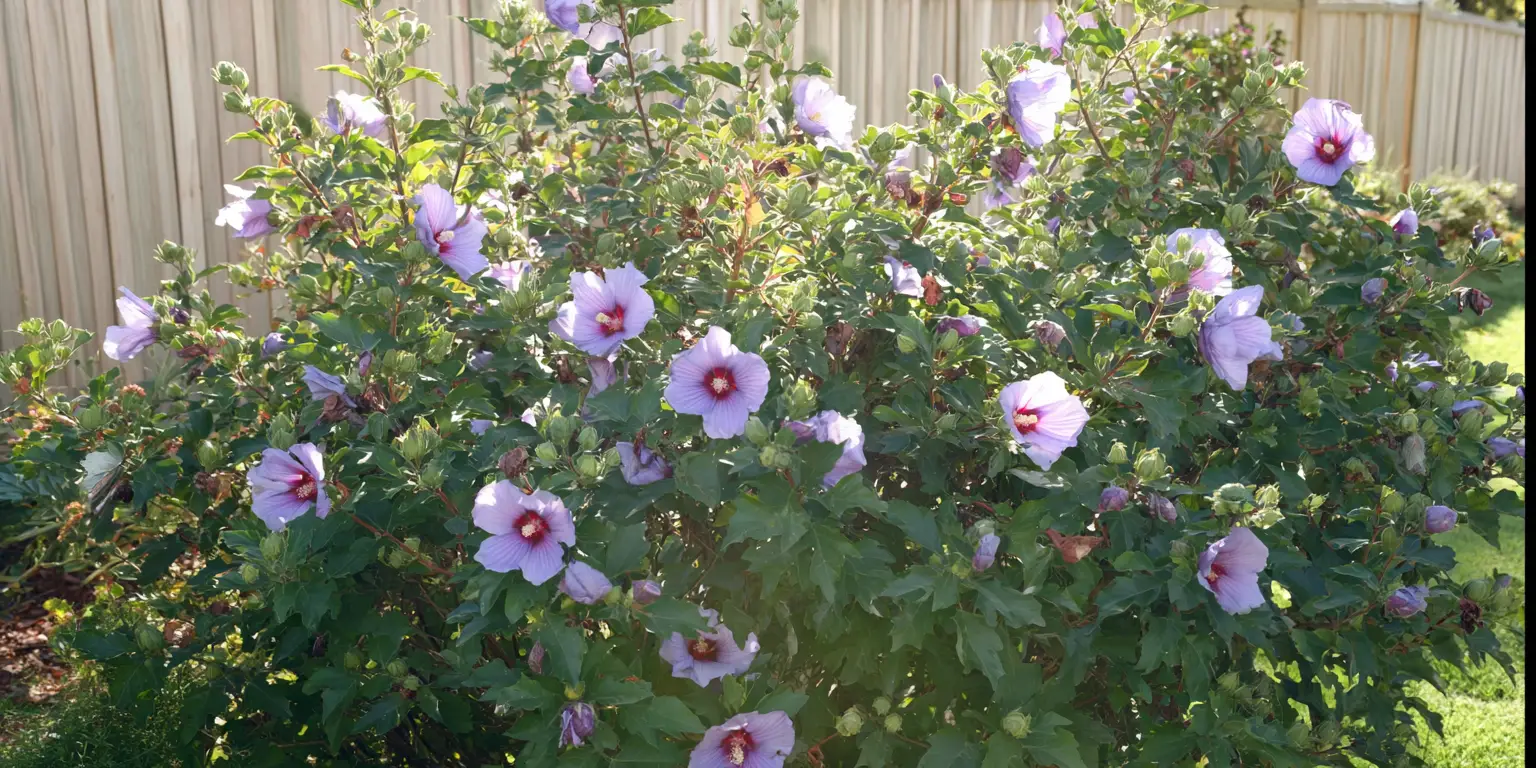
in bloom
now
through Oct
Bloom calendar
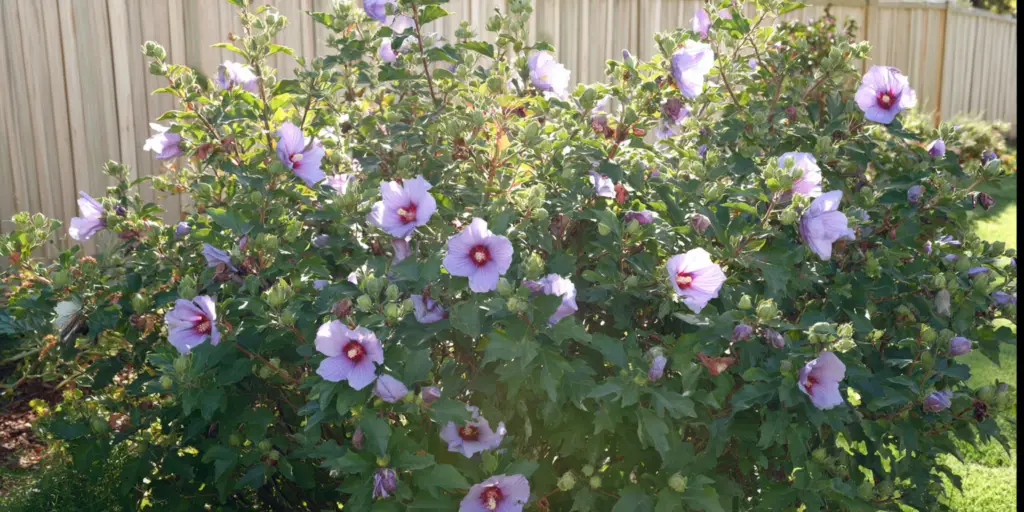
Hibiscus syriacus
Deciduous shrub
At‑a‑glance
- Group/Class: Deciduous shrub
- Height × spread: 8-12 ft (2.4-3.7 m) × 6-10 ft (1.8-3.0 m)
- Bloom window: mid summer to fall
- Color & flower form: White, pink, purple, or blue. Single or double. Often with red eye
- Fragrance: 0 none
- USDA hardiness: zones 5 to 9
- Breeder / Year / Origin: unknown. unknown. China and Taiwan
- Cut‑flower notes: Cut branches with buds for short displays. Each bloom lasts one day
- Pet safety: safe (ASPCA and NC State list non‑toxic). sources differ online
How it differs
- Woody shrub rather than a die‑back perennial.
- More drought and salt tolerant than marsh hibiscus.
- Smaller blooms but a very long window.
- Self‑seeds more readily than most hibiscus.
Strengths
- Heat and drought tolerance after establishment.
- Flowers on new growth. Pruning is flexible.
- Good for hedges and urban plantings.
- Attracts pollinators and hummingbirds.
Care in one minute
Site in full sun. Accepts light afternoon shade.
Use average, well‑drained soil. Water to establish then during drought.
Mulch 2 to 3 inches to conserve moisture.
Avoid heavy nitrogen that reduces flowers.
Renewal prune older stems in late winter for vigor.
Watch‑outs
- Can self‑seed. Remove seed pods if unwanted.
- Prune in late winter or just after bloom to manage size.
- Aphids and Japanese beetles may feed on foliage and buds.
Best uses (tags)
Provenance note
Native to China and Taiwan. Widely cultivated with many named cultivars.
References
- NC State Extension Gardener Plant Toolbox – Hibiscus syriacus
- ASPCA – Toxic and Non‑Toxic Plants: Hibiscus (Hibiscus syriacus)
Similar Flowers
Enjoying our flower guides? Add YourFlowersGuide as a preferred source on Google. It helps more readers find us.
Add to Preferred Sources