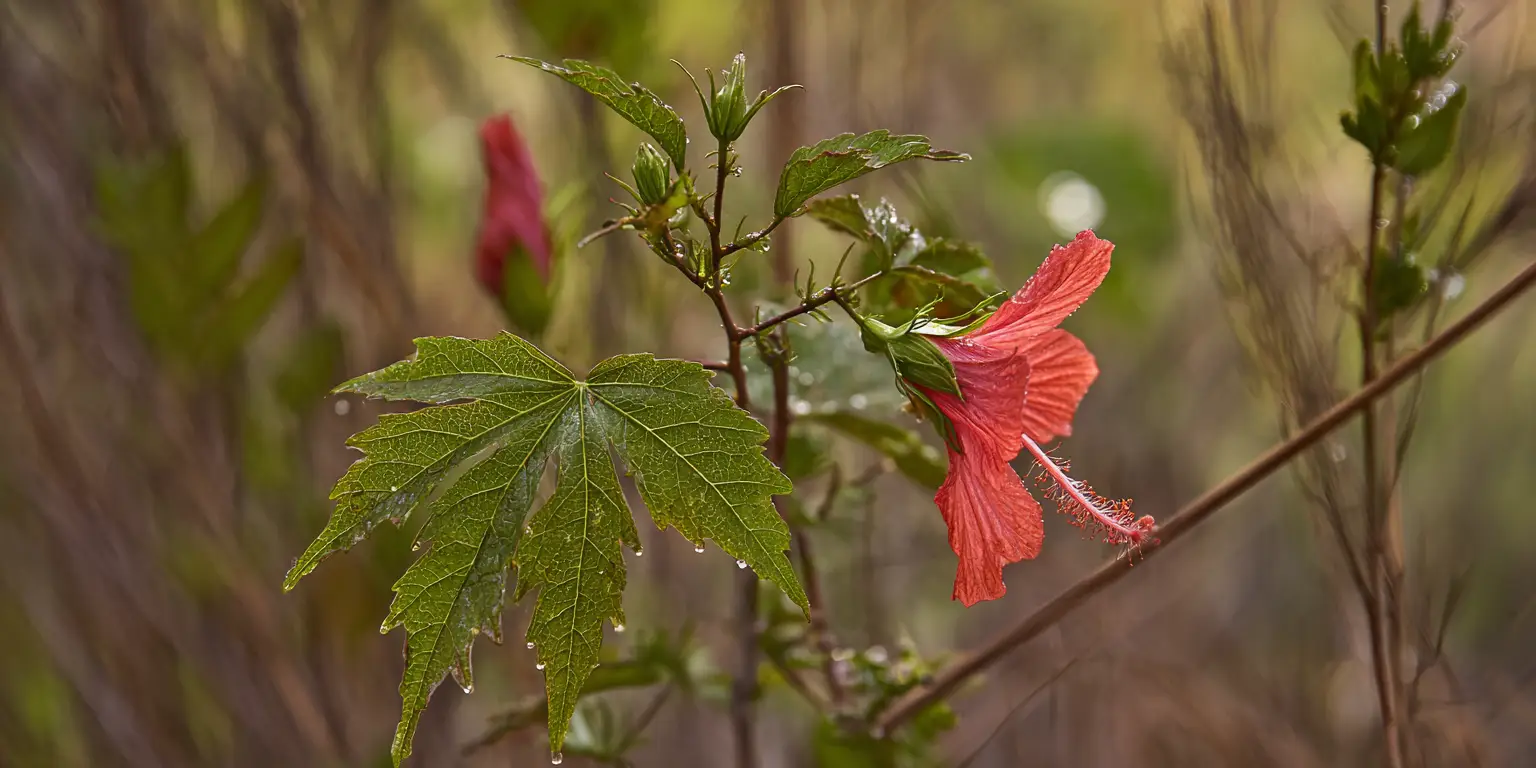
in bloom
now
through Oct
Bloom calendar
Hibiscus coccineus
Hardy hibiscus (herbaceous perennial)
At‑a‑glance
- Group/Class: Hardy hibiscus (herbaceous perennial)
- Height × spread: 6-8 ft (1.8-2.4 m) × 2-3 ft (0.6-0.9 m)
- Bloom window: mid summer to early fall
- Color & flower form: Scarlet red. Narrow petals with star‑like look
- Fragrance: 0 none
- USDA hardiness: zones 6 to 9
- Breeder / Year / Origin: unknown. unknown. USA
- Cut‑flower notes: Tall stems. Single flowers are short‑lived in water
- Pet safety: unknown . varies by source
How it differs
- Distinct star‑shaped blooms and dissected foliage.
- Taller and narrower than many hardy hibiscus.
- Moisture loving compared with shrub hibiscus.
- Dies back fully in winter and resprouts.
Strengths
- Strong vertical accent for rain gardens.
- Attracts hummingbirds and butterflies.
- Heat tolerant with moisture.
- Native species for naturalistic plantings.
Care in one minute
Choose full sun and an evenly moist site.
Amend with organic matter to hold moisture without waterlogging.
Water during dry spells. Mulch 2 to 3 inches.
Cut to the ground after frost or leave short stubble to mark clumps.
Watch‑outs
- Needs even moisture for best vigor.
- Leggy in shade or poor soils.
- Foliage may be nibbled by caterpillars.
Best uses (tags)
Provenance note
Native to wet habitats of the southeastern United States. Long grown for bold summer color.
References
- Lady Bird Johnson Wildflower Center – Hibiscus coccineus
- NC State Extension Gardener Plant Toolbox – Hibiscus coccineus
- Clemson HGIC – Hibiscus
Similar Flowers
Enjoying our flower guides? Add YourFlowersGuide as a preferred source on Google. It helps more readers find us.
Add to Preferred Sources