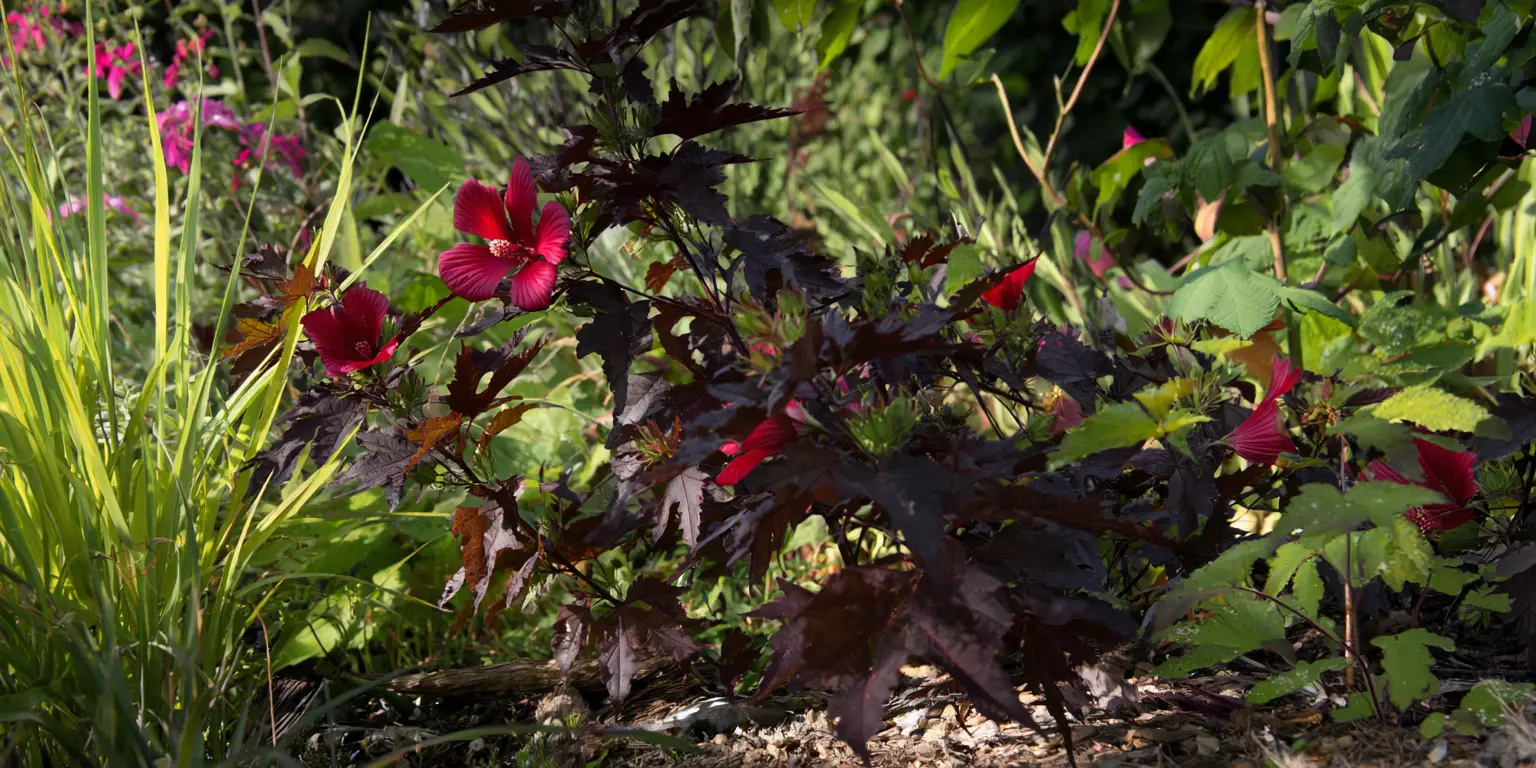
in bloom
now
through Oct
Bloom calendar
Hibiscus acetosella
Tender perennial sub‑shrub. often grown as annual
At‑a‑glance
- Group/Class: Tender perennial sub‑shrub. often grown as annual
- Height × spread: 3-5 ft (0.9-1.5 m) × 1-2.5 ft (0.3-0.8 m)
- Bloom window: late summer to fall. sometimes into winter in warm areas
- Color & flower form: Small maroon to pink hibiscus flowers. Foliage burgundy to purple
- Fragrance: 0 none
- USDA hardiness: zones 9 to 11. grown as annual in colder regions
- Breeder / Year / Origin: unknown. unknown. tropical eastern Africa
- Pet safety: unknown . varies by source
How it differs
- Grown primarily for foliage color.
- More tender than hardy hibiscus. Best as a warm‑season annual in most regions.
- Upright habit benefits from tip‑pinching to reduce legginess.
Strengths
- Striking, fast‑growing purple foliage.
- Heat tolerant in full sun with regular water.
- Useful for high‑contrast containers and borders.
Care in one minute
Grow in full sun for best leaf color. Give light shade in extreme heat.
Use well‑drained soil or potting mix and water regularly.
Feed lightly every 4 to 6 weeks in active growth.
Pinch tips at 8 to 10 inches to encourage branching.
Root cuttings in late summer to overwinter indoors.
Watch‑outs
- Killed by frost or light freeze.
- Leggy without pinching or enough light.
- May not flower before frost in cool summers.
Best uses (tags)
Provenance note
Native to tropical East Africa. Widely used for ornamental foliage color.
References
- NC State Extension Gardener Plant Toolbox – Hibiscus acetosella
- Kew Science – Plants of the World Online – Hibiscus acetosella
- University of Wisconsin Horticulture – Hibiscus acetosella
Similar Flowers
Enjoying our flower guides? Add YourFlowersGuide as a preferred source on Google. It helps more readers find us.
Add to Preferred Sources