returns in
184
days
Bloom calendar
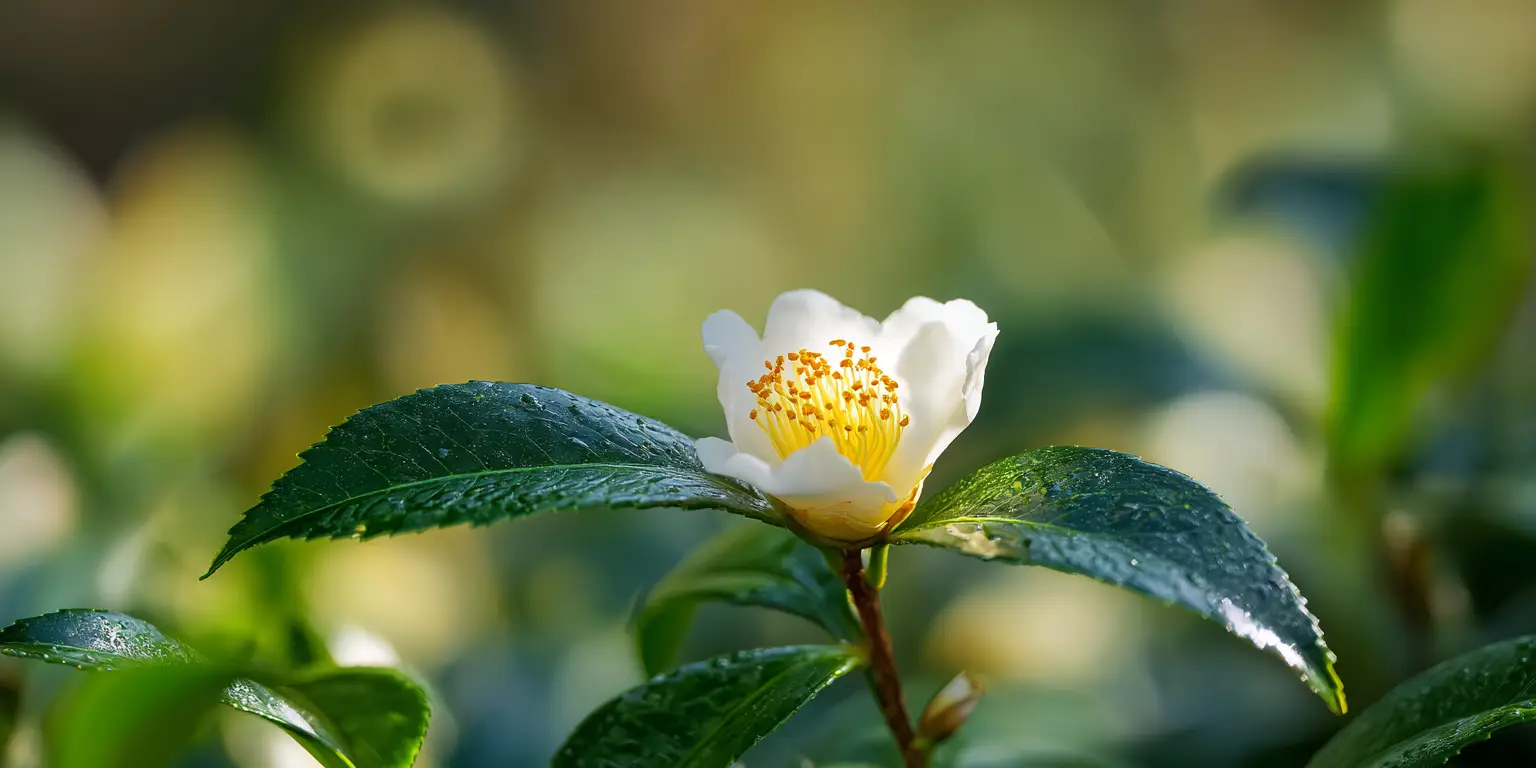
Camellia sinensis
Species
At‑a‑glance
- Group/Class: Species
- Height × spread: 10–15 ft (3.0–4.6 m) × 6–10 ft (1.8–3.0 m)
- Bloom window: October to December
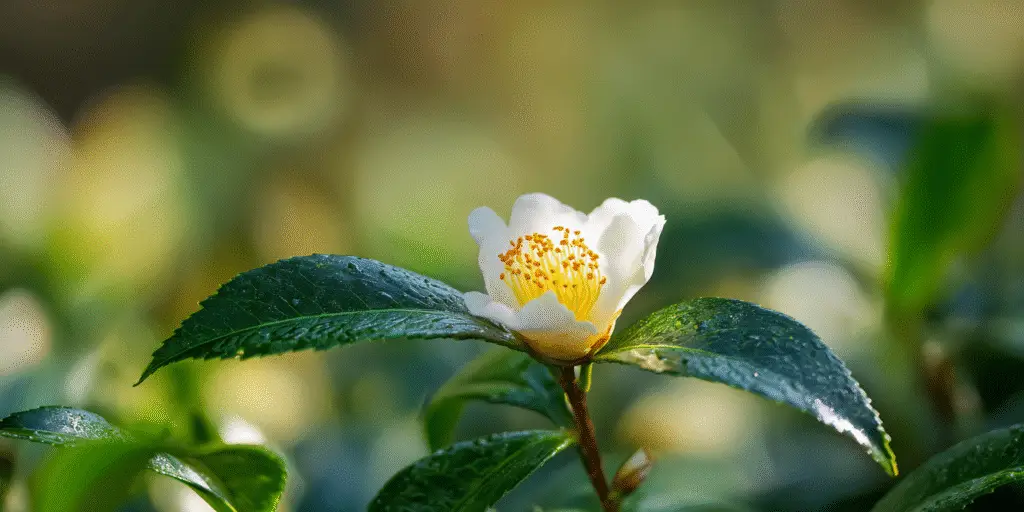
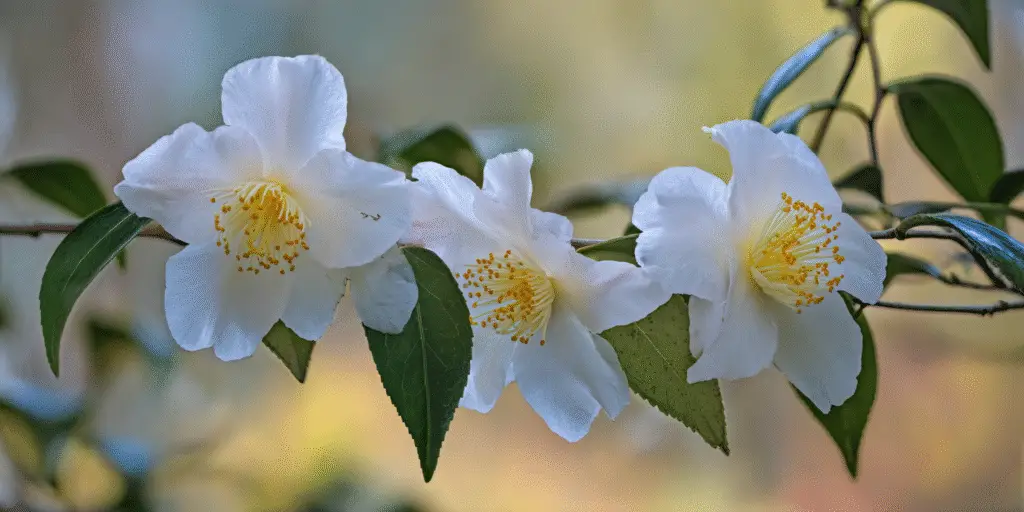
- Color & flower form: white, single, yellow stamens
- Fragrance: 2 noticeable
- USDA hardiness: zones 7–9
- Breeder / Year / Origin: unknown, unknown, China
- Cut‑flower notes: small stems and blooms; short vase life; better as foliage accent or floating blooms
- Pet safety: sources differ; leaves contain caffeine – avoid pet ingestion
How it differs
- Grown mainly for edible leaves rather than large flowers.
- Smaller flowers than ornamental camellias but noticeably fragrant.
- Tolerates and benefits from regular clipping for harvest.
- Useful as an edible hedge in mild climates.
Strengths
- Edible leaves for tea making.
- Fragrant fall bloom for seasonal interest.
- Dense, manageable shrub with glossy evergreen foliage.
Care in one minute
Light: sun to part shade; shelter from drying winter winds where possible.
Soil: acidic and organic with excellent drainage; maintain mulch.
Water: steady moisture through summer when buds and new leaves form.
Feeding: light, balanced fertilizer in spring if needed.
Pruning: maintain 3–5 ft (0.9–1.5 m) for harvest; clip after flowering.
Watch‑outs
- Tea leaves contain caffeine, which is toxic to pets; keep prunings away from animals.
- Leaf spots, root rot, and scale in stressful or wet conditions.
- Needs routine pruning to keep harvestable size.
Best uses (tags)
Provenance note
Domesticated in China for tea production over millennia; now grown in warm, humid regions worldwide and as an ornamental in North America.
References
- Missouri Botanical Garden – Camellia sinensis profile
- Clemson University HGIC – Camellia
- VCA – Caffeine Toxicity in Pets
Similar Flowers
Enjoying our flower guides? Add YourFlowersGuide as a preferred source on Google. It helps more readers find us.
Add to Preferred Sources