Taxonomy and origin
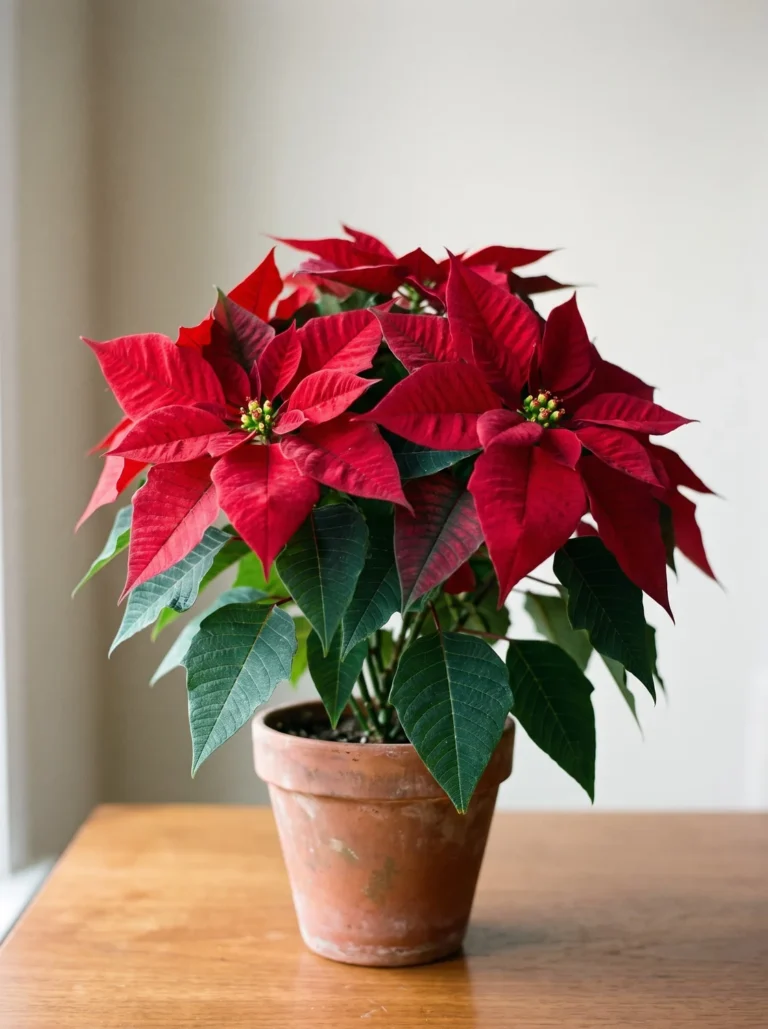
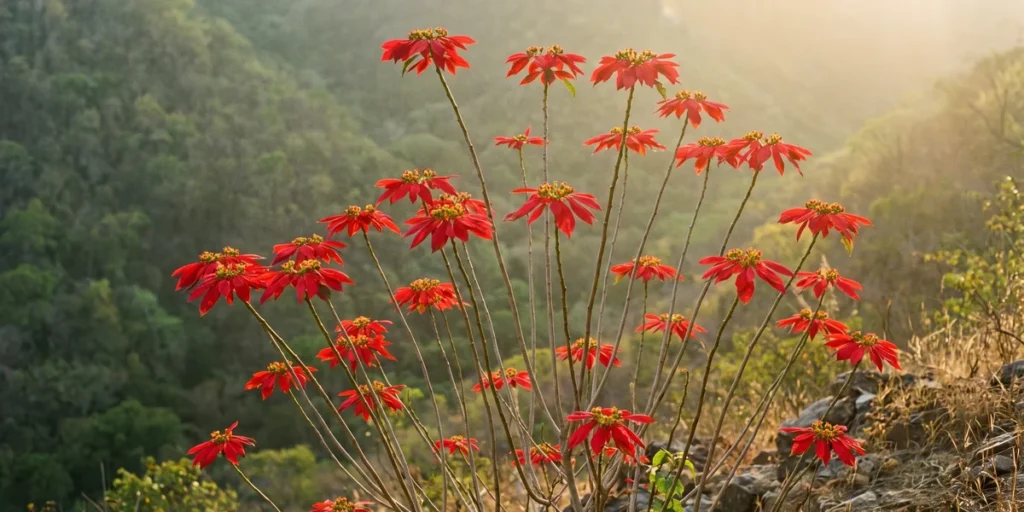
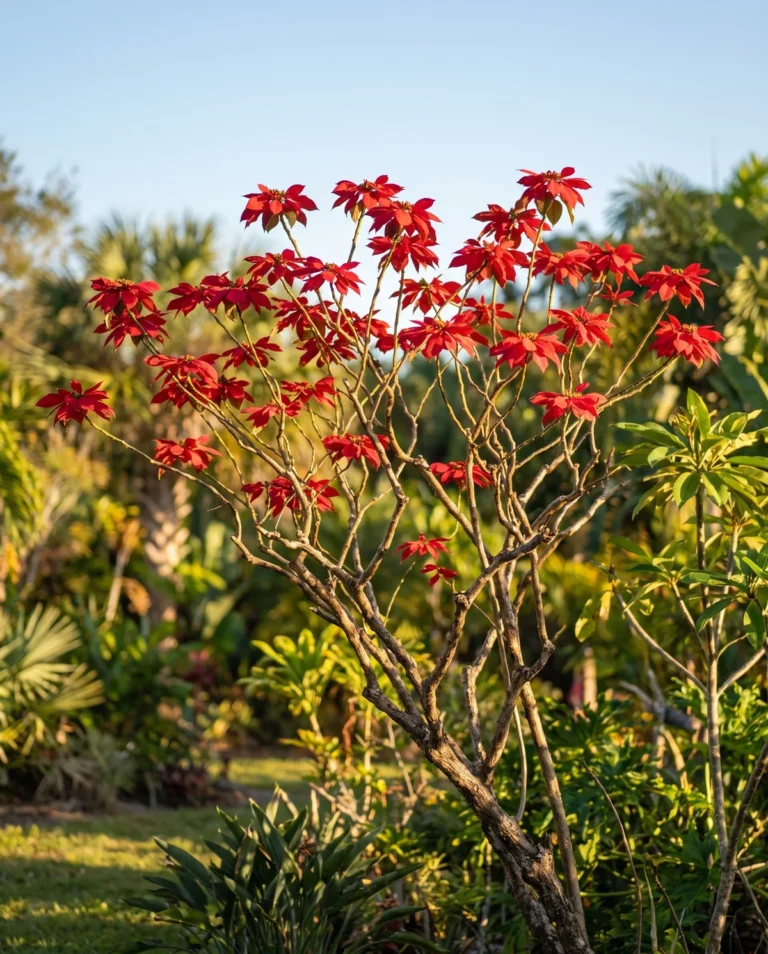
The poinsettia is Euphorbia pulcherrima, a member of the spurge family, Euphorbiaceae, and like its relatives it bleeds a milky latex from any cut stem or torn leaf. It grows wild on the Pacific slope of Mexico and into Guatemala, where it is a lanky shrub or small tree of 10 to 15 feet, flowering in the short days of winter. The showy part is a ring of bracts, true leaves that flush red around the actual flowers, which are the small yellow-green button-like structures in the center called cyathia. The botanical name, given in 1834, means "the most beautiful euphorbia." The Aztecs grew the plant long before Europeans saw it, called it cuetlaxochitl, pressed a reddish textile dye from the bracts, and used the latex against fevers. In Mexico it is the flor de nochebuena, the Christmas Eve flower, from a story of a poor girl whose roadside weeds turned scarlet when she laid them at a nativity as her only gift.
The United States got the plant through Joel Roberts Poinsett, the first American minister to Mexico, who took cuttings near Taxco in 1828 and shipped them to his greenhouse in South Carolina; the plant was displayed in Philadelphia the next year and carried his name by about 1836. December 12, the day he died in 1851, is now National Poinsettia Day. The modern potted plant is largely the work of the Ecke family of southern California, who dominated production for most of a century and guarded a technique that made their plants branch into the compact, many-headed shape buyers expect. University researchers solved the secret in 1997. A phytoplasma, a bacteria-like organism passed along by grafting, causes the free branching, and once that was published the trait spread through the whole industry. Today the poinsettia is the best-selling flowering potted plant in the United States, bred into more than 100 varieties, and red forms still account for over three quarters of everything sold.
How many are sold each winter is genuinely unknown
Published counts of the American poinsettia trade refuse to agree with each other. Reputable figures run from 35 million plants a year through 45 million to more than 70 million, with one national valuation putting the crop at $216.5 million in a single season, and the counts plainly measure different slices of the same business. The part every source does agree on is the calendar. The selling season runs about six weeks, Thanksgiving through Christmas, and the entire dispute fits inside it.
Eight cultivars from a university list, by what the name itself tells you
Clemson Extension's poinsettia fact sheet names a working list of cultivars rather than reviewing the whole market of more than 100. The eight below come from that list. The badge is derived, not judged: green means the bract color is stated in the cultivar's own name, red means the name carries no color and the shade shown is simply what the trade sells under it. Heights and habits are deliberately absent, because a retail poinsettia's size is set by the grower's pinching and pot, not by the cultivar.
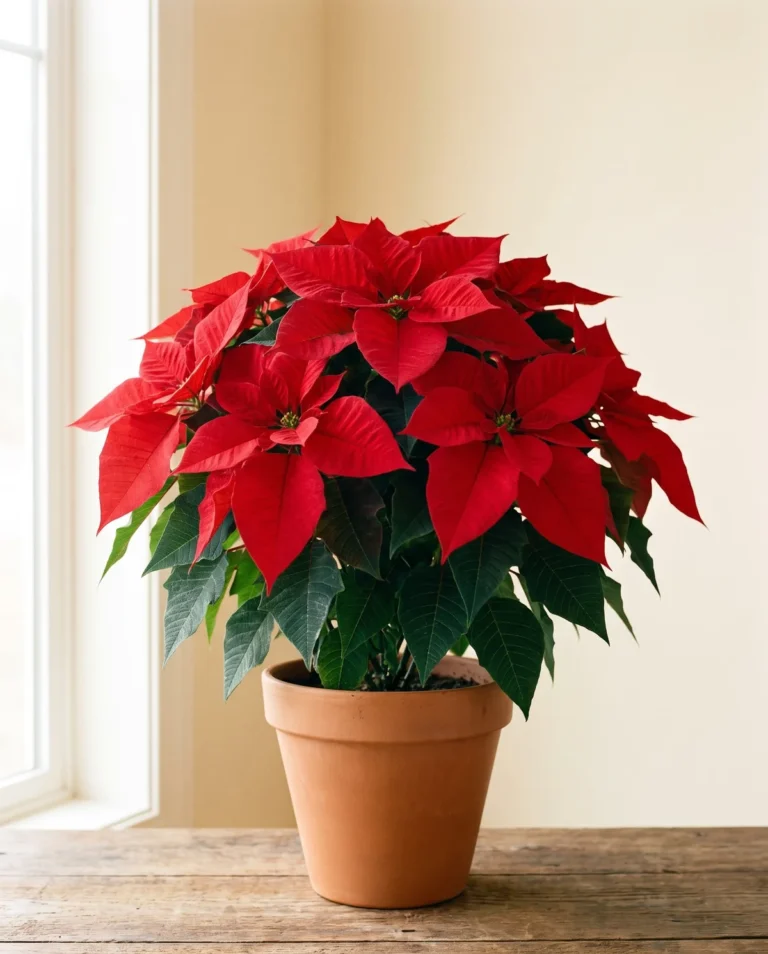
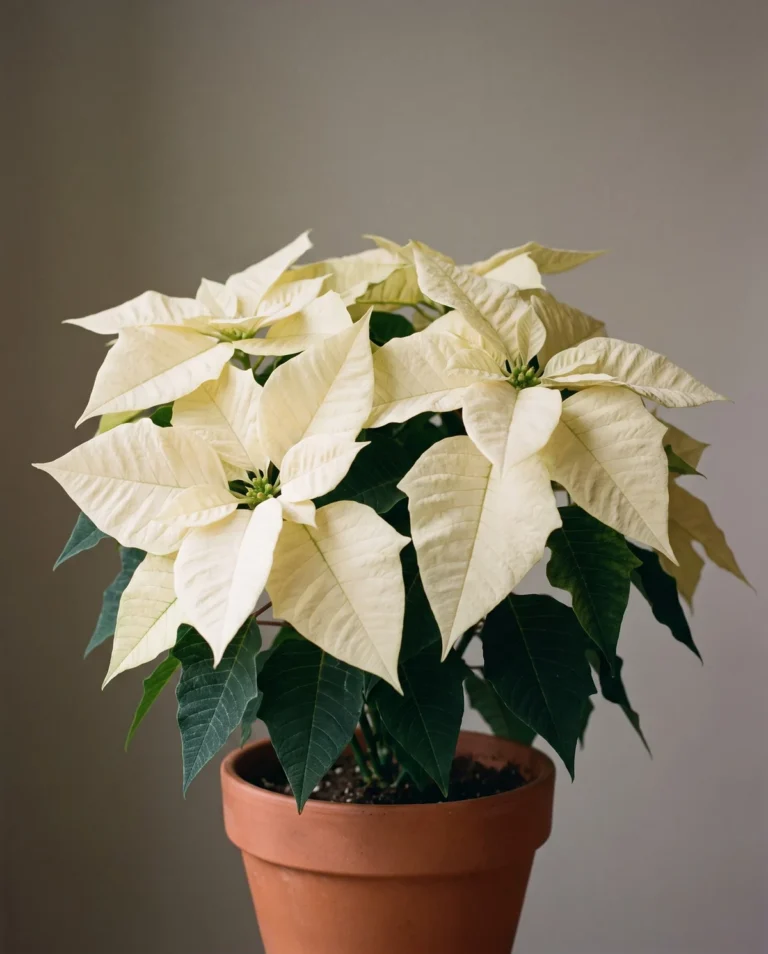
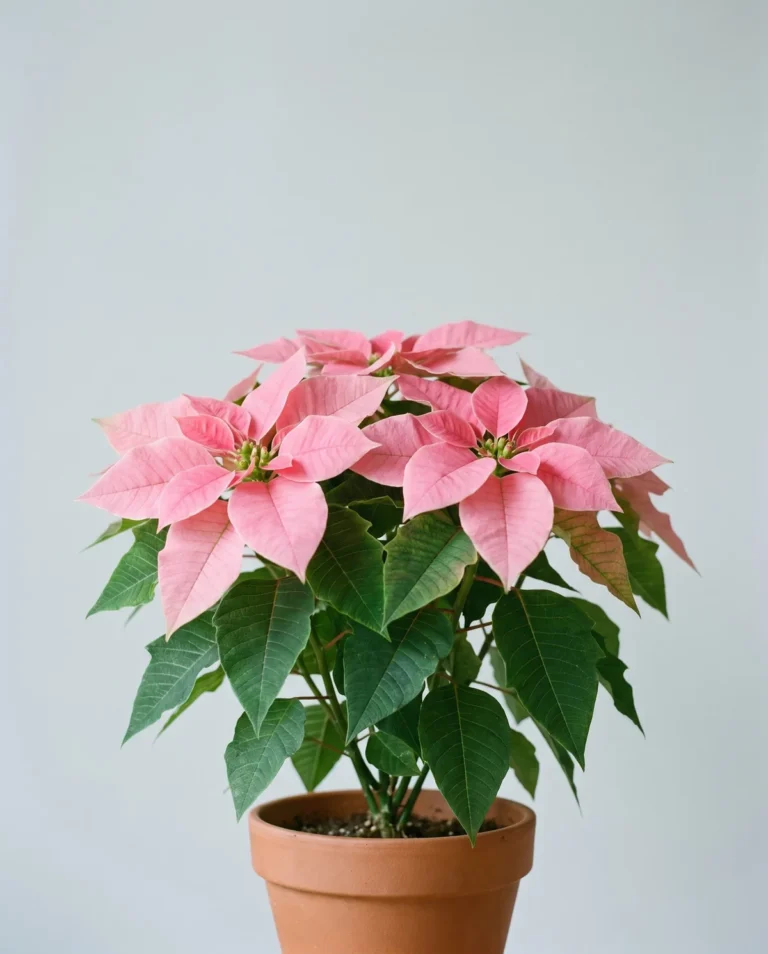
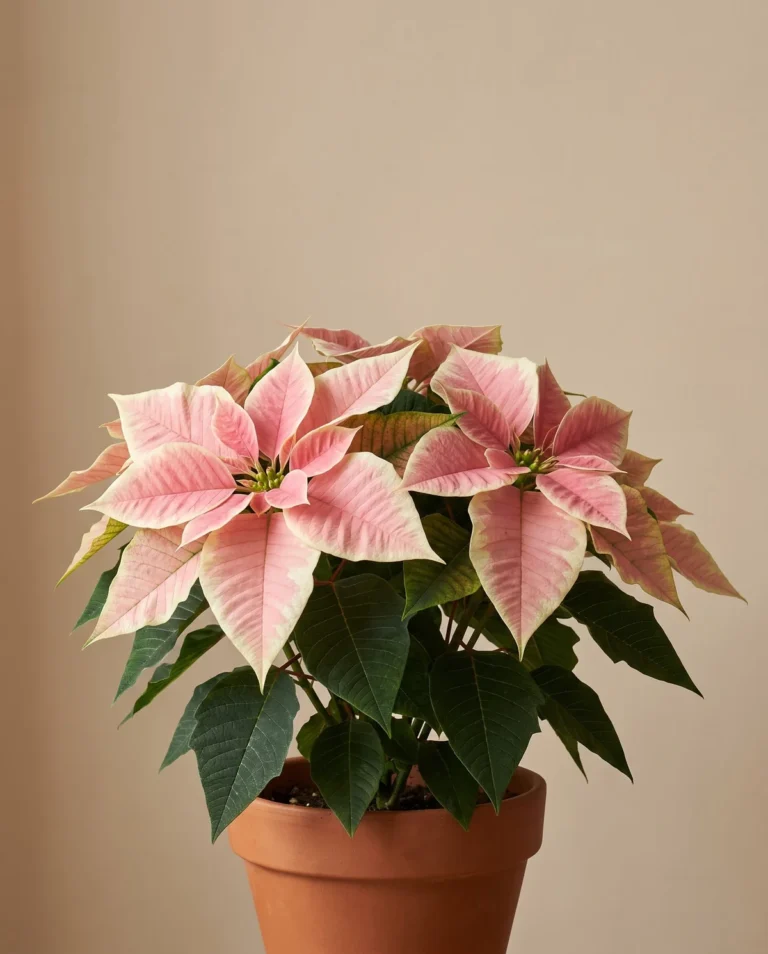
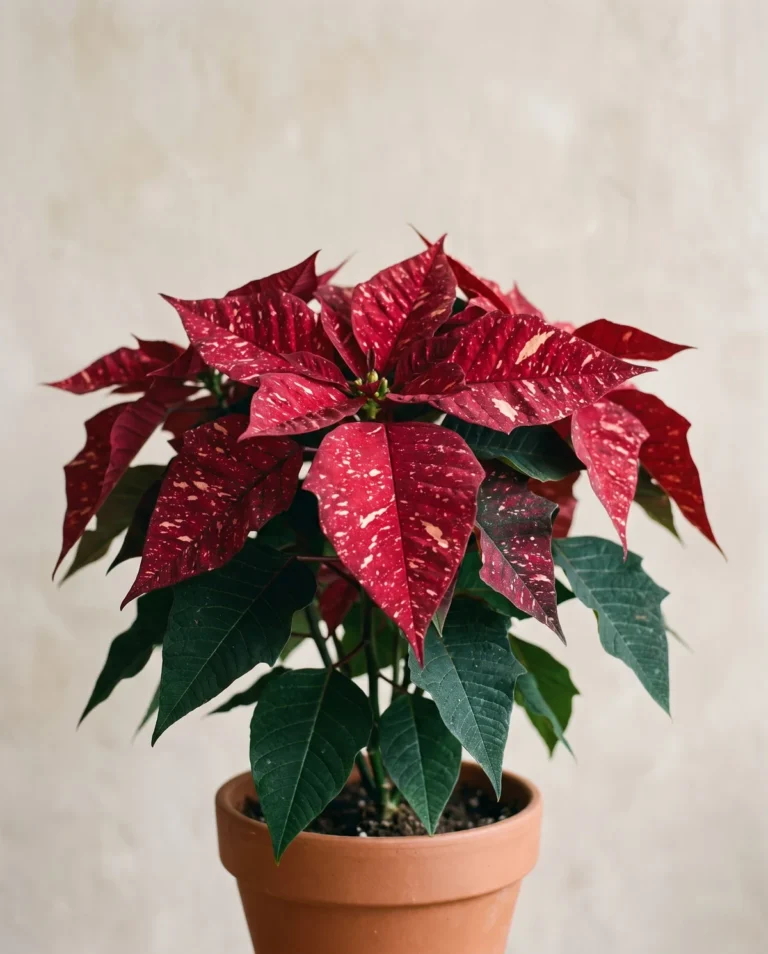
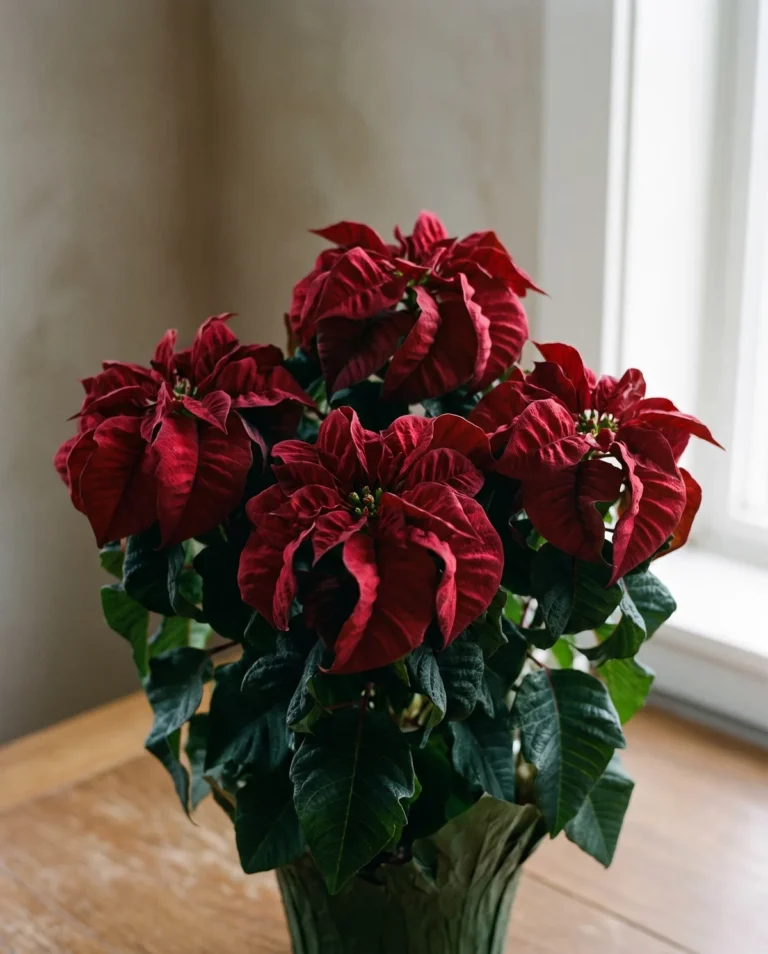
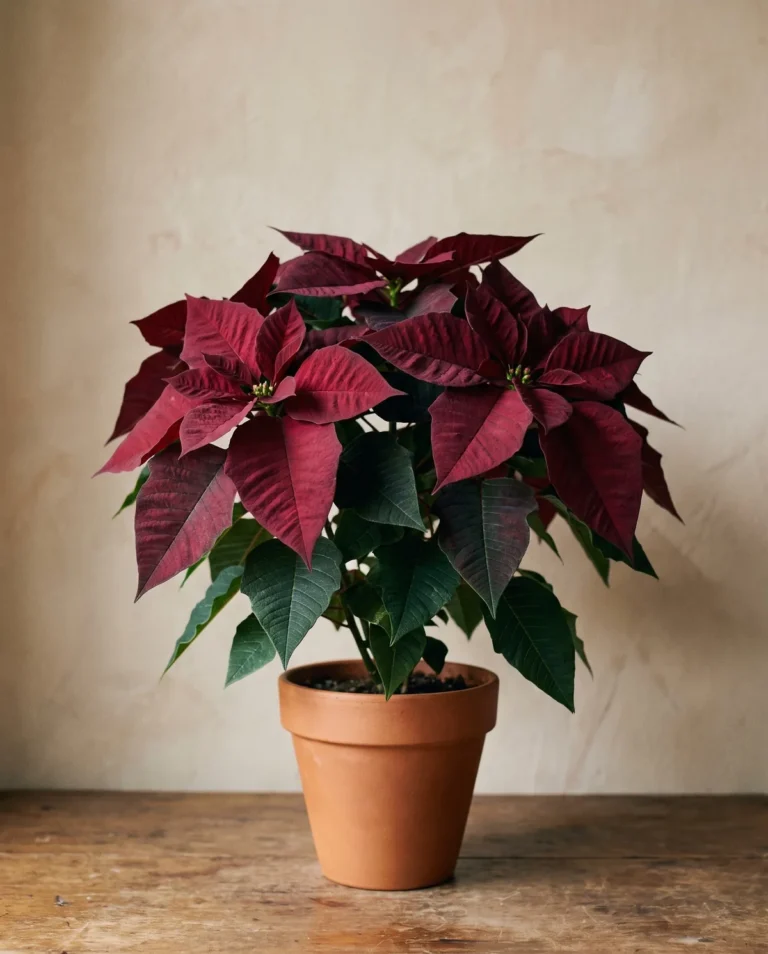
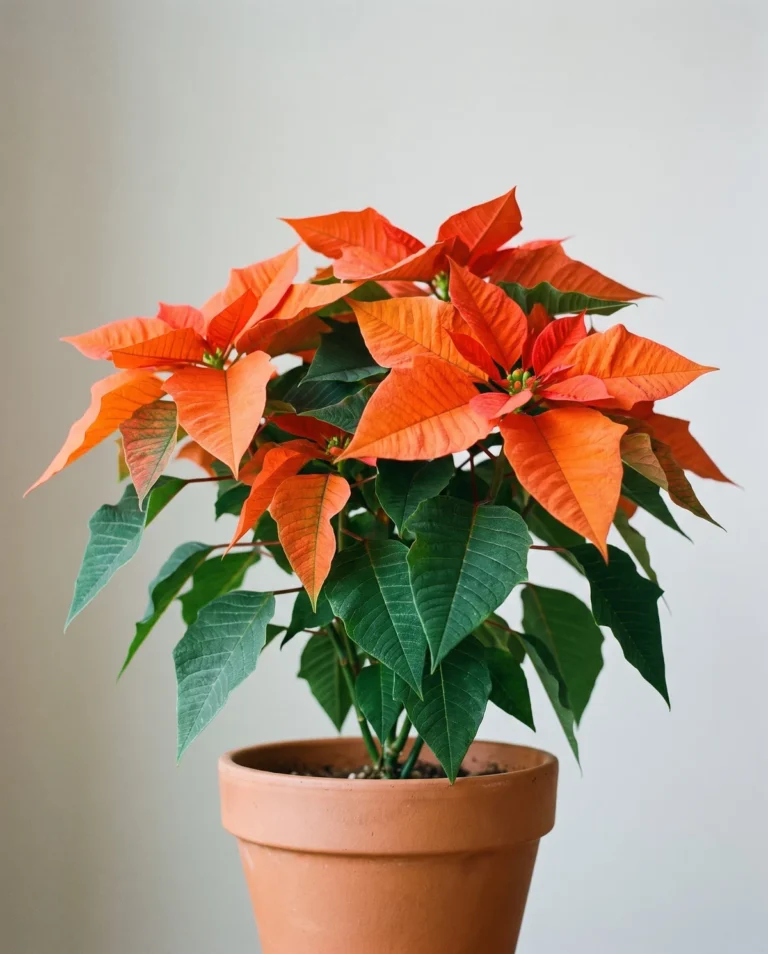
The first named cultivar in the trade was 'Oakleaf' in 1923, per Clemson, a century after the plant reached the United States. Everything sold since 1997 also shares one invisible trait: the graft-transmitted phytoplasma that makes plants branch into the compact many-headed dome, the trade secret one California family kept for decades.
Bloom time
Poinsettias are short-day plants, which in practice means the bracts begin coloring when nights grow long in fall. Greenhouse growers time their crops so plants reach full color for the Thanksgiving and Christmas market, and a plant bought in late November typically peaks through December and into January. In frost-free climates where the shrub lives outdoors year round, coloring starts on the same autumn schedule but the display runs far longer, deep into spring, which is why one university plant toolbox tags its bloom season as both winter and spring. The color itself sits in the bract pigments, and the true flowering event is much smaller: the yellow-green cyathia in the center open, shed a little pollen, and fade. Once the cyathia have finished, the bracts have nothing left to serve and the plant begins letting them go, so the state of those center buttons tells you where a plant is in its season.
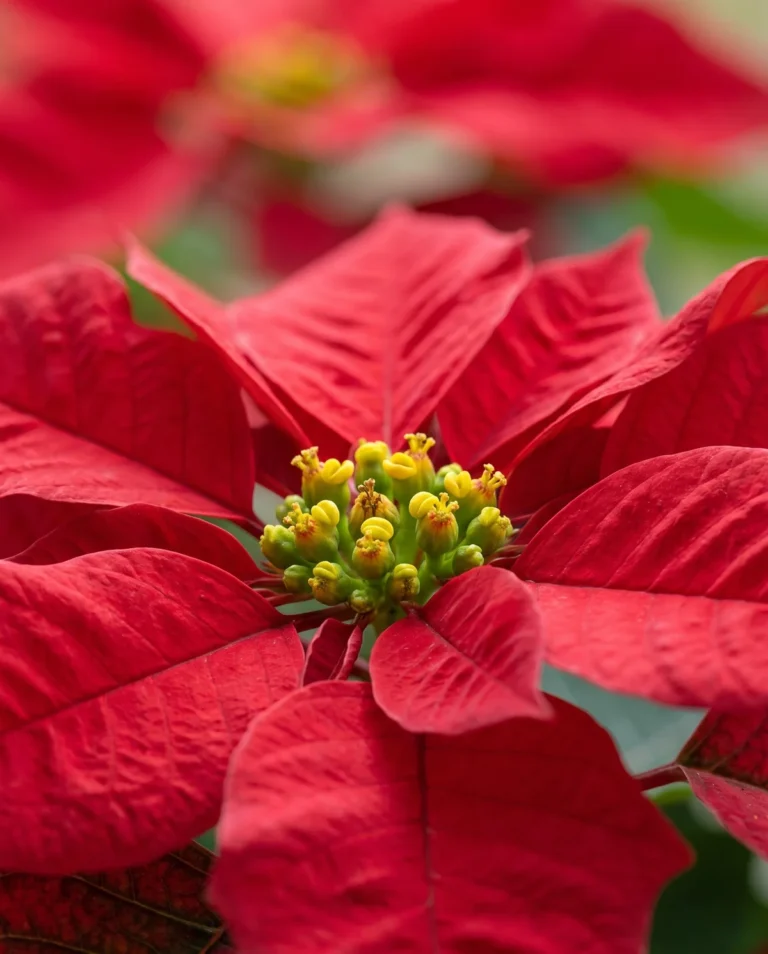
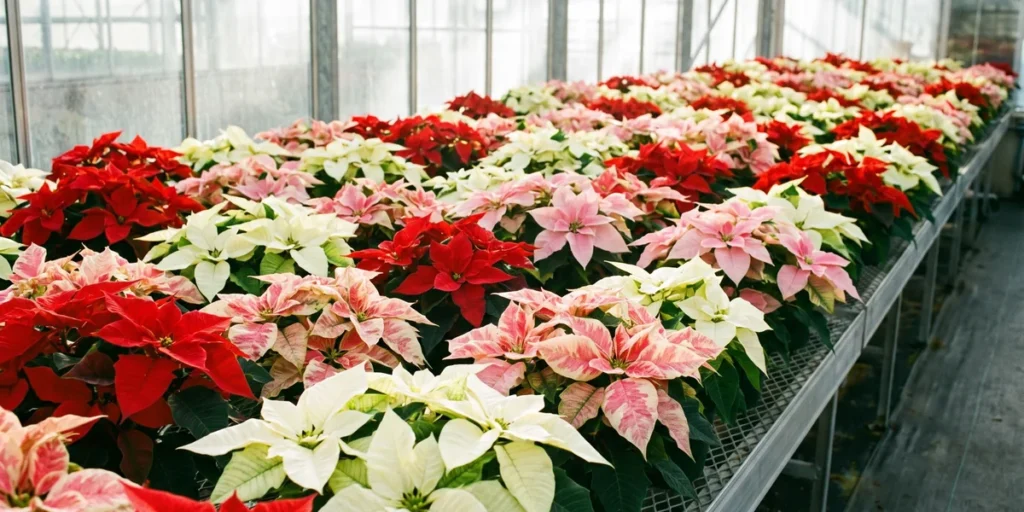
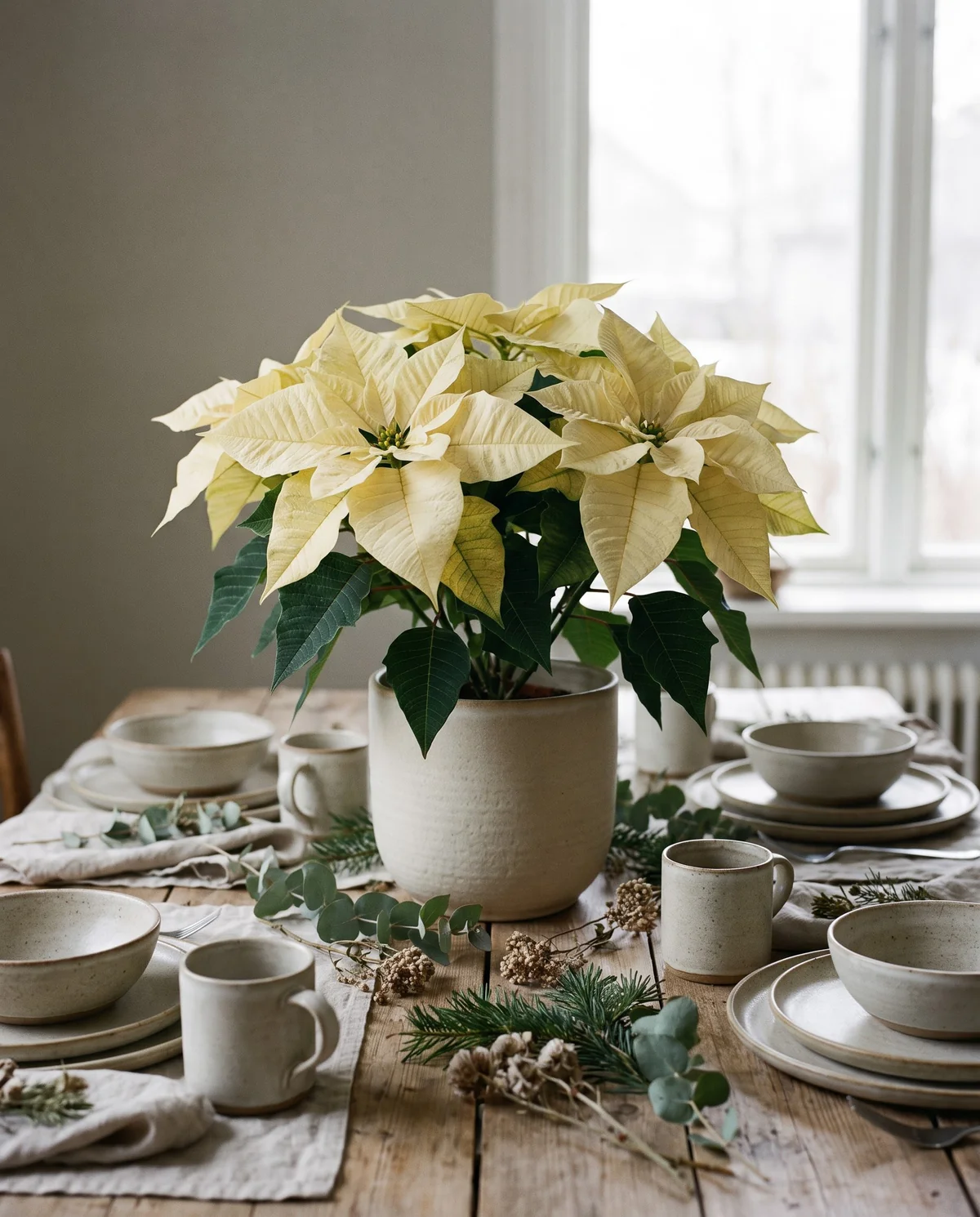
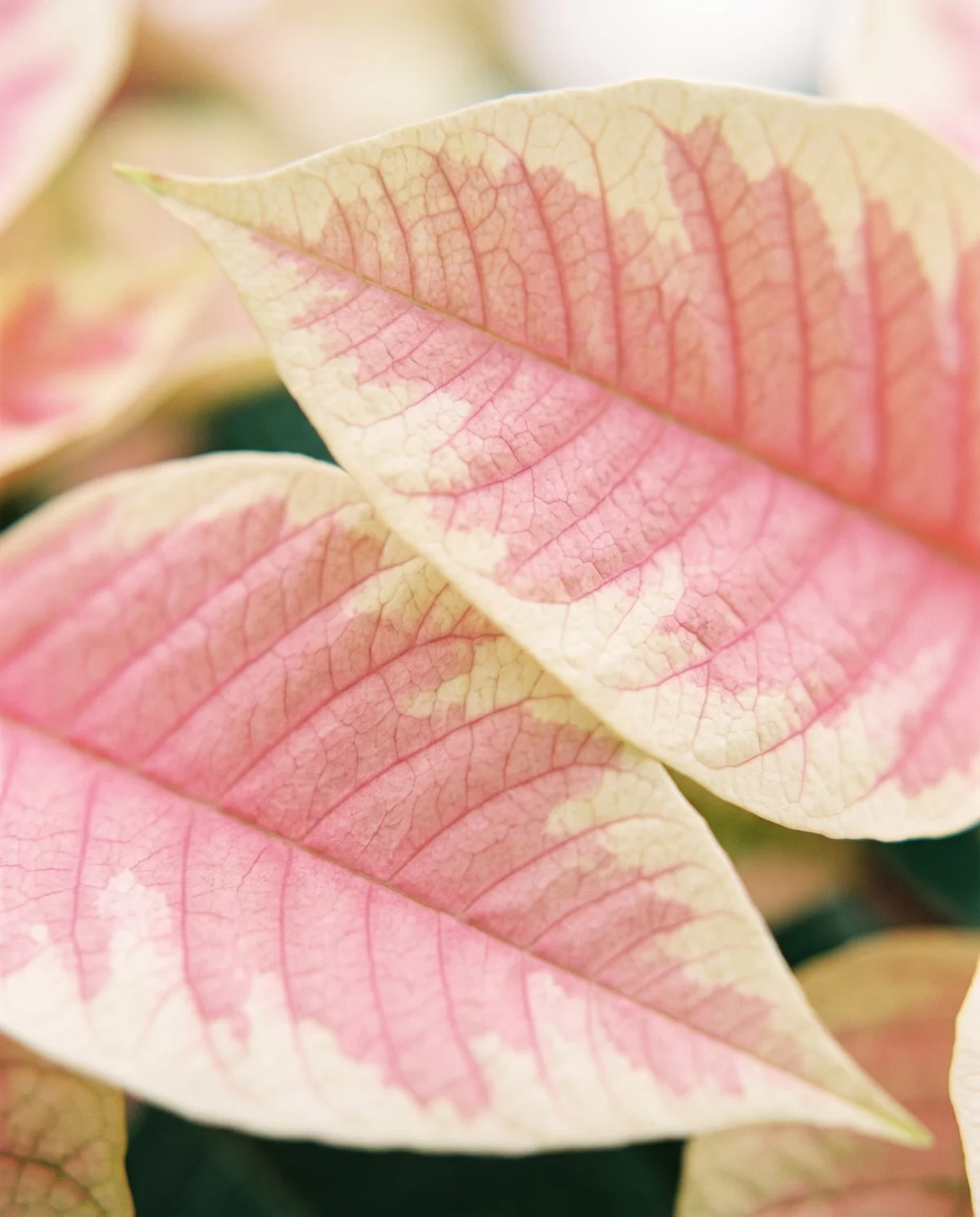
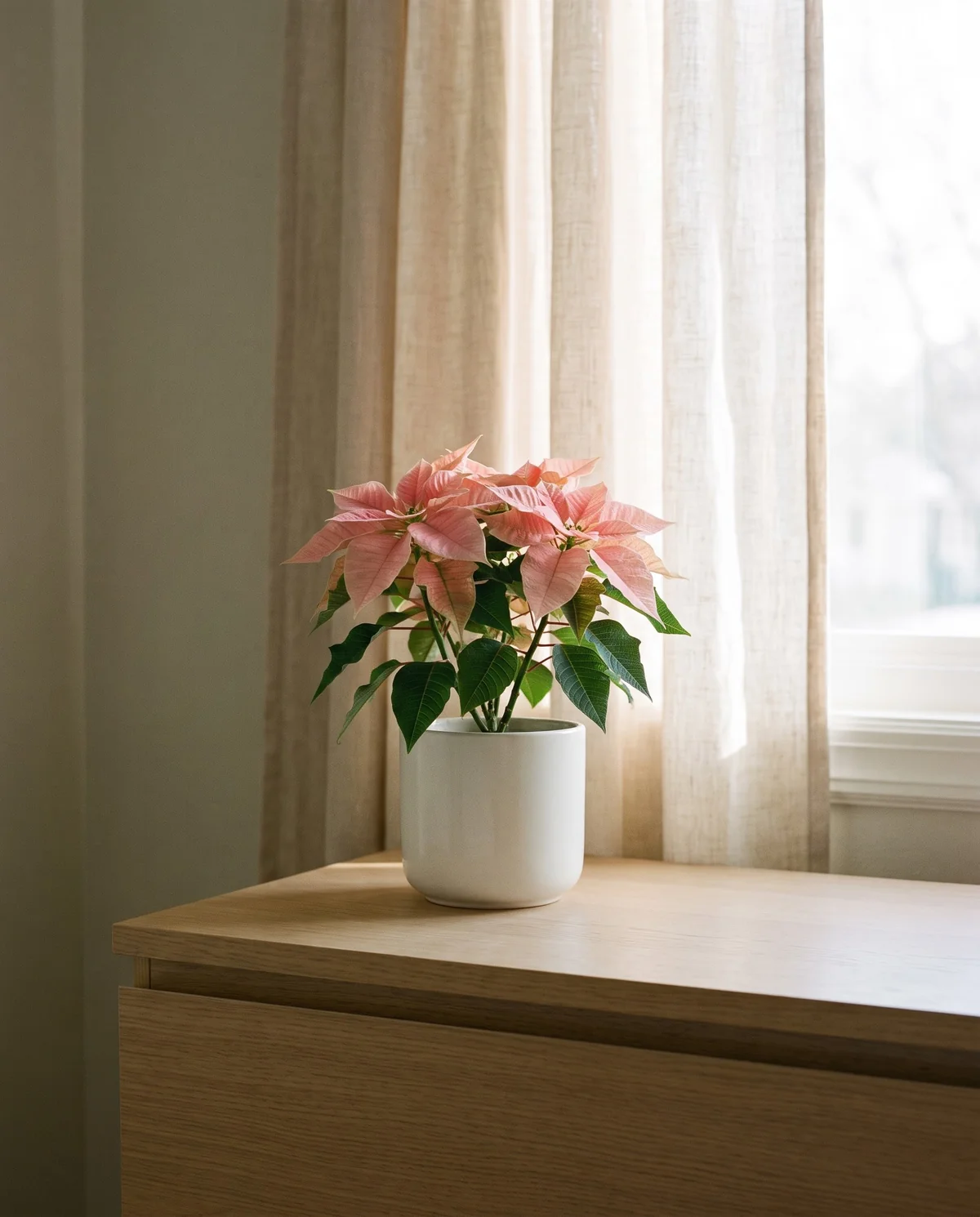
Bract color is not limited to the classic scarlet that dominates every store display and put the plant on the map of red flowers. Breeders sell white, cream, pink, salmon, burgundy, and marbled forms, plus novelty types with curled bracts or speckling, and what a given color signals in a gift is a subject of its own covered in flower color meanings. Whatever the color, the calendar is the same. Bracts hold for six to eight weeks in a warm room, longer with cool nights and good light, and a gradual shed of lower leaves starting in late winter is the plant winding down on schedule.
The only flower here whose color is not a flower
Across the eighty-plus flowers profiled on this site, a small club stages its show with something other than petals: the anthurium and the calla carry a colored spathe, a single sculpted sheath around the true bloom, and the bird of paradise launches its display from a boat-shaped bract. The bigleaf hydrangea half-joins them with a show carried mostly by sepals. The poinsettia stands alone even in that company, because its color comes from ordinary leaves, dozens of them, that change pigment on a light schedule. Leaf care and flower care are the same job on this plant, so anything that costs it foliage, cold, drafts, drowned roots, costs the display directly. Deadheading does not exist for it, since there is nothing to deadhead. And the show scales with leaf count, which is why a well-branched plant beats a tall one every time.
Year one, year two, and the plant it becomes in the ground
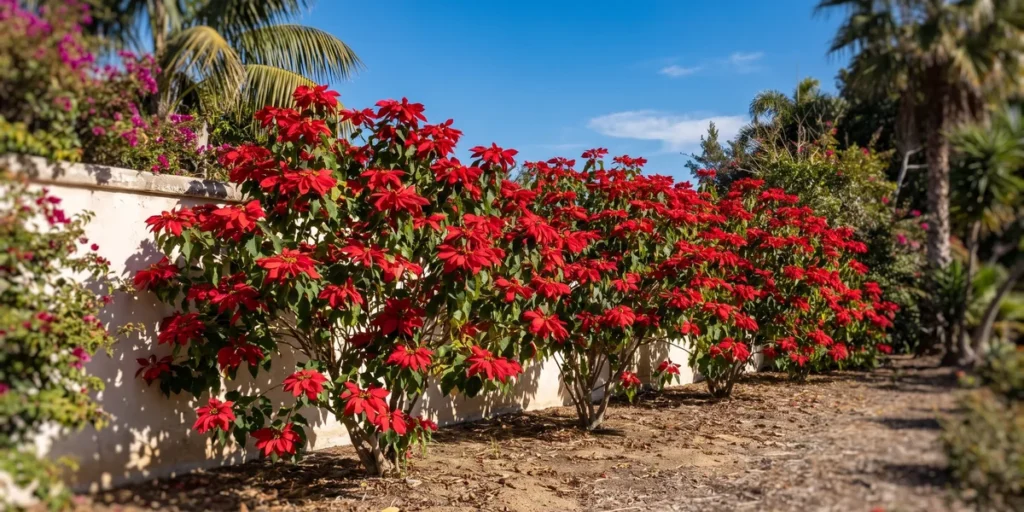
Year one is the year everyone knows: a greenhouse-grown plant peaks in the store in late November, holds color six to eight weeks in a bright warm room by Illinois Extension's measure, and begins shedding lower leaves around February by Purdue's calendar. Year two belongs only to owners who ran the full loop, the March cut-back, summer feeding, the September 1 last pinch, and the October-to-Thanksgiving darkness regimen, and even then expectations deserve managing: the plant colors on its own schedule, the display depends on how disciplined the dark nights were, and a home windowsill cannot reproduce the light a production greenhouse pours into the crop, so a second-year plant is typically looser and less uniform than the one the grower shaped with pinching and growth regulation. That gap is not failure, it is the difference between a florist product and a shrub. Year three and beyond only exist outdoors in zones 9a to 11b, where NC State rates the plant a 3-to-12-foot erect shrub: cut back hard each spring, it thickens into a hedge or corner plant that colors every winter without anyone managing its nights, and in its native Mexico the same species stands 10 to 15 feet with the color carried at the branch tips.
Height and spread
Size depends entirely on where the plant lives. A retail poinsettia stands a foot or two tall and about as wide, shaped by the free-branching trait and by growers pinching it into a dome. Kept as a potted plant in northern homes it rarely passes about three feet even after years. Planted in the ground in a frost-free climate the same plant reverts to what it is, an erect, multi-stemmed shrub of 3 to 12 feet, and in its native Mexican range it grows leggy and reaches 10 to 15 feet, with the color carried at the branch tips. Landscape plants in warm zones get cut back hard after flowering to keep them dense and the color at eye level.
Light
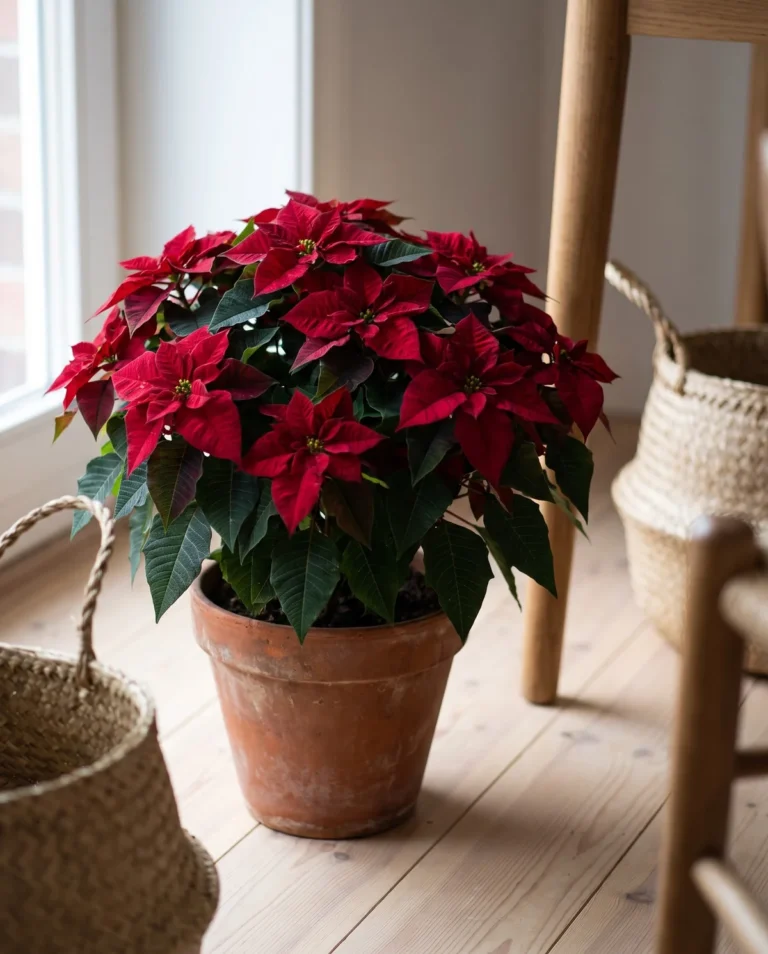
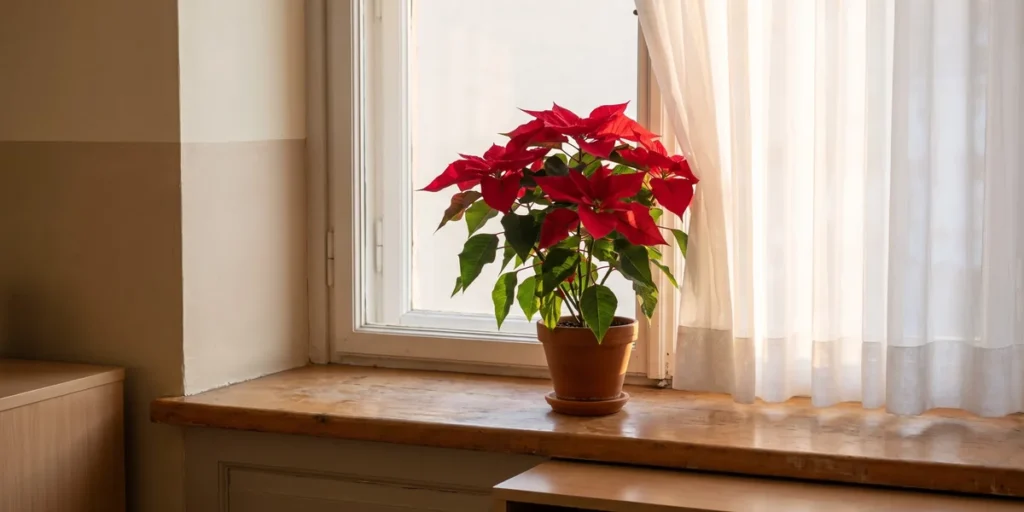
Indoors, give a poinsettia at least six hours of bright, indirect light a day, the kind of exposure a spot near an east or south window provides. A sheer curtain between plant and glass is enough to soften midday sun; deep shade, by contrast, drains the plant quickly, and poor light is one of the named causes of early leaf drop. Keep the plant itself from touching cold windowpanes. Outdoors in zones 9 to 11 the shrub carries a partial-sun rating, two to six hours of direct sun a day, and colors best where it gets morning light with some afternoon relief. One caution surprises people: while the plant is being pushed to rebloom in fall, even a lamp switched on briefly at night can delay coloring, so bright days and truly dark nights have to work together.
Water
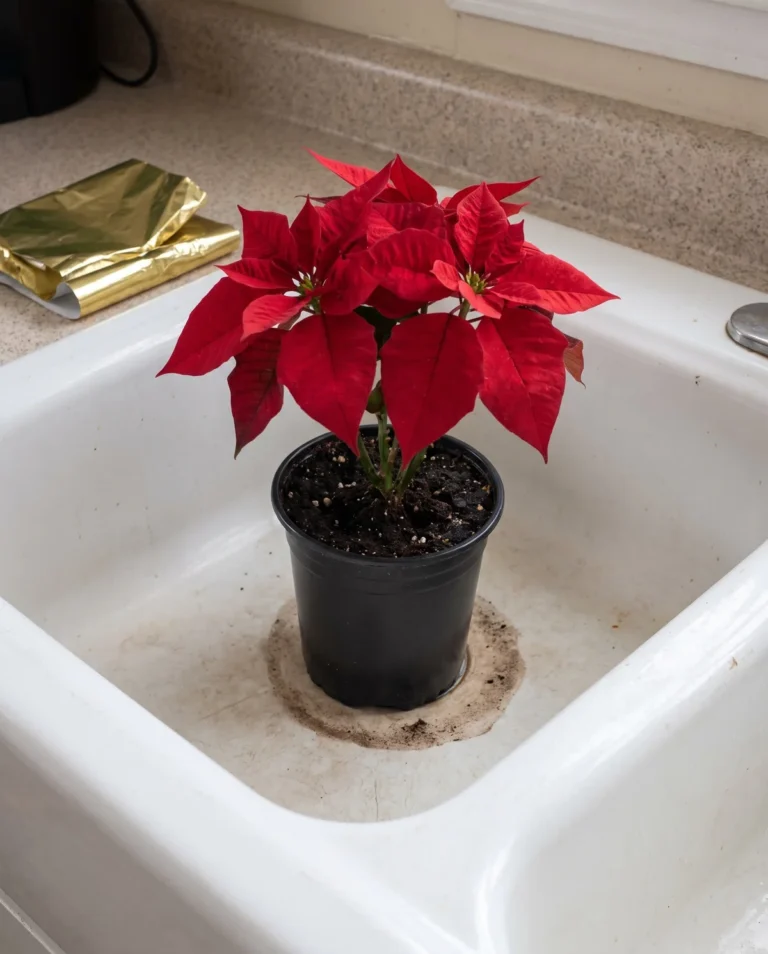
Water when the soil surface feels dry to the touch, then water thoroughly until it runs from the drain holes, and never let the pot stand in what drains out. The decorative foil on gift plants is the quiet killer here, because it holds every ounce of runoff against the roots; punch holes in the bottom or pull the foil off and water the plant in a sink, letting it drain fully before it goes back on display. Soil kept soggy suffocates roots and invites rot, while soil left bone dry wilts the plant and costs it leaves, and both extremes end the show early. Cool rooms slow drying and warm dry rooms speed it, so the finger test beats any schedule. Skip fertilizer entirely while the plant is in color; feeding resumes only if you keep the plant into spring for another season, at which point a balanced houseplant fertilizer every two to three weeks through the growing months does the job.
Soil and pH
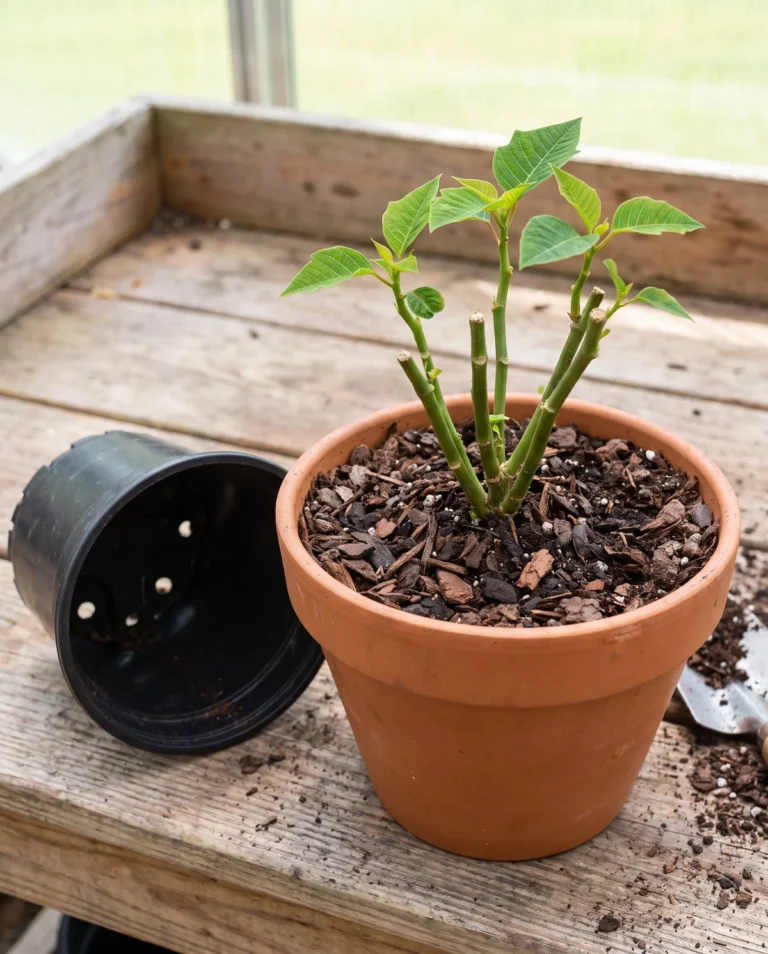
A poinsettia asks for nothing exotic in the pot: any fresh, well-drained peat- or bark-based potting mix works, and drainage matters far more than recipe because the root system is unforgiving of standing water. In the ground its rated range runs from neutral soil up into the alkaline territory above pH 8.0. If you keep a gift plant for a second year, move it in early June into a container two to four inches wider with fresh mix, both for root room and because year-old peat mix slumps and holds water against the roots.
USDA hardiness
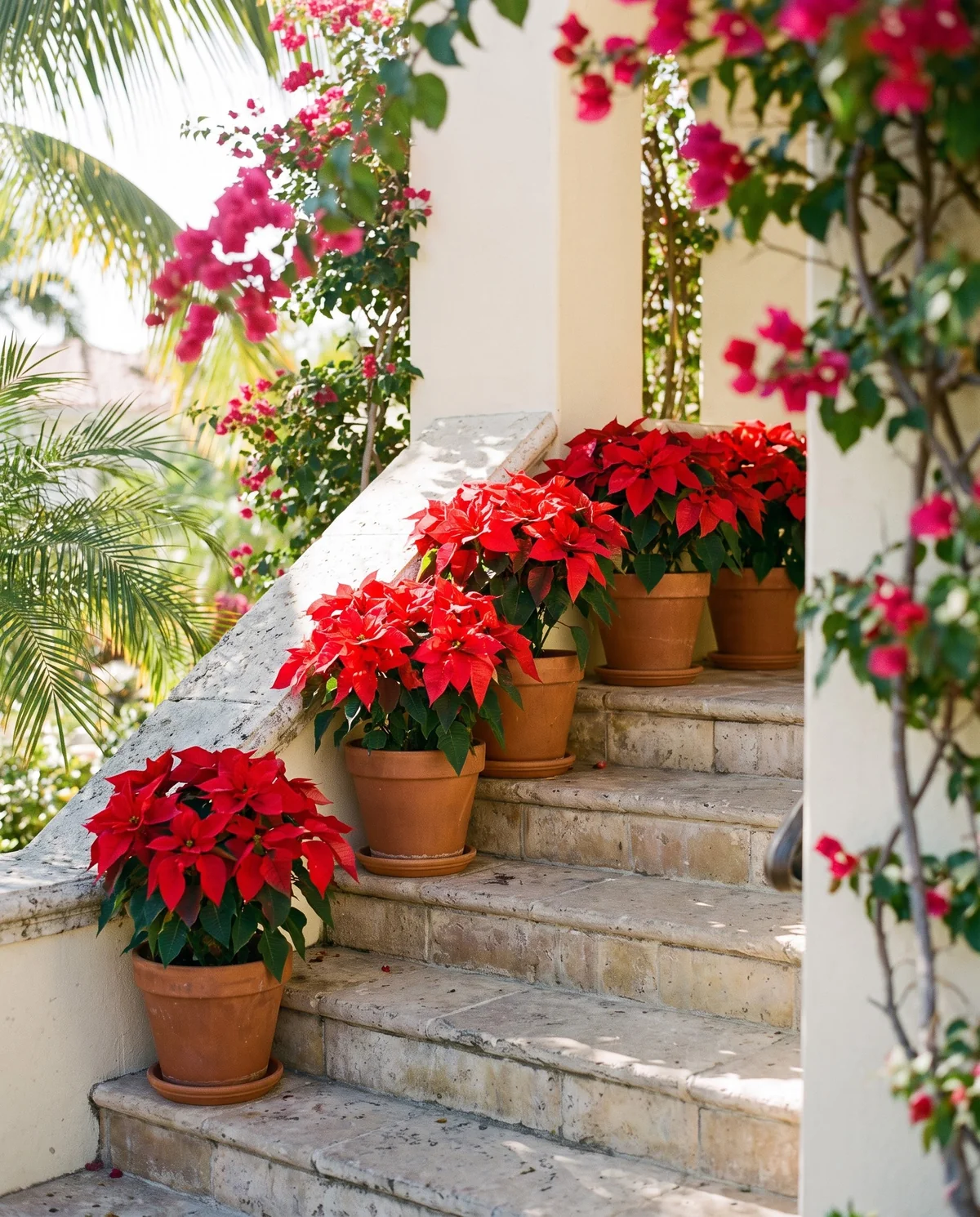
Poinsettias are hardy outdoors in USDA zones 9a through 11b, which in the United States means Florida, the Gulf Coast, southern Texas, the low deserts, coastal California, and Hawaii. Everywhere colder, it is a houseplant, and a tender one: this is a tropical shrub with no tolerance for frost and real damage well above freezing. Chilling injury starts below 50°F, and a plant left in a cold car during errands or carried unwrapped across a parking lot in January can drop its leaves days later. Indoors the comfort band is narrow and warm, and heat is as much a hazard as cold, since a spot above a radiator or beside a heat vent yellows and sheds foliage.
| Situation | Range | What happens |
|---|---|---|
| Day, indoors | 65 to 70°F | Longest bract life |
| Night, indoors | 60 to 65°F | Cooler nights extend color |
| Below 50°F | Even briefly | Chilling injury, leaf drop |
The year, by the calendars that actually publish dates
The gift plant's whole second act runs on a schedule, and the schedule differs by who publishes it, so each row names its source. Nothing is averaged: where calendars disagree on the darkness dose, the disagreement is shown, and the strict end is the safe read because a missed night costs more than an extra hour.
Propagation and longevity
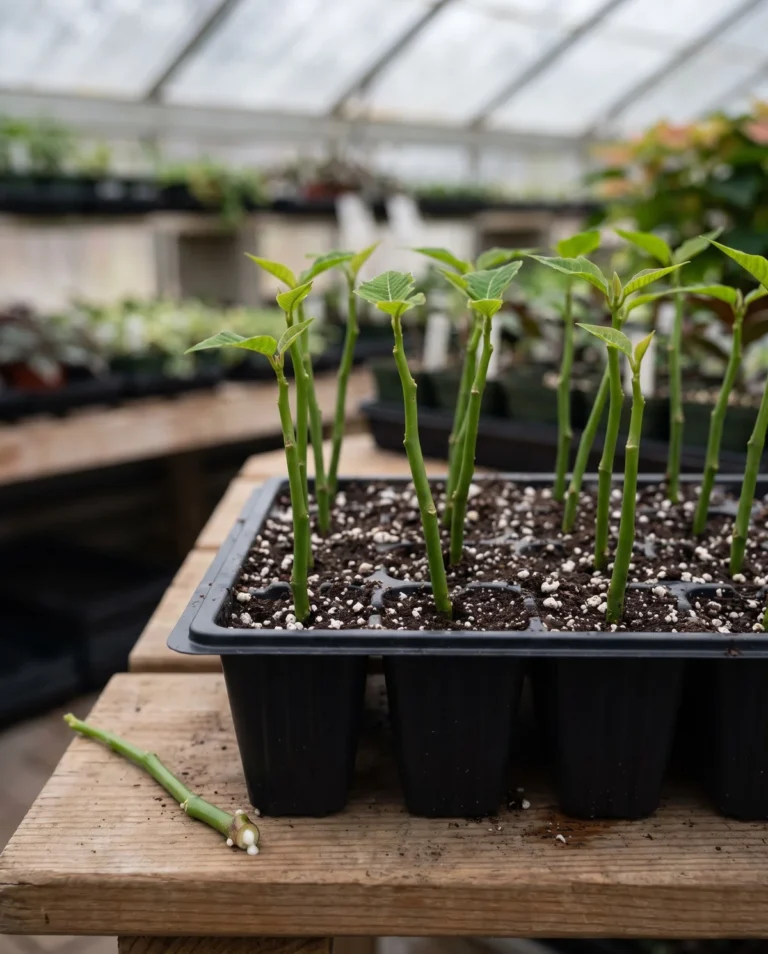
Poinsettias propagate by stem cuttings, the method used for essentially every plant in commerce: growers root cuttings taken from mother stock, most of it descended from the California ranches that supply the industry. A home gardener can do the same in early summer from a plant held over, rooting four-inch tip cuttings in moist mix, though the latex calls for gloves and a moment to let cut ends stop bleeding. Commerce runs entirely on cuttings; seed plays no role in it. As for lifespan, the plant itself is a long-lived woody perennial. In the ground in zones 9 to 11 it grows and flowers for many years, and even in a pot it is not the disposable item its January fate suggests, though millions are thrown away after the holidays all the same.
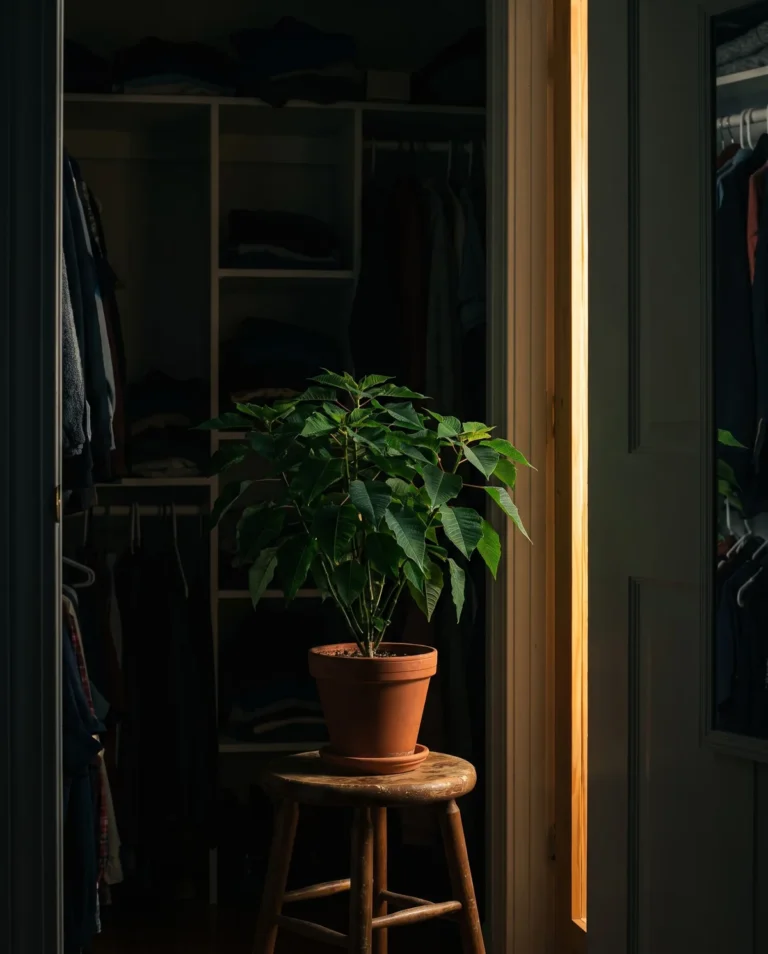
Keeping one going, and getting it to color again, runs on a calendar. When the bracts fade in March or April, cut the plant back to about eight inches, keep it warm and lit, and start feeding every two to three weeks. Repot in early June, summer the plant outdoors after nights are reliably warm, and pinch the shoot tips once or twice before the first of September to build a full plant. From the first week of October the plant needs a long stretch of total darkness every single night, with bright light by day, for eight to ten weeks, and bracts will be coloring by late November. Extension calendars disagree on the exact dose, quoting anywhere from ten to fourteen hours of nightly darkness over six to twelve weeks, and the safe reading is the strict end: fourteen hours in a closet or under a box, every night without exception, because a single lamp-lit evening mid-run can stall the whole process.
A bare plant in March is often not a dead plant
The display season ends the way it ends for a deciduous shrub, with stems going progressively bare, and by early spring a neglected poinsettia can look like a pot of dead sticks. It frequently is not. The entire keep-it-alive calendar opens by cutting the plant back to eight-inch stubs, a step that only makes sense because bare poinsettia wood reshoots, and a stem that shows moist green tissue under a light fingernail scratch is alive regardless of how it looks. The test costs nothing: scratch low on a stem, and if there is green, cut the plant back, water sparingly, keep it warm and bright, and wait for the new shoots that the whole second-year routine is built on. Only stems that scratch brown and dry all the way down, or have gone soft at the base, have actually quit.
Fragrance
The poinsettia has no fragrance to speak of, and no reliable reference documents a scent for it either way; the NC State plant profile of the species carries no fragrance attribute at all. The show is entirely visual. For a holiday houseplant that is convenient, since the plant shares tables with food and candles and adds nothing to the mix, and scent-sensitive households that struggle with paperwhites or hyacinths in the same season have no such problem here. Anyone who notices an odd smell from a poinsettia should suspect the pot, not the plant: soil kept constantly wet sours, and that swampy smell is an overwatering alarm worth acting on.
Toxicity and pet safety
The poinsettia's reputation as a deadly plant is a myth with a traceable paper trail. It began with a rumor from Hawaii in 1919 that a child had died from eating a leaf, a story never verified, which was printed as fact in a 1944 book on poisonous plants and repeated from there for decades. The testing came later and went the other way. Researchers at Ohio State fed rats massive doses of ground poinsettia in 1971 and recorded no deaths, no symptoms, and no behavior changes at all. Toxicologists have since calculated that a 50-pound child would need to eat more than 500 bracts just to reach the doses that showed no toxicity in testing, and an analysis of nearly 23,000 poinsettia exposures reported to American poison centers found that over 92 percent of patients had no symptoms whatsoever and not one case was fatal.
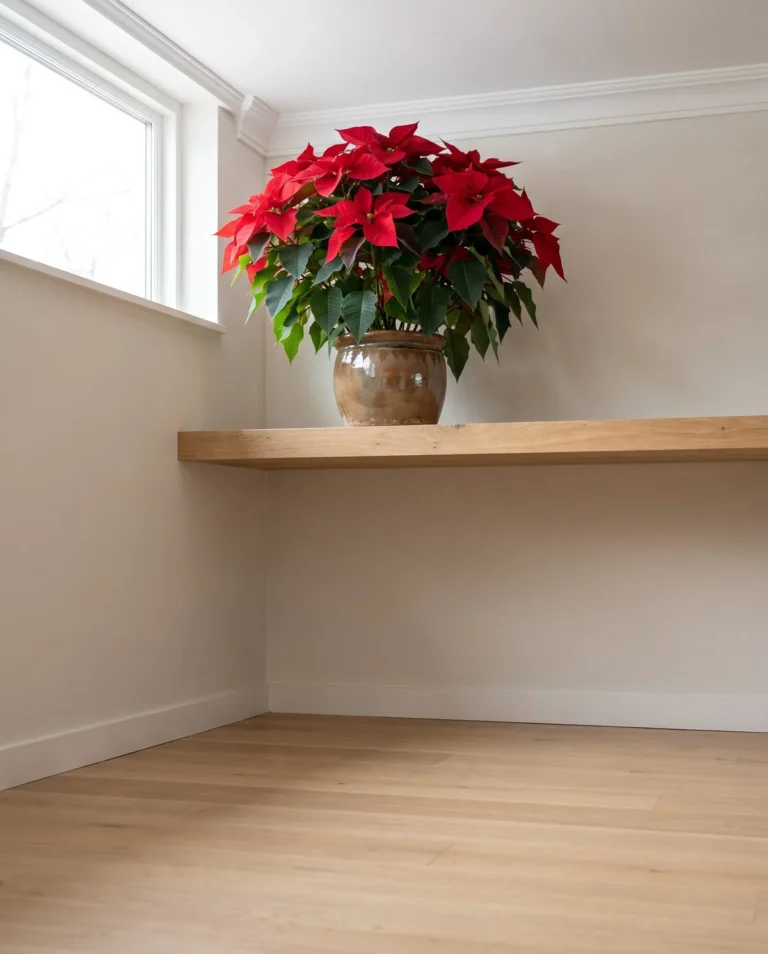
The ASPCA does list poinsettia as toxic to cats, dogs, and horses, while calling its toxicity generally overrated: the milky sap can irritate the mouth and stomach, and a pet that chews the plant may drool or vomit and then recover on its own. The well-documented hazard is the latex itself on skin, which causes contact dermatitis in sensitive people, ranging from mild redness to a real rash, and people with natural rubber latex allergy can cross-react to it. So place the plant where a determined leaf-chewing cat cannot graze it bare, wash hands after pruning, and keep the sap away from eyes. A poinsettia in a house with pets and children is a normal, reasonable choice, which cannot be said of true winter hazards like holly berries and mistletoe.
Four things everyone repeats about poinsettias, tested
The myth: A poinsettia can kill a child or a pet.
The reality: The ASPCA keeps the plant on its toxic list for cats, dogs and horses while calling its toxicity generally over-rated: the expected outcome of a chewed leaf is drooling or vomiting that resolves on its own, and NC State rates the human poison severity low. What actually deserves the caution is contact: the latex sap is a documented cause of dermatitis, and people with natural rubber latex allergy can cross-react to it. The December plants that justify a vet call are elsewhere on the table, holly berries and mistletoe, and treating the poinsettia as their equal is the myth doing the talking.
The myth: The red flowers last for weeks.
The reality: The red parts are not flowers. NC State's profile codes the petals as bracts, colored leaves, and the flowers as insignificant: the true flowers are the small yellow-green cyathia in the center, which open, shed pollen, and finish in days. What lasts six to eight weeks is foliage, which is exactly why the display survives as long as it does.
The myth: It is a winter plant, so it likes the cold.
The reality: It blooms in winter because winter nights are long, not because it tolerates cold. Clemson puts chilling injury below 50 degrees Fahrenheit, warmer than a January garage, and the University of California's guidance holds room temperature at 65 to 70 degrees. It is a tropical Mexican shrub keeping a photoperiod schedule, and the cold window ride home hurts it more than a warm dry living room ever will.
The myth: Once Christmas is over, the plant is finished.
The reality: Illinois Extension states plainly that with effort a poinsettia can be brought to bloom again the next year, and publishes the route: a March cut-back, summer growth, and eight or more weeks of long, totally dark fall nights. The January trash run is an industry default and a fair choice, but it is not botany; in the ground in zones 9 to 11 the same plant is a shrub that colors every winter for years.
How long it lasts indoors
The poinsettia is not a cut flower; it is sold, shipped, and enjoyed as a whole potted plant, and its measure is indoor display life. The benchmark from university extension guidance is six to eight weeks of color from a fresh plant, and a well-placed one often runs past that, holding leaves into February before it begins a natural decline. Freshness at purchase matters as much as anything done at home. Look at the cyathia, the small button flowers at the center of the bracts: on a fresh plant they are tight, green-tipped or barely showing yellow, and not yet shedding pollen, while a plant with open, pollen-dusted, or fallen cyathia is weeks into its season no matter how red it looks. Skip plants displayed in sleeves near store doorways, plants with yellowed lower leaves, and anything wilted in wet soil.
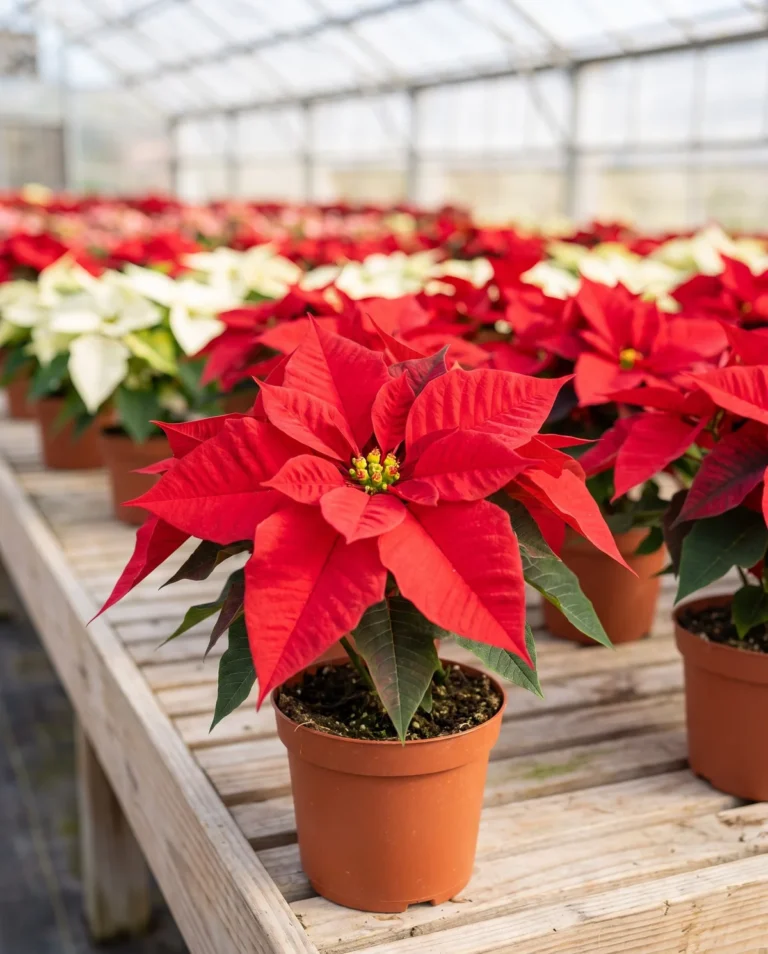
The ride home deserves the same attention. Have the plant sleeved or bagged for the trip, warm the car first in real cold, and never leave it parked in the cold during errands; the chilling injury described under hardiness is earned in exactly these minutes. At home, give it light, keep it a foot clear of cold glass, and keep it out of the airflow from doorways, heat vents, and fireplaces. Treated this way the plant outlasts most of the season's décor, and pairs naturally with the other big holiday pot, the amaryllis, which trades places with it as the easy rebloomer: the amaryllis asks only a rest period to flower again, while the poinsettia demands its strict dark nights. The two other winter windowsill plants keep their own clocks, the Christmas cactus for decades and the cyclamen through a summer sleep.
How long a poinsettia really lasts indoors, by who measured it
This plant is not a cut flower, and no university publishes a vase-life trial for it as a stem; the numbers that exist measure the potted plant's display run, so those are the numbers given.
Feed it while it is in color to keep the show going.
University of California guidance says to avoid fertilizing during the holiday season outright. Feeding belongs to the spring-through-fall growing loop, and pushing fertilizer at a plant in full bract color does nothing for the display.
Leave the foil on; it is part of the gift.
The foil is the leading cause of the plant's leading disease. Purdue's instruction is to punch holes in the bottom or water the plant in a sink, because runoff trapped against the roots is how root rot starts. The foil can stay for looks only if it never holds water.
When leaves start falling, the plant is dying.
Date-dependent. In December, falling leaves are a symptom worth diagnosing, usually cold, drafts, or watering extremes per Clemson. From February on, a slow shed of lower leaves is the normal end of season by Purdue's calendar, and no rescue is called for.
Pests and diseases
The pest to know is the whitefly, the most common insect problem on poinsettias: tiny white wedge-shaped flies that rise in a puff when foliage is disturbed, with scale-like young stuck to the leaf undersides. Check under a few leaves in the store before buying, because whiteflies often ride home from the greenhouse, and an infested poinsettia parked among houseplants shares them. Light infestations wipe off or wash off; heavier ones justify insecticidal soap or simply discarding a short-season plant. Mealybugs, soft scale, and spider mites appear less often, mites mostly in hot, dry rooms. Isolating any new plant for a week or two is cheap insurance.
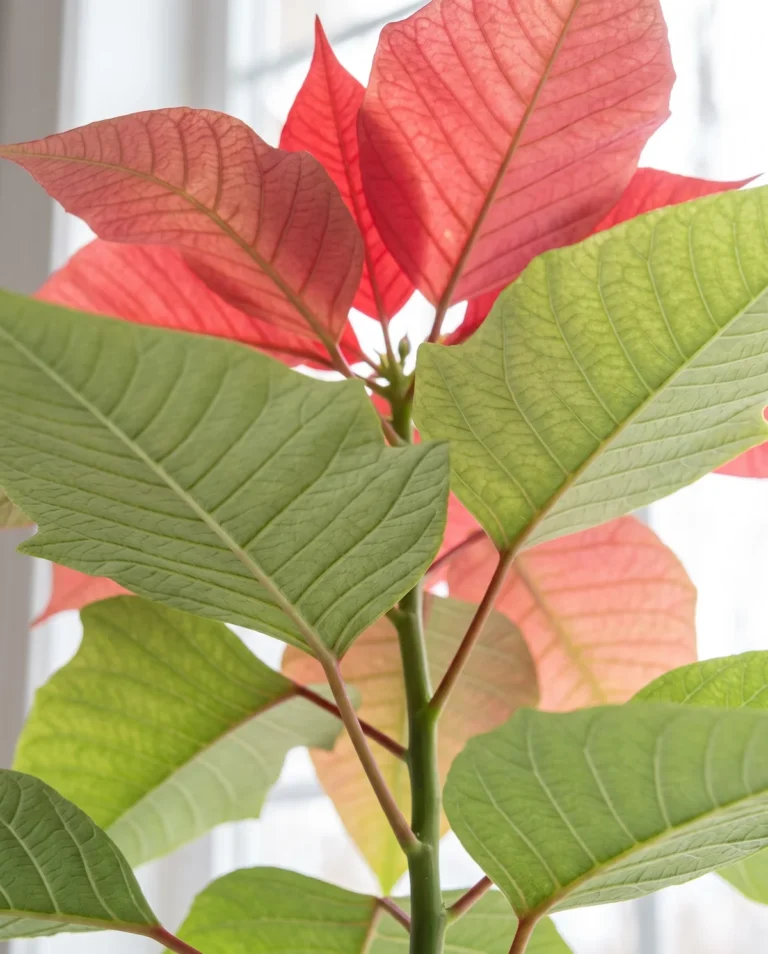
Disease trouble indoors is almost entirely root rot, and it is self-inflicted. Constantly wet mix in a foil-wrapped pot suffocates roots, the plant wilts even though the soil is wet, lower leaves yellow and fall, and recovery is unlikely once stems soften at the base. Prevention is the watering routine, dry surface before water, full drainage after, no standing water ever. Greenhouse diseases such as gray mold on bracts belong to production and rarely develop in a living room; a plant that arrives clean and is watered correctly stays clean. There is no spray schedule to keep and nothing to prune for health, which makes this one of the lower-effort plants of the season, whatever its reputation for fussiness.
Five forks people hit in December, and the detail that decides each
Almost everything that goes wrong with a poinsettia announces itself the same way, leaves coming off, so the diagnosis lives in the pattern and the timing rather than the symptom. Where a card has no photo, that is deliberate: an insect's own body is an identification fingerprint better served by words than by a generated approximation.
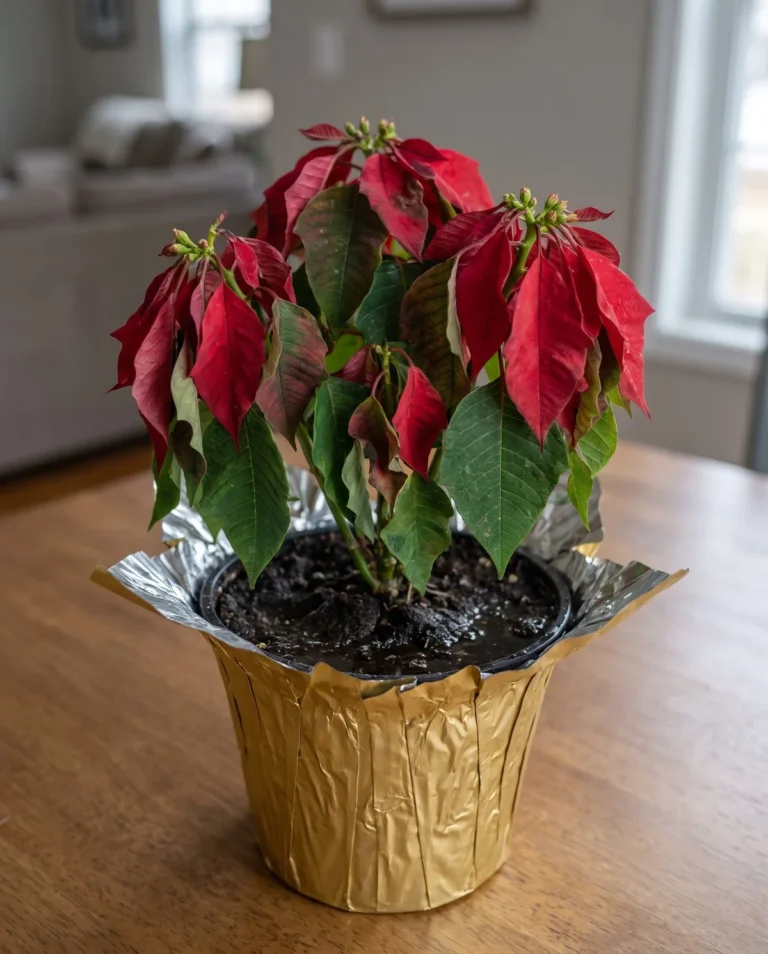
Feel the soil before reaching for the watering can. Clemson names root rotting fungi as the disease outcome of overwatering and poor drainage, and the foil gift wrap is the usual cause because it holds every ounce of runoff against the roots. A plant wilting in wet soil is drowning: pull the foil or punch holes in it, let the pot drain fully, and water again only when the surface is dry. If stems have gone soft at the base, the rot has moved into the crown and the plant is not coming back.

Clemson puts the chilling threshold at 50 degrees Fahrenheit, and minutes below it, an unwrapped walk across a parking lot, a wait in a cold car, are enough. The tell is the timing: the plant looked fine in the store, came home in cold weather, and shed days later. Nothing in the living room caused it and nothing needs fixing there; keep the plant warm and lit, water normally, and it will hold what it still has. The prevention was the sleeve and the warmed car, which is worth knowing for the replacement.
Clemson calls whitefly the most common insect on poinsettias, and it almost always ships in from the greenhouse rather than finding the plant at home. Turn a few leaves in the store: the adults are wedge-shaped white flecks underneath, the young are flat, scale-like and stuck to the underside. At home, light cases wash or wipe off, insecticidal soap handles heavier ones, and a badly infested short-season plant is often not worth the fight next to the houseplants it can seed. No photo here on purpose: a generated whitefly is a guess, and the flush of white when foliage is shaken is more diagnostic than any still image.
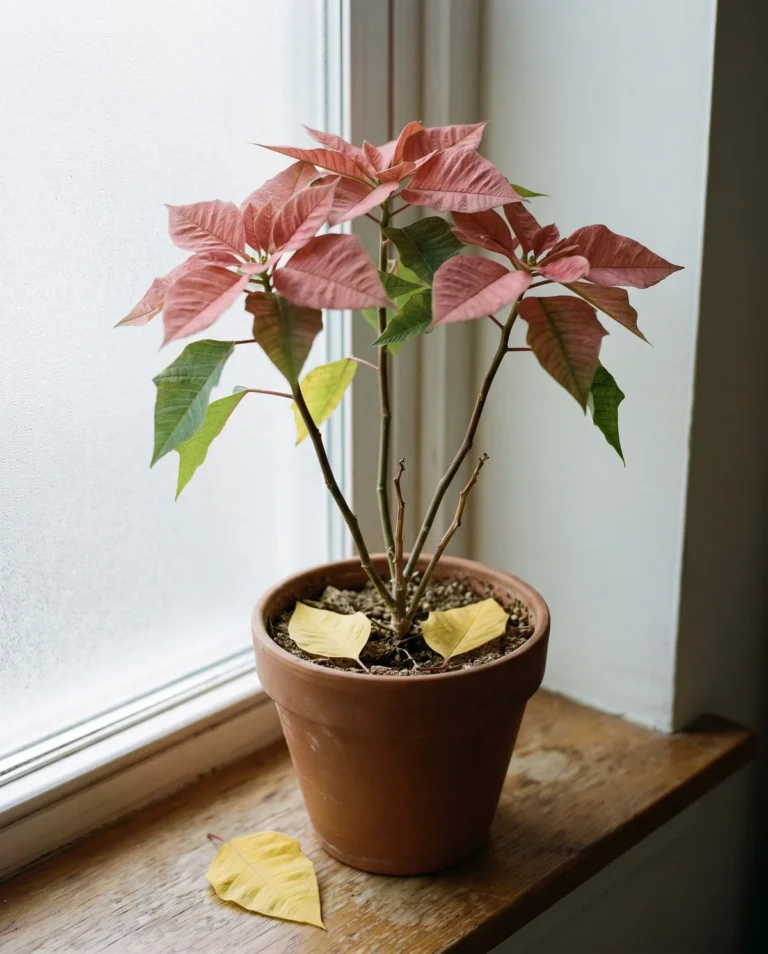
Purdue Extension's care calendar says plants hold well past December and begin dropping leaves in February. That shed starts low on the stems and climbs slowly, with the bracts often still colored above it, and it is the plant closing its display season, not failing. The decision point is what you want next: compost it with a clear conscience like millions of others, or cut it back to about eight inches when the bracts finally fade, per Clemson, and start the year-long loop toward a second coloring.
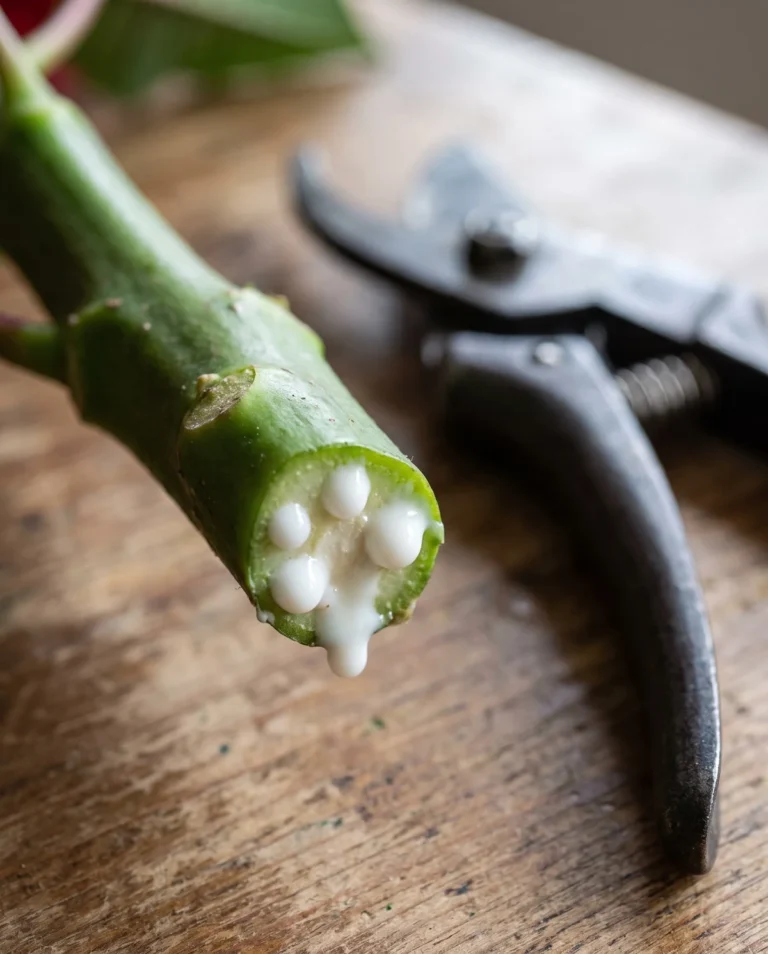
NC State's plant profile states the milky latex in all parts can cause mild to severe contact dermatitis depending on sensitivity, and flags cross-reactivity for people with natural rubber latex allergy. This is the real risk the poison myth points away from: eating the plant is a non-event by the numbers, but sap on skin is worth respecting. Gloves for pruning, wash after handling, and keep hands away from eyes until washed. The sap flows from any cut or torn surface, so the exposure moment is pruning and cutting, not touching intact leaves.
Two ordered paths, and the cheap causes come first
Both of the plant's classic failures, leaves falling and bracts refusing to color, are almost never disease. The checks below run in order of likelihood and cost, environment before pathology, because correcting the wrong guess, more water, more fertilizer, a sunnier sill, routinely makes the real cause worse.
What actually goes wrong with poinsettias, by the clinics that see them
No percentages are claimed here, because no honest sample of home poinsettia trouble exists to count. Instead each line carries the wording of the extension service that handles the complaint, which is a ranking by institutional emphasis rather than by post count, and the check line is the first thing to rule out.
Cold history first, then drafts and heat vents, then light, then the watering extremes. Clemson's premature leaf drop list is exactly that order of environmental causes, and disease is not on it.
The foil wrap. Clemson ties root rotting fungi to overwatering and poor drainage, and Purdue's fix is mechanical: holes in the foil, watering in a sink, never a pot standing in water.
Leaf undersides, ideally before the plant is bought. Adults lift off in a white puff when foliage is disturbed; the scale-like young stay glued underneath.
Light leaks during the fall dark treatment. Illinois Extension frames reblooming as possible with effort, and the effort is eight to ten weeks of fourteen-hour nights, not any special product.
Exposure happens at pruning and cutting, when latex flows. Gloves and a wash cover it; people with rubber latex allergy should treat the plant's sap as a known cross-reactor.
FAQ
Are poinsettias poisonous to cats, dogs, or kids?
Far less than their reputation says. The ASPCA lists them as toxic to cats, dogs, and horses but calls the toxicity generally overrated, expecting drooling or vomiting at worst. For people, testing found no poisoning even at massive doses; a 50-pound child would need over 500 bracts just to match them. The sap can irritate skin, so wash after handling.
How long does a poinsettia last?
Six to eight weeks of full color is the normal run for a fresh plant in a bright, warm room, and a well-kept plant holds leaves into February. Buy fresh by checking that the small center flowers are still tight and not shedding pollen.
How do I get my poinsettia to turn red again?
Keep it alive through summer, then from the first week of October give it 12 to 14 hours of total darkness every night, in a closet or under a box, with bright light by day, for 8 to 10 weeks. Any light during the dark period, even briefly, delays coloring. Bracts show color by late November.
Why is my poinsettia dropping leaves?
The usual causes are cold exposure below 50°F, drafts from doors or heat vents, too little light, or watering extremes in either direction. A chill during the ride home shows up as leaf drop days later. Gradual lower-leaf shed in late winter is the normal end of season.
How often should I water a poinsettia?
Whenever the soil surface feels dry: water thoroughly until it drains, then empty the foil or saucer so the pot never stands in water. The finger test beats any schedule, because drying speed changes with the room.
Can I plant my poinsettia outside?
In USDA zones 9 to 11, yes, where it grows into a shrub of 3 to 12 feet and colors every winter. Everywhere colder it can only summer outdoors in the pot, going out after frost ends and coming back in before nights drop below 60°F.
Is the red part the flower?
No. The red parts are bracts, true leaves that change color as nights lengthen in fall. The actual flowers are the small yellow-green buttons in the center, called cyathia, and their condition is the best freshness test when buying.
The next questions people ask, answered short
The plant is a perennial shrub, so it does not die on a schedule; what ends in January is the display, not the plant. Indoors it comes back into color only if someone runs the fall darkness routine. In the ground in zones 9 to 11 it recolors every winter on its own, because outdoor nights supply the darkness naturally.
That is the species showing through. Wild and landscape plants are leggy shrubs with color at the branch tips, per Britannica's description, and the compact store dome is manufactured by grower pinching plus a branching trait spread through the industry. A held-over plant that never got pinched by September 1 reverts toward the natural habit.
Yes, and Clemson's keep-it-alive calendar assumes it: move it out once nights are reliably warm, give it bright light, feed every two to three weeks, and bring it back in before fall nights dip below about 60 degrees Fahrenheit. The move back in is also when the darkness regimen planning starts.
No cultivar carries those colors. The bred range runs red, white, cream, pink, salmon, burgundy, orange tones, and marbled or speckled combinations; blues, purples, and glittered plants are white cultivars that have been dyed or painted, a practice Illinois Extension's trend coverage files under dyed varieties. The dye does not harm the plant, but the color will not return next year.
In a pot, one to three feet, with about three feet as the practical indoor ceiling per Britannica. In the ground in zones 9 to 11, NC State rates it 3 to 12 feet, and in native Mexico it reaches 10 to 15 feet as a small tree, per Iowa State University, which is why in-ground plants get cut back hard every spring.
Flower photos
Interesting tips
The first named poinsettia cultivar, 'Oakleaf', dates only to 1923, nearly a century after the plant reached the United States, and everything on a store bench today descends from breeding done since. The Paul Ecke Ranch in Encinitas, California still supplies the mother stock behind most of the world's poinsettias, by Clemson's figure over two thirds of them. December 12 is National Poinsettia Day, marking the death of the diplomat who brought the plant north, while the official December birth flowers remain narcissus and holly. And a plant that spent a week sleeved beside a drafty store entrance is aging fast no matter the price, so the tight-cyathia check from the buying section is worth its ten seconds in any store, at any point in the season.
Related Guides & Flowers
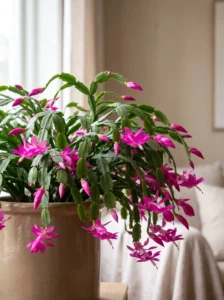
Christmas Cactus
decades-long winter bloomer, safe for pets.
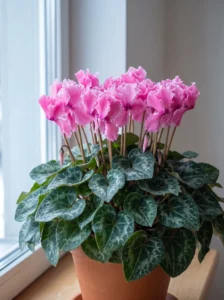
Cyclamen
months of cool-room winter flowers.
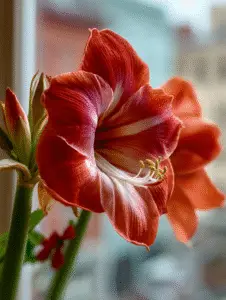
Amaryllis
the easy rebloomer of the holiday table.
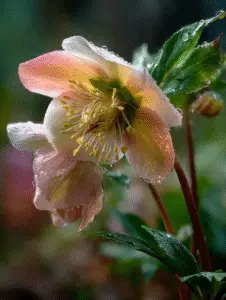
Hellebore
winter roses for the frozen garden.
Enjoying our flower guides? Add YourFlowersGuide as a preferred source on Google. It helps more readers find us.
Add to Preferred Sources