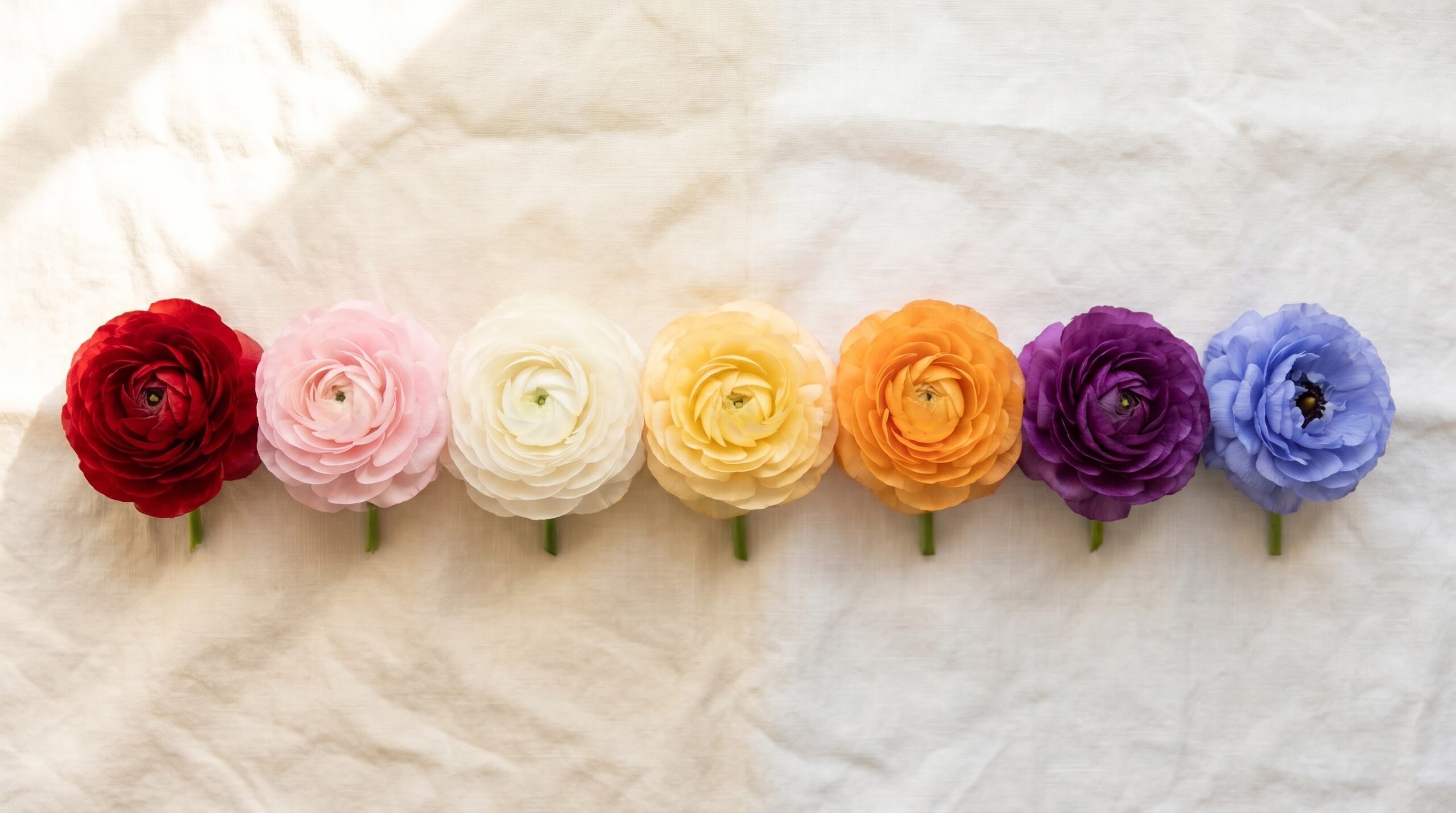
The colour spectrum, at a glance
Red
Love and passion
Pink
Affection and thanks
White
Purity and sympathy
Yellow
Friendship and cheer
Orange
Energy and warmth
Purple
Admiration and dignity
Blue
Calm and trust
Colour is the fastest thing a flower says. Before anyone reads a card or recalls a Victorian meaning, they see red or yellow or white and feel something. So if you are choosing flowers to carry a message, the colour does a lot of the talking, and getting it right matters more than picking the exact botanical species. The broad habits are easy to learn. Red leans toward love and passion. Pink reads as gentle affection and gratitude, white as purity and sympathy, yellow as friendship and cheer. Orange signals energy and warmth, purple admiration and dignity, blue calm and trust. Those are reliable enough to lean on. The catch, and the part most colour charts leave out, is that the same colour can mean the opposite a border away, and that the same colour can flip a flower’s meaning entirely.
None of this is fixed law. There is no official dictionary of flower colour meanings, and the lists that sound certain quietly disagree with each other. Even Iowa State University Extension, while listing common meanings, allows that a single flower can carry more than one and that the sources behind these readings rarely line up. So treat the colour habits below as strong traditions worth knowing rather than ironclad rules, and you will choose better than someone clutching a single confident chart.
What each colour generally says
Start with the broad strokes, because in most everyday gift-giving the broad strokes are all that the person receiving the flowers will read. Red is the colour of love, desire, and respect, which is why a red rose is the cliche it is and why red works for romance and for honouring someone you admire. Pink softens that. It carries affection, gratitude, and sweetness without the full romantic charge, so a pink bloom says I care about you in a way that suits a friend, a mother, or a new relationship that is not ready for red. White reads as purity, peace, and reverence in the Western tradition, which is exactly why it carries both weddings and funerals; the same clean simplicity that suits a bride suits a grave.
Yellow is sunshine and friendship, the cheerful colour you send to lift someone rather than to court them, though it has an old jealous streak this guide returns to below. Orange turns the heat up on yellow, signalling energy, enthusiasm, and warmth, a good choice for congratulations and bold celebration. Purple has long meant dignity, admiration, and a touch of royalty, the colour you reach for to say I respect you or I am proud of you. Blue, rarer in nature, reads as calm, trust, and serenity, which is part of why people seek out genuinely blue flowers for the steadying, peaceful note they bring to an arrangement.
Green and the colours people forget
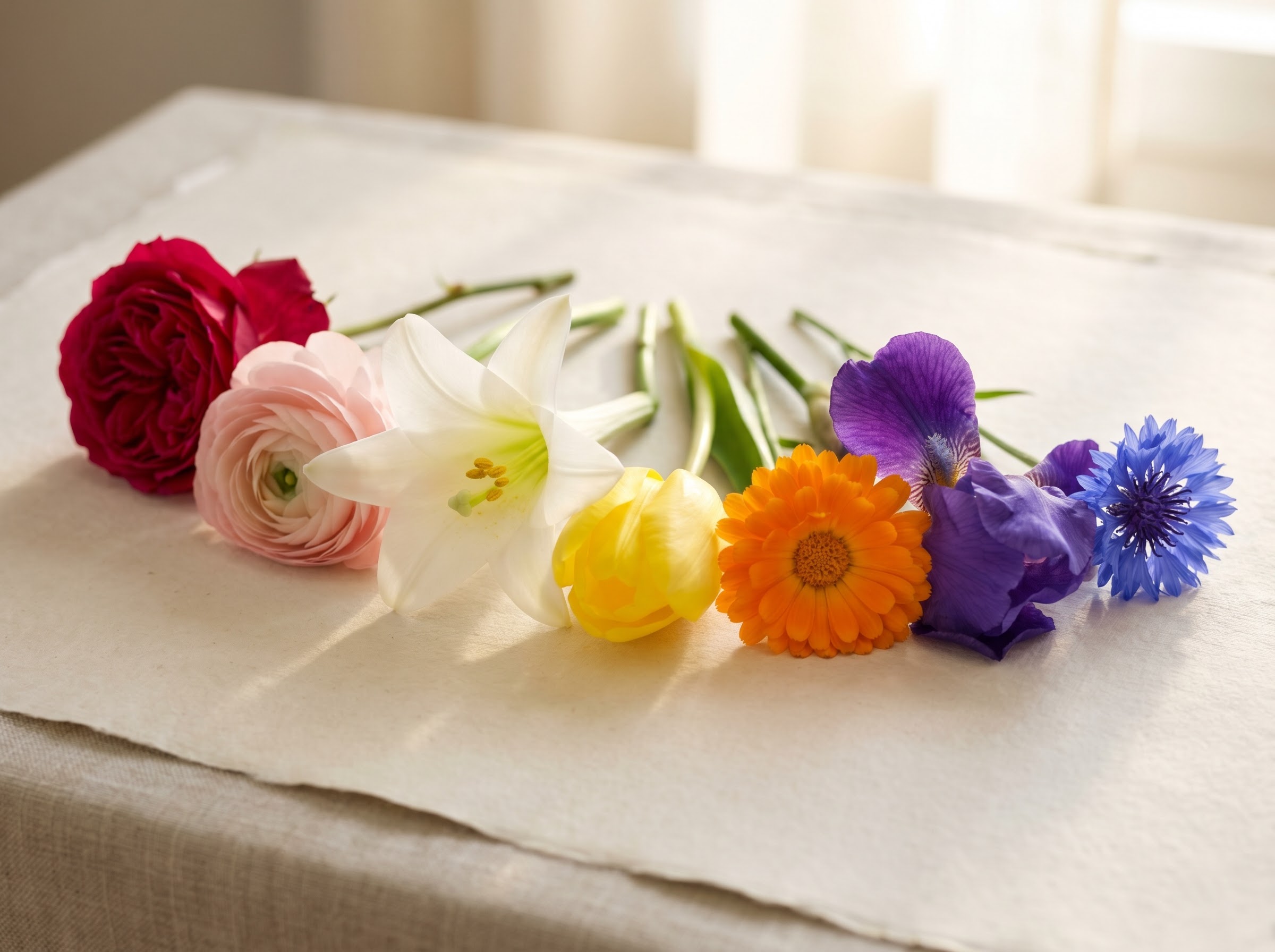
Green deserves a line of its own because people overlook it, mistaking it for filler. Many read green as renewal, health, and good fortune, with a sense of youth and optimism layered on top. That is the feeling of new growth, which makes green a quietly hopeful choice for a fresh start or a recovery. The lesson worth carrying past green is simpler than any single shade. What a recipient registers first is the overall colour and brightness of an arrangement, then the particular flowers, and only after that any coded meaning attached to a stem. Most people clock the warmth or coolness of a bunch long before they wonder what one bloom is supposed to mean, so build the feeling you want with colour and let the finer meanings be a bonus for anyone who looks them up.
When colour flips a flower’s whole meaning
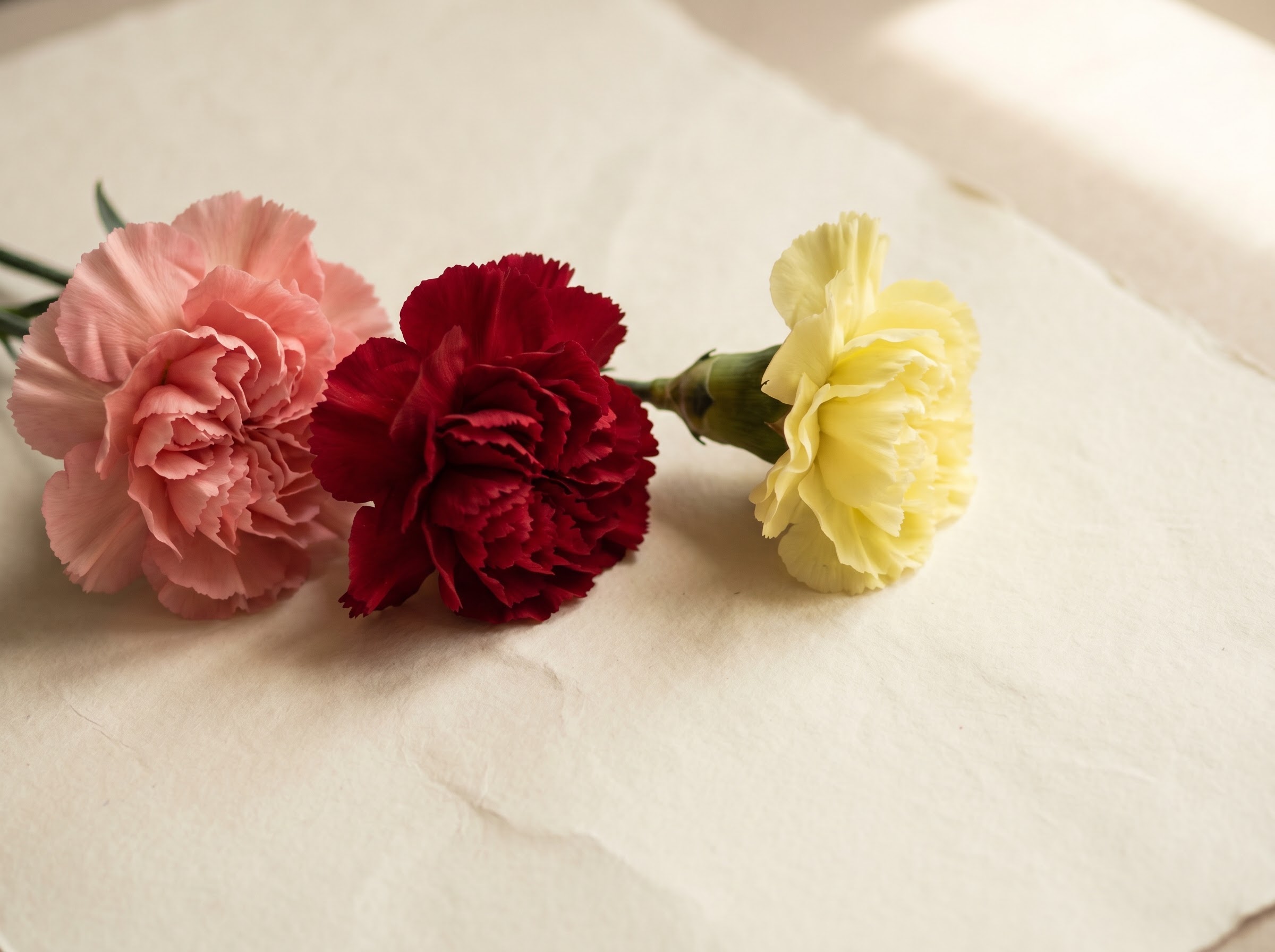
Here is the part that catches people out. For some flowers the colour does not just shade the meaning, it reverses it, turning a friendly gift into an insult you never intended. The carnation is the clearest example. A pink carnation has long stood for a mother’s undying love and a red one for deep admiration, both warm. Yet a yellow carnation was listed as disappointment, disdain, or rejection, and a striped carnation meant outright refusal, a polite “I cannot be with you.” So a cheerful mixed carnation bunch assembled without a thought can carry a sour note buried in one colour, even though no normal recipient today is fluent enough to catch it.
The same trap waits in several common flowers. A yellow rose means friendship and joy now, but Victorian lists read it as jealousy or fading love, which is why “what does a yellow rose mean” is one of the most argued questions in the whole subject; the full rose meaning and colour guide settles it colour by colour. A yellow tulip swung the other way over time, from the Victorian “hopeless love” to today’s plain cheerful sunshine. The hyacinth turns on colour too: the purple kind is the classic flower of apology, while yellow hyacinth was tied to jealousy. The lily may be the starkest case of all, because a white lily is a leading sympathy and funeral flower while an orange tiger lily reads as confident pride and wealth, the same flower carrying mourning and swagger depending only on its colour.
| Flower and colour | Common reading today | When it flips, or the cultural caveat |
|---|---|---|
| Yellow rose | Friendship and joy | Read as jealousy or waning love in Victorian lists; modern friendship is the safe assumption now |
| Yellow carnation | Part of a cheerful bunch | Traditionally disappointment, disdain, or rejection; a striped carnation meant refusal |
| Yellow tulip | Cheerful sunshine | Once meant “hopeless love” in Victorian lists; the modern reading warmed into plain cheer |
| Yellow hyacinth | Sunny and playful | Tied to jealousy; the purple hyacinth, by contrast, is the flower of apology |
| White lily versus orange tiger lily | White: purity and sympathy | White lily is a leading funeral flower; the orange tiger lily reads instead as confidence and pride |
| White flowers, anywhere in East Asia | Purity and peace in the West | The colour of mourning across much of East Asia, so an all-white gift can read as funereal |
| Red flowers, in China | Love and passion in the West | Luck, joy, and celebration in China, the colour of weddings and new year |
| Chrysanthemum, any colour, in Europe | Joy and long life in Asia and the US | Strictly a funeral flower in France, Italy, and much of Europe |
The cultural caveat almost no chart includes
Colour meaning is not universal, and the place it breaks hardest is white. Across much of the West white stands for purity and peace, the colour of a bride and of a clean, respectful sympathy arrangement. Across much of East Asia, white is the colour of mourning, the shade worn and given for death. An all-white bouquet that looks elegant and celebratory in one country can read as funereal in another, which is a real risk when you are sending flowers to someone whose roots are elsewhere. Red carries a parallel surprise. In the West red is love, but in China red is the colour of luck, joy, and celebration, used for weddings and the new year, so a gift of red there reads as good fortune rather than romance.
Individual flowers carry these splits too, and the chrysanthemum is the sharpest. Across much of Asia and the United States the mum means joy and long life, a cheerful birthday or get-well flower. In France, Italy, and much of Europe it is strictly a funeral flower, reserved for graves and remembrance, so a bright mixed bouquet built around mums can land badly. The marigold runs the other way, glowing with celebration and the sun in Mexico and India while older European books tied it to grief. The honest move when you are giving across cultures is to check what the colour and the flower mean where the person is from, not where you happen to be standing. For the cases where this matters most, our guide to flower meanings around the world collects the borders where the same flower means opposite things.
How to use colour to say what you mean
Once you know the habits and the traps, colour becomes a tool rather than a tripwire. If you want to send love, red roses are the clearest signal, with pink as the gentler version when red feels like too much too soon. For thanks and warm affection without romance, pink and yellow do the work, and a pink rose specifically reads as gratitude and gentle admiration. For sympathy in the West, white lilies and white roses are the traditional and trusted choice, soft and reverent. For congratulations and bright energy, reach for orange and strong yellows. For respect and pride, purple says it without a word.
The simplest safeguards are these. Avoid an accidental yellow carnation in a love bouquet, since its old meaning is the unkind one. Skip all-white arrangements for someone with East Asian roots unless mourning is genuinely the message. Send only chrysanthemums in much of Europe if the occasion is a funeral, and avoid them for happy occasions there. Beyond those few flips, lean on the broad colour moods and trust that the warmth or calm of an arrangement will carry far more than any coded reading. If you want to understand why these meanings exist at all and why they disagree so often, the full meaning of flowers guide explains where the language came from and how to read any flower honestly.
Sources
- Cornell University, Written in Petals: The Language of Flowers, on the history of floriography.
- Iowa State University Extension, Flowers and Their Meanings, on why sources disagree.
More meaning guides
More About The meaning of flowers, honestly
Enjoying our flower guides? Add YourFlowersGuide as a preferred source on Google. It helps more readers find us.
Add to Preferred Sources