Taxonomy and origin
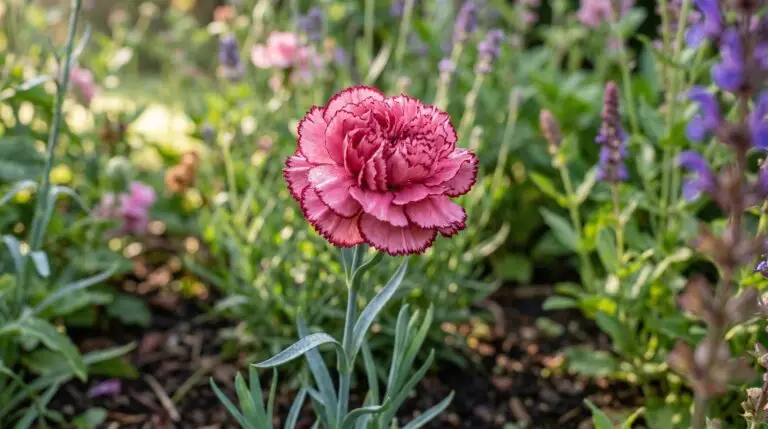
Dianthus caryophyllus sits in the family Caryophyllaceae, the pink family, and carries the old common names clove pink and gillyflower alongside carnation. The genus name comes from Greek roots that translate roughly as flower of the gods, while the species epithet caryophyllus means clove, a nod to the scent that once defined the plant before breeders traded it for shipping durability. Its wild origin is usually placed in the Mediterranean, with the exact native range now uncertain because the plant has been cultivated for around two thousand years, which makes it one of the oldest documented garden ornamentals in the West.
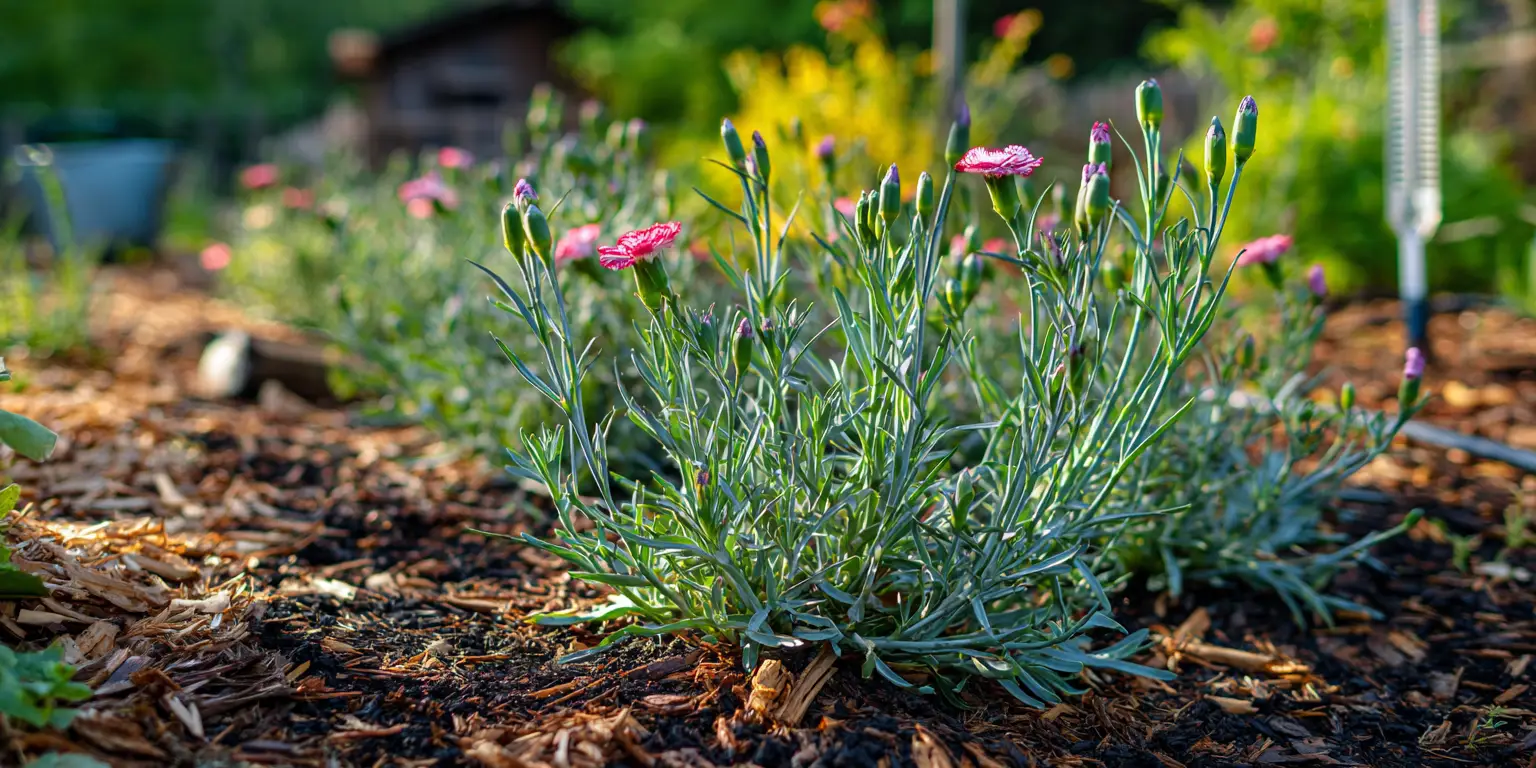
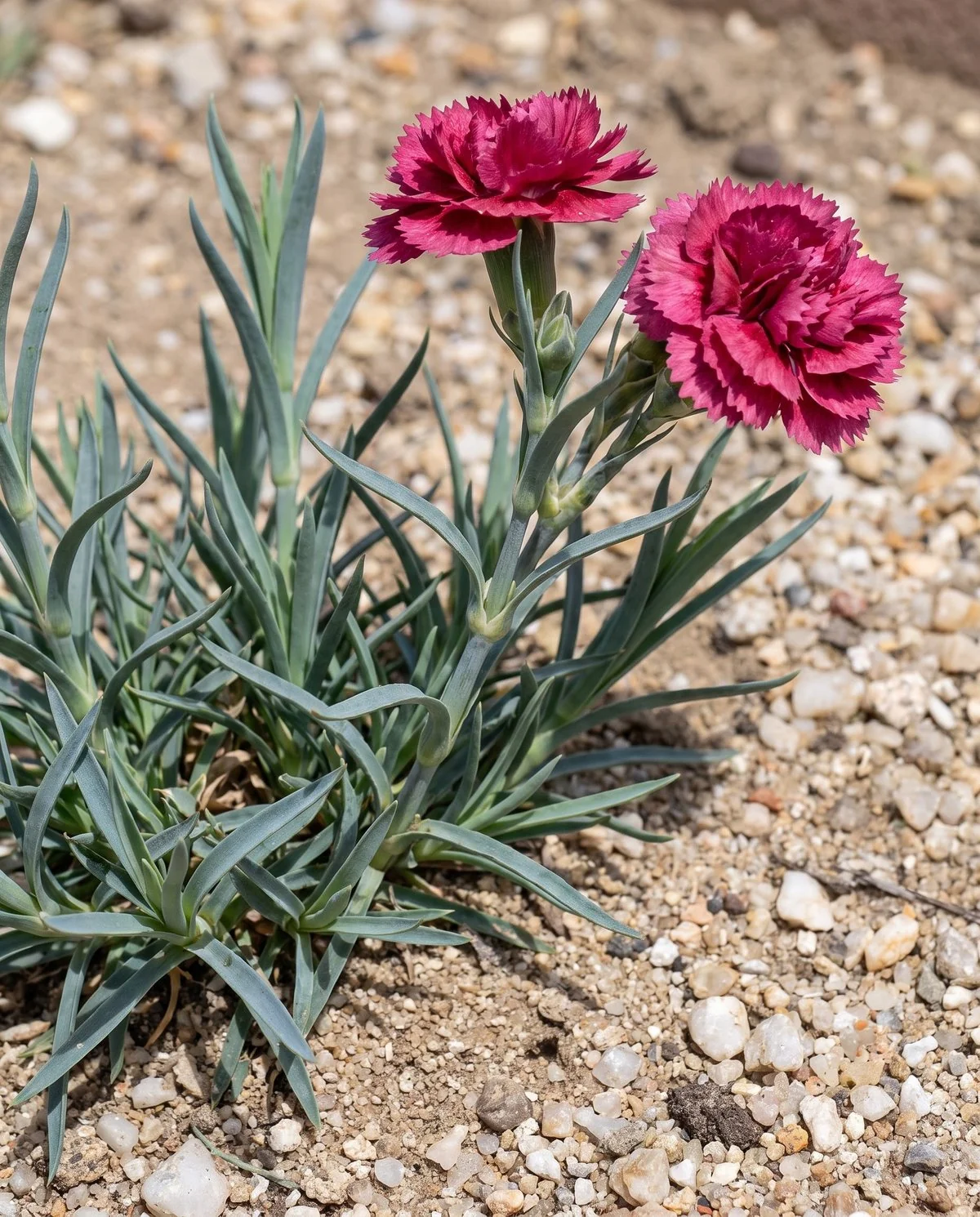
What the home grower needs from that history is mostly practical. Dianthus is a genus of low, tufted, often blue-grey plants adapted to lean, fast-draining ground, frequently the kind of stony, lime-rich soil found across Mediterranean hillsides. That heritage explains nearly every quirk of its care: the dislike of soggy roots, the preference for an alkaline rather than acidic bed, and the tolerance of poor, gritty conditions that would starve a richer feeder. The narrow, lanceolate, bluish-grey leaves that grow in opposite pairs up the stem are the family signature, shared with border pinks and sweet William. The color symbolism and language-of-flowers reading live on the meaning card elsewhere on this page rather than in the care notes here.
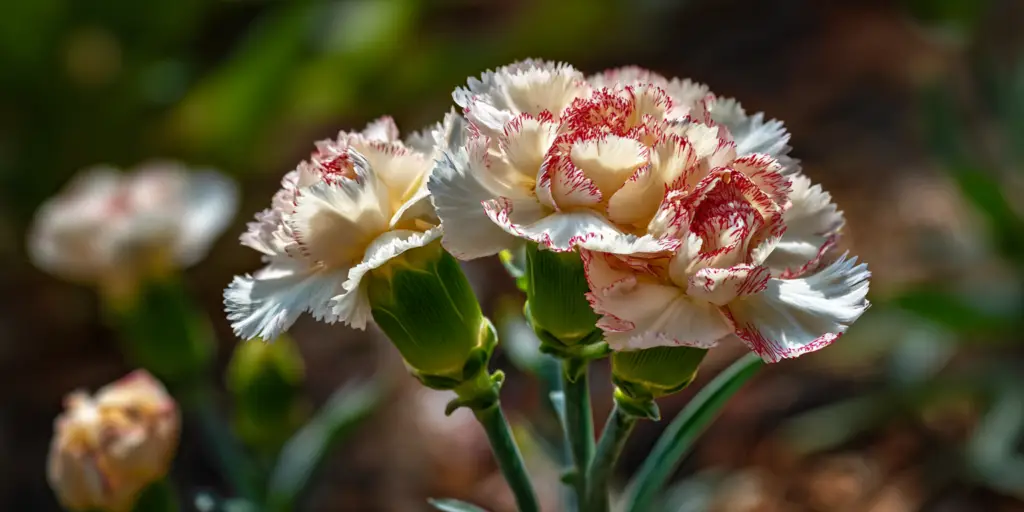
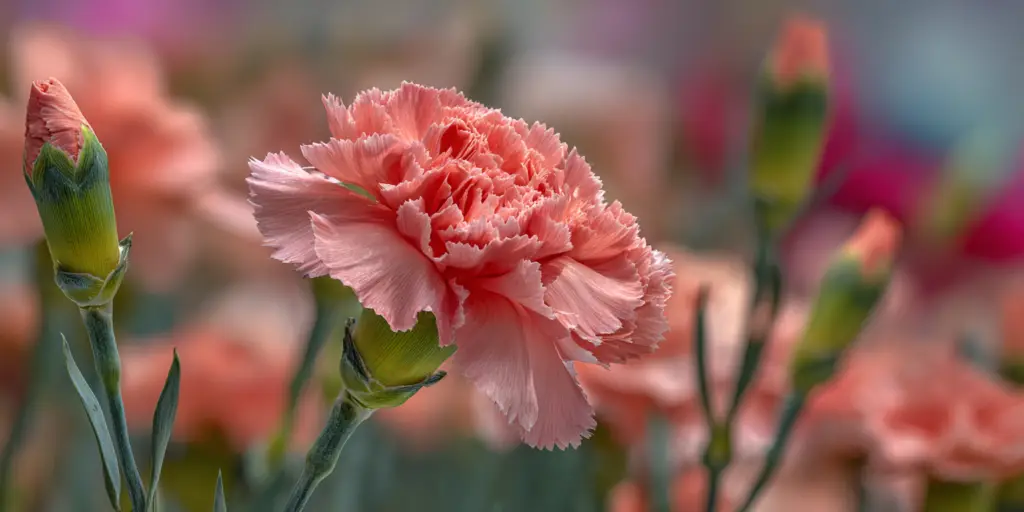
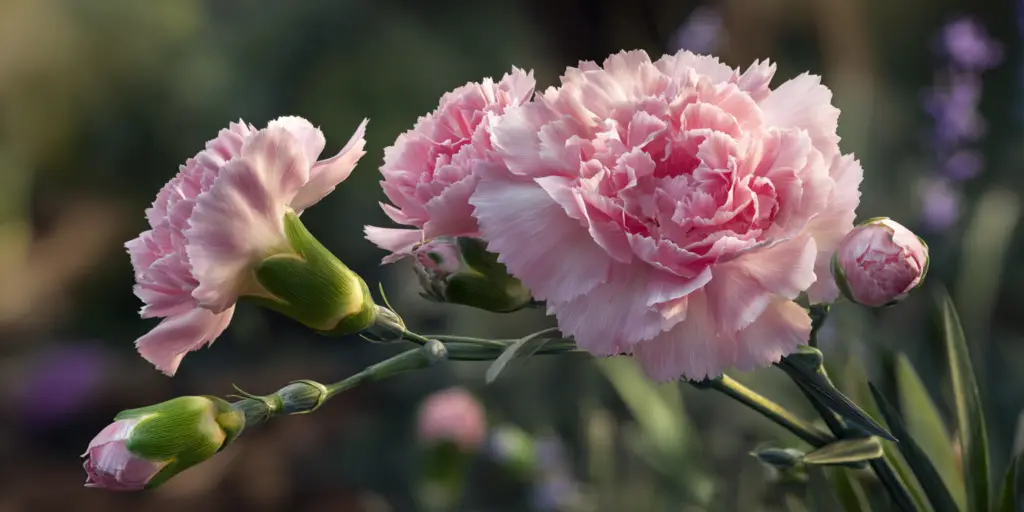
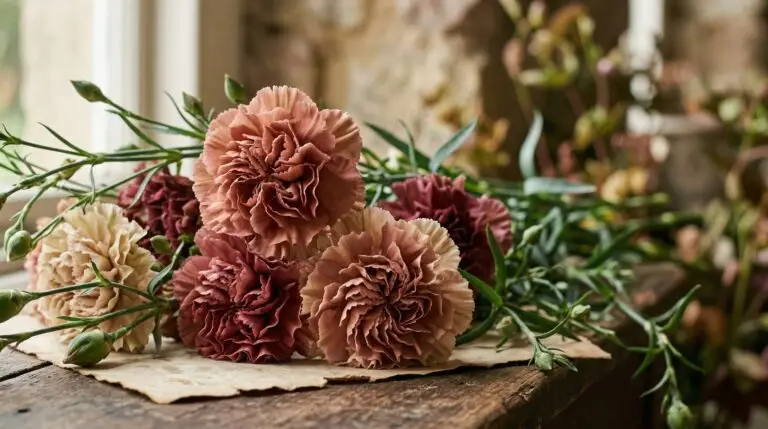
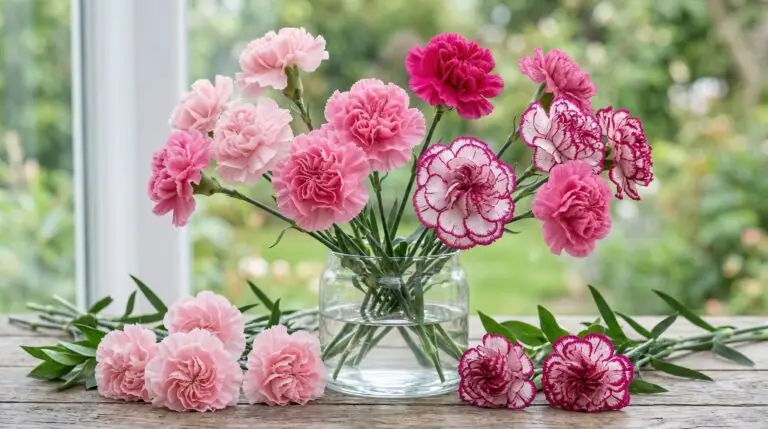
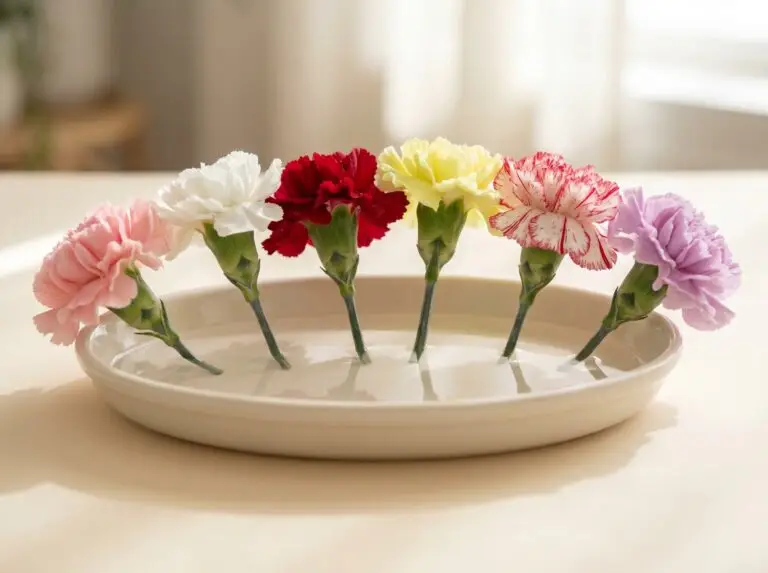
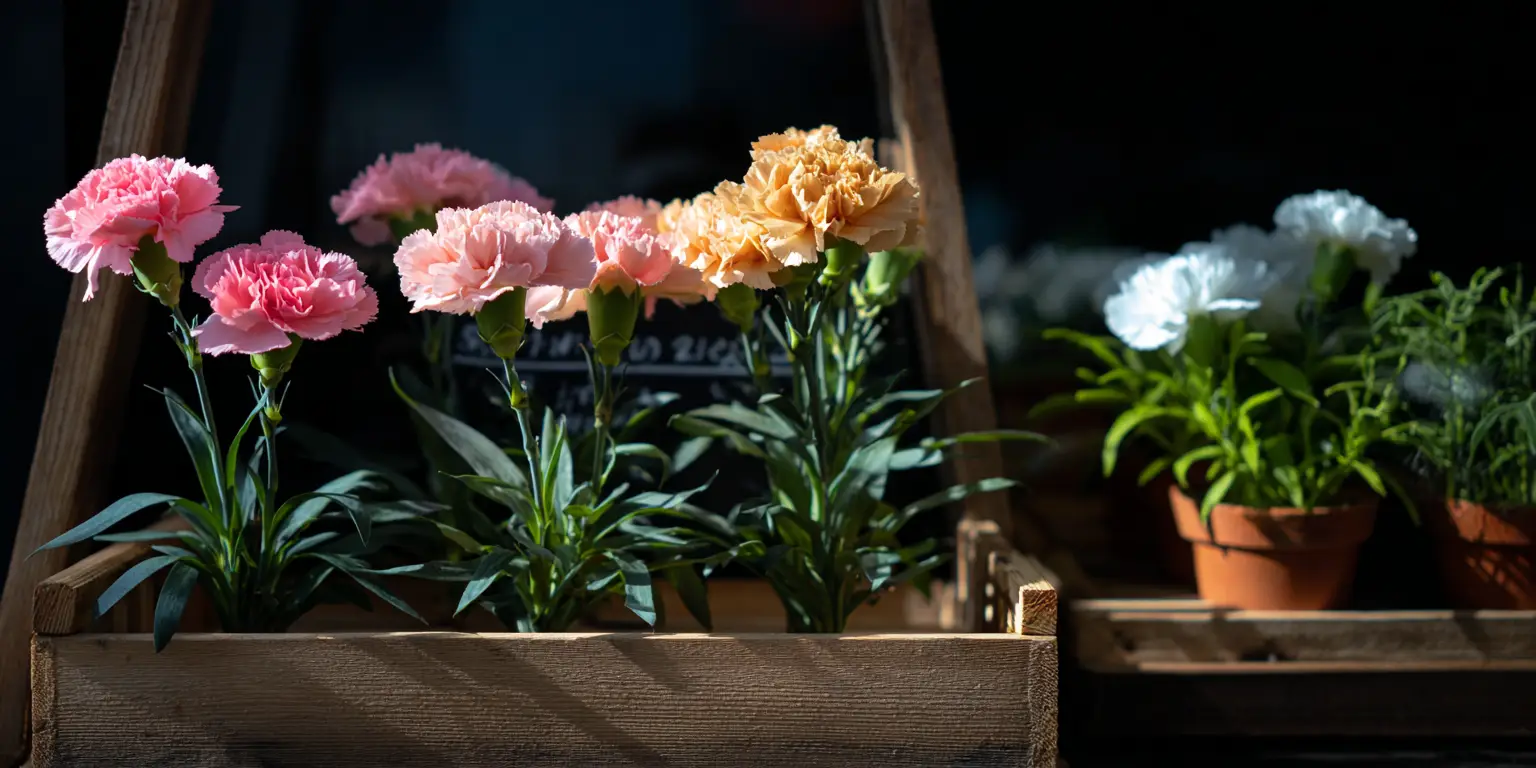
Most confusion at the shop or seed rack comes from lumping every Dianthus together, when the trade actually splits them into a few clear groups. Standard or large-flowered carnations are the classic florist stem: one big ruffled bloom on a tall stalk, bred for shipping and vase life. Spray carnations, also sold as mini carnations, branch into several smaller flowers per stem and fill out mixed bouquets. Border carnations are the garden perennials, shorter and clump-forming, grown for the bed rather than the bucket. Beyond true carnations sit the wider Dianthus "pinks," including cottage-garden border pinks and sweet William, which tend to be lower, hardier, and often far more fragrant than their florist cousins.
| Type | Flower form | Typical use | Rough height |
|---|---|---|---|
| Standard (large-flowered) | One large bloom per stem | Florist cut flowers, single-stem arrangements | 2 to 3 ft, up to ~4 ft |
| Spray (mini) | Several small blooms per stem | Mixed bouquets, fillers | 1.5 to 2.5 ft |
| Border carnations | Clump-forming, medium blooms | Garden beds and borders | 12 to 18 in |
| Dianthus "pinks" | Small, often fringed blooms | Edging, cottage gardens, fragrance | 6 to 12 in |
Choosing well comes down to the job. For a vase that has to survive a week of travel and a warm room, a standard or spray carnation is the most reliable cut flower you can buy. For a scented, low-maintenance edge along a path, a border pink earns its place. If fragrance is the whole point, skip the modern florist hybrids and seek out heirloom or clove-scented named pinks, because those are the strains that kept the perfume.
What the four groups on a Dianthus label actually commit to
Carnation is sold as four different plants under one word, and the split that matters is not flower size but what the group was selected for. Two of the four were bred as glasshouse cut crops, measured in stem length and shipping durability. The other two are garden perennials with a hardiness rating behind them. RHS, Britannica, NC State Extension, Missouri Botanical Garden and a Utah State University production trial each describe a different piece of that split, and together they explain most of the confusion in the forum sample.
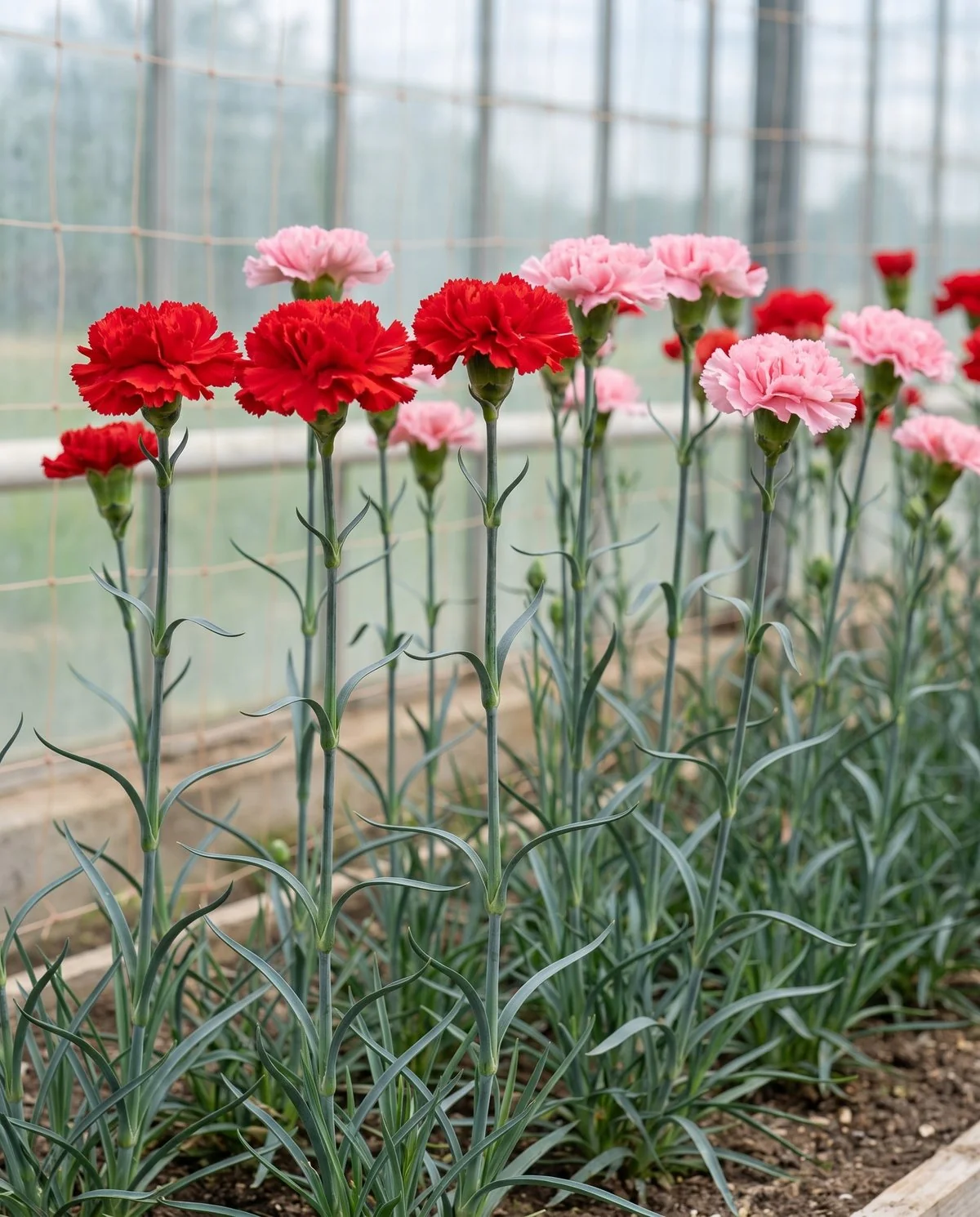
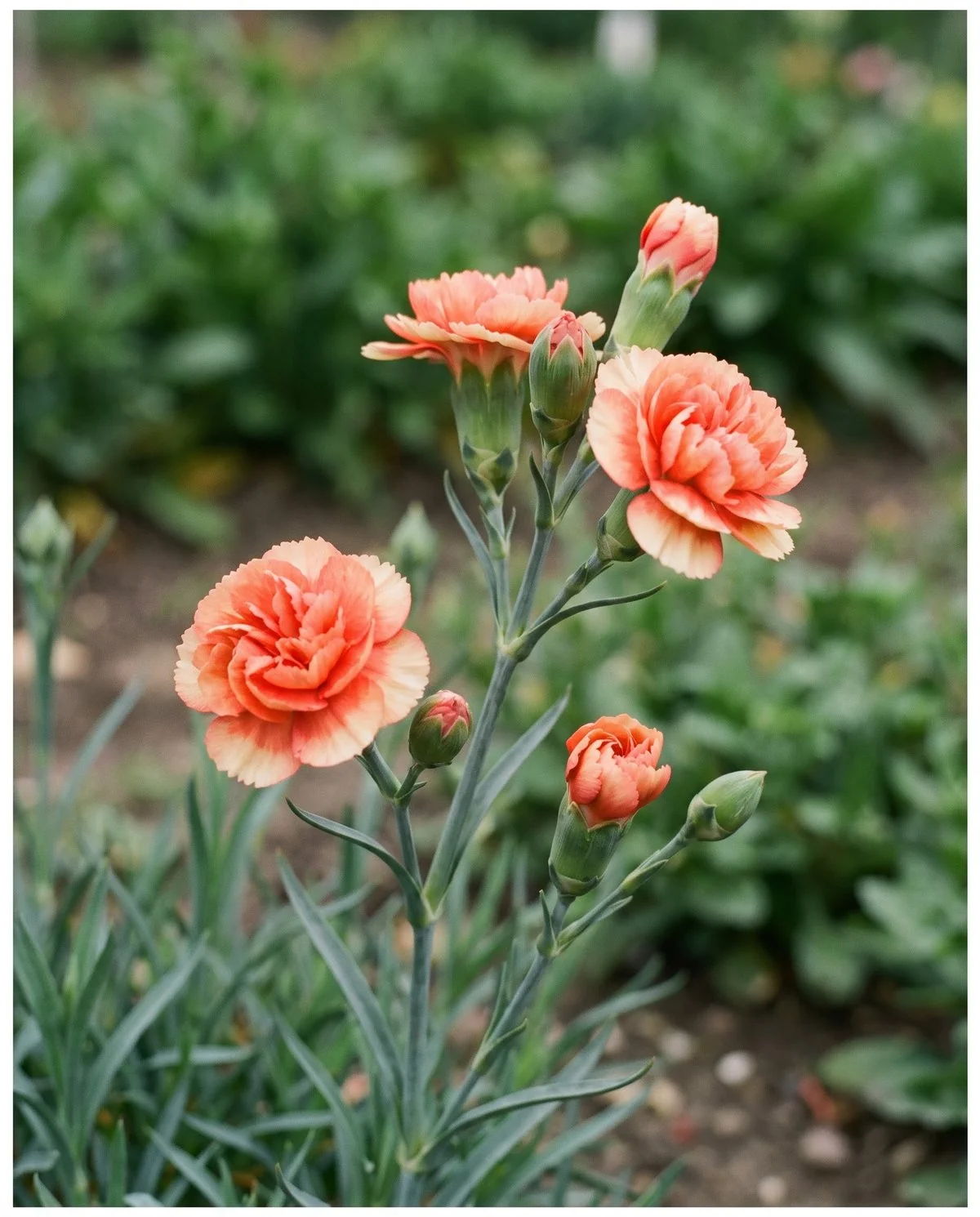
Two words on the label carry more meaning than they look like they do. Perpetual-flowering is a production description rather than a botanical one: Britannica uses it for the type selected to flower continuously year-round under controlled greenhouse conditions, against the border carnation's single seasonal flush. Paint brush stage is the harvest standard behind both cut groups, outer petals just past vertical and roughly perpendicular to the stem, and Utah State University confirms the same standard applies to sprays, where at least one bloom on the stem must be open to that point. The one fact that resolves most of the buying confusion is a limit rather than a group: NC State gives Dianthus caryophyllus zones 6a to 9b, Missouri Botanical Garden gives 6 to 9, and RHS rates it H4 at roughly minus 10 to minus 5 degrees Celsius, so three institutions independently describe a temperate plant with a warm-end ceiling as well as a cold-end floor.
Bloom time
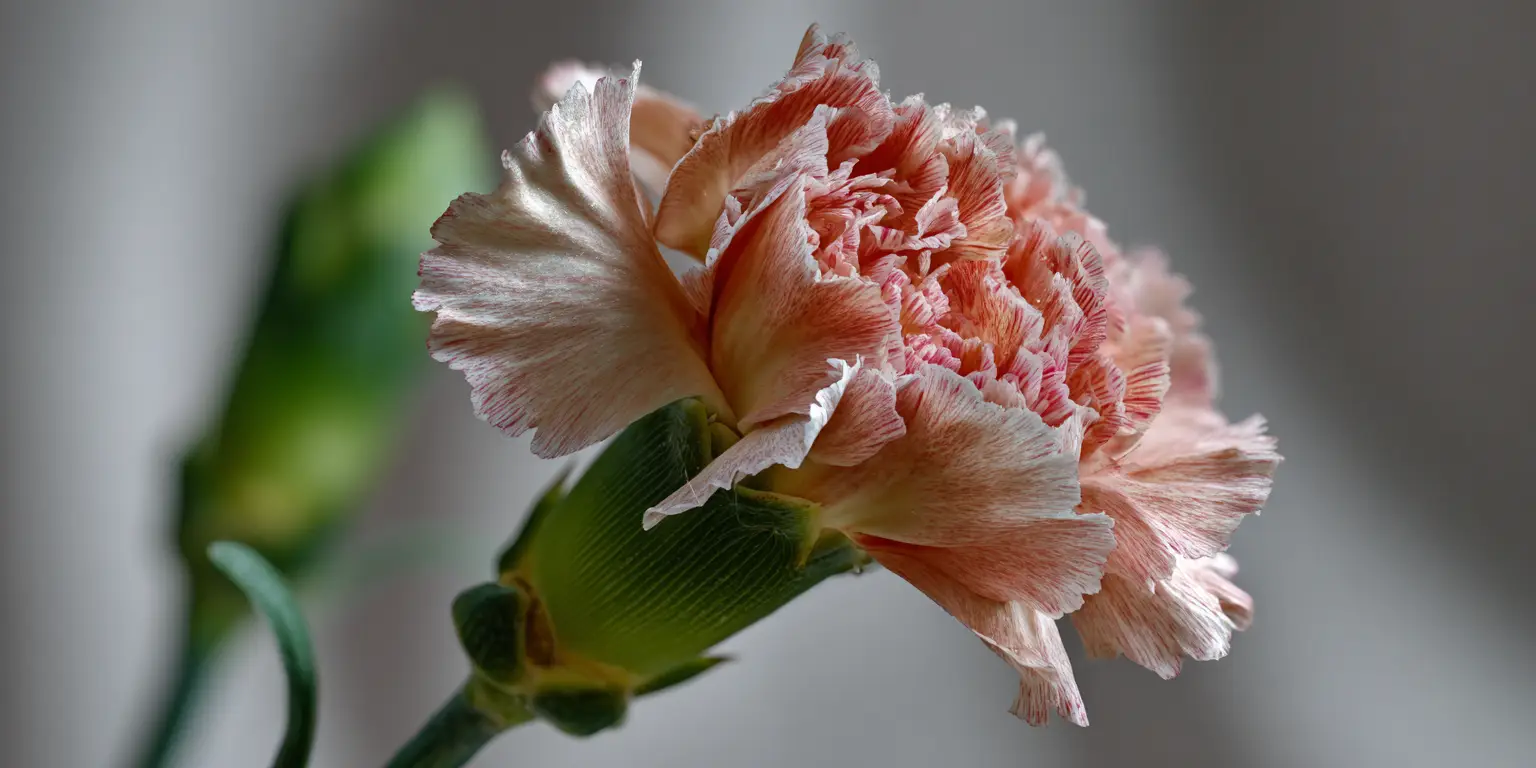
Garden carnations flower from late spring into summer, with the heaviest flush in the middle of the season. Buds set in May and June, and the main show runs through June, July, and August. Plants raised from seed usually skip flowering in their first year, putting their energy into roots and foliage instead, so a spring sowing typically rewards you the following summer rather than the current one. Climate shifts the calendar: in mild winter regions and under glass, carnations can bloom on and off through much of the year, which is exactly why commercial growers favor them, since a controlled greenhouse turns a seasonal cottage flower into a year-round cut crop. In hotter zones the bloom can pause during the worst of summer heat and resume as nights cool.
The reliable lever for the gardener is deadheading, the simple act of snipping each spent bloom back to a leaf node. Removing finished flowers stops the plant from pouring its strength into seed and prompts it to keep producing instead, which can stretch flowering into early fall in many gardens. Keep cutting the spent heads and the plant treats every cut as a reason to set another bud.
Year one, the woody base, and the question nobody has answered
Year one has a number attached to it, and it is longer than people expect from something sown in a tray: Utah State University's own commercial production trial puts seed to first bloom at roughly 130 to 140 days, which means a sowing made late in spring is unlikely to flower until the following summer. Years two and three belong to a figure that is widely misread. RHS states that border carnations take 2 to 5 years to reach full mature size, and that is a measurement of size rather than of life expectancy. What RHS records about ageing is separate and more useful: the plant will develop a woody base with age, the same pattern that eventually makes most perennial subshrubs leggy and less floriferous, and the forum sample shows it arriving as early as year two in one case, where a two-year-old plant threw two tall clusters, bloomed, and then petered out altogether. How long a carnation actually lives is an open question in this research rather than a settled figure. One Ask Extension ticket has a gardener asking directly whether dividing resets her plant's lifespan, which she describes unprompted as about five to six years, and the answering extension expert addressed only the timing and technique of the division, leaving the number itself untouched. Consumer sources commonly suggest replacing border carnations and garden pinks every two to three years once they go woody, and no .edu source in this research confirmed either figure, so the honest position is that the ageing pattern is documented while the endpoint is not. The commercial crop runs on a different clock entirely and should not be read as evidence about a garden plant: perpetual-flowering carnations under glass are replaced on a cycle set by greenhouse economics and disease management rather than by anything the plant does.
Height and spread
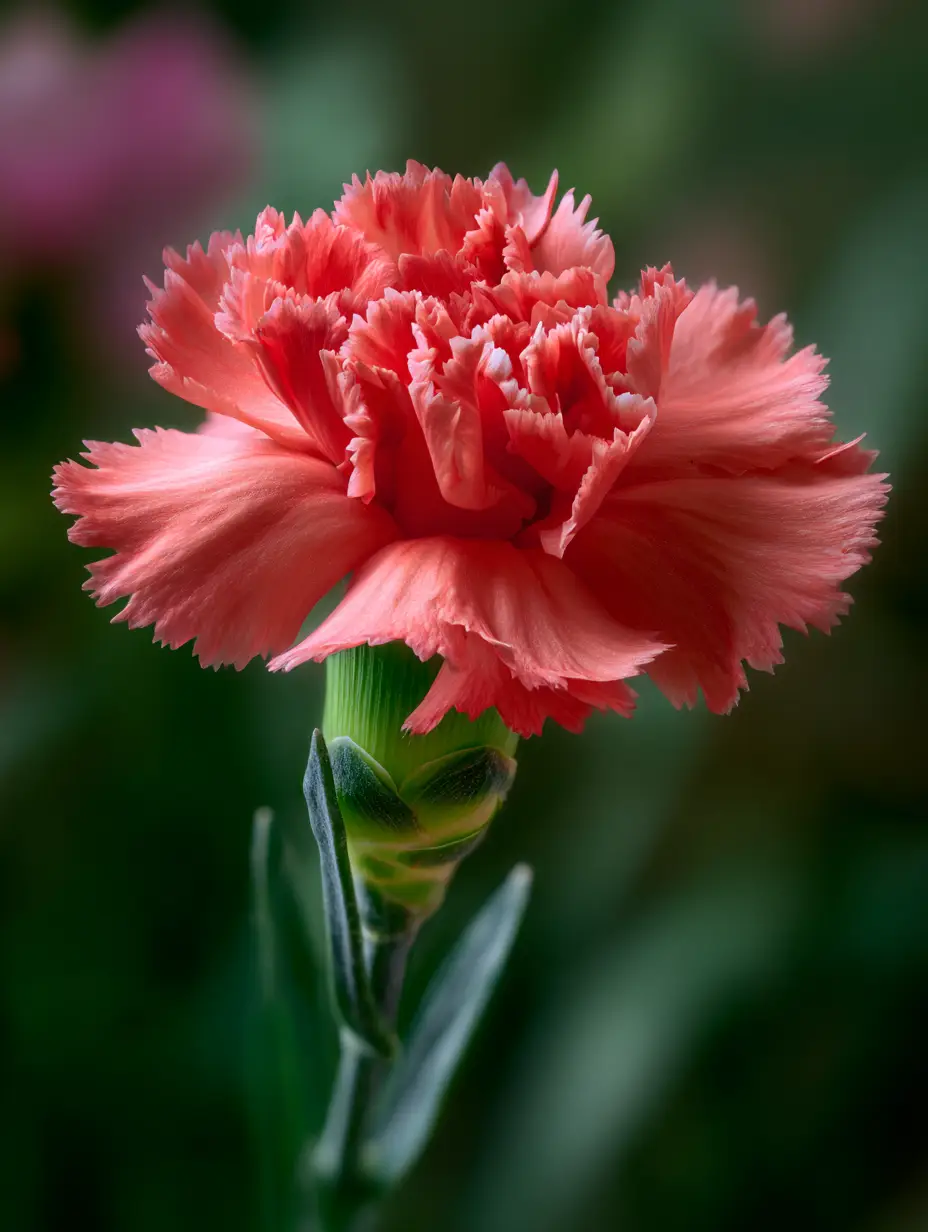
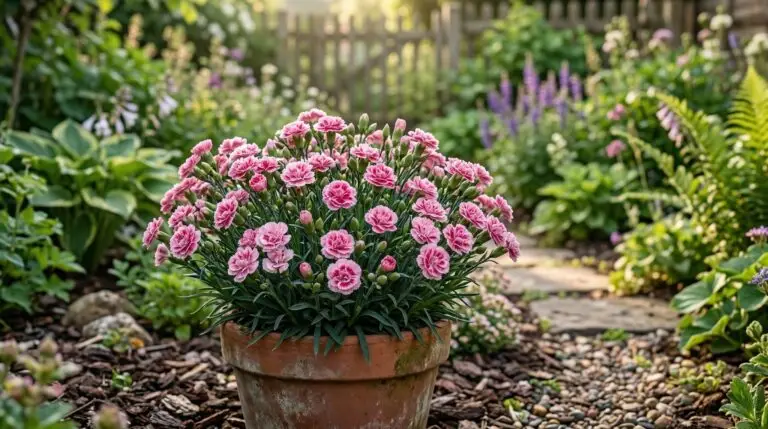
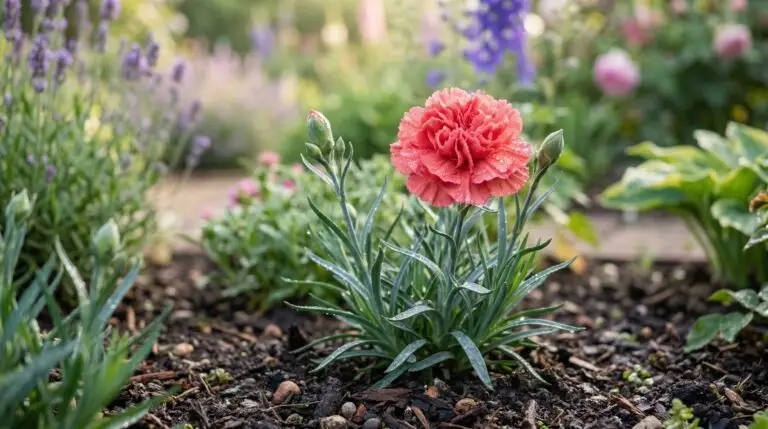
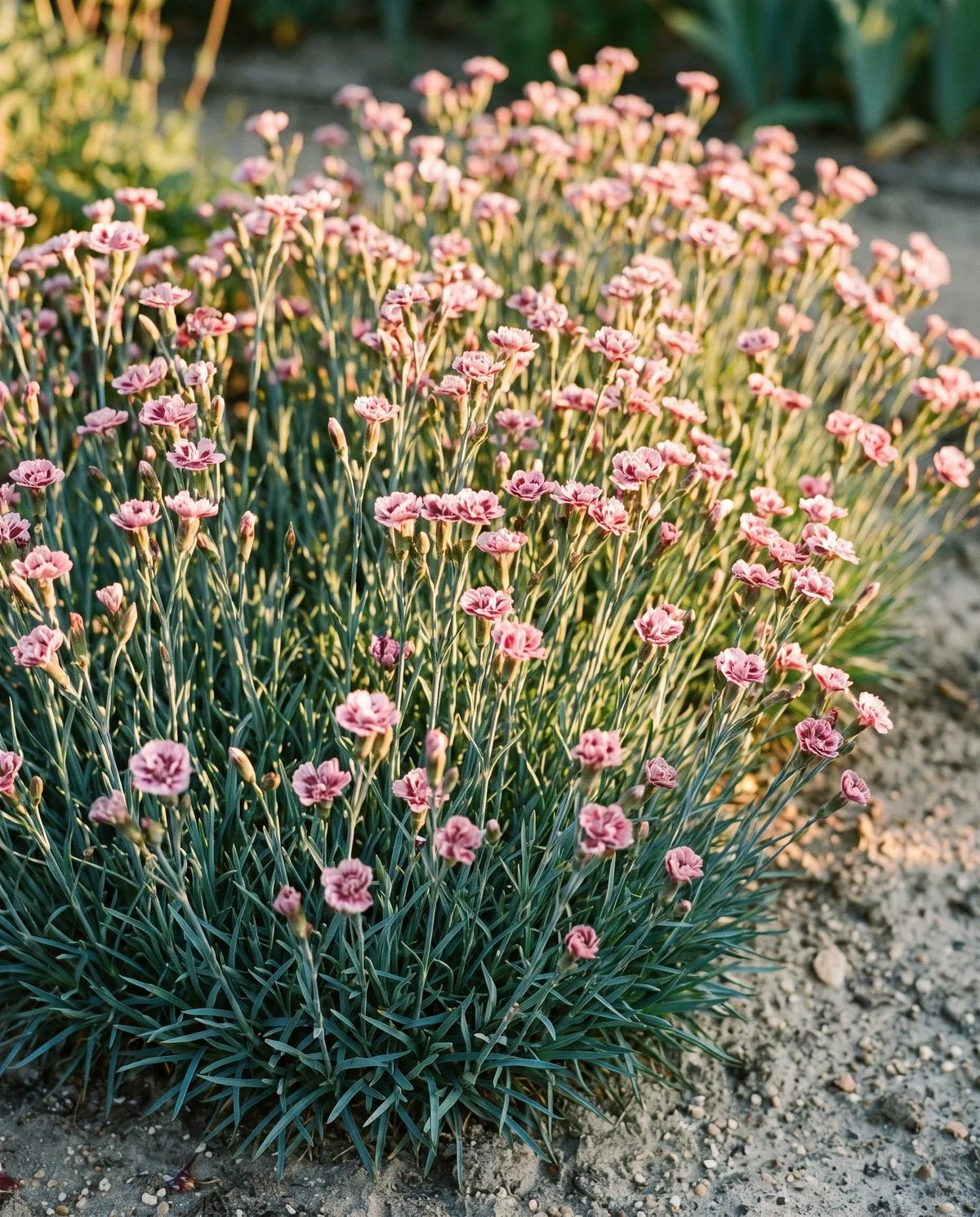
Border garden carnations stay compact, generally 12 to 18 inches (30 to 45 cm) tall with a spread of 9 to 12 inches (20 to 30 cm), and dwarf selections can sit as low as 6 inches, which suits them to the front of a bed or a container lip. Florist and standard carnations are the giants of the group, reaching 2 to 3 feet (60 to 90 cm) and sometimes nudging 4 feet (about 1 meter) on a strong greenhouse stem, since they are bred to deliver a long, straight stalk to the cutting bench. The bluish-grey, grassy foliage forms a low tuft from which the flowering stems rise.
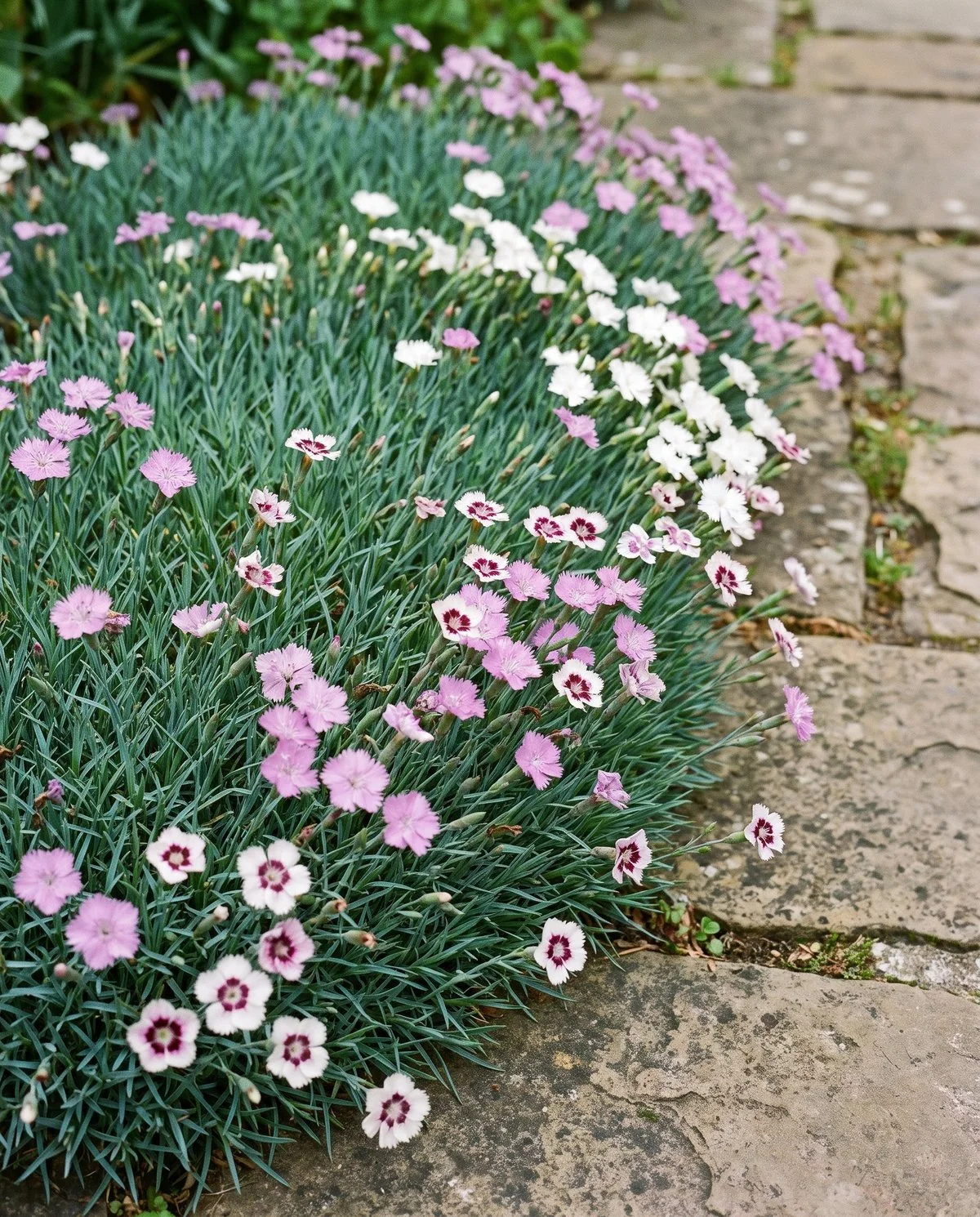
Spacing follows the type. Pack the small pinks close as an edging and they knit into a mat; give the tall florist forms room and air, because crowded stems trap damp and invite the fungal troubles covered further down. Taller selections may also need light staking or a grid of twiggy supports, especially where wind and rain can flatten a heavy-headed bloom just as it opens.
Light
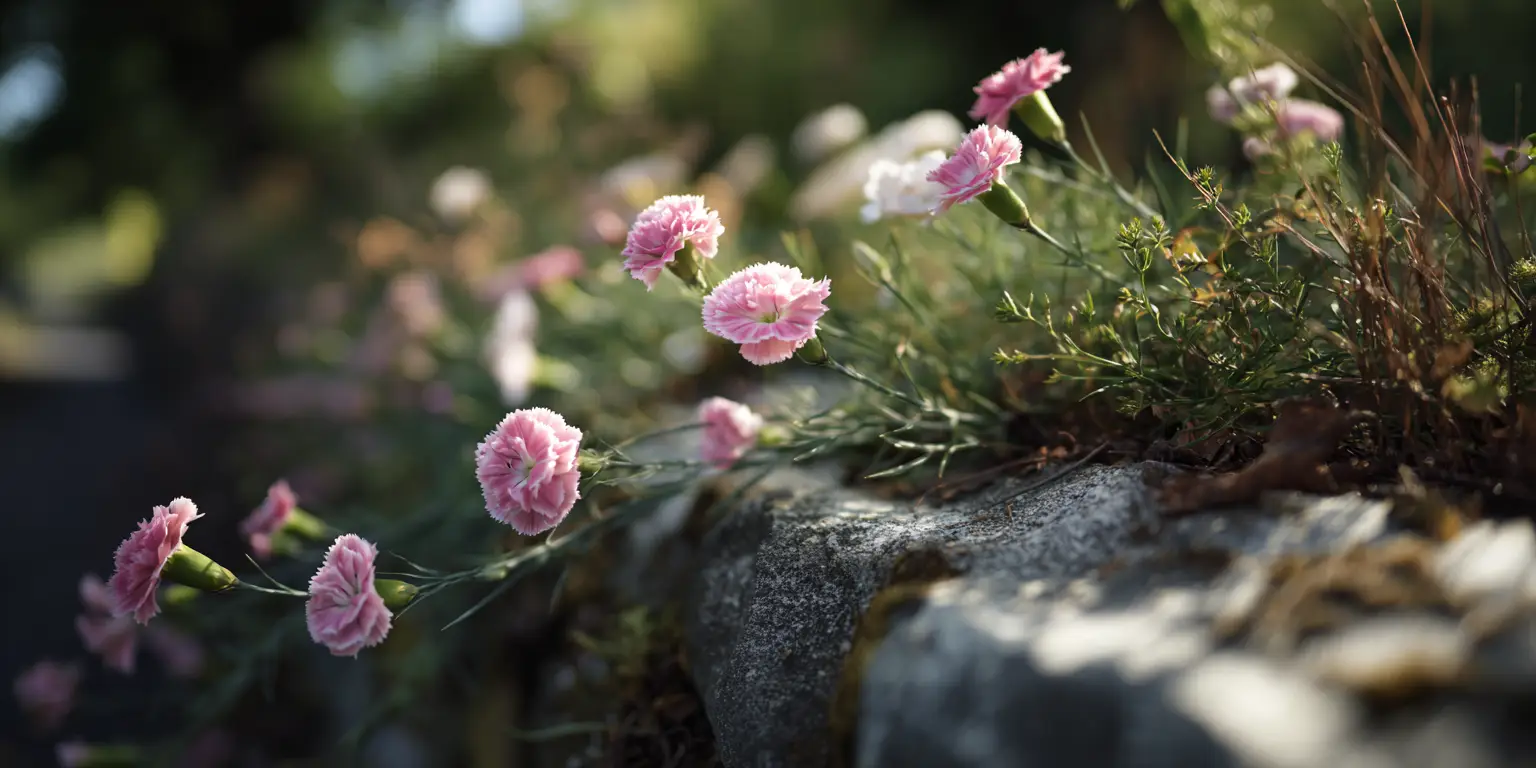
Carnations are full-sun plants. Aim for at least six hours of direct sun a day, and more is generally better for stem strength and flower count. Sun is what keeps the stems stiff and the plant blooming freely; starve it of light and it answers with weak, spindly growth, longer gaps between flowers, and a floppy habit that no amount of staking fully fixes. A south-facing bed, an open border, or a bright windowsill for a potted plant all qualify.
The one exception is extreme heat. In very hot, high-sun regions a little afternoon shade helps preserve flower color, since intense midday light can bleach the richer reds and pinks, and it spares the plant some heat stress during the worst hours. That is a refinement, not a reversal: even in those climates the plant still wants a sunny site overall, just with relief from the harshest part of the day.
Water
Watering is where most carnations are lost. The plant likes soil that is evenly moist but, far more importantly, sharply drained, and it resents sitting wet. The working rule is to let the top inch of soil dry slightly, then water deeply, which during the growing season usually means roughly once or twice a week depending on heat, container size, and how fast the bed drains. Water at the base of the plant rather than over the foliage and flowers, because wet leaves and crowns are an open invitation to fungal disease.
Overwatering, not drought, is the common failure. Yellowing foliage, limp stems, and crown or root rot all point the same way: too much water, too little drainage, or both. Carnations evolved on lean, stony Mediterranean ground and carry real drought tolerance once established, so when in doubt it is safer to err dry than wet. In pots this matters even more, since a saucer of standing water will rot the roots within days no matter how good the mix above it. Free drainage is the single most protective thing you can give the plant.
Four claims worth pinning down
The myth: The rainbow and multicolour carnations at the supermarket are a variety.
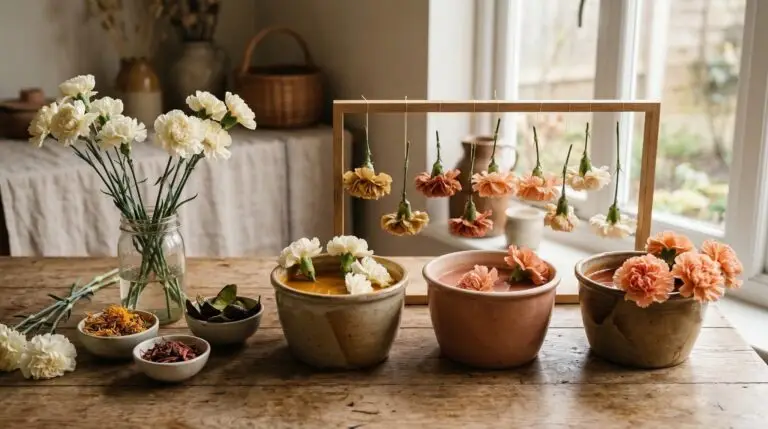
The reality: They are white carnations that have drawn dye up the stem through the same water-transport tissue every cut flower uses. University of Nebraska-Lincoln Extension at Lancaster publishes the exact recipe: one ounce of food colouring dissolved in a pint of warm water with a teaspoon of sugar, the trimmed stems stood in about three inches of the solution, left one to 24 hours until the colour develops. White is used because it has no pigment of its own to interfere, and the same technique is sold commercially as tinted carnations. This is a separate phenomenon from the naturally bicolour picotee patterning some cultivars genuinely carry.
The myth: Carnations are short-lived annuals, good only as cut-flower filler.
The reality: False as botany, understandable as a garden-centre convention. RHS and Britannica both describe true Dianthus caryophyllus, in border and perpetual-flowering form alike, as a hardy evergreen perennial, and RHS calls the border type the traditional hardy carnation of the English garden. NC State lists the life cycle as annual or perennial depending on cultivar and conditions rather than as a fixed trait. A real gardener in the sample hit the confusion exactly: in his country the plants are perennials and get extremely old, while the seed he can buy says it should be used as an annual.
The myth: A carnation that has lost its clove scent can be brought back to it.
The reality: There is nothing to bring back. Fragrance in this species is carried largely by eugenol, the compound behind clove spice, and decades of cut-flower breeding traded it away for vase life, stem strength, colour range and shipping durability, partly because the essential oils do not survive cold storage and transit intact. A plant that never had the scent will not develop it. One poster asked directly whether there is a way to get the smell back; the sourced answer is a different plant, an older clove pink line or a true border carnation, which RHS describes as frequently clove-scented.
The myth: A bloom that opens lopsided out of a cracked green tube has a disease.
The reality: That is calyx splitting, and it is a nutritional and environmental disorder rather than an infection. Peer-reviewed agronomy research links the calyx tube cracking as the bud expands to boron deficiency, compounded by temperature fluctuation and humidity, with foliar boron applications as the documented commercial remedy. NC State published a fact sheet on the disorder, which is cited here for its existence only, since the file is a 2012 scan with no recoverable text. The infection it gets confused with is Botrytis bud rot, where the bud itself turns brown and water-soaked, fails to open, and grows fuzzy grey mould in humid weather.
Soil and pH
Soil is where carnations break the usual flower rulebook, and getting it right is half the battle. Unlike the many ornamentals that crave rich, moisture-holding, slightly acidic beds, Dianthus wants the opposite: a loamy or sandy, freely draining soil that runs neutral to slightly alkaline, roughly pH 6.5 to 7.5 and happiest at or just above 7.0. Heavy, wet, acidic ground is the enemy, holding water around the crown and pushing the pH in exactly the wrong direction. If your garden is naturally acidic, a dose of garden lime will raise the pH while adding calcium, and the carnations will reward the correction with stronger growth.
Texture matters as much as chemistry. Work in coarse sand, grit, or fine gravel along with a modest amount of compost or aged manure to open up clay and keep water moving through. The aim is a bed that drinks and then drains, never one that stays sodden. In containers, start with a quality potting mix and cut it generously with extra perlite or horticultural grit so the root zone never goes airless. If you fix only one thing about your soil, make it drain.
USDA hardiness
As garden perennials, carnations are most reliable in USDA zones 6 to 9, with zones 7 and 8 the sweet spot where they overwinter cleanly and rebloom for several years. In zone 6 they can come through a hard winter with help, a loose mulch of straw or evergreen boughs laid over the crown to buffer the cold and, just as crucially, to keep meltwater from pooling. From zone 5 down, treat them as annuals or grow them in movable containers that can shelter in a cold frame, unheated porch, or bright garage over winter. At the warm end, zones 9 and 10 are workable, though relentless summer heat can shorten the plant’s life and stall its bloom. Because these are short-lived perennials, lifting a favorite plant into a pot for the season is a dependable way to carry it through a winter too cold to gamble on.
The dates and thresholds that are actually published
No university publishes a zone-by-zone carnation planting calendar, and this block does not invent one. What exists is a set of thresholds and intervals from five named institutions, quoted as each gave them, plus one convergence: three independent sources put the species in the same temperate window.
Propagation and longevity
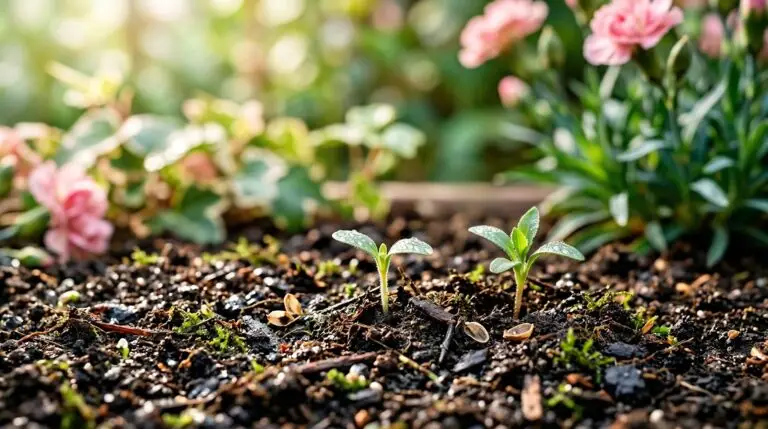
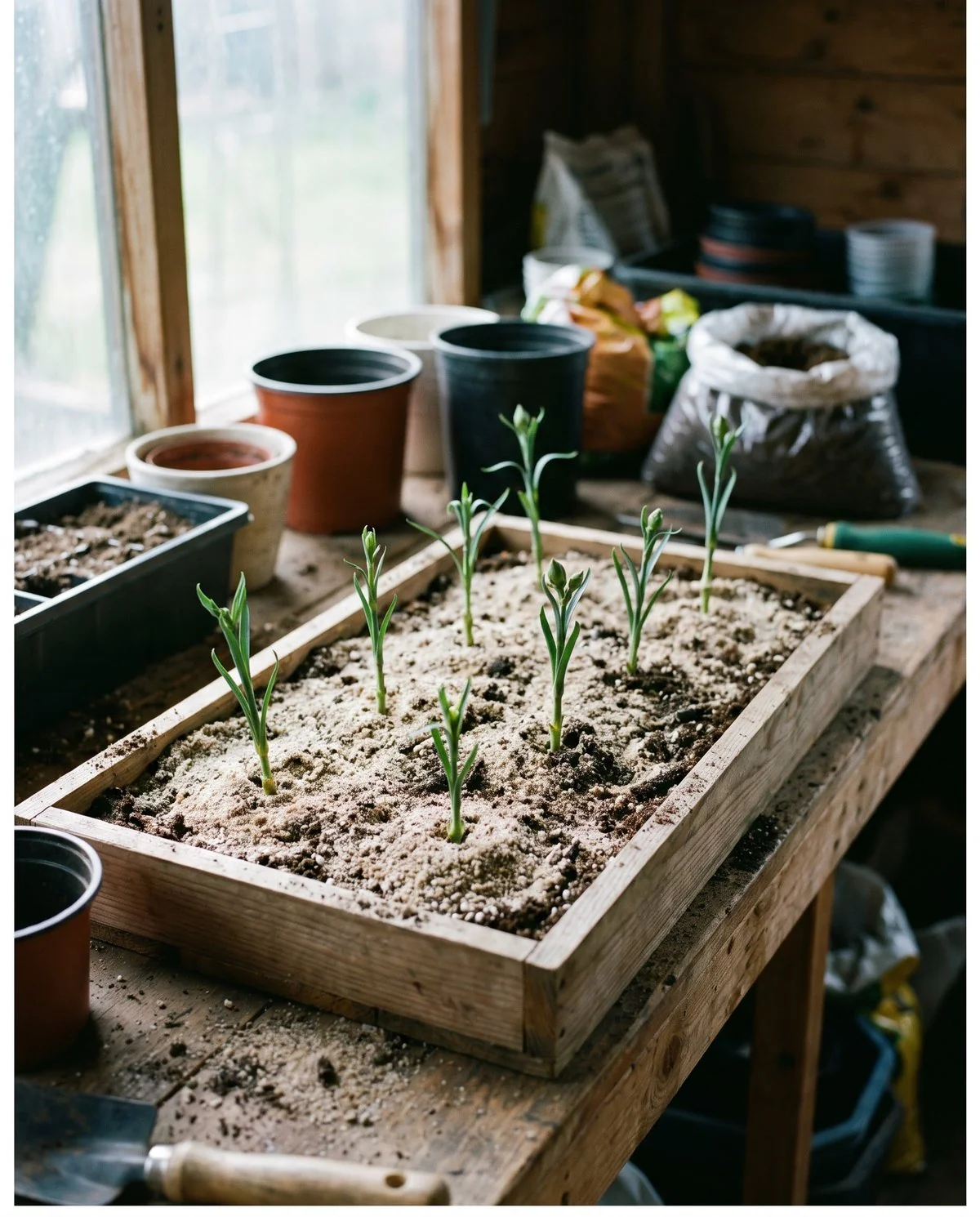
Carnations can be raised from seed, cuttings, or division, and the method you pick depends on how fast you want flowers and whether you care about cloning a specific plant. Seed is the cheapest route: start it indoors six to eight weeks before the last frost, expect germination within a week or two, and accept that seed-grown plants rarely bloom in their first year. Cuttings are the way to copy a named or favorite variety true to type. Take 4 to 6 inch non-flowering shoots in summer or early autumn after the main bloom, root them in sand, vermiculite, or a perlite-peat mix over three to four weeks, and a rooting hormone raises the success rate. Division suits the mat-forming border types: lift and split a clump with several crowns in early spring.
| Method | When | What to do | Time to root or flower |
|---|---|---|---|
| Seed | 6 to 8 weeks before last frost | Sow indoors, transplant out | Germinates ~1 to 2 weeks; blooms next year |
| Cuttings | Summer to early autumn | Root 4 to 6 in non-flowering shoots | Roots in ~3 to 4 weeks |
| Division | Early spring | Split clumps with multiple crowns | Establishes that season |
On longevity, honesty helps. Carnations are short-lived perennials, typically at their best for two to three years and sometimes pushing past five in ideal, well-drained conditions before they decline. Commercial growers often treat them as annual or biennial crops for exactly this reason, replacing stock rather than nursing aging plants. The practical takeaway for a home gardener is to keep a few cuttings rooting every couple of years so a strong variety never simply ages out of the garden.
Fragrance
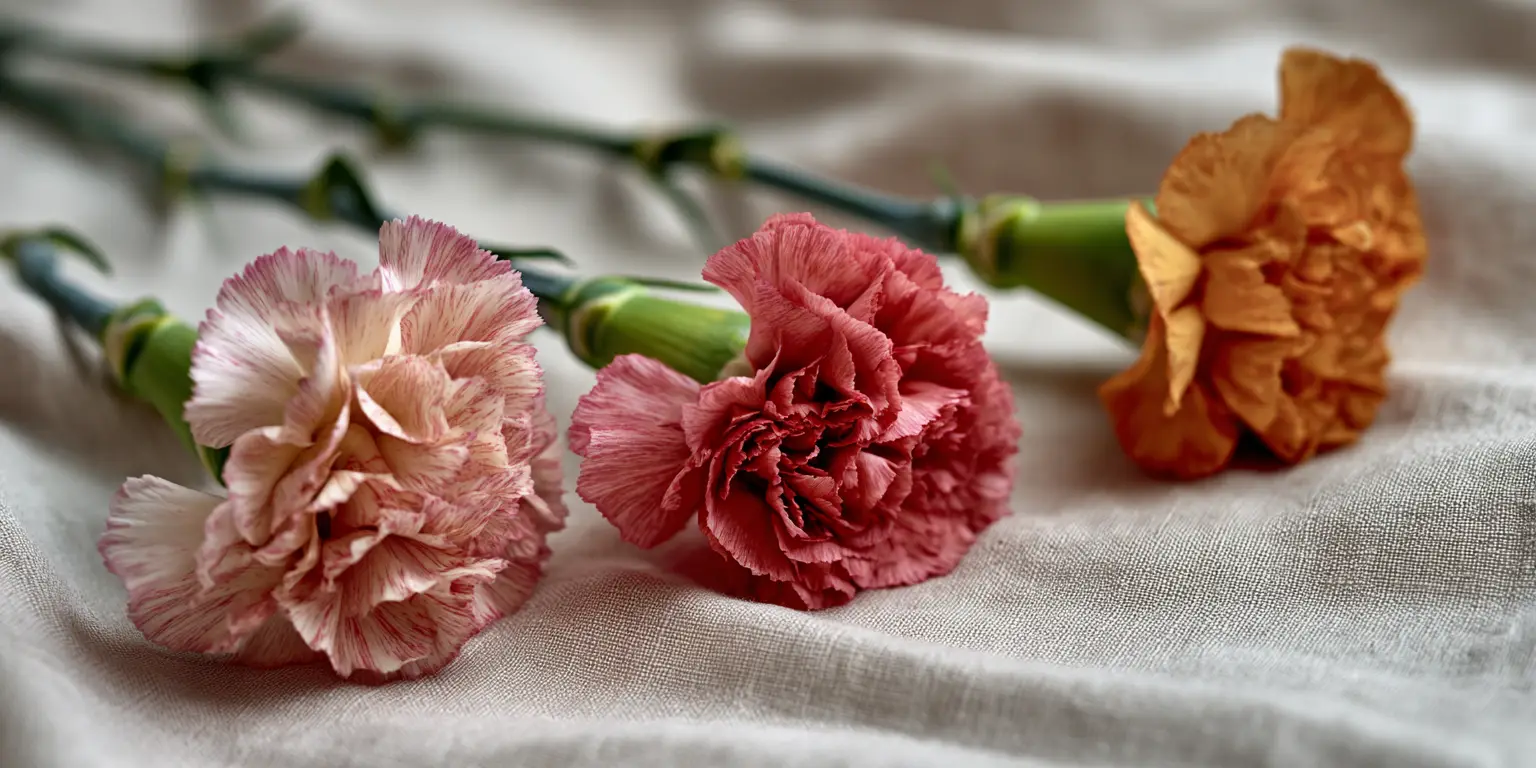
The carnation’s scent is its oldest claim to fame and the reason for its botanical name. At its best the perfume is a warm, spicy-sweet clove note, sometimes read as cinnamon or nutmeg, carried largely by eugenol, the same aromatic compound that gives the clove spice its punch. That is precisely why caryophyllus, meaning clove, became the species epithet, and why clove pink stuck as a common name. The fragrance reads strongest in warm weather with a light breeze to lift it, which is when an old cottage pink can perfume a whole corner of a garden.
Here is the part that surprises buyers: many modern florist carnations barely smell at all. Decades of breeding aimed at the cut-flower trade prioritized vase life, stem strength, color range, and shipping durability, and scent quietly fell off the list, partly because much of the fragrance does not survive cold storage and travel intact. The result is a flower that lasts beautifully and smells of almost nothing. If fragrance is what you are after, the answer is to grow heirloom carnations or old-fashioned Dianthus pinks, the strains bred for the garden and the nose rather than the cooler and the freight truck, since they keep the clove richness their commercial cousins gave up.
Toxicity and pet safety
Carnations are mildly toxic to cats, dogs, and horses, and the ASPCA lists Dianthus caryophyllus as toxic for that reason, naming an unknown irritant as the toxic principle, so the flower is not a safe pick for a home with a determined plant-chewer. The risk, though, is low-stakes. A pet that nibbles the foliage or flowers may show mild gastrointestinal upset, such as drooling, vomiting, or diarrhea, and contact with the sap can cause mild skin irritation or dermatitis in sensitive animals or people. These signs are generally mild and pass on their own, which sets carnations apart from the genuinely deadly cut flowers.
For perspective on the high-stakes end, lilies sit in a different category, since even small exposures can cause fatal kidney failure in cats, so a household with cats should weigh that distinction when choosing flowers. Carnations carry no such severe hazard. Still, the sensible move is to keep arrangements and plants out of easy reach, rinse off skin after handling the sap if you are prone to irritation, and call a vet or the poison line if a pet eats a large amount or seems unwell. If pets are a constant factor, the guide to flowers that are safer around cats and dogs is a better starting point than any single mildly toxic species.
Vase life
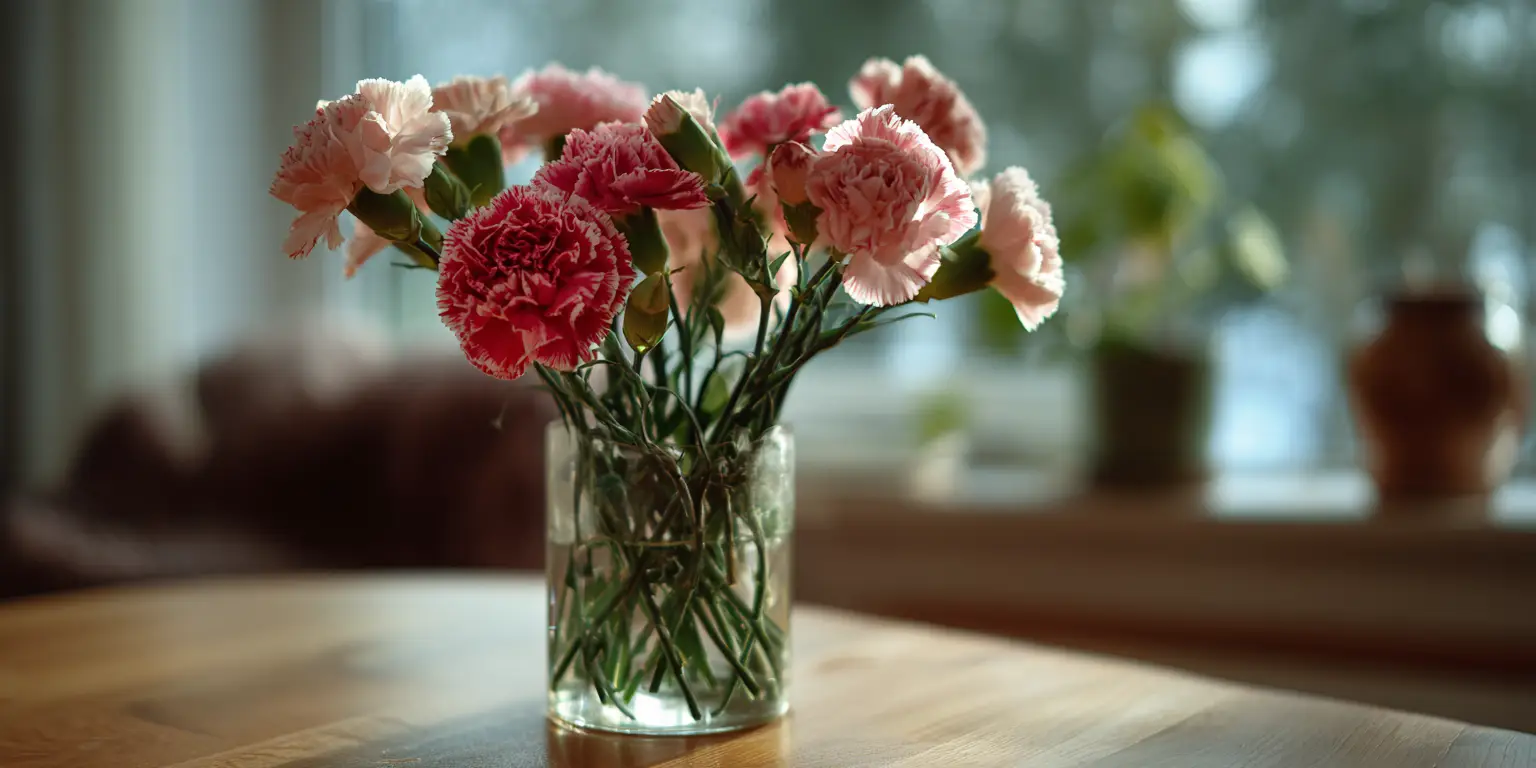
Vase life is the carnation’s signature trait. A well-kept stem holds for two to three weeks in water, with many lasting one to two weeks even with careless handling and some modern long-life varieties approaching a full month under ideal care. That alone puts carnations among the longest-lasting cut flowers you can buy, far outlasting roses, tulips, or peonies, and it is the single best reason they dominate supermarket bunches and mixed arrangements where longevity matters more than prestige. The flower also drops its petals slowly rather than shattering all at once, so it leaves a tidy table rather than a mess as it fades.
The reason for that staying power is partly the dense, tightly packed petal structure and partly the plant’s general toughness, but care still decides whether you get one week or three. Recut each stem at a 45-degree angle with a clean, sharp blade before it goes in the vase, strip off any leaves that would sit below the waterline so they cannot rot and foul the water, and use fresh, cool water with a packet of floral preservative if you have one. Change the water every couple of days, recutting the stems each time, and keep the vase in a cool spot out of direct sun, heat vents, and drafts.
| Do this | Avoid this |
|---|---|
| Recut stems at a 45-degree angle before arranging | Crushing or tearing stems |
| Strip leaves below the waterline | Leaving foliage to rot in the water |
| Use cool, fresh water plus flower food | Warm or stagnant water |
| Change water and recut every 2 days | Letting cloudy water sit |
| Keep the vase cool, out of direct sun and heat | Placing near a fruit bowl |
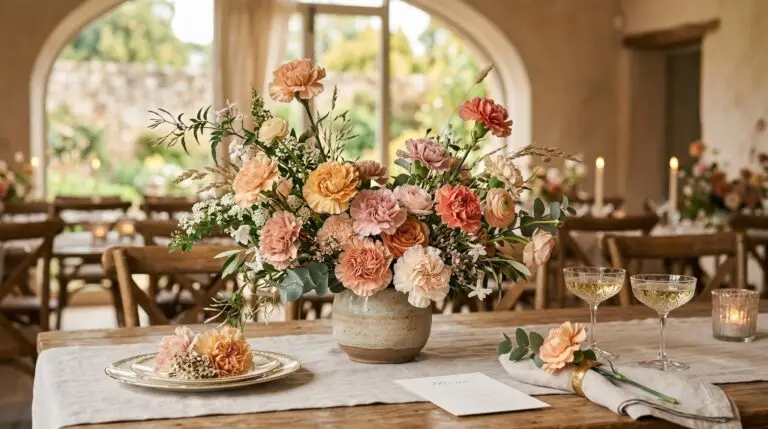
That last point carries weight. Carnations are notably ethylene-sensitive, and ethylene is the ripening gas that fruit gives off, so a bowl of apples, bananas, or tomatoes near the vase will cut the flowers’ life short and make them fade, curl, or go to sleep early. Keeping the arrangement away from ripening fruit, and away from heat that speeds everything up, is one of the easiest ways to push a carnation toward the long end of its range. Because they hold so well and travel so reliably, carnations are a practical backbone for wedding flower arrangements and other events where blooms must look fresh well after they leave the cooler.
The measured numbers behind the longest-lasting cut flower in the shop
Carnation is the one flower in this series where the postharvest research is richer than the garden research, because the industry needed it and because the plant responds so visibly to ethylene that it became the model species for studying it. The numbers below are the reason a supermarket bunch can outlast a far showier bouquet by weeks.
A bunch that lasts three weeks must be a special long-life variety.
Sometimes it is, since cultivars bred for 20 days and more exist and are named above. Far more often it is silver thiosulfate applied at the grower, which is why the answer to the sample's highest-engagement post, a gifted bouquet still perfect after three weeks, is a treatment the buyer never sees rather than a variety they could ask for.
A penny in the vase keeps cut carnations fresh.
True historically, false now. NC State Extension gives the reason: modern US pennies are 97.5 percent zinc, not the pre-1982 95 percent copper that gave the trick its original mild fungicidal basis.
Cutting the stems again before moving them into an arrangement helps them drink.
For carnation the more consequential handling is keeping the stems away from ethylene, since this is the flower the entire ethylene-senescence literature was built on. A fresh angled cut, clean water and a cool spot are worth doing; putting the vase next to ripening fruit undoes all three.
Reading the bunch in the store, stage by stage
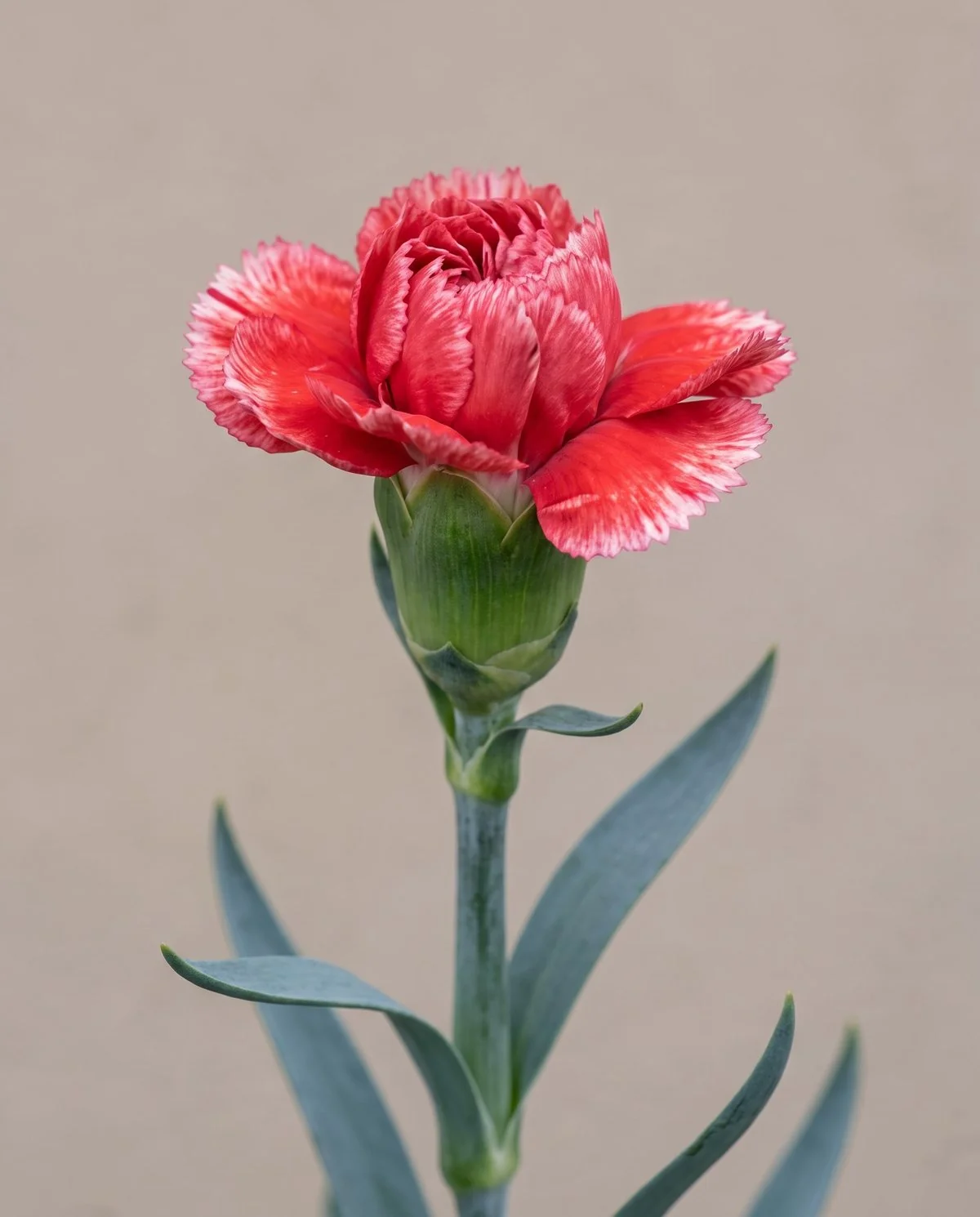
Whether a tight carnation bud will ever open in your vase is decided before you buy it, at the moment the stem was cut, and the cut stage is readable right in the store bucket. The trade harvests at three stages. Buds cut at the star stage, still closed with just a point of petals showing, are meant for weeks of dry cold storage and are opened afterward in a sugar feeding solution: a star bud that reaches a shopper and goes into plain water often stalls there and never opens at all. Buds cut at the paintbrush stage, with petals standing straight up out of the calyx like a dry brush, open quickly and reliably on their own. Fully selling flowers are cut half to three quarters open. So the reading is simple: paintbrush and beyond is a safe buy, a bunch of hard, starred buds is a gamble that only pays if you feed it, and for spray types the stem to pick carries one to three open flowers with the rest showing color.
If the gamble came home anyway, the fix is the sugar the bud was counting on. Dissolve the full flower food sachet in the measured amount of water rather than a splash, recut and let the buds draw it, and accept that some star buds are past finishing no matter what. Two smaller trade habits transfer to the kitchen counter as well. The stem is brittle exactly at its swollen nodes and snaps there under a knife, so recut between the joints, not through them. And the split calyx covered earlier on this page has a florist's patch: when buds are just starting to open, a snug band of clear tape around the calyx holds the tube together, which is how growers themselves rein the disorder in.
Pests and diseases
Carnations are relatively trouble-free in a well-drained, sunny bed, and deer and rabbits usually leave them alone, but a few problems turn up often enough to know. Aphids cluster on soft new growth and can be knocked back with a strong spray of water or insecticidal soap, and spider mites move in during hot, dry spells, where the same soap clears an outbreak. The diseases that matter are mostly fungal and mostly traceable to damp, crowded, poorly drained conditions, which is the through-line of carnation care. Botrytis blight shows as a grey mold on flowers in cool, wet weather, while the serious threats are the wilts: fusarium wilt browns and splits the stem, and bacterial wilt blackens stems with a slimy ooze and is effectively fatal, so an infected plant should be removed and destroyed rather than treated. Root rot is the overwatering disease, prevented the same way everything else here is, with excellent drainage.
Almost all of it comes down to the same handful of habits. Plant in full sun and free-draining soil, space the plants for airflow, water at the base in the morning rather than over the foliage, clear away spent blooms and dead leaves so disease has nowhere to settle, and avoid replanting carnations in the same spot year after year. Get those right and most of these problems never gain a foothold, which is why the drainage and sun the rest of this guide keeps returning to do double duty as pest control.
What carnation owners actually ask about, ranked by frequency
409 unique posts, deduplicated by permalink, from r/gardening and r/plantclinic across 44 title and theme queries: 317 from r/gardening and 92 from r/plantclinic. Themes overlap and do not add to 100. The shape of the corpus is itself the finding, because the largest theme by a wide margin is people making more carnations rather than rescuing one, which is not how the tulip or chrysanthemum corpora behave.
Which method the plant justifies. RHS roots softwood cuttings from non-flowering shoots taken in summer in roughly three weeks in a 1:1 sand and peat mix, while Utah State University's production trial puts seed at 130 to 140 days from sowing to first bloom, so this choice is three weeks against four months, and only the cutting comes true to a named variety.
Drainage and the week's high temperatures, before any spray. NC State records the species as intolerant of high heat and a poor choice for southern gardens, and the posts in this theme almost always carry a trigger the poster has not connected yet: a heatwave, a saucer of standing water, or a transplant.
Which of the four groups is in the ground. RHS rates border carnations H4, hardy through most of the UK at roughly minus 10 to minus 5 degrees Celsius; NC State gives the species zones 6a to 9b and Missouri Botanical Garden 6 to 9. Several of the highest-engagement posts in this theme are gardeners surprised their plant lived, including one bought on clearance for two dollars in bad condition that came through subzero cold under snow taller than itself.
Whether the wilt is one-sided or whole-plant, and what the inside of a cut stem looks like. That single distinction separates Fusarium wilt from water stress and takes a knife rather than a diagnosis by photograph.
What happened to the stems before they reached the shop. The single highest-engagement post in the whole sample, at 452 upvotes, is a gifted bouquet that had not wilted at all in three weeks, and the answer is a grower-level pre-treatment the buyer never sees.
The leaf undersides and the leaf axils. Several posts in this theme cannot separate pest damage from disease by eye, which is the same fork Penn State Extension's carnation page answers by naming its five diseases explicitly.
Which strain it is, because scent is a cultivar trait rather than a condition. One poster asked directly whether there is a way to get the smell back; another arrived unprompted at the sourced conclusion that the varieties used in cut flowers have virtually no fragrance.
Whether anything is powdery, water-soaked or fuzzy, in that order. The posts here are genuine diagnostic dead ends, one asking outright whether it is insects or fungus and whether the plant should be removed.
Height against the group. A standard florist type carries a bloom on a stem approaching three feet and needs support that a 12-inch border plant never does, and several posts here describe stems bent by wind, pets or a footstep rather than by weakness.
The sowing date first. This count is a floor rather than a measurement: a plant with lush foliage and no flower has nothing dramatic to photograph, the same under-representation the tulip and chrysanthemum corpora showed for their own no-bloom rows.
The soil rather than the leaves, since both errors produce limp foliage. This count is small because the same posts are usually filed under yellowing instead.
Whether the grower is commercial. This is a real, extension-documented defect: NC State published a fact sheet on it, and peer-reviewed agronomy research ties it to boron deficiency with temperature swings and humidity. The near-total absence from a home-gardening corpus measures who loses money from a lopsided bloom, not whether the disorder exists.
Two paths, worked in order
Both begin with the conditions rather than the pathogens, because in a corpus of 409 posts the undifferentiated dying plant outnumbers every named disease by roughly seven to one, and the trigger the poster has not identified yet is usually heat or standing water.
Photo pairs for the carnation look-alikes
The pairs that turn on posture, structure or plant habit carry photographs. The pairs that turn on a pathogen fingerprint do not: xylem streaking, rust pustule texture and the fuzzy grey mould of Botrytis are checkable diagnostic details, so the clean side is shown and the damaged side waits for a real reference photograph. One pair here has no photograph at all, and that is the honest answer for it.
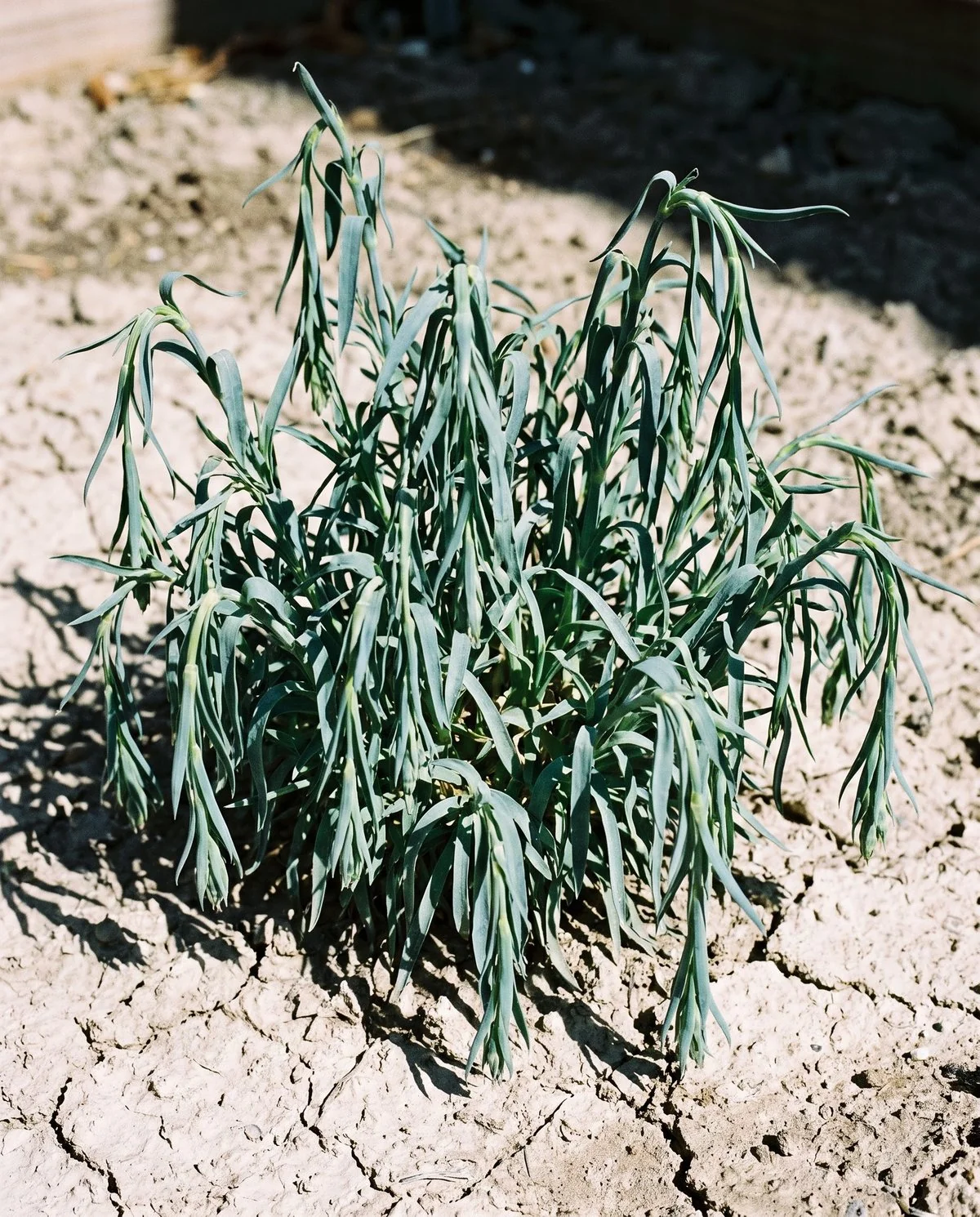
The pattern first, then the stem. Fusarium oxysporum f. sp. dianthi yellows and wilts the lower leaves up one side of the plant first and works upward, with the stem shrivelling and turning greyish, and the tell is internal: brown or dark streaking in the xylem when a stem is cut open. Drought wilts the whole plant evenly, recovers at least partly after watering, and leaves the inside of the stem clean. Penn State Extension, UC IPM and Illinois Extension all route this diagnosis through the cut stem rather than the leaf colour. Only the drought side is photographed.
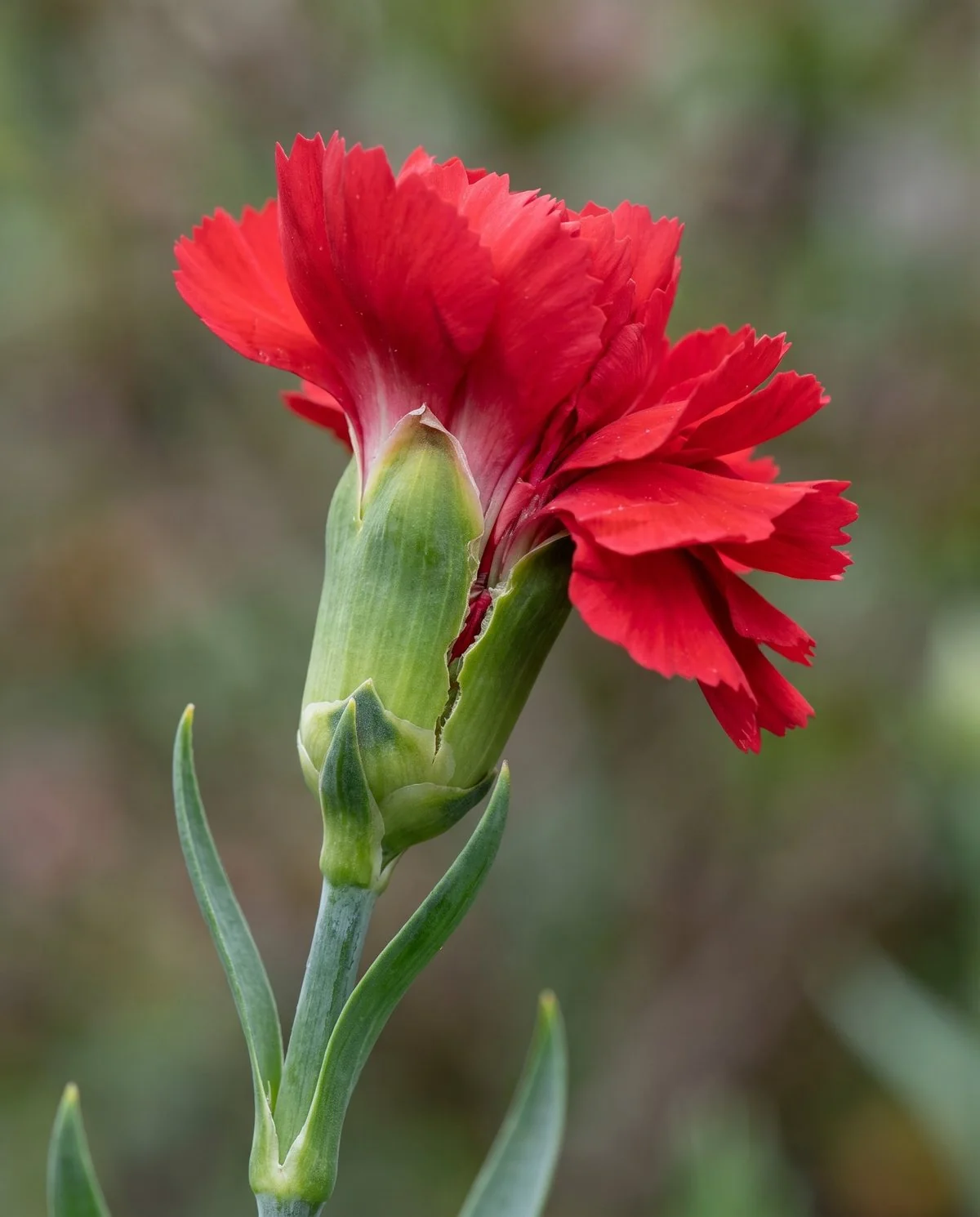
Whether anything is rotting. Calyx splitting is structural: the calyx tube cracks as the bud expands and the flower opens off-centre, while the rest of the plant looks healthy, and peer-reviewed agronomy research ties it to boron deficiency compounded by temperature swings and humidity, with foliar boron as the documented commercial remedy. Botrytis bud rot is the infection it gets mistaken for, and it looks different: the bud itself turns brown and water-soaked and fails to open, with the classic fuzzy grey mould developing on the dead tissue in humid conditions. Only the split calyx is photographed.
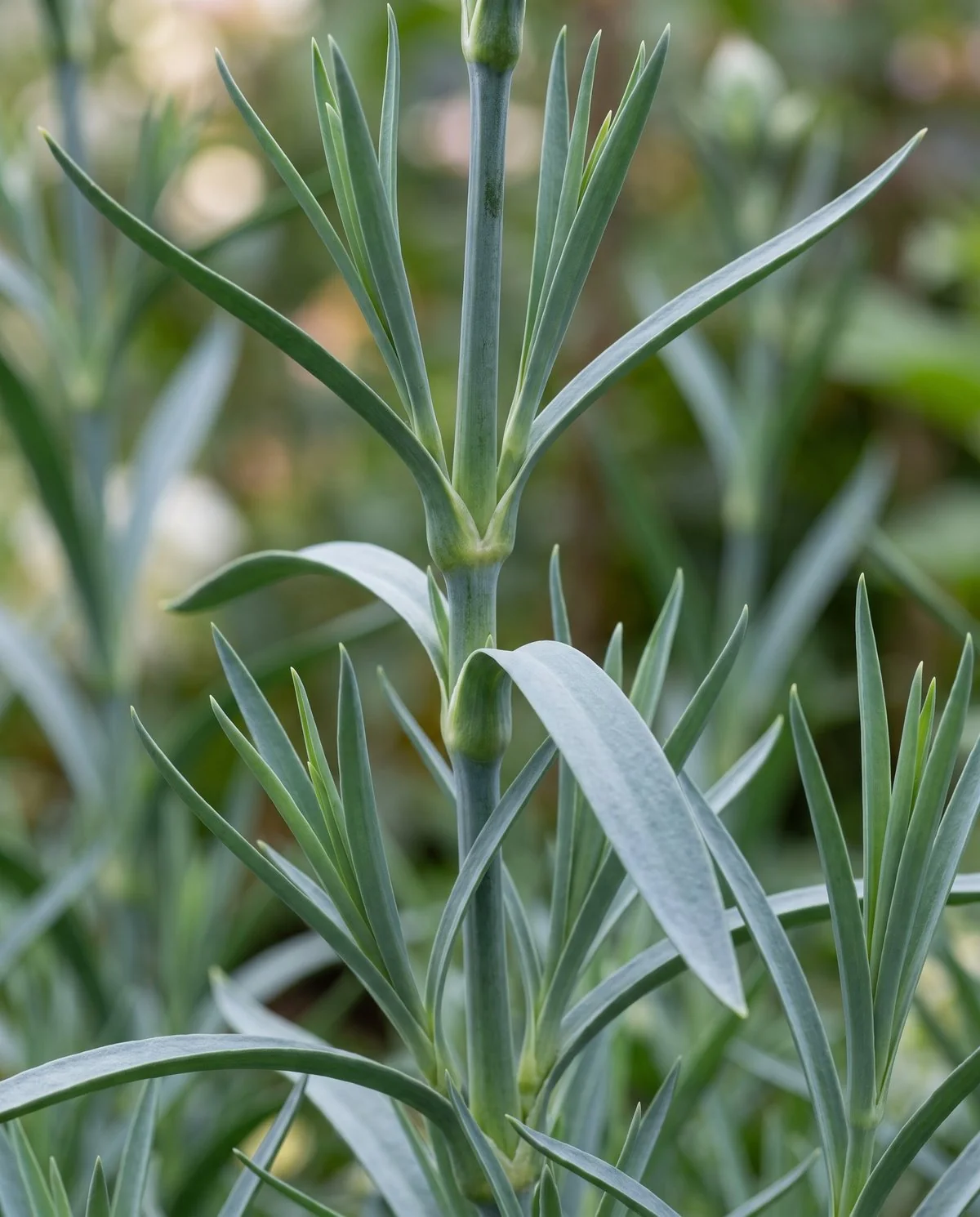
Texture and the conditions that preceded it. Penn State Extension and the UC IPM and PNW handbooks describe Uromyces dianthi as chocolate to cinnamon-brown powdery pustules up to a quarter inch, breaking out on both leaf surfaces and sometimes on buds and stems, releasing visible brown spore dust when rubbed, and favoured by cool nights near 60 degrees Fahrenheit alternating with warm humid days and a film of leaf-surface moisture lasting 9 to 12 hours. Healthy carnation foliage is uniform blue-green with nothing powdery on either surface. Only the healthy side is photographed.
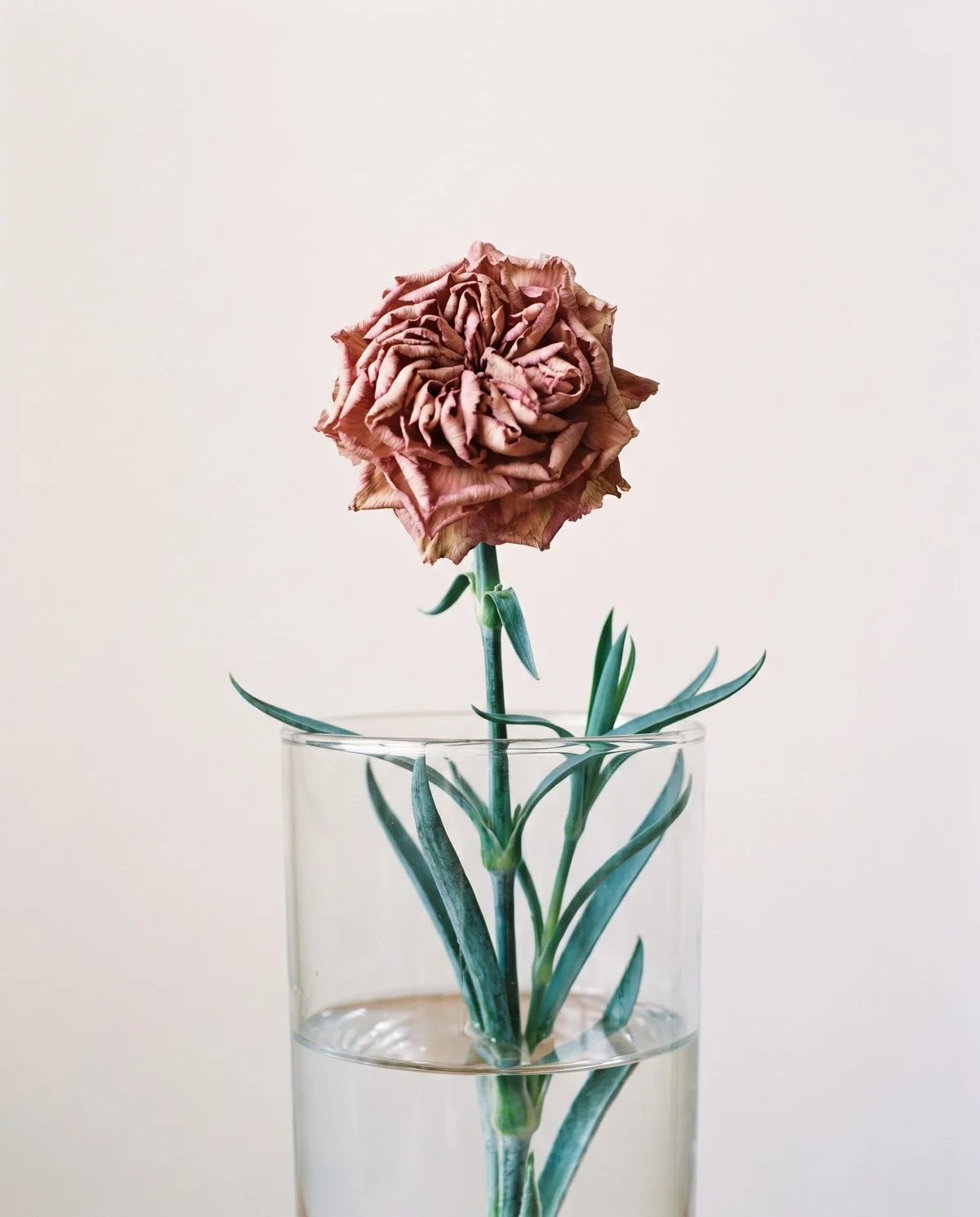
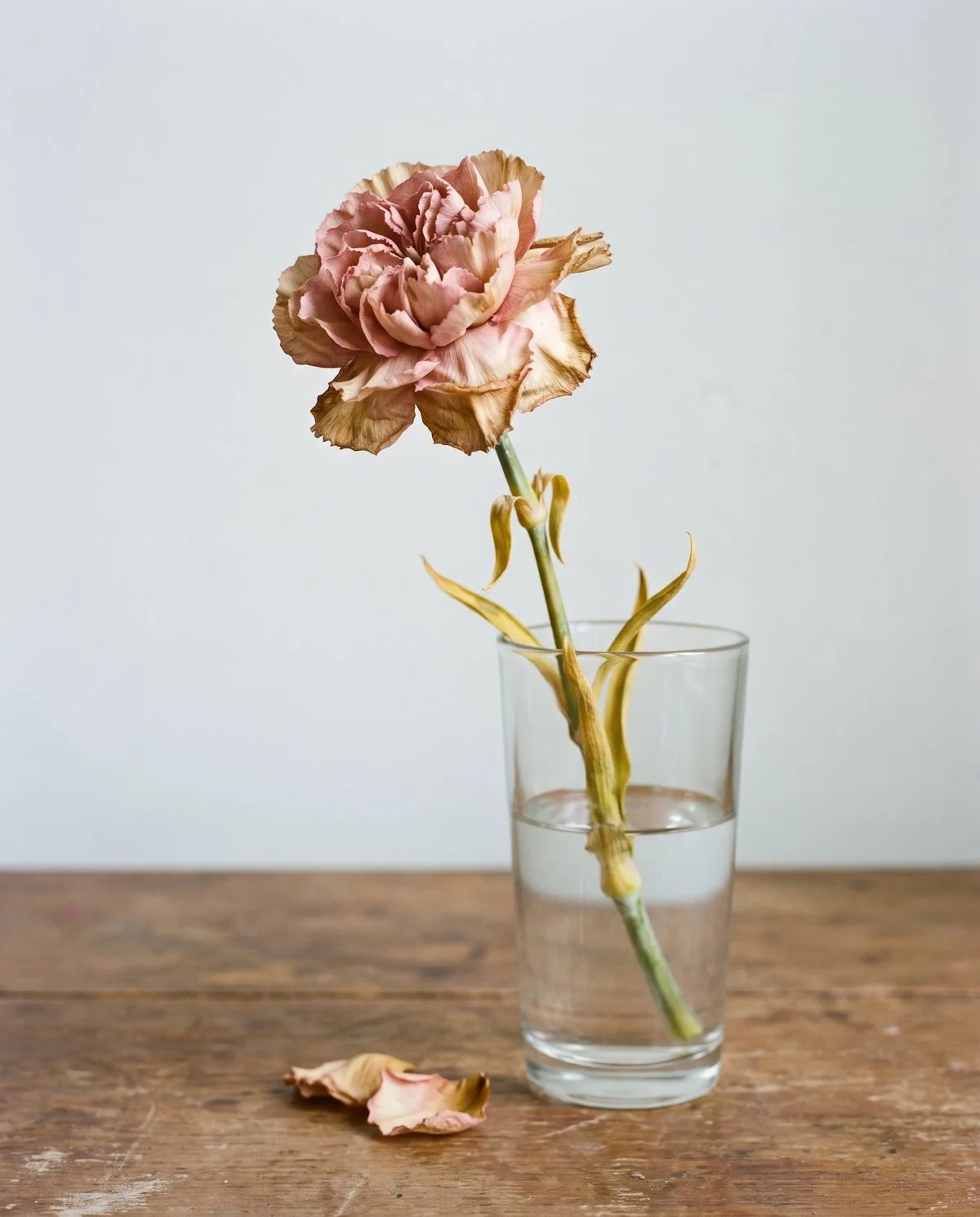
Which part of the flower failed first, and how fast. Ethylene rolls the petals inward within hours to a couple of days of exposure, well before the bloom would be due to fade, and the stem and foliage often still look fresh underneath a collapsed flower. A natural end of vase life fades the whole flower gradually with the stem and foliage declining in step. Carnation is the model species in ethylene-senescence research precisely because this response is so fast, visible and repeatable, which is also why a fruit bowl matters more for this flower than for almost any other.
Nothing on the outside of the plant separates these two reliably, and that is the useful finding rather than a gap. Penn State Extension lists Pseudomonas caryophylli and Fusarium wilt side by side on the same page, and its description of the bacterial progression, grey-green to yellow to dead with root rot, is close enough to Fusarium's external symptoms that the external appearance alone will not decide it. The check that does carry information is the stem cross-section from the first pair on this list. No photograph is offered for either side, because a generated illustration of either disease's external symptoms would only add false confidence.
Flower photos

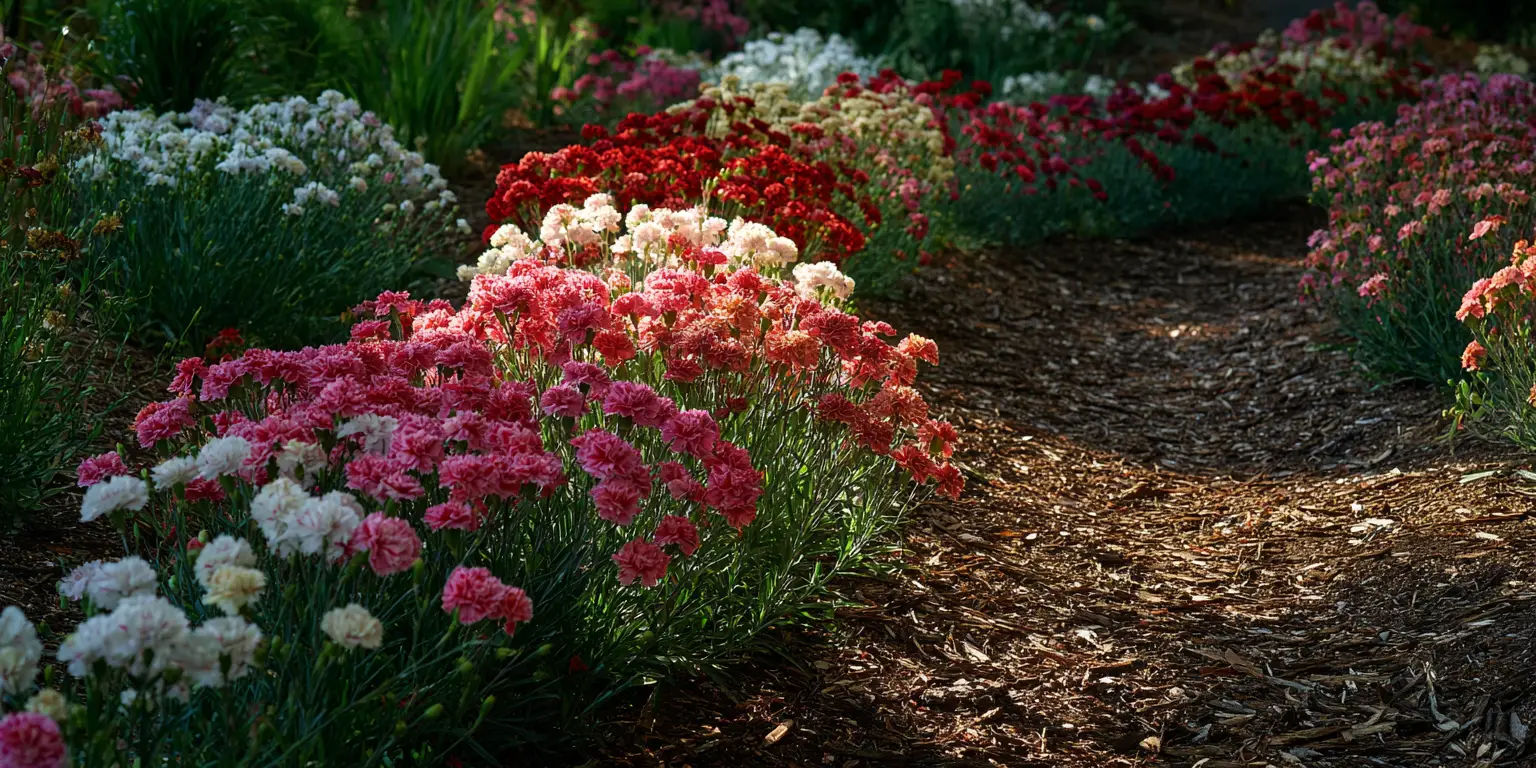
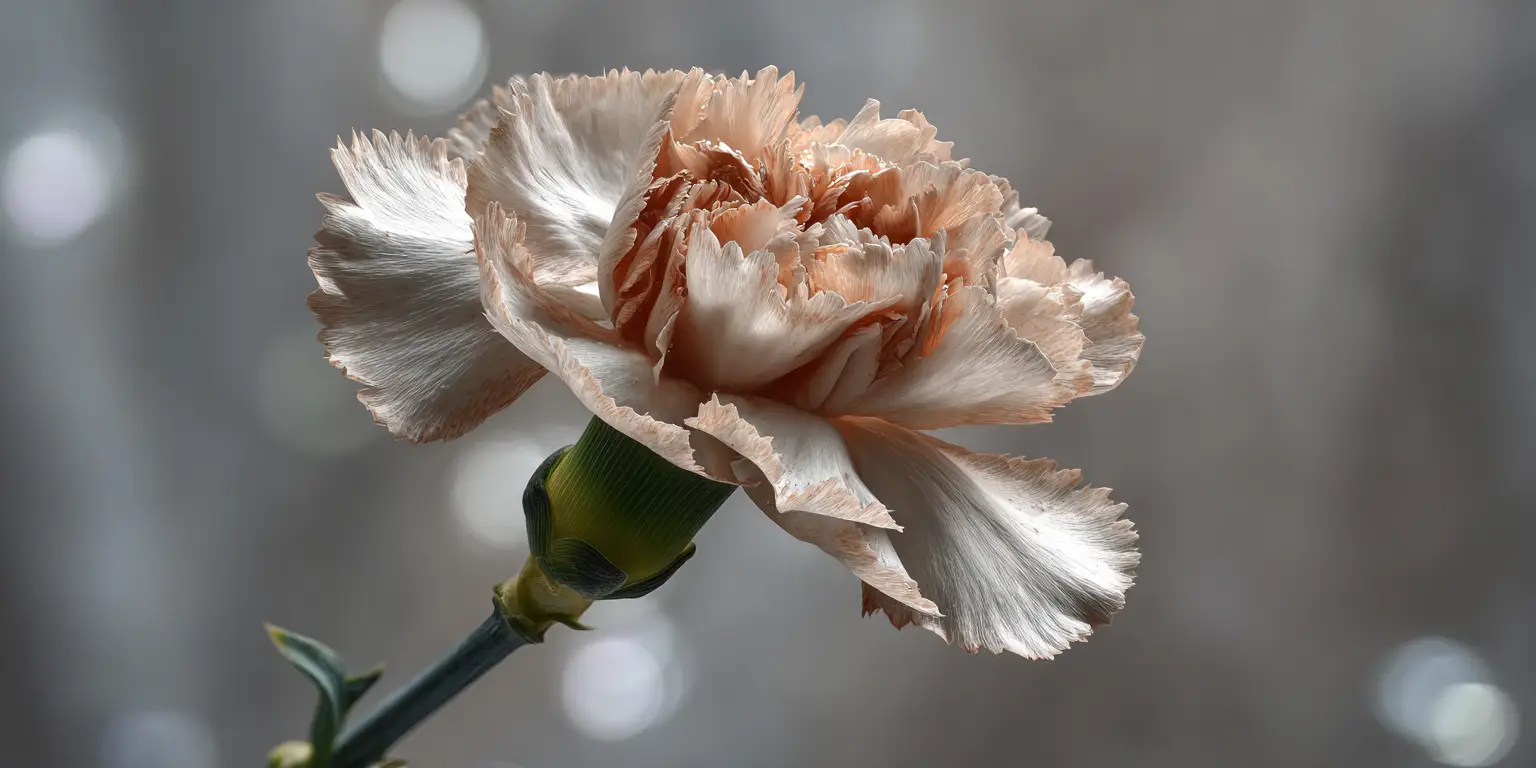
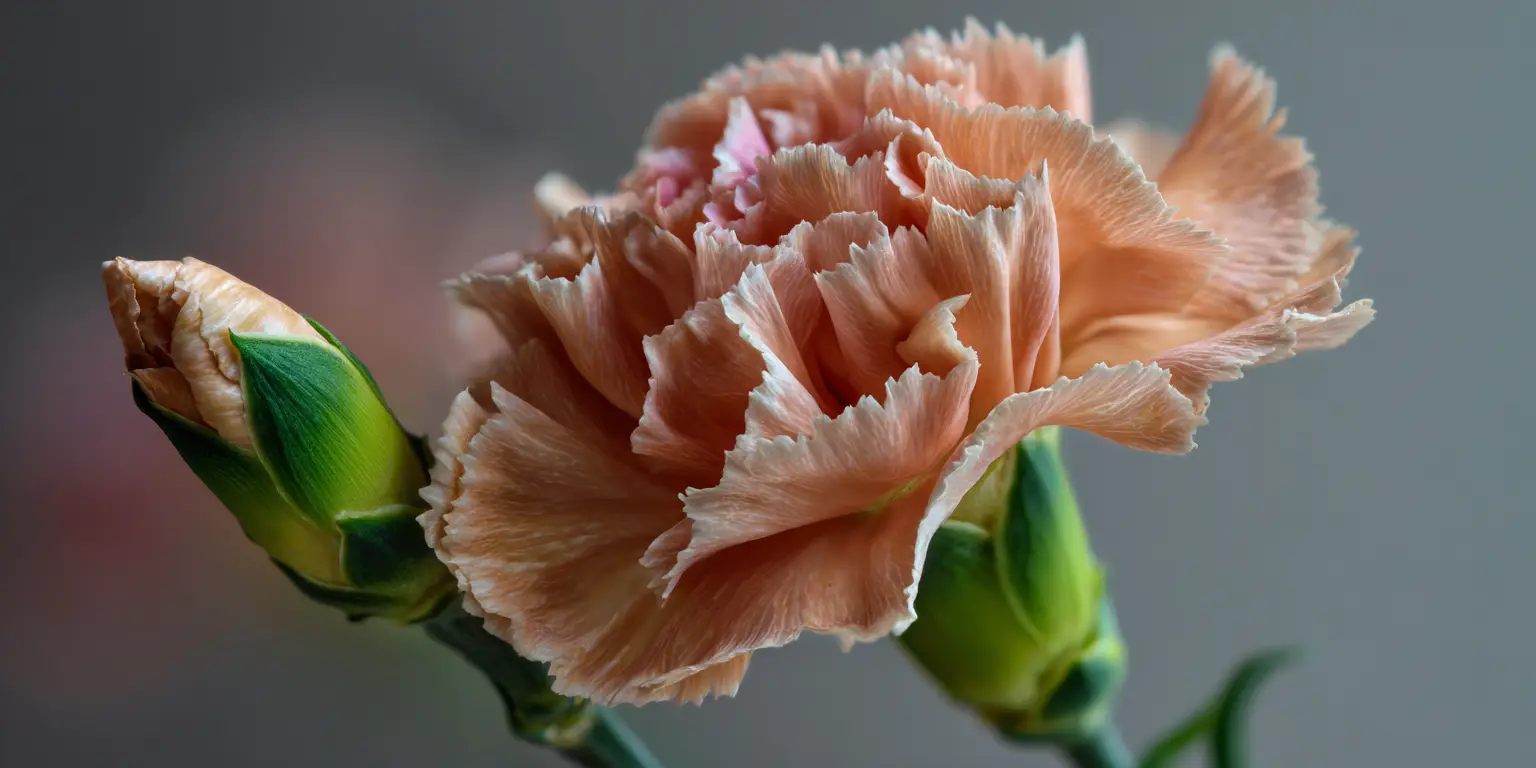
FAQ
How long do carnations last in a vase?
Commonly two to three weeks with good care, and at least one to two weeks even when handled carelessly, which ranks them among the longest-lasting cut flowers sold. Recut the stems at an angle, pull off any submerged leaves, stand them in cool fresh water with flower food, refresh the water every couple of days, and keep the vase cool and clear of ripening fruit, since the fruit’s ethylene gas ages them fast.
What soil do carnations need?
Free-draining, loamy or sandy soil on the neutral to slightly alkaline side, roughly pH 6.5 to 7.5, which is the reverse of what acid-loving flowers want. They hate heavy, wet, acidic ground, so sweeten an acidic bed with garden lime and open up the drainage with grit before planting.
Are carnations toxic to cats and dogs?
Mildly, yes. The ASPCA lists them as toxic to cats, dogs, and horses, with chewing causing mild stomach upset, drooling, vomiting, or diarrhea, and the sap sometimes irritating skin. The effects are mild and self-limiting, nothing like the kidney-failure danger lilies pose to cats.
Why don't my carnations smell?
Most likely they are modern florist varieties bred for vase life and shipping, where fragrance was sacrificed. The clove scent the species is named for lingers in heirloom carnations and old-fashioned Dianthus pinks, so seek those out if perfume matters.
Are carnations annuals or perennials?
Short-lived perennials, hardy in roughly USDA zones 6 to 9 and at their best for two to three years. In colder zones gardeners grow them as annuals or overwinter them in pots indoors.
How do I get more blooms?
Give them at least six hours of full sun, hold back on water, and deadhead spent flowers back to a leaf node all season. Pinching out the very first bud on a young plant pushes it to branch and carry more flowers later.
What is being done to these flowers to make them so hardy? Mine have been in a vase three weeks and haven't wilted a bit.
Almost certainly silver thiosulfate pre-treatment at the grower or wholesaler. Carnations are unusually ethylene-sensitive, silver thiosulfate blocks that sensitivity, and the treatment is described as increasing vase life two- to threefold, which is the specific reason a cheap carnation bunch can outlast a far more expensive bouquet by weeks. This was the highest-engagement question in the entire 409-post sample, at 452 upvotes.
Can I root a cutting from the bouquet I was given?
Not from a flowering stem, which is what a bouquet is made of. RHS specifies non-flowering shoots, taken in summer, rooted in a 1:1 sand and peat mix, with roots in about three weeks. Propagation is the largest theme in the forum sample at 21 percent, and the word non-flowering is the part that gets skipped.
How do I tell if my carnation has Fusarium wilt or is just dry?
Two checks, in this order. Fusarium wilt yellows and wilts up one side of the plant first, while drought wilts the whole plant evenly and recovers at least partly after water. Then cut a stem open: brown or dark streaking in the internal tissue is Fusarium's tell, and water stress never produces it. Penn State Extension, UC IPM and Illinois Extension all route this decision through the cut stem rather than through the leaves.
My supermarket carnation is two colours, split down the middle. What causes that?
This reads as a naturally occurring bicolour or sport pattern rather than dye. Sport mutations producing two-toned and striped carnation petals are a named, documented category in carnation breeding, with patented bicolour sport cultivars sold commercially, and the tell is that the colour boundary follows the petal's own structure rather than a dye-uptake gradient. That is a category answer rather than a diagnosis: this specific flower was not independently confirmed in this research.
How long does a carnation actually live?
This is genuinely unresolved. RHS's 2 to 5 years is time to full mature size rather than a lifespan, and RHS separately records that the plant develops a woody base with age. An Ask Extension ticket asked the lifespan question directly, with the gardener offering about five to six years unprompted, and the answering expert addressed the division timing instead of the number. No .edu source in this research confirmed a lifespan figure in either direction, so the ageing pattern is documented and the endpoint is not.
Interesting tips
A few extra facts round out the carnation’s character. It is the birth flower for January and the traditional bloom for a first wedding anniversary, which keeps it in steady demand for early-year and milestone occasions; the symbolism behind that role sits on the January birth flower guide. On young plants, pinching out the very first flower bud feels counterintuitive but pays off, since it pushes the plant to branch and produce more stems and blooms over the season. White carnations are a classroom staple for demonstrating capillary action, because a stem set in dyed water draws the color up into the petals within a day, making the plant’s plumbing visible.
The edible angle is genuine: carnation petals are safe to eat and have long been crystallized in sugar for cake decoration or scattered into salads, with the spicier heirloom types tasting closest to their clove scent, though the bitter white heel at the petal base is usually trimmed off first. In the garden the plant earns its keep as relatively pest-resistant, with deer and rabbits generally passing it by, and a potted carnation can be carried through winter indoors by trimming it back after blooming and keeping it in a cool, bright spot with sparing water. For early-spring celebrations the flower’s reliability and long vase life make it a dependable choice in any Mother’s Day arrangement, which is part of why it became one of the holiday’s signature blooms.
Related Guides & Flowers
Anemone
Crisp, elegant blooms that pair well with carnations in bouquets and spring arrangements.
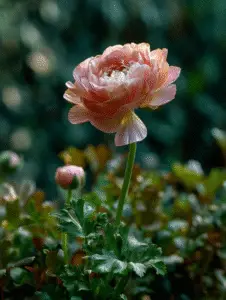
Ranunculus
Ruffled, rose like layers that match carnation texture for romantic, full bouquets.
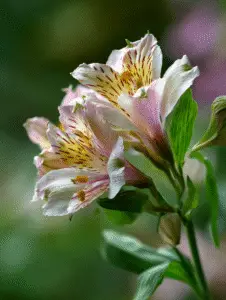
Alstroemeria
A long lasting cut flower that complements carnations with a lighter, speckled look.
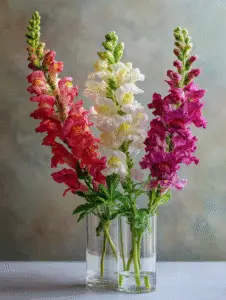
Snapdragon
Adds vertical lines and movement, great for mixed vase arrangements with carnations.
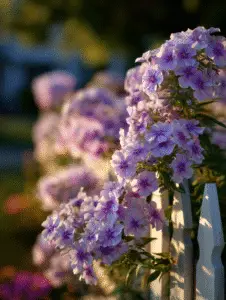
Phlox
Soft clusters that echo the dense, garden feel carnations can create in borders and bouquets.
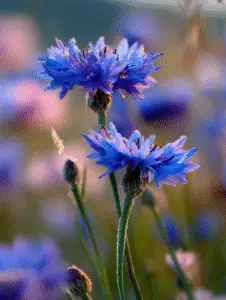
Cornflowers
A less obvious, cottage style match that adds airy blue accents next to carnations.
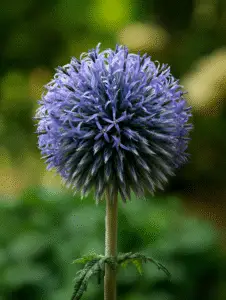
Globe Thistle
Bold, architectural texture that contrasts carnation ruffles in modern or dried friendly designs.
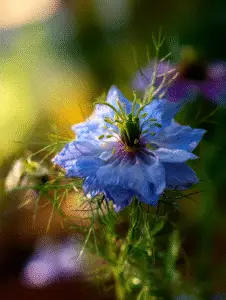
Love in a Mist
Delicate, lacy foliage and unique blooms for soft filler around carnations in garden style bouquets
References
Enjoying our flower guides? Add YourFlowersGuide as a preferred source on Google. It helps more readers find us.
Add to Preferred Sources