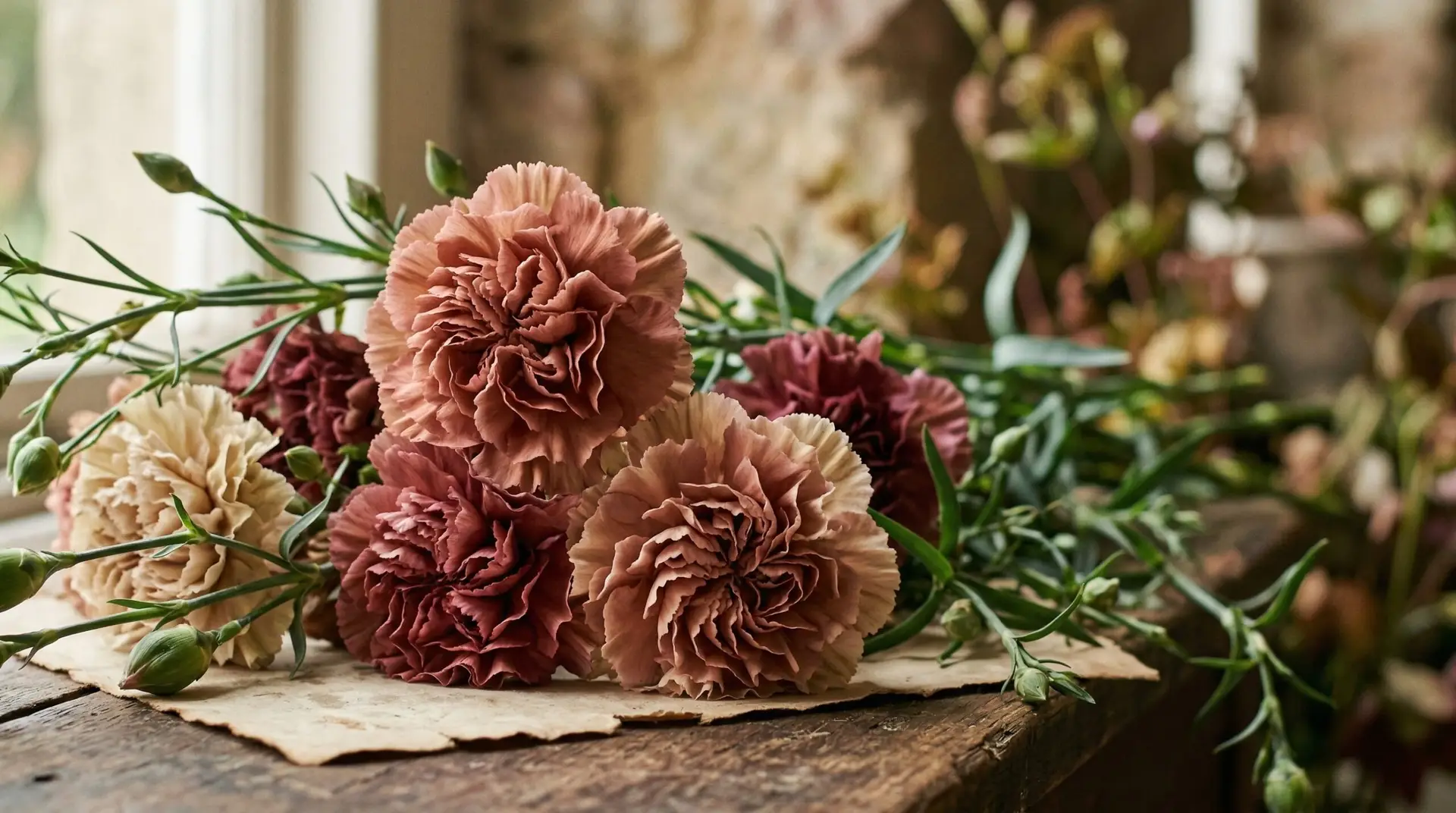
Long before it became a staple of grocery store bouquets, the carnation grew wild on the rocky hillsides of the Mediterranean. The Greek philosopher Theophrastus walked among these fragrant, ruffled blooms more than two thousand years ago and gave them a name that would echo through history. He called the plant Dianthus, combining the Greek words for god and flower to create a title fit for something so deeply fragrant. The scent carried notes of warm clove and spice, rising strongest when the midday sun baked the poor soil where the plants thrived. This original wild carnation was a modest, five-petaled flower in shades of pale pink and peach, far simpler than the dense pompons we recognize today. Yet that small pink bloom held enough presence to capture the attention of early botanists and begin a migration across continents and centuries. The carnation origin story is one of constant reinvention, moving from sacred ancient temples to royal courts and eventually into the hearts of modern gardeners. This deep carnation history proves that a single plant can capture the human imagination for millennia.
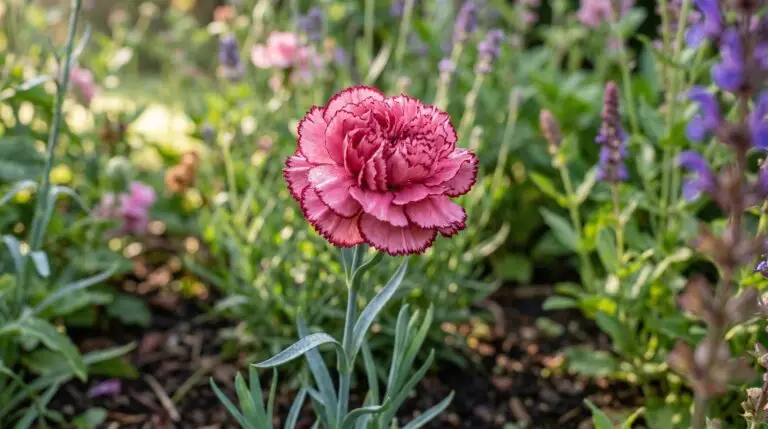
The life of a carnation begins as a slender shoot that pushes through the cool spring earth with quiet determination. Its foliage emerges in shades of frosted blue and silver-green, forming dense mats that look almost like sea glass scattered across the garden bed. As the days lengthen and the soil warms, the plant sends up wiry stems topped with tightly wound buds that resemble tiny, pointed acorns. When these buds finally unfurl in early summer, they release that signature spicy fragrance into the humid air. The flowers open slowly, revealing layer upon layer of fringed petals that catch the morning dew. This slow, deliberate blooming process mirrors the slow spread of the plant itself across the ancient world. Traders and travelers gathered the tiny black seeds from dried pods and carried them along trade routes, ensuring the flower found new soil in distant lands.
Contents 4 sections
Crowns of the ancient world
The common name we use today likely grew from the flower’s prominent role in ancient ceremonies. Historical linguists trace the word carnation to ‘corone’ or ‘coronation,’ referencing the elaborate flower crowns and garlands woven by the Greeks and Romans. Artisans of the ancient world prized the blooms for their sturdy stems and exceptional lasting power once cut from the earth. They harvested the flowers in the cool morning hours, stripping the lower leaves before twisting the stems into thick, fragrant wreaths used to crown athletes, poets, and political leaders. A crown of Dianthus carried deep cultural weight, signaling divine favor and earthly achievement in equal measure. The flowers held their shape and scent long after the ceremonies ended, slowly drying into papery reminders of glory. This practice of weaving the blooms into celebratory garlands firmly established the plant as a symbol of reverence in classical society.
Tears falling on foreign soil
As the classical world gave way to the Middle Ages, the stories surrounding the flower shifted to reflect new cultural beliefs. A powerful Christian legend emerged to explain the existence of the pink carnation, tying the bloom to the crucifixion of Jesus. According to this story, Mary wept as she watched her son carry the cross, and wherever her tears fell upon the dry earth, a pink carnation sprang up from the dust. This narrative transformed the plant from a symbol of earthly triumph into one of a mother’s undying love and sorrow. Monks began cultivating the flowers in their walled cloister gardens alongside medicinal herbs and other sacred plants. While the rose often meant heavenly perfection and the lily signaled absolute purity, the carnation became the botanical embodiment of maternal devotion. European painters of the Renaissance frequently included a single cut carnation in their portraits of the Madonna and Child to signal this specific narrative of maternal love to their viewers.
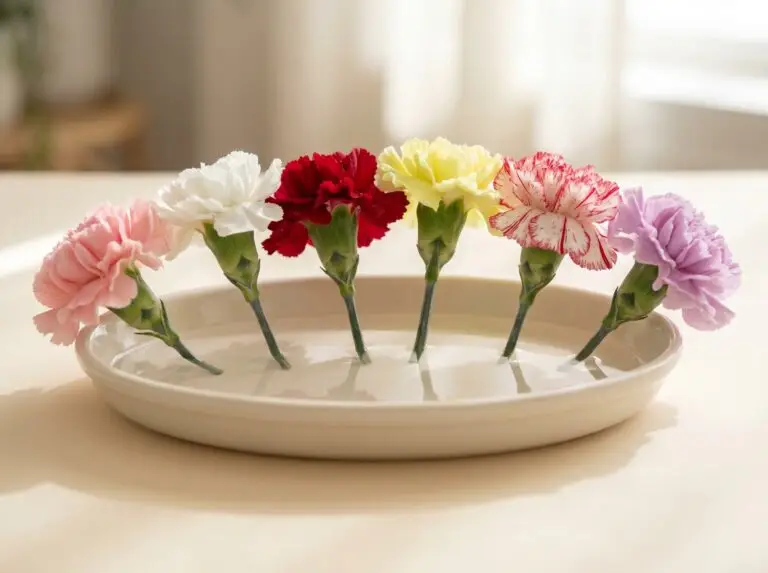
The plant’s genetic flexibility made it a favorite subject for early botanists and dedicated amateur gardeners across Europe. By the sixteenth and seventeenth centuries, breeders in England and the Netherlands began crossing different wild varieties to coax out new colors and fuller flower heads. They selected seeds from plants that showed spontaneous mutations, carefully isolating those with striped petals or exceptionally large blooms. The original pale pinks expanded into deep crimsons, bright yellows, and pure, snowy whites. Gardeners learned to propagate their favorite discoveries through stem cuttings rather than seeds, ensuring the exact patterns and colors would carry over to the next generation. The plants spent their winters dormant under layers of snow, only to push up fresh silver foliage at the first sign of a spring thaw. This hardiness made the carnation a beloved fixture in cottage gardens, where it grew happily alongside herbs and vegetables.
A daughter remembers her mother
The ancient association between the flower and maternal love found its most profound modern expression in a small West Virginia church in the early twentieth century. A woman named Anna Jarvis wanted to honor her late mother, Ann Reeves Jarvis, who had spent her life organizing women to improve sanitary conditions and lower infant mortality rates. On a Sunday in May of 1908, Anna arranged for five hundred white carnations to be distributed at a memorial service at Andrews Methodist Episcopal Church. She chose the white carnation specifically because it was her mother’s favorite flower, noting that its white color signified the truth, purity, and broad charity of a mother’s love. The fragrance of the blooms filled the wooden sanctuary, creating a powerful sensory memory for everyone in attendance. This quiet gesture of remembrance sparked a national movement, and the white bloom quickly became the official emblem of the new holiday. The question of why carnations for mothers day are so prevalent today traces directly back to this single morning in West Virginia.
As the holiday gained official recognition, the tradition around the flowers evolved to include different colors for different meanings. People began wearing a red carnation to honor a mother who was still living, while reserving the white blooms to remember a mother who had passed away. The floral industry rapidly expanded production to meet the massive demand every May, growing millions of stems in sprawling glass greenhouses. Much like the chrysanthemum dominates the autumn markets, the carnation became the absolute ruler of the spring floral trade. Anna Jarvis grew deeply resentful of this commercialization, spending the latter half of her life actively protesting the very holiday she had created. She hated seeing the flowers sold for profit, believing that the printed greeting cards and expensive bouquets destroyed the quiet, personal sentiment she had originally intended. Despite her fierce opposition, the tradition had taken root in the public imagination and could not be undone.
Cultivating a lasting legacy
The flower’s influence extends far beyond a single Sunday in May, cementing itself in the national identities of several countries and states. Spain claims the red carnation as its national flower, where the bright blooms are tucked into hair during flamenco performances and woven into elaborate festival displays. The deep red petals stand out sharply against the whitewashed walls of southern Spanish villages, thriving in the same hot, dry Mediterranean climate where their wild ancestors first grew. In Monaco, the flower holds similar national importance, while the state of Ohio adopted the scarlet carnation to honor President William McKinley, who wore one in his lapel every day for good luck. These varied cultural adoptions show how easily the plant adapts to different narratives and geographies. The tough, gray-green foliage resists drought and heat, allowing the plants to survive in challenging environments where more delicate flowers would quickly wither. This resilience is entirely fitting for a plant that has maintained its cultural relevance for more than two millennia.
Bringing this history into your own garden requires nothing more than a patch of well-draining soil and a spot that catches the full afternoon sun. When you press the small, brittle seeds into the dirt, you are participating in a ritual that stretches back to the philosophers of ancient Greece. The plants will ask for very little as they establish their roots, quietly building strength through the cool spring rains. By the time summer arrives, the heavy flower heads will nod in the breeze, releasing that same spicy clove scent that filled the ancient temples and cloister gardens. Cutting a few stems to bring indoors connects you to the countless generations of gardeners who have done exactly the same thing. You can place a single bloom in a glass of water on the kitchen sill and watch how long it lasts. It is a quiet reminder that the longest-lasting stories are often growing right outside our doors.
More About Carnation
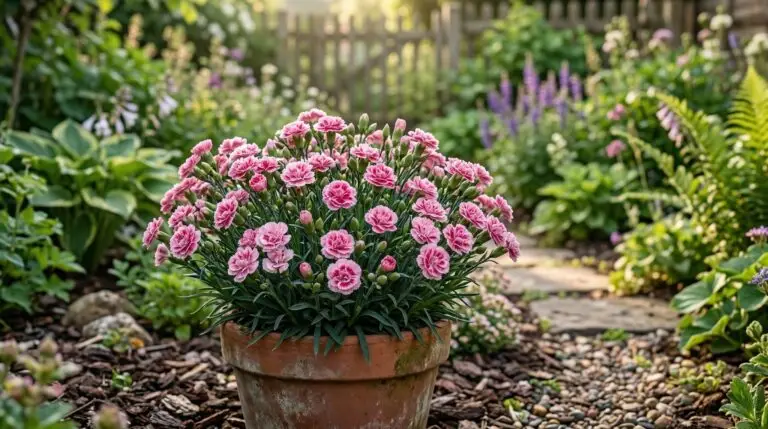
Growing carnations in containers for a fragrant windowsill or balcony garden
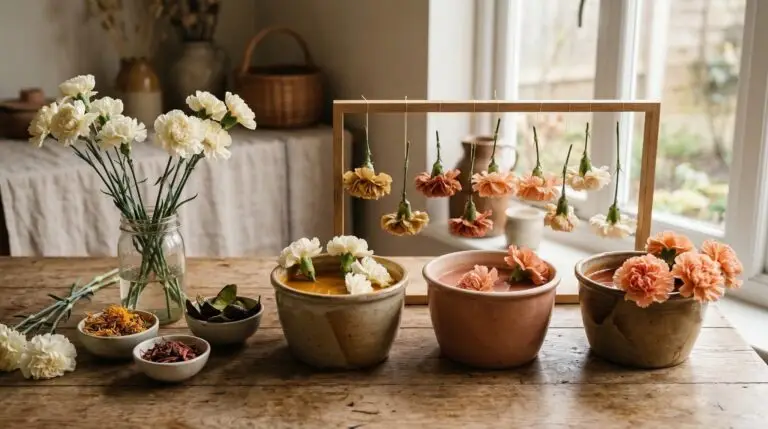
How to dye carnations with food coloring for fun science projects and party decor
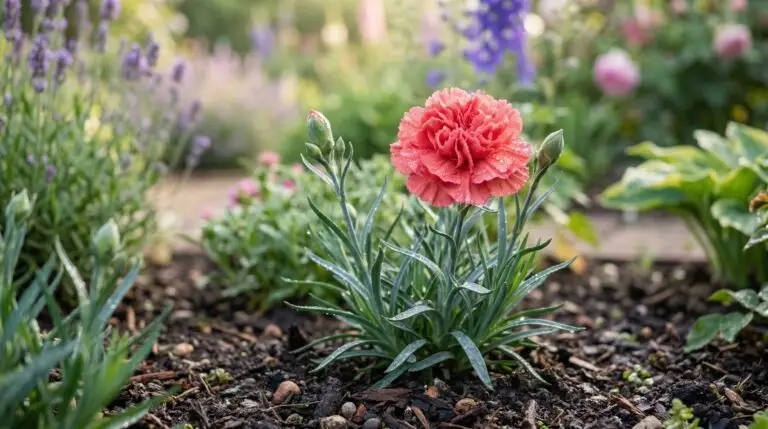
How to make carnations last over two weeks in a vase with proper care
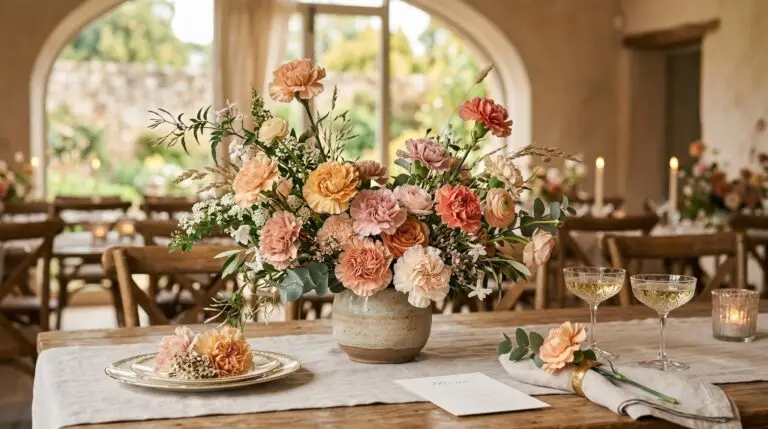
Carnation wedding bouquets making a comeback with modern elegant designs
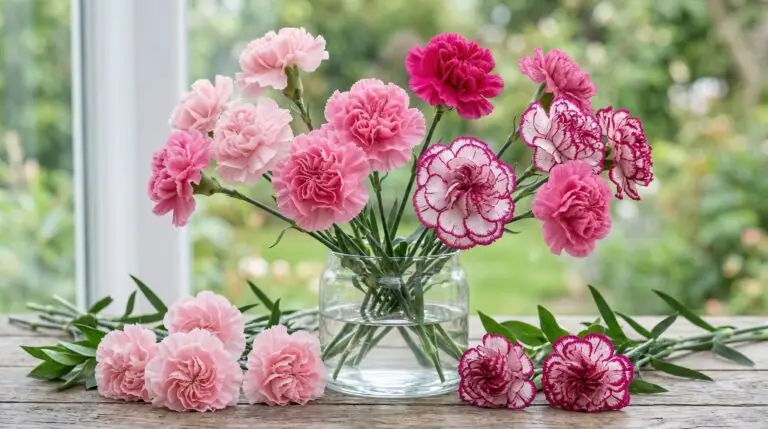
Best garden pinks and border carnations for fragrant perennial cottage gardens
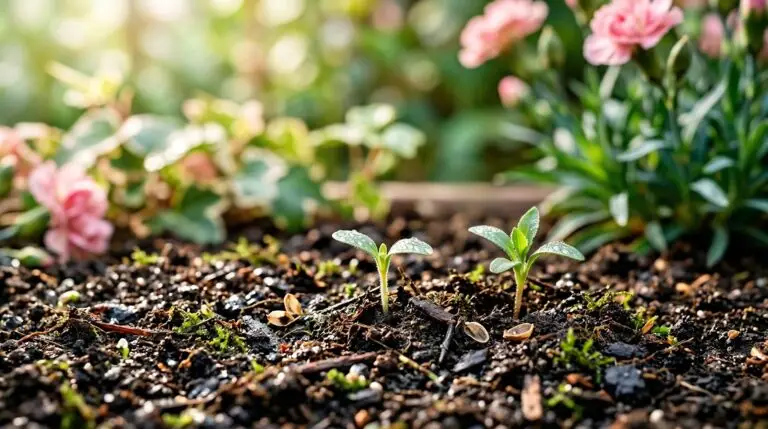
Growing carnations from seed and cuttings for fragrant garden borders all summer
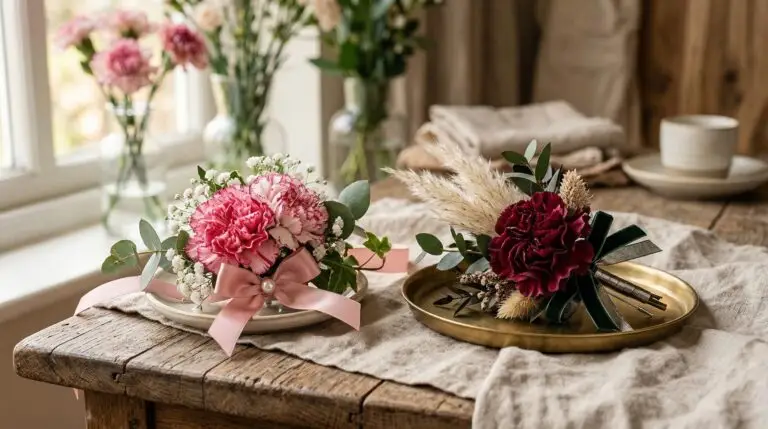
Carnation leis corsages and boutonnieres for proms graduations and celebrations
Why carnations deserve more respect as garden flowers beyond their grocery store reputation
Carnation meaning and carnation colour meanings, honestly explained
Enjoying our flower guides? Add YourFlowersGuide as a preferred source on Google. It helps more readers find us.
Add to Preferred Sources