Most common today
Love, fascination, and distinction, in a gentle, devoted register rather than romantic fire. It is the classic worldwide Mother’s Day flower, the emblem of steady, durable affection you feel for family and the people who have been good to you for years.
The Victorian reading
In the Victorian language of flowers the carnation carried fascination and a woman’s love, and the striped carnation specifically meant refusal, the “no” you could send by flower instead of saying it aloud.
The colour spectrum, at a glance
Red
Admiration and deep love. The most openly romantic carnation, warmer than a red
Widely safe
The colour spectrum, at a glance
What to write on the card
For a mother: “Thank you for a lifetime of love.” (For admiration, a red carnation suits “I admire you more than you know”; for support, a white one suits “thinking of you, with love.”)
A carnation is the flower of love, and yet by the old readings a yellow one quietly meant disdain and a striped one meant a flat refusal. That is the whole strange charm of this flower in a sentence. Hand someone a soft pink carnation and you are saying a mother’s tender, undying love; hand them a yellow one, by the older readings, and you are saying you are let down by them. The flower is the same. The colour changes everything. Below you will find the honest meaning of each carnation colour, the reason this humble bloom became the worldwide Mother’s Day flower, the Victorian readings that still trail behind it, and a plain note on which parts are old custom and which are simply how florists talk now.
Compared with most flowers, the carnation is on firm ground. The core readings line up across the standard lists, which is more than you can say for a lot of blooms. It is not official or universal, though, and the most useful thing about the carnation is also the trickiest: its meaning swings hard by colour, further than almost any other common flower. A bouquet of one shade can say something its grower never intended. So the colour is where this guide spends most of its time.
The carnation underneath the colour
Before any single colour gets involved, a carnation stands for love, fascination, and distinction. It is warm, affectionate, and a little old-fashioned in the best way, the flower of devoted feeling rather than fiery passion. That gentler register is exactly why it became the flower of mothers rather than lovers. In the Victorian language of flowers it carried fascination and a woman’s love, and that reading still sits underneath the modern one. A carnation is not the grand romantic gesture a rose is; it is the steady, lasting kind of love, the sort you feel for family and for the people who have been good to you for years.
Part of the carnation’s appeal is plain practicality, and that practicality shaped its meaning over time. It blooms and ships year-round, it is common and inexpensive, and as a cut flower it lasts a long time in the vase with a faint clove-like scent. A flower that is always available, always affordable, and slow to wilt naturally becomes the flower of everyday devotion rather than the once-a-year splurge. The botanical name, Dianthus, is widely said to come from Greek roots meaning roughly the flower of the gods or the divine flower, and whether or not that gloss is precise, it suits a bloom that has carried tender, almost reverent meanings for a very long time. If you want the plant itself, the varieties, the scent, and how to keep cut stems fresh, our guide to how to grow carnation is the place for that.
How each carnation colour reads
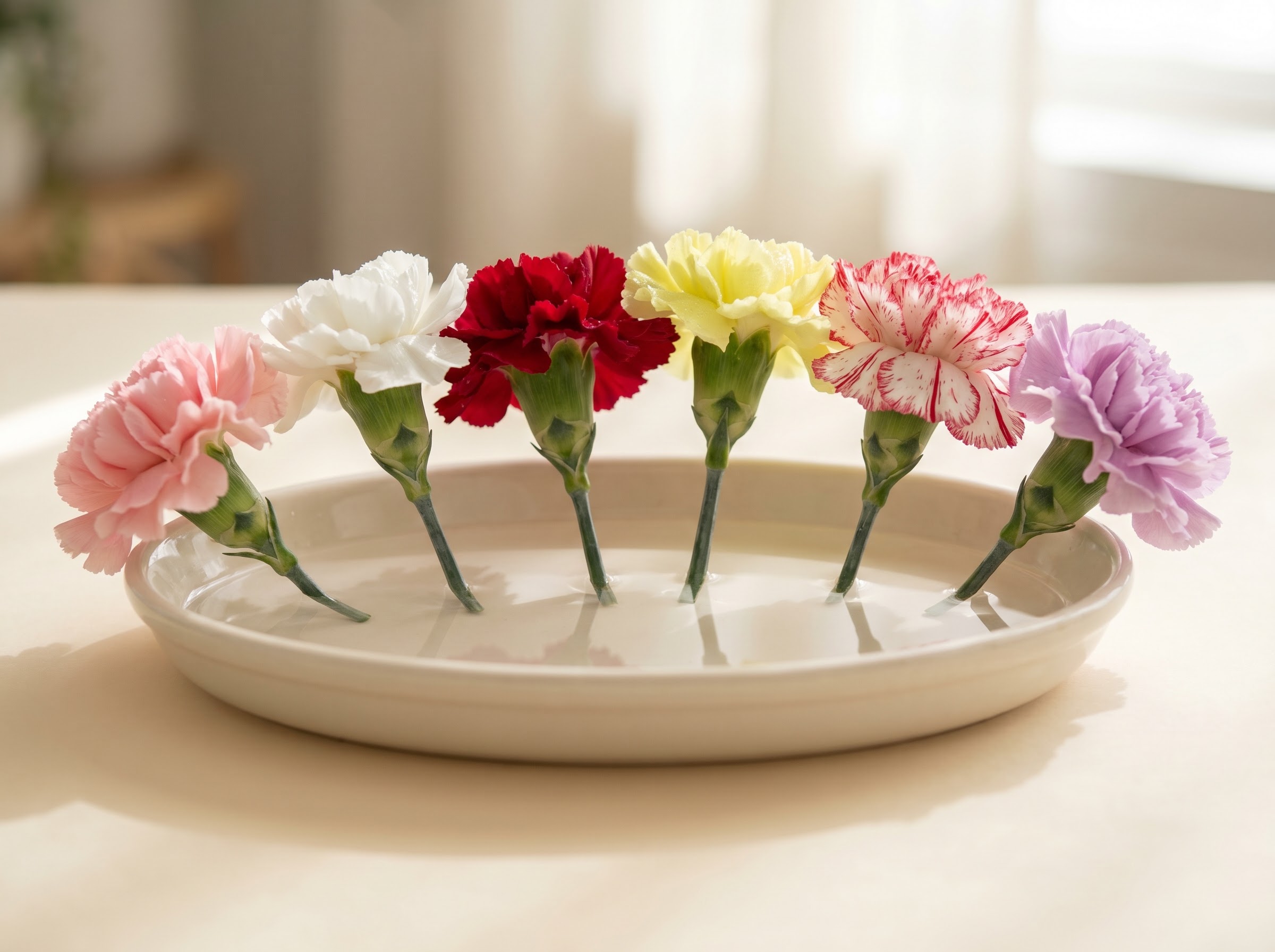
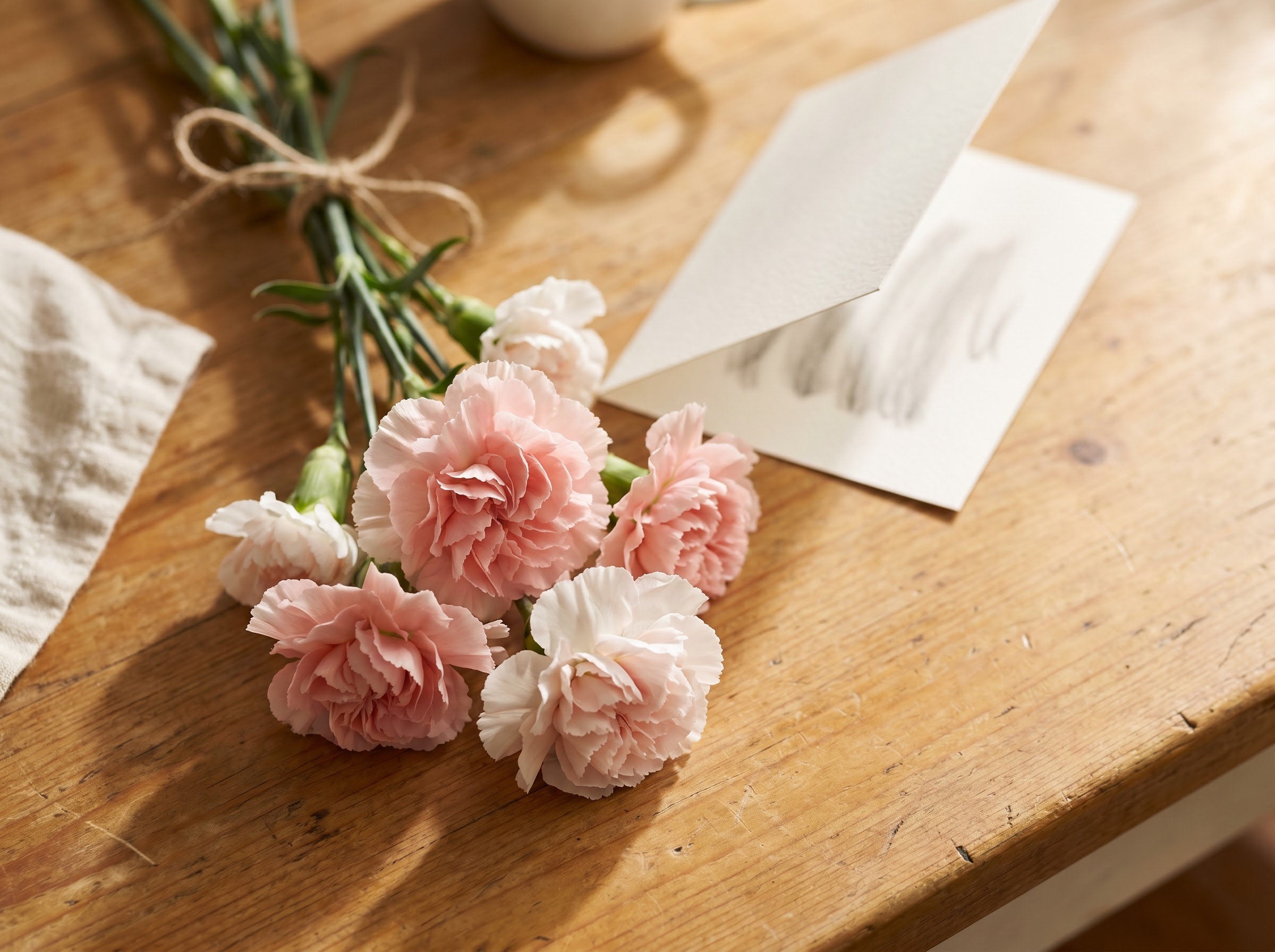
Pink is the carnation that matters most, because pink is the Mother’s Day carnation. A pink carnation traditionally means a mother’s undying love, and that single reading carries more weight in real life than any other carnation meaning. It is the safe, lovely, almost universal choice for a mother, a grandmother, or anyone who has mothered you, and it is hard to get wrong. White carnations point a little differently, toward pure love and good luck, which gives them a clean, gentle, well-wishing feel that suits new beginnings and quiet support as much as affection. Red carnations turn the volume up toward admiration and deep love, the most openly romantic member of the family, closer to what a red rose says, though still warmer and less fiery.
Then the family turns. Yellow is where the carnation stops being kind. A yellow carnation has long been read as disappointment, disdain, or rejection, one of the few flowers whose traditional meaning is openly cold. This is not a fringe reading or a single grumpy Victorian; it shows up consistently across the lists, which is unusual for a negative meaning. Striped carnations are colder still in the old language, standing for refusal, a polite but unmistakable “I cannot be with you,” which is the kind of message the Victorians liked to send in a flower precisely because it spared them saying it aloud. Purple carnations carry the lightest of the difficult meanings, capriciousness, a sense of changeability or whim rather than steady feeling. None of these darker readings cancels the carnation’s loving reputation, but they are real, and they are exactly why the colour you choose matters more here than with most flowers.
The table below gathers every carnation colour with its everyday meaning and a frank note on how firm that meaning really is. With this flower the firmness column earns its keep: a couple of these colours carry a reading sharp enough to misfire if you send them blind.
| Carnation colour | Common meaning | How solid is this |
|---|---|---|
| Pink | A mother’s undying love | The strongest, safest reading. The classic Mother’s Day carnation. |
| White | Pure love and good luck | Well attested. Gentle and well-wishing; suits support or new beginnings. |
| Red | Admiration and deep love | Consistent. The most openly romantic carnation, warmer than a red rose. |
| Yellow | Disappointment, disdain, or rejection | Genuinely negative and widely listed. Worth knowing before you gift it. |
| Striped | Refusal, “I cannot be with you” | An old Victorian message. Almost no modern recipient reads it this way. |
| Purple | Capriciousness | The lightest of the difficult meanings; less commonly invoked. |
What a carnation says to a partner, a friend, or a parent
For love, the carnation speaks at a lower volume. A red carnation reads as admiration and deep love and works as a sincere romantic gift, but it lands as devotion and respect more than burning passion, which is sometimes exactly what you mean and sometimes a half-step short of it. Plenty of people send carnations to a partner happily; just know you are saying “I love and admire you” rather than making a sweeping declaration. For friendship and warmth without romance, pink and white are the gentle, friendly end of the family, lovely for a friend, a thank-you, or someone you simply want to wish well. The carnation is also a common tattoo, where the chosen colour does the same work it does in a bouquet; our guide to flower tattoo meanings covers how that translates to ink.
Where the carnation truly has no rival is the bond between parent and child. The pink carnation is the worldwide flower of mothers, and the whole flower leans toward gratitude, motherhood, and the quiet, durable love you feel for family. That makes it close to ideal for Mother’s Day, birthdays, and any moment you want to say thank you to someone who raised you or stood by you. The one real trap is colour. Because yellow means disdain and striped means refusal in the traditional language, a mixed or carelessly chosen bunch can technically carry a message you never meant. In practice almost no recipient decodes a bouquet that closely, so do not panic over a stray yellow stem; but if you want the meaning to be clean, lean on pink, white, and red.

The stories behind a flower of mothers
The carnation has carried tender meanings for a very long time, and a few old stories explain why it settled where it did. One Christian legend, often repeated though hard to pin to a firm source, holds that carnations first bloomed where the Virgin Mary’s tears fell as she wept, which is offered as part of why the pink carnation became so tightly tied to a mother’s love. Stories like that are not history in the strict sense, but they are how flower meanings actually formed, passed down and reshaped until the association felt natural. The carnation’s reputation as the flower of devoted, motherly love is the long sediment of legends like that one.
The Victorian readings sit inside a larger tradition that is older and more tangled than most people assume. As Cornell’s “Written in Petals” exhibit explains, sending messages with flowers is an ancient art with roots in China, Egypt, and Assyria, and much of what became the familiar British flower language was actually built in France before it crossed the Channel and became a Victorian craze. So when a carnation chart tells you yellow means disdain, that is a custom that writers assembled over generations rather than a fixed code handed down whole. Culture shifts it further. In parts of Asia, including Korea, carnations are worn for Parents’ Day as a sign of gratitude to a mother and father, which extends the mother-love meaning to both parents. In France the carnation reads differently again, leaning more toward a funeral flower, a reminder that the same bloom can mean tenderness in one country and mourning in another. It is not alone in that split; the chrysanthemum carries cheerful associations across much of Asia and the United States yet reads as the flower of the grave in France and parts of Europe, so the two share the odd fate of being funeral flowers by geography.
Why the warm meaning grew and the cold one only faded
The carnation is one of the rare flowers whose old meaning has largely held rather than softened. In the Victorian language of flowers it meant fascination and a woman’s love, and the striped carnation specifically meant refusal, the “no” you sent by flower so you would not have to say it. The pink-as-mother’s-love reading is the one that grew louder over time, lifted by the rise of Mother’s Day in the twentieth century. The modern American holiday is widely credited to Anna Jarvis, who, by the common telling, chose the carnation as its emblem, with a coloured one worn for a mother still living and a white one in memory of a mother who had passed. The finer points of that origin story are told in different ways, but the broad fact is steady enough: the carnation’s bond with mothers was cemented within living memory, which is why it feels both old-fashioned and current at once.
What did not soften is the negative end of the palette. Some flower readings reverse outright over the decades, the way a colour or a custom can be rehabilitated until it means almost its opposite, but the yellow carnation did nothing of the kind. It kept its cold meaning of disappointment and disdain, and the striped carnation kept its refusal. Those readings simply faded from use rather than reversing, because hardly anyone sends a flower to say no anymore. So they survive on the meaning charts without surviving in real life, which is its own small lesson about how flower language works: a meaning can stay technically true and still go quietly extinct in practice.
How much to trust the carnation’s readings
Carnation meanings are well attested, but well attested is not the same as official, and the carnation has one built-in contradiction worth naming plainly. The flower is loving overall, the gentle emblem of motherly devotion, and yet two of its colours, yellow and striped, carry openly unkind meanings. That tension is real, not a mistake in the charts. It is simply what happens when a single flower accumulates meanings across centuries and colours, some warm, some cold, all filed under the same bloom. The lesson is that with a carnation you cannot read the flower alone; you have to read the colour with it.
The deeper caveat is the one that runs under every flower meaning. When Iowa State University Extension gathered its own list of flowers and what they supposedly stand for, it added a warning worth repeating: the meanings come from many different sources, the same bloom often gets read more than one way, and no single authority ever settled any of it. The carnation comes off better than most under that warning, its core colours agreeing fairly closely across the standard references, but even here you are reading a tradition rather than a law. Lean on the strong, consistent readings, pink for a mother, red for admiration, white for good wishes, with real confidence. Treat the sharper colour meanings, and the funeral association in France, as custom that varies by place and by person rather than a rule the recipient will enforce. For the bigger picture of how colour can flip a flower’s whole message, our guide to flower colour meanings traces the same pattern across the rest of the flower world.
Choosing and writing the carnation
Give carnations whenever you want to say a steady, affectionate, grateful kind of love rather than a grand romantic one. They suit Mother’s Day above all, but also birthdays, thank-yous, get-well wishes, and any moment you want warmth without drama, helped along by the fact that they are inexpensive, available all year, and last unusually well in the vase. Choose pink for a mother or grandmother, white for good wishes and gentle support, and red when you genuinely mean admiration and love. Skip the yellow and the striped unless you know the recipient will never read a meaning into them, simply because those two carry the only genuinely cold messages in the family. If you are matching the flower to the occasion rather than the colour, our guide to flower meanings by occasion lines the carnation up against the other usual choices for each event.
For the words on the card, keep them as plain and sincere as the flower itself. For a mother, something like “thank you for a lifetime of love” matches the pink carnation perfectly and needs no decoding. For admiration, “I admire you more than you know” sits right with a red one; for support, “thinking of you, with love” suits white. In the end the carnation means devoted, durable love for an almost circular reason: it became the cheap, reliable flower people reached for when they wanted to thank a mother, and after enough decades of that the gesture and the meaning grew into the same thing. The motherly devotion was never decreed; it accumulated. If you want to see how that accumulation works across the rest of the flower world, our guide to the meaning of flowers takes apart where these readings come from and why they keep shifting.
Sources
- Cornell University, Written in Petals: The Language of Flowers, on the history of floriography.
- Iowa State University Extension, Flowers and Their Meanings, on why sources disagree.
More flower meanings
 RoseLove in nearly every form, with the precise message set by the colour you choose. A rose on its…
 ChrysanthemumAt its core the chrysanthemum means long life, friendship, joy, and loyalty, but the reading…
 IrisFaith, hope, wisdom, and courage, with the older idea of a message running underneath, which is…
 LilyAt its core a lily means purity, devotion, and renewal, with the colour tuning the message; the…
More meaning guides
More About Carnation
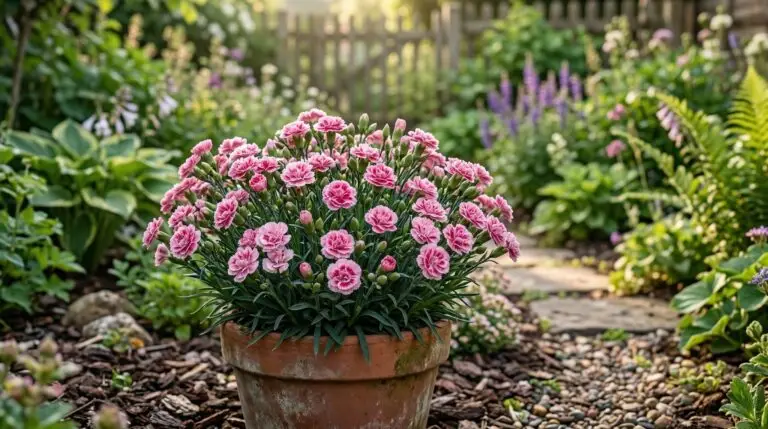 Growing carnations in containers for a fragrant windowsill or balcony garden
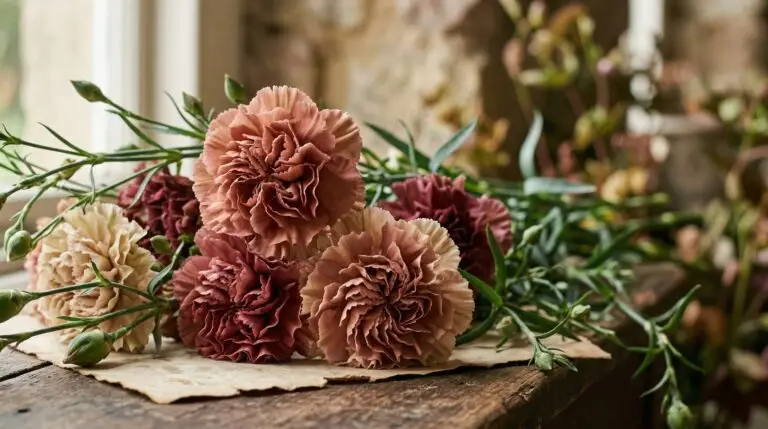 The rich history of carnations from ancient Greek garlands to Mother’s Day flowers
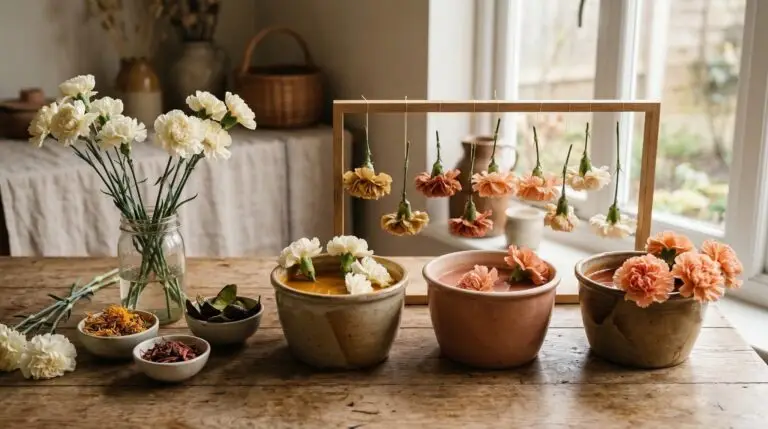 How to dye carnations with food coloring for fun science projects and party decor
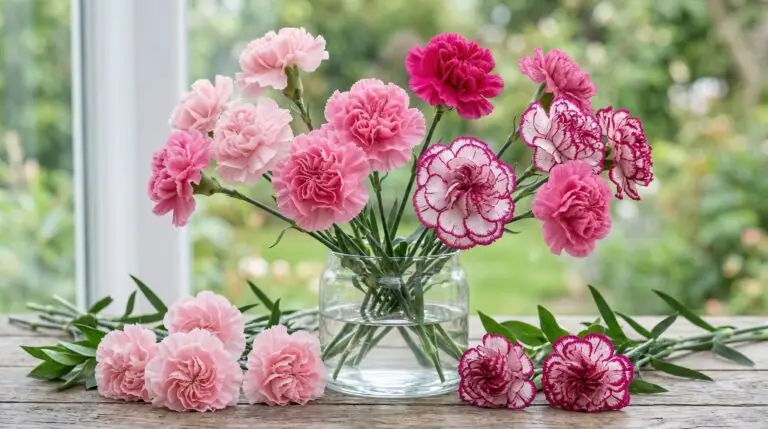
 How to make carnations last over two weeks in a vase with proper care
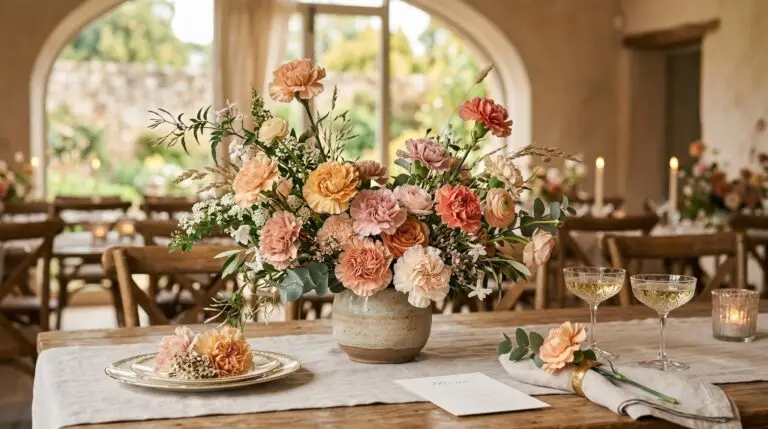 Carnation wedding bouquets making a comeback with modern elegant designs
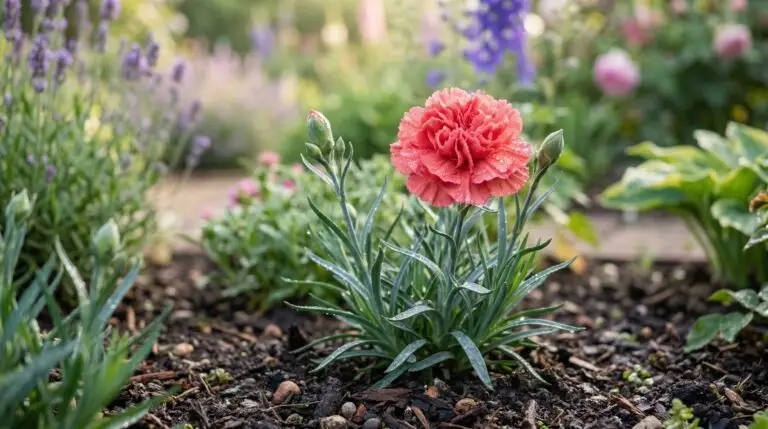
 Best garden pinks and border carnations for fragrant perennial cottage gardens
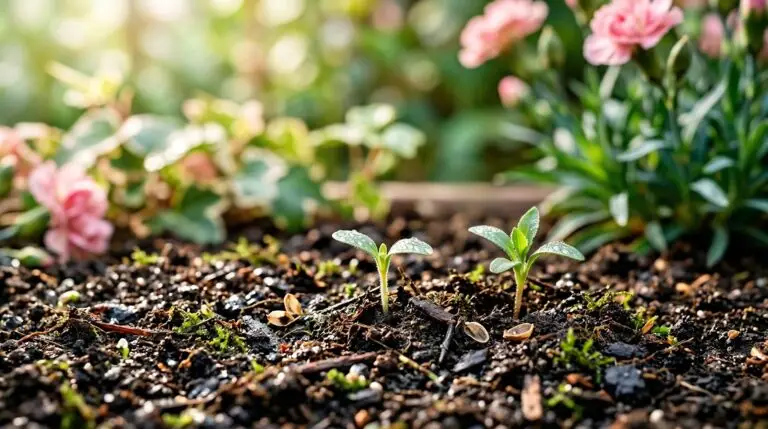 Growing carnations from seed and cuttings for fragrant garden borders all summer
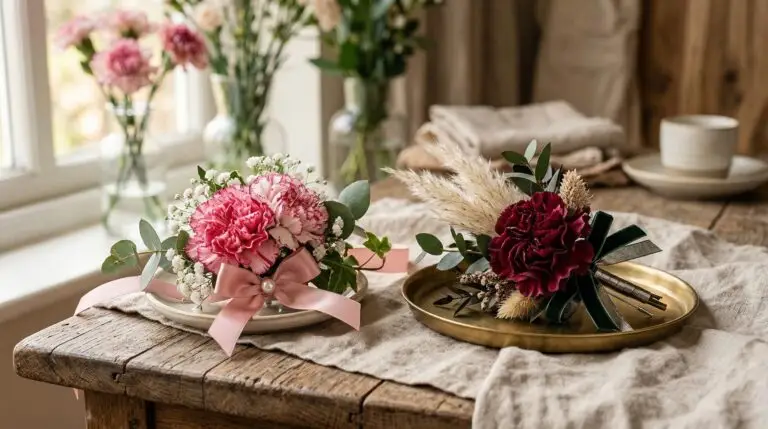 Carnation leis corsages and boutonnieres for proms graduations and celebrations
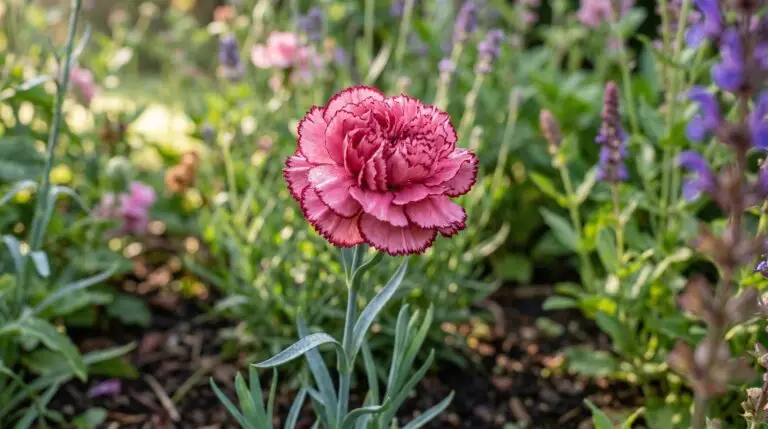 Why carnations deserve more respect as garden flowers beyond their grocery store reputation
Enjoying our flower guides? Add YourFlowersGuide as a preferred source on Google. It helps more readers find us.
Add to Preferred Sources