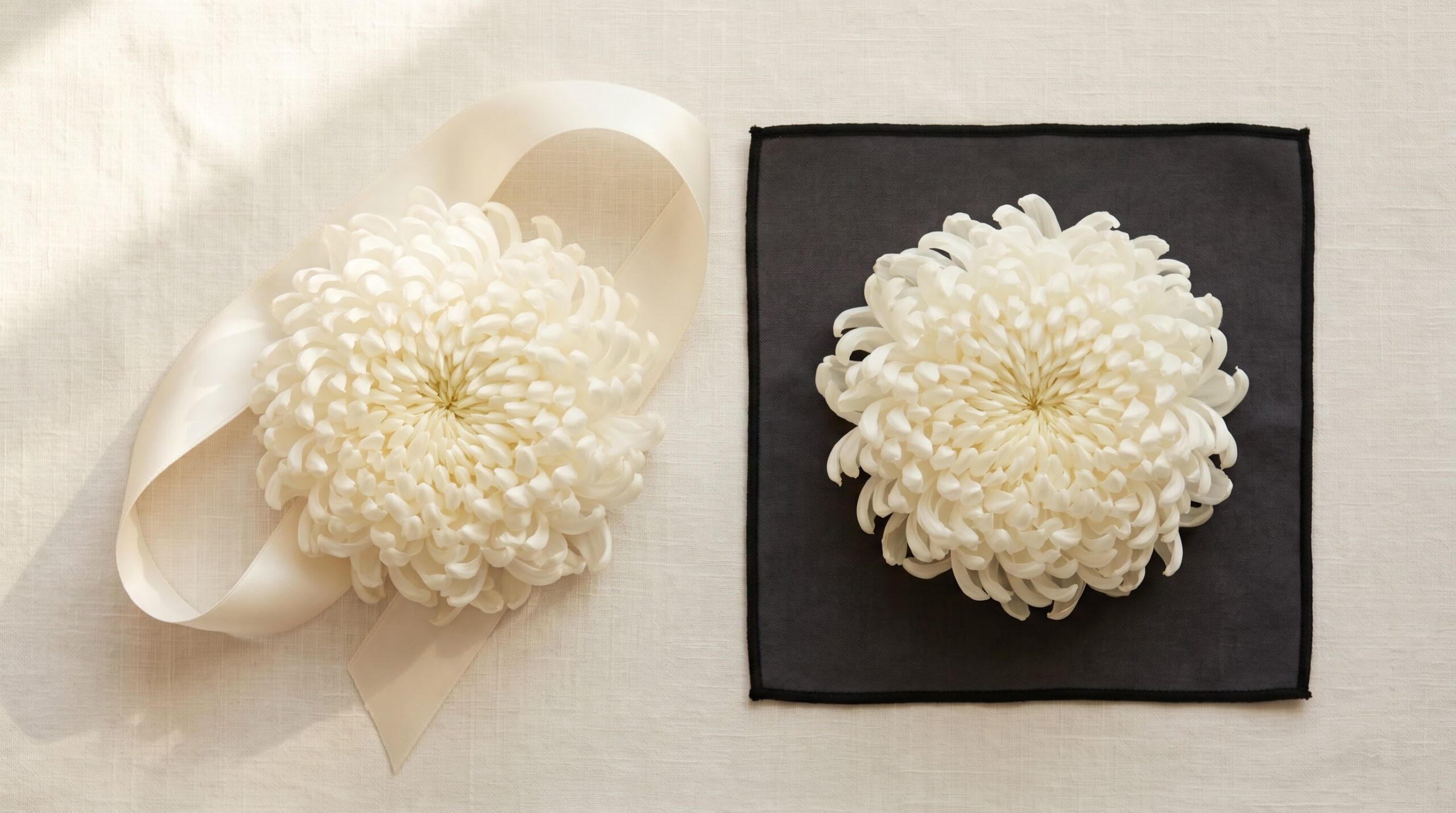
The same flower, a border away
Japan
Cherry blossom is the brevity of life (hanakotoba)
China
Red means luck and celebration
Egypt
The lotus stood for the sun and rebirth
Mexico
Marigolds light the Day of the Dead
Europe
Chrysanthemums read strictly as funeral flowers
A flower can mean one thing in your living room and the opposite a border away. A white bouquet that reads as elegant and pure at a Western wedding is the colour of a funeral across much of East Asia. A cheerful pot of chrysanthemums that says joy and long life in Tokyo or Texas is reserved for graves in France. This is the part of flower meaning that travels worst, and the part worth checking before you send flowers to someone in another country or from another culture. Below is what the same flowers say in Japan, China, ancient Egypt and Greece, Mexico, and Christian tradition, plus the handful of meanings that flip hard at the border.
Era and colour shift a flower’s meaning, but culture is the strongest lever of the three, and the only one that can reverse a message rather than just nudge it. There is no single official dictionary to fall back on either, a point even the .edu sources concede, so when you cross a culture you are not simply adding a meaning. Sometimes you are sending the exact opposite of the one you packed at home. If you want the wider picture first, our guide to the meaning of flowers lays out how era, colour, and culture each pull on the same bloom.
Japan and the language of hanakotoba
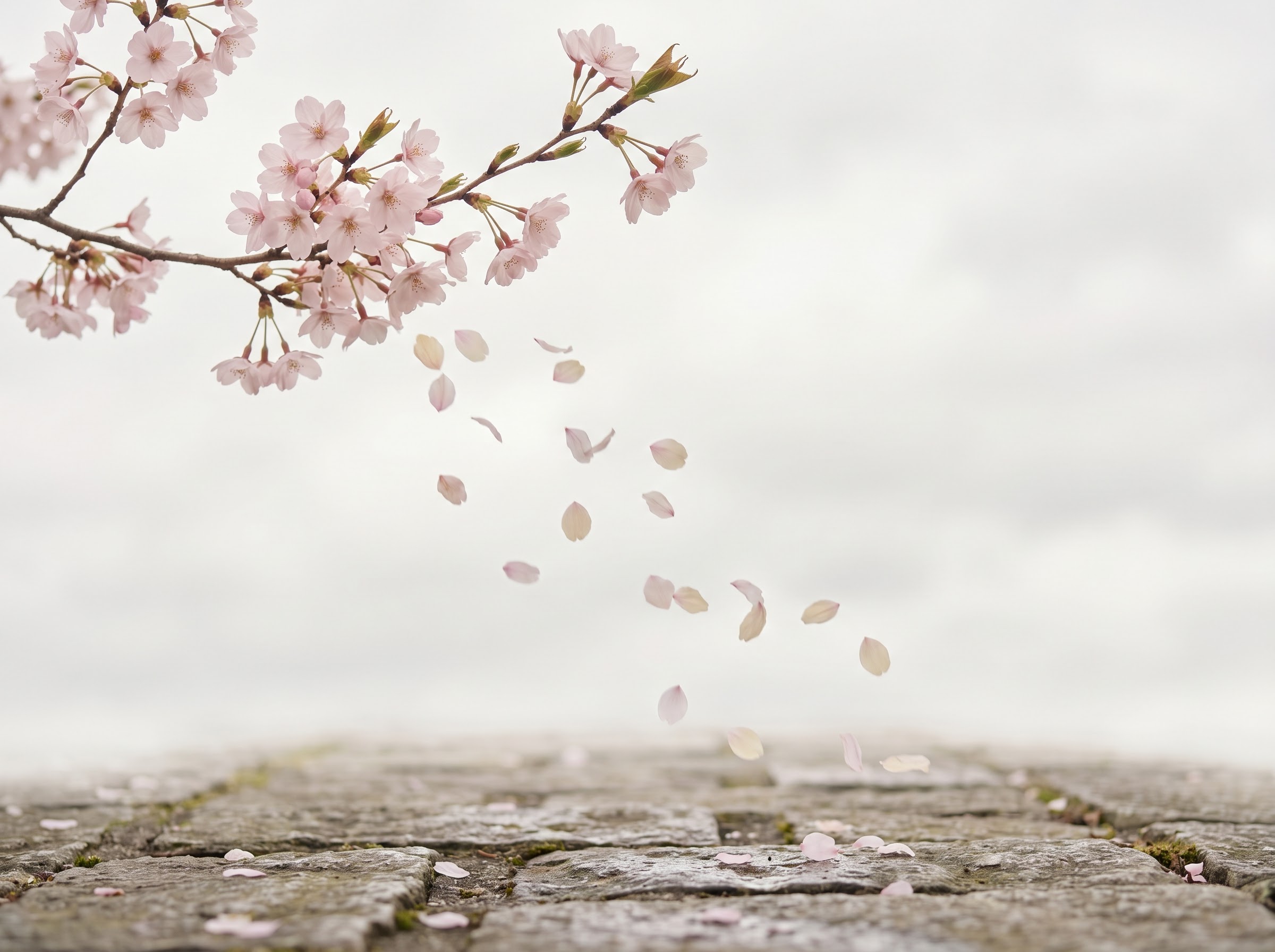
Japan keeps its own refined system of flower meaning called hanakotoba, and it leans toward feeling and the passing of time more than toward courtship. The cherry blossom, sakura, is the center of it. It stands for the beauty and the brevity of life, the bittersweet awareness that lovely things do not last, an idea the Japanese call mono no aware. People gather under the blossoms knowing the petals will be gone in about two weeks, and the brief bloom is the whole point rather than a flaw. That makes sakura a tender, slightly melancholy flower, closer to “let us not waste this” than to plain celebration.
The chrysanthemum sits at the opposite, formal end of Japanese tradition. It is the imperial emblem, dignified and high, and it is honoured at the Chrysanthemum Festival, Choyo no Sekku, the Double Ninth, a day traditionally tied to health and long life, so in Japan a chrysanthemum reads as joy and long life rather than mourning. The camellia, tsubaki, is admired and noble too, though there is an old, darker thread to it, since the way the whole bloom drops at once instead of shedding petals was once tied to a warrior’s sudden death. And then there is the red spider lily, the flower most associated in Japan with death and final farewell, said in hanakotoba to bloom along the path to the afterlife. It is a striking case, because it shows that even within one culture a flower can be precisely the wrong gift.
China, where the peony is king
China carries some of the oldest flower symbolism in the world, and its readings tend toward honour, rank, and long life rather than romance. The peony is the grand one, often called the king of flowers, a sign of riches, honour, and high standing, which is why it turns up again and again in Chinese painting and at celebrations. The chrysanthemum, the same flower Europe reserves for graves, is here one of the Four Gentlemen of Chinese art and stands for long life and a noble character. The lily is given at weddings as a wish for a hundred years of love, and the azalea is the homesick bush, the flower of longing for home. Even the cherry blossom, so Japanese in the Western imagination, carries a meaning in China too, closer to feminine beauty, love, and strength.
Colour matters as much as the flower in China, and it does not match Western habit. Red is the colour of luck, joy, and celebration, the colour of weddings and the New Year, not only of romance. White, by contrast, leans toward mourning and funerals across much of East Asia, the reverse of its Western reading as purity and peace. So an all-white arrangement that feels refined and bridal in London can feel funereal in Beijing, and a burst of red that feels aggressive to a Western eye can read as warm good fortune. If you are choosing flowers to send into China, our guide to flower colour meanings sets the Western readings side by side with the places they invert.
Ancient Egypt and Greece, where the meanings began
Long before Victorian Britain printed its little dictionaries, the older Mediterranean cultures had already tied flowers to gods and to the turning of the world. According to Cornell University’s exhibition on floriography, sending messages with flowers is an ancient art rooted in the symbolism of China, Egypt, and Assyria, so the practice is far older than the parlor game it later became. In ancient Egypt the blue lotus was the sun flower in the literal sense, closing its petals at night and opening them again at dawn, which made it a natural symbol of the sun, of creation, and of rebirth. It is worth a small botanical aside here, since the Egyptian “lotus” is really a water lily, Nymphaea caerulea, and not the true lotus of Asia, Nelumbo, even though tradition and translation have long lumped the two together. The Asian lotus carries enlightenment in Buddhism and beauty and prosperity in Hinduism, where it is tied to the gods Lakshmi and Vishnu, so it is one of the few flowers whose deep meaning stays fairly consistent across several traditions. You can follow that thread further in our lotus flower meaning guide.
Greece gave us the flowers of love and loyalty. The violet was tied to Aphrodite, the goddess of love, and to the poet Sappho, who is remembered weaving violets for the women she loved, which is part of why the violet still reads as faithful, modest, devoted affection. The rose runs back through Rome to Venus, and to secrecy, since the Romans hung a rose over a meeting to mark that what was said beneath it stayed private, the origin of the phrase “sub rosa,” under the rose. These are not Victorian inventions. They are the inheritance the Victorians later organized, simplified, and sometimes got wrong.
Mexico, India, and the marigold
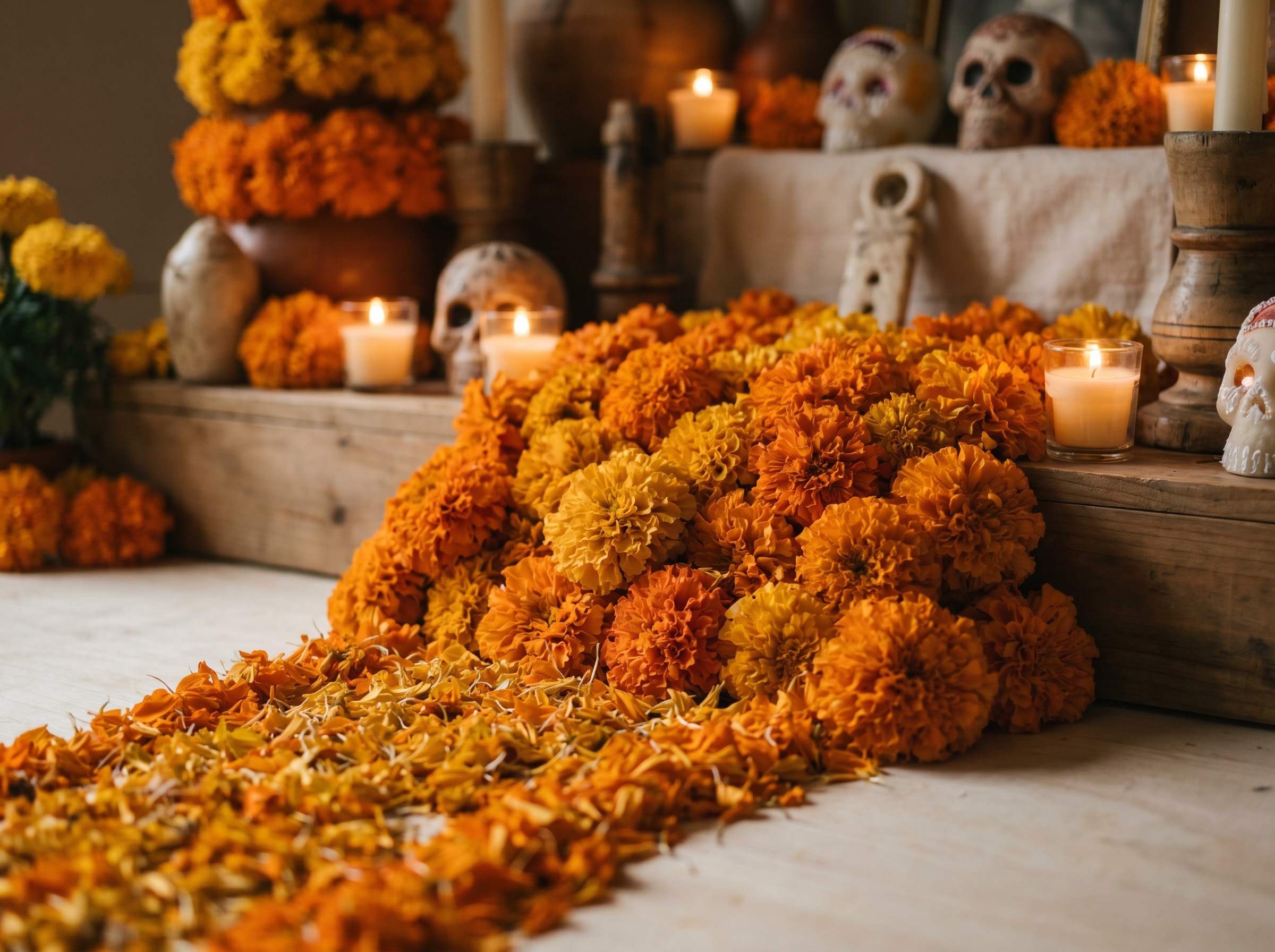
The marigold is the clearest case of a flower that means almost opposite things depending on where you stand. In Mexico it is the flower of Dia de los Muertos, the Day of the Dead, its heavy scent and hot orange colour believed to guide the spirits of the departed back home, so it is laid in great drifts across graves and altars as an act of welcome and love. In India it is auspicious, strung into thick garlands for weddings and draped over temple statues, a flower of blessing and celebration. Yet the old Victorian European books listed the very same marigold under grief, jealousy, and cruelty. The flower did not change. The culture reading it did. The Mexican and Indian meanings are about honouring the dead and the divine; the Victorian one was about the pain of the heart, which is why the marigold belongs near the top of any list of meanings that do not survive a border crossing.
Christian and Bible symbolism, and the lily
Christian tradition has its own settled flower language, and the white lily is its emblem. The white Madonna lily is linked to the Virgin Mary and stands for purity and the restored innocence of the soul, which is how the lily became the flower of Easter and of churches. That same lily, though, is the leading sympathy and funeral flower in much of the West, so within Christian custom the lily already holds joy and mourning at once, decided by colour and setting. The rose carries Christian weight too, often associated with the Virgin Mary and with martyrdom, and many flowers picked up their gentler Western readings inside a religious frame before the florists ever sold them. The lesson is the same one that runs through the whole subject. A flower means whatever its tradition has decided it means, and the petals only carry that decision.
The meanings that flip hardest at the border
Some flowers shift only a little when they travel, and a few turn into a different message entirely. Here are the ones where the gap is widest, with the common Western or modern reading set against the reading somewhere else, so you can see at a glance which familiar blooms carry a surprise abroad. Treat it as a caution list. These are the flowers to check before you send them across a culture, not because any one reading is wrong, but because the person receiving them reads in the language of their own tradition.
| Flower | Western or modern reading | The reading elsewhere |
|---|---|---|
| Chrysanthemum | Joy and long life in the United States and much of Asia | Strictly a funeral flower in France, Italy, and much of Europe, for graves and All Souls’ Day |
| White flowers (general) | Purity, peace, and weddings in the West | The colour of mourning and funerals across much of East Asia |
| Red flowers (general) | Love and passion in the West | Luck, joy, and celebration in China |
| Marigold | Warmth, creativity, and the sun today, grief in Victorian books | Honoring the dead on the Day of the Dead in Mexico; blessing and weddings in India |
| Cherry blossom | Spring, renewal, and gentle fleeting beauty | The bittersweet brevity of life, mono no aware, in Japanese hanakotoba |
| Lotus | Calm, rebirth, rising above hardship | Enlightenment in Buddhism, divine beauty in Hinduism, the sun and rebirth in ancient Egypt |
| Lily | Purity and weddings, and the West’s leading funeral flower | A wedding wish for a hundred years of love in China; the Virgin Mary in Christian tradition |
| Peony | Romance, prosperity, and a happy marriage | The king of flowers, a sign of riches, honour, and rank in China |
| Red spider lily | An unusual ornamental in Western gardens | Death and final farewell in Japan |
None of these splits is a mistake to be corrected. They are simply different traditions arriving at different answers, exactly as Iowa State University Extension warns when it notes that meanings vary and flowers can carry more than one. The practical move is small and reliable. When you send flowers into another culture, find out what the flower and its colour mean in the recipient’s tradition, and let that decide the bouquet. The bloom is the same everywhere you carry it. The message belongs to the place that reads it.
Sources
- Cornell University, Written in Petals: The Language of Flowers, on the history of floriography.
- Iowa State University Extension, Flowers and Their Meanings, on why sources disagree.
More meaning guides
More About The meaning of flowers, honestly
Enjoying our flower guides? Add YourFlowersGuide as a preferred source on Google. It helps more readers find us.
Add to Preferred Sources