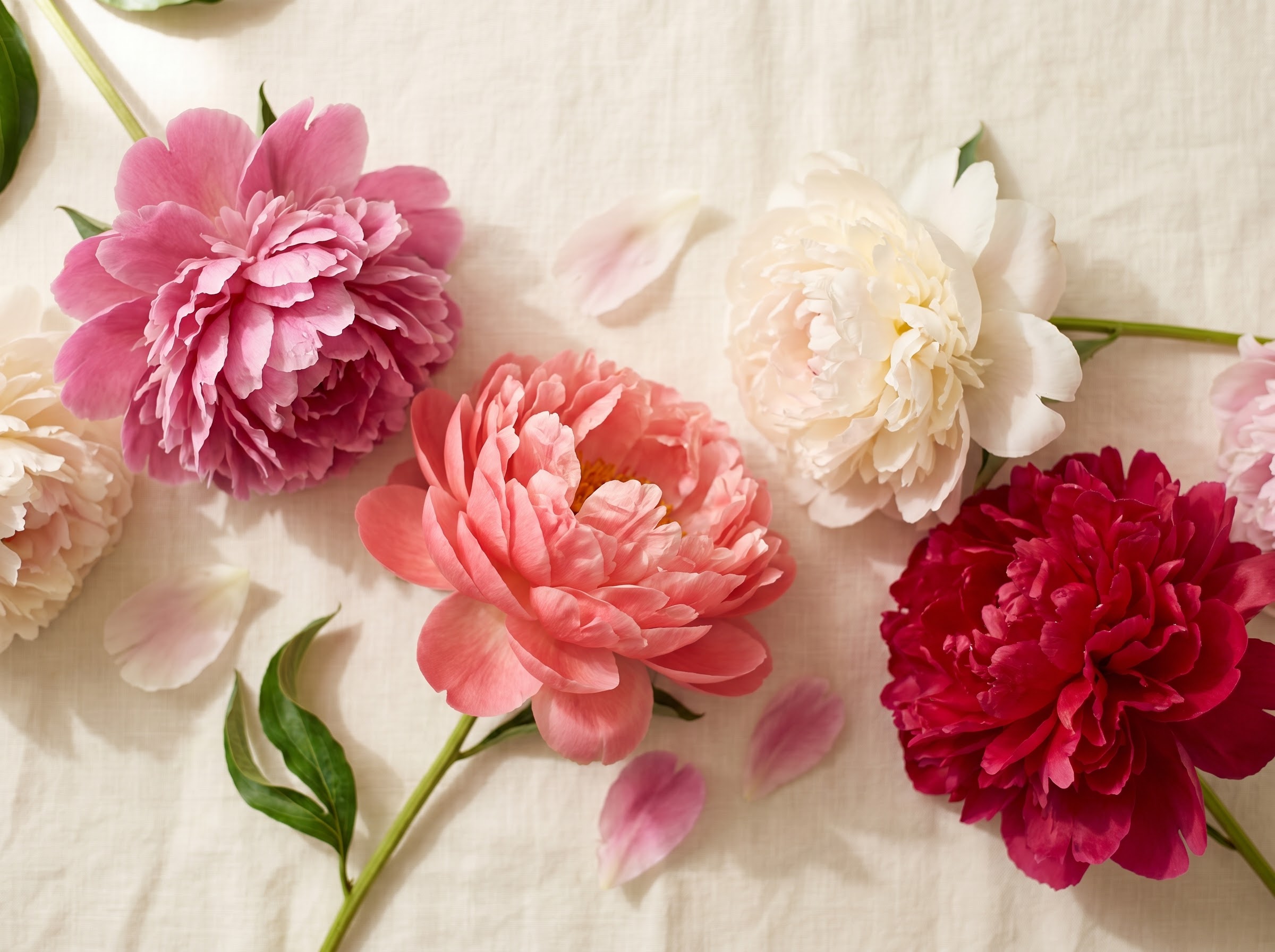
Most common today
A wish for a happy, prosperous, love-filled life: romance, prosperity, good fortune, and a happy marriage. It is one of the most requested wedding flowers, and people also give it for engagements, anniversaries, and congratulations.
The Victorian reading
In the Victorian language of flowers the peony stood for bashfulness and a happy life, sometimes carrying a faint note of shame or hiding. That shy reading has largely faded from how the flower is used today.
What to write on the card
For a wedding: ‘A full, lucky, love-filled life ahead.’
A peony is the flower people reach for when they want to wish someone a good life, not just a good day. Its core meaning is romance, prosperity, good fortune, and a happy marriage, which is exactly why it has become one of the most requested wedding flowers in the world. Give a peony and you are saying something generous and forward-looking: may your life be full, lucky, and loved. That lush, almost overstuffed bloom carries an old reputation for abundance, and a separate, even older life in China, where it has been honored for centuries as the king of flowers. Below you will find the honest reading of what a peony means today, what it has meant to the Victorians and to China and Japan, what it stands for as a tattoo, and a plain note on which parts are well attested and which are softer tradition.
Most of what the peony stands for pulls in the same direction, which is rarer than it sounds. Plenty of flowers hide a sting somewhere in their history, but the peony has almost nothing in its luggage that would embarrass a gift. The main thing worth getting right is which tradition you are leaning on, because the Western romance reading and the Chinese prestige reading are not quite the same flower, even though they sit on the same stem.
What a peony means
At its heart the peony means a happy, prosperous, love-filled life. The modern reading bundles four things that usually travel together: romance, prosperity, good fortune, and a happy marriage. That is why it shows up at weddings far more than at any other event, and why people give it for anniversaries and to say congratulations when something good is beginning. The flower itself reinforces the message. A peony opens into a huge, many-petalled, generous head, and that visual fullness reads as plenty, as a life with more than enough in it.
There is a quieter old meaning underneath the bright one. In the Victorian language of flowers, the peony stood for bashfulness and a happy life, and sometimes carried a faint note of shame, the idea of hiding or holding something back. That bashful reading has largely faded from how people use the flower now, but it is worth knowing, because it explains the occasional source that lists a peony as shy or modest rather than abundant. Both readings are real. They simply belong to different centuries. If it is the plant behind the symbolism you are after, the varieties, the bloom time, the trick of keeping those heavy heads upright, our guide to how to grow peonies goes into all of it.
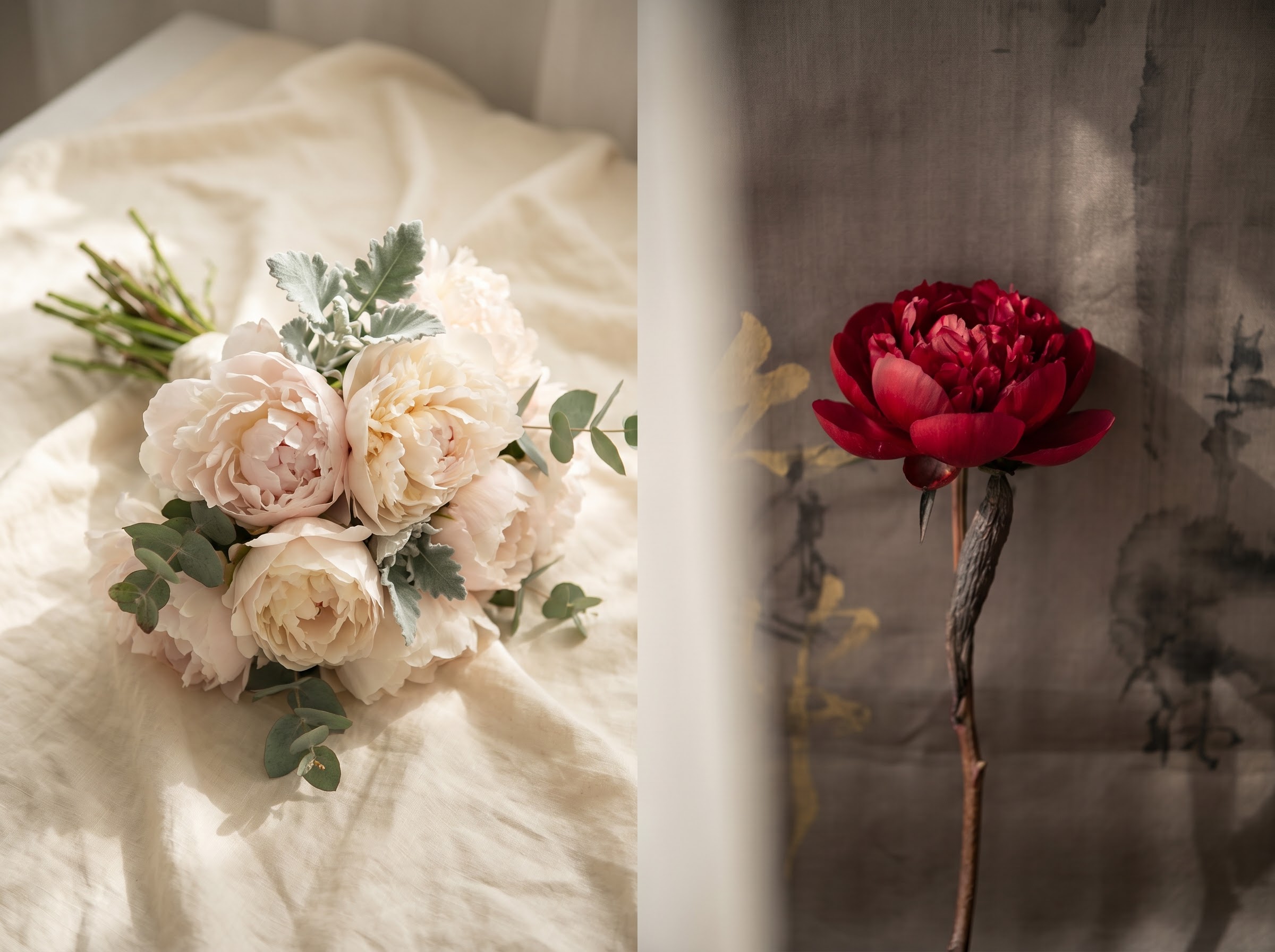
Giving a peony, at a wedding and beyond
For a wedding, a peony is close to a perfect choice. It says romance and a happy marriage in one breath, and it does so without the heavy, declare-everything weight of a red rose, so it suits couples who want lush and romantic rather than intense. The same meaning makes it lovely for an engagement, an anniversary, or a milestone where you are wishing someone abundance going forward. A card to a couple can lean straight into the flower’s meaning: a full, lucky, love-filled life ahead.
As a gift between people who are not a couple, the peony stays warm without turning awkward. Because its meanings are romance, prosperity, and good fortune rather than any single private declaration, you can give it to a friend starting a new chapter, to someone you are congratulating, or to a household you are wishing well, and it reads as generous goodwill. It does not carry an apology meaning or a sympathy meaning, so it is not the flower for those moments. The peony’s job is celebration and good wishes, and it does that job without asking the recipient to decode anything.
The two lives of the peony: West and East
The peony lives a double life across cultures, and the two halves do not fully overlap. In the West, much of the flower’s symbolic vocabulary comes from the Victorian language of flowers, a system that, despite its English reputation, was largely assembled in France before it crossed the Channel and became a craze. Floriography itself is far older than the Victorians, with roots in the symbolism of China, Egypt, and Assyria, but the tidy meaning-per-flower lists that gave the peony its bashfulness reading are a nineteenth-century European invention.
China is where the peony’s grander meaning was born, and it is much older and much more serious than a gift-card sentiment. For centuries of Chinese tradition the peony has been the king of flowers, a symbol of riches, honor, and rank, an emblem of prosperity and high status rather than simple romance. That puts it in the company of the blooms Chinese culture reserved for high character, the way the chrysanthemum stands for noble endurance. It is why a peony in a Chinese context can mean wealth and rank as much as love. Japan took the flower in a related but distinct direction, reading it as bravery, honor, and good fortune, a more martial and dignified set of associations than the soft Western wedding flower. Tradition also offers a Greek origin story for the name: the old tale holds that the flower was named for Paeon, a healer of the gods, a thread some read as a loose tie to healing. Treat that myth as a charming story rather than a load-bearing meaning, since it sits in the lore around the flower rather than in any documented list of what people meant when they handed one over.
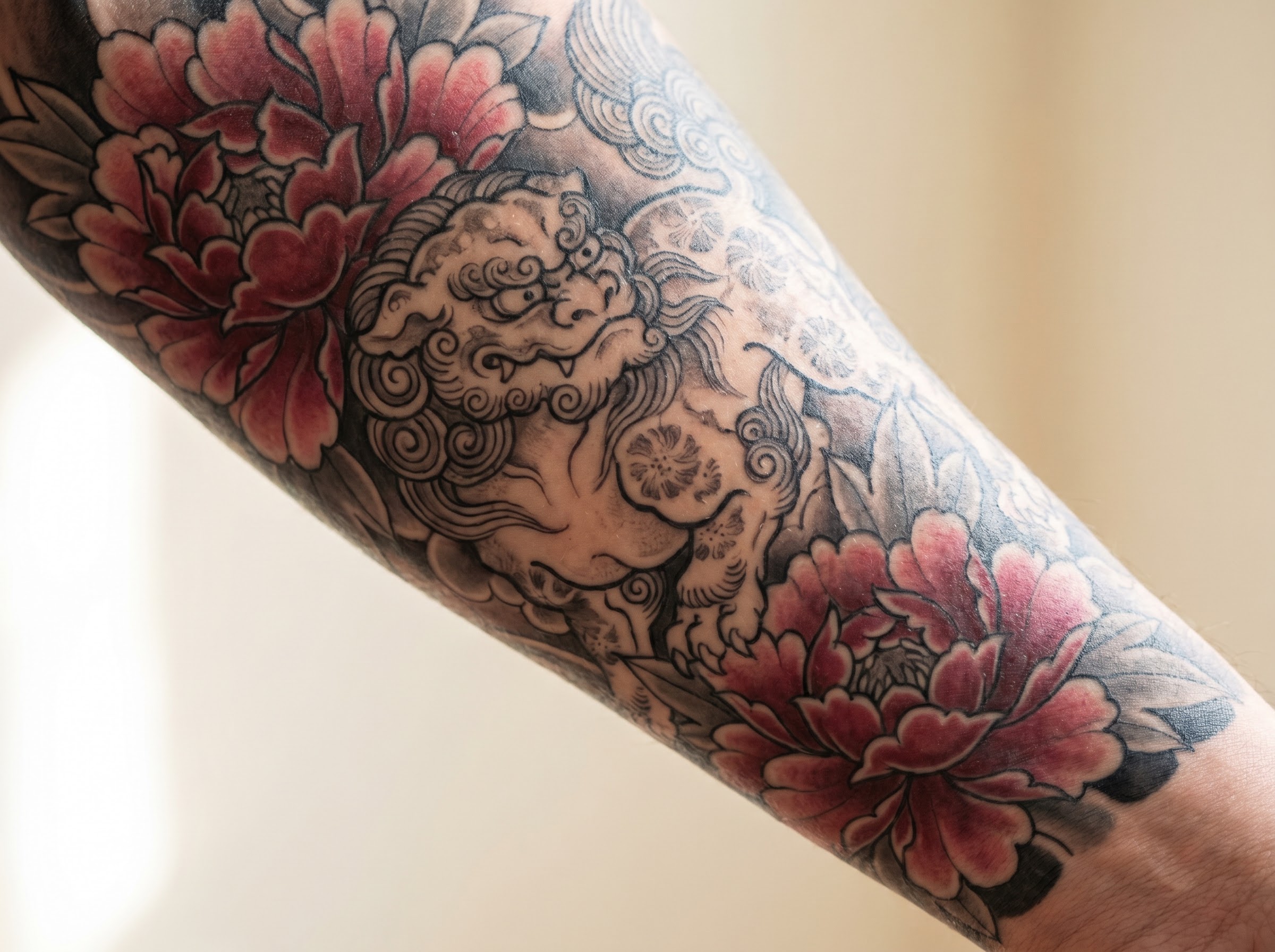
Peony tattoo meaning
A peony tattoo does not come with a fixed dictionary entry, and anyone who tells you it has one settled meaning is selling you tidiness the flower never had. What it does have is two clear inheritances, and which one you are wearing depends almost entirely on the style of the work. In Japanese-style tattooing the peony is a workhorse, not a decoration: it reads as bravery, prosperity, and good fortune, and the giveaway is the company it keeps. Pair it with a lion-dog guardian, a koi, or a dragon and you are looking at the courage-and-honor reading, the petals chosen as much for the way they fill space around a larger figure as for any sweetness. The same bloom in fine-line or watercolor Western work usually means the gentler thing, a happy and prosperous life, beauty, a marriage or a person worth marking. So the honest answer to what a peony tattoo means is that the design tells you before the flower does, and the meaning a wearer assigns to it outranks any of this. If you are weighing the peony against other blooms for ink, our guide to flower tattoo meanings walks through how the popular ones read.
How the meaning got happier
The clearest way to see how a peony’s meaning has moved is to set the centuries side by side. The Victorian list gave it bashfulness and a happy life, with that odd undertone of shame or hiding. Today the flower has shed almost all of the shyness and kept, even amplified, the happy-life part, while gaining the strong romance and wedding associations it carries now. The Chinese reading, meanwhile, was never really part of that Western shift at all; it has held steady as a symbol of riches and honor for far longer than the Victorian list has existed.
| Tradition or era | What the peony means | How solid this is |
|---|---|---|
| Modern Western | Romance, prosperity, good fortune, and a happy marriage; a favorite wedding flower | Well attested and consistent. The safest reading to send today. |
| Victorian language of flowers | Bashfulness and a happy life, sometimes a note of shame or hiding | Documented in nineteenth-century lists. Largely faded from modern use. |
| China | The king of flowers; riches, honor, and rank | An old, serious cultural tradition, distinct from the Western romance reading. |
| Japan | Bravery, honor, and good fortune | A real cultural reading, more dignified and martial than the wedding flower. |
| Tattoo | Prosperity, courage, honor, and beauty | Drawn from the Chinese and Japanese traditions; common in ink, but not a fixed, dictionary-style meaning. |
What that table shows is the rare flower whose meaning got happier over time rather than just darker or simply different. Most blooms that changed at all picked up a contradiction along the way; the peony mostly dropped its faint shyness and grew into a confident symbol of abundance and love, with no warning label left behind. The one thing to keep straight is which tradition the recipient is likely to read it in, because a peony given inside a Chinese family may register first as a wish for prosperity and honor, while the same flower at a Western wedding registers first as romance.
Sending one, and what to put on the card
Give peonies for the happy, forward-looking moments: a wedding, an engagement, an anniversary, a graduation, a new home, or any congratulations where you are wishing someone a full and fortunate life. Late spring is the flower’s natural season, so it is at its most abundant and affordable around then, which is part of why early-summer weddings lean on it so heavily. It is not the right flower for an apology or for sympathy, so save it for celebration.
For the card, let the meaning do the work. To a couple, something like a full, lucky, love-filled life ahead matches the flower exactly. For a friend beginning something good, you might write that you are wishing them prosperity and every good fortune, which leans on the Chinese reading without needing to explain it. One honest qualifier belongs here, even with a flower this agreeable: none of these readings is fixed law. The plain-spoken list kept by Iowa State University Extension says as much, noting that flower meanings come from many sources and that one bloom can hold several at once, and the peony fits that pattern even though its meanings happen to sit unusually well together. So send peonies with confidence for any glad occasion, lean on the well-worn romance-and-prosperity meaning, and keep the older Victorian shyness and the precise tattoo readings as interesting background. If you want to see how a single bloom can be read so many ways in the first place, our hub on the meaning of flowers is the place to start.
Sources
- Cornell University, Written in Petals: The Language of Flowers, on the history of floriography.
- Iowa State University Extension, Flowers and Their Meanings, on why sources disagree.
More flower meanings
 DaffodilNew beginnings, rebirth, and hope. As one of the first flowers to push up after winter, the…
 MagnoliaDignity, nobility, and perseverance: a quiet, composed strength that holds steady through hard…
 OrchidLove, luxury, beauty, and strength, read as refined admiration more than open passion: the gift…
 RoseLove in nearly every form, with the precise message set by the colour you choose. A rose on its…
More meaning guides
More About The meaning of flowers, honestly
Enjoying our flower guides? Add YourFlowersGuide as a preferred source on Google. It helps more readers find us.
Add to Preferred Sources