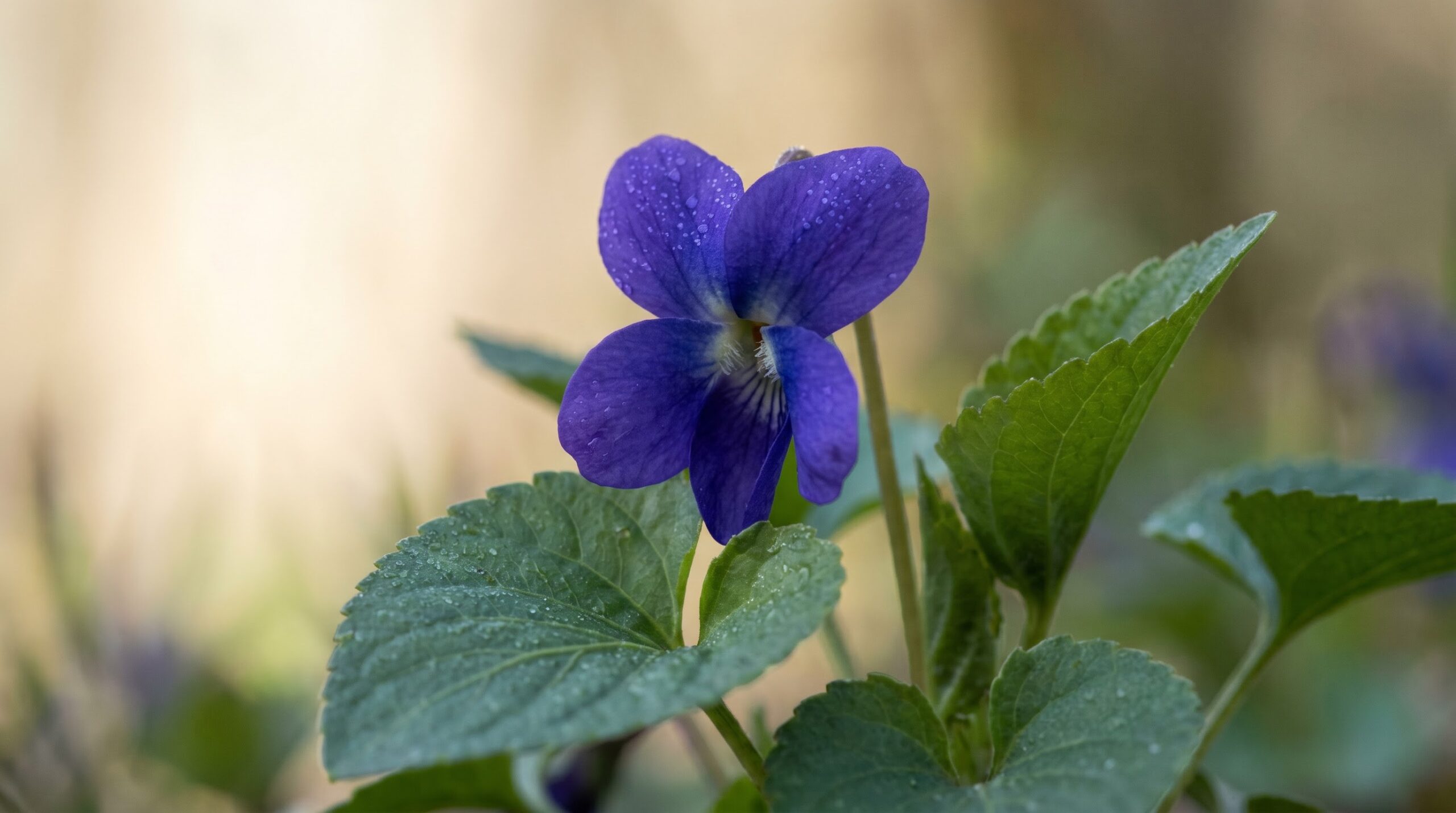
Most common today
Faithfulness and modesty: a humble, loyal love that says “I will always be true,” the devotion that stays rather than the one that dazzles.
The Victorian reading
In the Victorian language of flowers the violet read as faithfulness, modesty, and watchfulness (an attentive, guarding loyalty). Only “watchfulness” has really faded; the rest carried straight through to the modern reading.
The colour spectrum, at a glance
What to write on the card
Quietly, faithfully yours. (For a white violet’s hopeful note, “let us take a chance on happiness.”)
A violet means faithfulness. Under that one quiet word sit all its softer shades: modesty, humility, loyal and unshowy love, the promise that says “I will always be true.” It is the flower of the person who does not need to be the loudest in the room to be the most devoted. A violet grows low and half hidden and means what it means anyway, and that small, shy habit is no accident; it is the whole reason the flower came to stand for modest, steadfast affection in the first place. Below you will find the honest reading of the violet, what its blue, white, and purple forms each say, the real Greek myth and the quiet queer history behind it, and a clear note on how settled each of these meanings actually is.
The good news for anyone who wants a straight answer is that the violet rarely argues with itself. Plenty of blooms swing wildly from one source to the next, and a handful carry meanings that openly contradict. The violet does not. Across the old lists and the modern ones, it lands on the same small cluster of ideas, faithfulness and modesty, again and again. That makes it a flower you can send with real confidence.
What a violet means
At its core the violet is the flower of faithful, humble love. The two threads, modesty and faithfulness, are wound together so tightly that they are almost one idea. The modesty comes first, drawn straight from the plant itself. A violet grows low to the ground, often half hidden under its own heart-shaped leaves, blooming in early spring before showier things take over the garden. People looked at that and read it as humility, a beauty that does not push itself forward, and the meaning stuck. To “shrink like a violet” became a phrase in English for exactly this kind of shy modesty.
The faithfulness grew out of the same quiet character. A flower that asks for no attention and keeps coming back every spring reads naturally as loyal, constant, the opposite of fickle. So in both the old Victorian lists and the readings used today, a violet says modesty and faithfulness together, a humble and loyal love rather than a blazing romantic one. It is the bloom for steady devotion, the love that stays rather than the love that dazzles. The Victorians added one more note, watchfulness, a kind of attentive, caring loyalty, but the heart of the meaning has barely moved in two hundred years. How a flower’s shy or showy character ends up dictating its message is one of the threads we follow on the hub for the meaning of flowers.
Violet colour meanings, one by one
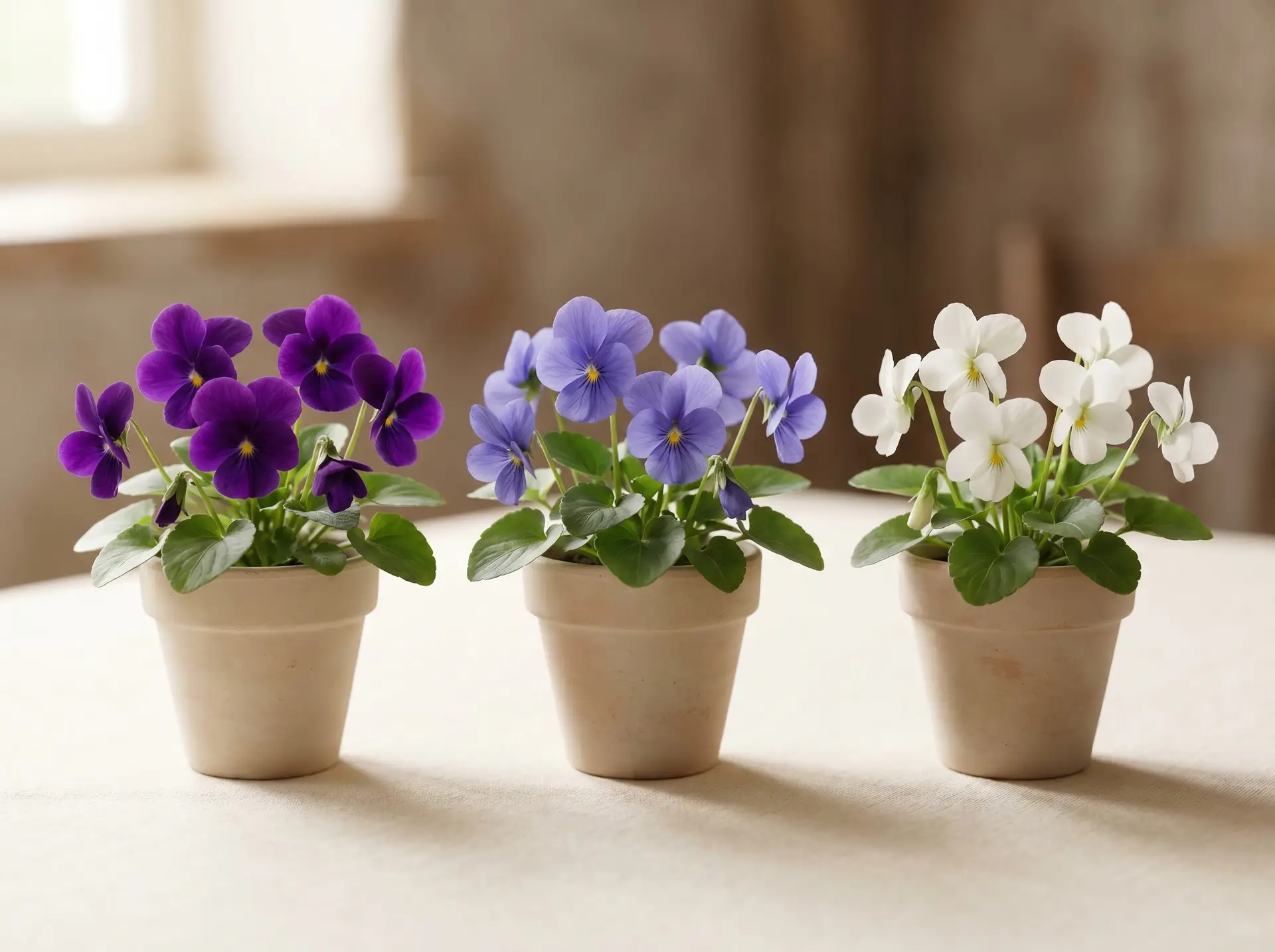
The word violet names a colour as well as a flower, and the blooms themselves come in more than the single purple most people picture. The shade does shift the message, though far more gently than it does for the rose, and every reading still sits inside that same family of faithful, modest love. Purple, the classic violet shade, leans into truth and devotion, the deepest and most serious version of the flower’s loyalty. A purple violet is the one to read as committed, true, the colour of a bond you mean to keep. Blue violets soften that toward faithfulness and love more plainly, a tender and constant affection without the heavier weight of the purple. This is the gentle, everyday reading, love that is sure of itself and quiet about it.
White violets are the outlier worth knowing. They carry innocence, as white flowers usually do, but the traditional lists give them a sweeter and more specific line: “let us take a chance on happiness.” That phrase turns a white violet into a small, hopeful invitation, a flower for the tentative start of something, for taking a gentle risk on a person. It is one of the loveliest small messages in the whole tradition, and it suits a new and uncertain affection far better than a bold red rose would. None of these colour readings fight each other the way rose colours sometimes do; they are three angles on the same faithful heart, so you can pick the shade for its mood and trust the core meaning to hold.
Here is the violet family in one place, with the meaning most people use and a plain note on how solid each one is. The note matters as much as the meaning, because it tells you which readings are rock steady and which carry a softer, more poetic edge.
| Violet form | Common meaning | Note |
|---|---|---|
| The violet overall | Modesty and faithfulness; humble, loyal love | Very steady. The same reading in old and modern lists alike. |
| Purple | Truth and devotion | The deepest, most committed shade. The serious version of the flower’s loyalty. |
| Blue | Faithfulness and love | The gentle everyday reading. Constant, tender affection. |
| White | Innocence; “let us take a chance on happiness” | A hopeful, tentative invitation. Sweeter and more specific than plain innocence. |
The violet in love and loyalty
Because its love is the loyal, undemanding kind, the violet sends a very particular romantic message. It is not the flower for a first dramatic declaration; that is the red rose’s job. The violet is for the love that has already proven steady, or for the person who would rather show devotion than perform it. Given to a partner, it quietly says “I am yours, and I will stay.” A bunch of violets reads as faithful, grounded affection, the promise behind the passion rather than the spark of it, a gift that suits a long relationship as much as a careful new one.
It works just as gracefully outside romance. Violets carry warmth without pressure, so they suit a close and loyal friendship, a thank-you to someone who has quietly stood by you, or a gesture toward anyone whose steadiness you want to honour. Its near cousin the pansy occupies much the same gentle, thinking-of-you territory, and our guide to pansy meaning shows where the two part ways. The white violet, with its hopeful “let us take a chance” note, is the one to choose when an affection is new and you want to test the water gently. The flower’s whole personality is restraint, which is exactly why it lands so well with people who find a dozen red roses a little too loud. If you are choosing by the feeling you want to send rather than the flower, our guide to what flowers mean by feeling sets the violet beside the other blooms for loyalty and quiet love.
From Greek myth to Napoleon’s violet
The violet’s symbolism reaches a long way back, well past the Victorian parlour. In classical tradition it was tied to Aphrodite, the Greek goddess of love, which seated it among the love flowers from the start. The most resonant thread, and the one many people are really searching for, runs through the poet Sappho of Lesbos. It is said that Sappho wove violets into garlands for the women she loved and wrote of them in her verse, and that small detail has carried an enormous weight ever since. Through her, the violet became quietly bound up with love between women, a link that lasted into the modern era.
That is the honest root of the violet’s place in sapphic and queer history. The twentieth century revived the association, and at various points a gift of violets, or a violet corsage, served as a discreet token of love between women when such love had to stay private. It is a real and tender piece of cultural history, and it sits comfortably with the flower’s older meanings, since faithful, devoted, sometimes hidden love is exactly what the violet has always stood for. The same flower that meant modest constancy to the Victorians meant quiet courage to people who could not name their love aloud. That layered meaning is part of why the violet shows up as a tattoo, carrying both the loyal-love reading and the sapphic thread at once; our guide to flower tattoo meanings sets it beside the other popular blooms and what each tends to signal in ink.
The neatly ordered Victorian list the violet sits in was itself assembled fairly late, and not where most people assume. Cornell University’s history of floriography traces the practice of sending messages with flowers back through China, Egypt, and Assyria, and notes that the polished British version owed most of its shape to France. The violet’s meaning was not handed down whole from antiquity; it was inherited from the Greeks, refined in France, and codified by the Victorians, who happened to read it the same way the modern lists do.
How little the violet has changed since the Victorians
Here the violet does something most flowers do not: it barely shifted at all. The Victorian language of flowers read the violet as faithfulness, modesty, and watchfulness, and the modern reading is faithfulness, modesty, and humble loyal love. The only thing that really faded is “watchfulness,” that older sense of attentive, guarding loyalty, which sounds a little quaint now and rarely turns up in current lists. Everything else carried straight through, so the violet looks almost stubborn in its constancy, which is fitting for a flower that means exactly that.
So when you read an old Victorian flower dictionary and a modern florist’s guide side by side, the violet is one of the few entries where they simply agree. There is no trap waiting, no reversed meaning to catch you out. That steadiness is worth saying plainly, because so much of flower symbolism shifts with the century reading it. The colour of a violet can lean the message toward truth or tenderness or hope, as the table above shows, but none of those readings contradict the others. The flowers whose colour genuinely flips the message, sometimes into its opposite, are gathered in our guide to flower colour meanings.
Giving violets, and a line for the card
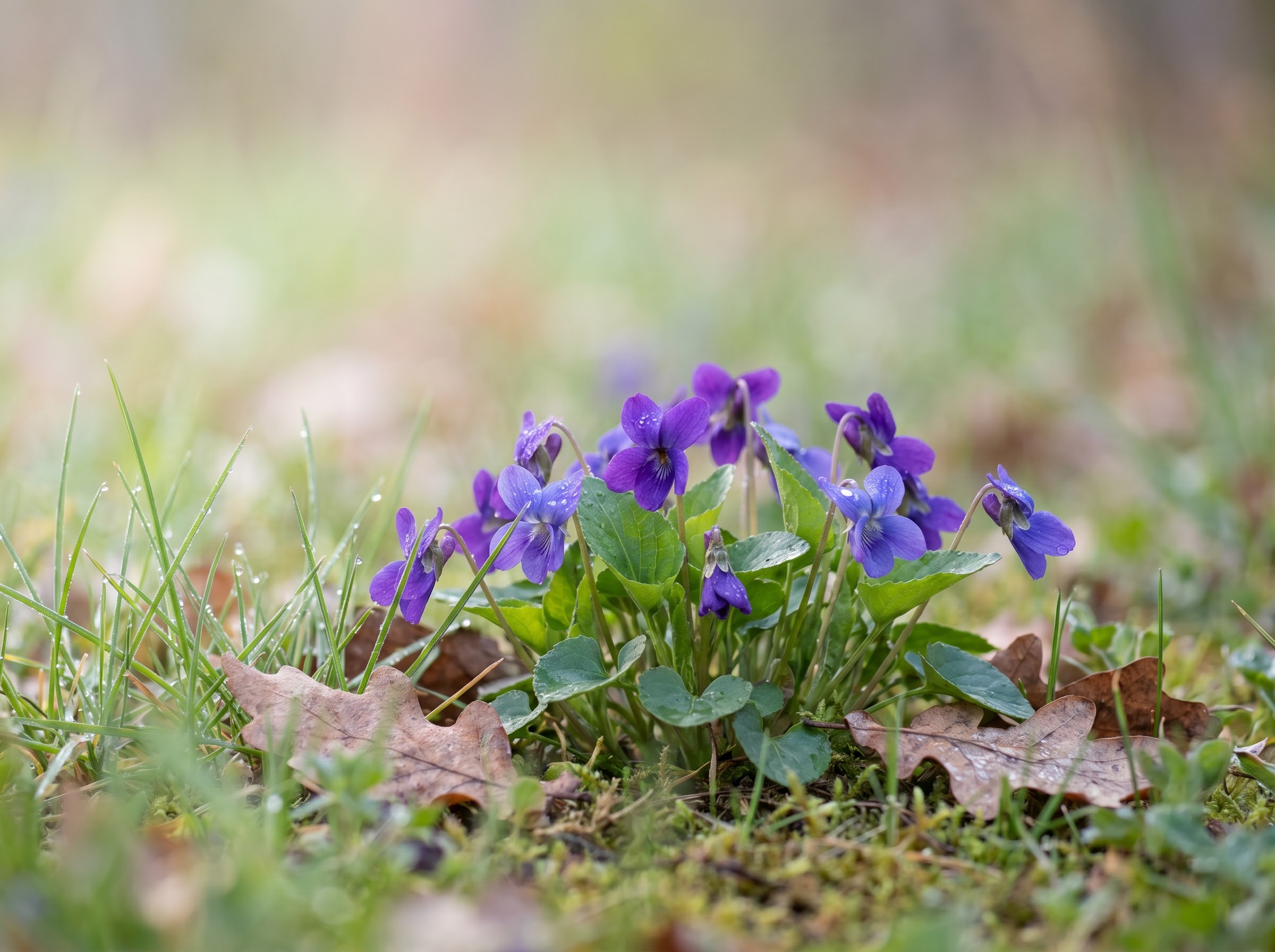
Violets are early spring flowers, blooming low and sweet before most of the garden wakes, and they are the birth flower of February, which makes them a meaningful gift for a February birthday. That season is part of why they read as hopeful and faithful at once, the first loyal bloom after winter. They suit anniversaries, a quiet declaration to a steady partner, a gesture of thanks to a loyal friend, and any moment where you want to say “I am with you” without theatre.
For the words on the card, let the flower’s own restraint guide you. A line as simple as “Quietly, faithfully yours” says everything the violet means, and it fits the unshowy spirit of the gift far better than a grand romantic speech would. For a white violet and its hopeful note, something like “let us take a chance on happiness” leans straight into its traditional meaning. Keep it short and sincere, because the violet has never been a flower for grand statements.
One small thing to note, since people search for it: violet is also a given name and the everyday word for a colour, so the flower’s meaning is only one of three things the word can point to. If you are giving the flower, none of that muddies the message. The honest caveat is the gentle one that runs under all of this. Iowa State University Extension is candid in its own flower-meaning list that one bloom is read different ways by different sources and that no chart is official or universal. The violet simply happens to be one of the flowers those sources land on together, so you can send it with about as much confidence as the language of flowers ever allows, trusting that faithful, modest love is what it has meant for a very long time and still means today.
Sources
- Cornell University, Written in Petals: The Language of Flowers, on the history of floriography.
- Iowa State University Extension, Flowers and Their Meanings, on why sources disagree.
More flower meanings
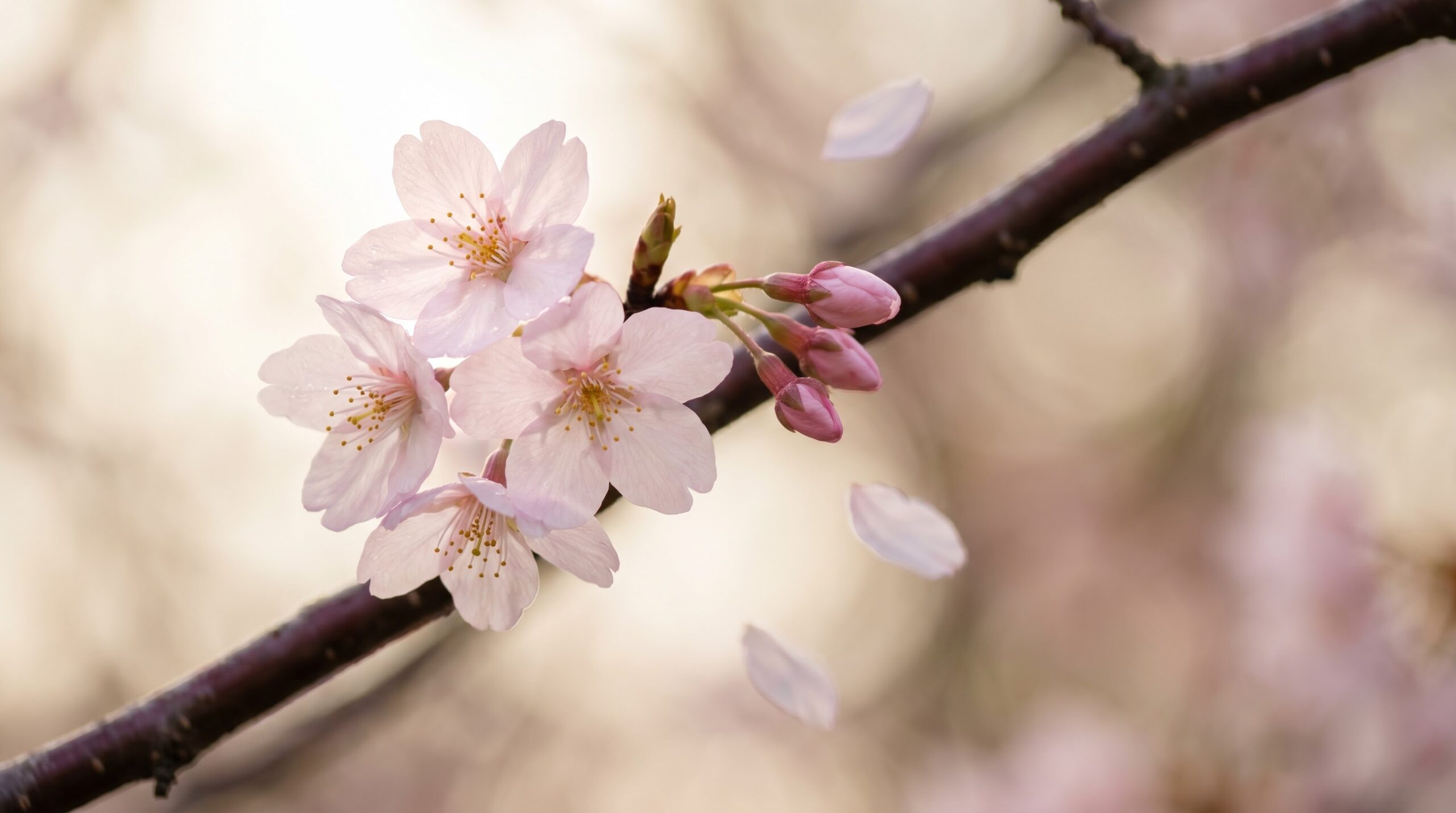 Cherry blossomThe beauty and brevity of life caught in one breath: a flower that is dazzling and gone in…
 ChrysanthemumAt its core the chrysanthemum means long life, friendship, joy, and loyalty, but the reading…
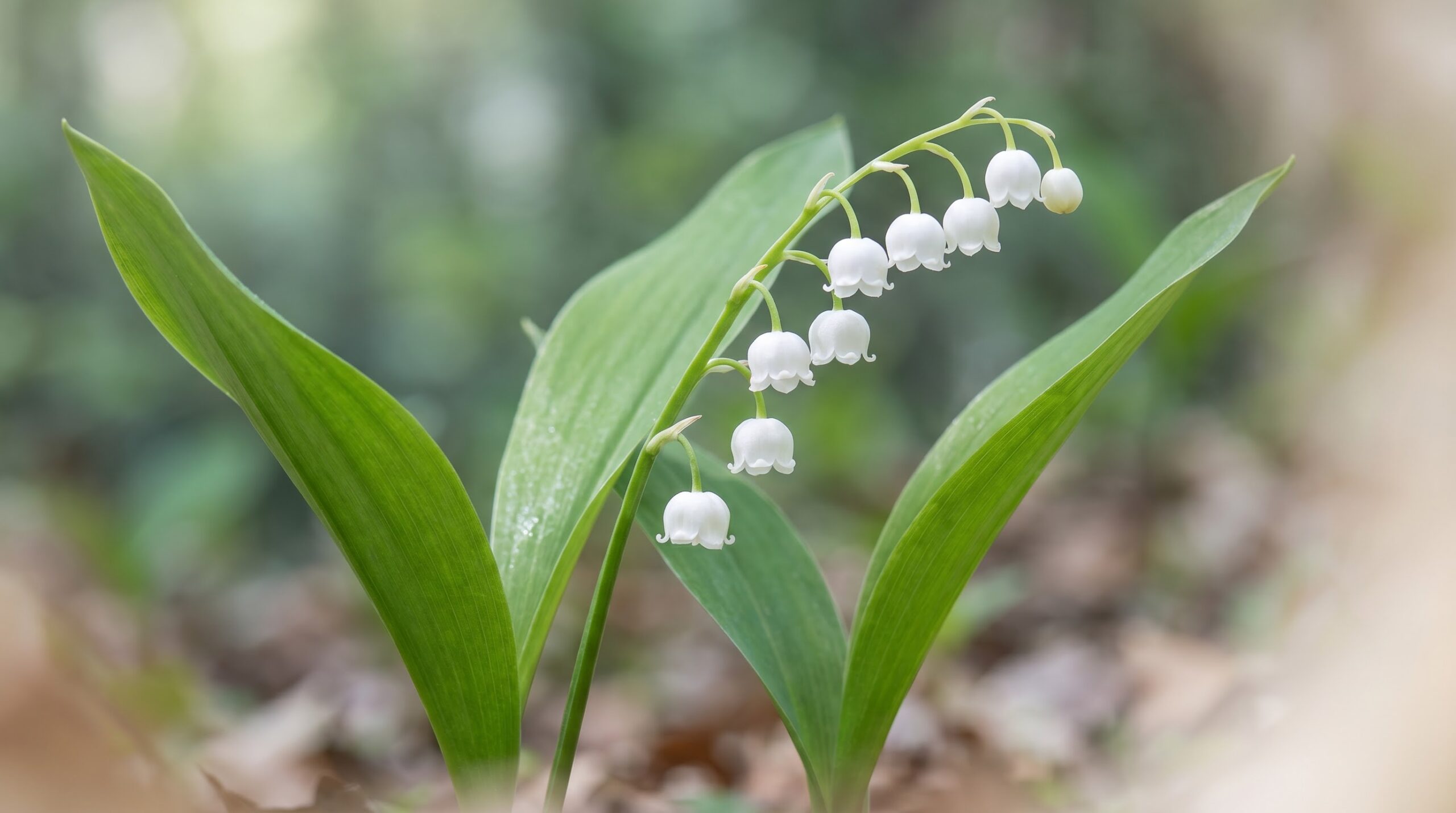 Lily of the valleyThe return of happiness, with sweetness and humility close behind, and at its warmest the…
 OrchidLove, luxury, beauty, and strength, read as refined admiration more than open passion: the gift…
More meaning guides
More About The meaning of flowers, honestly
Enjoying our flower guides? Add YourFlowersGuide as a preferred source on Google. It helps more readers find us.
Add to Preferred Sources