Most common today
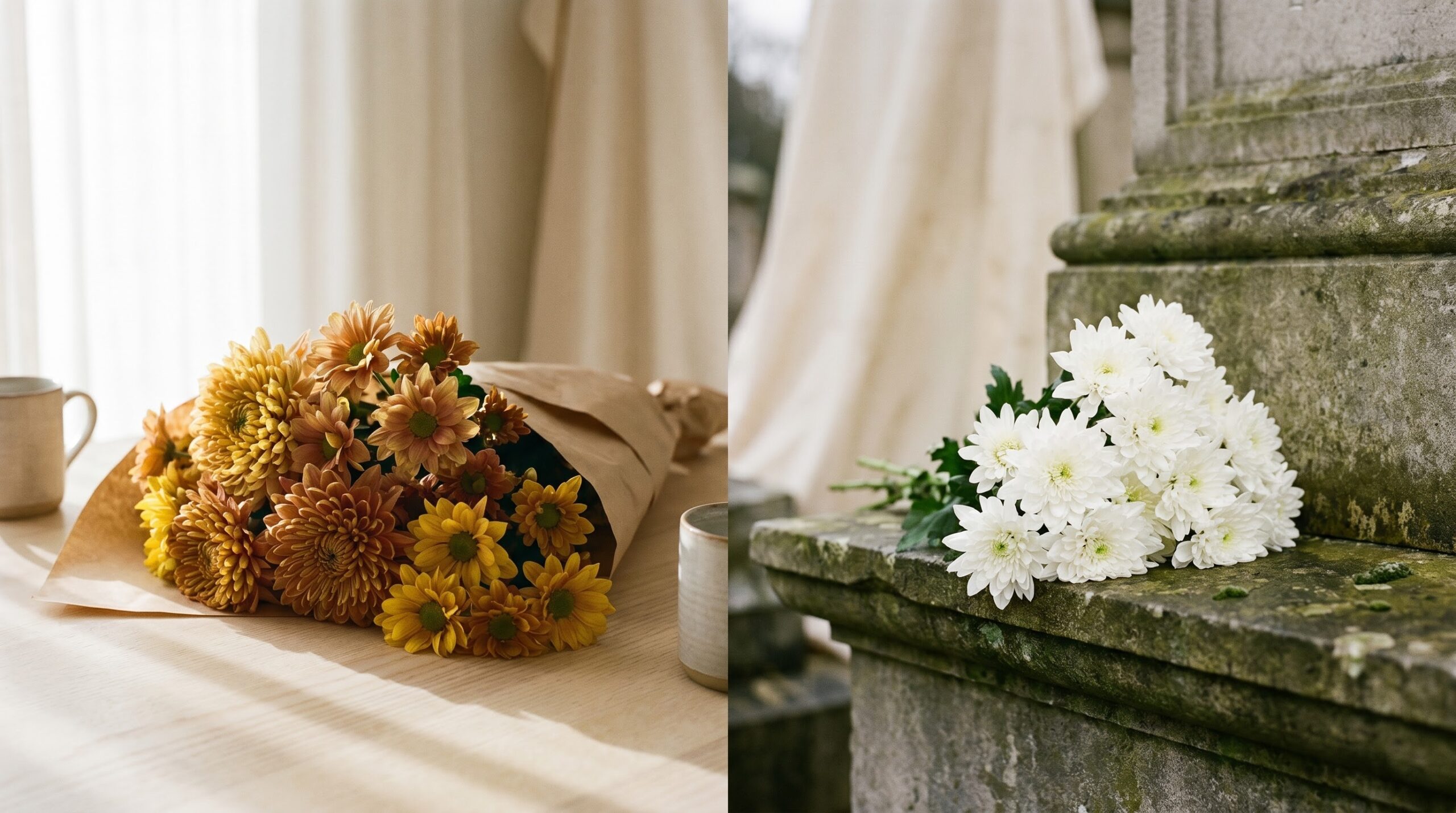
At its core the chrysanthemum means long life, friendship, joy, and loyalty, but the reading flips by country: warm longevity and good cheer across Asia and the United States, and a funeral and remembrance flower across much of Europe.
The Victorian reading
In the Victorian language of flowers it was read gently as cheerfulness, friendship, and rest, closer to the Asian long-life reading than to the European funeral one.
The colour spectrum, at a glance
What to write on the card
For a friend in the US or Asia: “To a long and happy life.” (Avoid giving mums to anyone from France, Italy, or much of Europe, where they read as a funeral flower.)
Give a friend in Tokyo or Chicago a bunch of chrysanthemums and you have wished them a long, happy life. Give the same flowers to a friend in Paris or Rome and you may have handed them a graveside arrangement. The flower has not changed. The country has, and with it the whole meaning. That single fact is what makes the chrysanthemum unusual among popular flowers, because most of them shift their reading by colour or by century, while the mum shifts it by border. In much of the world, and across Asia and the United States in particular, it stands for friendship, joy, and above all long life. Across much of Europe it is a flower for the dead. Below is the honest reading of the chrysanthemum, colour by colour and culture by culture, with a clear note on which parts are old and steady and which parts depend entirely on where you are standing.
In tone, the chrysanthemum is well agreed upon. Cheerfulness, warmth, friendship, and endurance run through almost every list, and the Victorians read it gently as cheerfulness, friendship, and rest. The disagreement is not really about what the flower feels like. It is about whether that warmth points toward a long life lived or a life being mourned, and that depends on the map more than on the petals.
The meaning underneath the colour and the country
At its core the chrysanthemum is a flower of longevity and loyal good cheer. It blooms in fall, when most of the garden is shutting down, and it keeps going through light frost when softer flowers have given up, so it carries a built-in suggestion of staying power and a long, durable life. The name itself points at brightness; “chrysanthemum” is usually traced to the Greek words for gold and flower, a fitting label for a bloom that lights up the autumn beds in golds, bronzes, and deep reds. That hardiness and that autumn timing are why so many cultures landed on the same family of meanings: long life, endurance, friendship that lasts, and a cheerful steadiness.
So when someone asks what a chrysanthemum symbolizes, the honest first answer is long life and warm friendship, and then a question comes straight back: where, and what colour. Those two follow-ups do almost all the real work, and the geography matters even more than the colour. A white mum is a wish for loyalty and truth in one place and a funeral flower in another, which is a far wider swing than any single colour produces on its own. If you want the plant itself, the varieties, and how it shrugs off frost, our guide to how to grow chrysanthemum handles all of that. The meanings are below.
How the colours read, and where one of them turns cold
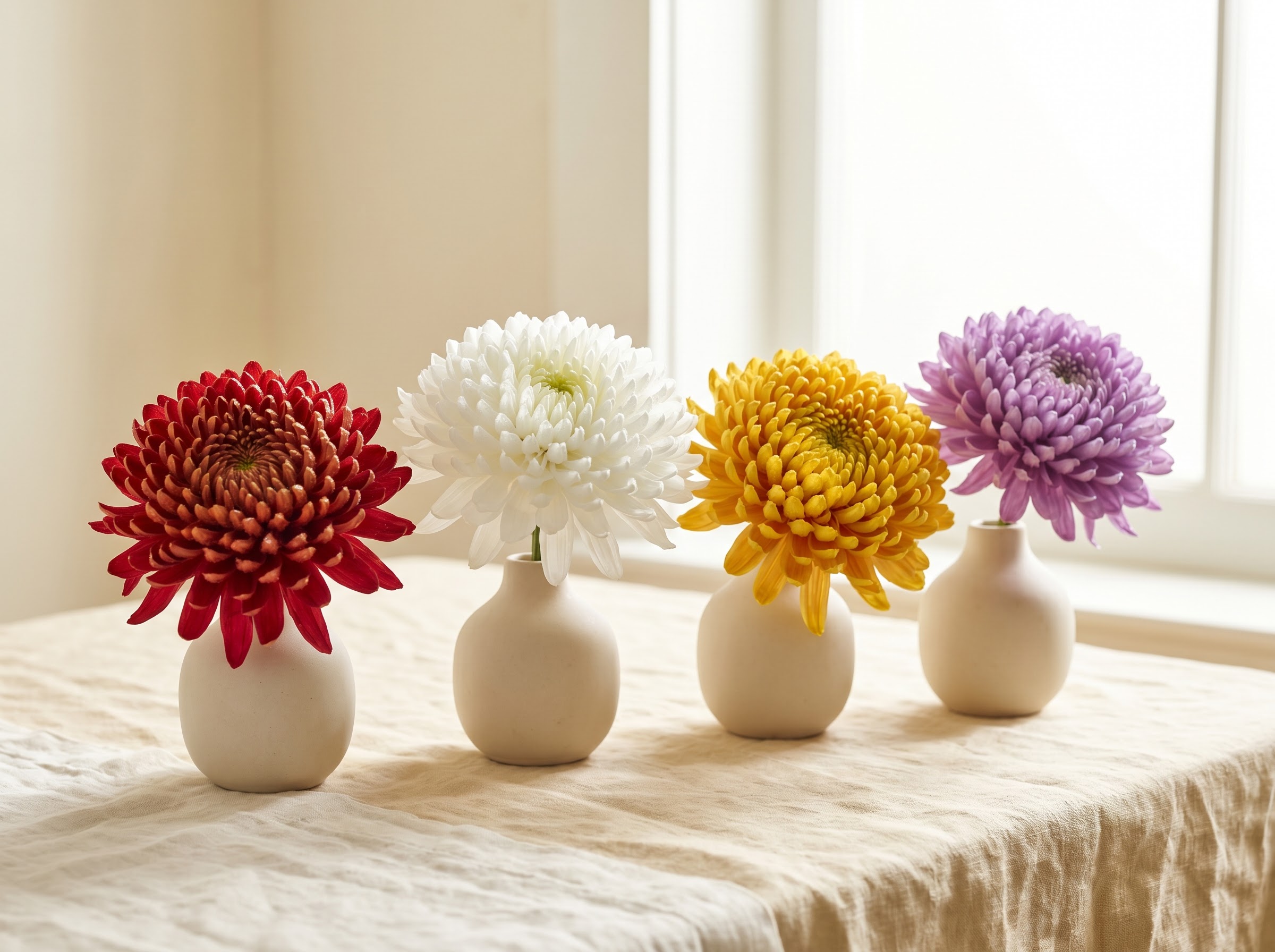
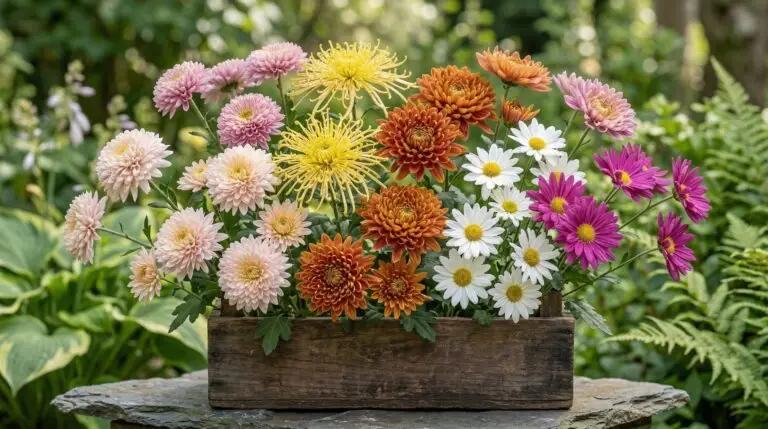
The chrysanthemum comes in nearly every warm shade and a few cool ones, and the traditional language gives each its own note. A red chrysanthemum reads, simply, as love, the warmest and most romantic of the family and the one to choose if you want the flower to carry real affection rather than friendly cheer. A white chrysanthemum is the one that splits hardest by place. In the older flower language it stands for truth and loyal, honest love, a lovely thing to give. Across much of Europe, though, white mums are first and foremost the flower of grief and the grave, so the same white bloom that says “I am true to you” in one setting says “rest in peace” in another. That is the colour to be most careful with, and the reason is geography, not the petal.
A yellow chrysanthemum carries the family’s one genuinely cool note. In the traditional lists it means slighted or neglected love, a quiet reproach closer to “you have hurt me” than to anything cheerful. It is the rare warm-coloured flower that traditionally means something chilly, so a bunch of bright yellow mums is not the friendly gift the colour seems to promise, at least not in the strict old vocabulary. Most modern recipients will simply see cheerful autumn yellow and think nothing of it, but it is worth knowing the older reading before you build a bouquet around it. A violet or purple chrysanthemum, by contrast, traditionally carries the gentle message “get well soon,” which makes it a thoughtful choice for someone recovering, especially where the flower is not tied to mourning.
Here is the chrysanthemum’s colour family in one place, with the meaning the tradition gives each one and a plain note on how solid that reading is and where it can flip. With this flower the colour is only half the story, so read each note against the country it will land in, because that is what decides whether a white bloom says loyalty or says farewell.
| Chrysanthemum colour | Traditional meaning | Note |
|---|---|---|
| Red | Love | The warmest and most romantic mum. The clear choice when you mean affection. |
| White | Truth and loyal love, also grief in Europe | The biggest split. A wish for loyalty in much of the world, a funeral flower across much of Europe. |
| Yellow | Slighted or neglected love | Traditionally a cool note, closer to a reproach. A warm colour with a chilly old meaning. |
| Violet or purple | Get well soon | A gentle wish for recovery. A thoughtful gift where the flower is not tied to mourning. |
What it says when you give it
For love, the chrysanthemum is honest but specific. A red mum says love plainly, and it is the one to send if romance is the message. The flower as a whole, though, leans far more toward friendship and warm regard than toward passion, so a mixed autumn bunch of golds and bronzes reads as good wishes rather than a declaration. The chrysanthemum is one of the better flowers for the affection that is not romantic: a long friendship, a kind colleague, a parent, anyone you want to wish well without the weight of roses. Its meaning of long life makes it a lovely choice for a milestone birthday or an elder you admire, which is exactly why “to a long and happy life” sits so naturally with it.
The exception catches people out. A cheerful pot of mums dropped off for a French or Italian friend’s birthday can land as something closer to a condolence than a celebration, because that is the role the flower plays there. None of this is about the bloom being unlucky. It is about the recipient reading the flower through their own culture, which is the whole reason geography matters more here than with almost any other flower. The closest parallel is the marigold, whose meaning flips between bright celebration and the grave depending on the culture you ask, and our guide to marigold meaning traces that same kind of split. When in doubt, ask what the flower means where the person is from, or pick something less loaded. For more on how a flower’s reading travels and changes from country to country, our guide to flower meanings around the world follows the same splits across other blooms.
How East and West split on the mum
The chrysanthemum’s two opposite reputations grew up on opposite sides of the world, and knowing where each comes from makes the split far less confusing. In East Asia the flower has been honoured for many centuries as an emblem of long life and noble character. In China it is one of the “Four Gentlemen,” the four plants that stand for the seasons and for upright character, and it carries the steady meaning of a long, dignified life. In Japan it rose even higher, becoming the imperial emblem, the flower of the throne itself, and the focus of a seasonal Festival of Happiness. In both places the autumn-blooming, frost-tough mum became a symbol of endurance and a good, long life, and that warm reading travelled with the flower to the United States, where it remains a cheerful staple of fall. This reading of the flower as a sign of upright character and the long life rather than of romance is part of why it sits among the blooms with a spiritual and moral weight, and our guide to spiritual flower meanings gathers that side of the flower world.
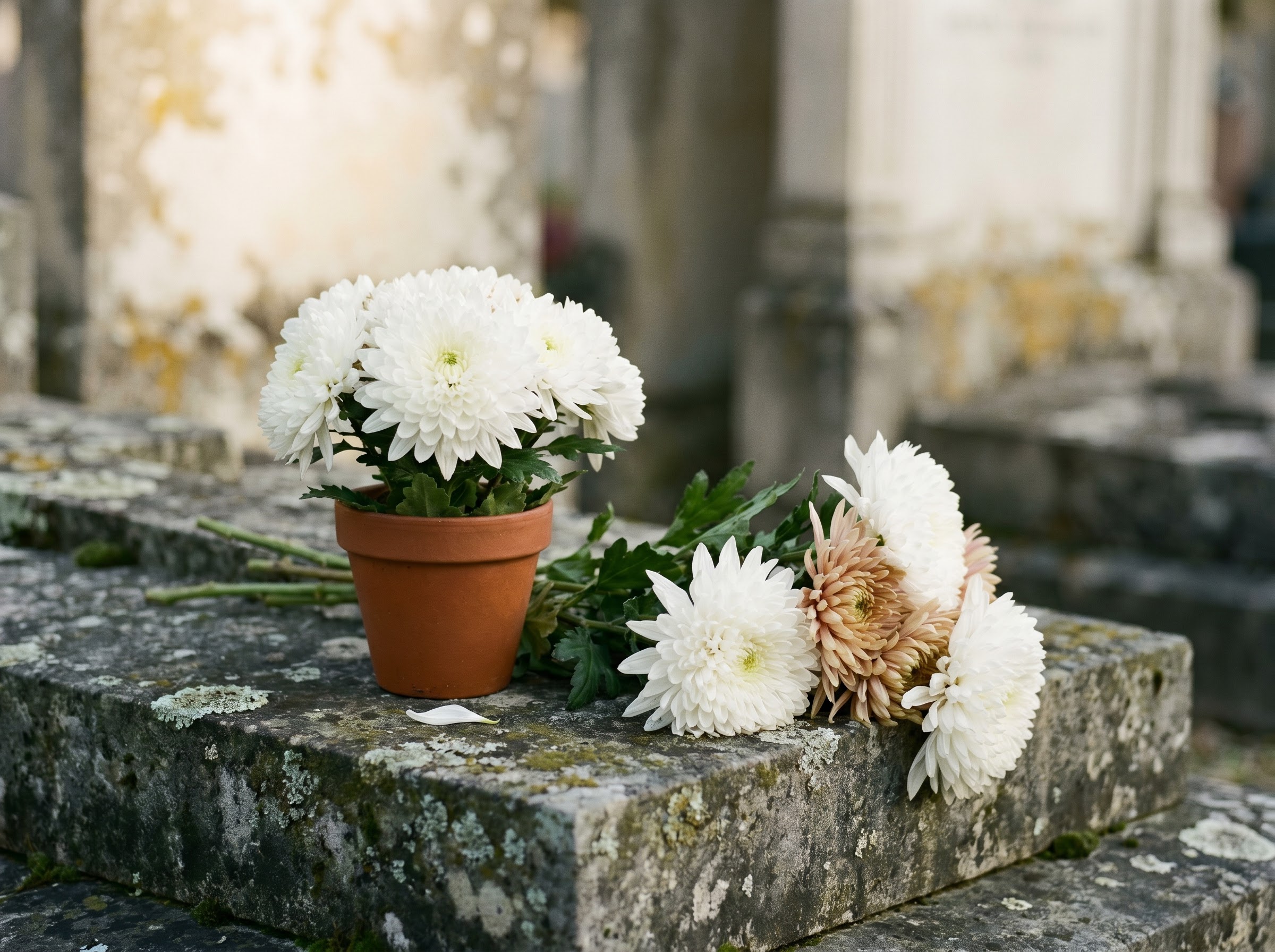
Europe took the same flower in almost the opposite direction. Across much of the continent the chrysanthemum became the flower of remembrance and the grave, laid at cemeteries and sold heavily around the early-November days that honour the dead, so that in France, Italy, and several neighbouring countries a chrysanthemum is read first as a funeral flower. Floriography itself is ancient, with roots in the symbolism of China, Egypt, and Assyria, but the polished Victorian-era system that most English meaning charts descend from came together in nineteenth-century Europe, much of it in France, and that is the branch that fixed the chrysanthemum as a flower for graves rather than for long life. So the joy reading and the death reading are not a mistake or a muddle. They are two old, sincere traditions that simply never agreed.
What the Victorians read into it, and what changed
In the Victorian language of flowers the chrysanthemum was read warmly, as cheerfulness, friendship, and rest, which sits closer to the Asian longevity reading than to the funeral one. The colour shadings sharpened that: red for love, white for truth and loyal love, yellow for slighted or neglected love. What shifted afterward was not so much the meaning as the geography of it. The gentle Victorian cheerfulness held on in the English-speaking world and blended easily with the long-life reading already strong in Asia, while continental Europe leaned harder into the cemetery association until the mum became, for many people there, a flower you would never give to the living. The yellow note softened too. Where the old lists made yellow a quiet reproach, most people today simply see a bright fall flower and read nothing chilly into it at all, so the Victorian “neglected love” survives more in meaning charts than in how a real bouquet is received.
Why two true meanings can sit side by side
Even with the chrysanthemum, where the tone is broadly agreed, there is no single official rulebook. A reference list kept by Iowa State University Extension is candid about why: the same flower turns up read different ways by different sources, and one bloom can carry several meanings at once. What sets the chrysanthemum apart from the usual run of double meanings is that its two readings do not merely shade each other, they openly contradict along a line drawn on the map. The way to use the meanings, then, is to treat the warm reading, long life, friendship, loyalty, and cheer, as the steady core you can trust almost anywhere, and to treat the funeral reading as a real regional fact rather than a footnote. The colours add a useful second layer, with red for love and violet for “get well soon” the most reliable, and yellow’s old cool meaning the one most likely to be ignored today. Lean on the warm core, respect the European exception, and the flower stops being confusing. If you want to see how meanings like these took shape and why they pull apart by place and era, our hub on the meaning of flowers lays out the whole picture.
Giving mums without sending the wrong message
The chrysanthemum is at its best as an autumn gift of warmth and long life, given where that reading is the one in the room. For a friend or an elder in the United States or across Asia, a card that reads “to a long and happy life” matches the flower perfectly, and a fall birthday, a housewarming, or a thank-you are all natural occasions for it. Its frost-hardy, long-blooming nature makes a potted mum a generous and practical gift that keeps going outdoors well into the cold, which quietly reinforces the message of endurance. Red mums carry love for a partner, a violet or purple bunch is a kind “get well soon” for someone recovering, and a mixed gold-and-bronze armful simply says warm regard. The one rule that overrides all of this is the geography rule. Before giving chrysanthemums to anyone from France, Italy, or much of continental Europe, remember that the flower may read as a graveside gesture there no matter how cheerfully you mean it, and choose another flower or ask first. Used with that one piece of care, it is among the warmest things you can hand someone in fall, a steady wish for a long, good, friendly life.
Sources
- Cornell University, Written in Petals: The Language of Flowers, on the history of floriography.
- Iowa State University Extension, Flowers and Their Meanings, on why sources disagree.
More flower meanings
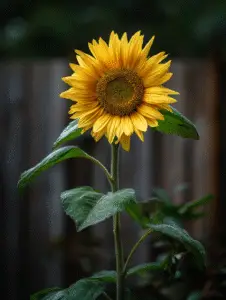 SunflowerAdoration, loyalty, and warmth, with a strong thread of happiness and positivity. Because the…
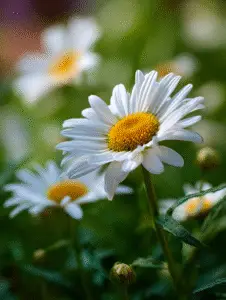 DaisyInnocence and purity above all, plus a loyal, faithful kind of true love and the idea of new…
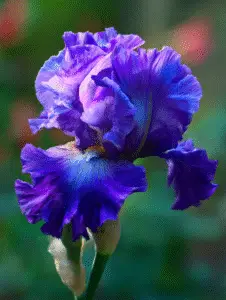 IrisFaith, hope, wisdom, and courage, with the older idea of a message running underneath, which is…
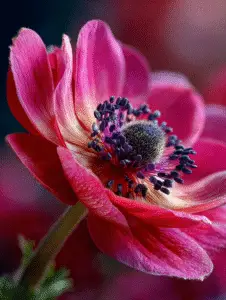 AnemoneIn modern use the anemone stands for anticipation and protection against ill will, a hopeful…
More meaning guides
More About Chrysanthemum
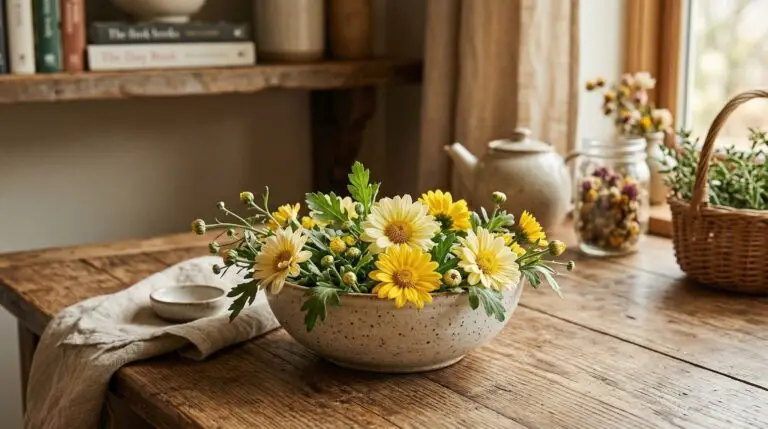 Chrysanthemum tea and edible flowers from garden to cup and kitchen
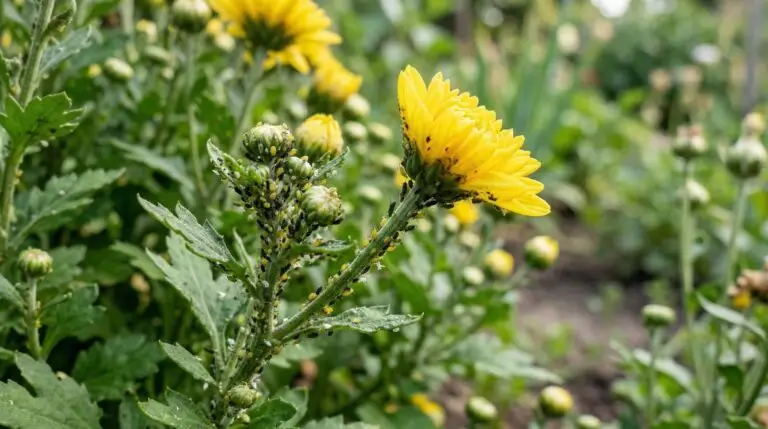 Chrysanthemum pest and disease guide including aphids leaf miners and white rust
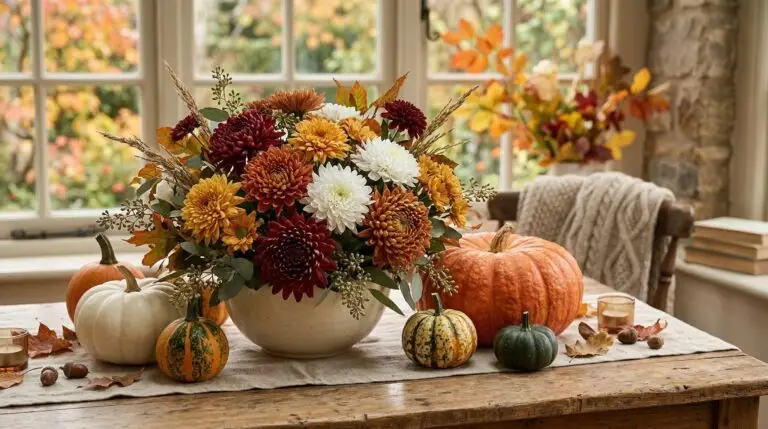 Fall porch and front door displays using chrysanthemums pumpkins and autumn decor
 How to pinch chrysanthemums for bushy plants loaded with fall flowers
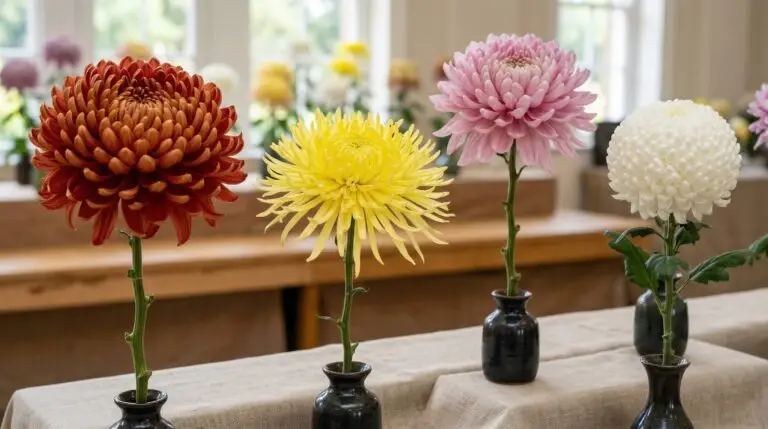 Exhibition chrysanthemums and the art of growing show-stopping single blooms
 Hardy garden chrysanthemum varieties that survive winter and come back stronger
 Companion plants for mums: what to grow and what to avoid
 How to divide chrysanthemums in spring for healthier plants and more blooms
 Growing garden mums as perennials instead of throwing them away every fall
Enjoying our flower guides? Add YourFlowersGuide as a preferred source on Google. It helps more readers find us.
Add to Preferred Sources