What each number quietly says
Love at first sight
I love you
I want to be yours
12
Be mine, settled love
24
Yours around the clock
50
Love without limits
100
Utter, lifelong devotion
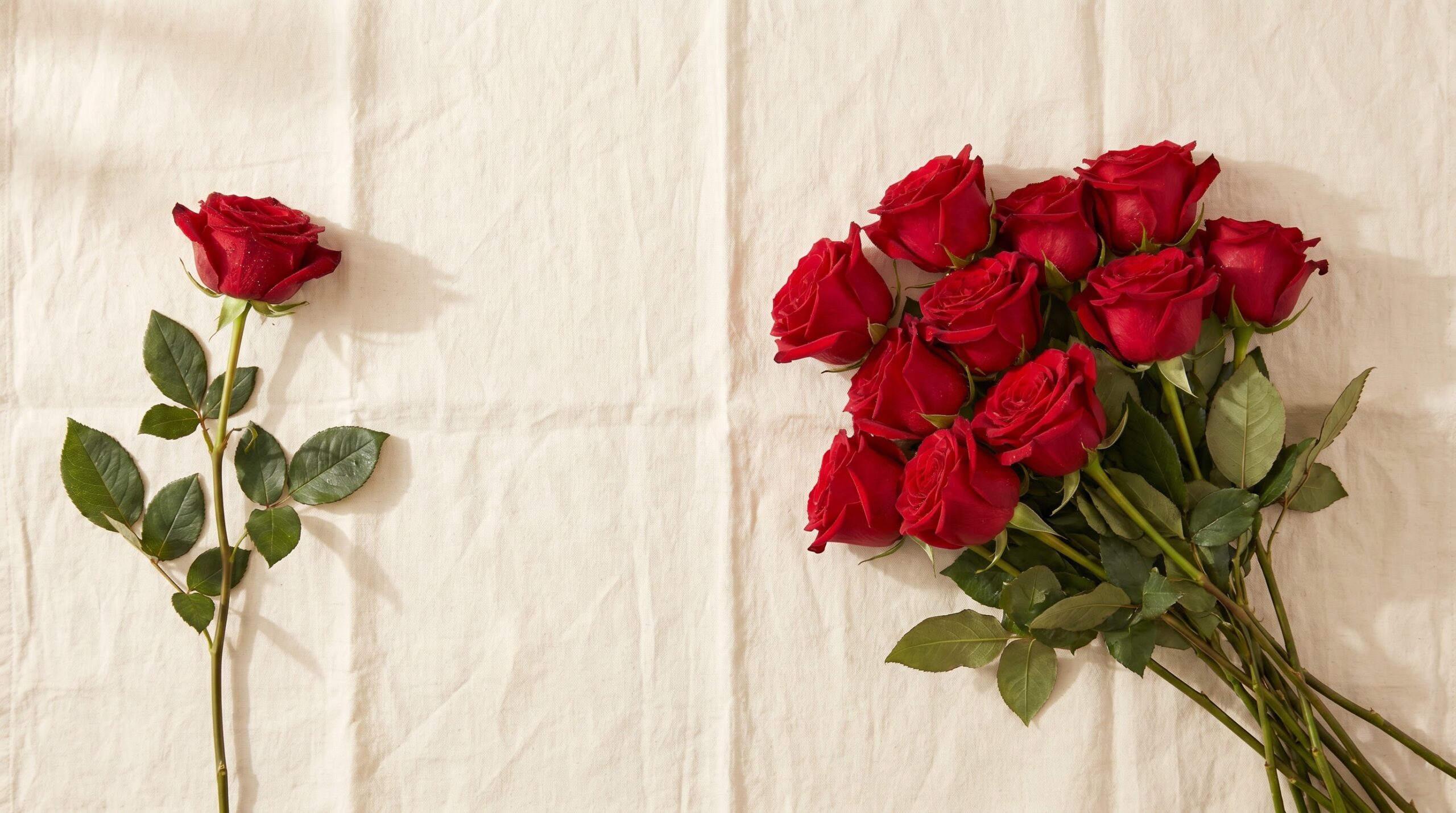
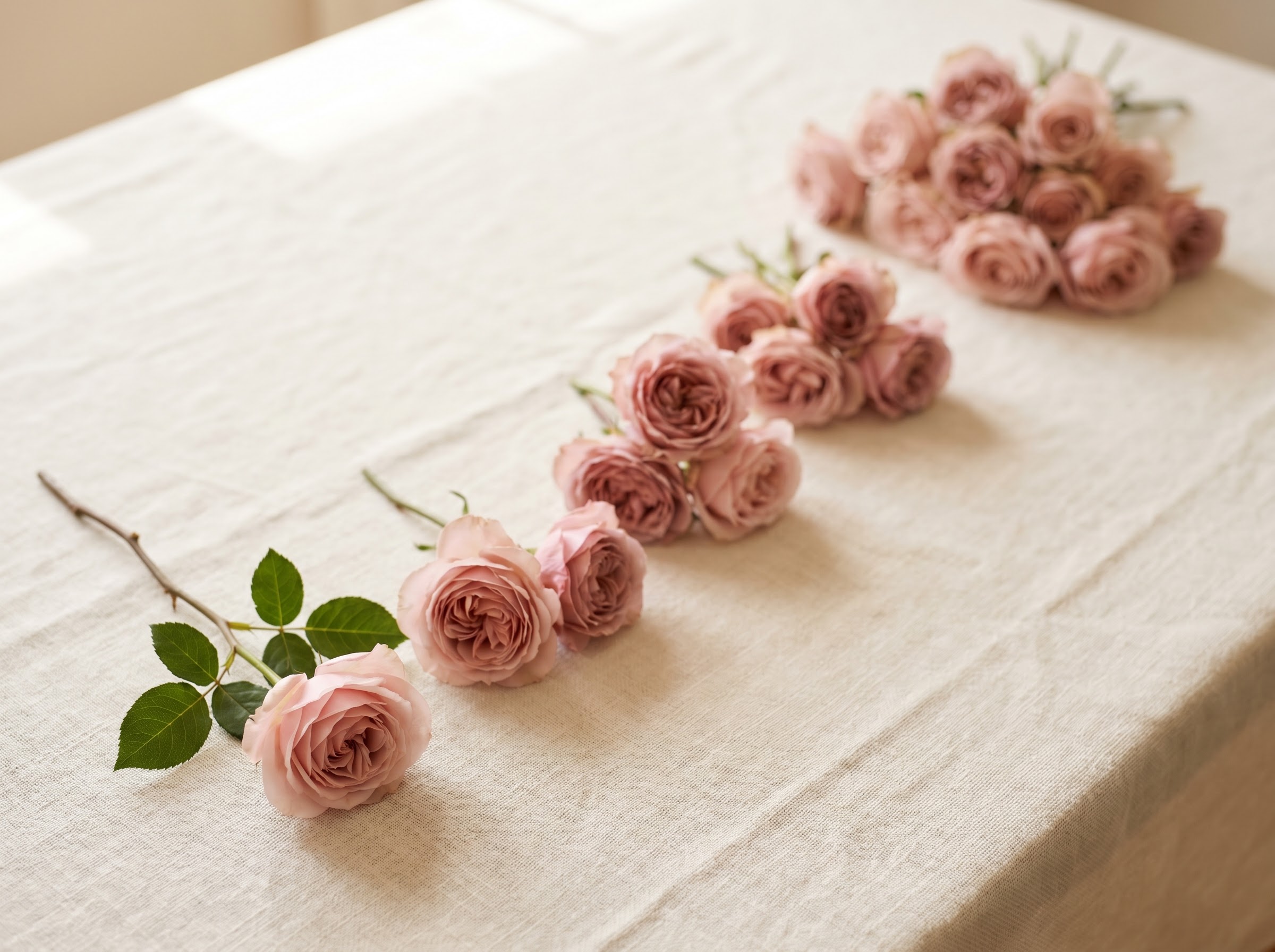
One rose says you, and only you. A dozen says I love you in the most settled, traditional way. Beyond that the rough idea is simple: the more roses, the bigger the feeling, with a few specific counts that florists have attached their own lines to over the years. That is the short of it. The longer and more honest version is that this is a gifting tradition rather than a strict code, the readings shift between florists and websites, and the person opening the bundle of stems is going to feel the gesture far more than they are going to count the heads. Below you will find the traditional meaning for each common number, where the count and the colour work together, and a straight answer about how much weight any of it really carries.
Roses themselves already say a great deal before you decide on a quantity. The flower reads as love and passion at full strength, as gratitude when you want to thank someone, and as plain warm friendship when the colour is right, so the number sits on top of a meaning the rose is already carrying. If you want the fuller picture of what the bloom says on its own, our guide to rose meaning and colour covers every shade. Here we are looking only at how many.
What each number traditionally signals
The counts below are the ones florists and gift guides return to most. Read them as a modern florist and gifting tradition that grew up around the flower trade, charming and useful as a nudge that nobody is obliged to follow. Several of these readings vary from one source to the next, which is exactly what you would expect from a convention nobody ever made official.
| Number | What it traditionally signals | Good for |
|---|---|---|
| 1 rose | Love at first sight, or “you are the only one.” A single stem reads as quietly certain rather than grand. | A first date, an understated anniversary, a one-line declaration. |
| 3 roses | “I love you,” in the old shorthand of three words, three stems. A small, sincere gesture. | One-month and other early milestones, a sweet just-because. |
| 6 roses | “I want to be yours,” a softer step than a full dozen. Sometimes read simply as infatuation. | A budding relationship, a thank-you with warmth behind it. |
| 12 roses (a dozen) | “Be mine” and complete, settled love. The classic, safe, unmistakable choice. | Valentine’s Day, anniversaries, any clear romantic statement. |
| 24 roses (two dozen) | “I am yours around the clock,” one rose for each hour. A bigger, more devoted version of the dozen. | A serious anniversary, an apology with real weight, a grand gesture. |
| 50 roses | Love with no limits and no conditions. Abundance for its own sake. | A milestone anniversary, a proposal, an over-the-top romantic moment. |
| 100 roses | Utter devotion, a love meant to last a lifetime. About as large as the gesture gets. | An engagement, a major anniversary, a once-in-a-relationship statement. |
A few smaller counts carry their own lore, and they are worth knowing if only so you do not send the wrong one by accident. Nine roses traditionally suggest a love meant to last forever. Eleven is read as “you are my treasured one.” Thirteen is the odd one out, listed in some places as a secret admirer and in others as plain bad luck, which is reason enough to round up to a dozen if you are not sure how it will land. None of these are settled, and you will find sources that swap them around, so treat the specifics lightly.
How colour and number work together
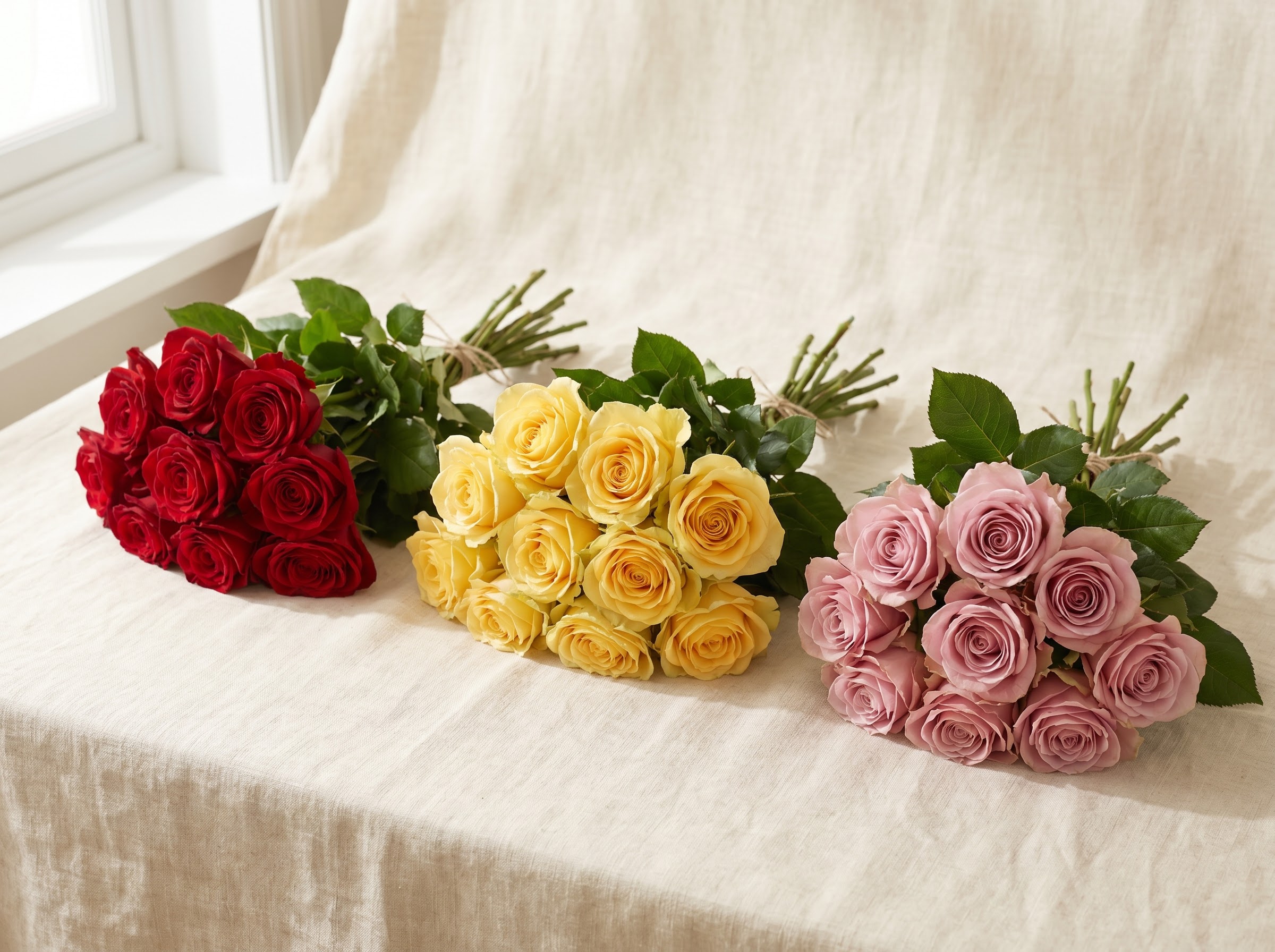
The number sets the size of the feeling; the colour sets what the feeling is. A dozen red roses is the loudest possible “I love you,” because red already means love and passion and the dozen is the full romantic statement. Swap the colour and the same count says something else entirely. A dozen yellow roses reads today as warm friendship and joy rather than romance, so it makes a generous gesture for a friend without the romantic charge a dozen reds would carry. Twelve pink roses land somewhere gentler, gratitude and admiration at full volume, which suits a thank-you or a softer kind of affection.
This is where a little honesty helps. The yellow rose is the one people get caught out by. Older Victorian lists tied it to jealousy or even infidelity, while today it almost universally reads as friendship and cheer, so a dozen yellows sent to a friend will be received exactly as you intend by nearly everyone. The colour carries far more of the message than the count does, which is why the safest move is to get the colour right first and treat the number as the dial that turns the volume up or down. Our guide to rose meaning and colour walks through each shade, including that yellow-rose dispute, so the two pages together cover both halves of the decision.
How much the count actually matters
Here is the part the florist selling you the larger bunch has no reason to mention. There is no official rulebook for the number of roses. Even the meanings of the flowers themselves come from many competing lists rather than one authority, as Iowa State University Extension points out in its rundown of common flower meanings, and the number tradition is looser still. It grew up around the flower trade, was repeated and tweaked from one shop and one website to the next, and was never set by anyone with the standing to set it. That is why your search turns up a dozen confident pages that quietly disagree about what six or thirteen roses mean.
So the count is a nice touch, not a sworn message. Most people who receive roses register three things almost at once: the colour, the overall size and lushness of the bunch, and the fact that you thought of them at all. The exact number is something they would have to stop and tally, and very few do. A thoughtful card saying what you mean will always carry more than a precisely counted stem, because the words remove all doubt while the count only hints. If the symbolism delights you, lean into it and pick a number that fits your moment. If it stresses you, let it go. A dozen of the right colour, handed over warmly, has never once been read as the wrong message.
A simple way to choose
If you want a quick rule that respects the tradition without being ruled by it, start from how big the moment is and how new the relationship is, then choose the colour that names the feeling. A single rose or three suits something early and tender, when restraint says more than excess. A dozen is the reliable middle, the count that reads as a clear, confident romantic statement at almost any stage. Twenty-four and up belong to the big occasions, the engagements and the milestone anniversaries and the apologies that need to be unmistakable, where the sheer abundance is the point.
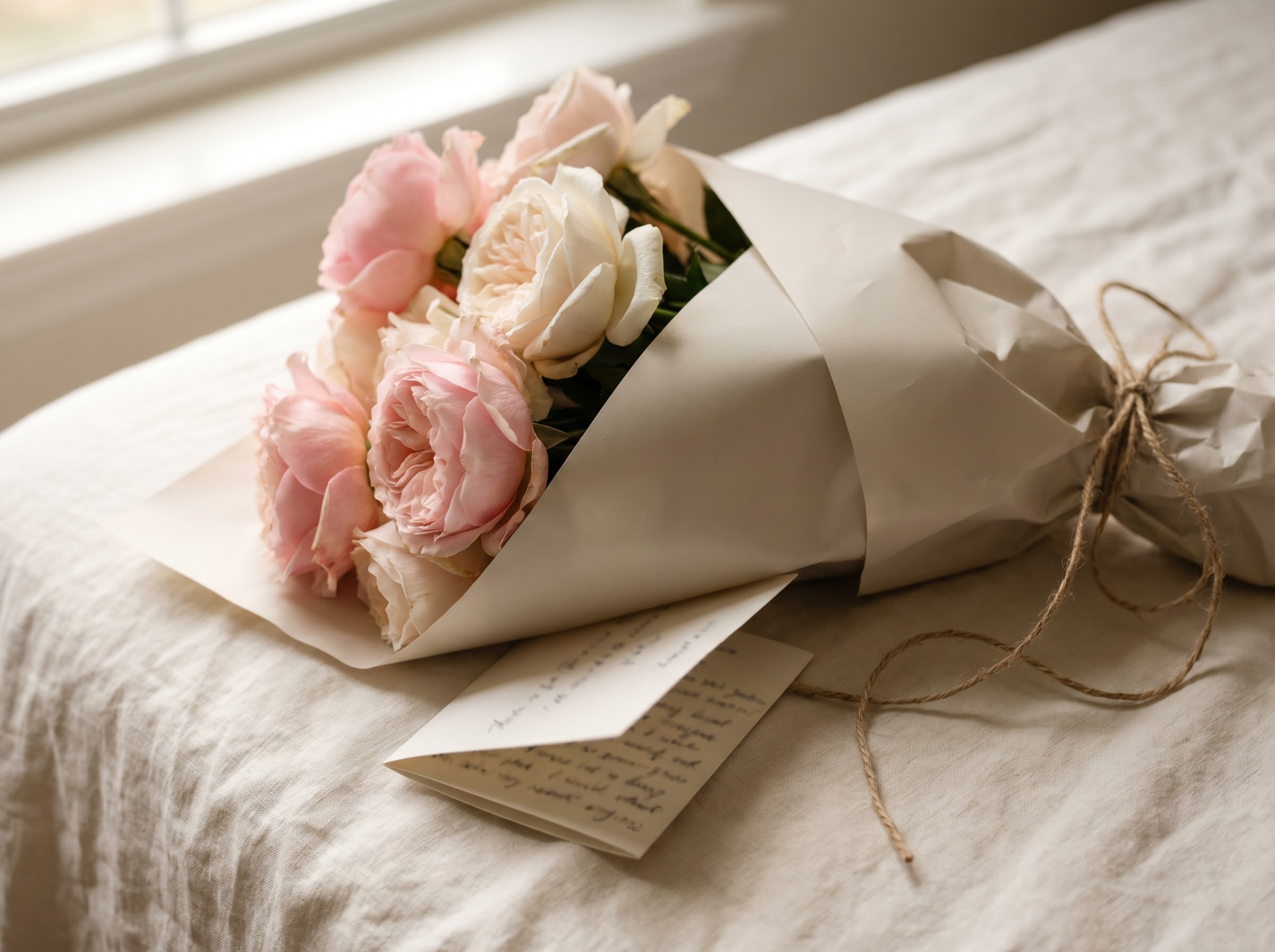
Match that to colour and you are done. Red for love, pink for affection and thanks, yellow for friendship, white for new beginnings or sympathy depending on the setting. Then write a sentence on the card that says the thing directly, and the roses, however many you chose, become the part that makes the words feel like more. If you would like help pairing the right flower to the right moment beyond roses, our guide to flower meanings by occasion covers what to send, and what to avoid, for the days people actually shop for. And the wider meaning of flowers guide explains why none of these meanings are as fixed as they look, which is the most freeing thing to know before you buy.
Sources
- Cornell University, Written in Petals: The Language of Flowers, on the history of floriography.
- Iowa State University Extension, Flowers and Their Meanings, on why sources disagree.
More meaning guides
More About The meaning of flowers, honestly
Enjoying our flower guides? Add YourFlowersGuide as a preferred source on Google. It helps more readers find us.
Add to Preferred Sources