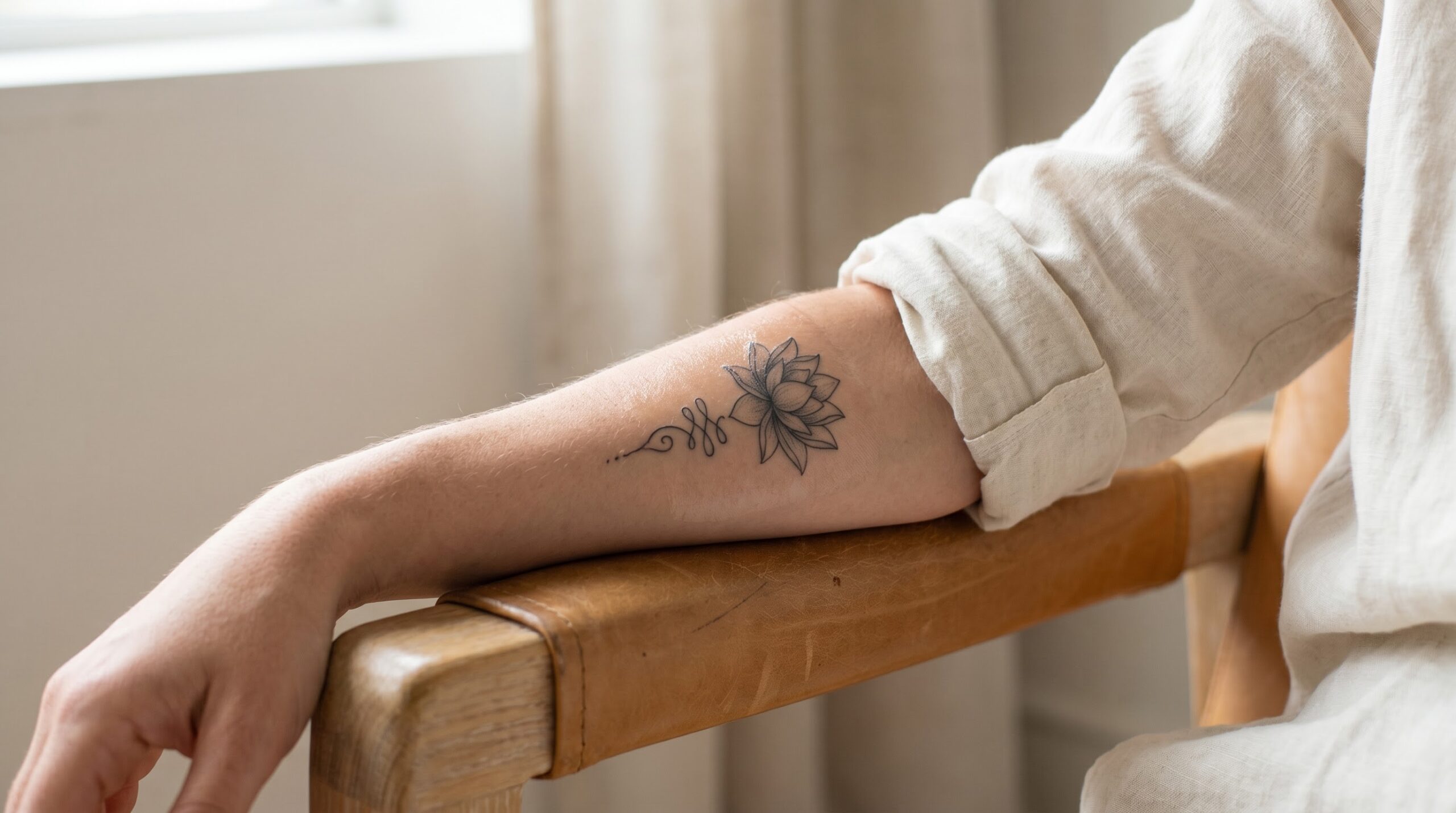
You are sitting in the studio chair, sleeve rolled up, and the artist asks what the lotus on your forearm is supposed to mean. The honest answer is that it means whatever you decided it would, and that is the part most tattoo guides skip. Traditional meanings are real in the sense that people have agreed on them and carried them for a long time, but no one with the authority to fix them ever did. A lotus reads as a flower that pushes up through muddy water and opens clean. A poppy reads as remembrance. A rose reads as love that keeps its defences. Those readings give you a strong, widely understood place to begin, and your own reason for the piece sits on top of them. What follows is the common reading for the flowers people actually ink, with the colour and placement notes that shift it, so you choose with the full picture rather than one confident line off a forum.
Tattoo meanings are even looser than the older language of flowers they grew out of, and that is worth knowing before you commit something to skin. Even the careful, university-grade references admit that the same flower turns up with several meanings depending on which source you read, as Iowa State University Extension notes in its own list of common flowers. If the polite, sourced version already disagrees with itself, the tattoo version, filtered through personal stories and studio walls, disagrees even more. The point is freeing, not discouraging. You are not hunting for the one correct meaning. You are choosing the one that fits your story and then knowing how others will read it.
What the popular flower tattoos mean
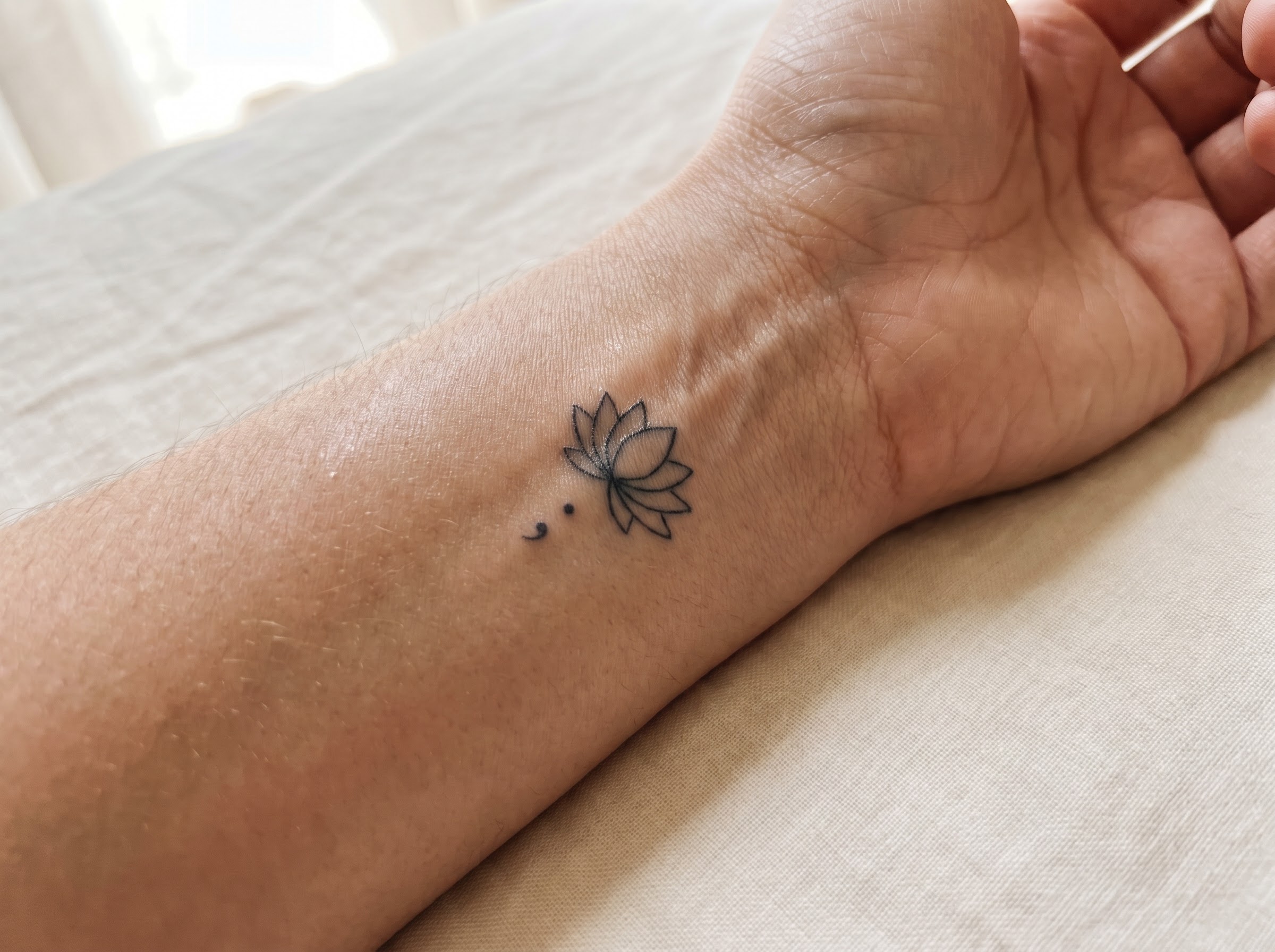
The lotus is near the top of every meaningful-tattoo list, and the reason is its life cycle. It grows out of muddy water and opens clean above it, which is why it reads as resilience and spiritual awakening, the “grew through the mud” idea that recovery communities have adopted. Many people pair it with a mandala or an unalome line. Colour shifts it without erasing it: a white lotus leans toward purity of mind, pink toward the supreme lotus tied to the Buddha in Buddhist tradition, blue toward wisdom over the senses, red toward the heart and compassion, and purple toward mysticism. The fuller spiritual reading lives in our guide to the lotus flower meaning, but for a tattoo, the rising-from-hardship reading is the one most viewers will assume.
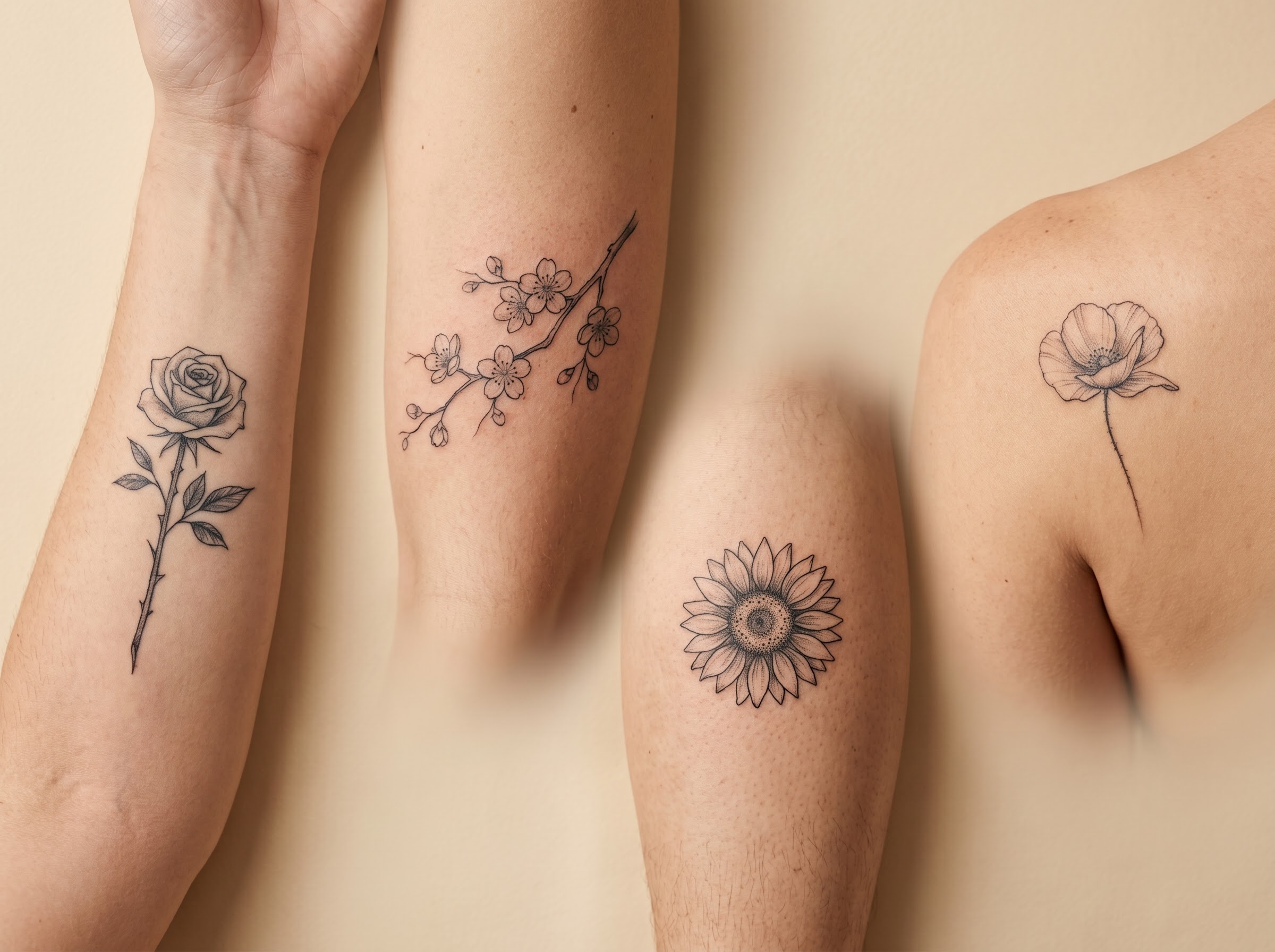
Cherry blossom, inked as sakura, carries the opposite emotional weight and is just as loved. In Japanese tradition it stands for the beauty and brevity of life, the bittersweet awareness that the bloom lasts barely two weeks, so the tattoo tends to say live fully because nothing lasts. It also reads as love and femininity, and a branch of falling petals is a common way to mark a loss without anything grim about it. The rose is the most tattooed flower of all and the most flexible. On its own it reads as love and beauty, and the thorns add a second layer, protection, or the idea that beauty keeps its defences. Colour does most of the talking here, the same way it does on the stem. Red is romantic love, white is purity and remembrance, pink is gratitude and gentle affection, and a black or deep crimson rose reads as mourning and lasting devotion rather than anything sinister. A yellow rose is the one to think about, since today it reads as friendship and joy while older lists tied it to jealousy, a split we settle in our piece on the rose meaning and colour.
The sunflower is the bright, hopeful end of the spectrum. It turns its face to the sun, so the tattoo reads as loyalty, positivity, and devotion, and in recent years it has also become a quiet symbol of solidarity tied to Ukraine. The poppy sits at the other end and is widely misread. People call it the flower of death, when its real weight is remembrance, restful sleep, and consolation. As a tattoo it most often honours a lost loved one or a veteran, and it can simply mean calm. The lily covers a wide range depending on the form: white lily for purity and, in many contexts, sympathy or memorial; calla lily for elegance; stargazer for ambition. It also carries motherhood and renewal, which makes it a frequent choice for a piece about family. The peony, drawn large and lush, tends to read the way it does in life and at weddings, as romance, prosperity, and honour, and in Chinese tradition it is the “king of flowers,” a symbol of riches and rank, while Japanese tradition ties it to bravery. Its meaning on skin is simply that older symbolism carried over, which is why the ink reading feels grounded rather than improvised.
How colour and placement change the meaning
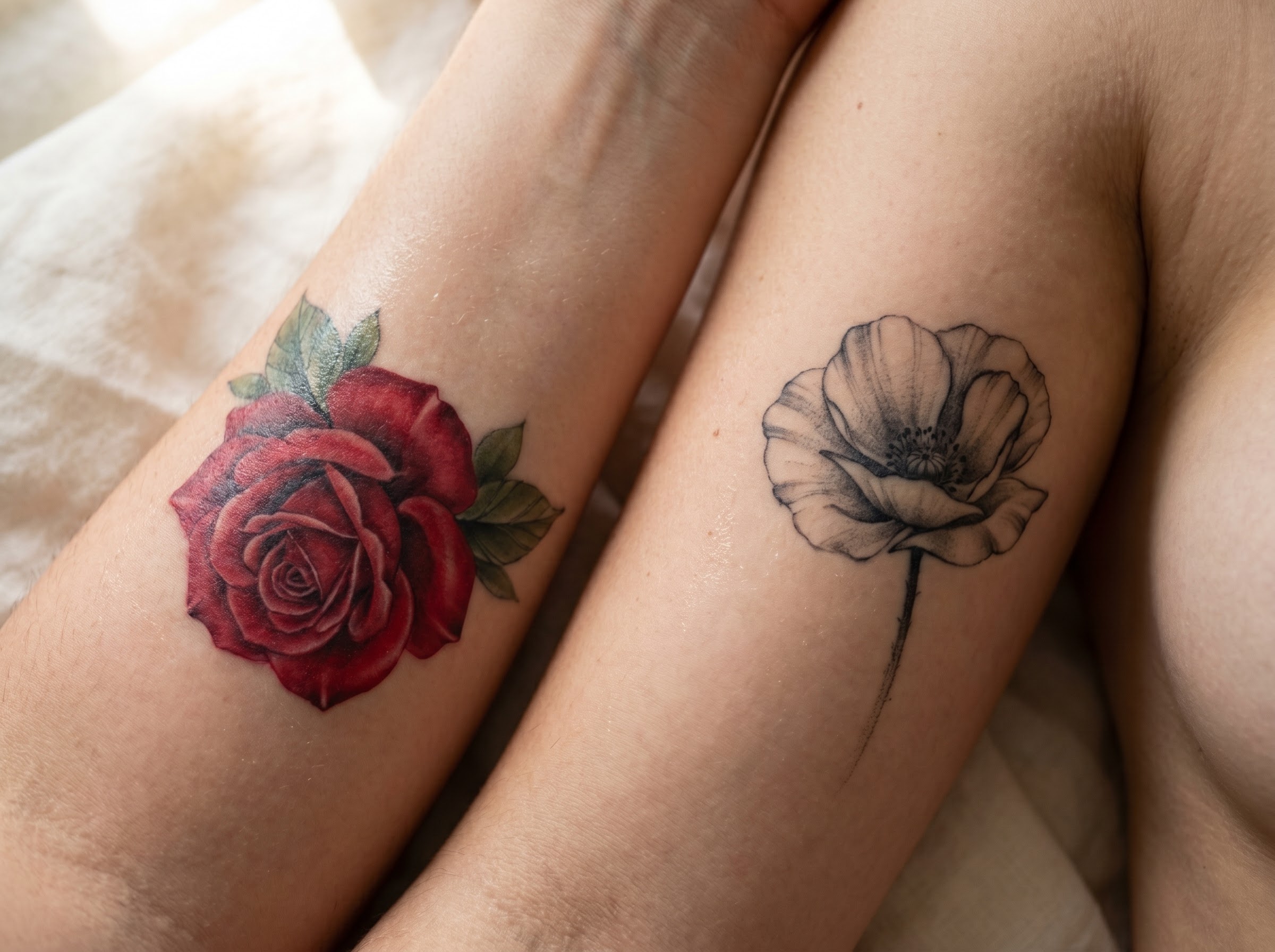
Colour is the fastest way to move a flower tattoo from one feeling to another, and it follows the same broad habits as a cut bloom. Red leans toward love and passion, white toward purity and remembrance, pink toward gentle affection, yellow toward friendship and cheer, purple toward wisdom and dignity, and black, which has no botanical equivalent, toward grief, permanence, or simply a graphic look the wearer likes. The yellow rose is the standing reminder that colour can flip a meaning rather than just shade it, so if a specific reading matters to you, choose the colour as deliberately as the flower. A great deal of the per-flower nuance, white lily versus tiger lily, blue iris versus purple iris, comes down to this, and the broader logic of it sits in our guide to what flowers mean by feeling.
Placement carries less fixed meaning than people expect, and most of what it signals is about visibility and pain rather than a hidden code. A piece on the forearm or hand is meant to be seen and read by others, while one on the ribs, spine, or inner arm is usually more private, closer to a note to yourself. Size changes the message too: a small single bloom often marks one specific person or moment, while a trailing branch or a full sleeve tends to tell a longer story. None of this is a rulebook. It is simply how a viewer, and a future you, will tend to interpret where the flower lives and how big it grows on the body.
Birth flower tattoos
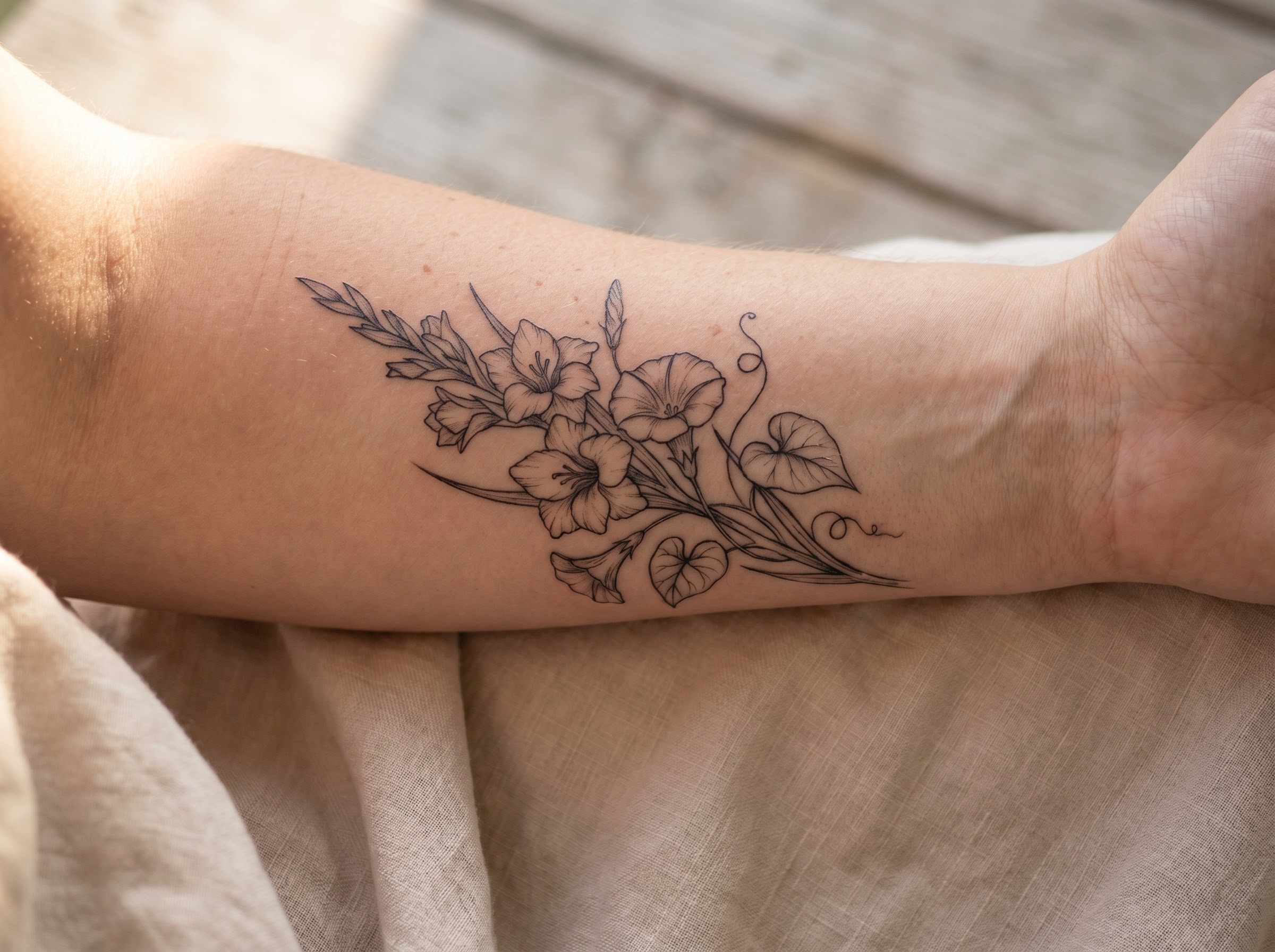
One of the most common reasons people choose a particular bloom is that it belongs to a birth month, theirs or someone they love, which turns a flower tattoo into a quiet portrait of a person. Each month has one or two traditional flowers, and the meaning of the piece becomes the meaning of that flower plus the bond it stands for. A gladiolus for an August birthday carries strength of character and moral integrity, and doubles as a memorial bloom, which is why it shows up so often for a late parent born that month. A morning glory for September reads as affection and the brevity of life, and is usually paired with the aster. An iris can mark a February or a memorial at once, since it means faith and hope and is a frequent choice for a grandparent. If you are choosing by date rather than by feeling, our guide to birth month flowers maps every month to its bloom, and many people combine two months into one design to hold a relationship in a single piece.
Flowers for resilience, recovery, and mental health
A large share of flower tattoos are about getting through something, and a handful of blooms have become the shorthand for it. The lotus leads again here, for the same reason it leads everywhere, the clean flower rising out of the mud, which reads as coming through a hard period intact. The gladiolus, the sword lily, carries strength of character and is a natural fit for a piece about standing firm. The protea, an ancient architectural bloom, means transformation and standing strong through change, and tends to suit someone marking a major turn in their life rather than a single event. Cherry blossom belongs in this group too, less for triumph and more for acceptance, the reminder that hard seasons, like the bloom, do not last.
The forget-me-not is the memory flower in this cluster, meaning a bond that distance or loss cannot break, and it is often chosen as an emblem of remembrance for someone slipping away or already gone. Hellebore is the quieter option, a flower that blooms in the dead of winter and reads today as serenity and a calm that arrives in the cold, though older lists tied it to scandal, so its meaning is more personal than widely understood. Many people pair a flower from this group with a small semicolon, a familiar motif many people wear for a story continued rather than ended. The semicolon is not a flower and is not a medical statement, so treat it as a personal symbol you are choosing, and let the flower beside it say what kind of survival it was.
A quick reference for the common flower tattoos
The table below pulls the popular pieces into one place, with the meaning most viewers will read, the way colour or variant shifts it, and the kind of person each tends to suit. Treat the last column as a starting suggestion rather than a rule, since the whole point is that the meaning is yours to set.
| Flower | Common tattoo meaning | Colour or variant note | Who it tends to suit |
|---|---|---|---|
| Lotus | Resilience, rising above hardship, spiritual awakening | White purity of mind, pink the Buddha lotus, blue wisdom, red the heart, purple mysticism | Anyone marking recovery or a spiritual turn |
| Cherry blossom (sakura) | The beauty and brevity of life; live fully | Falling petals read as loss; the branch reads as femininity and love | Those marking impermanence or a gentle loss |
| Rose | Love and beauty; thorns add protection | Red love, white purity and remembrance, pink affection, black or deep crimson mourning and devotion, yellow friendship today | Almost anyone; the most flexible flower tattoo |
| Sunflower | Loyalty, positivity, devotion | A bright, hopeful piece; also a symbol of solidarity | Optimists and those marking a steady bond |
| Poppy | Remembrance, consolation, restful peace | Red for remembrance and a fallen loved one; white for consolation | Those honouring a loss or a veteran |
| Lily | Purity, motherhood, renewal | White for sympathy and memorial, calla for elegance, stargazer for ambition | Family pieces and memorials |
| Peony | Romance, prosperity, honour | Large and lush; the “king of flowers” in Chinese tradition | Those wanting a bold, ornamental love or fortune piece |
| Forget-me-not | Faithful memory; a bond loss cannot break | Tiny blue blooms; often chosen as an emblem of remembrance | Those honouring someone gone or fading |
| Gladiolus | Strength of character, integrity; memorial | The August birth flower; tall sword-like spikes | August births and those marking inner strength |
| Magnolia | Dignity, quiet strength, perseverance | A Southern emblem of grace | Those who want strength without loudness |
| Tiger lily | Confidence, pride, fierce individuality | Freckled, recurved orange blooms | The bold and self-assured |
| Protea | Transformation; standing strong through change | Architectural; the king protea is iconic | Those marking a major life turn |
Choosing a flower tattoo you will still mean later
Because the meanings shift and contradict, the tattoo that ages well is usually the one tied to your own reason rather than to a chart you found. The traditional reading matters mostly so you are not surprised by how others read it, the way you would want to know a chrysanthemum reads as a funeral flower across much of Europe before you sent one there. Pick the flower whose story you actually share, choose the colour to point it where you want, and let the placement decide how public the message is. Whether you start from a birth month, from a feeling, or from the honest map of the whole subject in our guide to the meaning of flowers, the flower carries the tradition and you carry the reason, and the second one is the part that lasts.
Sources
- Cornell University, Written in Petals: The Language of Flowers, on the history of floriography.
- Iowa State University Extension, Flowers and Their Meanings, on why sources disagree.
More meaning guides
More About The meaning of flowers, honestly
Enjoying our flower guides? Add YourFlowersGuide as a preferred source on Google. It helps more readers find us.
Add to Preferred Sources