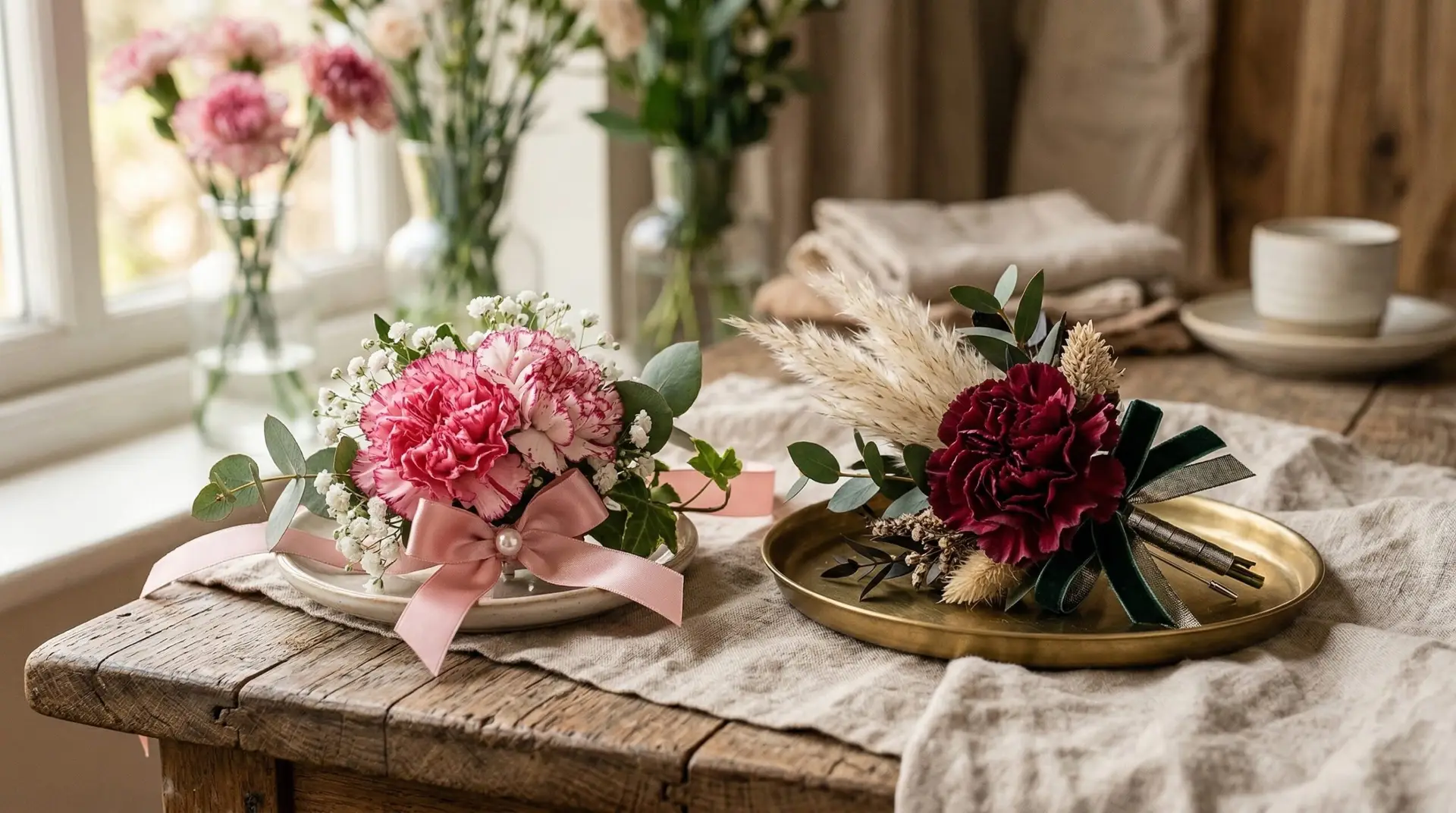
The morning light catches the ruffled edges of freshly cut carnations resting on the cool metal of the florist bench. A deep, spicy scent rises from the damp petals, smelling faintly of crushed cloves and wet earth after a sudden spring rain. These are not flat, ordinary blooms, but densely packed spheres of color, ranging from the soft blush pink of early morning clouds to a saturated magenta that photographs almost purple in the evening shadows. When you brush your fingers across the top of a blossom, the texture feels like crumpled silk, while the pale green calyx holding the petals together is smooth and firm like a young pea pod. Gathering these stems for a carnation corsage or a graduation garland requires a gentle touch, as the nodes along the pale green stalks snap easily under too much pressure. The air in the workroom grows heavy with their peppery fragrance as scissors slice through the crisp stems, preparing each flower for its transformation into wearable art. You can almost hear the quiet rustle of the papery petals rubbing against one another as they are sorted by size and shade.
Before these blooms ever reach a workroom, they begin their lives in long, sun-drenched rows where the soil smells of warm dust and mineral-rich water. The mature foliage forms a dense mat of blue-green leaves, covered in a natural waxy coating that feels like a fine powder rubbing off on your hands. New growth emerges in a bright, almost neon shade of chartreuse, contrasting sharply with the silvery, mature stems that support the swelling flower buds. When the morning fog rolls through the growing fields, the moisture beads up on the tightly closed calyxes, hanging like heavy glass droplets before the sun burns the mist away. Harvesters walk the rows with sharp shears, listening for the crisp, satisfying snap of the stems breaking cleanly at the nodes. They leave behind the younger buds, which look like swollen green acorns, waiting for the precise moment when the colored petals begin to push through the top. This careful selection ensures that only the strongest, most resilient blossoms are chosen for the long nights of celebration ahead.
When it comes to prom flowers carnation blooms require preparation long before the evening dresses are pressed and the suits are tailored. The freshly cut stalks must drink deeply from cool water buckets overnight, allowing their cells to plump and stiffen so they can survive hours away from moisture. You will know the blossoms are ready when the petals feel cool to the cheek and resist slightly when you press your thumb into the center of the flower head. A well-hydrated flower holds a secret strength beneath its delicate appearance, capable of enduring the heat of a crowded gymnasium or the humid air of a late spring graduation ceremony. Florists often pair them with the waxy, star-shaped blossoms of stephanotis, creating a sharp visual contrast between the tightly ruffled spheres and the smooth, porcelain-like white stars. The spicy scent of the colored petals mingles with the sweet, heady perfume of the white companion blooms, filling the room with a fragrance that will forever remind the wearer of this specific night. Every cut and wire placement is executed with the final environment in mind, ensuring the plant material remains crisp and colorful as the sun sets and the celebration begins.
Contents 3 sections
Crafting the carnation boutonniere
The creation of a carnation boutonniere is a quiet exercise in precision and restraint at the florist bench. You start by selecting a single, unblemished bloom, usually one that has just begun to unfurl its innermost petals, revealing a tight core of ruffled color. The stem is cut short with a sharp knife, leaving only an inch of the pale green stalk, which bleeds a tiny drop of clear, watery sap onto your fingertips. A thin piece of green florist wire pierces the firm, bulbous base of the calyx, sliding through the plant tissue with a soft, yielding resistance. You then stretch a length of sticky, dark green floral tape, pulling it taut until it releases its waxy adhesive, and wrap it tightly down the wire to create a new, flexible artificial stem. Sometimes a sprig of dusty miller is tucked behind the bloom, its soft, silver-gray leaves feeling like felt against the smooth green tape, adding a frosty frame to a deep crimson or pure white flower. The finished piece rests lightly in the palm of your hand, a tiny, self-contained garden ready to be pinned against the rough wool of a jacket lapel.
Shaping a carnation corsage
Building a carnation corsage requires a completely different rhythm, as multiple blooms must be woven together into a crescent of color that curves naturally around a wrist or rests flat against a silk shoulder. Miniature varieties, with their spray of smaller flower heads on a single branching stem, are carefully separated and wired individually to reduce bulk. The designer gathers these wired blooms in one hand, bending the artificial stems so the flower faces look upward and outward, mimicking the way they might reach for the sun in a morning garden. Ribbons of sheer organza or crisp satin are looped and pinched into the cluster, adding a smooth, reflective texture that catches the overhead lights and contrasts with the matte, ruffled flower petals. While a classic rose might offer a heavy, velvet elegance, this ruffled flower brings a lively, textured volume that dances lightly on the wearer’s arm. You know the balance is right when the arrangement feels secure but looks entirely weightless, forming a floating cloud of clove-scented petals anchored by a wide band of elastic or ribbon. As the evening wears on and the air grows warm, the heat of the wearer’s skin will coax out even more of the spicy fragrance, trailing behind them as they move across a dance floor.
Weaving a carnation lei
There is a hypnotic, repetitive grace to stringing a carnation lei for a graduation ceremony or a returning traveler. Hundreds of flower heads are stripped entirely of their stems, leaving a mountain of loose, fluffy spheres piled high on the cool surface of the work table. You thread a long, heavy needle with strong cotton string, tying a sturdy knot at the very end to catch and hold the first blossom. The metal needle pushes straight through the center of the green calyx and out the top of the petals, pulling the bloom down the string where it settles with a soft rustle against the knot. As flower after flower is added to the line, the string transforms into a thick, cylindrical garland, heavy and cool to the touch. The sheer volume of petals creates a dense collar of color, often alternating between deep maroon and brilliant white to match school colors or celebrate a specific season. When draped over the shoulders, the weight of the garland feels like a comforting embrace, while the concentrated scent of hundreds of crushed stems and spicy petals rises continuously to the wearer’s face.
The quiet beauty of these floral pieces reveals itself at the end of the night, long after the formal photographs are taken and the ceremonies are over. Stepping out into the cool, damp night air, the flowers react to the sudden drop in temperature, their petals tightening slightly against the chill. A stray petal might fall, drifting slowly down to rest on a damp sidewalk, leaving a small splash of pale blush pink against the dark, wet concrete. The wire and tape hold firm, but the edges of the blooms begin to take on a translucent, papery quality as they slowly give up their moisture to the surrounding atmosphere. Even as they begin to fade, the spicy, clove-like perfume lingers heavily in the fibers of a wool jacket or the interior of a quiet car heading home. You unpin the lapel flower or untie the wrist ribbon, feeling the slight stickiness of the floral tape and the bruised green tissue of the calyx under your thumb. Placed carefully on a wooden dresser in the dark, the flowers rest in the quiet room, a fragrant memory of music, movement, and fading evening light.
More About Carnation
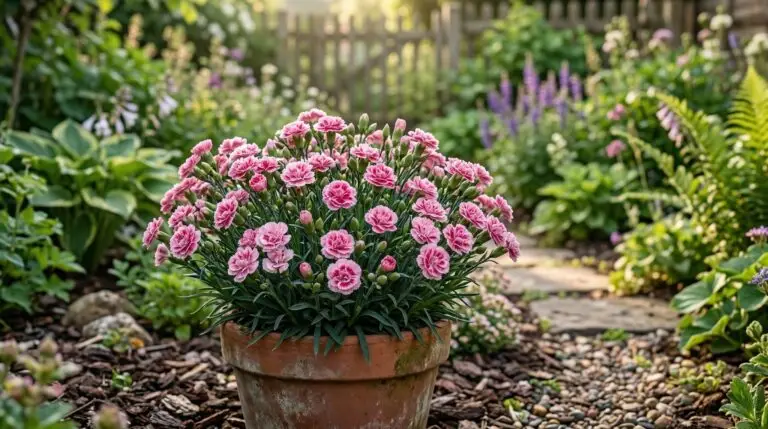
Growing carnations in containers for a fragrant windowsill or balcony garden
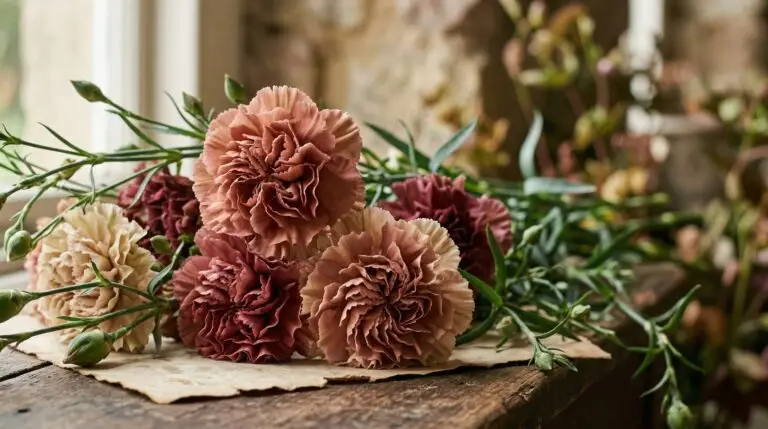
The rich history of carnations from ancient Greek garlands to Mother’s Day flowers
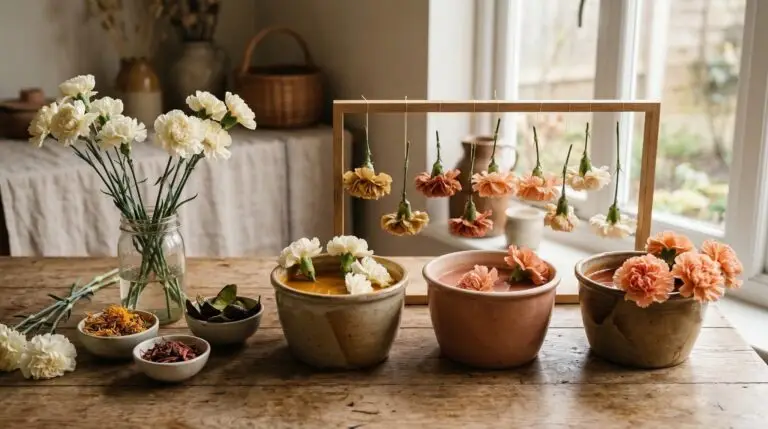
How to dye carnations with food coloring for fun science projects and party decor
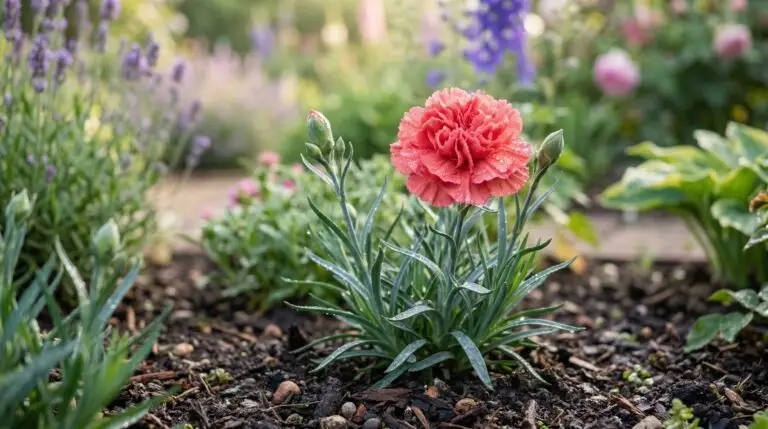
How to make carnations last over two weeks in a vase with proper care
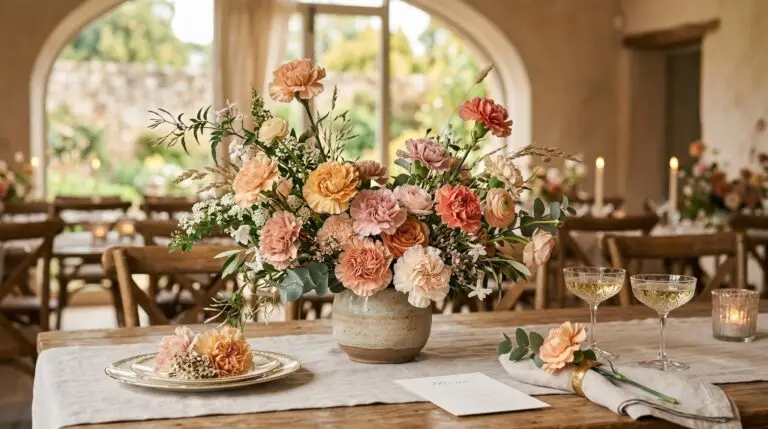
Carnation wedding bouquets making a comeback with modern elegant designs
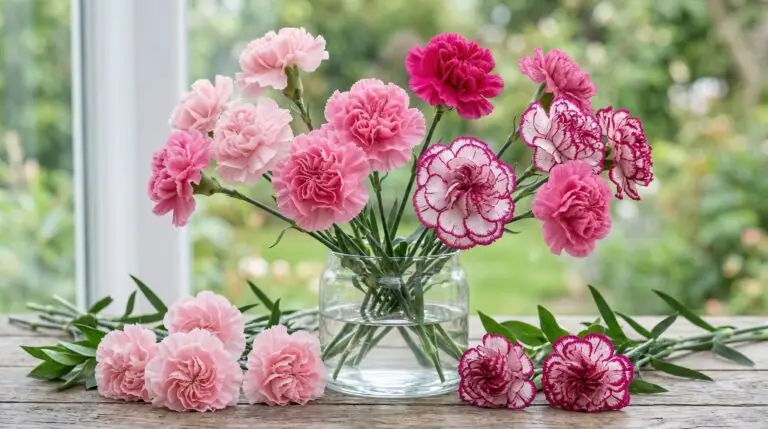
Best garden pinks and border carnations for fragrant perennial cottage gardens
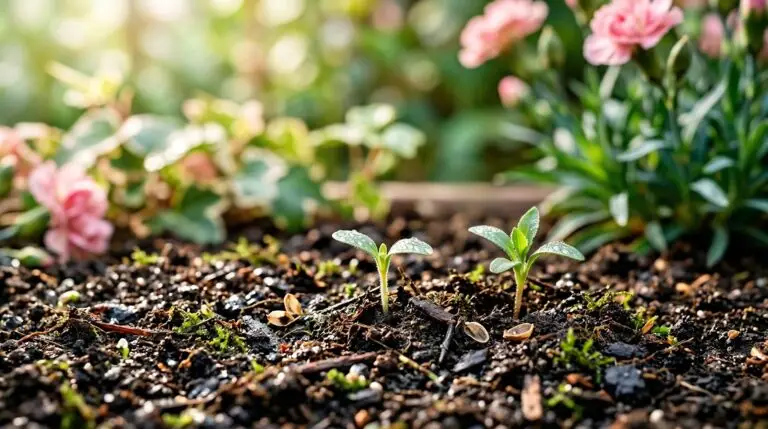
Growing carnations from seed and cuttings for fragrant garden borders all summer
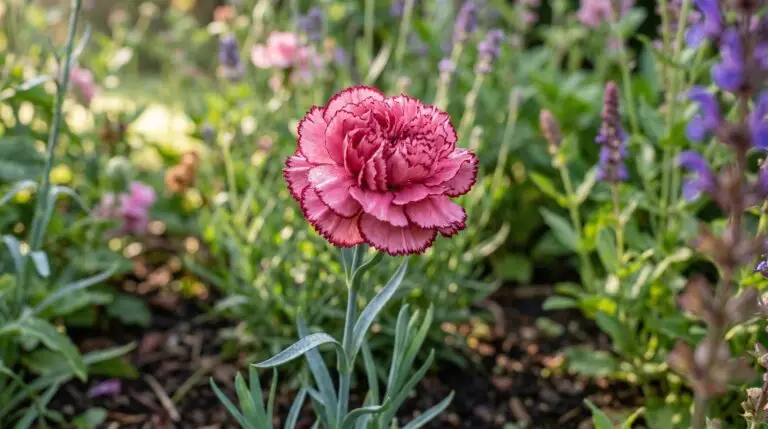
Why carnations deserve more respect as garden flowers beyond their grocery store reputation
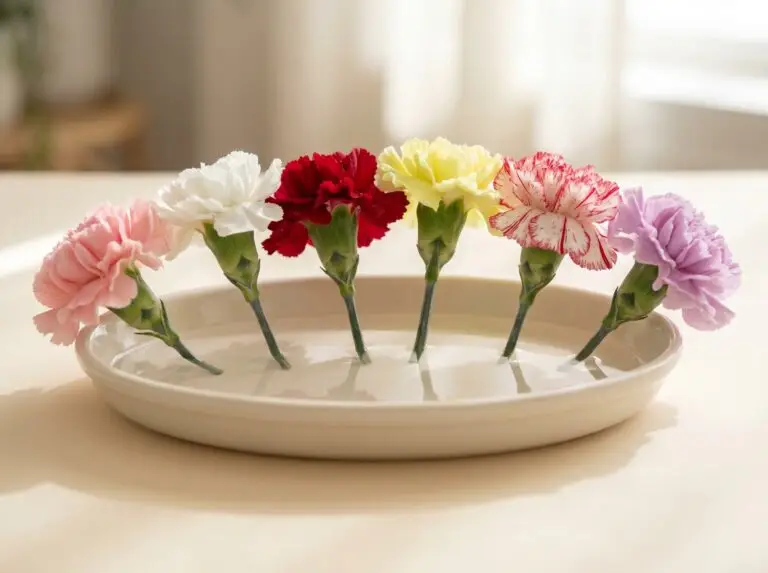
Carnation meaning and carnation colour meanings, honestly explained
Enjoying our flower guides? Add YourFlowersGuide as a preferred source on Google. It helps more readers find us.
Add to Preferred Sources