
Taxonomy and origin
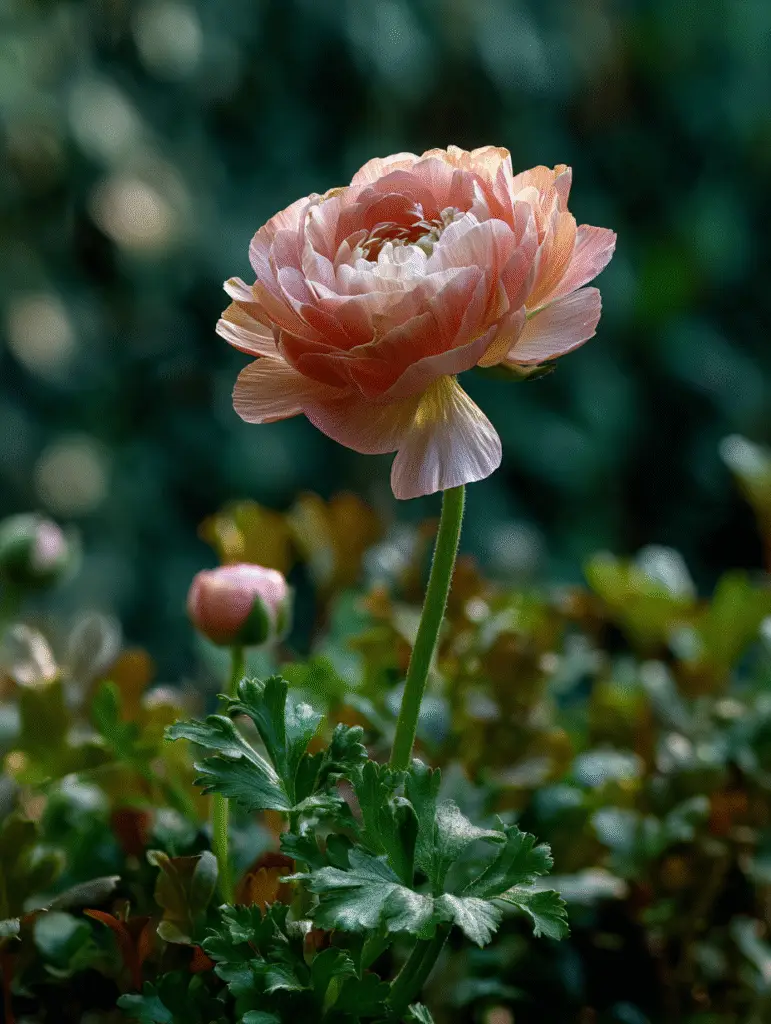
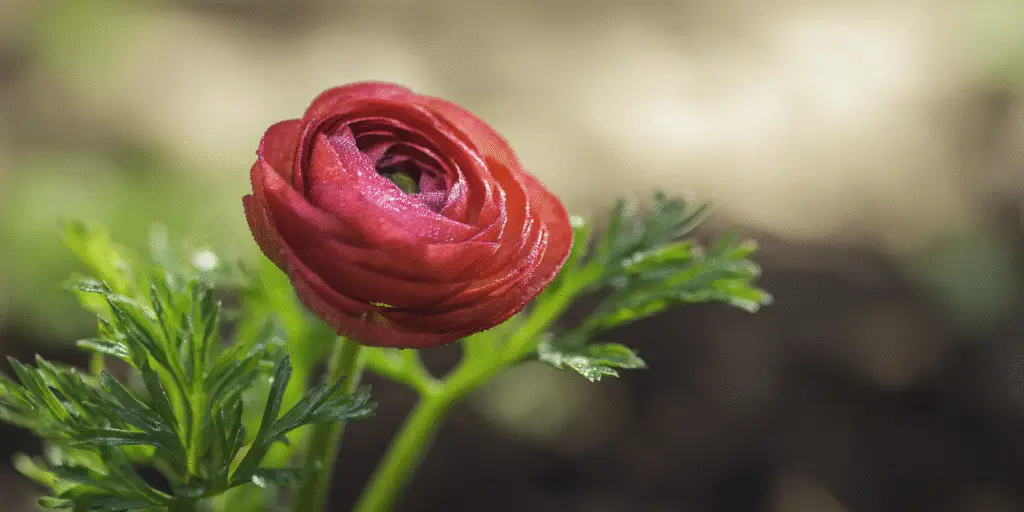
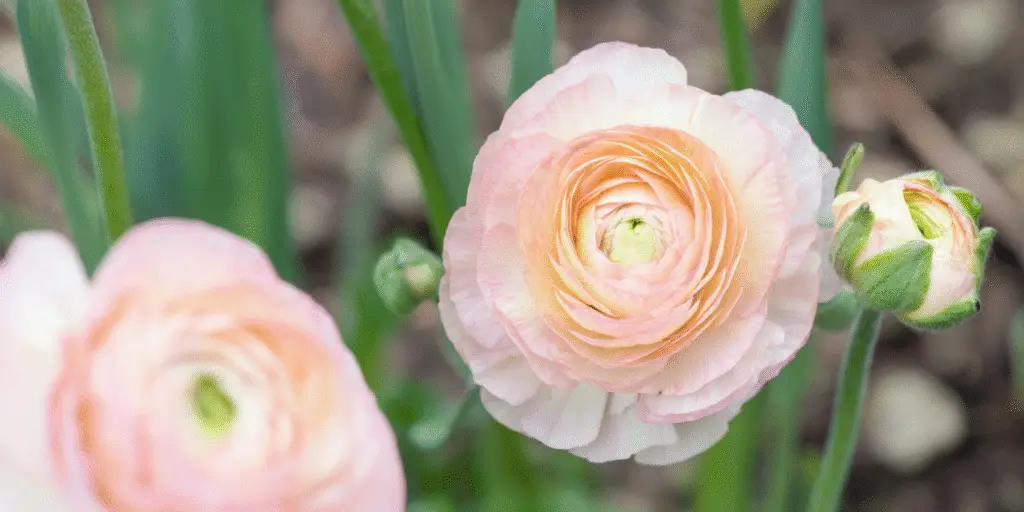
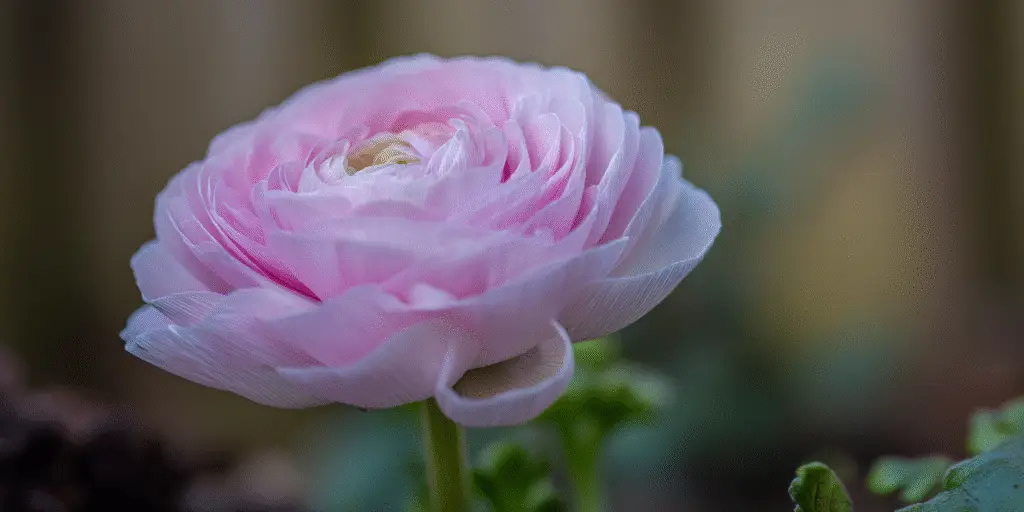
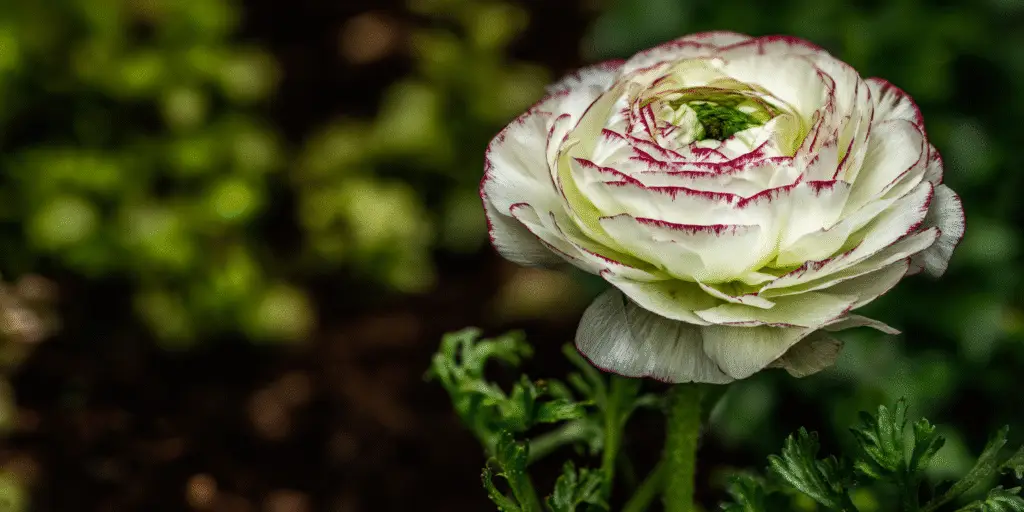
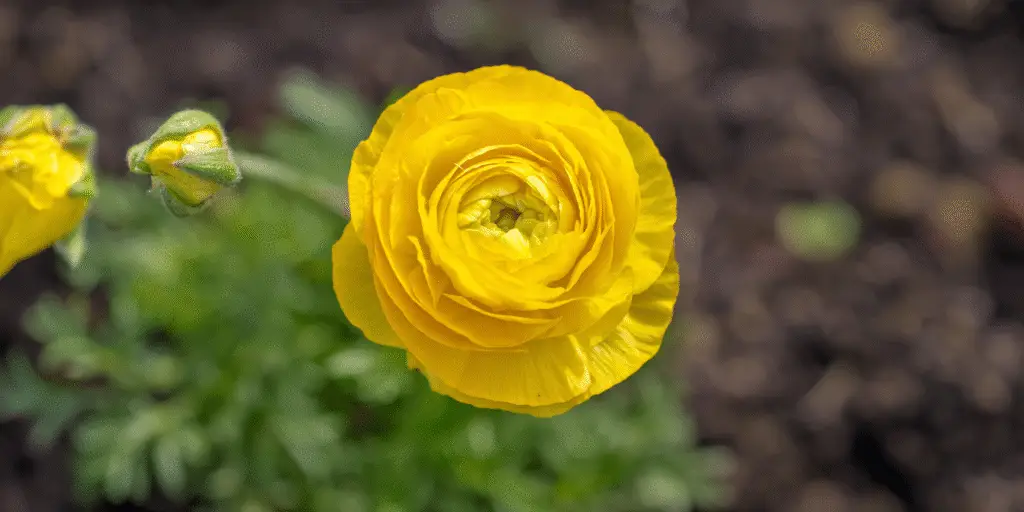
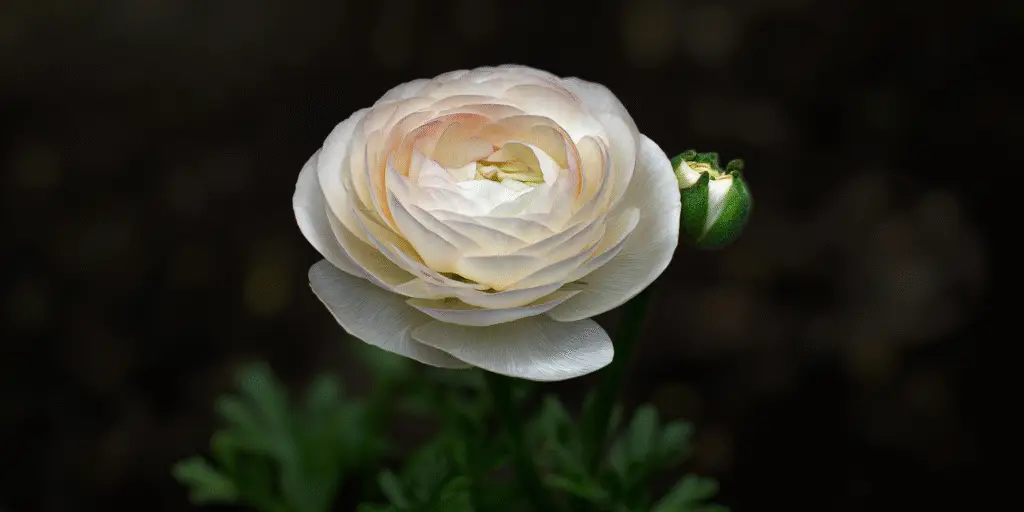
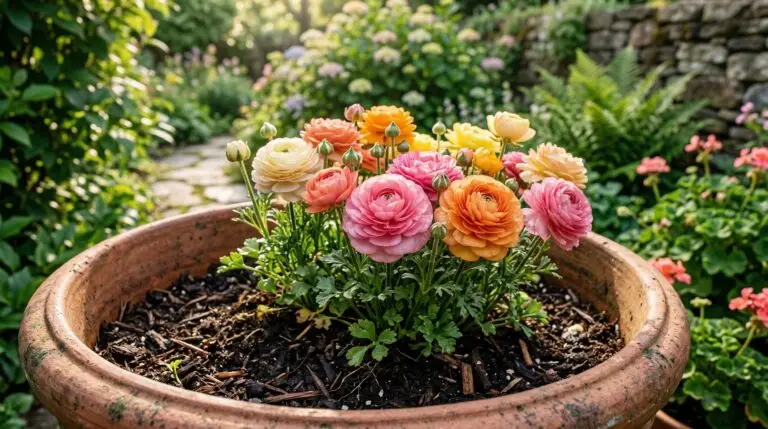
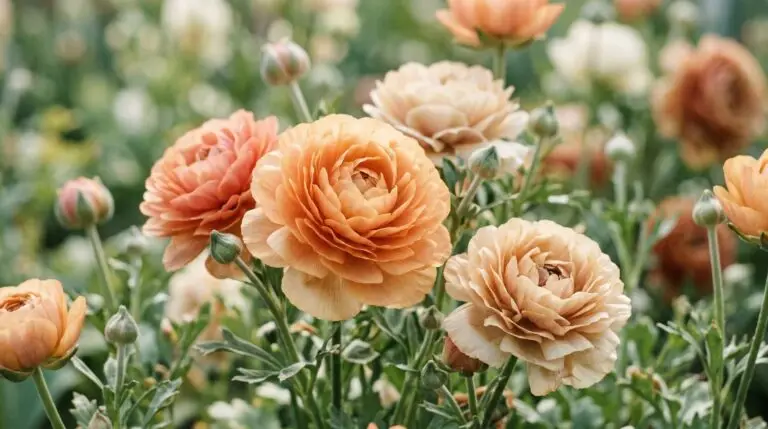
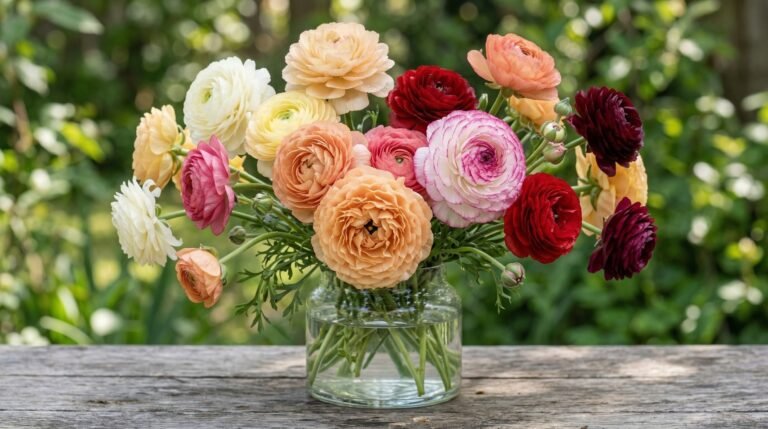
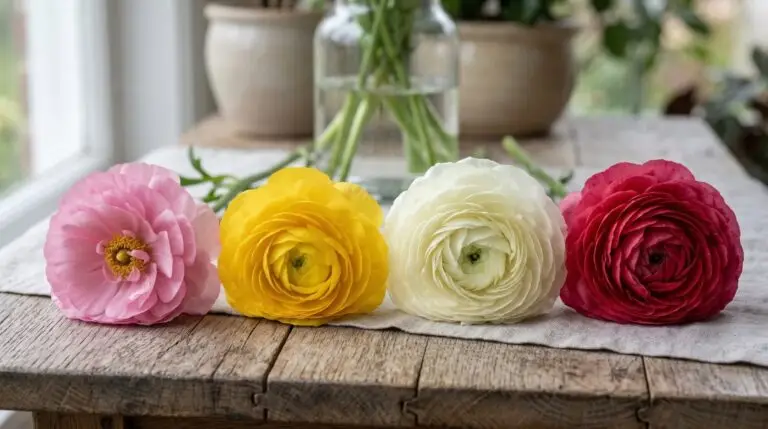
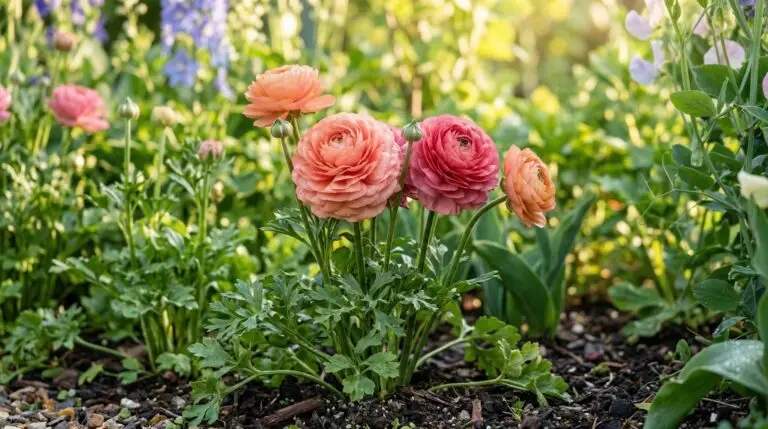
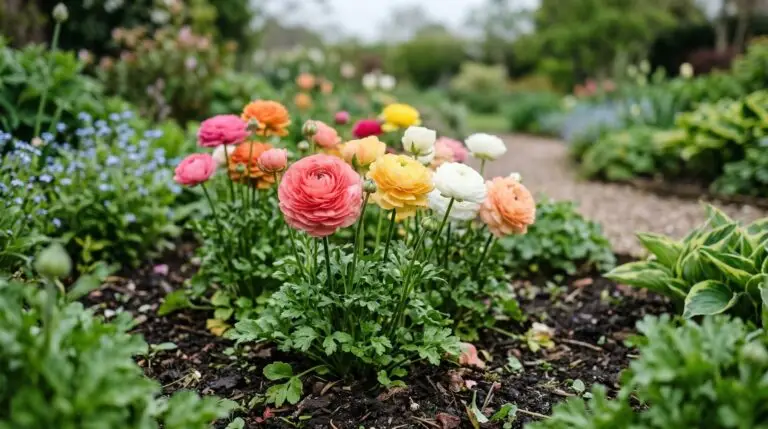
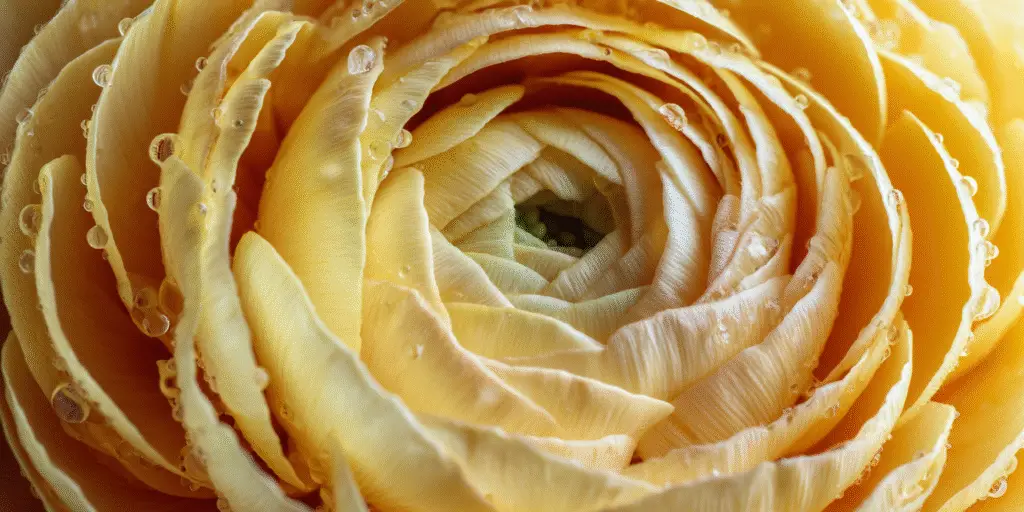
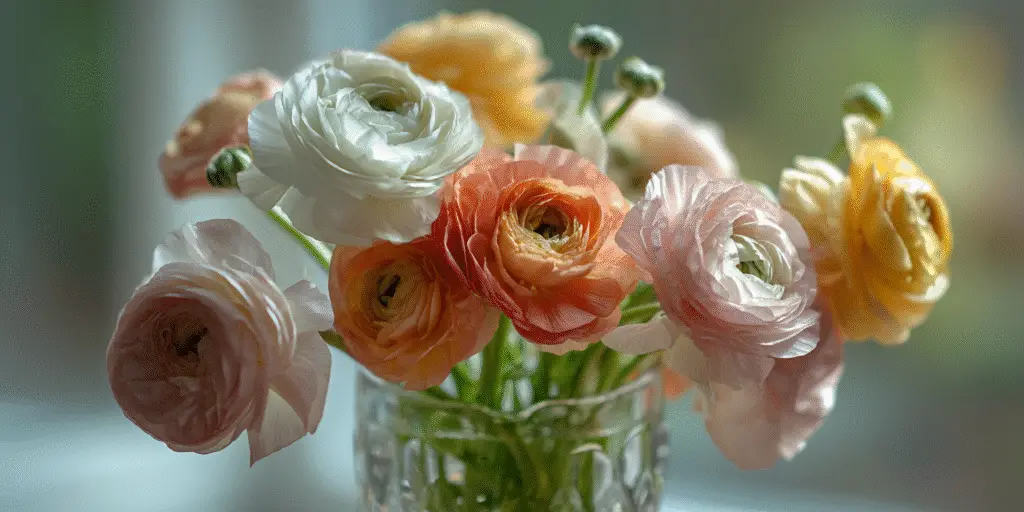
Ranunculus is a genus in the buttercup family, Ranunculaceae, holding hundreds of species known loosely as buttercups. The plant grown in gardens and sold by florists is almost always the Persian buttercup, Ranunculus asiaticus, native to the eastern Mediterranean, southwestern Asia, and North Africa, where mild wet winters and dry summers set its rhythm of cool-season growth and summer rest. The name comes from the Latin for "little frog," a nod to the wild buttercups that grow in damp ground. Breeding has pushed the wild single flower into the packed, many-petaled forms sold today, in a color range that covers almost everything except a true blue. Its close relatives in the same family include the anemone, grown from a similar corm on the same cool-season schedule and often planted right beside it.
For the garden and the vase, the series matters more than the species, because breeders sell ranunculus by named strains that differ in petal count, stem length, and how they hold up as spring warms. The table below sorts the ones a buyer is most likely to meet.
For a first try or a pot on the patio, La Belle and Aviv are forgiving and quick. For cutting, the Italian strains, Tecolote, Amandine, Elegance, and the Cloni selections, give the longest stems and the fullest blooms that read as small peonies in the vase. Butterfly types trade petal count for sheer flower numbers and an open face that bees can actually use. Color and petal density are the last thing to settle, after stem length and how a strain handles the warmth of your particular spring.
The grade on the bag decides the flower count
The buyer-facing choice in ranunculus is not a division system, it is a corm size grade, and it predicts something concrete: how many flowers one plant produces. The circumference bands and counts below come from bulb-retailer consensus rather than from a university trial, and no single named source could be pinned to the specific counts, which is stated here rather than dressed up. The relationship itself, a larger corm giving more and larger flowers, is repeated consistently enough across every source in this pack to state plainly, and it reframes the usual complaint about an unlucky batch as a size difference someone paid for or did not.
Named series sit on top of the grade and are a separate decision. The Italian or Cloni lines, from the Biancheri breeding work out of Camporosso Mare in Italy, are the premium end of the florist-type market, prized for petal density and flower size rather than for any hardiness or ease trait; the Butterfly series is the one structurally different form in the group, open-faced and airier than the classic densely doubled bloom, in pink, white and picotee. No .edu classification of ranunculus commercial series exists anywhere in this pack's sourcing, unlike the official division systems tulips and daffodils can lean on, so every series claim here rests on grower and retail sources and is flagged rather than promoted.
Bloom time
Ranunculus is a spring flower. It opens once the weather warms enough to push growth but before real heat arrives, and it quits when summer sets in, which is the single most useful thing to understand about the plant. In most gardens the show runs from mid-spring into early summer, roughly April through June, and each corm sends up a succession of flowers over several weeks rather than one flush. The trigger that ends it is temperature: once daytime highs hold above about 70 degrees the plant stops setting new buds, and as the low 80s arrive it yellows and drops into summer dormancy. Cool nights and moderate days, around 55 to 65 degrees, give the longest, fullest run. Deadheading spent flowers keeps new buds coming while the weather stays kind, and steady moisture between cuttings does more for the total flower count than anything else.
Because the plant lives on cool weather, when to plant depends entirely on how cold the winter gets. In mild-winter regions the corms go in during fall for late-winter and early-spring bloom; in colder regions they wait until late winter or the first workable weeks of spring, since a hard freeze kills unprotected corms. Gardeners in hot-summer climates who want the longest season lean on fall planting and the cool-months growing trick covered in the guide to why ranunculus melts in summer heat.
| Climate | Plant corms | Expect bloom | Overwinter |
|---|---|---|---|
| Mild winters, USDA 8 to 10 | Fall | Late winter into spring | Leave in ground, mulch |
| Cold winters, USDA 7 and below | Late winter to early spring | Late spring into early summer | Lift and store, or replant fresh |
| Hot summers with mild winters | Fall, under low cover | Winter into early spring | Leave in ground, expect summer dormancy |
Year one, and what year two depends on
Year one is real but more conditional on timing than for a tulip or a daffodil, because ranunculus has no fallback if the season is wrong: a bulb planted at the wrong depth may still limp through, while a corm planted in the wrong season can fail almost completely, as it did for the zone 6b grower in this pack's sample who planted June 1 and got two or three leaves from an entire batch. Get the fall-versus-spring call right for the zone and one self-reported data point from the same sample is useful context rather than a trial: 20 corms of a Porcelaine-series planting went in mid-November, about 80 percent sprouted within two weeks and the rest within another week, and roughly 70 percent produced blooms, which is the highest-engagement post in the whole corpus at 8,181 points. From there the window itself is Clemson's: flowering about 90 days after planting, lasting up to 6 to 7 weeks, ended by heat on the plant's own schedule rather than by the calendar. Year two is where the honest answer has to be given by zone rather than as one number. In zones 8a to 10b, NC State's own stated hardiness range for Ranunculus asiaticus, there is genuine potential to leave corms in the ground and have them return, since those winters are cool enough to satisfy dormancy without hard-freezing the corm, and even there many growers lift and store deliberately as insurance against a wet or unusually cold winter rotting a corm in place, which is risk management rather than proof that in-ground survival is impossible. Zone 7 is the edge case, where survival under winter mulch is possible and not reliable enough to plan around. In zones 3 to 6, or in any zone without deliberate lifting, the plant is functionally a single season, because freeze-thaw cycles in wet soil will very likely rot an unprotected corm before spring. With lifting done properly, dried 2 to 3 weeks then stored at 40 to 50 F in a dry medium, corms stay viable roughly 6 to 9 months, which is long enough to bridge a summer lift to the following window and makes the plant an annual with a saved investment rather than a one-and-done purchase, in any zone where a grower will do the extra step. One thing this pack deliberately does not claim: no source in it ranks the Italian, Cloni, Tecolote or Butterfly series against each other for perennial reliability, so return odds here are governed by zone and storage practice rather than by which series was bought.
What the corm is doing when the plant melts
The heat shutdown running through this page is not the plant failing but the plant switching jobs. Once daytime temperatures hold in the low to mid 70s, ranunculus stops initiating flower buds and reroutes its effort into rebuilding the storage corm underground, then lets the foliage go and enters dormancy. That is why the June planting from the case above produced two or three leaves and quit: those plants were not starving or underwatered, they had been set out into the season their own program treats as the exit. A corm planted that late banks what little it can into a new corm and shuts down, and no watering schedule reverses the switch, because the trouble is not stress but instruction.
Grower posts usually blame the lengthening days for ending the season, and the research points the other way. In greenhouse work, flowering came fastest under 20-hour days with cool nights, day lengths far beyond anything an outdoor June delivers, which puts the blame back on warmth rather than daylight. The practical reading is that the season can be stretched only by coolness: shade and steady moisture buy some days at the end of the run, but once the root zone holds warm the switch flips no matter what the calendar or the day length says.
Height and spread
Persian buttercup stays compact, usually 1 to 2 feet tall in bloom, with a low mound of finely cut, almost fern-like leaves near the ground and flowering stems that rise cleanly above it. A healthy corm spreads to about 6 inches to a foot across as it matures, so plants set 6 inches apart in the garden knit into a full stand without crowding, while cut-flower growers often plant tighter in rows to push straight stems. The habit is clumping, never running, so a ranunculus stays where it is planted. The modest height suits the front or middle of a spring bed, where it fills in below taller companions like peonies and tulips and above low edging plants, building a layered spring picture before the summer perennials take over.
Light
Ranunculus flowers best in full sun, at least 6 hours of direct light a day, which builds sturdy stems and the heaviest bloom. In cool spring weather more sun is simply better, and a plant short on light stretches, leans, and flowers thinly. The one adjustment is for warm regions: as spring tips toward summer, a little afternoon shade takes the edge off the heat that would otherwise cut the season short, while the plant still gets strong morning and midday light. Since ranunculus runs its whole life cycle in the cool months, the aim is maximum light through that window, so an open, sunny spot away from the shade of walls and evergreens gives the best return.
Water
Ranunculus wants steady moisture through its growing and flowering months but will rot in wet ground, so drainage matters as much as the water itself. Keep the soil about as damp as a wrung-out sponge, never bone-dry and never soggy, watering when the top inch has dried and always at the base rather than over the flowers. The real danger point is the corm: cold, saturated soil around a newly planted or dormant corm invites the rot that kills more ranunculus than any pest. After planting dry or lightly presprouted corms, go easy on water until green shoots appear, then water regularly through the bloom. As the flowers finish and the foliage yellows in early summer, the plant is heading into dormancy and needs far less, so taper off and let it dry as it rests.
Three claims, one of which two authorities genuinely disagree about
The myth: Corms need a long soak, overnight or more, to wake up properly.
The reality: Mostly false, actively risky past a point, and genuinely not unanimous, which is worth stating rather than hiding. For the standard soak, pre-sprout and transplant method the dominant sourced figure is 3 to 4 hours and not past four, because corms held longer go soft and mushy and lose the ability to root; Clemson's own wording is several hours. This pack's sample shows the cost in practice, in a grower who followed a nursery's advice to soak overnight for seven hours and found significant white growth on a corm that same day. The exception is real and named: RHS's own guidance for growing Persian buttercups in containers under glass says to soak the tubers for a day, a different growing method in a different climate. Both are sourced to a named authority, and picking one would mean hiding the other.
The myth: Ranunculus and anemone are the same plant under two names.
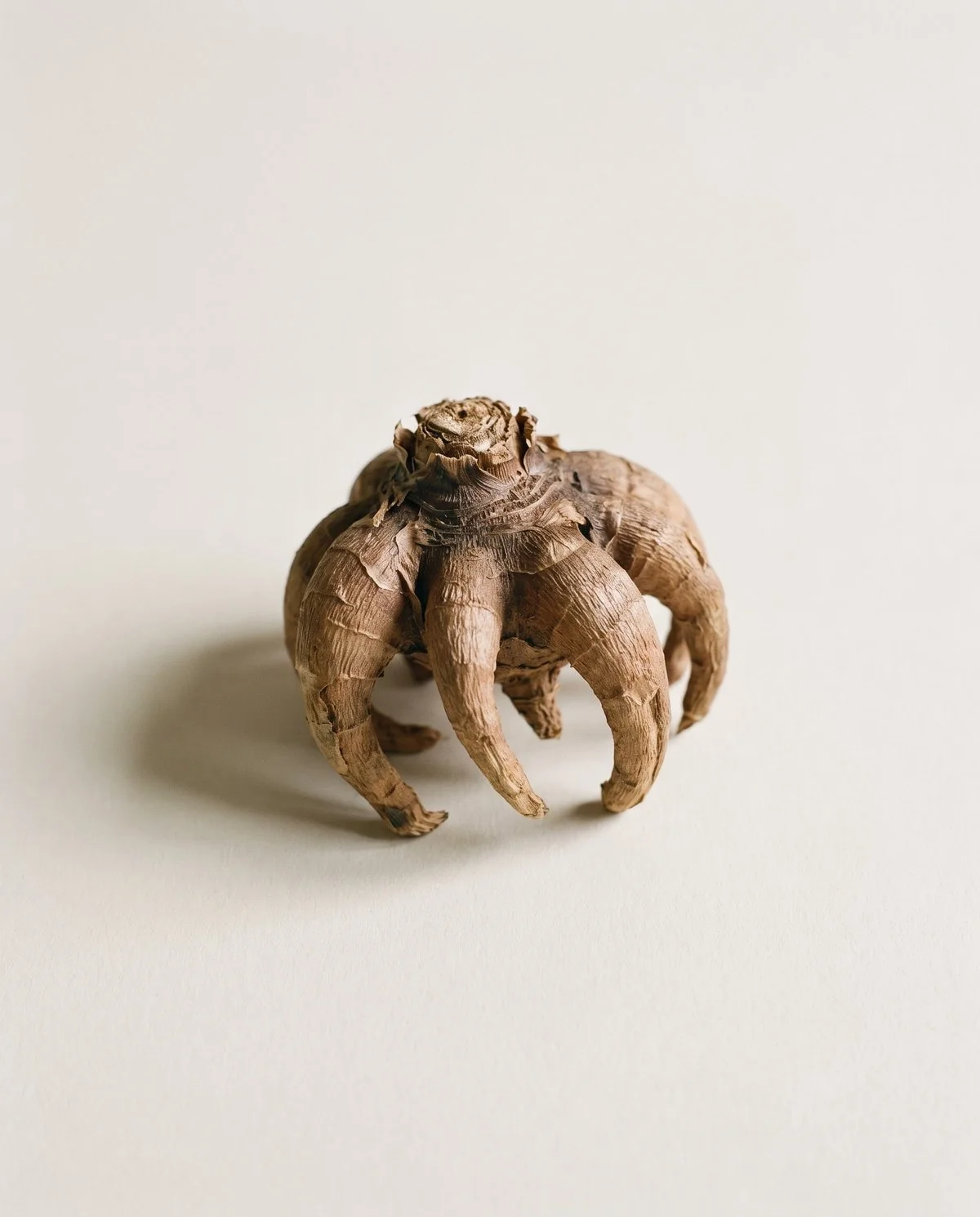
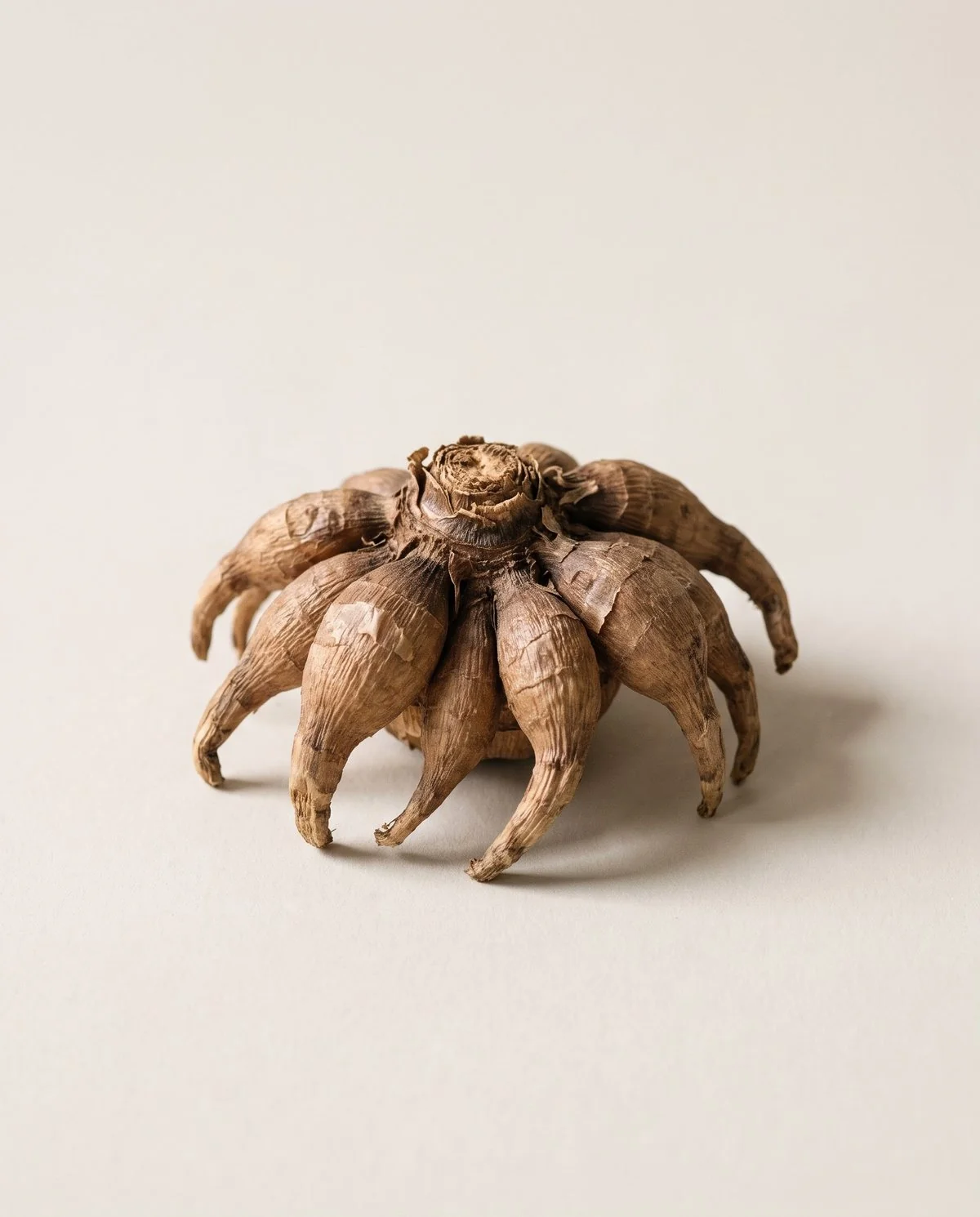
The reality: False. They are different genera in the same family, Ranunculaceae, with visually distinct storage organs and bloom shapes: ranunculus grows from a claw-fingered tuberous root, which is not technically a corm at all despite what the US nursery trade calls it, and opens a many-layered rounded flower, while Anemone coronaria grows from a rounded acorn-like corm and opens a flatter saucer with a dark centre. The confusion is understandable, since they are sold side by side, prepped the same way and bloom in the same season, and they are still not interchangeable.
The myth: A corm that gave only a few flowers was an unlucky batch.
The reality: Usually a size, not a batch. Corm grade predicts bloom count directly, from up to 35 flowers on a jumbo at 7 to 8 cm around down to up to 7 on a No. 3 at 3 to 4 cm, because the corm's own stored reserve is what funds each successive stem through a 6 to 7 week bloom window. Those specific counts come from retail consensus rather than a university trial and are flagged as such; the size-to-count relationship itself is consistent across every source in this pack.
Soil and pH
The plant does best in light, fertile, well-draining soil, a sandy or loamy mix opened up with compost so water moves through freely. Heavy clay that holds water is the main enemy, since standing moisture around the claw-shaped roots leads straight to rot, so gardens with dense soil do better with raised beds, mounded rows, or generous amendment before planting. The pH target is slightly acidic to neutral, roughly 6.0 to 7.0, which keeps nutrients available, and ranunculus is forgiving within that band as long as the extremes are avoided. Working aged compost or manure into the bed before planting supplies both the fertility for a heavy run of bloom and the loose structure the corms need to root and drink without sitting wet.
USDA hardiness
Ranunculus asiaticus is a tender perennial, reliably winter-hardy only in about USDA zones 8 through 10. In those mild regions the corms can stay in the ground year to year, sprouting again each cool season, especially under a protective layer of mulch, though even there the bloom quality often fades after the first season. In zone 7 and colder the corms will not survive a hard, prolonged freeze in open ground, so ranunculus is grown as an annual, either replanted from fresh corms each season or lifted after the foliage dies back and stored dry until replanting. Storing corms is a gamble, since they dry out or rot easily, and many growers simply buy fresh corms for dependable results. Knowing your winter lows is what decides whether ranunculus is a returning perennial or a one-season flower in your garden.
Planting by zone band, with the corm prep both authorities give
Ranunculus is a cool-season plant and whether its cool window falls in fall or in spring depends entirely on the zone, which is why there is no single answer to when to plant and why the question is 34.0 percent of this pack's sample. Clemson HGIC supplies both ends of the split directly. Two figures sit under the whole table: flowering begins about 90 days after planting and the flowering period lasts up to 6 to 7 weeks per Clemson, and NC State classifies the plant semi-hardy with injury expected below 28 F.
What insulation is actually worth in a fall planting
The table above settles the calendar, but for anyone planting into the cold edge the real question is what a layer of protection actually buys, and that has been measured. In a two-winter field trial in a cold-winter climate, November plantings left bare came up at 46 percent, while the same corms under straw mulch or a fabric low tunnel came up at 91 percent. The cover did not make the winter mild: soil two inches down averaged just over 4 degrees warmer than bare ground through the cold months, and that narrow margin was the whole difference, since the plant itself holds to about 26 degrees, only a couple of degrees past the injury line quoted earlier on this page. Insulated fall plantings also bloomed about two weeks earlier, while spring plantings gained nothing from the same cover, so the fabric earns its keep only on the fall side of the calendar.
The same trial puts a boundary on presprouting that this page has not drawn until now. For fall planting in open ground the corms should go in dry and dormant: presprouted corms in unprotected November ground emerged 42 percent worse and cut the marketable harvest by a third, because the roots and shoots a presprouted corm has already pushed are exactly the tissue a freeze takes first. Presprouting keeps every advantage this page gives it in spring plantings and under cover, where the head start meets no deep cold. The rule that falls out of the numbers is short: fall means dormant corms under insulation, spring means presprouted corms under open sky.
Propagation and longevity
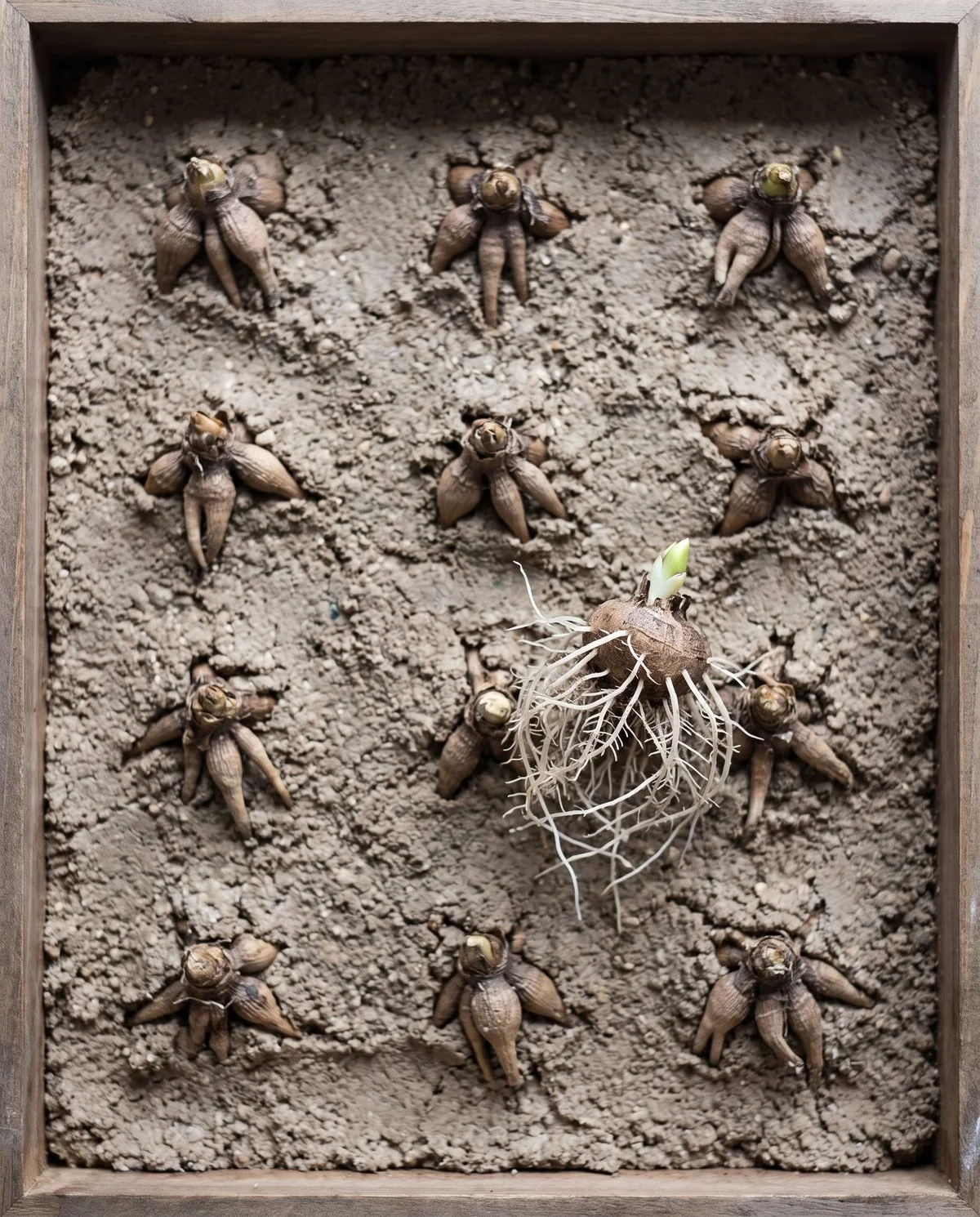
Ranunculus is grown from its small, claw-shaped corms, and the way you start them decides how well they perform. The corms arrive dry and hard, so the first step is to soak them in cool water for three to four hours until they plump and roughly double in size, then pull them out, since much longer than that risks waterlogging and rot and an overnight soak is a common way to lose a batch. Many growers then presprout, nestling the soaked corms claws-down in a tray of barely damp potting mix or sand and holding them somewhere cool, around 40 to 50 degrees, for ten to fourteen days until short white roots appear. Presprouted corms transplant with a head start and flower a few weeks earlier, and the cool spell weeds out any corm that would have rotted before it ever went in the ground. Plant the corms with the claws pointing down, about 2 inches deep and 6 inches apart, in loosened, well-drained soil. Each corm produces one plant that may form a few small offset corms by season's end, which can be lifted and separated, and ranunculus can also be raised from seed, though seed is slow and mainly a breeder's route. In longevity the plant is short-lived even at its best: a perennial for a few years in mild zones, an annual everywhere colder, and a flower most gardeners renew from fresh corms rather than nurse for the long haul.
Two paths, worked in order
Both start with the method and the calendar rather than with a pest, because the two largest themes in this pack's 194-post sample are process mechanics: soak and pre-sprout confusion at 38.7 percent and planting timing at 34.0 percent, ahead of every disease and animal problem combined.
Fragrance
Ranunculus is grown for its looks rather than its scent. Most varieties carry little or no fragrance, at most a faint green freshness that fades in a room, which sets the flower apart from the perfumed roses and lilies it often stands in for. In arrangements that is usually a plus: a bowl of ranunculus adds color and that dense, petal-packed form without competing with scented flowers or overwhelming anyone sensitive to strong floral smells. In the garden the lack of perfume means the plant draws pollinators mostly by the sight of its open-centered, single-flowered forms rather than by scent, so a few Butterfly-type ranunculus among the doubles gives bees something to work.
Toxicity and pet safety
Ranunculus is toxic, and this is one flower where the pet answer is a plain no. All parts of the plant contain ranunculin, which converts to an irritant called protoanemonin when the tissue is bruised or chewed. According to the ASPCA, buttercups including Ranunculus are toxic to cats, dogs, and horses, with ingestion causing drooling, vomiting, diarrhea, mouth irritation and oral ulcers, loss of appetite, and an unsteady gait. The fresh sap can also irritate human skin, so gloves make sense when cutting a lot of stems. The bitter, burning taste usually stops an animal from eating much, and dried plant material loses most of its potency, but fresh ranunculus should be kept out of reach of pets and small children, and cut arrangements set where curious animals cannot browse them. Anyone choosing flowers specifically for a home with pets is better off starting from a list of safe options, such as the guide to flowers safe for cats and dogs.
Vase life
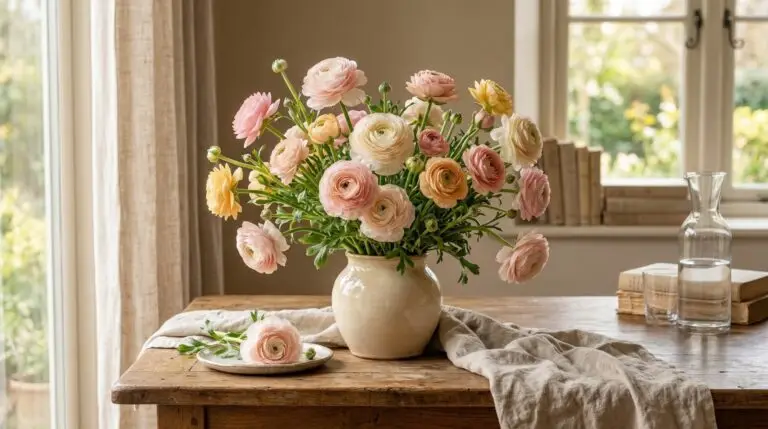
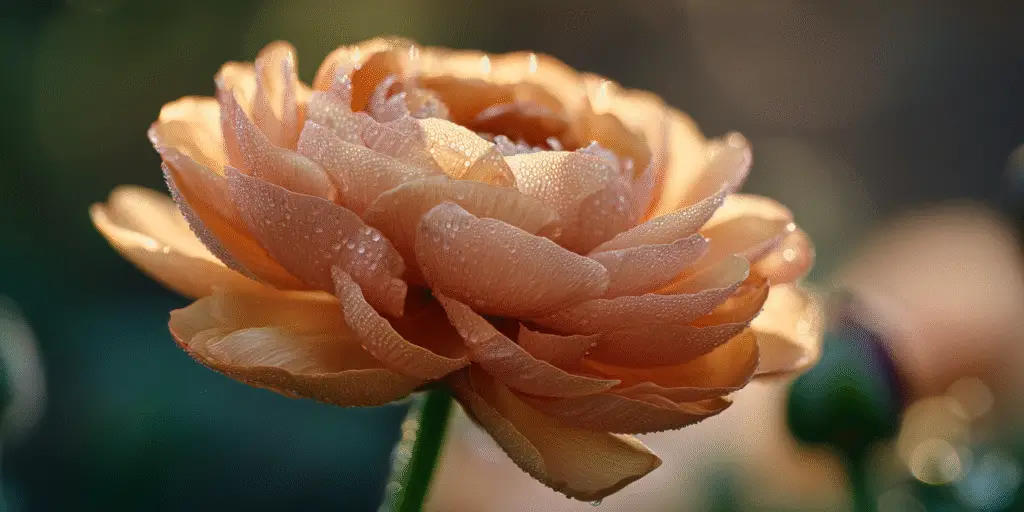
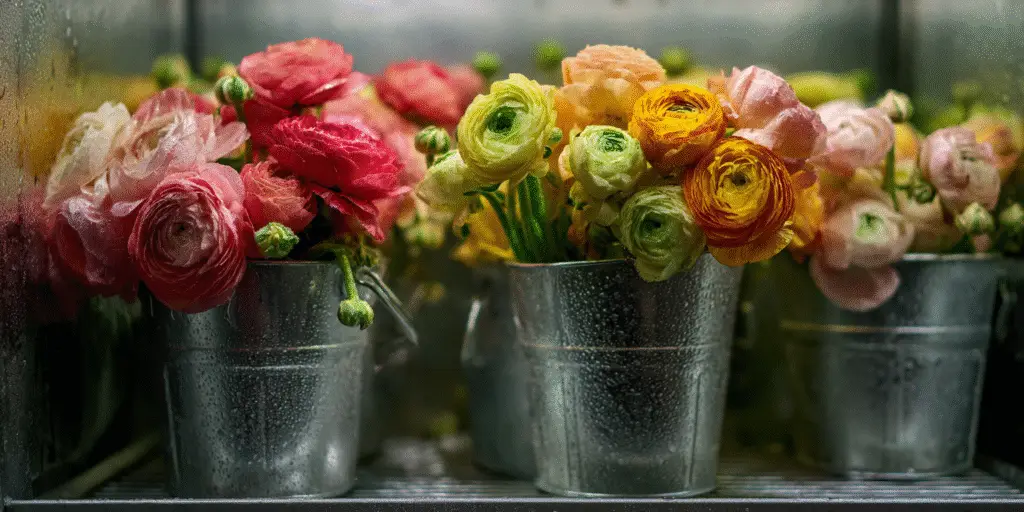
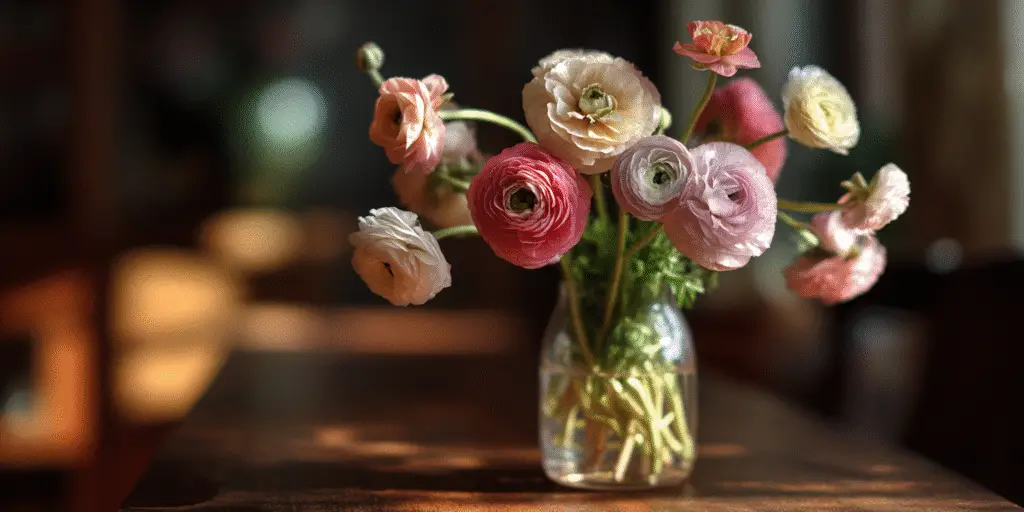
Cut ranunculus is one of the better-lasting spring flowers, holding 7 to 10 days in the vase and up to about 12 with cold-conditioned stems and clean handling. Cut or buy stems when the bud has colored up and feels soft, like a marshmallow, but has not fully opened, since the flower keeps opening in water and a bud cut too tight can stall. Harvest in the cool of the morning, get the stems straight into cool water, and strip any leaves that would sit below the waterline, since submerged foliage fouls the water and shortens the life of the whole bunch. Refresh the water every couple of days, keep the vase out of direct sun and away from ripening fruit, and the buds keep opening into an evolving display. This long life on a straight, wiry stem, paired with a full, rose-like flower in colors peonies and garden roses cannot always match, is why ranunculus is a florist staple and a favorite for wedding flowers, where it delivers a lush, romantic look for a few dollars a stem, well under what peonies command.
The postharvest numbers, and the folk tricks nobody has tested on this flower
The headline here contradicts the flower's own appearance: petals thin as tissue paper on a stem that outlasts most of the garden. What follows is what is actually sourced, with the tier of each source stated, because no university postharvest trial for ranunculus was found for this pack, unlike the tulip and Iceland poppy work from NC State's own lab.
Petals that thin cannot last, so ranunculus is a two-day flower.
False, and the reversal is the point. RHS puts a bloom cut before it fully opens at 10 to 12 days, which rivals or beats many roses, and this pack's own sample shows growers treating the flower as their preferred cut precisely because of how long the display holds.
A penny in the water, an aspirin, or a shot of vodka will extend the vase life.
Not found, and deliberately not answered by borrowing. No source gathered for this pack addresses any of those three for ranunculus specifically. The tulip research in this same series did find a real copper mechanism behind the penny claim and a reason it no longer applies, and importing that finding to a different flower's chemistry as though it had been verified here would be exactly the shortcut this pack refuses. Stated as an open gap.
Pests and diseases
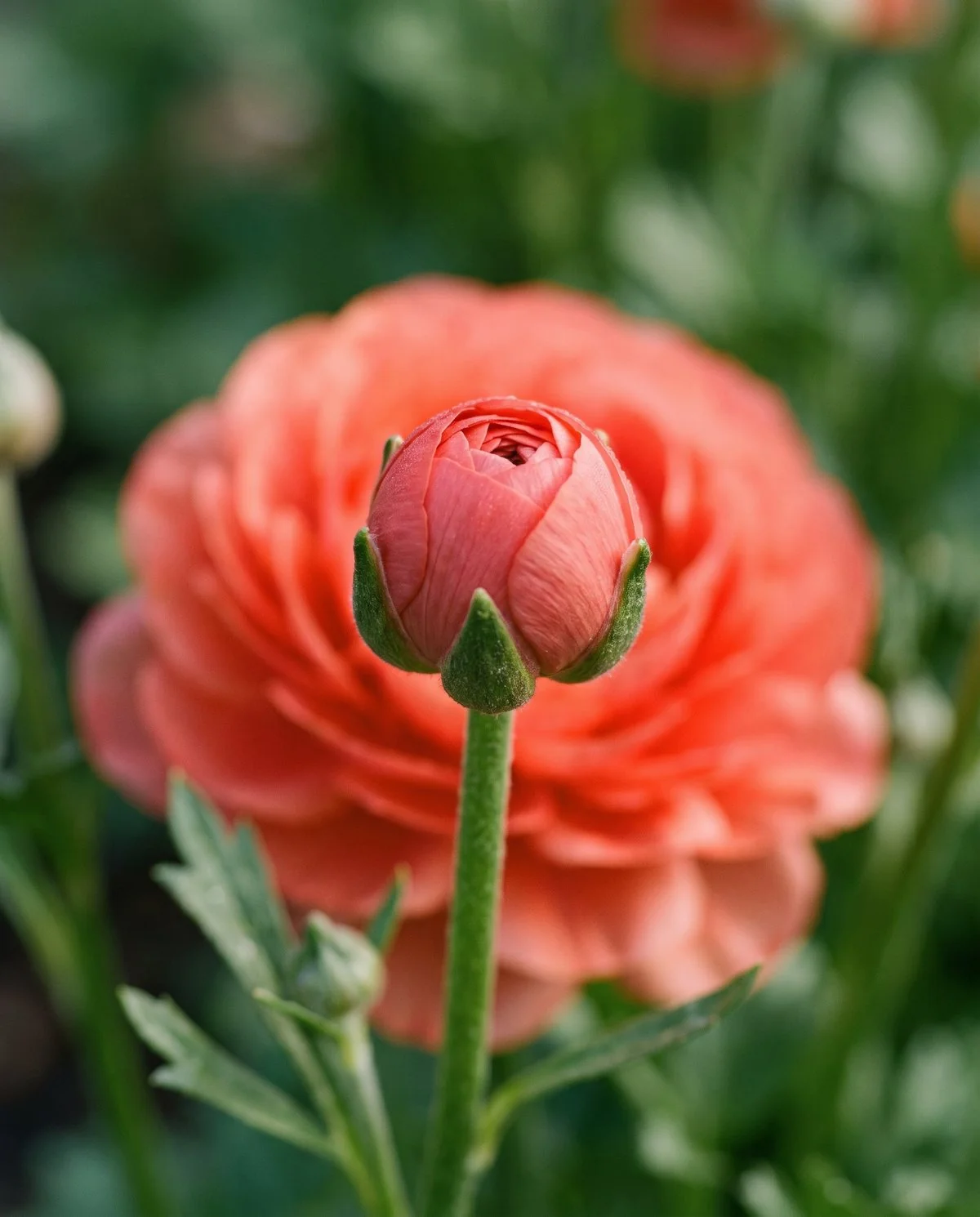
Ranunculus is not especially pest-prone, but a few problems show up in the cool, damp conditions it likes. Aphids are the most common, clustering on new growth and buds to suck sap; a light infestation washes off with a jet of water, while a heavier one calls for insecticidal soap. Spider mites can appear in hot, dry spells as the season warms, stippling the leaves and spinning fine webs. In the ground, mice, voles, and other rodents sometimes dig up and eat the corms, so a newly planted bed in a rodent-prone spot may need mesh or a repellent. The more serious threats are fungal and tied to wet soil: root and crown rot, often driven by Pythium or Botrytis, makes plants wilt suddenly and turns the roots black and mushy, and Botrytis blight can grey out flowers and foliage in cool, damp, crowded conditions. The defense is cultural rather than chemical: plant in sharply drained soil, avoid overwatering, water at the base in the morning so foliage dries fast, give plants room for air to move, and clear away any diseased material promptly. Get the drainage and spacing right, and most ranunculus trouble never starts.
Photo pairs, including two that are identification rather than disease
Corm firmness, storage-organ shape and growth habit are safe to photograph and are here in full, including both sides of the rot pair, because a soft dark corm is a general texture contrast rather than a named pathogen's signature. Two pairs stop short: grey mould's fuzz and powdery mildew's white coating are checkable fungal fingerprints, so those wait for real reference photographs.
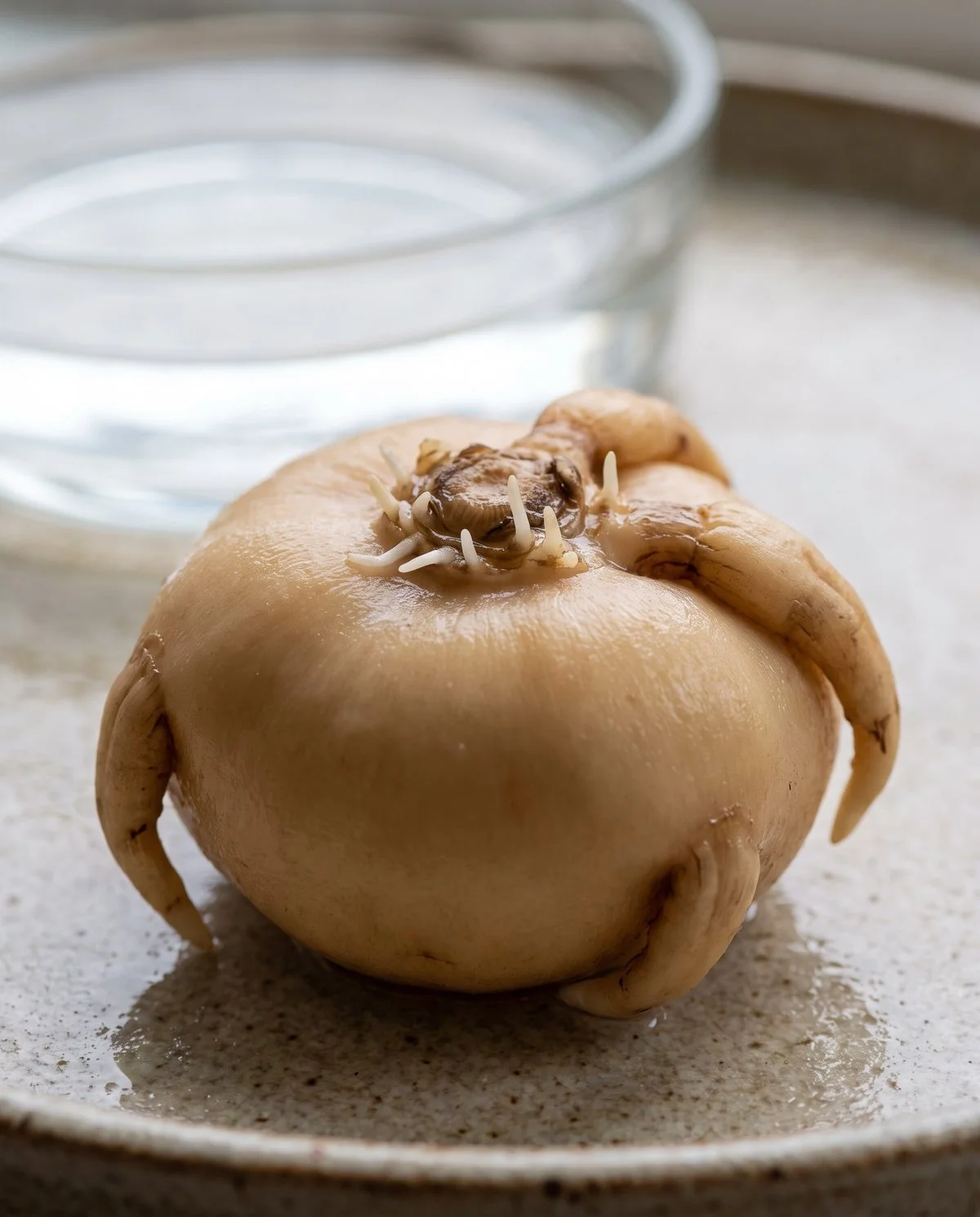
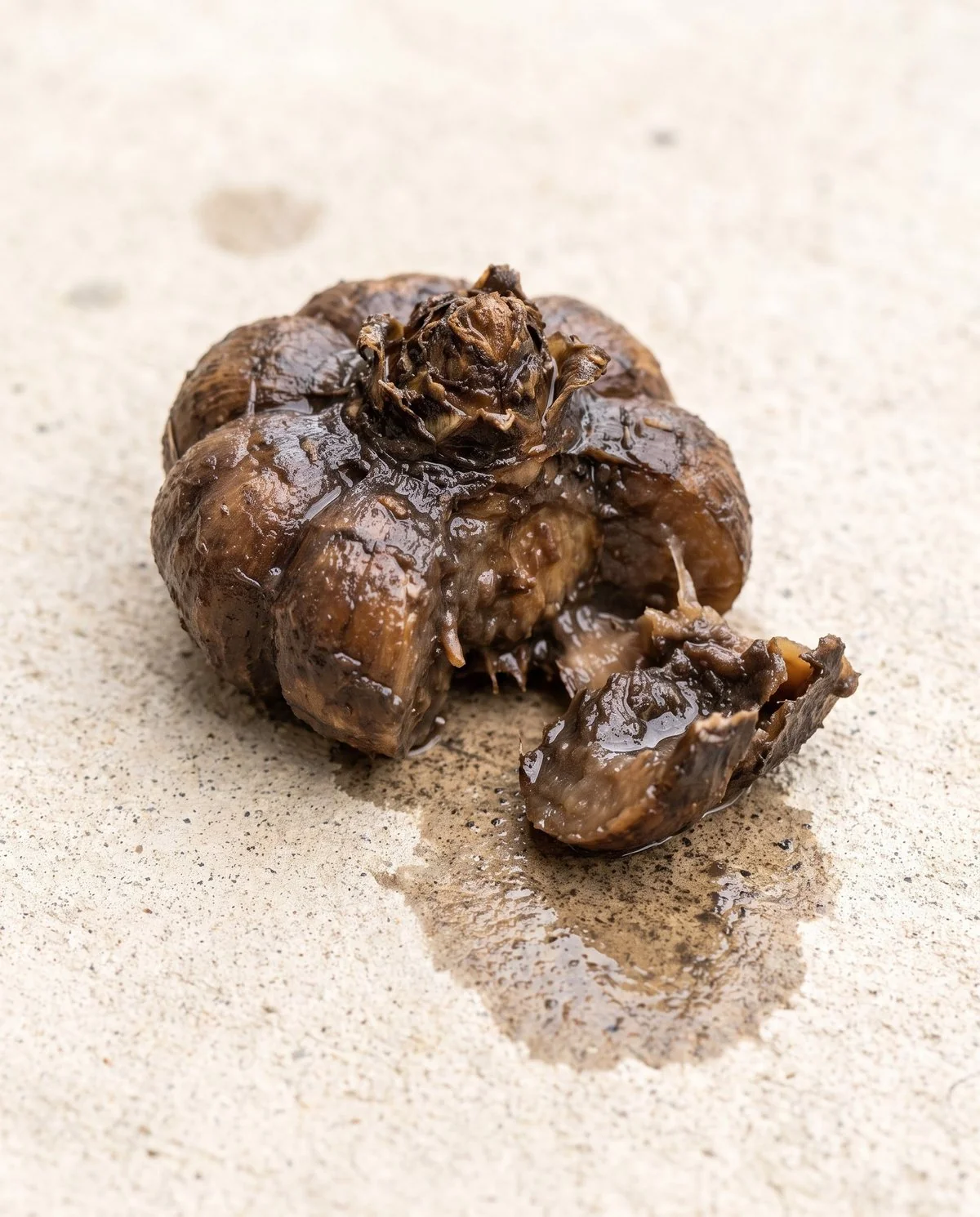
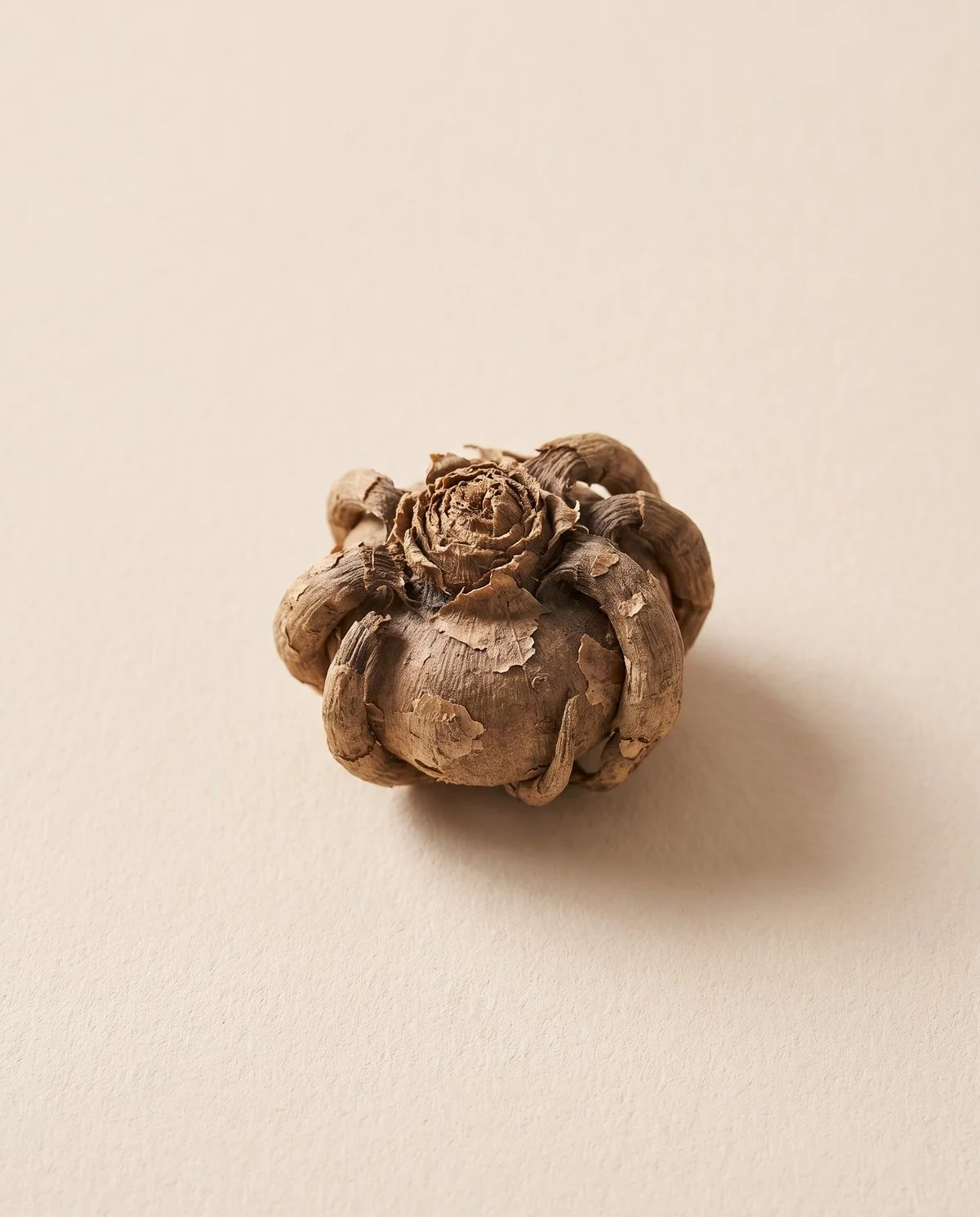
Squeeze it. A ranunculus corm starts dry, shrivelled and claw-like, and Clemson's description of a correct soak is that it plumps to roughly twice its dry size; a good one stays firm under pressure and puts out fine white hair-like rootlets. A rotting one goes soft, dark and mushy and in advanced cases falls apart in the hand. That tactile test is why this pair matters more than any photograph: three separate posters in this pack's sample describe the same uncertainty, one asking whether fuzz on top is normal or mould, one stating with relief that the corms are not mushy and did not rot, and one who soaked overnight on a nursery's advice and found white growth the same day.
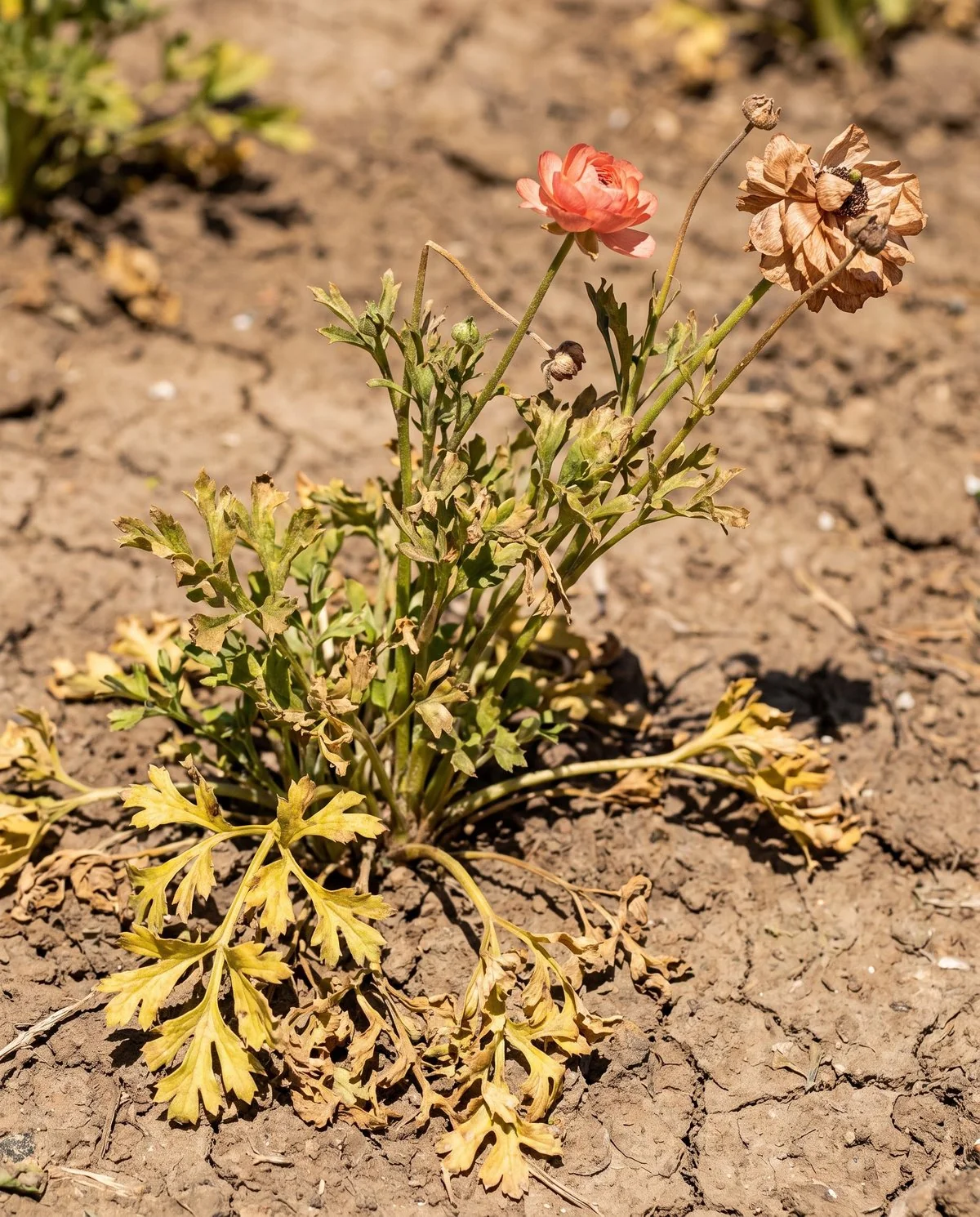
Check the weather before the plant, because these two happen in opposite conditions. Heat-driven dormancy yellows and dries the foliage from the base up, shrinks each successive bloom before bud production stops, and is timed to real heat, the low to mid 80s F. RHS names Botrytis, grey mould, as one of ranunculus's three main problems and describes it as a fuzzy grey mould on flowers, buds and leaves favoured by cool, wet weather. So the season alone is a diagnostic: collapse in heat is the plant's own schedule, collapse in cool damp weather is a disease. Only the heat side is photographed here.
Note the weather again, and then stop guessing from a photograph. RHS and NC State both name powdery mildew as a real ranunculus problem: a white to greyish powdery coating that starts on leaves and progresses to stems and flowers, favoured by dry conditions with poor air circulation, which RHS explicitly contrasts with Botrytis's preference for wet weather. Neither side of this pair is photographed here, because the spec's own rule names powdery mildew sporulation as a fingerprint that needs a real reference photograph rather than a generated approximation.
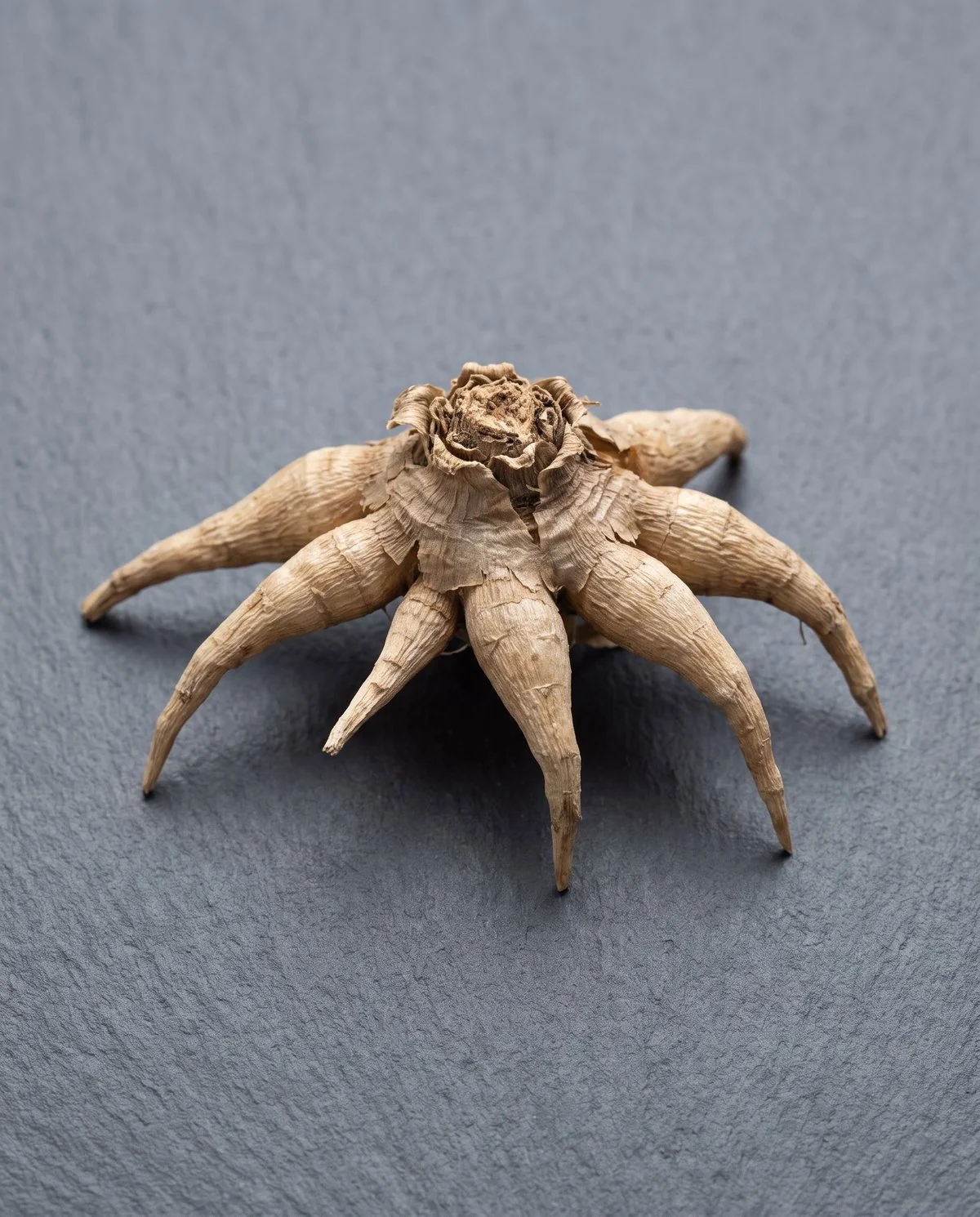
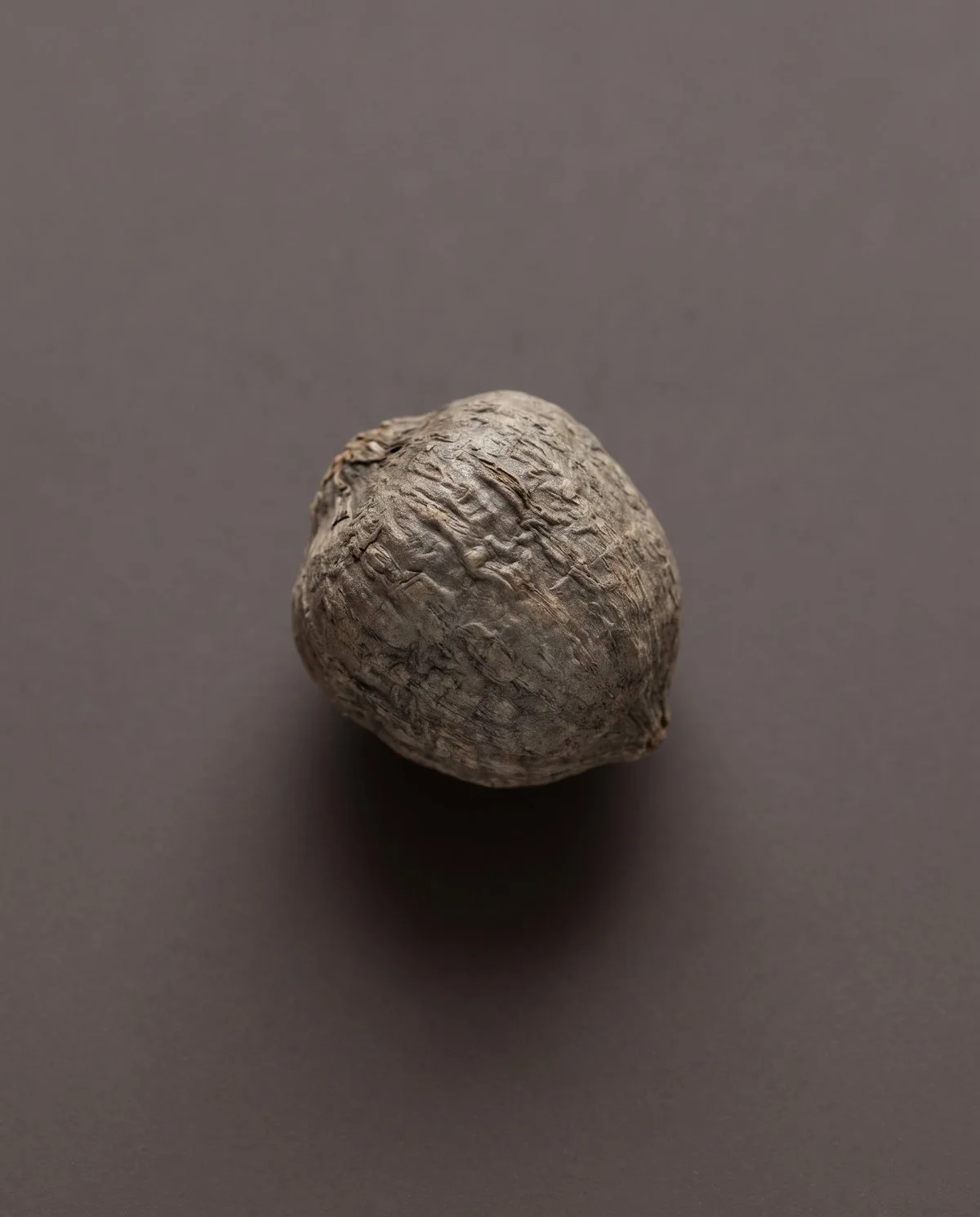
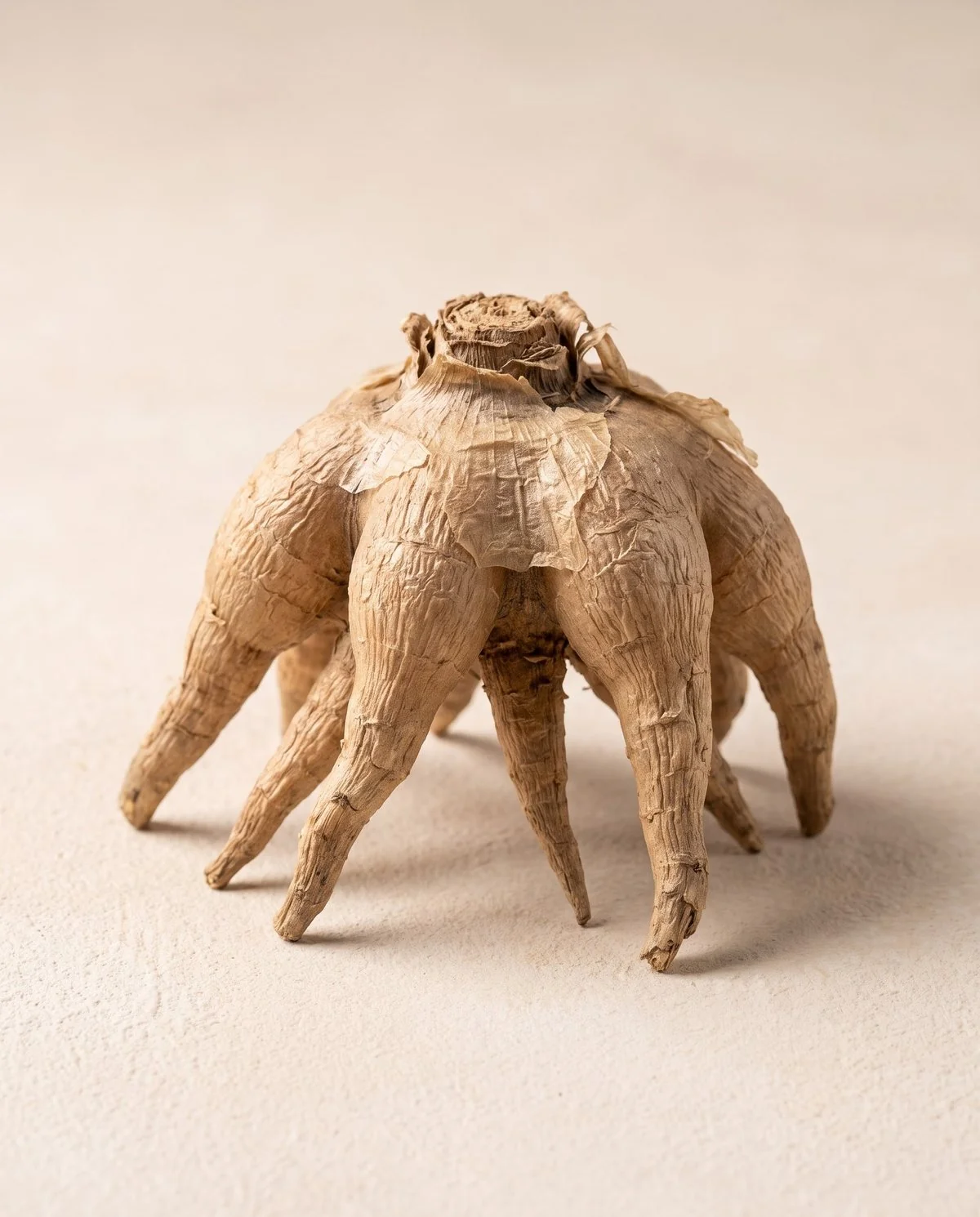
Look at the shape of the storage organ, which is the one difference visible before either plant grows. Ranunculus is a tuberous root that reads as a small brown octopus, several thin claw-like fingers radiating from one central point, and its bloom is many-layered and rounded like a small peony. Anemone coronaria's corm is firmer and more rounded, closer to a shrivelled acorn with no claw-like fingers at all, and its bloom is a flatter, bolder saucer usually with a visually distinct dark centre. They are sold side by side in the same fall catalogues and prepped with near-identical instructions, which is exactly why the pair is here.
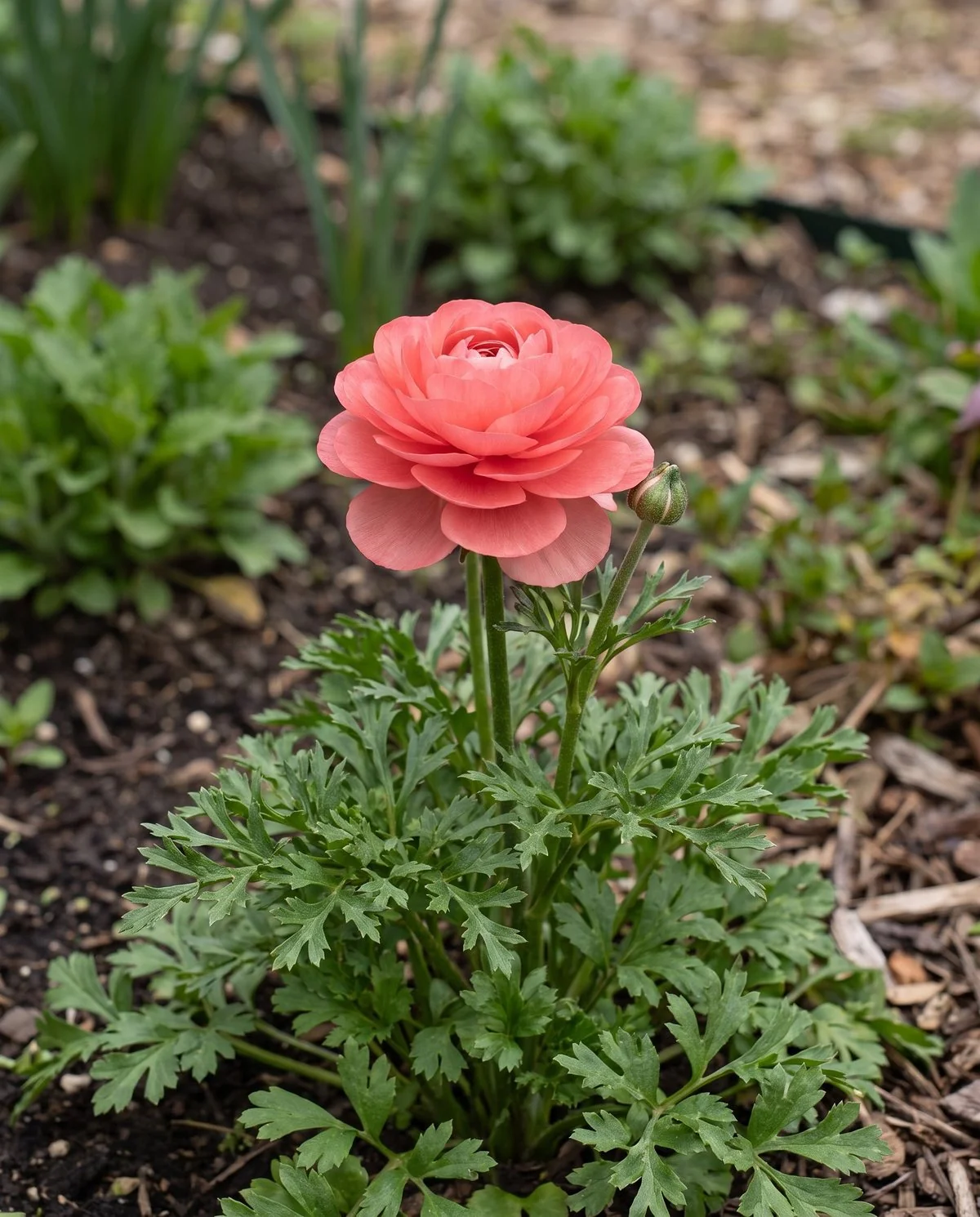
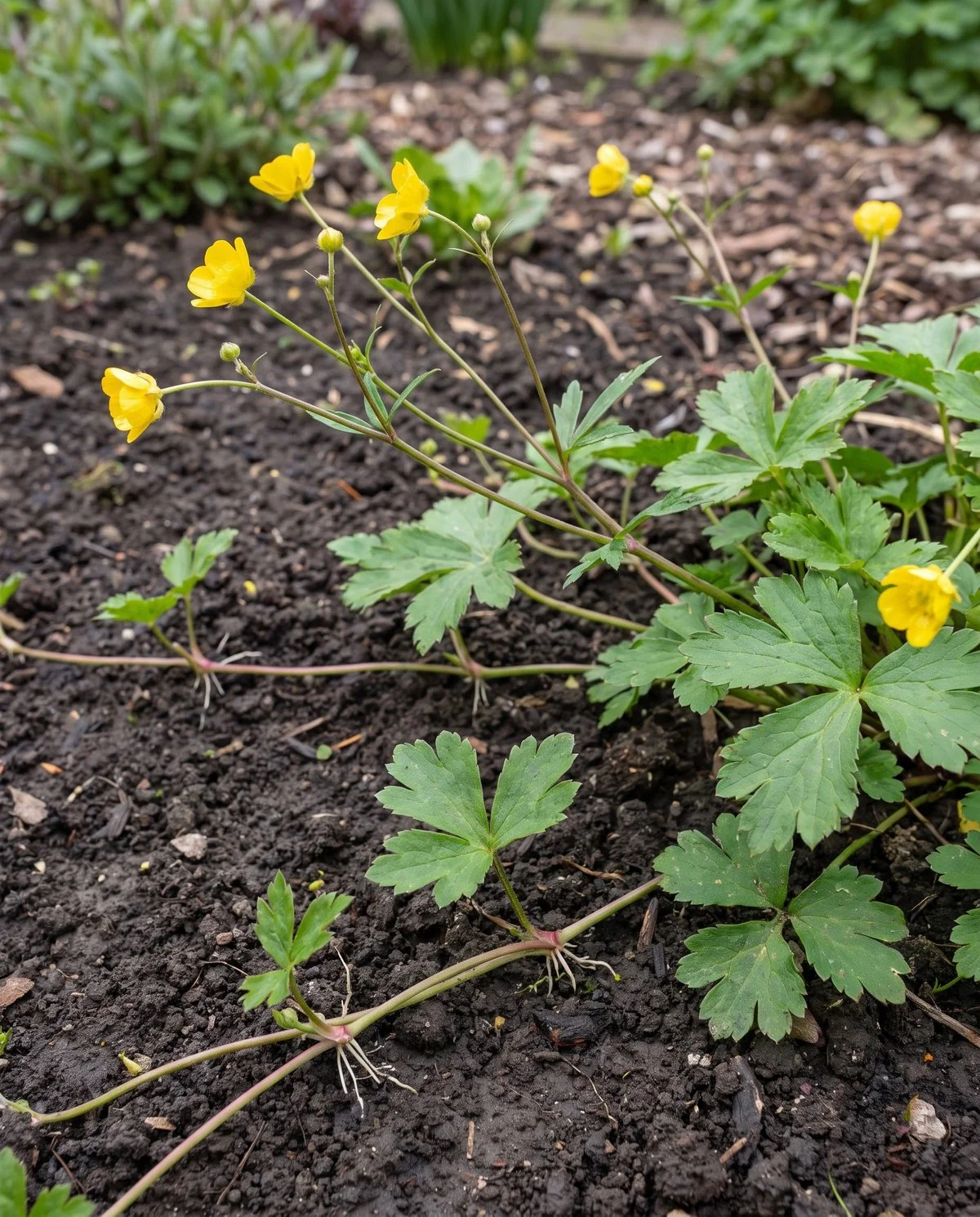
Compare the flower and the root system rather than the leaf alone. Planted Ranunculus asiaticus carries larger, many-layered rounded blooms across a wide non-yellow range of white, pink, coral, red, purple and bicolour, grows from the claw-shaped tuber above, and has more deeply cut, fern-like foliage. The weedy species such as creeping buttercup carry small, simple, glossy five-petalled yellow flowers, spread by runners rather than from a single storage tuber, and have broader, less finely cut leaves. Both are genuinely Ranunculus, which is why a gardener in this pack's sample who planted corms in a zone 8b autumn could not tell which was which months later.
What ranunculus growers actually ask about, ranked by frequency
194 unique posts from r/gardening and r/plantclinic, deduplicated by permalink, combining a title-filtered pull with a theme-query supplement that matched body text as well as titles and completed in full for this flower. The shape of this list is the finding: unlike every other flower researched in this series, the two largest themes here are process mechanics rather than damage or disease. Themes overlap and do not add to 100.
Which method is being followed, because the sourced answers differ by method rather than contradicting each other. RHS's own guidance for planting tubers directly into pots under glass says to soak them for a day; Clemson says several hours; the US flower-farm consensus for the soak, pre-sprout and transplant sequence says 3 to 4 hours and not past four, because longer leaves corms soft and mushy.
The winter, not the calendar. Clemson splits it as mild-winter regions plant in fall and USDA zones 3 to 7 plant in late winter or early spring after extreme frost danger passes. One zone 6b to 7a grower in this sample started in February and had the planting cooked by mid-April; another planted June 1 and got two or three leaves from the whole batch.
The date against the plant's own schedule. Once daytime temperatures consistently sit in the low to mid 80s F the plant is entering natural summer dormancy, so yellowing foliage and shrinking blooms then are a season ending rather than a rescue. A single early hot spell while buds are still forming is the genuinely risky case, and this sample has a Central Valley grower who lost plants to exactly that before they flowered.
Firmness, by hand, before anything visual. A properly soaked corm plumps to roughly twice its dry size and stays firm; a rotting one goes soft, dark and mushy and falls apart when handled. This theme jumped from 3 posts to 20 once dedicated soak and rot queries ran, and one case in it is a grower who followed a nursery's own advice to soak overnight for seven hours and found significant white growth on a corm the same day.
Whether the plant is outdoors in heat or indoors in a low-light room, because this bucket holds both. A distinct subset is gift and indoor plants wilting with no connection to outdoor temperature at all.
Nothing, usually. This theme is smaller here than the equivalent theme in the tulip and daffodil packs, and the reason is visible in the posts: ranunculus is grown at home in order to cut it rather than received as a surprise bouquet, so the posts are first-bouquet-of-the-season photographs rather than complaints.
Whether they were dried first. Grower practice is 2 to 3 weeks drying on newspaper or screens out of direct sun, turning periodically, then a paper bag or breathable mesh with dry peat or vermiculite at 40 to 50 F, where corms stay viable for roughly 6 to 9 months. No university source in this pack confirms that viability figure.
Nothing in this sample settles it. Several posters ask whether seed-grown ranunculus is easier than corm-grown, and the sample itself carries no consensus answer, which is worth saying plainly rather than filling in.
The season first, since most of this row is heat or watering rather than disease. Ranunculus carries no colour-word confound in a keyword search, unlike daffodil, so this count needed almost no hand-correction.
The planting date against the zone, first and always. This theme went from 1 post to 5 once body-text queries ran and is still a floor, because on a plant with a roughly 90-day single-season cycle a failed planting reads to its owner as this did not work rather than as why will it not bloom, which no keyword pass catches. One poster in it lost a full season and correctly concluded the fix was timing and method rather than different corms.
Whether it is a pest at all. This stayed the smallest theme even after the full supplement, which is plausibly real rather than pure under-counting: NC State's own Plant Toolbox characterises the plant as relatively pest-free outdoors while naming root rot and black root rot in wet or poorly drained soil.
The storage organ and the flower colour together. The recurring case is a grower weeding a bed months after planting corms who cannot tell planted Ranunculus asiaticus from a creeping buttercup that moved in, which is understandable rather than a beginner error, since both genuinely are Ranunculus.
Flower photos


FAQ
How do I plant ranunculus corms?
Soak the dry, claw-shaped corms in cool water for three to four hours until they plump up, then plant them with the claws pointing down, about 2 inches deep and 6 inches apart, in loose, well-drained soil. For earlier, stronger plants, presprout the soaked corms in barely damp mix at 40 to 50 degrees for ten to fourteen days until small white roots show, then transplant.
When should I plant ranunculus, and when do they bloom?
It depends on your winters. In mild-winter areas (USDA 8 to 10) plant in fall for late-winter and early-spring bloom. In colder areas plant in late winter to early spring for late-spring and early-summer bloom. Either way the flowers come in the cool part of the year and finish when it turns hot.
Why did my ranunculus stop blooming or die back in summer?
Heat. Ranunculus is a cool-season plant that stops setting buds once daytime highs hold above about 70 degrees and goes dormant as the low 80s arrive. That summer die-back is normal, not a failure, and the corm is simply resting until conditions cool again.
Are ranunculus perennial or annual?
Both, depending on climate. In about USDA zones 8 to 10 the corms can overwinter in the ground and return for a few years. In zone 7 and colder they are grown as annuals, replanted from fresh corms or lifted and stored after the foliage dies back.
Are ranunculus toxic to cats and dogs?
Yes. Ranunculus is toxic to cats, dogs, and horses per the ASPCA, causing drooling, vomiting, diarrhea, and mouth irritation if eaten. The bitter taste usually limits how much a pet consumes, but keep the plants and cut stems out of reach.
How long do cut ranunculus last?
About 7 to 10 days, and up to roughly 12 with cool handling. Cut on a diagonal when the bud is colored and soft but not fully open, strip the lower leaves, and stand the stems in clean water with floral preservative if you have it, changing the water every couple of days. A cool spot out of direct sunlight holds the blooms longest.
How do I store ranunculus tubers for next year?
If you live in a region with freezing winters and want to save your ranunculus, you can dig up the tubers after the foliage has turned yellow and died back. Gently clean off excess soil and allow the tubers to dry for a few days in a shaded, airy spot. Once dry, store them in dry peat moss or vermiculite in a paper bag or ventilated box. Keep the storage container in a cool (around 50°F, 10°C), dark, and dry location. Not all tubers will survive storage, but this method gives you a chance to replant them the following growing season.
Do ranunculus multiply or spread over time?
Ranunculus tubers can produce small offset tubers as they grow. Over a season, a healthy tuber may form a few "baby" tubers attached to the original. When the plant is lifted, these can be separated and planted on their own, effectively multiplying your stock. However, ranunculus do not spread aggressively in the way that some bulbs (like daffodils) do. Their clumps can get a bit larger from year to year in mild climates, but they generally stay where they are planted and expand slowly. Many gardeners rely on planting additional new tubers each year for a bigger display rather than expecting large natural spreading.
Why are my ranunculus not blooming?
If ranunculus plants fail to bloom, it is often due to environmental stress or timing. Ranunculus need cool temperatures to initiate flowering; if they were planted too late and encountered early heat, they might not set buds. Insufficient sunlight is another common reason: these plants require full sun for abundant blooms. Additionally, poor soil or overcrowding can reduce flowering. Check that the soil is rich and well-drained, and that tubers were planted at the proper depth (around 2 inches deep). Lastly, if the foliage suffered from disease or pest damage early on, the plant might not have enough energy to produce flowers. Ensuring the ideal cool-season growing conditions and proper care will typically result in plentiful blossoms.
Why did my corms turn mushy in storage or after soaking?
Almost always a soak past roughly four hours, or storage in a damp, poorly ventilated container. A healthy corm stays firm and plumps to about twice its dry size; a rotted one goes soft and dark and can fall apart when handled. One grower in this pack's sample reached that state from a nursery's own advice to soak overnight for seven hours, and found white growth on a corm the same day.
One source says soak for a day and another says four hours maximum. Which is wrong?
Neither, and that is the honest answer. RHS's day-long soak is written for tubers going directly into pots under glass, a UK growing context; the 3 to 4 hour figure comes from US cut-flower growers running a soak, then a cool pre-sprout, then a transplant. Clemson sits between them at several hours. Match the duration to the method you are actually following, and if you are pre-sprouting, stay at the short end, because that is where the mould reports in this pack's sample come from.
I am in zone 7. Do I follow the fall advice or the spring advice?
Zone 7 is the genuine boundary and the sources split on it. Clemson's own guidance places zones 3 to 7 together and says late winter or early spring after extreme frost danger passes; wider practice treats zone 7 as a marginal fall planting that needs winter mulch protection. No source in this pack breaks zone 7 out as its own case, so both framings are given rather than one being chosen for you.
Is ranunculus the same thing as anemone?
No. Same family, different genus, and different storage organ: ranunculus is a claw-fingered tuberous root that reads as a small brown octopus, anemone is a rounded corm closer to a shrivelled acorn. The blooms differ too, many-layered and rounded against a flatter saucer with a dark centre. They are sold side by side in the same catalogues and prepped almost identically, which is why the question keeps getting asked.
How many flowers should one corm actually give me?
It tracks the grade on the bag. Retail consensus runs from up to 35 flowers on a jumbo at 7 to 8 cm circumference, through about 20 on a No. 1 at 6 to 7 cm and about 12 on a No. 2 at 5 to 6 cm, down to about 7 on a No. 3 at 3 to 4 cm, which is rarely stocked at retail. No university trial in this pack confirms those specific counts, but the mechanism behind them is straightforward: the corm's stored reserve funds each successive stem over a 6 to 7 week bloom window, so a bigger corm has more to spend.
Interesting tips
The biggest levers with ranunculus are pulled at planting time, well before the first flower opens. Presprouting is the one that pays off most: soaked, cool-started corms flower earlier, grow stronger, and let you cull any corm that rots before it wastes a spot in the bed. Match the strain to the job, since the Italian cut-flower series give long stems for the vase while La Belle and Aviv suit pots and quick garden color. Where the cool season is long enough, plant in a few successions two to three weeks apart to stretch the show instead of getting one big flush. In hot-summer regions, lean into fall planting and treat the flower as a winter-to-spring crop, because fighting the summer heat is a losing game. For the vase, cut at the marshmallow-soft bud stage in the cool morning for the longest life. And since no ranunculus is truly blue, pair them with genuinely blue spring bulbs like muscari or with early tulips if you want that color in the picture.
Related Guides & Flowers
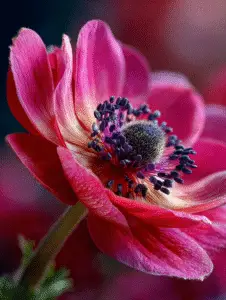
Anemone (Windflower)
Silky, layered petals with a refined, airy look; perfect companion to ranunculus in spring bouquets.
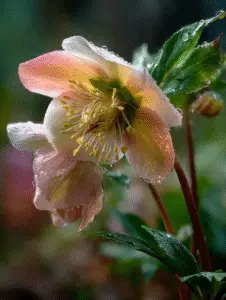
Hellebore
Early-spring, many-petaled blooms with a romantic, rose-like form; same Ranunculaceae family.
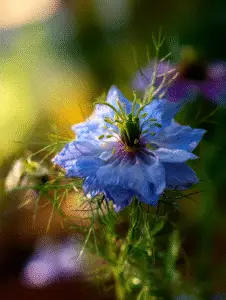
Love-in-a-Mist (Nigella)
Same family as ranunculus; delicate flowers and sculptural seed pods that pair beautifully in arrangements.
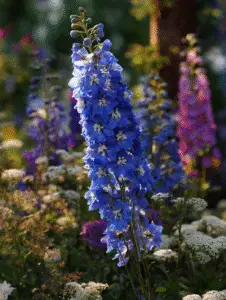
Delphinium (Elatum Group)
Tall spires from the Ranunculaceae family; great color contrast and vertical interest beside ranunculus.
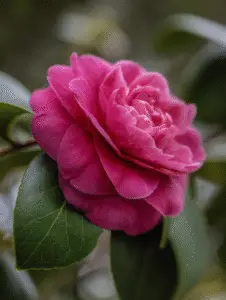
Camellia
Lush, layered petals and refined form; a good visual match for romantic ranunculus styling.
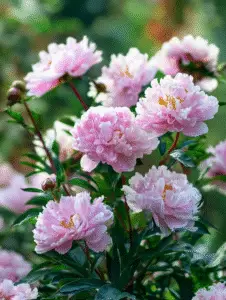
Peonies
Big, plush petals and a similar "cup of petals" look; a natural substitute or partner in luxury bouquets.
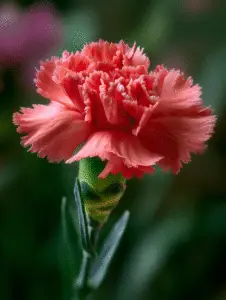
Carnation
Long-lasting, frilled petals and broad palette; a budget-friendly textural match in mixed bunches.
References
- NC State Extension – Ranunculus (Plant Toolbox): Practical cultural notes, spacing, planting depth, and site conditions for Ranunculus.
- Utah State University Extension – Ranunculus Cut Flower Production (2023): Cool-season annual production timings, planting windows, and cut-flower guidance for R. asiaticus. PDF.
- Cornell University (eCommons) – Postharvest Storage and Handling of Ranunculus asiaticus (2011): Vase-life handling, conditioning, and storage recommendations.
- Kew Science – Plants of the World Online: Ranunculus asiaticus: Accepted name, native range, and taxonomic baseline.
- ASPCA – Buttercup (Ranunculus spp.) Toxicity (cats, dogs, horses): Clear pet-safety confirmation and symptoms to cite in your toxicity section.
Enjoying our flower guides? Add YourFlowersGuide as a preferred source on Google. It helps more readers find us.
Add to Preferred Sources