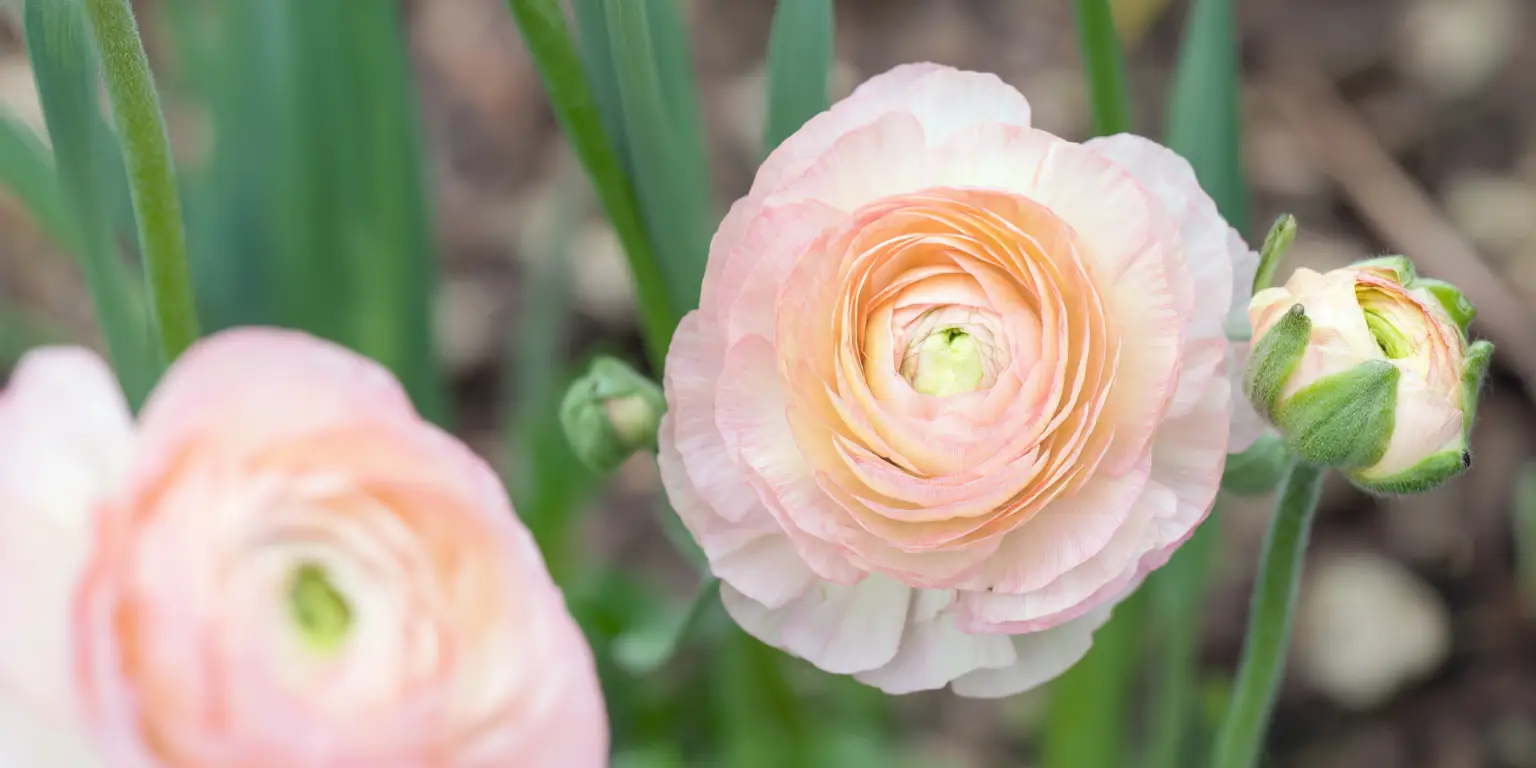
Amandine
Persian Buttercup Series: Amandine
At‑a‑glance
- Group/Class: Persian Buttercup Series: Amandine
- Height × spread: 14–20 in × 10–12 in (35–50 cm × 25–30 cm)
- Bloom window: Early to mid spring in mild zones; late spring to early summer elsewhere
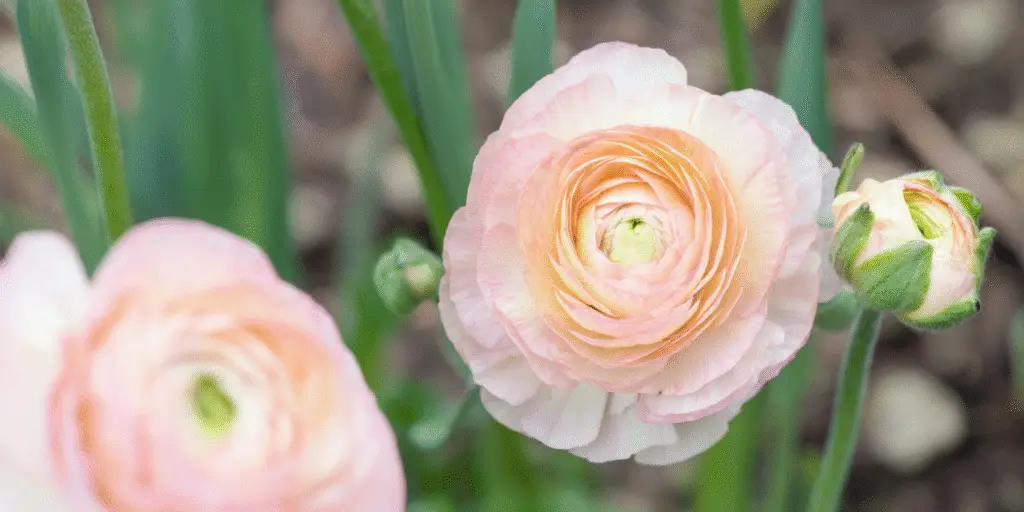
- Color & flower form: Fully double; wide range including whites, pastels, bicolors
- Fragrance: 0 none
- USDA hardiness: Zones 8–10; grown as annual in colder zones
- Breeder / Year / Origin: Unknown (French seed strain), Year unknown, France
- Cut‑flower notes: Harvest at marshmallow stage; typical vase life 10–12 days in preservative
- Pet safety: avoid
How it differs
- Slightly more heat tolerant than many standard strains
- Large, full blooms with strong stems
- Good productivity for cut flowers
- Broad color palette including wedding pastels
Strengths
- Dependable cut‑flower performance
- Tall enough for arranging
- Long vase life when cut in bud
- Adapts to field, tunnel, or container culture
Care in one minute
Plant in full sun in fast‑draining soil; amend clay with grit or plant in raised beds or pots
Pre‑soak corms 1 hour; plant 2 in deep and 6–8 in apart with claws down
Irrigate to keep evenly moist during growth; avoid overhead watering in cool, damp spells
Fertilize lightly every 2 to 3 weeks while in active growth
Cut or deadhead regularly to maintain production
Lift and store corms dry after foliage yellows in cold or very wet‑summer climates
Watch‑outs
- Corms rot in heavy or waterlogged soils
- Heat above 85°F can end flowering quickly
- Botrytis can spot petals in cool, wet weather
- Not winter hardy beyond Zones 8–10
Best uses (tags)
Provenance note
A French seed‑raised line widely adopted by growers for uniform stems and large flowers. Growers commonly note slightly better heat tolerance compared to some older strains.
References
- RHS – Ranunculus asiaticus profile
- NC State Extension – Ranunculus planting and care
- Floret Flowers – How to grow ranunculus (vase life and harvest stage)
Similar Flowers
Enjoying our flower guides? Add YourFlowersGuide as a preferred source on Google. It helps more readers find us.
Add to Preferred Sources