Taxonomy and origin
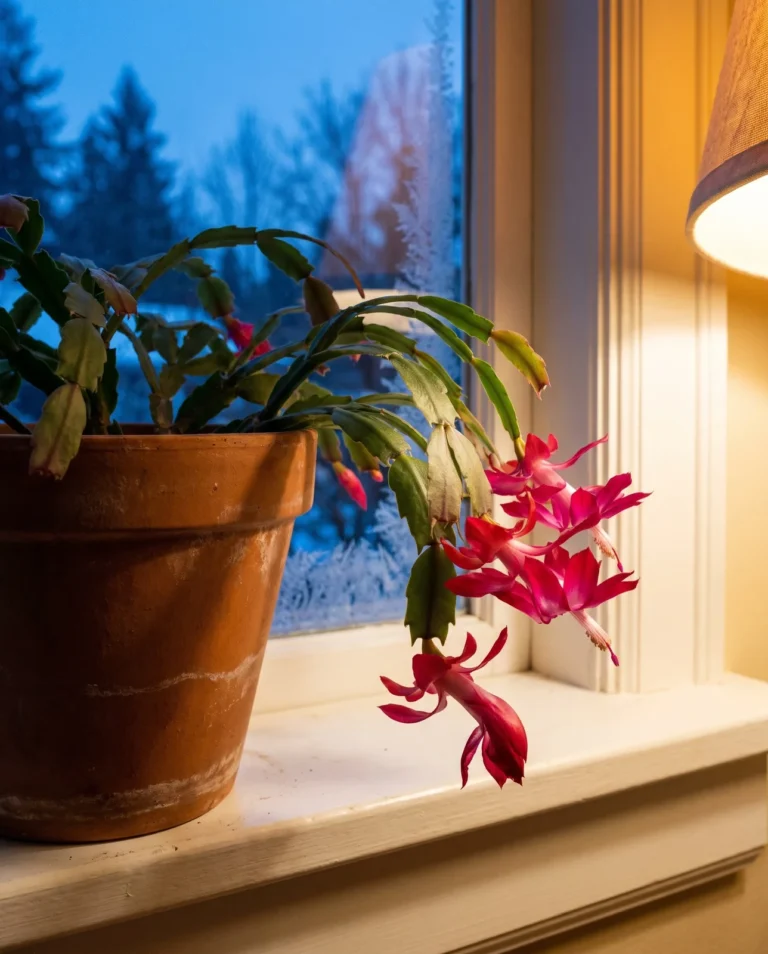
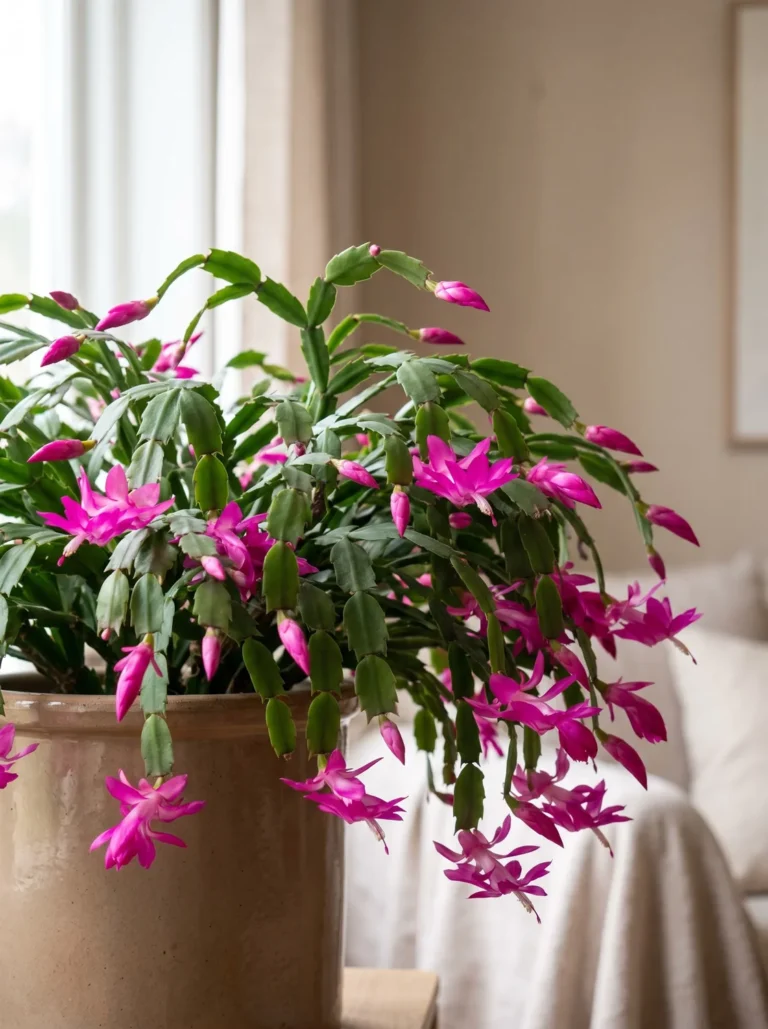
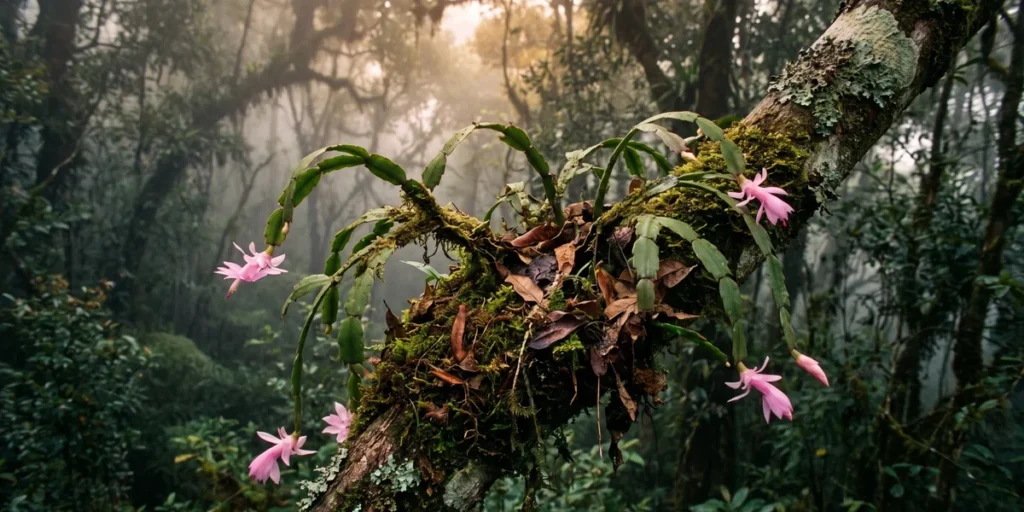
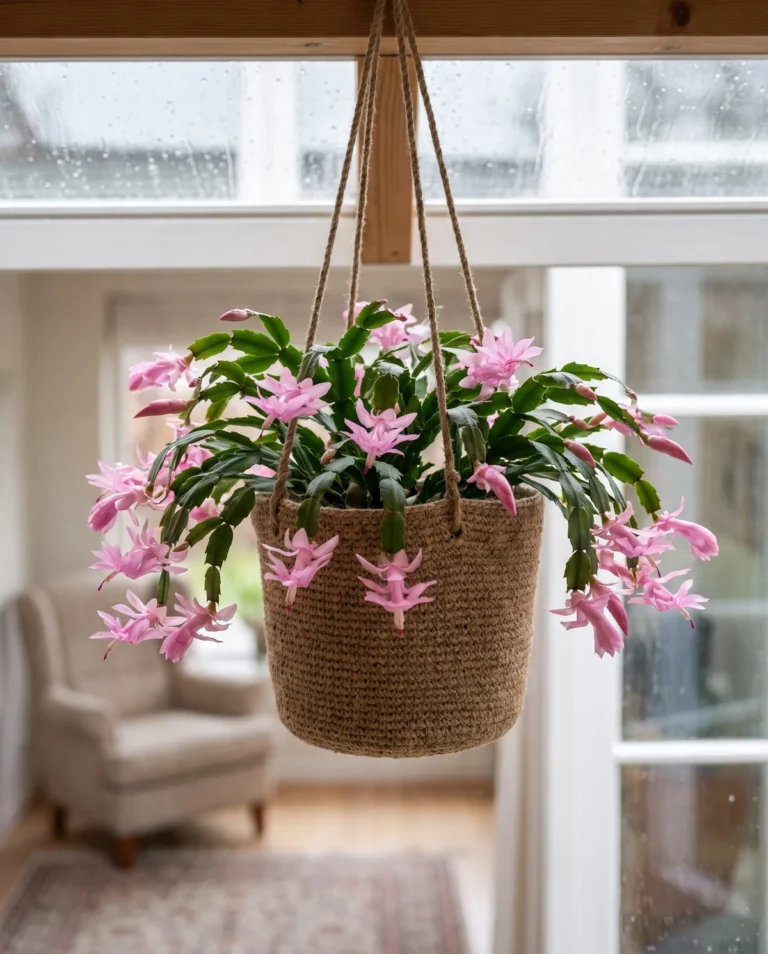
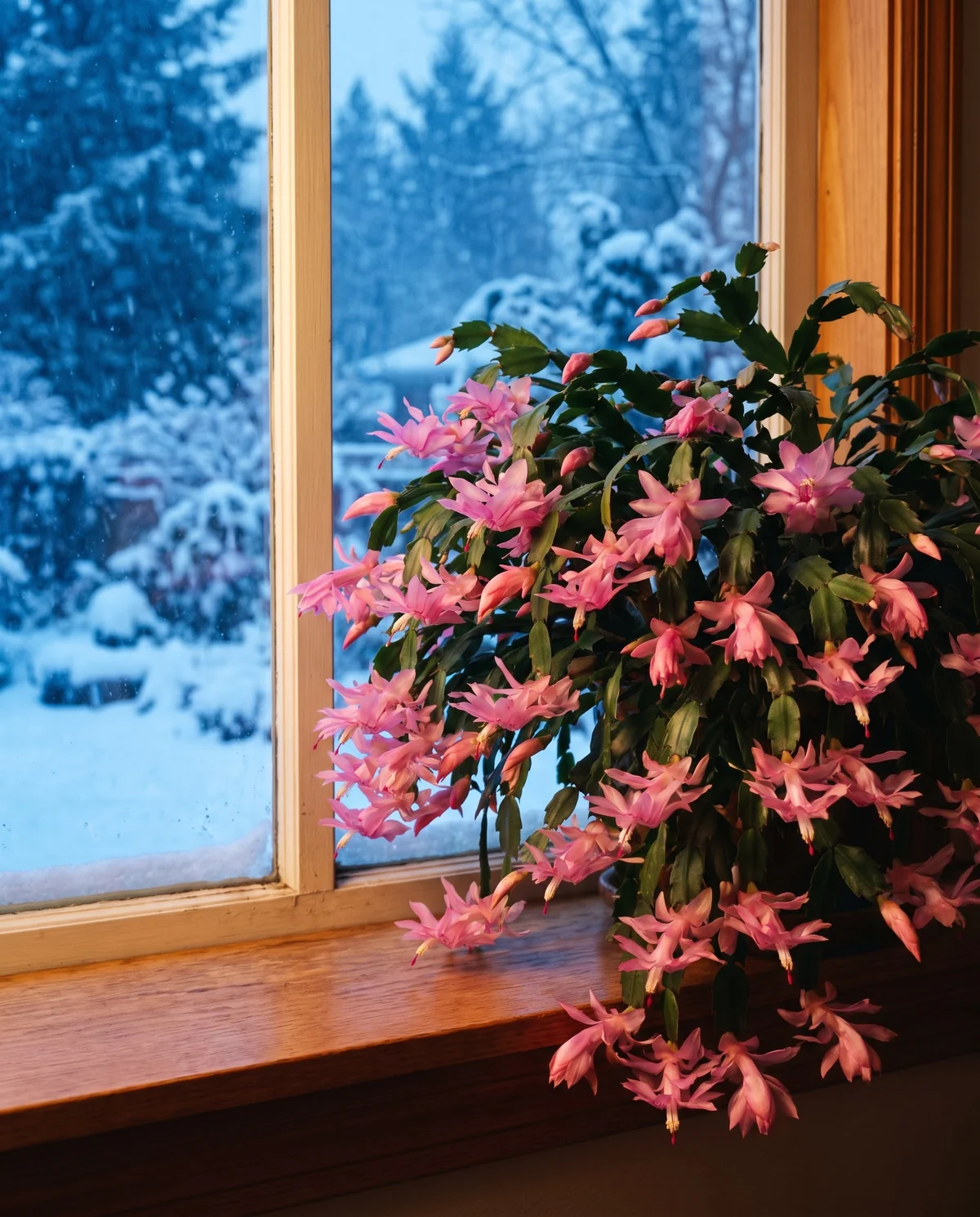
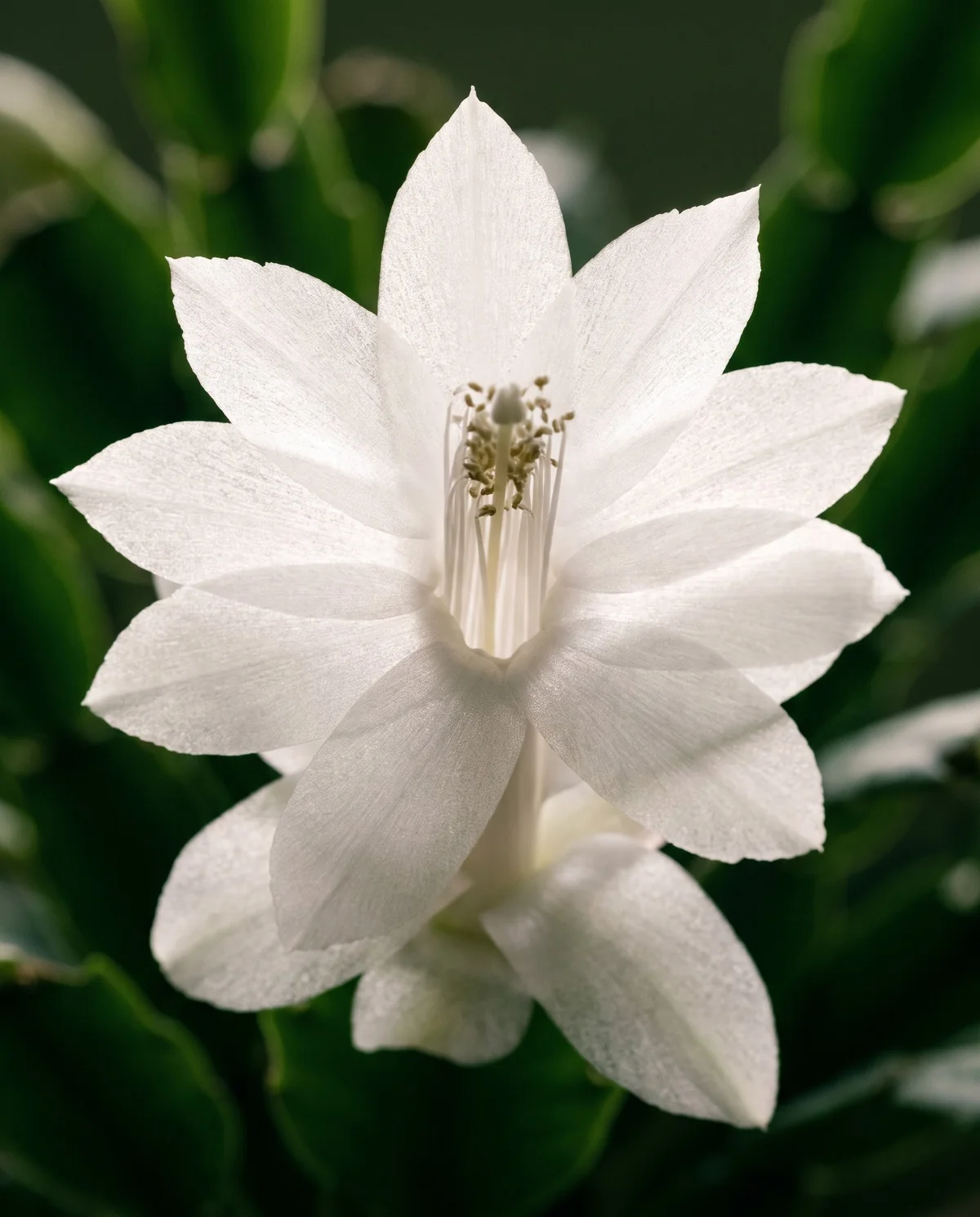
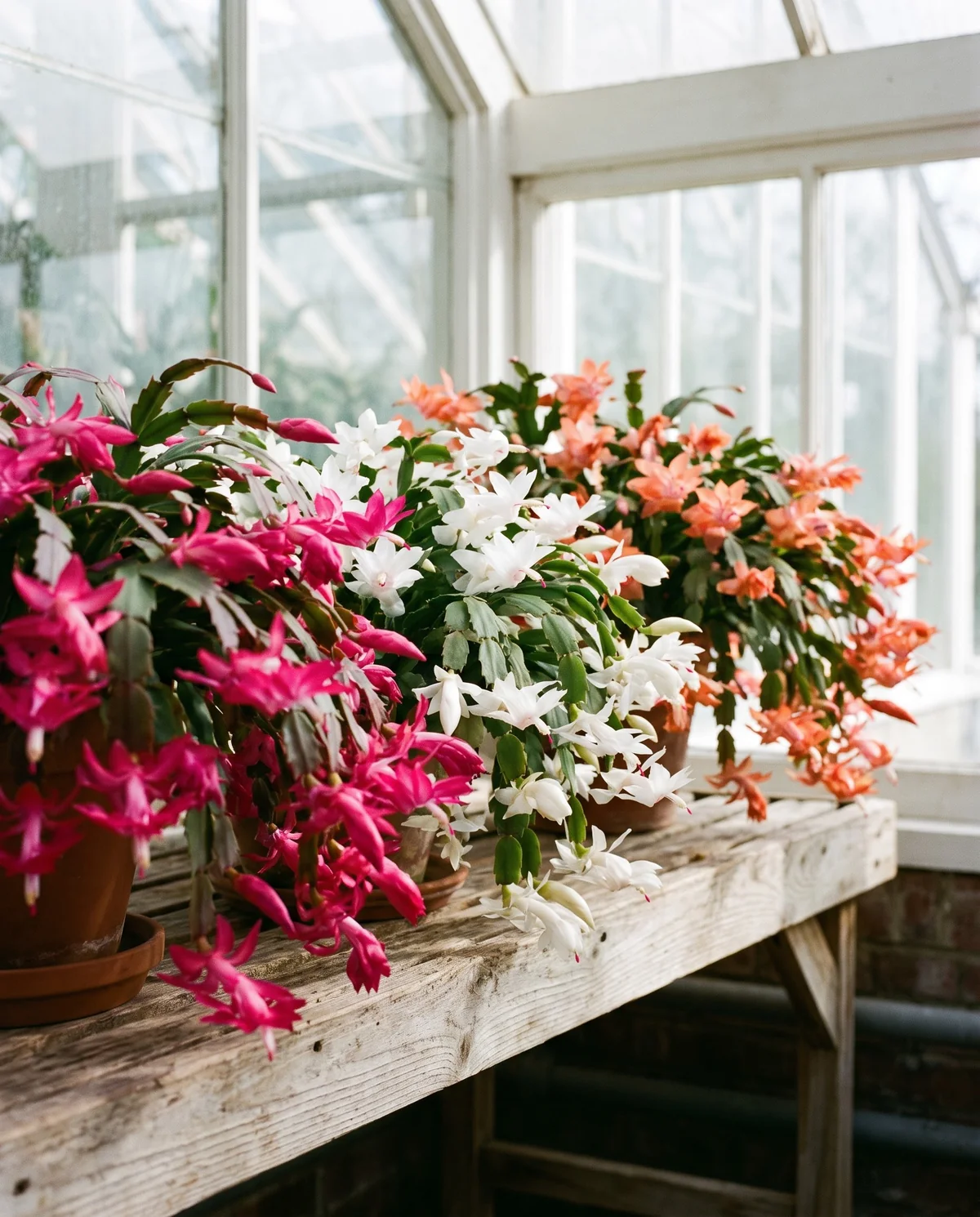
The holiday cacti are the genus Schlumbergera in the family Cactaceae, true cacti by anatomy but tropical ones by address. The two species behind the houseplant grow in the Serra dos Orgaos, the coastal mountains behind Rio de Janeiro, at elevations of roughly 3,000 to 5,000 feet, living as epiphytes on moss-covered branches and in leaf-filled rock crevices, drinking rain and whatever nutrition decays around their roots. That habitat explains nearly every care rule the plant has. The flattened green segments are actually stems, built for shade. The roots expect air, moisture, and fast drainage. And the flowers, up to three inches of tiered, swept-back tepals in the shape botanists call zygomorphic, are built for hummingbirds, which pollinate the genus in the wild. Cultivated breeding has pushed the wild pink-to-red palette into whites, golds, yellows, peaches, salmons, purples, and bicolors, across more than 200 named cultivars, from 'White Christmas' and pale yellow 'Gold Charm' to salmon-orange 'Peach Parfait'.
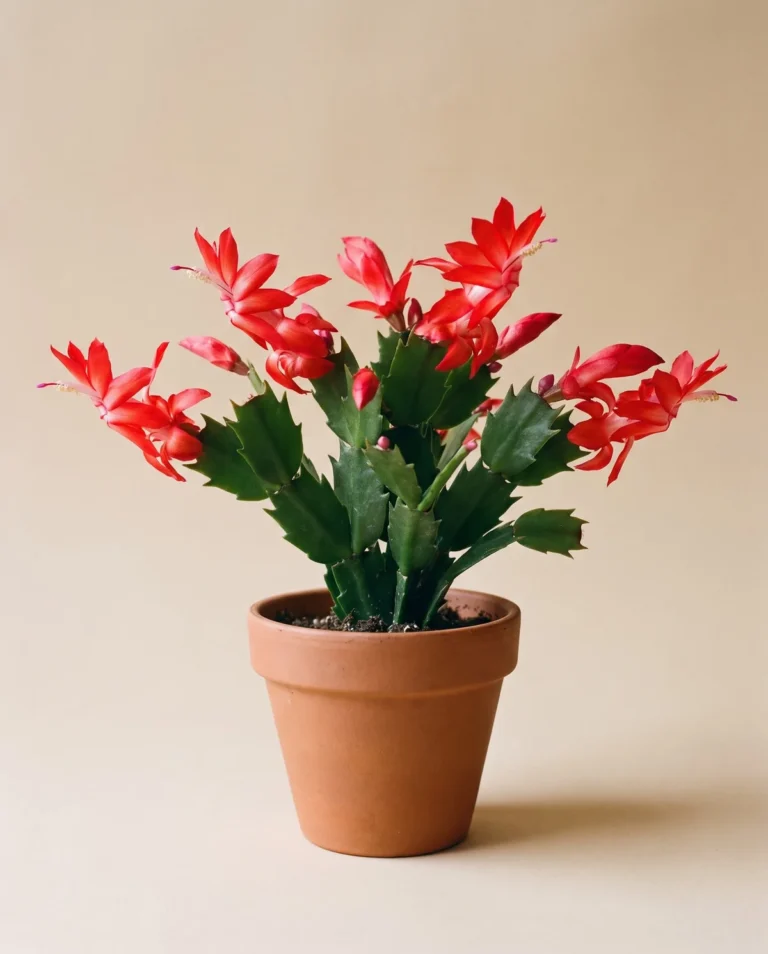
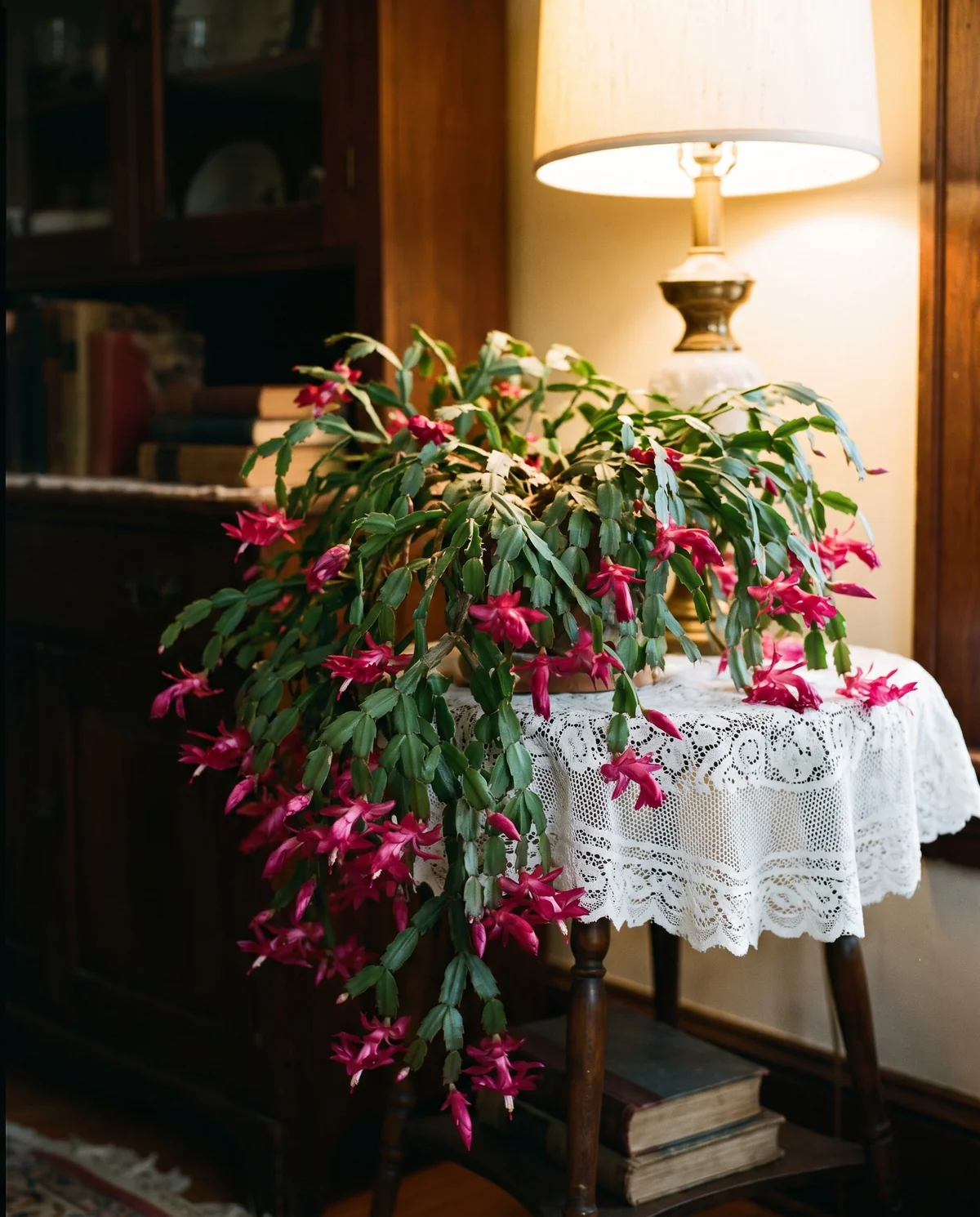
Thanksgiving cactus, Schlumbergera truncata, was in European cultivation by 1818 and described scientifically in 1819 from a plant grown at Kew. Its partner species was collected in Brazil in 1837 and reached England two years later, named for the Duke of Bedford who backed the expedition. In the 1840s a nurseryman named William Buckley crossed the two at England's Rollisson Nurseries, and the hybrid recorded by 1852, Schlumbergera x buckleyi, is the true Christmas cactus; the genus itself was named in 1858 in honor of Frederic Schlumberger, a cactus collector. The plants have been holiday gifts since the second half of the nineteenth century. The store shelves, though, belong to the earlier species. University extensions from Iowa to Illinois note that most plants sold as Christmas cactus are actually Thanksgiving cactus or its hybrids, while the true hybrid survives mostly as a pass-along heirloom, rarely grown commercially. Telling them apart takes one glance at a stem segment, claw-like points for truncata, rounded scallops for buckleyi, and one more at the flowers, held upright on the first, hanging down on the second.
Eight faces of the holiday cactus, colors straight from the university tables
More than 200 cultivars exist by NC State's count, and almost none of them are reviewed by neutral sources, so this grid stays inside what universities actually publish: six named cultivars whose colors come from the UMass Amherst commercial table and the NC State toolbox, plus the two plants people actually own, the store-standard Thanksgiving type and the heirloom true Christmas hybrid. The badge is derived: green means the color is stated by the source table itself, red means the entry shows a type rather than a single named cultivar.
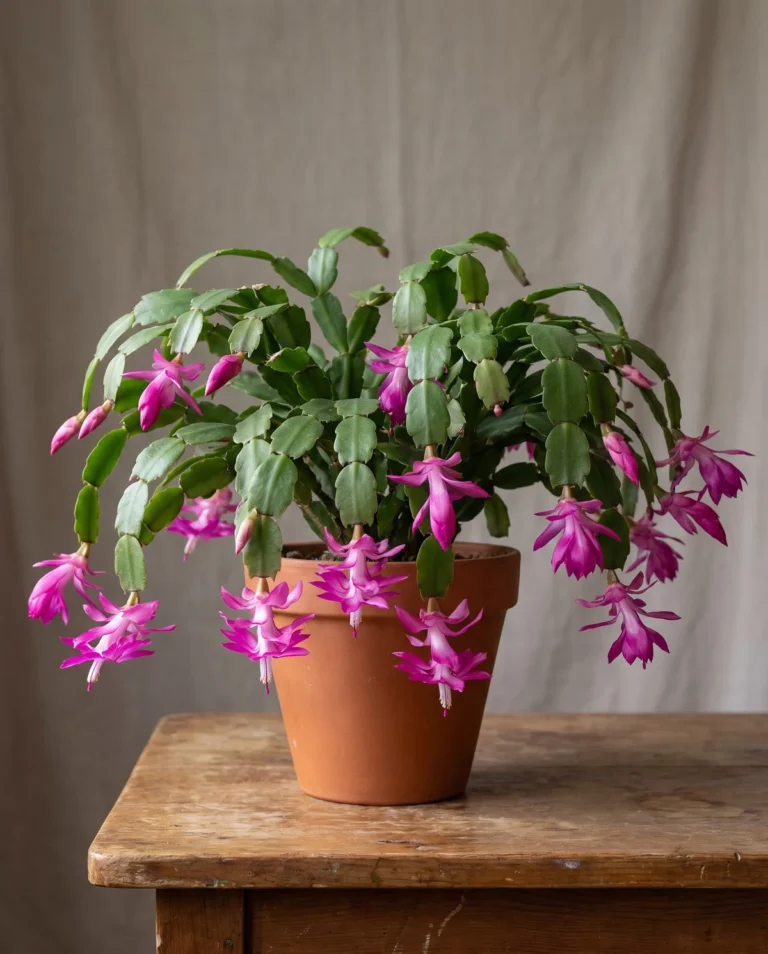
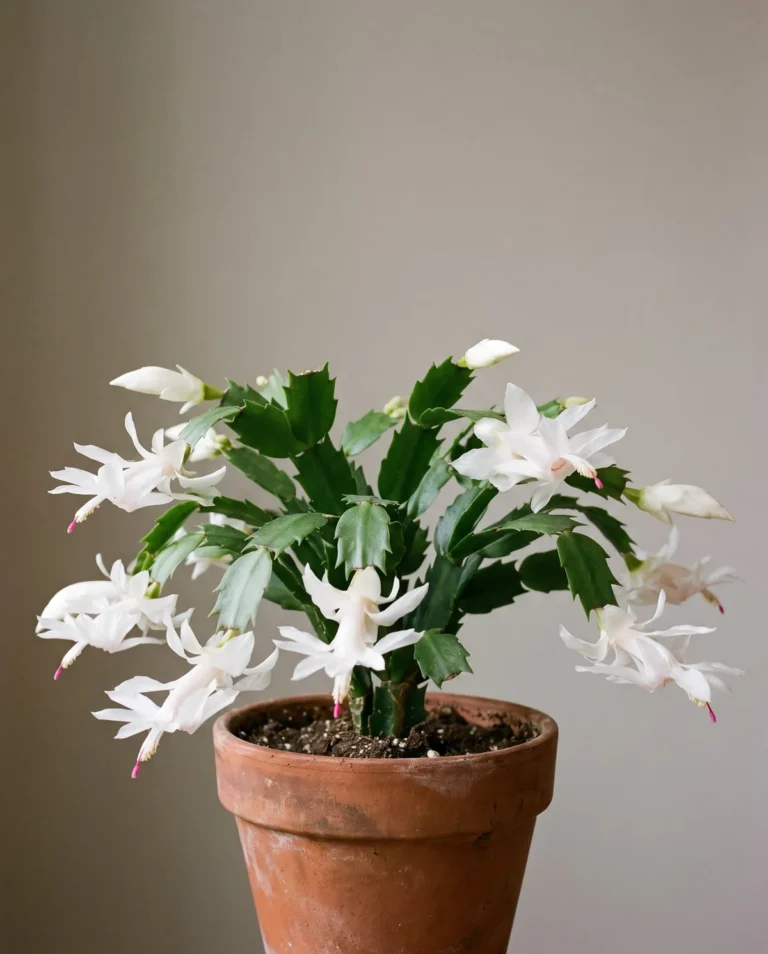
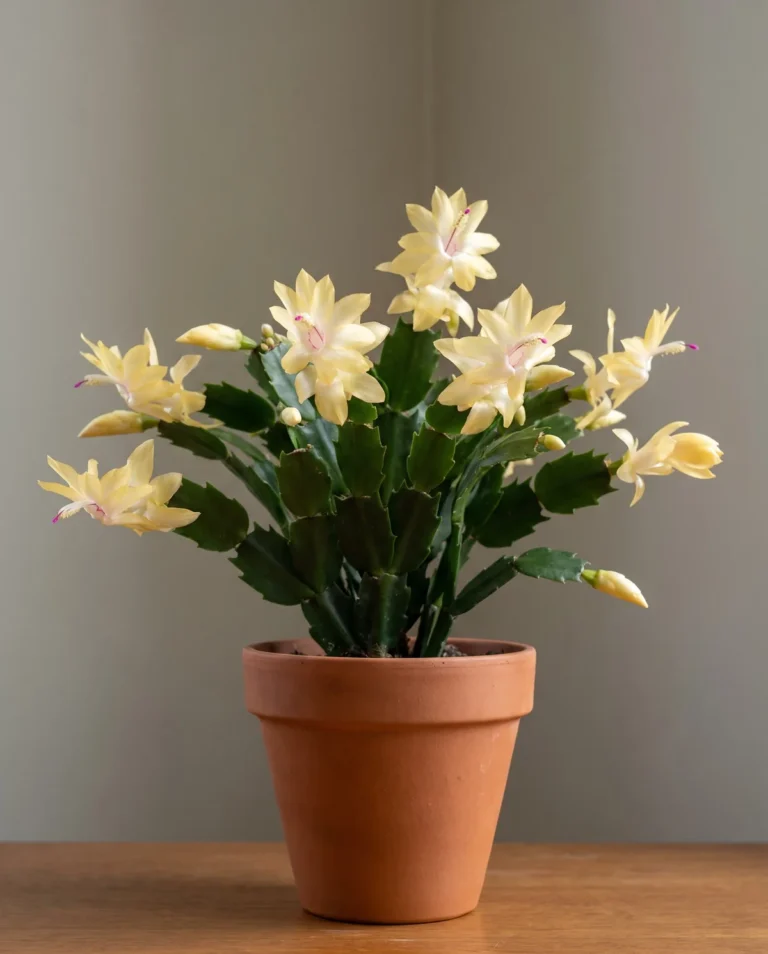
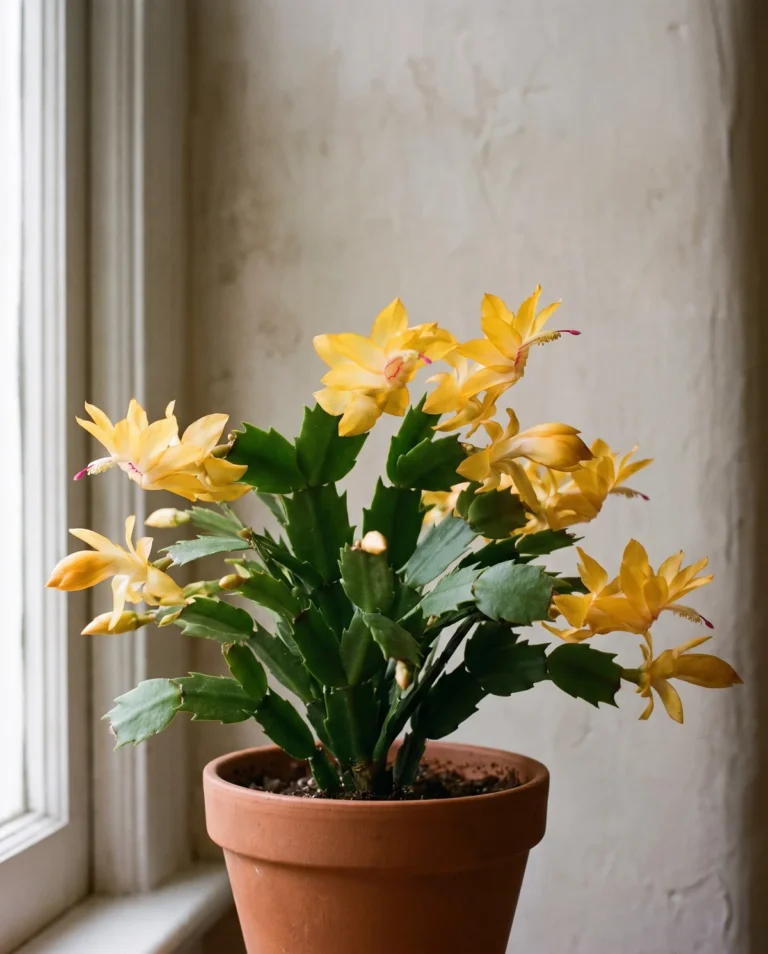
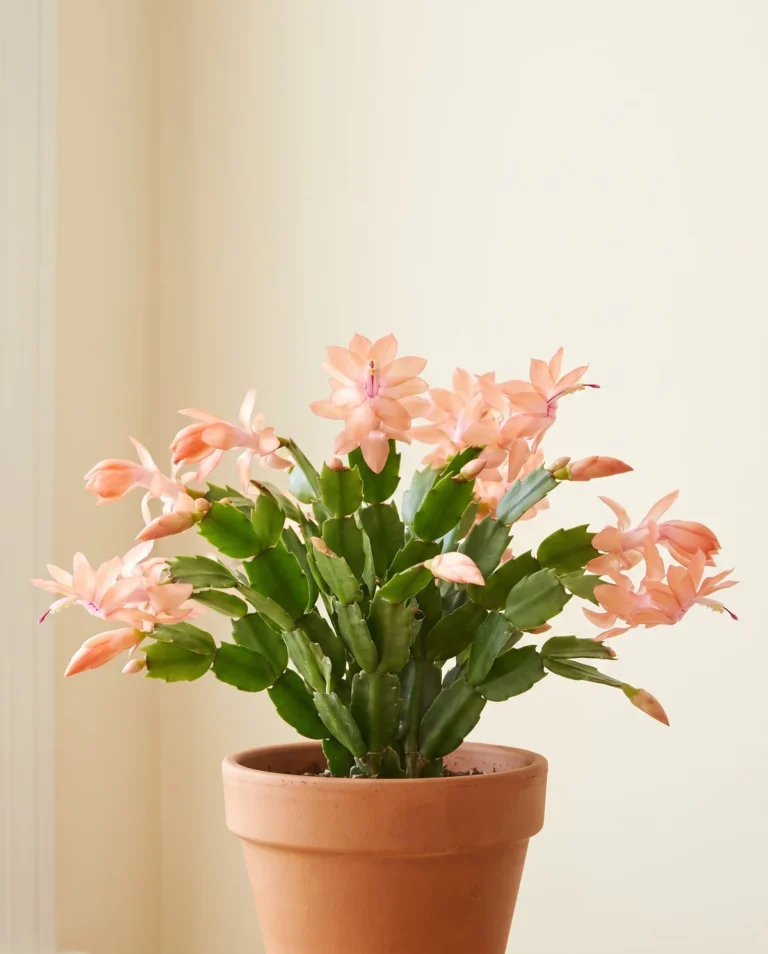
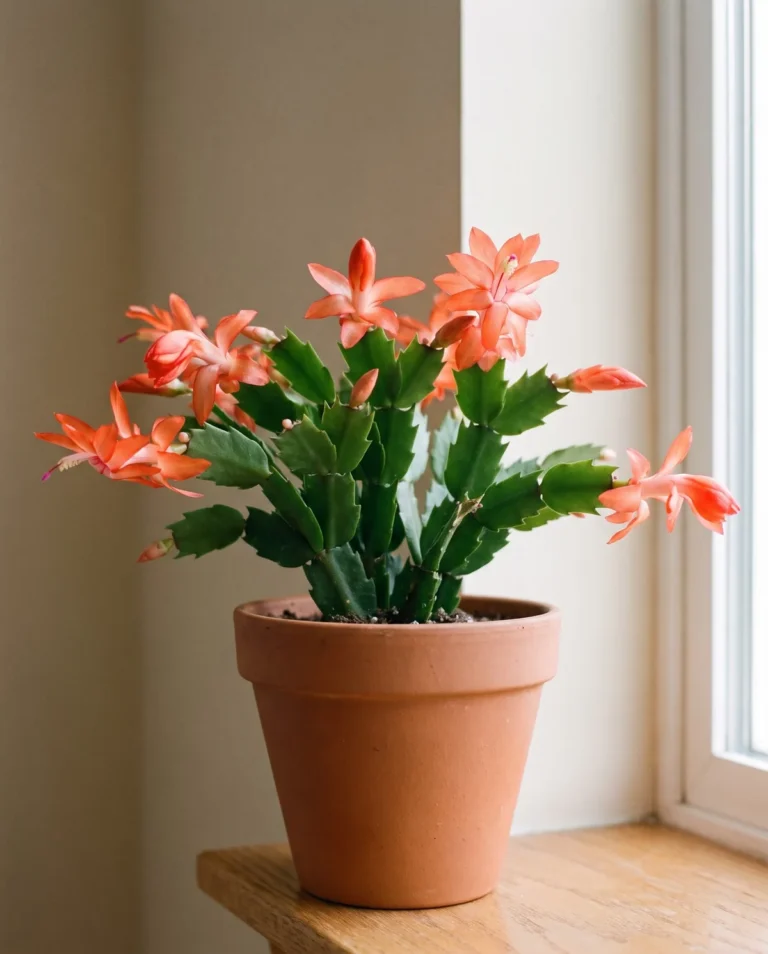
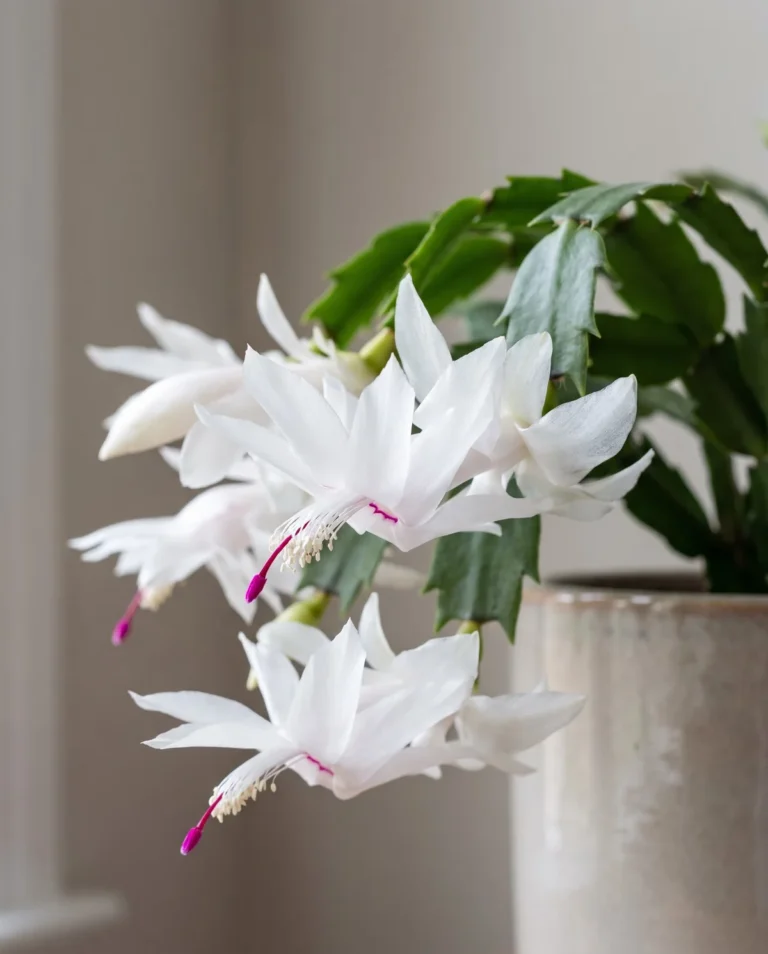
Wild Schlumbergera flowers run only pale pink to red per Wisconsin Extension; every white, gold, peach and bicolor above is breeding work layered onto the same hummingbird-built architecture. The one popular claim deliberately missing here: that white and yellow cultivars blush pink in cool rooms. No university source states it, so this page does not either.
Bloom time
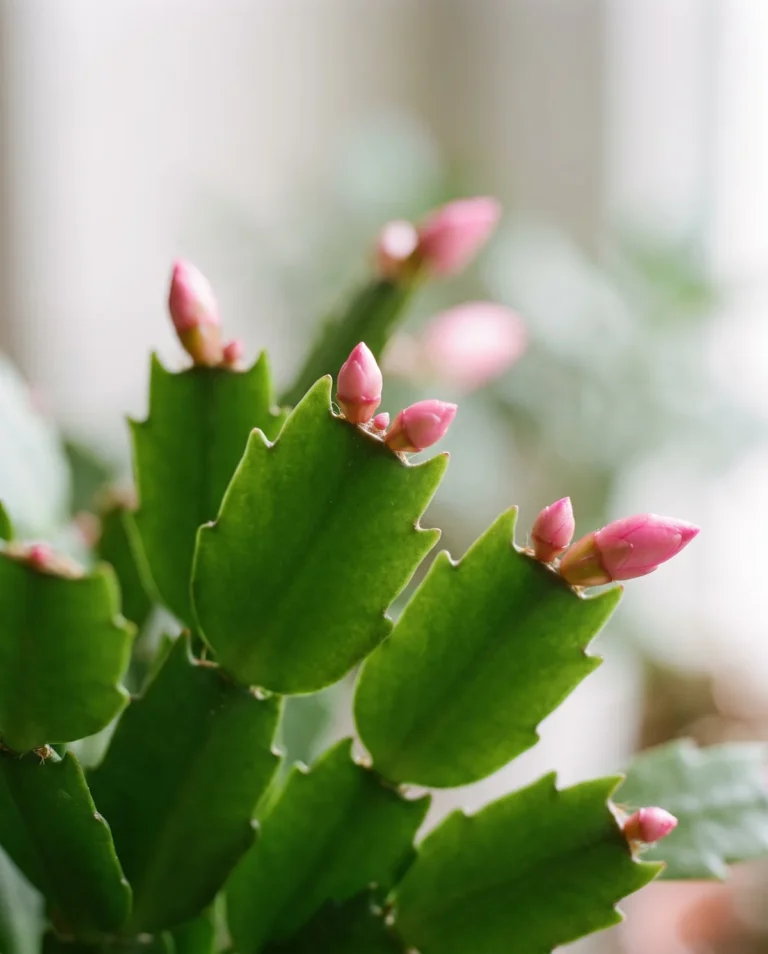
The two species keep different calendars, and the names run a few weeks ahead of the plants. Thanksgiving cactus generally blooms from mid or late November into late December, catching both holidays in a good year, while the true Christmas cactus runs later, into January and February, and in some published windows into March. Both are one autumn's work: the buds are set by fall conditions and open over several weeks, so the display as a whole stretches across the season. A plant that blooms in October or waits until January has simply answered its own light and temperature, and cultivar genetics shift the window as well. The buds themselves appear at the segment tips three to four weeks after conditions turn right, and once they are set, day length stops mattering entirely; from that point the job is protecting them, which is a separate art covered under bud drop.
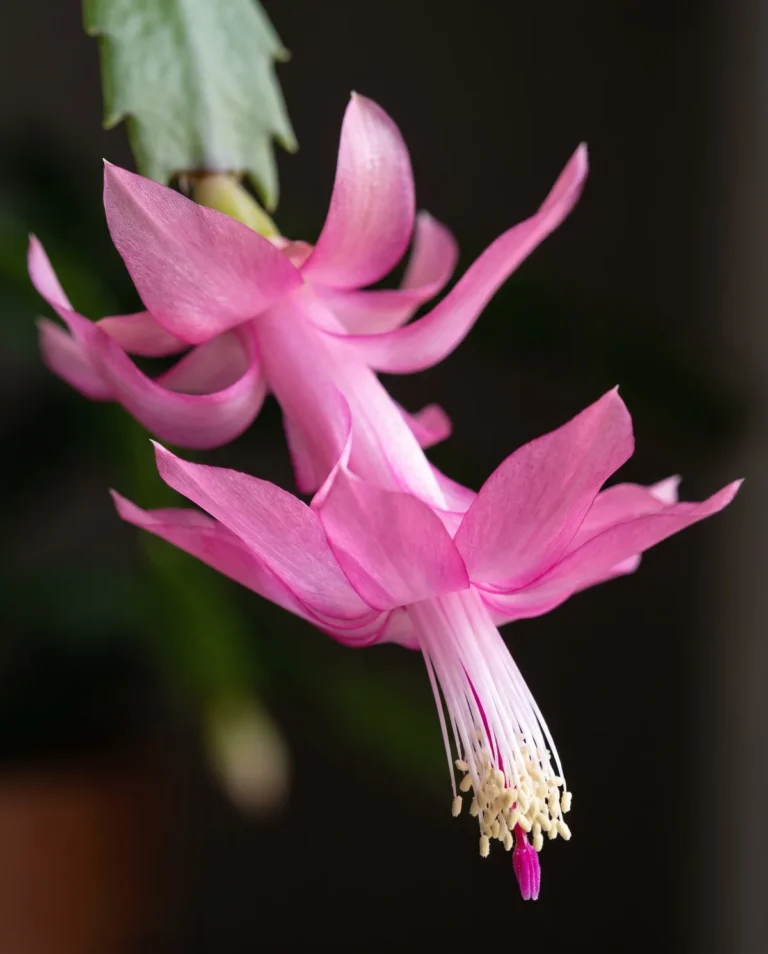
What sets the buds is an either-or covered in full under Getting it to bloom: cool autumn nights in the 50s on their own, or long uninterrupted dark nights in a warm home. The cool route is why a plant summering on a porch into fall often comes inside already budded, and why the cyclamen and the Christmas cactus, the two cool-lovers of the winter windowsill, so often succeed in the same houses.
Year one, year five, and the plant your grandchildren argue over
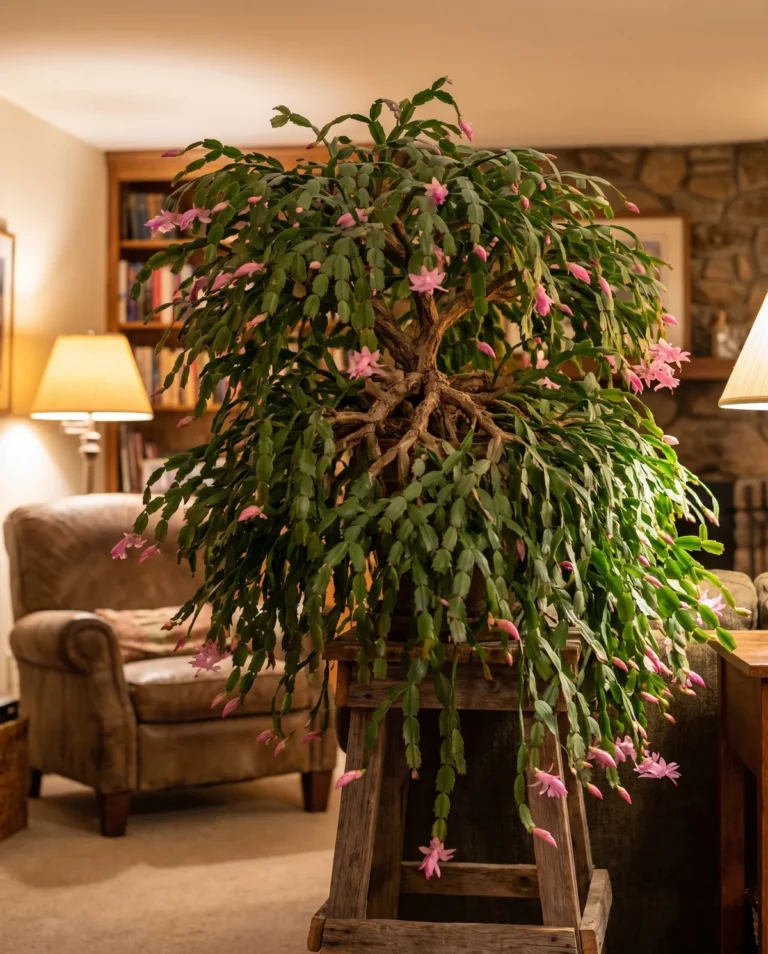
Year one is a store plant's first winter, and its calendar honesty test: what sold as a Christmas cactus is usually Schlumbergera truncata per Iowa State and Illinois Extension, so it blooms from around mid-November and may be finishing by the holiday its label promised. It spends that first year settling, and the correct ambition is modest, keep the watering honest and give it one cool or dark autumn. Years two through five are the compounding phase: each season adds segments, each new segment tip is a future flower site, and the bud counts climb from a handful toward the dozens, interrupted only by the one spring repot the plant actually needs in that span, since Clemson has it flowering best pot-bound and repotted roughly every three years. Past that the plant leaves houseplant territory. South Dakota State documents 20 to 30 years as ordinary and specimens over 100 years old, Missouri's state horticulturist notes they often outlive their caretakers, and Iowa State describes them passed down through generations, which changes what a person is doing in October: an hour of closet discipline stops being plant care and becomes maintenance on an inheritance, and a spring pinch of surplus segments becomes the next generation's starter plant, rooted three to a pot in three to eight weeks.
Height and spread
This is a small, wide plant. A mature holiday cactus stands nine inches to a foot high by NC State's measure and spreads one to two feet, with segmented stems that start upright and then arch over into a cascade, which is why the classic presentations are a hanging basket or a pot on a stand, plinth, or shelf edge where the stems can pour over the rim. Spread commonly exceeds height, and a decades-old specimen carries hundreds of segment tips, each one a potential flower site. Growth is unhurried, and the plant's size is easy to manage by pinching off segments at a joint in spring, which doubles as propagation material. Weight matters more than footprint with age: an heirloom in full bloom is heavy, brittle, and best moved rarely, both for the stems' sake and because moving a budded plant is a classic way to lose the buds.
Light
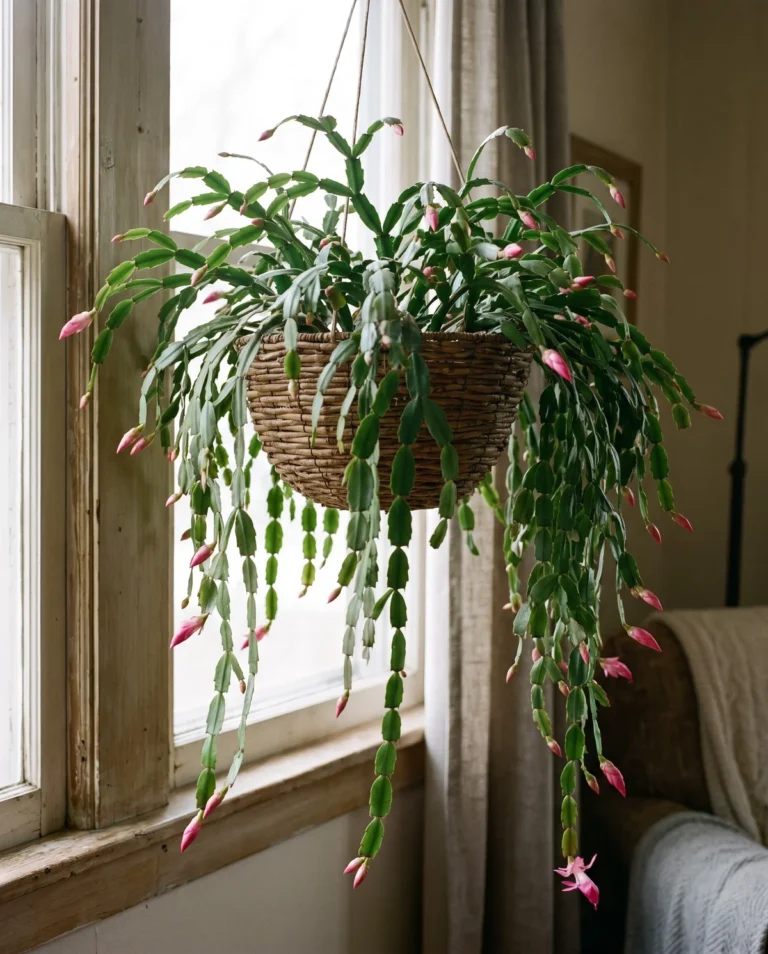
Bright but filtered light is the rule, inherited from the tree canopy the plant evolved under. Indoors that means a spot near an east window, or set back from a south or west one, with sheer curtains doing the work the forest shade once did. Direct summer sun is the main hazard: it bleaches the green segments toward a sickly pale yellow, and a plant summering outdoors belongs in part shade, roughly three to six hours of gentle sun, with a bare south-facing rail the wrong address entirely. The seasons flip the advice at the edges, since weak fall and winter sun is fine and even helpful, and extensions allow full sun during the short-day months. The autumn detail matters most: while buds are being set, daytime brightness should be as generous as possible, because the trigger is dark nights paired with bright days. A plant blooming in a dim corner got its buds elsewhere and is now spending them.
Water
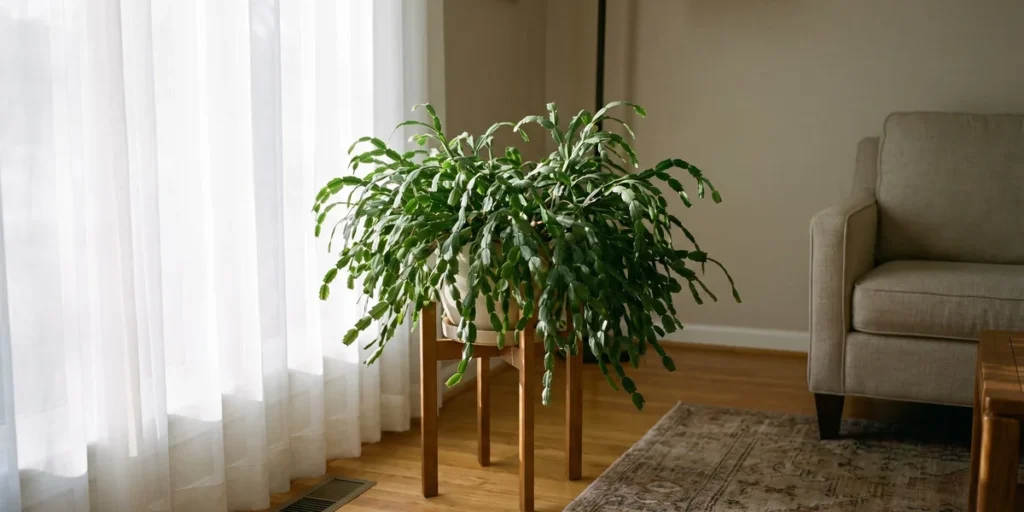
Ignore the word cactus on the label; this plant's relatives may bake in deserts, but it drinks like the rainforest epiphyte it is. Water thoroughly when the top of the mix feels dry to the touch, let the pot drain completely, and never leave it standing in a saucer of runoff. The finger beats the calendar here, because drying speed swings with season, pot size, and mix. The safer error is underwatering: extensions state that holiday cacti tolerate it far better than overwatering, and root rot, the plant's major disease, is almost entirely a gift from the watering can. The confusing part is that a drowned plant and a parched one look identical, limp, dull, wrinkled segments, so the soil has to make the diagnosis. Ease off slightly in mid-September while buds are setting, and again after flowering finishes, when the plant wants a quiet, drier rest before spring growth resumes. Humidity, unusually for a cactus, is welcome year round, which is why extension writers keep recommending bathrooms.
Four things everyone believes about this cactus, tested
The myth: It is a cactus, so it should be watered like one.
The reality: It is a true cactus by anatomy and a rainforest plant by lifestyle, and the second fact wins. New Hampshire Extension states outright that holiday cacti need significantly different care from desert cacti, being epiphytes of Brazilian forest branches; Iowa State adds that unlike desert cacti they should not be allowed to stay dry. The real rule is water when the top of the mix feels dry, with Missouri IPM's caveat that underwatering is still the safer error.
The myth: The plant in the store is a Christmas cactus.
The reality: Usually not. Iowa State and Illinois Extension state that most plants sold as Christmas cactus are actually Thanksgiving cactus, Schlumbergera truncata, and UMass adds that the true 1840s hybrid is rarely grown commercially, surviving mostly as a family heirloom. The two are told apart in seconds by the segment edges and flower angle, covered with photos in the look-alike cards above, and the practical consequence is pleasant: the store plant simply blooms weeks earlier than its name promises.
The myth: Repot it every spring like other houseplants.
The reality: Clemson's guidance is the opposite: the plant flowers best somewhat pot-bound and needs repotting only about every three years, with Iowa State noting it can go many years in one container and Wisconsin setting the outer bound at four to five. An oversized fresh pot of wet mix is not generosity, it is the leading route to root rot.
The myth: Dropped buds mean the plant is sick.
The reality: Dropped buds mean the plant was startled. The documented causes are relocation, temperature events past 90 or below 50 degrees Fahrenheit, watering swings, drafts and dry air, per Missouri Botanical Garden, NC State and Illinois, and none of them is a disease. Minnesota Extension adds the strangest entry: a plant that sets more buds than it can feed drops the surplus deliberately, self-pruning, which looks like a crisis and is arithmetic.
Soil and pH
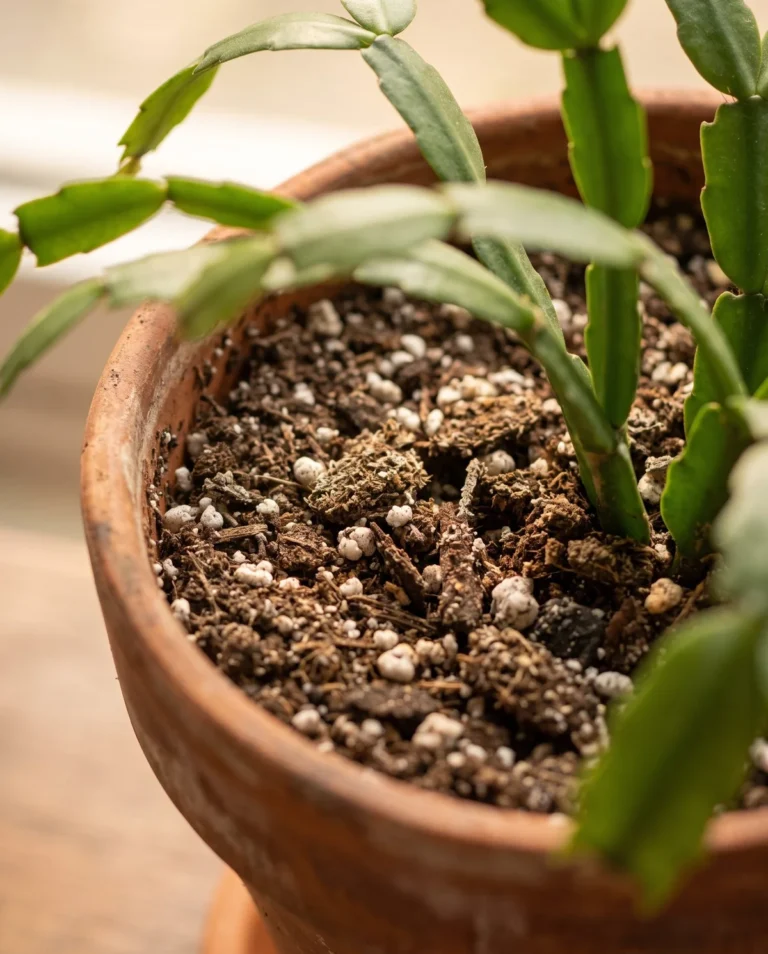
Potting mix for a holiday cactus is about air first and nutrition second, because roots that grip tree bark in the wild suffocate in dense, water-holding soil. The extension recipe is ordinary potting mix cut with drainage material, roughly 60 to 80 percent mix to 20 to 40 percent perlite, and any commercial blend sold for succulents or epiphytes lands in the same territory. Chemistry is undemanding: slightly acid to neutral suits it, and no one amends pH for this plant in practice. What does matter is resisting the urge to upgrade the pot. A holiday cactus flowers best slightly pot-bound, and repotting is a once-every-three-to-five-years event done in spring; extensions note the plant can go many years in the same container without complaint. When the time comes, go up a single pot size, keep the mix airy, and expect the plant to sulk briefly, since even a good repot is a change, and autumn change is what this species answers with dropped buds.
USDA hardiness
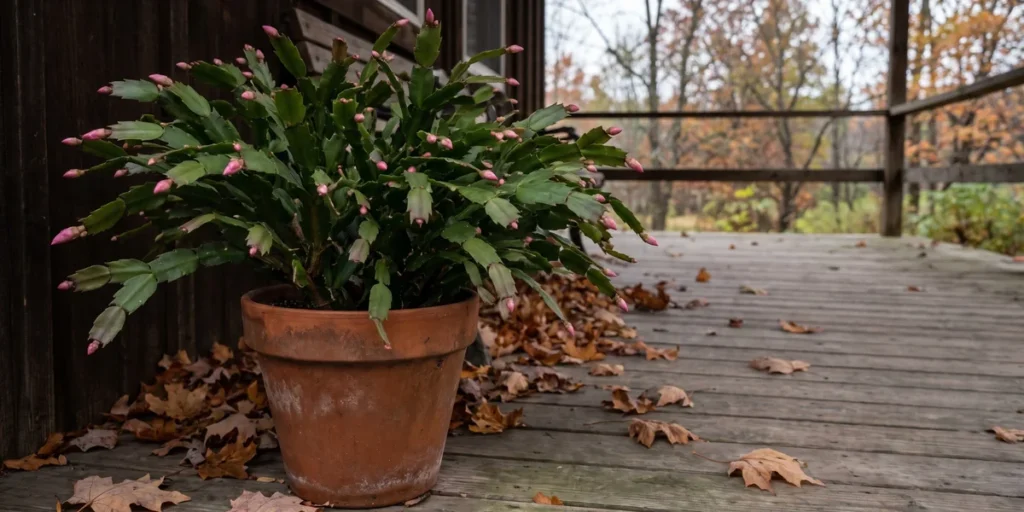
Outdoors the holiday cactus is a zone 10a to 12b plant, at home in the frost-free coastal strips of California, the Gulf, and Florida, where it can live in shaded containers year round. Everywhere else it is a houseplant that vacations outside: out to a shaded porch or patio once nights are reliably warm, back inside before real cold, with the useful bonus that fall nights spent outdoors in the 50s will often set the flower buds on their own before the plant ever comes in. Temperature preferences run in seasons: warmth for growth, coolness for bud set, steadiness for bloom. Through the April-to-September growing months it likes roughly 70 to 80°F. In fall, days in the 60s and nights in the 50s to low 60s favor bud set, while warm nights are the usual reason bloom never comes. Once buds exist, extremes in either direction cost them.
| Season | Target | The line not to cross |
|---|---|---|
| April to September | 70 to 80°F | Frost, in either direction of the calendar |
| Fall bud set | Nights 50 to 65°F | Nights above 65 to 70°F stall bloom |
| Buds already set | Steady room warmth | Above 90°F or below 50°F drops buds |
The year, three ways to run it
The same plant runs on three published calendars depending on where it lives. Where sources disagree on the darkness dose, the spread is shown rather than averaged; the strict end is the safe read because one lit evening costs a night and a warm October costs the year.
Getting it to bloom
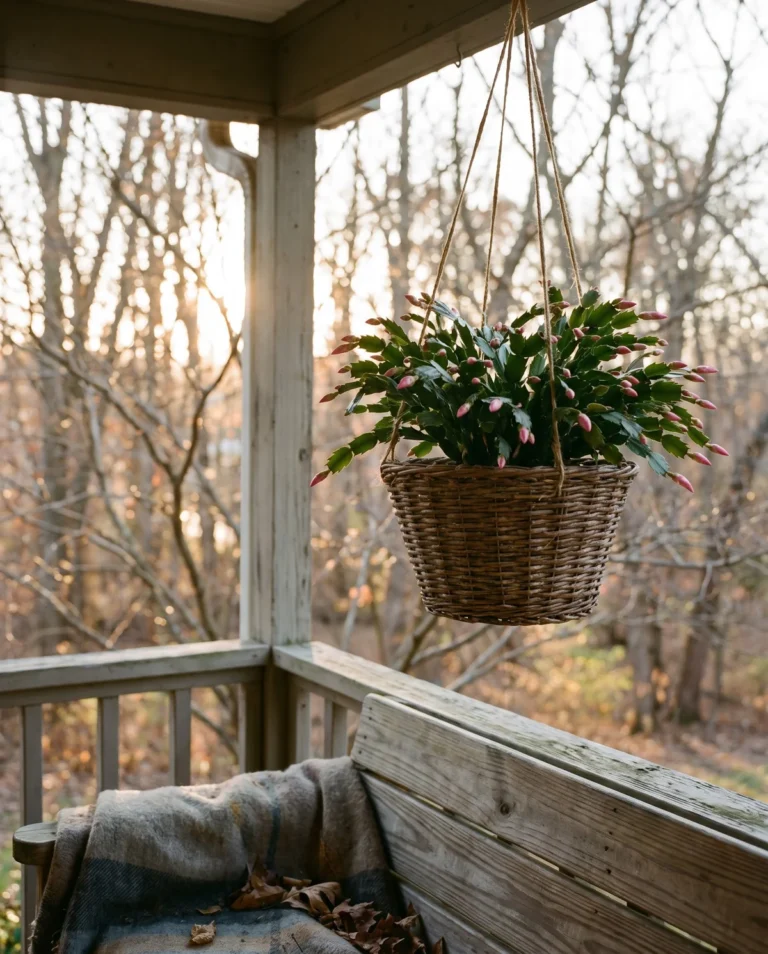
Both routes to a budded plant belong to autumn. The cold route asks the least: keep the plant somewhere with night temperatures in the 50s from mid-September on, an unheated porch, a cool spare room, a garden spot before frost, and buds form on their own regardless of what lamps or day length are doing. Extension guidance puts the trigger band at roughly 50 to 59°F nights, with bloom following in five to six weeks, and one source notes that even a few consecutive nights near 40°F will force the issue. The margins deserve respect, since right at 50°F some bud drop can follow, and the reliable comfort zone is the mid-50s. This is the route heirloom plants have used for generations in cool farmhouse windows, no schedule required.
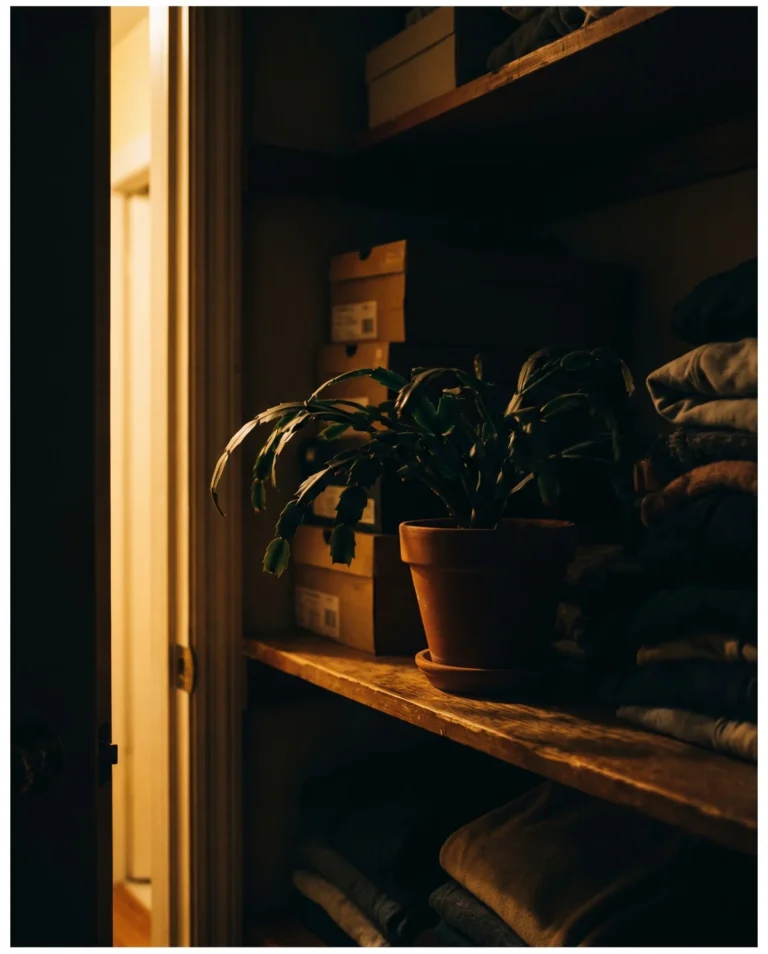
The dark route is for warm modern homes, and it is a discipline rather than a trick. Starting around mid-September, the plant needs long, absolutely uninterrupted darkness every night for six to eight weeks, in a closet, under a box, or in an unused room, paired with bright light and normal watering by day. Published extension figures for the nightly dose run from twelve hours to sixteen, with several landing on thirteen or fourteen, and the safe reading is fourteen; what is not negotiable is the word uninterrupted, because even two hours of stray light in an evening cancels the night, and a lit interruption repeated through October explains many failures. Warmth sabotages the count too, since nights above the mid-60s can hold the plant vegetative no matter how dark it is. Buds show at the segment tips within three to four weeks, and from that moment the schedule ends, light stops mattering, and the only job left is keeping the plant unstressed until the buds open.
A cold shock and a late-summer drying
Beside the main triggers sit two quieter levers. The cold shock: several consecutive nights near 40°F will force bud set on a stubborn plant, a move for a specimen that sailed through a mild October unbudded, applied by parking it in an unheated but frost-free space for under a week. The late-summer drying: some growers ease the watering rhythm slightly through August and September to harden the summer's new growth before the trigger season begins, one more reason the generous year-round watering that keeps a fern happy quietly works against this plant's December. Neither lever replaces the main triggers, and the cold one carries its own caution, since holding a budded plant at the very bottom of the range starts costing buds instead of making them.
The mountain in your living room
The care sheet's strangest rule, that a healthy plant refuses to bloom over 65 to 70°F at night, stops being strange on a map. The species evolved between roughly 3,000 and 5,000 feet in Brazil's coastal ranges, where even tropical latitude cannot keep nights warm, and autumn at that altitude means exactly what the plant demands in a house: bright days, long nights, and a reliable nightly chill. A modern heated home reproduces a condition the mountain never offered, a warm night, and the plant reads it as a season that has not arrived yet. Seen that way, the closet and the cool porch are impressions of home, and the windowsill above a radiator is the strangest environment the species ever meets.
Propagation and longevity
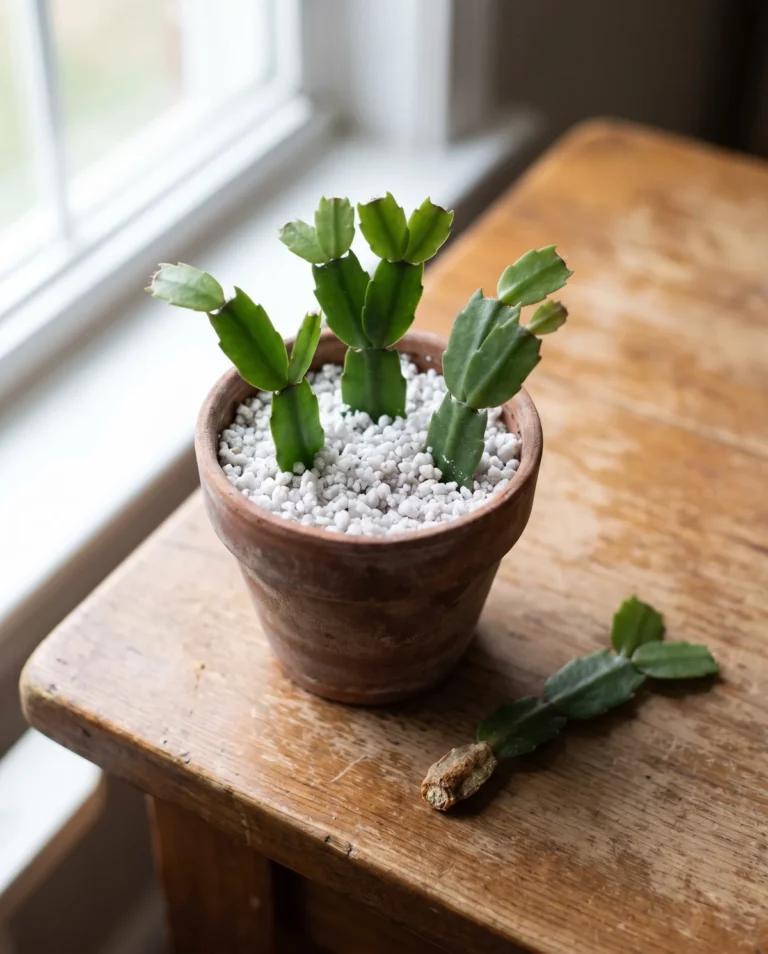
Holiday cacti hand out their own cuttings at every joint. In May or June, twist or cut off sections of three to five segments, let the wounds dry overnight, then set them about an inch deep in moist perlite, coarse sand, or a light mix, several to a pot, with a loose plastic tent to hold humidity. Roots form in roughly three to eight weeks, and the young plants are genetically identical to the parent, which is how century-old plants travel between generations: a handful of segments in an envelope is a complete inheritance. Extension services record 20 to 30 years as ordinary for a well-kept plant and individual specimens passing 100, frequently outliving the person who rooted them. The poinsettia of the same December is discarded by the millions in January; a Christmas cactus is a plausible gift to a grandchild. The recipe for joining that club is unspectacular: filtered light, water on the dry-to-touch rule, a tight pot, cool or dark autumns, and the restraint not to move or fuss over a plant that has settled.
Fragrance
The Christmas cactus has no documented fragrance. This site's data table codes the plant not fragrant, and none of the extension sources behind this page mention scent at all, which fits the pollinator: these flowers advertise to hummingbirds, which hunt by sight, so the species spent its budget on shape and color, the tiered silhouette and the nectar tube. For a holiday houseplant the silence is convenient. It shares the season's table with scented candles, citrus, and cut evergreens without adding to the pile, and households that find paperwhites or hyacinths overwhelming in a closed winter room get their color here for free. Any actual odor near the pot comes from the mix: constantly wet medium sours, and that swampy smell means the watering has been too generous for too long.
Toxicity and pet safety
This is the rare holiday plant with a clean bill. The ASPCA lists the Christmas cactus as non-toxic to cats, dogs, and horses, and extension coverage adds the practical footnote that it carries no thorns or spines, so the worst outcome of a pet raid is some chewed segments and perhaps a mildly upset stomach. Among the big three winter gift plants that makes it the default choice for households with determined plant-chewers, since the poinsettia, much overrated as a hazard, is still an irritant, and the cyclamen is dangerous if a pet digs up and eats the tuber. Sensible placement still has a case, because cats in particular find the dangling segments sporting, and a large old plant can lose a season's worth of growth, and its symmetry, to one enthusiastic afternoon. Protect the plant from the pet rather than the pet from the plant: a hanging basket or a high shelf settles the matter.
How long it lasts indoors
Two different clocks run on this plant, and both flatter it. The seasonal clock is the bloom: buds open in sequence over several weeks, individual flowers last a matter of days, and a well-budded plant holds a display across a month or more of the darkest season, with the Thanksgiving type starting around mid-November and the true Christmas type carrying into the new year. Protecting that display is mostly a matter of not surprising the plant. Once buds are visible, do not move the pot until flowers actually open, keep it clear of heat vents, fireplaces, and door drafts, hold the room short of 90°F and the cold side short of 50°F, and keep the watering steady, since a plant that dries hard while budded sheds its investment overnight. A plant carrying an enormous bud load will also drop some on purpose, self-pruning what it cannot feed, which looks alarming and is bookkeeping.
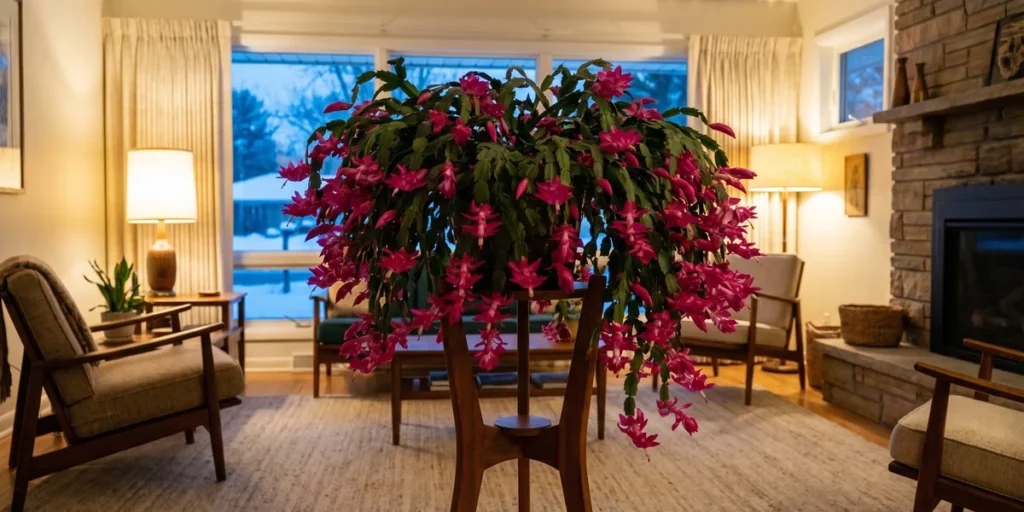
The other clock simply does not run out. With unremarkable care, the same individual blooms every year for decades, thickening into a specimen no store sells at any price. The amaryllis reblooms from its bulb with a rest, the poinsettia demands a darkness campaign for a diminished second act, and the Christmas cactus asks only for its autumn signal, then accumulates year over year. Buying one is less like buying flowers than planting a very slow tree, and the supermarket pot and the heirloom in the bay window are the same plant separated by nothing but time.
How long a holiday cactus really lasts, on both of its clocks
Not a cut flower, and the dataset codes it that way; the numbers that exist measure the potted display and the plant's lifespan, and the second number is the reason this plant has heirs.
Feed it to push it into bloom.
No extension bloom recipe includes fertilizer. The published triggers are cool nights or long uninterrupted darkness, per Clemson, Minnesota and Missouri Botanical Garden, and feeding belongs to the spring and summer growing months. Wisconsin's growers even ease watering in late summer to harden growth before the trigger season.
Move it somewhere prominent once the buds look good.
The single most efficient way to lose the buds. Relocation heads the documented bud-drop causes, and Iowa State's instruction is to leave the plant where it set its buds until flowers actually open, then parade it.
A bigger pot means a bigger show.
Backward for this species. Clemson has it flowering best somewhat pot-bound on a three-year repotting cycle, and the oversized pot's slow-drying mix is the standing invitation to the root rot South Dakota State calls its major disease.
Pests and diseases
The short pest list matches an undemanding plant. Mealybugs and soft scale are named by extension clinics as the most common insects, both appearing as immobile white fluff or brown bumps along stem joints, and both are handled by physical removal, a cotton swab in rubbing alcohol, repeated weekly until clean. Spider mites turn up in hot, dry rooms and answer to showers and humidity; fungus gnats advertise chronically wet mix and disappear when the watering slows. All of them together matter less than the one disease that counts, root rot, which extension services flag as the major killer and which is self-inflicted through overwatering or a heavy mix. Its signature is the paradox described under watering: limp, wrinkled, grayish segments on a plant whose soil is wet, because dead roots cannot drink. Caught early, the treatment is surgery: unpot, trim away brown mushy roots, repot in fresh airy mix, and water by the dry-to-touch rule from then on. Caught late, with rot into the stem base, the move is to take healthy segment cuttings and restart, which with this species is not even a defeat. Gray mold can spot flowers and stems in stagnant humid corners, and airflow fixes it.
Six forks, and the segment edges settle the first one
Half of holiday-cactus confusion is identity and the other half is water, and both diagnose from things you can see in ten seconds. Where a card has no photo, that is deliberate: an insect's body is an identification fingerprint better served by words than a generated approximation.
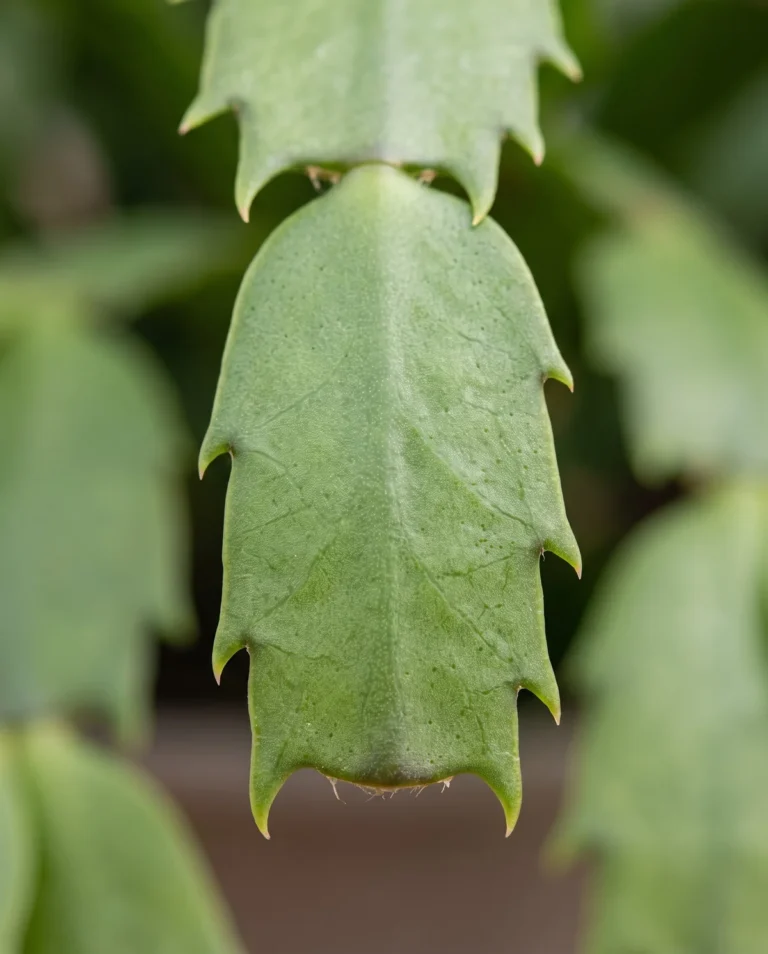
Iowa State and Missouri IPM give the same field mark: pointed teeth or claw-like projections mean Schlumbergera truncata, the species most stores sell under the Christmas name. Its flowers stand out straight or upward and its season starts around mid-November. Nothing needs fixing; it simply blooms on its own calendar, a few weeks ahead of the name on the tag.
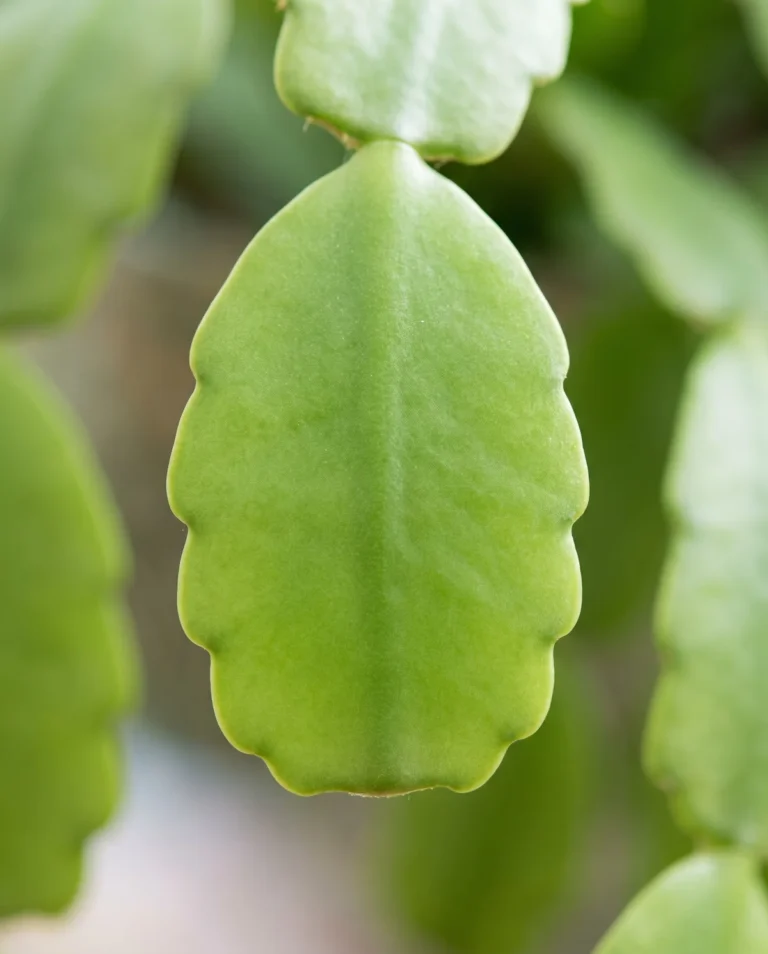
NC State's identification is exact: rounded cladode margins without pointed projections, pendulous flowers in magenta-red to pink, blooming late December into February. UMass notes the true hybrid is rarely grown commercially, so a scalloped plant usually arrived through family rather than retail, and it may be far older than it looks. Treat it as the long-term resident it is: tight pot, filtered light, cool autumns.
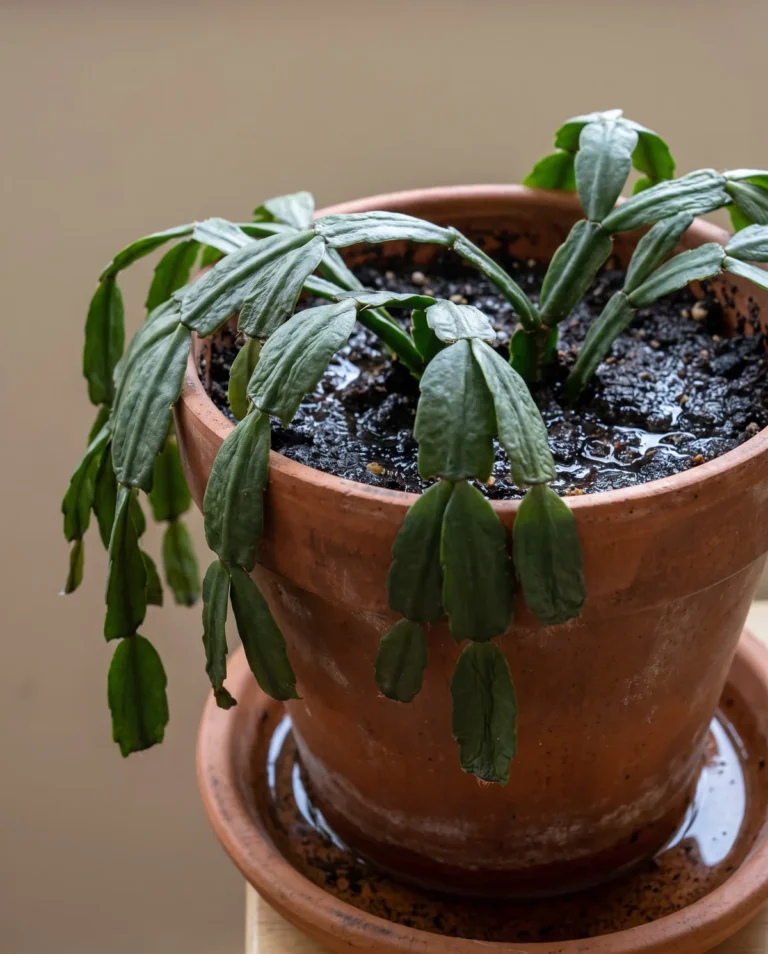
Illinois Extension names overwatering the most common culprit behind wilted, shriveled, gray-green stems, because drowned roots die and a plant with dead roots cannot drink no matter how wet the soil is. The same limp look with a light pot and bone-dry mix really is thirst, so the soil makes the call, never the stems. For the wet version: unpot, trim mushy roots, repot into airy mix, and water only when the top feels dry. South Dakota State calls the end stage, root rot, the major disease of this plant.
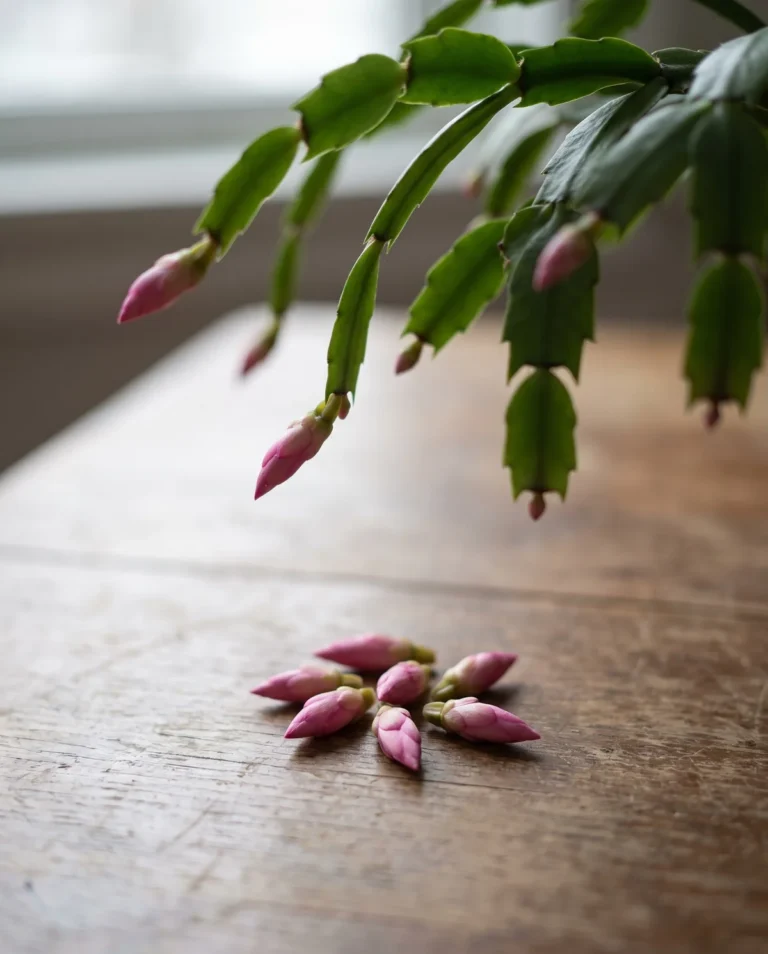
Missouri Botanical Garden lists relocation among the four standard bud-drop causes alongside heat over 90 degrees Fahrenheit, temperature swings and watering errors, and Iowa State's rule is direct: do not move the plant until flowers begin to open. Cold does it too, with NC State's Pender County office putting the danger lines at over 90 or under 50. And a plant carrying a huge bud load sheds some by design, what Minnesota Extension calls self-pruning of buds the plant cannot support. Steady spot, steady water, and the remaining buds hold.
Missouri IPM names mealybugs and soft scale the two most common insects on holiday cacti and recommends physical removal as the first response: a cotton swab dipped in rubbing alcohol, touched to each tuft, repeated weekly until nothing new appears. Scale reads as smooth brown bumps along the same joints and answers to the same swab. No photo on purpose: the insects themselves are an identification fingerprint, and the joints-and-cotton description is more reliable than a generated image.
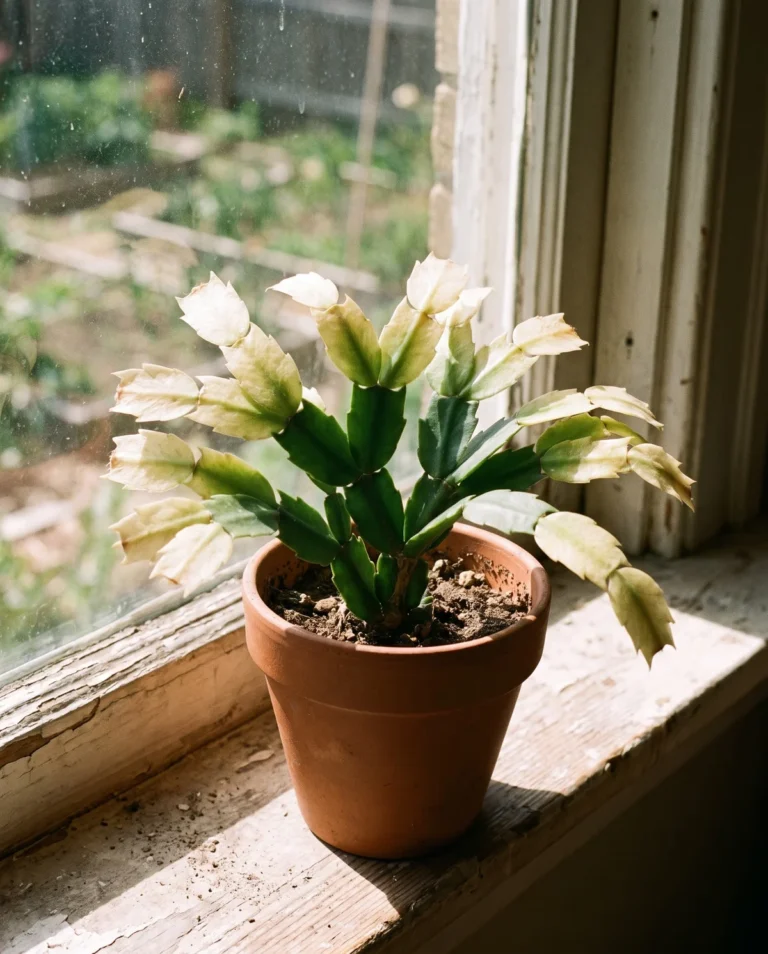
Clemson states the mechanism plainly: direct summer sun bleaches stems toward pale yellow. The plant reads light like the forest epiphyte it is, wanting the bright shade of a canopy, roughly three to six hours of gentle sun outdoors per Minnesota Extension, never a bare southern exposure in July. Moved back into filtered light, new growth comes in green; the bleached segments themselves stay pale and can be pinched off at a joint once new material replaces them.
Two ordered paths, October answers first
Both classic failures of this plant, no bloom and dropped buds, are environment stories, and both diagnose fastest by working backward through autumn. The checks run in order of likelihood: what the room was doing in October usually matters more than anything happening in December.
What actually goes wrong with holiday cacti, by the clinics that see them
No percentages are claimed, because no honest sample of home holiday-cactus trouble exists to count. Each line instead carries the wording of the extension service that handles the complaint, and the check line is the first thing to rule out.
October, in this order: night temperature above 65 to 70 degrees, light leaking into the dark hours, treatment started late or quit early. The plant is a short-day, cool-night bloomer and the room usually failed, not the plant.
Moving the pot tops the list per Iowa State; then temperature events past 90 or 50 degrees per NC State, watering swings, and drafts. Some drop on a loaded plant is self-pruning per Minnesota Extension.
The soil, not the stems: wet mix under a limp plant means dying roots, dry mix means thirst. Illinois Extension names overwatering the most common culprit, and South Dakota State calls the end result, root rot, the plant's major disease.
The joints between segments: cottony tufts are mealybugs, brown bumps are scale. Physical removal with an alcohol swab, repeated weekly, is the extension-recommended first response.
Placement history. Direct summer sun bleaches the stems of a forest epiphyte; filtered light or outdoor part shade of three to six hours keeps them green.
FAQ
Why is my Christmas cactus not blooming?
Autumn was too warm and too lit. The plant needs either nights in the 50s or six to eight weeks of long, truly uninterrupted darkness, twelve to fourteen-plus hours nightly, starting around mid-September. Lamps, streetlights, or nights above 65 to 70°F hold it vegetative. Give it a cool room or a nightly closet and buds appear in three to four weeks.
Why is my Christmas cactus dropping buds?
Sudden change of almost any kind: moving the pot, a draft, a heat vent, temperatures over 90°F or under 50°F, or soil that swung hard between wet and dry. A heavily budded plant also self-prunes buds it cannot support. Once buds show, keep everything steady and do not relocate the plant until flowers open.
How often should I water a Christmas cactus?
When the top of the mix feels dry to the touch, water thoroughly and let it drain fully. It is a rainforest epiphyte and should never be run bone dry like a desert cactus, but it forgives dryness far better than sogginess, and root rot from overwatering is its most serious disease.
Is Christmas cactus poisonous to cats or dogs?
No. The ASPCA lists it as non-toxic to cats, dogs, and horses, and it has no thorns. A pet that chews it may get a mildly upset stomach from the plant material itself, nothing more.
Do I have a Christmas cactus or a Thanksgiving cactus?
Check a stem segment. Two to four pointed, claw-like teeth on the edges mean Thanksgiving cactus, which is what most stores actually sell under the Christmas name. Rounded, scalloped edges with no points mean a true Christmas cactus, and its flowers hang downward while the other's stand out straight.
How long do Christmas cacti live?
Decades as a matter of course. Extension services document 20 to 30 years with ordinary care and individual plants past 100, which is why so many are family heirlooms started from a few segments of a grandparent's plant.
When should I repot a Christmas cactus?
Rarely, in spring, roughly every three to five years, and only one pot size up. It blooms best slightly pot-bound, and an oversized pot of wet mix is the fastest route to root rot.
The next questions people ask, answered short
Yes, and it helps. Minnesota Extension's recipe is a shaded porch or patio spot with three to six hours of gentle sun. Left out until fall nights settle into the 50s, it usually comes back indoors with buds already set, no darkness schedule needed; just bring it in before any frost.
Because it is almost certainly a Thanksgiving cactus, which most stores sell under the Christmas name per Iowa State, and because an early cool spell set the buds early. Nothing is wrong; cool nights in the 50s trigger bloom whenever they arrive.
No, that is a third holiday species on its own schedule, spring-blooming and slower to trigger, needing eight to twelve weeks of short days against the Christmas types' six to eight per Minnesota Extension. The ASPCA clears it for pets under the same listing as the Christmas cactus.
An airy epiphyte mix. Two parts potting mix to one part perlite lands inside Clemson's published range, and any bagged succulent or epiphyte blend does the same job. Heavy water-holding soil is the main route to root rot, this plant's most serious disease.
For this one, yes. NC State notes bathrooms are a popular spot for holiday cacti precisely because of their high humidity requirements, which separate them from desert cacti entirely. The window matters as much as the steam: the plant still needs bright filtered light there, and in fall it still needs its dark, cool nights wherever it stands.
Flower photos
Interesting tips
The cheapest path to a budded plant is a porch: leave the pot outdoors in part shade until fall nights settle into the 50s, and it will usually come inside already set with buds, no closet schedule required, just bring it in before any frost. When a bud-covered plant then drops a few, count before panicking, since a heavy setter sheds surplus buds by design. Segments removed at a spring pinch are free plants, and three cuttings rooted in one four-inch pot make a fuller gift plant faster than any single cutting will. Read the label with mild suspicion: a claw-toothed Thanksgiving cactus sold under the Christmas name blooms earlier than the box art suggests, which for a Thanksgiving table is a feature. The display happens at the stem tips, so every segment kept healthy is a future flower socket, a plant groomed by pinching carries more bloom than a sheared one, and the arching habit that wants a hanging basket also puts those tips exactly at eye level. It blooms for the month that officially belongs to narcissus and holly, the December birth flowers.
Related Guides & Flowers
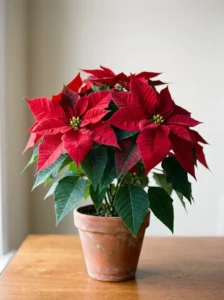
Poinsettia
the six-week icon of December windowsills.
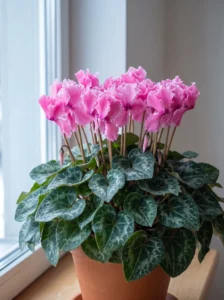
Cyclamen
months of cool-room winter flowers.
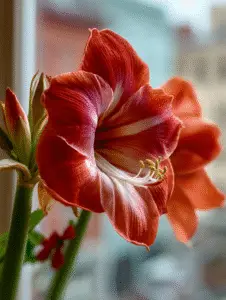
Amaryllis
the easy rebloomer of the holiday table.
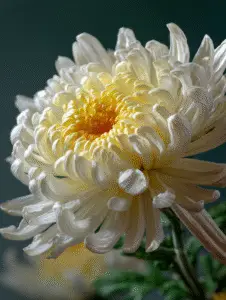
Chrysanthemum
the other heirloom that lives for decades.
Enjoying our flower guides? Add YourFlowersGuide as a preferred source on Google. It helps more readers find us.
Add to Preferred Sources