A Christmas cactus refuses to bloom when it misses the autumn cues that set flower buds: long unbroken nights and a cool room, not a stronger fertilizer. Almost every case falls into one of three situations. The stems stay green into November with no buds at all; buds form and then yellow, shrivel, and drop before they open; or the plant flowers in spring instead of December. Which of the three you have decides what to change, so sort your plant first.
Part of the trouble comes from treating the plant like a desert cactus. Cornell University describes it as a rainforest epiphyte that grows on tree branches in Brazil rather than in desert sand, so the neglect that suits a true desert cactus works against it here: bud set runs on day length, steady moisture, and temperature. That is also why a sulking plant is worth diagnosing: a well-kept one has been known to live 100 years. What follows covers how to tell the three problems apart, a diagnosis tree that rules out causes in the order that settles them fastest, the dark-and-cool routine step by step, the dates and temperature thresholds behind it, and what can still be done once buds are already falling.
On this page 6 sections
First, tell the three problems apart
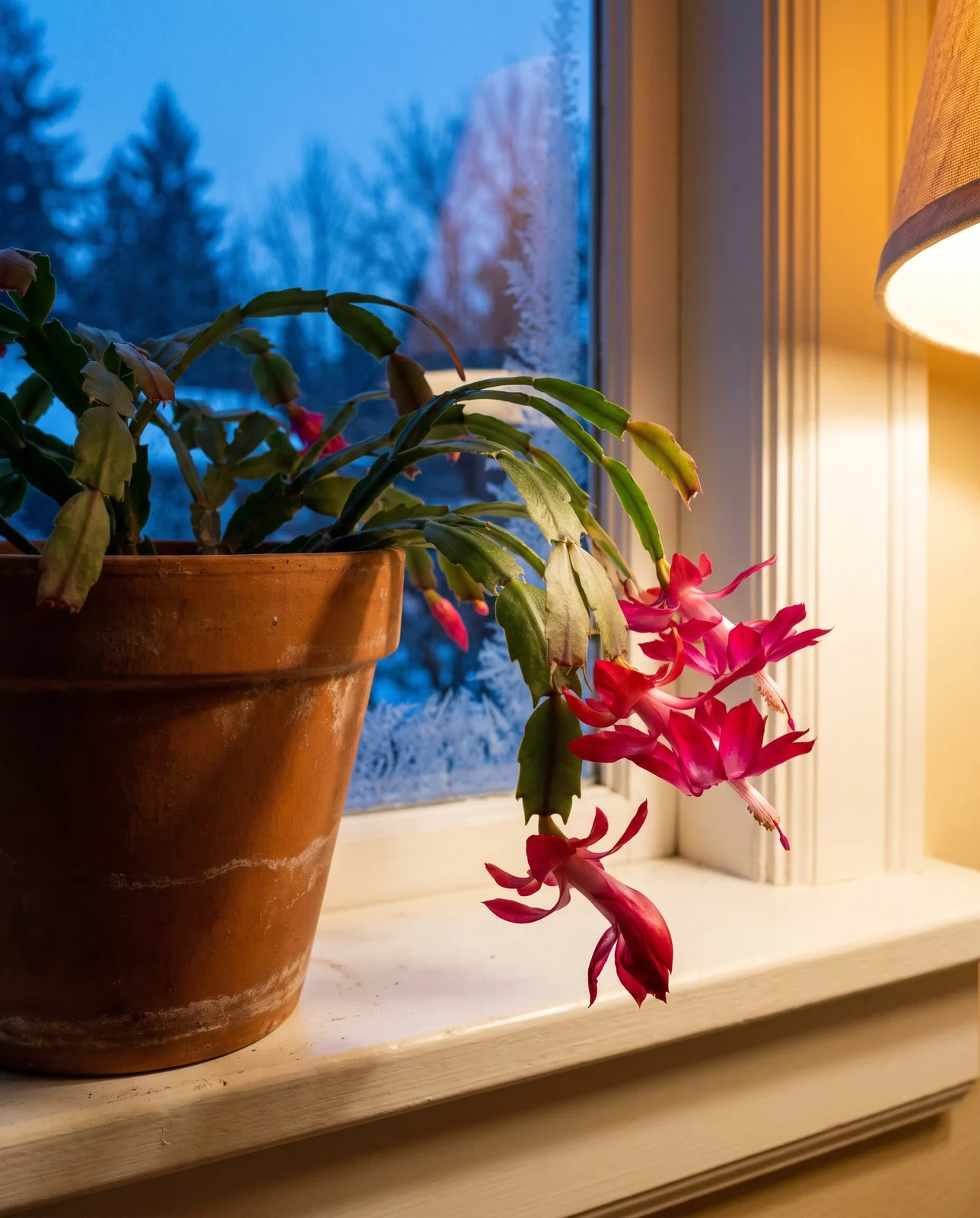
Start with the symptom, because the three cases have almost nothing in common. A plant still carrying nothing but foliage in November never began flowering at all, and in most homes the reason is one of two things: evening light from household lamps, or a room that stays above 70°F. Either one cancels the short-day signal before it registers, quietly and without any sign of damage. A plant that pushed small beads out along the stem tips and then dropped them, yellowed, onto the saucer did begin, and something interrupted it afterward. Penn State Extension puts bud drop down to temperature extremes, too little light, saturated roots, drought stress, or fertilizer applied while the buds are swelling. Iowa State University Extension adds one of the most common causes of total bud loss: picking the pot up and moving or turning it while buds are forming.
A plant that flowers heavily in March or April is usually not misbehaving, it is a different species than the label claimed. Much of what sells as holiday cactus is Thanksgiving or Easter cactus. Penn State Extension separates them by segments and anthers: Thanksgiving cactus carries two to four sharp, saw-toothed points along each stem segment and yellow pollen anthers, while a true Christmas cactus has scalloped, pear-shaped segments with no teeth and droopy blooms with purplish-brown anthers. The bloom windows follow the same split, mid-November into late December for the Thanksgiving type, late November into early February for three-inch rosy-red Christmas cactus flowers. Easter cactus segments are rounded, its flowers open flat and star-shaped, and it wants a two-stage cool period of its own before it will bud. An off-season display usually means the plant is simply following its natural genetic schedule.
Diagnosis tree
Trace a missing or dropped bud back to its cause
Holiday cactus buds fail in two ways: none form at all, or they form and then drop before opening. A plant blooming in spring or summer belongs on neither list, since that is a species question settled by stem-segment shape rather than by care history, with rounded margins on Easter cactus and saw-toothed edges on Thanksgiving cactus. Work down the matching column in order. Each check assumes the ones above it came back clean.
The dark-and-cool protocol, step by step
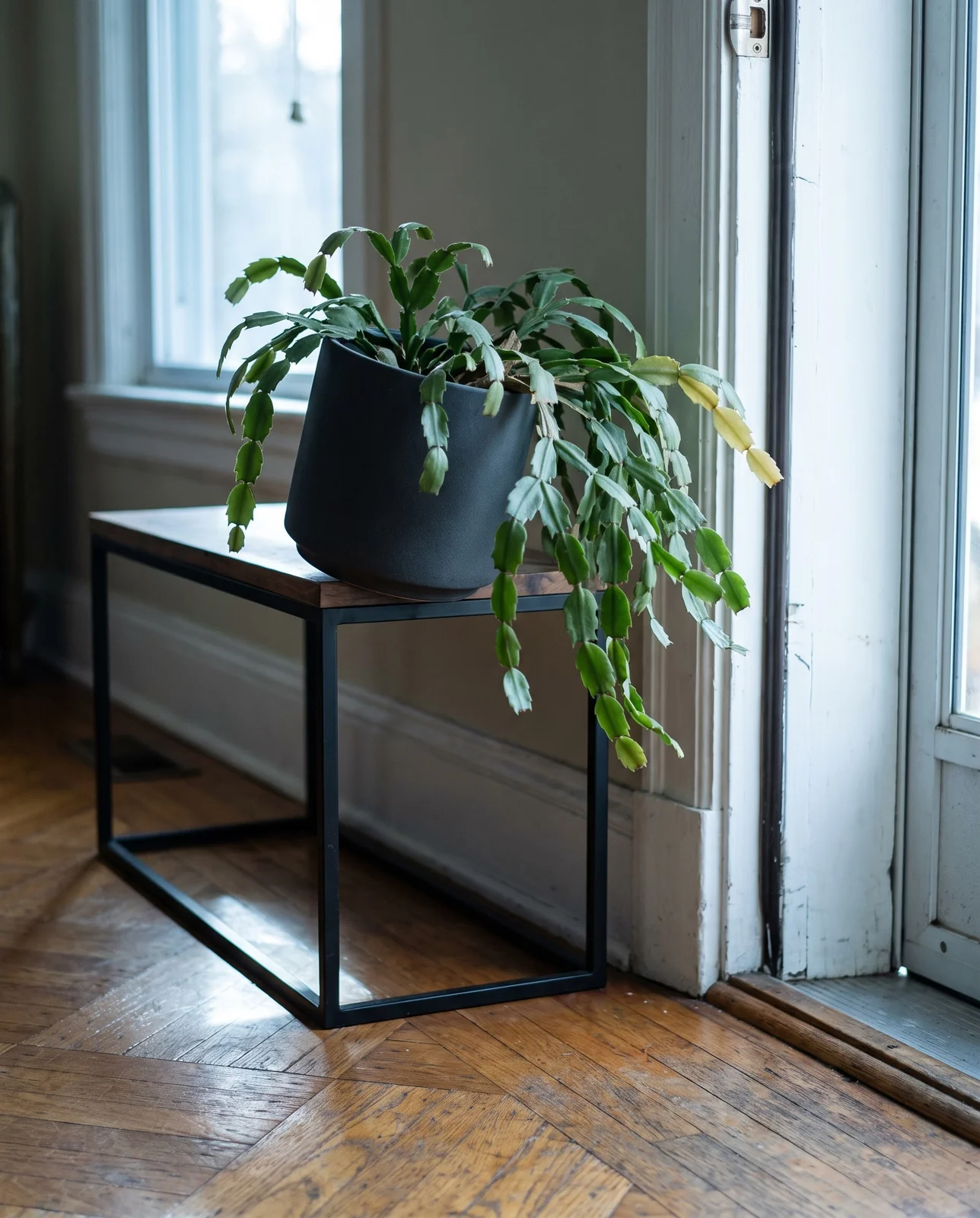
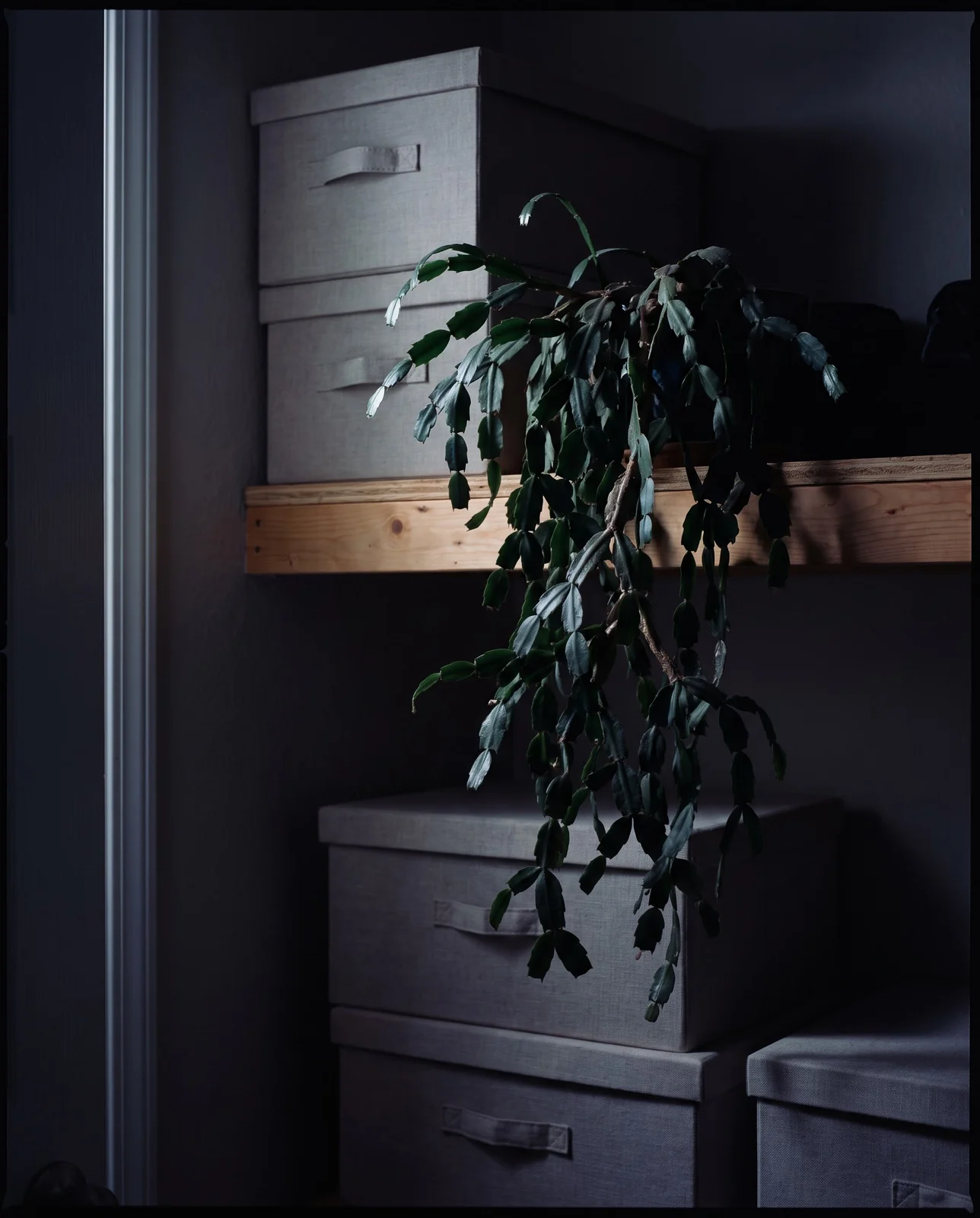
Christmas cacti are short-day plants: they build stem segments through the long days of summer and switch over to flowering as the days shorten in autumn, as Iowa State University Extension describes it. Starting that switch takes total darkness every night, and total means total. Cornell University and Penn State Extension both set the floor at 12 uninterrupted hours a day, while Iowa State finds most cultivars set buds most reliably on 14 to 16. A lamp switched on in the same room after dusk, a kitchen fixture, or ambient indoor light of any kind resets the plant’s internal clock and stalls bud development. Three ways to get real darkness in an ordinary house: park the plant in a room nobody uses in the evening, carry it into a closet each night, or drop a lightproof box over it from late afternoon until morning.
Temperature runs alongside the dark hours and can override them. Above 70°F the plant will not set buds even on short days, and Iowa State University Extension puts night temperatures of 60°F to 65°F with a slightly warmer day at the center of the range for bud formation. Cornell University points lower still, to 50°F to 55°F, as the ideal once the plant is in bloom. If no room in the house can be made properly dark, Iowa State University Extension names a second route: a steady 55°F through autumn will set flower buds on some cultivars regardless of day length. Anyone already carrying cyclamen through the winter has the right corner for it, since both plants want the cool end of the house.
Water carries the buds once they are set. This is a plant rooted in organic debris up a tree rather than in mineral soil, so the mix should stay evenly moist the whole time buds are forming, and letting it dry out completely is enough on its own to abort them. Cornell University’s cadence is twice a week through the summer growing season, dropping to a light watering roughly every 10 days once winter and bloom arrive. Fertilizer stops the moment the first buds show in autumn, on both Cornell and Penn State Extension’s advice, because feeding into bud development is itself one of the causes of the drop. And the pot stays where it stands, because Iowa State University Extension warns that moving it before the flowers open will cost you the buds. Once the first petals unfold, the plant can go wherever it is meant to be seen, as long as that spot is clear of heating vents, fireplaces, and doors to the outside.
Threshold and timeline block
Timing a bloom for late December means counting backward, the same arithmetic behind holiday displays of poinsettia or forced bulbs of amaryllis. Cornell University puts the start of the routine 8 to 10 weeks before Christmas, which lands in late September or early October. Two temperature limits bracket everything in between: below 50°F risks cold injury by Cornell’s reckoning, above 70°F stops bud formation by Iowa State University Extension’s. Penn State Extension’s 68°F day and 60°F night belong to a third category entirely: ordinary winter growing outside the bud-setting window.
The reverse holiday bloom schedule, and the thresholds behind it
Every lever here carries a stated threshold, and the universities do not fully agree on two of them. Darkness runs 14 to 16 unbroken hours a night by Iowa State University Extension's count, at least 12 by Cornell University's and Penn State Extension's, and any artificial light inside that window breaks the short-day trigger outright. Bud-setting temperature sits at 60°F to 65°F at night with a warmer day per Iowa State, while Cornell puts the ideal for a plant already in bloom lower, at 50°F to 55°F; above 70°F buds do not form at all by Iowa State's account, and below 50°F the plant takes cold damage by Cornell's. Everyday winter care sits apart from both figures at Penn State's 68°F by day and 60°F at night, with a warning that hard swings between those points bring buds down on their own. Soil stays evenly moist while buds are setting, per Iowa State University Extension, then drops to a light watering roughly every 10 days through winter per Cornell University; standing water rots the roots and a complete dry-out drops the buds, both per Penn State Extension. Fertilizer ends the moment autumn buds appear, Cornell and Penn State agreeing, since feeding during bud development is named as a trigger for the drop.
The forcing calendar runs backward from the holiday. Late September into early October, 8 to 10 weeks out: dark treatment begins at 12 to 16 hours a night, nights come down to 60°F to 65°F, and fertilizer stops. Late October into early November: check the stem tips for pinhead swellings, hold the soil moisture even, and leave the pot alone. Mid to late November: buds reach pea size, the strict closet routine ends, and the plant returns to bright indirect light away from drafts. Early to mid December: buds color up and begin to open, and once blossoms are expanding the plant can move to its display spot. Late December: full bloom, held at 50°F to 55°F per Cornell University to slow the fading, with a light watering whenever the top of the soil dries. January and February: back to Penn State Extension's 68°F day and 60°F night, and Cornell University's light drink roughly every 10 days.
Once it is already dropping buds
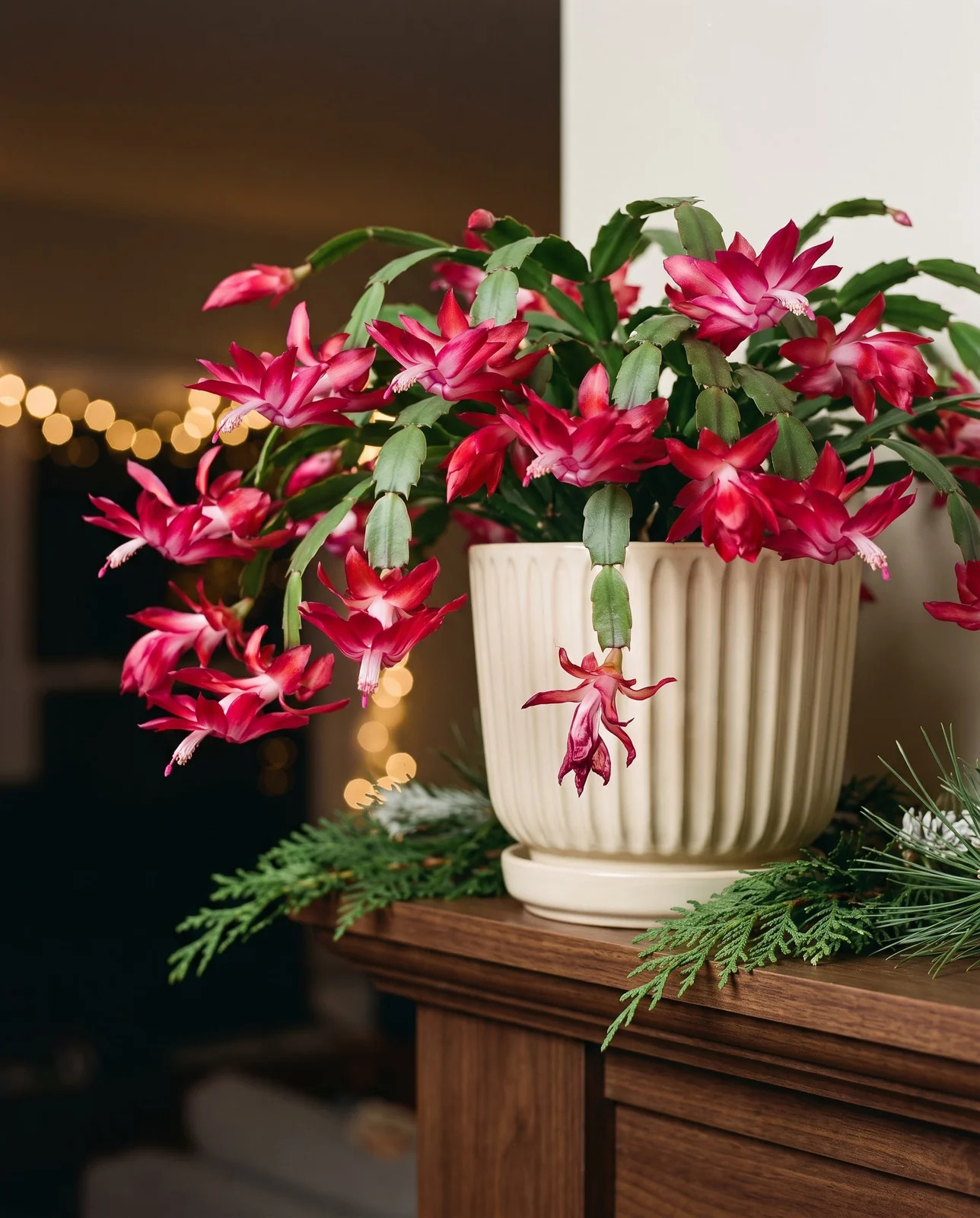
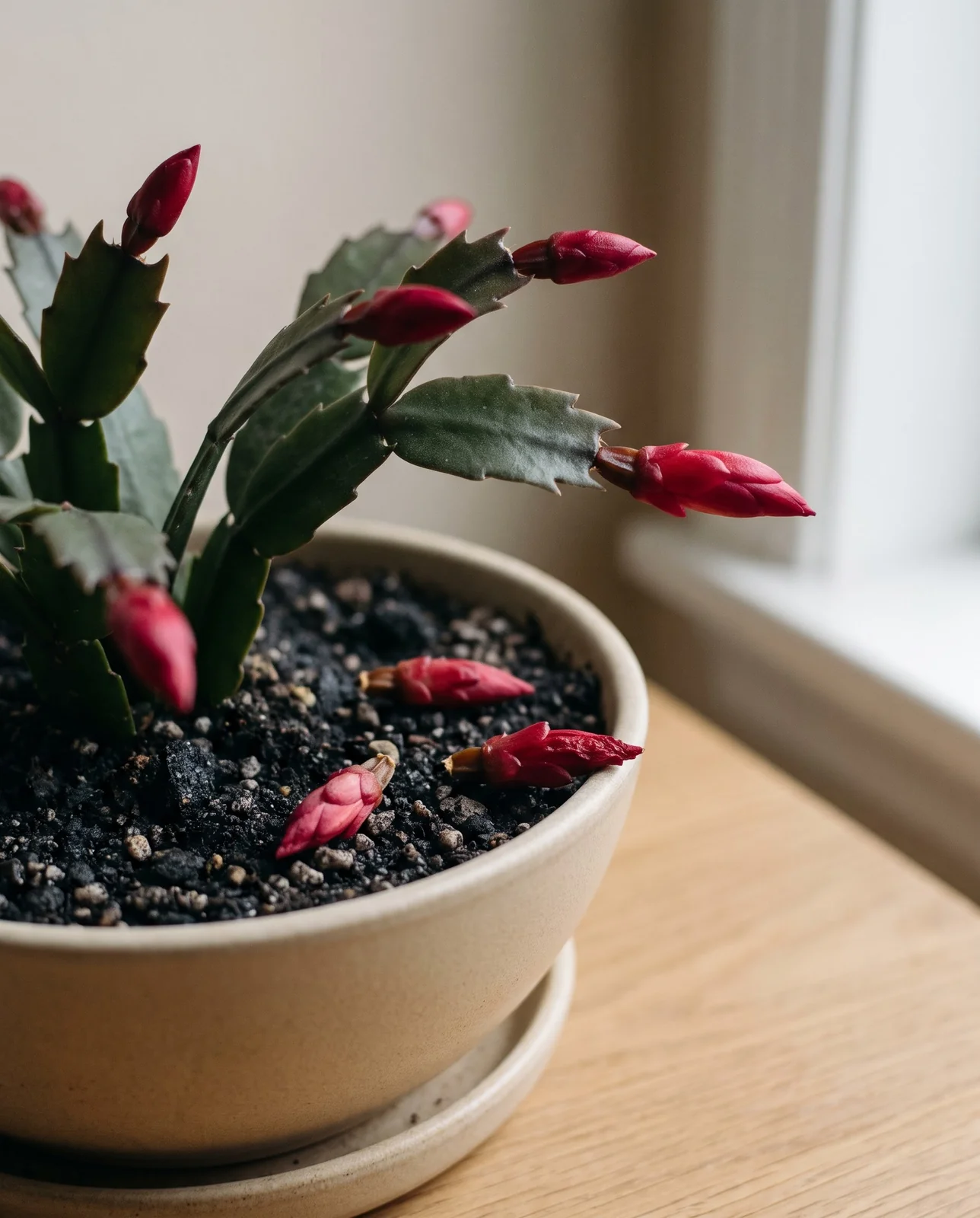
A ring of dropped buds on the windowsill is the end of those particular flowers. Once a bud pales, withers at the base, or snaps free of the segment, it is finished: abscission is the plant shedding load under stress, and it does not reverse. Extra fertilizer, a heavy watering, or a shift into direct sun will move the rest of them off the plant faster rather than rescue anything. What is left to protect is the buds still firmly attached, and they are protected by holding everything still.
Leave the container exactly where it stands, without even turning it, since a change in light orientation is enough to bring down more. Block the hot air from furnace registers, wood stoves, and radiators, and the cold that comes in every time an exterior door opens; Cornell University counts both directions as bud-drop triggers. Check the root zone by hand: lightly damp, like a wrung-out sponge, neither dust dry nor sodden. If the segments have gone bronze-red, Cornell reads that coloring as too much direct sun, so shift the plant into bright, filtered light.
If the whole crop goes, the rest of the season is about the plant rather than the flowers. Penn State Extension is firm that a holiday cactus is never repotted while it is trying to bloom, so leave it in its pot, in one stable spot with bright indirect light and light winter watering, and do any repotting in spring or early summer when it starts pushing new segments again.
FAQ
Why did my Christmas cactus buds fall off after I moved it?
Moving or turning the pot while buds are developing is one of the surest ways to lose them, and Iowa State University Extension says so directly. Leave the plant where it set its buds until the first blossoms actually open. After that it can go anywhere in the house that is clear of drafts.
How many hours of darkness does a Christmas cactus need to bloom?
Cornell University and Penn State Extension both put the floor at 12 uninterrupted hours a night. Iowa State University Extension finds most cultivars set buds far more reliably on 14 to 16 hours. A lamp switched on in the room breaks the run either way.
Is my room temperature too warm for flower buds to form?
Probably, if the house sits above 70°F. Iowa State University Extension finds that flower buds fail to form past that point even when the nights are long enough. Night temperatures of 60°F to 65°F with a slightly warmer day suit bud set.
When should I start the dark treatment for Christmas blooms?
Cornell University sets the start 8 to 10 weeks ahead of Christmas, so late September or early October. Run the long nights and cool temperatures without a break until the buds swell to about pea size, then let the plant back into normal light.
How do I know if my plant is a Thanksgiving cactus instead of a Christmas cactus?
Look at the stem segments and the anthers. Penn State Extension describes Thanksgiving cactus as carrying two to four sharp, saw-toothed points on each segment with yellow pollen anthers, and it blooms from mid-November into December. A true Christmas cactus has scalloped, pear-shaped segments and purplish-brown anthers, and it flowers from late November into February.
Can I save flower buds that have already started turning yellow and dropping?
No. Bud abscission does not reverse, so anything shriveled or already separated is gone. What helps is stabilizing everything around the remaining buds: stop the fertilizer, block the drafts, keep the soil evenly moist, and leave the pot exactly where it is.
Enjoying our flower guides? Add YourFlowersGuide as a preferred source on Google — it helps more readers find us.
Add to Preferred Sources