
in bloom
now
through Aug
Bloom calendar
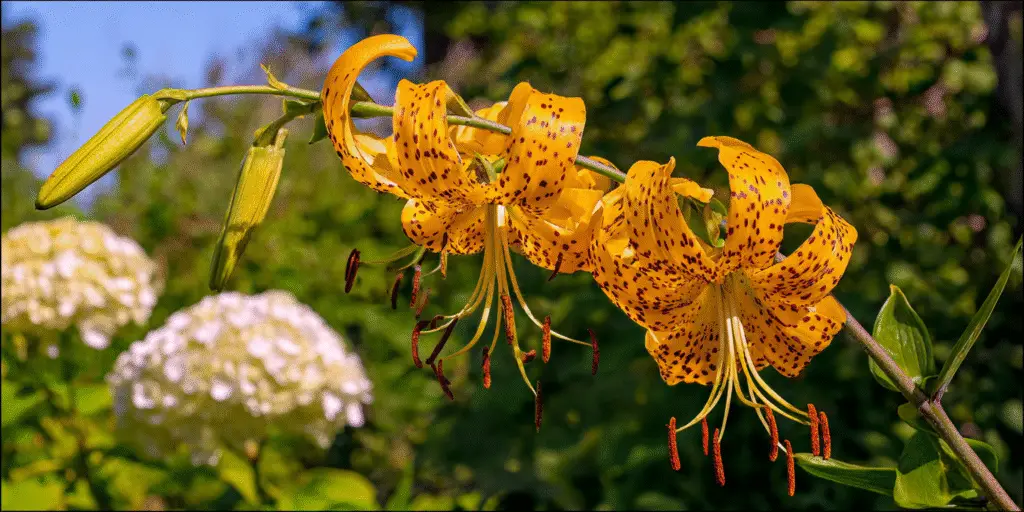
Lilium lancifolium
Species; Asiatic group
At‑a‑glance
- Group/Class: Species; Asiatic group
- Height × spread: 36–72 in (0.9–1.8 m) × 12–24 in (30–60 cm)
- Bloom window: July to August
- Color & flower form: Orange, heavily spotted, nodding turk’s‑cap
- Fragrance: 0 none
- USDA hardiness: zones 5 to 8
- Breeder / Year / Origin: unknown, native to East Asia
- Pet safety: avoid
How it differs
- Produces abundant bulbils on stems and spreads vegetatively
- Sterile triploid in many regions; rarely sets seed
- Non‑fragrant compared with many lilies
Strengths
- Reliable performer in full sun
- Multiplies readily from bulbils
- Tolerates varied soils if drainage is good
Care in one minute
Full sun; light shade reduces bloom
Moist, well‑drained, acidic soil
Even moisture during growth
Remove bulbils to limit spread; deadhead after bloom
Watch‑outs
- Can become weedy from bulbils if unmanaged
- Botrytis leaf blight in wet weather
Best uses (tags)
Provenance note
Native from the Russian Far East through China, Korea, and Japan; naturalized in parts of eastern North America.
References
- NC State Extension Plant Toolbox – Lilium lancifolium (Tiger Lily)
- Kew Science – Plants of the World Online – Lilium lancifolium
- UMass Extension – Lily Leaf Beetle (Lilioceris lilii)
- ASPCA – Tiger Lily
Similar Flowers
Enjoying our flower guides? Add YourFlowersGuide as a preferred source on Google. It helps more readers find us.
Add to Preferred Sources