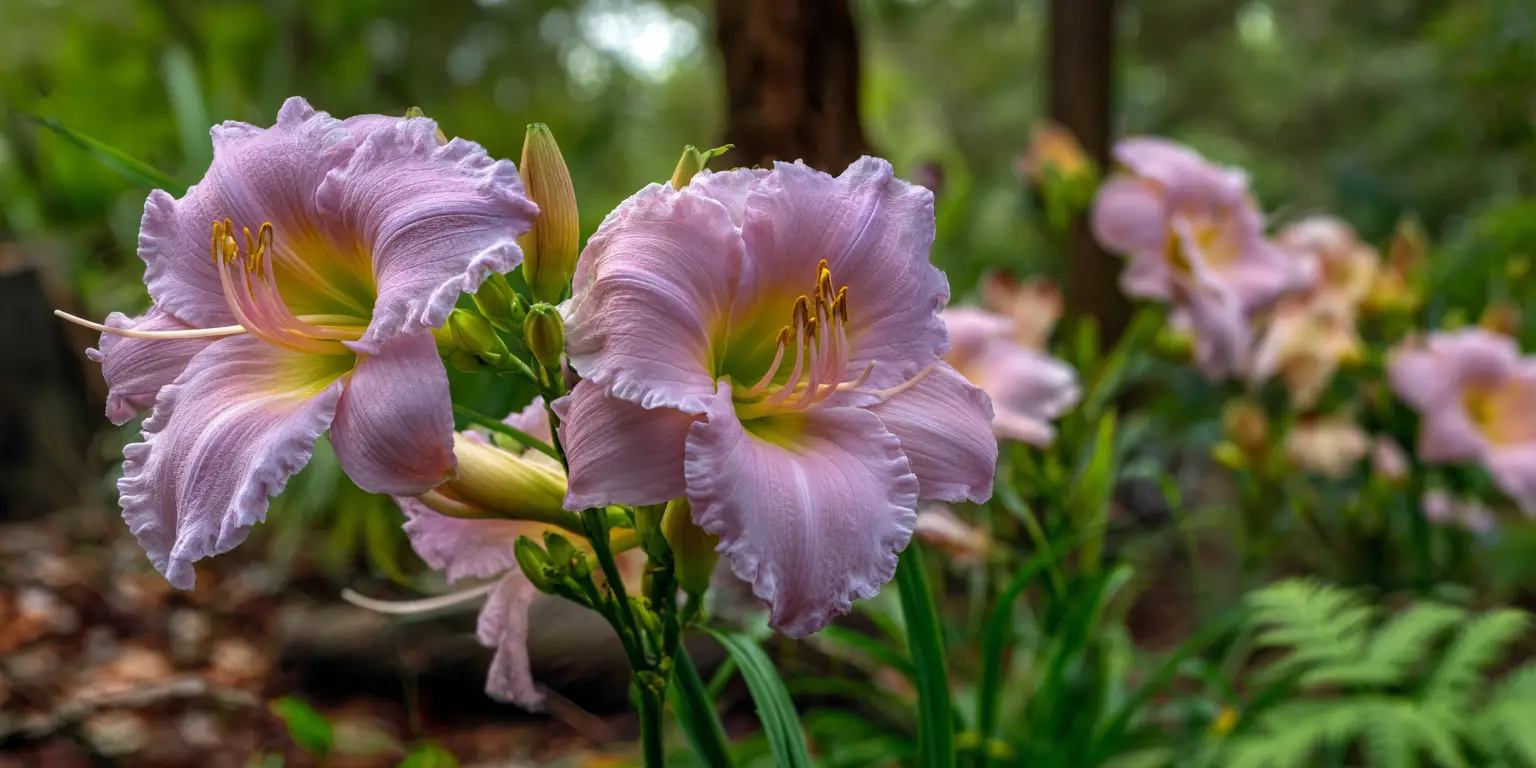
in bloom
now
through Aug
Bloom calendar
Catherine Woodbery
Daylily cultivar
At‑a‑glance
- Group/Class: Daylily cultivar
- Height × spread: to 30 in (75 cm) × 12-24 in (30-60 cm)
- Bloom window: mid summer
- Color & flower form: Orchid‑pink with green throat; about 6 in
- Fragrance: 1 trace
- USDA hardiness: zones 3-9 (general daylily guidance)
- Breeder / Year / Origin: unknown
- Cut‑flower notes: Flowers last 1 day; budded scapes extend the vase show
- Pet safety: avoid: toxic to cats; generally non‑toxic to dogs
How it differs
- Soft orchid‑pink color with larger blooms
- Noticeable fragrance compared with many cultivars
- Taller scapes for mid‑border use
- Classic look suited to cottage plantings
Strengths
- Adaptable and reliable in many soils
- Fragrant blooms in mid season
- Low maintenance perennial habit
- Good color partner with blues and whites
Care in one minute
Site: full sun for best flowering; light shade in hot afternoons is acceptable
Soil: well‑drained, moderately fertile; slightly acidic to neutral
Water: about 1 in per week; consistent moisture during bud set
Feeding: light spring fertilizer or compost
Grooming: remove spent blooms and scapes; clean foliage in fall
Divide every 3-4 years as needed
Watch‑outs
- Flower color can wash in deep shade
- Rust and leaf streak possible in humid or wet periods
- Divide clumps periodically to maintain flowering
Best uses (tags)
Provenance note
Introduced in the mid‑20th century; detailed registration data not verified in public sources at time of writing.
References
- Royal Horticultural Society – Hemerocallis ‘Catherine Woodbery’
- University of Minnesota Extension – Daylilies (care and bloom facts)
- Clemson Extension – Daylily diseases and insect pests
- ASPCA – Day Lilies (Hemerocallis spp.) toxicity to cats
Similar Flowers

Enjoying our flower guides? Add YourFlowersGuide as a preferred source on Google. It helps more readers find us.
Add to Preferred Sources