The pairing · pick a flower
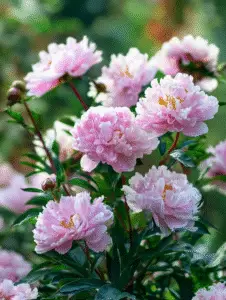 Peony+
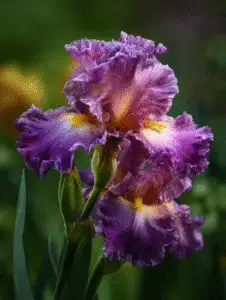 Bearded irisProven
Wants the same full sun, sharp drainage and near-neutral soil peony does, and its sword-like foliage is the clean vertical counterpoint to a peony's rounded mound while both bloom together in late spring.
Peony+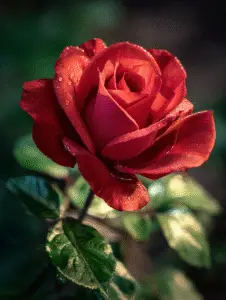 Shrub roseProven
The classic full-sun, well-drained border anchor, and it shares peony's exact disease logic: both get fungal trouble from crowding and wet foliage, so the same generous spacing that protects a peony protects a rose, and roses carry bloom on into summer after peony finishes.
Peony+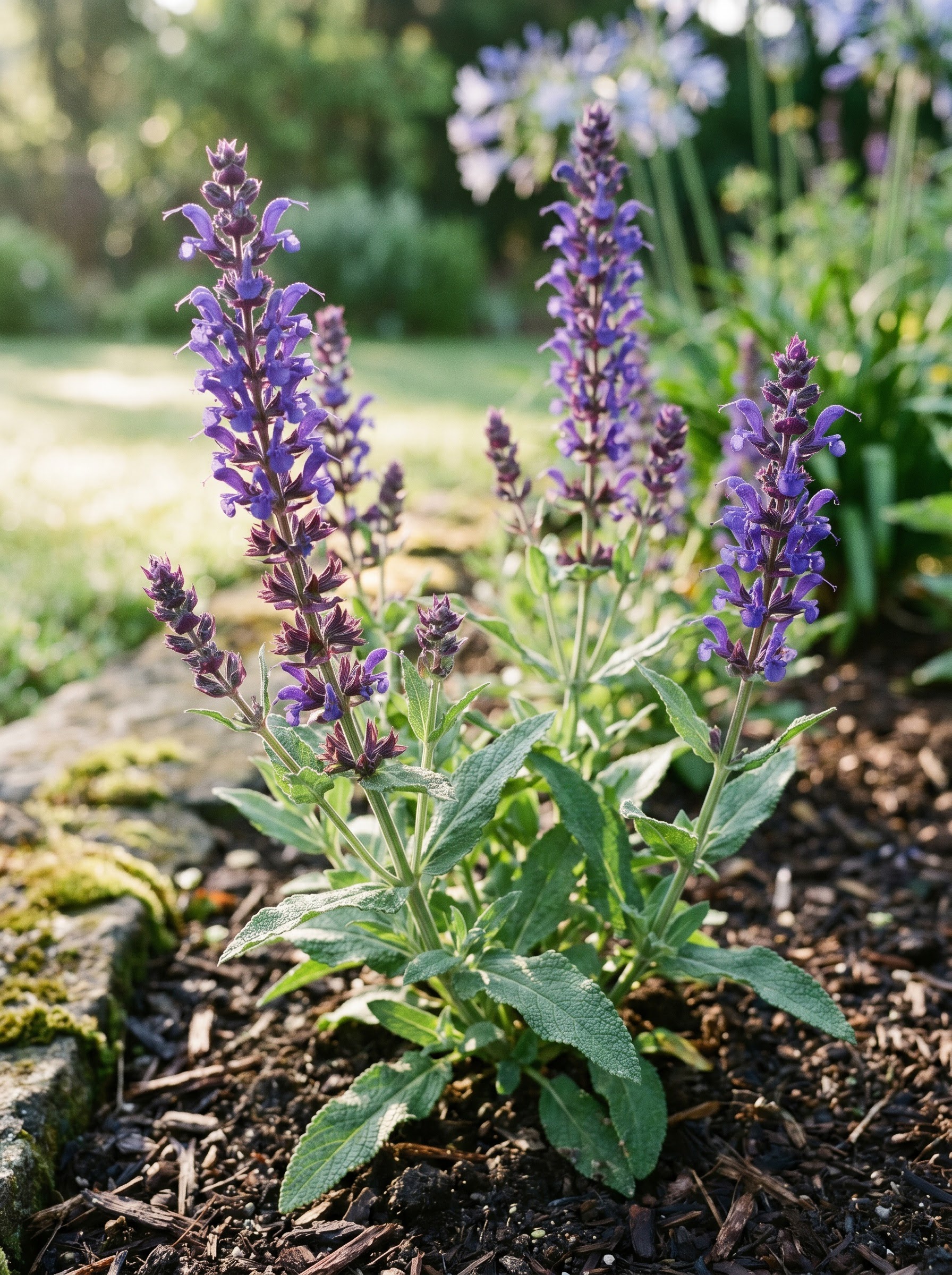 SalviaProven
Full sun and lean, well-drained soil are exactly what salvia wants, its upright violet-blue spikes are the vertical shape peony's mounding form lacks, and it blooms on well after peony fades, stretching color through summer.
Peony+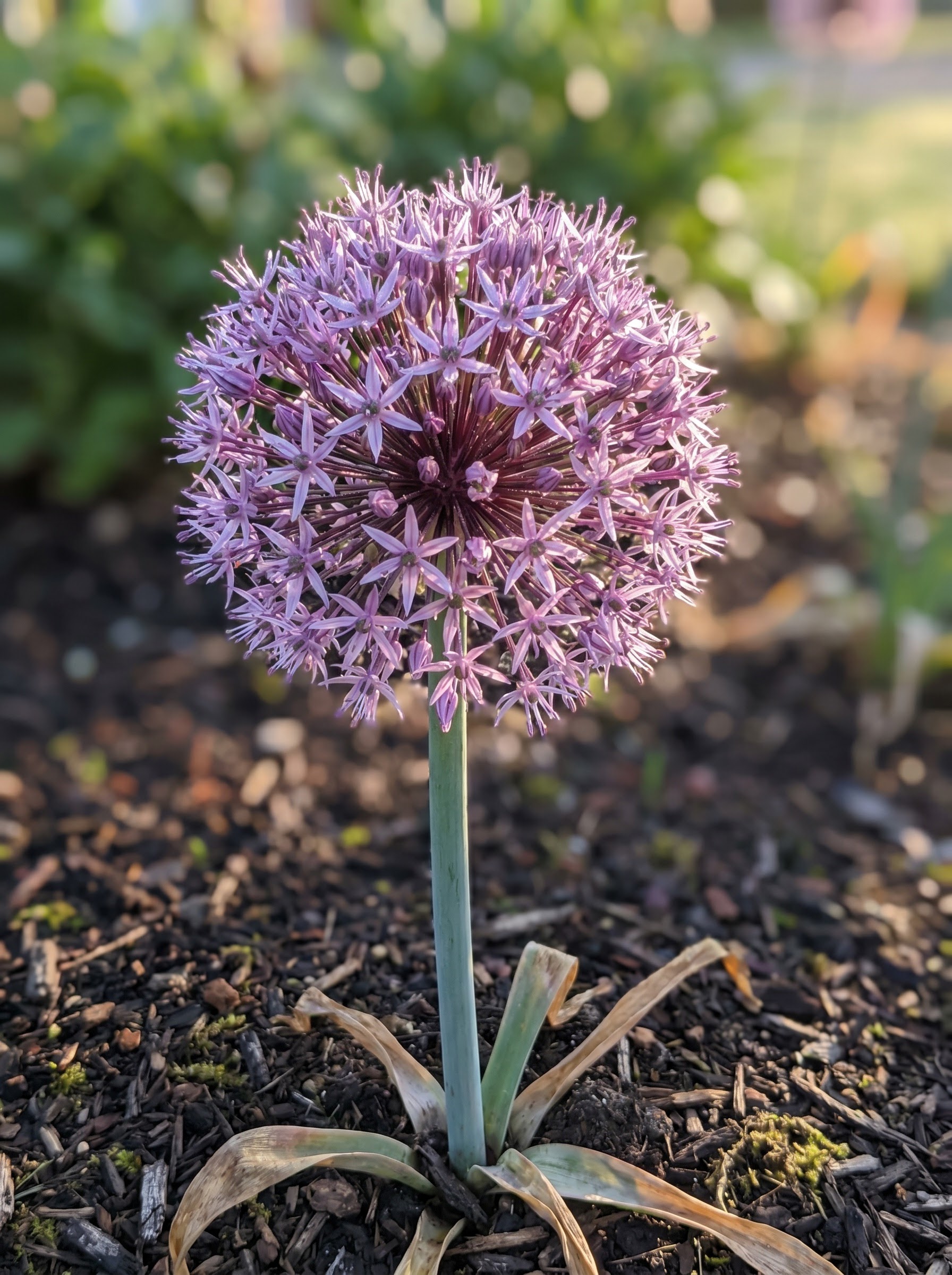 AlliumProven
Sun-loving and finished blooming before peony's foliage fully bulks up, so there's no season-long competition, and its spherical purple heads make a striking early contrast against peony's emerging bronze-red shoots.
Peony+ DaylilyProven
Clump-forming rather than running, so it never crowds a peony's root zone the way a spreader would, matches its full-sun and well-drained needs closely, and its arching grassy foliage carries the bed through summer once peony has gone quiet.
Peony+ CatmintProven
Genuinely drought-tolerant once established, which suits a mature peony's own reduced water needs, and its long grey-green and blue-purple bloom runs on both sides of peony's brief window, filling in low at the front of the bed.
Peony+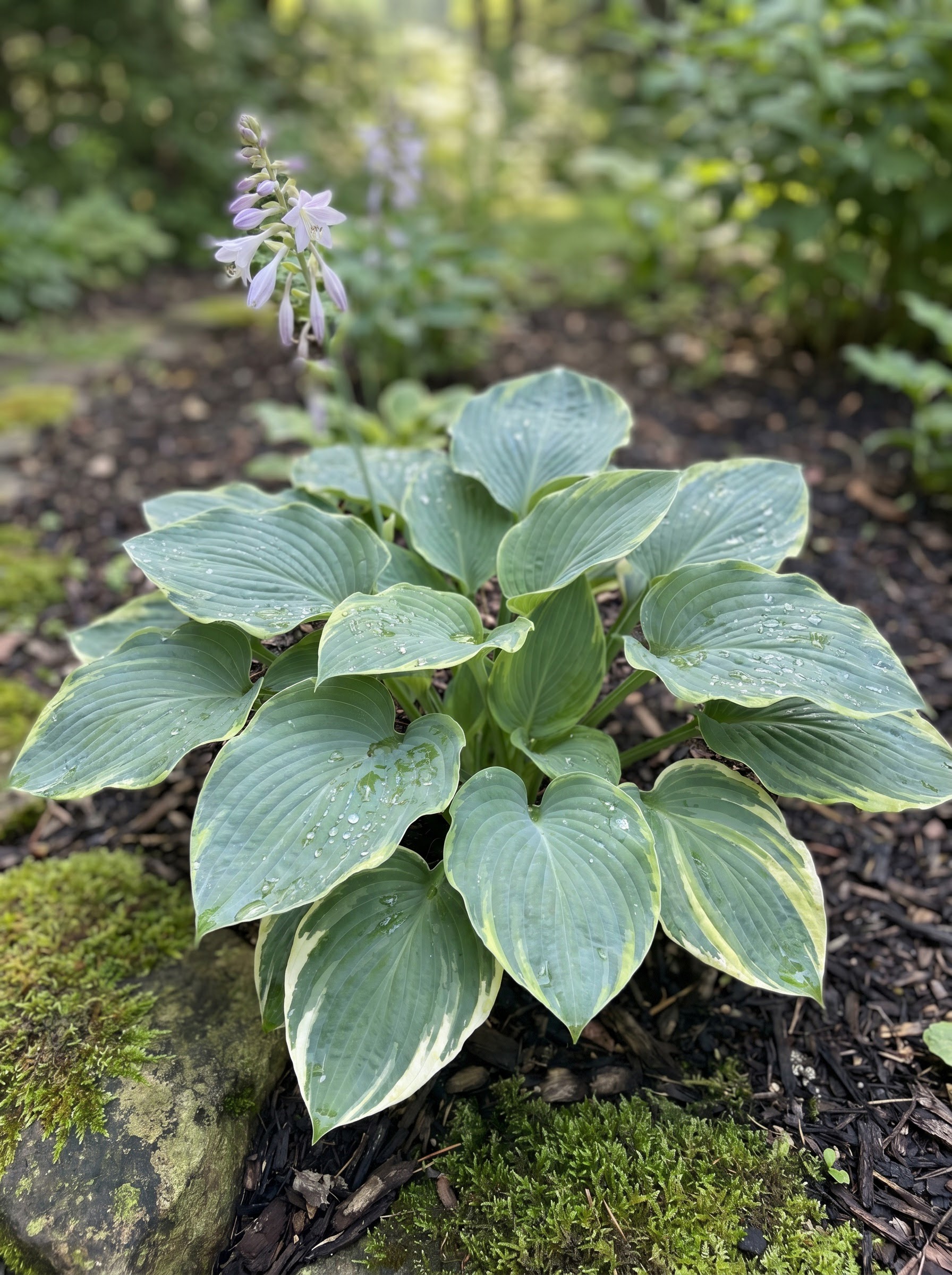 HostaPartial
Once peony's foliage starts to fade and go tired, hosta's broad textured leaves step in and fill the gap, but most hostas genuinely prefer part shade, a real mismatch against peony's full-sun requirement.
Peony+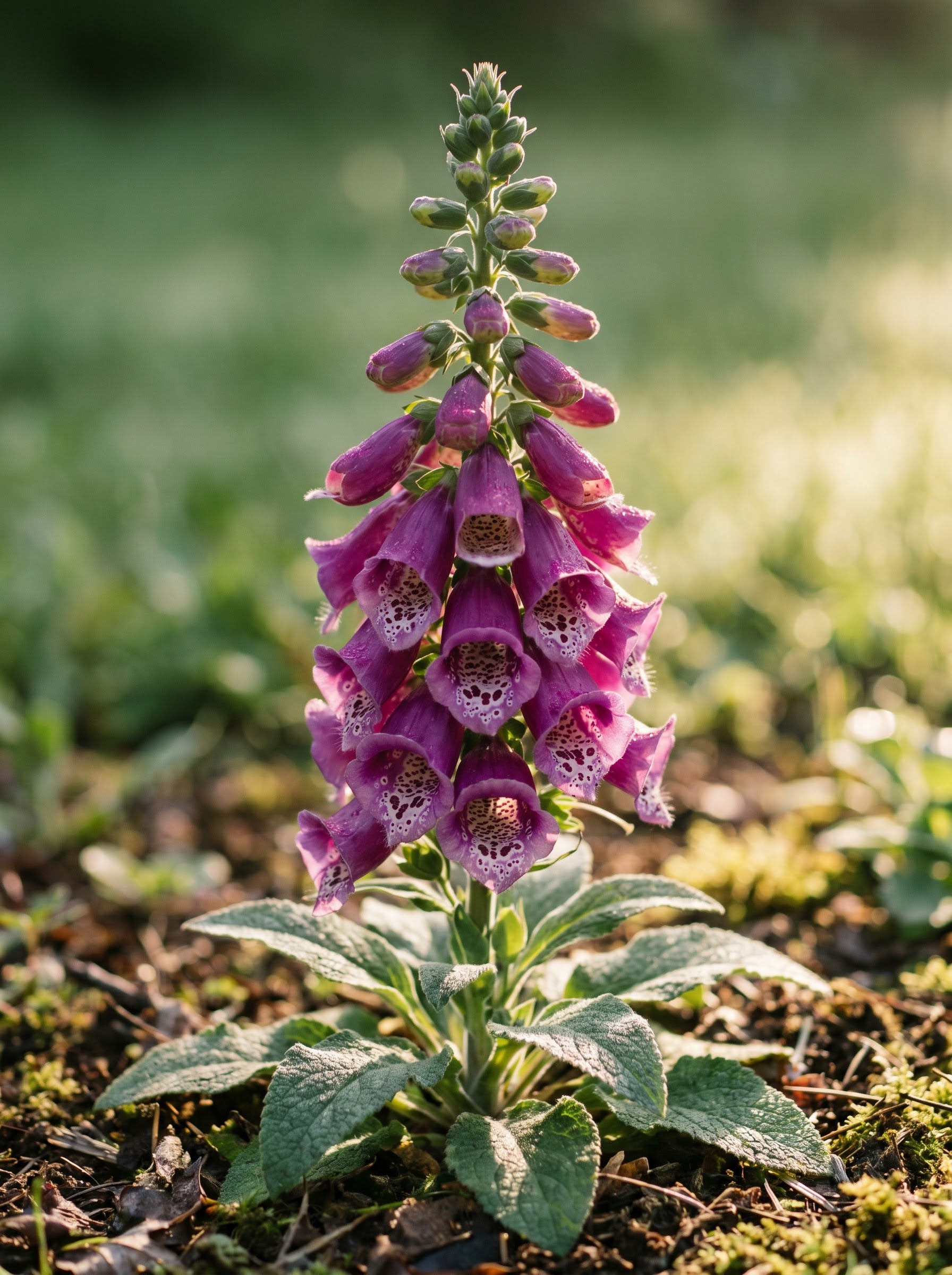 FoxgloveFolklore
A repeated, strong design pairing for the vertical spike role peony can't provide during its own bloom window, though foxglove naturally leans toward more moisture and part shade than a mature peony wants, and it self-seeds unpredictably as a biennial.
All peonies companions
8 flower companions, best match first
What not to plant near peonies
Most bad neighbours are not evil, they just want the opposite light, water or root run. Here is what to keep away, and what to do instead.
Japanese anemone
In loose, organic garden soil, the same kind of amended bed a peony sits in, it can slowly spread aggressively by rhizome and overrun neighboring perennials, which makes it a genuine crowding risk against a peony's crown over time.
Mugwort and other aggressive artemisia
Common mugwort spreads primarily by aggressive rhizomes that form large, fast-spreading patches and colonize disturbed ground readily, which makes it a genuine, hard-to-contain threat to a peony's crown once it gets established nearby.
Black walnut
Black walnut is named explicitly, alongside lilac, rhododendron and azalea, as an ornamental particularly sensitive to the juglone the tree's roots and leaf litter release, with the toxic zone reaching 50 to 80 feet from the trunk and worst inside the dripline.
Creeping phlox and other mat-forming spreaders
Spreads up to 2 to 3 feet wide from a single plant and, left to reach a peony's root zone, competes directly for the same water and nutrients right where the peony needs them most; it is genuinely resistant to powdery mildew itself, so the real conflict here is root space, not shared disease.
Zinnia and garden phlox (tall phlox), in humid climates
Both are genuinely prone to powdery mildew in their own right, zinnia especially outside full sun and garden phlox almost by reputation, so crowding either one against a peony in a humid climate compounds the same still, damp air that already threatens peony with Botrytis and mildew.
Mature shade-casting trees and shrubs (lilac, red maple, river birch, sweetbay magnolia)
Peony needs 6 to 8 hours of direct sun to bloom well, and these are all popular, otherwise-reasonable woody plants whose canopy looks fine at planting time but grows large enough within 5 to 10 years to cut a peony's light below what it needs.
The best companions for peonies, explained
A peony’s whole design problem is timing: two spectacular weeks in late spring, then four months of large, glossy, static green foliage, then a fall dieback that can go tired or spotty if nothing is planted to distract from it. The companions that actually earn a place in the bed are the ones that solve some piece of that timeline rather than plants chosen purely because they photograph well next to a peony bloom. Bearded iris is the cleanest match on the whole list for exactly this reason: it wants the same full sun and sharp drainage a peony does almost to the letter, its sword-like foliage supplies the vertical form a peony’s rounded mound can’t produce on its own, and the two bloom in the same window, so this is a genuine main-event pairing rather than a hand-off. Shrub roses do similar work at a larger scale. Wisconsin Horticulture Extension’s own peony guidance and every serious rose-growing source converge on the same disease logic for both plants, crowding and wet foliage invite fungal trouble, so the generous spacing that protects a peony protects a rose too, and roses keep flowering well into summer once peony’s brief show is over.
Salvia and allium cover the two ends of the season that iris and rose don’t. Salvia nemorosa asks for the same lean, well-drained sun a peony gets, its upright violet-blue spikes read as a genuine shape contrast against peony’s mass, and it doesn’t really get going until peony is finishing, which stretches color through the summer rather than competing for the same two weeks. Allium works the opposite direction: its spherical purple heads open early against a peony’s emerging bronze-red shoots and are finished blooming before the peony’s own foliage bulks up enough to need the space, so the design payoff is sequential instead of simultaneous, and there’s no season-long fight over the same ground. Daylily and catmint round out the workhorse tier. Daylily is genuinely clump-forming rather than running, which matters more than it sounds, since a peony resents disturbance at its root zone once it settles in, and its arching grassy foliage picks up the display through summer once peony’s flowers have dropped. Catmint’s real virtue for this flower specifically is that it’s drought-tolerant once established, a trait a mature peony shares, and its long bloom run covers both sides of the peony’s short window rather than one moment of it.
Two companions from this list carry an honest asterisk, and it’s worth saying so plainly rather than glossing over it. Hosta is the classic pick for hiding a peony’s fading, tired-looking foliage once the flowers are gone, its broad textured leaves are exactly the right visual weight for the job, but most hostas genuinely prefer part shade, a real conflict against a peony’s full-sun requirement that only resolves at the bed’s dappled northern edge or in a cooler climate. Foxglove gets recommended constantly for the vertical-spike role during peony’s own bloom window, and the design logic behind that pairing is sound, but foxglove naturally wants more moisture and shade than a peony’s drier, sunnier ground offers, and it self-seeds unpredictably as a biennial rather than settling into a fixed spot. Neither is a bad choice outright; both are choices that work better with the mismatch named up front than pretended away.
What not to plant near peonies
The single biggest gap in most peony companion advice is that it skips this section entirely, and the mechanism here is more specific and more interesting than a generic "some plants don’t get along" line. Peony’s real vulnerability is Botrytis blight and powdery mildew, both fungal, and both driven by the same root cause: crowded, still, damp air sitting around the foliage for too long. Wisconsin Horticulture Extension’s own disease-prevention advice for peony names spacing plants for proper air circulation, alongside removing old foliage each fall and avoiding overhead watering, as the core defense, and Iowa State University Extension independently states that a location with good air movement helps prevent foliar disease in peony specifically. That reframes the entire "what to avoid" question: it isn’t really about one bad plant so much as about anything, including a genuinely good companion, planted too close to the crown.
Two names come up again and again as the plants most likely to physically crowd a peony rather than just risk it through proximity. Japanese anemone spreads through creeping rhizomes, and Wisconsin Horticulture Extension notes that in loose, organic soil, exactly the kind a peony bed typically has, it can slowly spread aggressively and overrun neighboring perennials, which makes it a real crowding risk against a peony’s crown over a few seasons, not just an inconvenience. Common mugwort, the aggressive form of artemisia rather than the tamer ornamental varieties, spreads primarily by the same kind of rhizome, forming large, fast-spreading patches, and UConn Extension’s IPM program flags it as an aggressive colonizer of disturbed ground for the same crowding reason. Creeping phlox belongs on this list for a related but distinct reason: it spreads two to three feet wide from a single plant and, left to reach a peony’s root zone, competes directly for the same water and nutrients right where the peony needs them most. It’s worth being precise here rather than repeating a vague claim, since creeping phlox is actually resistant to powdery mildew in its own right, so the real conflict with peony is root competition, not a shared disease risk.
Zinnia and garden phlox, the tall border kind rather than the creeping groundcover, deserve a more conditional flag. Both are genuinely prone to powdery mildew on their own, zinnia especially once it’s out of full sun and garden phlox almost by reputation among gardeners, and Clemson Cooperative Extension is direct that zinnias grow best in full sun and are more prone to leaf disease in partial shade. Crowding either one against a peony in a humid climate compounds the exact still, damp air that already threatens peony with its own fungal problems, which makes this a real, climate-dependent caution rather than a universal ban; resistant cultivars and full spacing solve most of the risk. The one genuine chemical threat on this whole list is black walnut. Wisconsin Horticulture Extension names peony explicitly, alongside lilac, rhododendron and azalea, as an ornamental particularly sensitive to the juglone the tree’s roots and fallen leaves release into the soil, with the toxic zone reaching 50 to 80 feet from the trunk and the worst effects inside the dripline. There’s a real caveat worth carrying here too: the same extension source notes that walnut toxicity symptoms can be confused with drought stress, herbicide injury, or ordinary root competition, so a struggling peony near a walnut deserves a second look before the blame lands entirely on juglone. Mature shade-casting trees and shrubs, lilac, red maple, river birch, and sweetbay magnolia among the most common offenders, are a longevity trap rather than an immediate problem: a peony needs 6 to 8 hours of direct sun to bloom well, and these are all popular, reasonable-looking plants at installation that grow large enough within 5 to 10 years to quietly cut that light below what the peony needs. It’s also worth naming what doesn’t hold up under scrutiny: several widely repeated "avoid" claims, that highbush blueberry or river birch or witch hazel threaten peony because they host moth species whose larvae might eat roots, apply to nearly any garden plant that hosts any moth and don’t survive as a peony-specific mechanism once you look for a real source behind them.
Do they like the same conditions?
The rule that filters every candidate on this page is full sun and good drainage, tested honestly rather than assumed. Wisconsin Horticulture Extension and Penn State Extension both put the light requirement at 6 to 8 hours of direct sun daily, and bloom quantity drops off noticeably with less, which is a firmer constraint than it sounds, since it rules out most true shade-garden companions by default rather than leaving room for a compromise spot. Water works almost in reverse of what people expect: peony is moderate and even in its water needs while young, but Wisconsin Horticulture Extension notes that established plants become genuinely more drought-tolerant with age, and the real constraint isn’t moisture volume at all, it’s drainage. Penn State Extension is blunt about this specific point, stating that peonies do not tolerate wet feet, and poor drainage causing root rot is a documented failure mode rather than a minor risk. That single fact does more filtering work on this page than almost anything else: it’s why a genuinely moisture-loving companion, however pretty the pairing looks in a photo, is either an avoid or a bed-edge compromise, never a top match.
Soil pH is a softer rule by comparison. Both Wisconsin and Penn State agree peony wants neutral to slightly alkaline soil, but this is a range most garden perennials tolerate comfortably rather than a hard filter the way full sun is, which is part of why this page’s companion list leans on light and drainage to do the real sorting rather than pH. USDA hardiness zone 3 to 8 is the other agreed figure across sources, and it’s worth a genuine caveat for anyone gardening at the warm end of that range: peony has a real chill-hour requirement to set flower buds, so a zone 8 garden may be dealing with a peony that blooms less reliably regardless of what’s planted next to it, a separate issue from companion choice entirely. This is also where the honest myth-busting belongs, because it’s peony’s single most famous piece of garden folklore: peonies do not need ants to open their buds. Missouri’s Integrated Pest Management program states it plainly, calling it a myth that peonies require ants to bloom, and University of Illinois Extension adds that the pheromone trail ants leave while feeding has not been shown to have any effect on peony flower development. What’s actually happening is more interesting than the myth it replaces. Peony buds carry extrafloral nectaries, small glands outside the flower itself that secrete a sugar-rich nectar, and ants that come to feed on it end up defending that food source from other insects that would otherwise chew on the developing buds. It’s a real mutualism, nectar for protection, just not the one most gardeners were told about growing up.
How to plant them together
Layer by bloom timing more than by height alone, since a peony’s design problem is fundamentally about time, not just space. Allium goes in first, tucked 8 to 12 inches from the emerging crown in early spring before the peony’s own foliage needs that ground, so its early purple spheres get their moment against peony’s bronze-red new growth without ever competing for later-season space. Iris and rose share the actual bloom window and want real room, 18 to 24 inches for iris and a full 2 to 3 feet for rose, enough that neither plant’s foliage stays damp against the other’s, which matters because both share the same crowding-driven disease risk peony has. Catmint and salvia work the edges of the season on either side, both wanting 12 to 24 inches of clearance and a sunny, well-drained spot rather than the bed’s dampest pocket, and shearing either one back after its first flush keeps it reblooming through the peony’s long quiet green stretch. Daylily takes the summer hand-off at 18 to 24 inches out, genuinely low-maintenance and clump-forming rather than running, which means it never becomes a root-competition problem the way a spreading groundcover would.
The two conditions-mismatched picks, hosta and foxglove, need placement that respects their asterisk rather than fighting it. Give hosta the peony’s coolest, most dappled edge, not its sunniest ground, and accept that this pairing only really works in climates or microclimates where that compromise doesn’t cost the hosta its leaves to scorch. Foxglove wants a touch more moisture than the peony’s own root zone, so site it 18 to 24 inches out where a slightly damper pocket exists naturally rather than trying to water the whole bed to suit a biennial that will self-seed somewhere else next year regardless. Every planting in this bed, without exception, respects the 3 to 5 foot spacing peony itself needs from its own kind, since that airflow requirement doesn’t relax just because the neighbor is a good one; a crowded bed of excellent companions still traps the same damp, still air that invites Botrytis and powdery mildew. Peony rarely goes in a container given how long-lived and disturbance-averse it is, but where a large pot is used for a young plant before it finds a permanent bed, a low, sun-tolerant edger like catmint at the rim does the same front-of-border softening job an in-ground planting would, provided both get the same drainage-first watering routine rather than one tuned to a moisture-lover.
Does companion planting actually work for peonies?
Some of it holds up as genuine horticultural fact, and some of it is closer to a design habit repeated because it looks good, worth saying honestly rather than blurring the two together. The shared-conditions matches are the strongest claim on this page: iris, rose, salvia, allium, daylily, and catmint all genuinely want the same full sun and sharp drainage peony does, a real, checkable overlap rather than a marketing line, which is exactly why these six show up independently across extension guidance and design sources alike rather than just one blog repeating another. The seasonal-succession logic is also real and unusually specific to this flower: peony’s two-week bloom followed by four-plus months of static foliage is a genuine structural gap, and allium before, iris and rose during, catmint and salvia bridging outward, and daylily taking the summer hand-off closes that gap with actual bloom-timing data rather than just more flowers thrown at an already busy bed.
Where the evidence thins out is any claim that a companion actively protects or improves peony’s health beyond simply not fighting it for light, water, or airflow. There’s no meaningful case of a neighboring plant repelling peony’s actual pests or feeding it some chemical benefit the way allium’s sulfur compounds do for aphids in a broader vegetable-garden context, a mechanism that’s real but only loosely tied to peony specifically. Black walnut is the one confirmed chemical threat working the other direction, a genuine allelopathy case rather than folklore, which makes it rare and worth taking seriously precisely because most flowers on this site don’t have anything comparable. The ant myth deserves its own honest verdict, separate from the companion question entirely: ants are not required for peony to bloom, full stop, but the real mutualism behind the myth, nectar in exchange for pest defense, is genuinely documented and more interesting than either "ants are essential" or "ants are irrelevant." That’s the honest summary for this page: match the conditions first, respect the 3 to 5 foot spacing that protects against Botrytis and mildew second, and treat any claim beyond shared conditions and bloom timing, that a plant boosts peony’s flower size or wards off disease on its own, as unproven until a real source says otherwise.
What can I plant in front of peonies?
Low, full-sun companions that don’t compete hard for root space work best, catmint and hardy salvia both do the job at 12 to 18 inches from the crown, and lady’s mantle can bridge the front edge too, provided it gets a touch more consistent moisture than the peony’s own driest ground.
What should you not plant near peonies?
Aggressive spreaders that reach the crown, Japanese anemone and mugwort chief among them, along with anything planted so close it blocks airflow and traps the damp air that invites Botrytis and powdery mildew; black walnut is the one real chemical threat, and a large shade tree that looked fine at planting time can become a sun problem within 5 to 10 years.
Do peonies need ants to bloom?
No. It’s a well-documented myth; peony buds carry extrafloral nectaries that produce a sugary nectar ants feed on, and the ants incidentally defend that food source from other insects that would otherwise damage the buds, but the ants themselves have no role in opening the flower.
Can peonies grow near black walnut trees?
Not reliably. Peony is named specifically as juglone-sensitive, with the toxic zone from a mature black walnut reaching 50 to 80 feet from the trunk and worst within the dripline, though symptoms can sometimes be confused with drought or root competition from the tree itself.
What can I plant with peonies after they bloom?
Daylily and catmint both pick up once peony’s two-week show ends, and hosta works at the bed’s shadier edge specifically to cover the plain green foliage that follows; salvia extends color further into summer from the same full-sun spot peony already occupies.
Sources
- Wisconsin Horticulture Extension, Peony
- Wisconsin Horticulture Extension, Black Walnut Toxicity
- Pennsylvania State University Extension, The Beloved Peony
- Iowa State University Extension, Growing Peonies in Iowa
- University of Missouri Integrated Pest Management, Ants on Peony Flowers: An Example of Biological Mutualism
- University of Illinois Extension, How Ants Help Peonies
- North Carolina Extension Gardener Plant Toolbox, Allium giganteum
- Clemson Cooperative Extension HGIC, Zinnia Insect Pests & Diseases