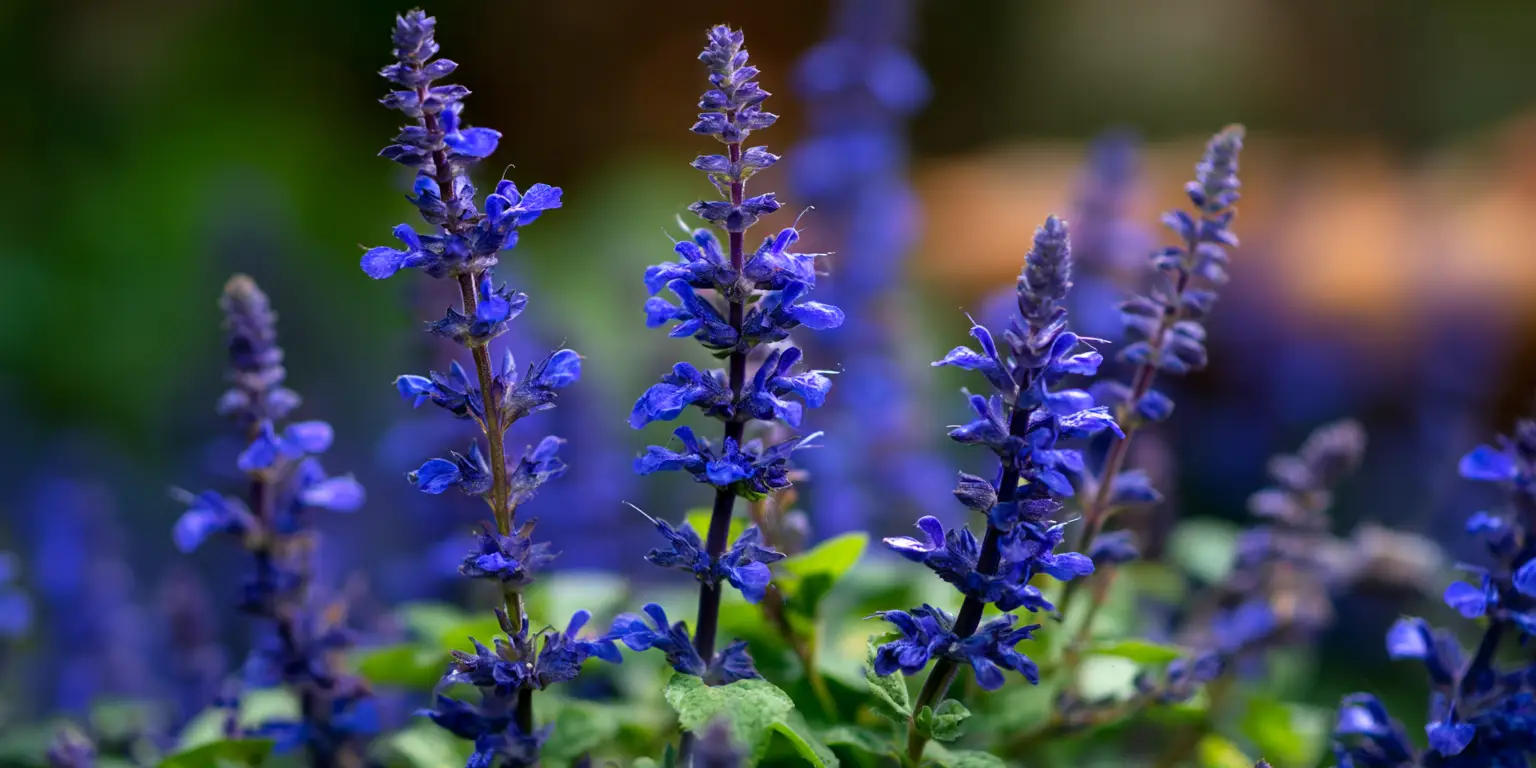
in bloom
now
through Oct
Bloom calendar
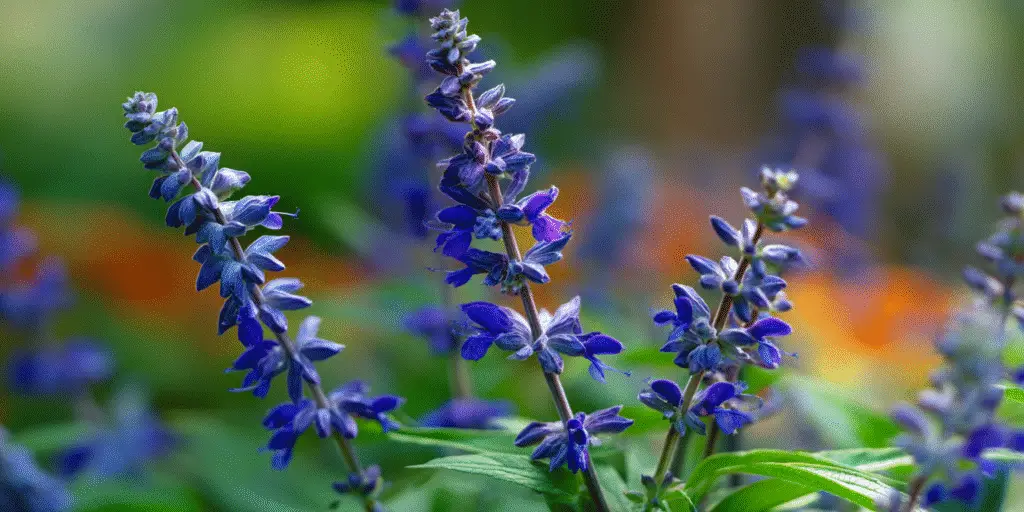
Mystic Spires Blue
Hybrid sage (Salvia longispicata × S. farinacea) · Ball Horticultural Co., 2007, USA
At‑a‑glance
- Group/Class: Hybrid sage (Salvia longispicata × S. farinacea)
- Height × spread: 24-36 in × 24-36 in (60-90 cm × 60-90 cm)
- Bloom window: early summer to fall
- Color & flower form: bright blue flowers on upright spikes
- Fragrance: 1 trace
- USDA hardiness: 7-10; grown as annual in colder zones
- Breeder / Year / Origin: Ball Horticultural Co., 2007, USA
- Awards/registration: Plant of Merit (MBG); US Plant Patent PP18054
- Pet safety: safe
How it differs
- More compact than ‘Indigo Spires’ with shorter internodes.
- Blooms heavily without staking in average garden soils.
- Handles heat and humidity better than many woodland sages.
Strengths
- Reliable long bloom with routine deadheading.
- Heat and drought tolerance once established.
- Strong, tidy habit for containers and small beds.
Care in one minute
Site: full sun.
Soil: well‑drained, even gritty; neutral to slightly alkaline pH.
Water: moderate; keep evenly moist the first month, then water deeply but infrequently.
Feeding: modest; a balanced slow‑release in spring is enough.
Grooming: deadhead spent spikes; shear lightly if plants tire in midsummer.
Overwintering: mulch crowns in zones 7-8; take cuttings where winters are cold.
Watch‑outs
- Not reliably hardy where winters drop well below 10°F (−12°C).
- Can develop mildew if air circulation is poor.
- Excess fertilizer can push leafy growth at the expense of flowers.
Best uses (tags)
Provenance note
An irradiation‑induced sport of ‘Indigo Spires’ selected in 2003 and patented as ‘Balsalmisp’ in 2007; marketed by Ball Horticultural Company.
References
- Missouri Botanical Garden – Salvia ‘Balsalmisp’ MYSTIC SPIRES BLUE
- U.S. Plant Patent US PP18054 – ‘Balsalmisp’
- NC State Extension – Salvia (genus overview with cultivar notes)
- Texas Superstar program – Mystic Spires Blue (brochure/overview)
Similar Flowers
Enjoying our flower guides? Add YourFlowersGuide as a preferred source on Google. It helps more readers find us.
Add to Preferred Sources