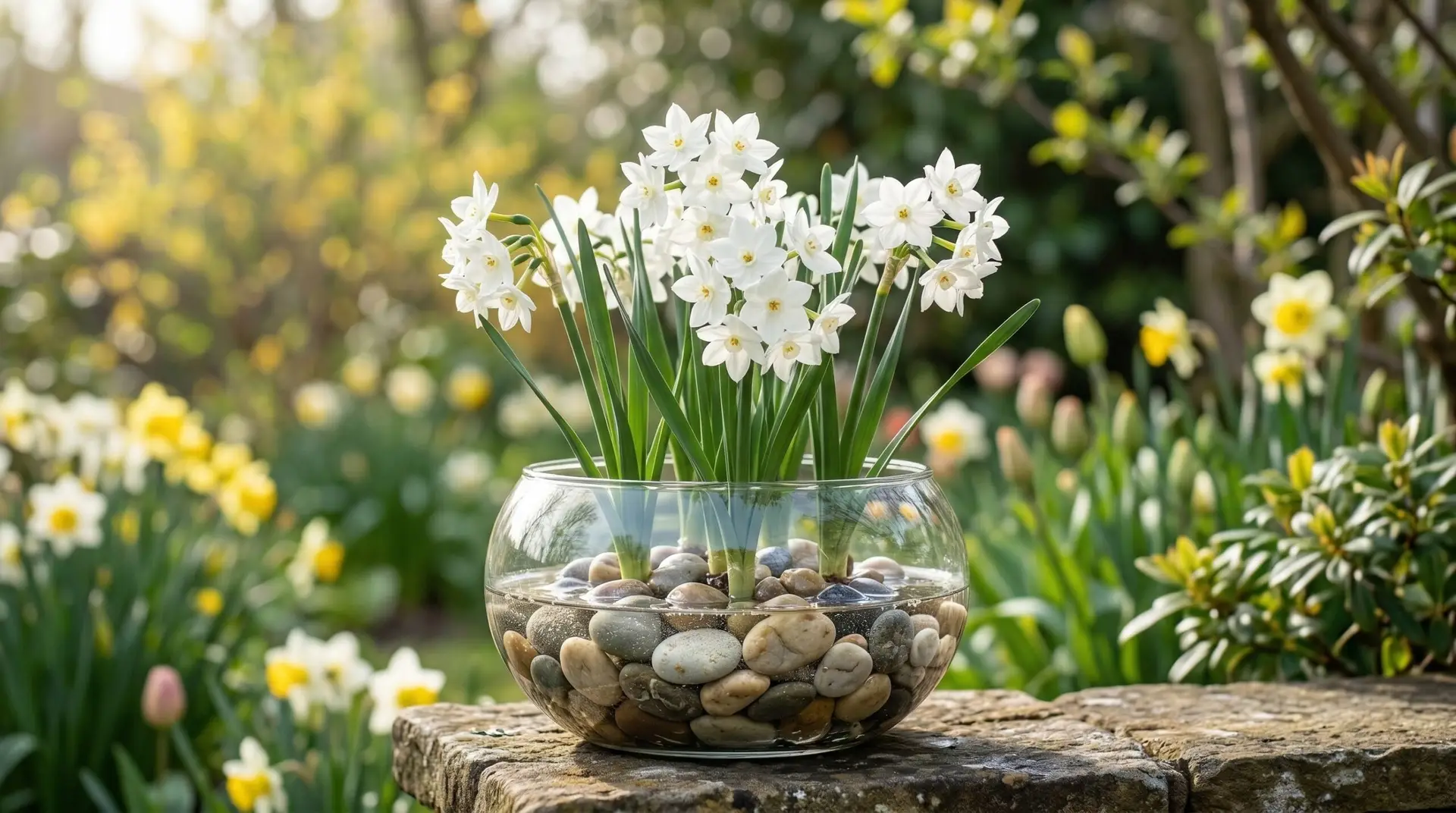
One of the first things gardeners ask when they start growing indoor daffodils is whether they can just put the bulbs in a warm room and wait for flowers. The answer depends entirely on which type of daffodil you have in your hands. Most traditional spring bulbs require a long period of winter chill to develop their roots and prepare for flowering. If you skip this cold period, the bulbs will either rot or push up a few weak leaves with absolutely no blooms. However, there is an exception that makes forcing daffodils incredibly easy for beginners. The paperwhite narcissus is a specific type of daffodil native to the Mediterranean climate that completely skips the cold requirement. Because they do not need a winter chill, paperwhites are the most popular choice for quick indoor blooms during the darkest months of the year.
Contents 3 sections
Growing paperwhite narcissus in water and pebbles
The natural follow-up question is exactly how to set up these bulbs if they do not need soil. Growing daffodils in a vase is a straightforward process that relies on a shallow layer of stones, marbles, or gravel to hold the bulbs upright. You simply fill a watertight container with a few inches of your chosen aggregate and set the bulbs on top so their pointed ends face the ceiling. The most important detail people miss here is the water level. You want to add just enough water so it barely touches the flat bottom plate of the bulb where the roots emerge. If the water creeps up the sides of the bulb, the papery outer layers will turn to mush and the entire bulb will rot before it ever sends up a shoot.
This leads to something many growers wonder about when planning for holiday displays. Figuring out exactly when to start your paperwhites depends on when you want them to bloom. These specific bulbs operate on a very reliable schedule, typically taking four to six weeks from the day you add water to the day the first buds open. If you want a cheerful centerpiece for a December holiday meal, you should start your first batch of bulbs right around the middle of November. A great strategy is to start a new bowl of bulbs every two weeks from November through January. This staggered planting method ensures you have a constant supply of fresh flowers replacing the older ones as they fade.
Inevitably, anyone who grows paperwhites will eventually ask why their tall, beautiful stems suddenly flop over onto the table. Indoor environments usually lack the bright, direct sunlight these plants would receive outdoors, causing the stems to stretch rapidly as they reach for whatever light they can find. This rapid growth results in weak, leggy stems that cannot support the weight of the heavy flower clusters. You can prevent this by keeping the bulbs in a cool room with the brightest window possible while they grow. By the way, there is an old trick involving hard liquor that actually works to keep paperwhites short and sturdy. Replacing their water with a weak solution of five percent alcohol, like clear vodka or gin mixed with water, stunts the stem growth just enough to keep the plants compact without harming the flowers at all.
Chilling traditional daffodils for potted blooms
What if you really want those classic, bright yellow trumpets instead of the white star-shaped blooms of paperwhites? Forcing traditional daffodils requires a bit more patience because you have to mimic the cold winter weather they naturally expect. You will need to plant these bulbs in pots with actual potting soil rather than just pebbles and water. Once potted, the bulbs need to sit in a dark, cold location that stays consistently between thirty-five and forty-five degrees Fahrenheit. An unheated garage, a cold frame, or an old refrigerator works perfectly for this rooting period. Just like when you prepare a tulip for indoor forcing, you must leave the daffodil bulbs in this cold storage for twelve to fifteen weeks so they can build a robust root system.
Once that long chilling period ends, you might wonder how quickly the plants will wake up and bloom. When you finally pull the pots out of cold storage, the bulbs will likely have pale yellow or white shoots just starting to poke through the soil surface. You should move them to a cool room with indirect light for a few days to let the shoots turn green before shifting them to a sunny windowsill. The sudden transition from the cold dark to a warm, bright room signals to the plant that spring has arrived. Within three to four weeks of coming into the warmth, the stems will shoot up and the flower buds will swell. This timeline is quite similar to the process of waking up an amaryllis bulb, though traditional daffodils rely on that initial cold period rather than just a period of dry dormancy.
Caring for the flowers and handling the bulbs afterward
People often ask how to make the flowers last as long as possible once they finally open. The lifespan of your indoor daffodils depends heavily on the temperature of the room where you display them. Warm, dry air from central heating systems will cause the flowers to wither and dry up in just a few days. You can significantly extend the bloom time by moving the pots or vases into a cooler room every night before you go to bed. Keeping them out of direct drafts from heat vents and away from warm appliances will also help the petals maintain their moisture. With cool nighttime temperatures, a pot of forced daffodils can easily look fresh and bright for up to two full weeks.
A question that catches many people off guard is whether these forced bulbs are completely useless once the flowers finally die back. The answer reveals a major difference between the two types of bulbs we have discussed. Paperwhites grown in water expend all their stored energy to produce those indoor blooms, leaving them completely exhausted and ready for the compost bin. Traditional daffodils grown in soil, however, can actually be saved and planted out in your garden to bloom again in future years. You just need to clip off the dead flowers, keep watering the green leaves until they naturally turn yellow and die back, and then plant the dormant bulbs in your yard in the fall. They will likely need a year or two of resting in the garden to rebuild their strength before they produce flowers again, but they will eventually return to their natural outdoor blooming cycle.
More About Daffodils (Narcissus)
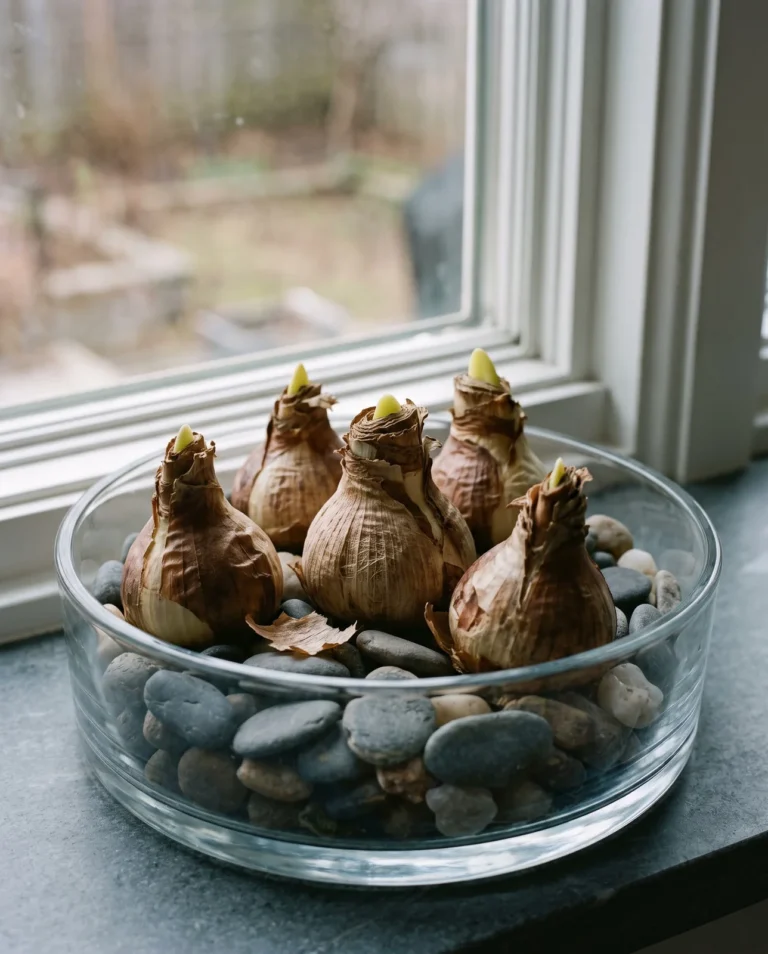
Paperwhites indoors: water, timing, and the flop fix
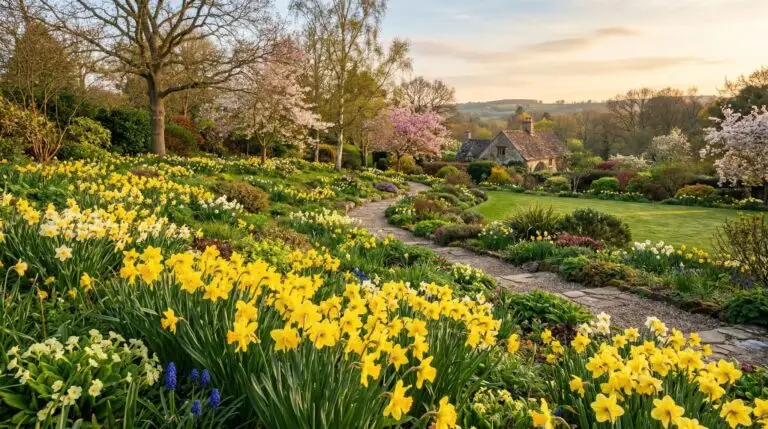
Designing a succession of daffodils that bloom from February through May

Naturalizing daffodils in lawns and woodland areas for wild spring beauty year after year
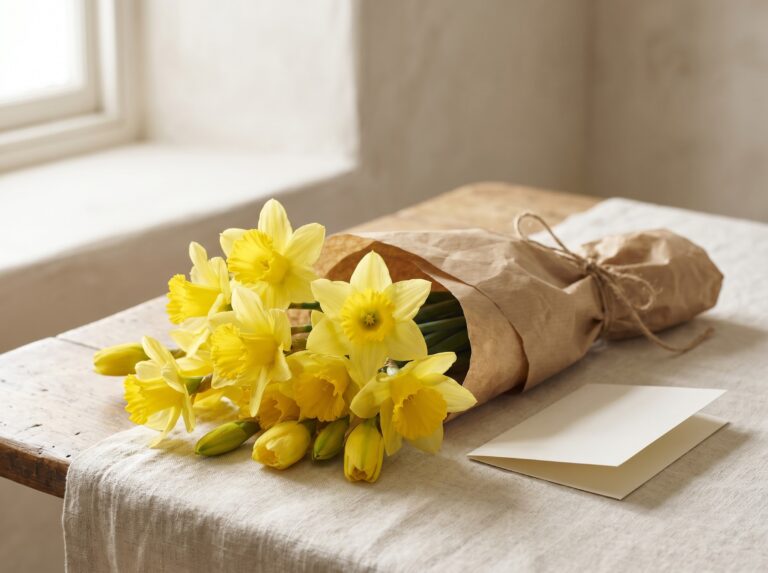
Daffodil meaning, from new beginnings to the Narcissus myth, honestly explained
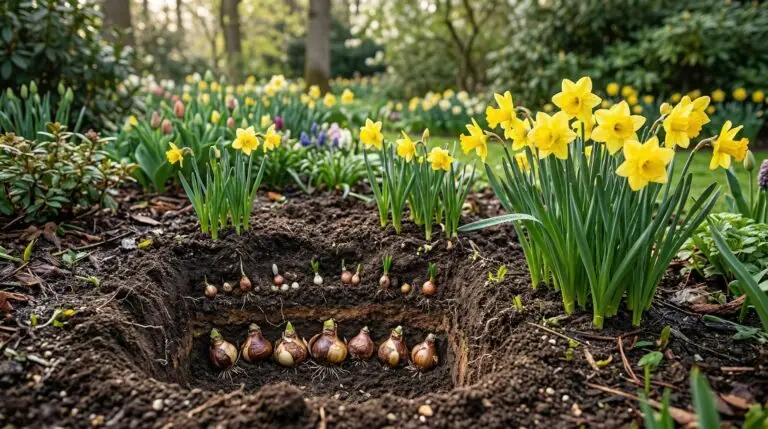
Growing daffodils in containers and pots for spring color on patios and porches
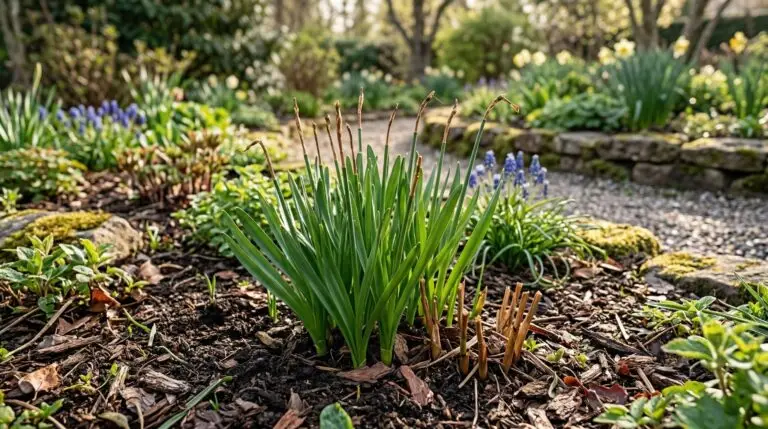
Why daffodils stop blooming after the first year and how to get flowers back
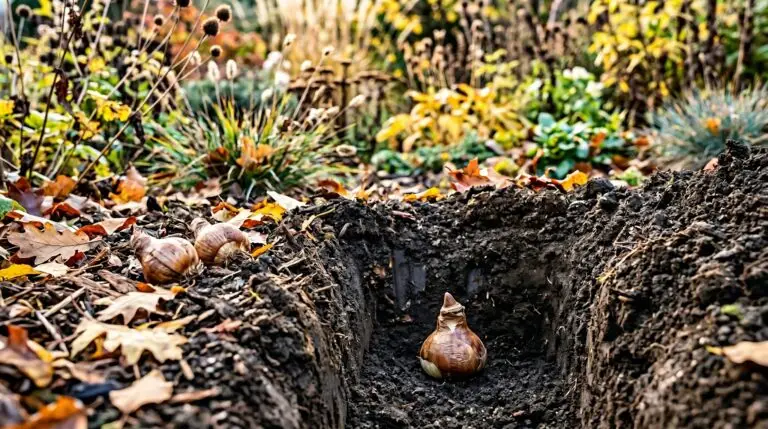
How to plant daffodil bulbs in fall for a golden carpet of spring flowers
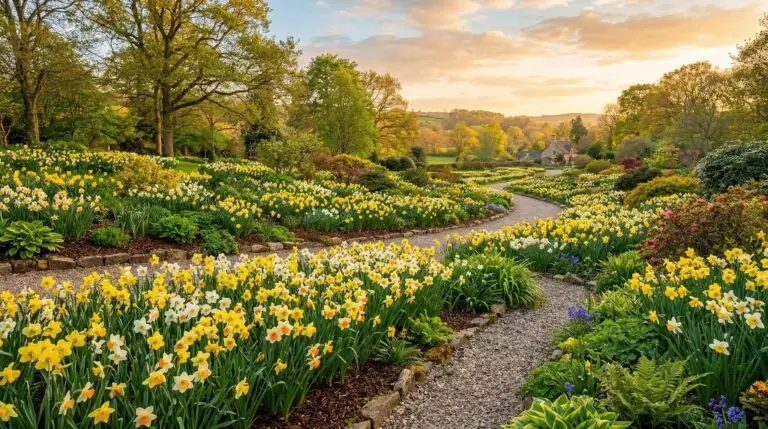
What to do with daffodil foliage after blooming and why you must leave it alone
Daffodils as deer-proof and squirrel-proof bulbs that nothing wants to eat
Best daffodil varieties for every garden from tiny Tete-a-Tete to giant King Alfred
Enjoying our flower guides? Add YourFlowersGuide as a preferred source on Google. It helps more readers find us.
Add to Preferred Sources