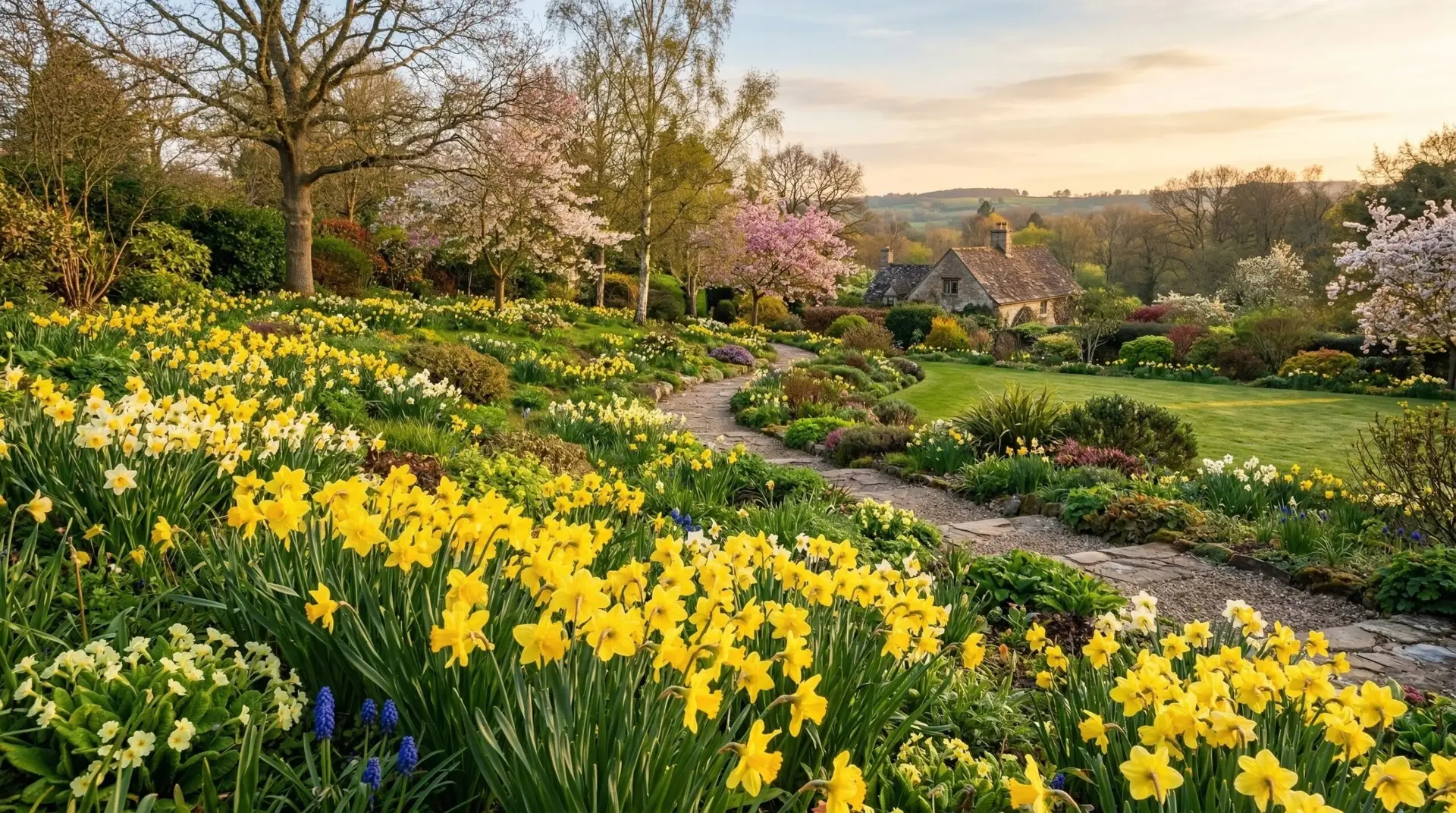
Creating a continuous display of daffodils from late winter through late spring requires a deliberate strategy rather than a spontaneous trip to the garden center. Before choosing specific flower colors or cup shapes, you need to understand the mechanics of daffodil bloom time and how different varieties behave in the garden. The most common mistake gardeners make is buying bags of mixed bulbs in late October, which often results a massive flush of color that vanishes entirely within three weeks. To achieve three solid months of flowers, you have to organize your project around early, mid-season, and late-blooming divisions. This approach involves calculating your space, planning a budget for specific named varieties rather than cheap bulk mixes, and ordering your bulbs months before they actually go into the ground. A successful succession planting project starts on paper in the middle of summer, long before the soil cools down enough for fall planting.
Before you order a single bulb, carefully evaluate the site where you intend to build your succession planting. Daffodils require at least six hours of direct sunlight during their active growing phase in the spring to produce strong stems and store enough energy for the following year. You also need to assess your soil moisture, because while these bulbs need regular water while growing, they will rot quickly if they sit in heavy, waterlogged clay during their summer dormancy. Take time to observe your garden beds and note which areas dry out well in July and August. If your chosen spot stays damp year-round, you will need to invest time and budget into amending the soil with coarse sand and compost to improve drainage before you start planting. Mapping out the exact square footage of your well-drained, sunny areas will tell you exactly how many bulbs you need to buy, preventing you from overspending on materials you cannot use.
Contents 4 sections
Selecting early, mid, and late varieties
Building your timeline begins with the earliest bloomers, which will break ground when the weather is still cold and unpredictable. The foundation of your early display should rely on species narcissus and miniature varieties that naturally emerge in February or early March. These small, rugged bulbs often push through light snow and handle freezing temperatures without taking damage to their foliage or buds. Because these early daffodils have smaller flowers, you need to buy them in larger quantities and plant them in tight clusters so they make a visual impact in the bare late-winter garden. You can plant these alongside a patch of snowdrop bulbs to create a reliable late winter display that requires almost zero maintenance once established. Budget for at least fifty early-blooming bulbs if you want a noticeable display, keeping in mind that these will naturalize and multiply over the coming years.
Once you secure your early bloomers, you can fill out the middle and end of your timeline with larger, more traditional varieties. Mid-season daffodils typically bloom in April and include the classic large-cupped and trumpet divisions that most people associate with spring. To stretch the display into May, you must specifically seek out late daffodils, which often include poeticus types with small cups and sweet fragrances, or late-blooming double varieties. When ordering, read the catalog descriptions carefully and group your purchases strictly by their designated bloom time rather than just their appearance. You can easily coordinate these mid and late varieties with a tulip planting to create a layered, continuous show of color as the season progresses. By intentionally buying an equal number of early, mid, and late varieties, you guarantee that as one group fades, the next is already sending up buds.
Executing the trench planting method
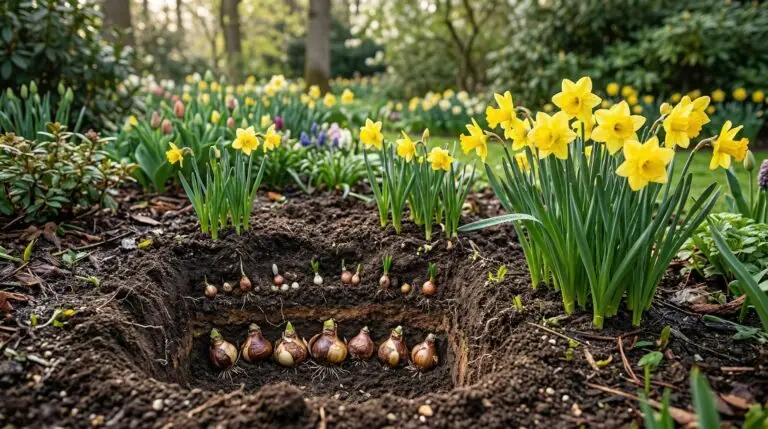
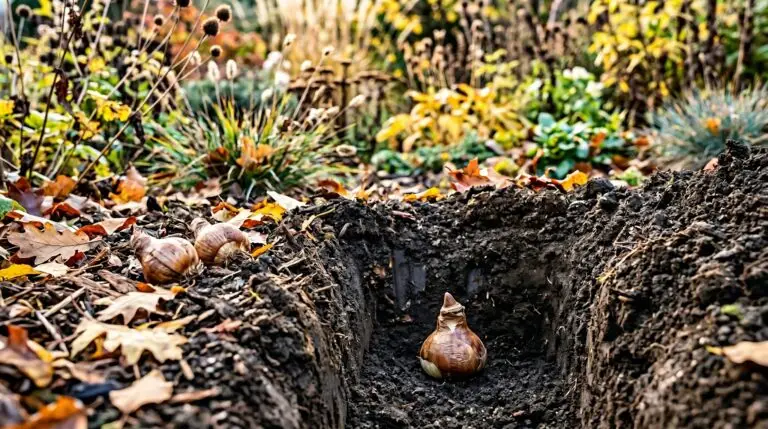
Succession planting daffodils in a limited space requires a specific physical execution strategy known as layering or trench planting. Instead of digging individual holes for each bulb, you will save hours of labor by excavating a single large trench or wide hole about eight inches deep. This method allows you to arrange early, mid, and late varieties in the exact same footprint, maximizing your flower density without overcrowding the roots. Place the large late-blooming bulbs at the very bottom of the trench, cover them with a thin layer of soil, and then place the smaller early-blooming varieties slightly higher up in the soil profile. This vertical stacking technique ensures that the foliage of the later varieties will eventually grow up right through the fading stems of the early ones, hiding the declining leaves. You will need to dedicate a solid weekend in October or November to execute this trenching method properly, so block out the time on your calendar well in advance.
To make this layered bed look complete, you should plan for companion plants that will cover the bare soil and provide a backdrop for the succession of flowers. Sowing seeds or planting small plugs over the top of your bulb trenches creates a living mulch that suppresses weeds and adds another dimension to the design. A classic approach is to blanket the area with a low-growing biennial like forget-me-not, which produces a haze of blue flowers that pairs perfectly with yellow and white daffodils. You need to plant these companions in the fall right after you finish burying your bulbs, so factor their cost into your overall project budget. As the early bulbs finish and the late bulbs take over, the companion plants will grow thick enough to conceal the bare lower stems of the daffodils. This simple addition turns a basic bulb planting into a cohesive garden bed that requires very little weeding during the busy spring months.
Managing maintenance and long-term expectations
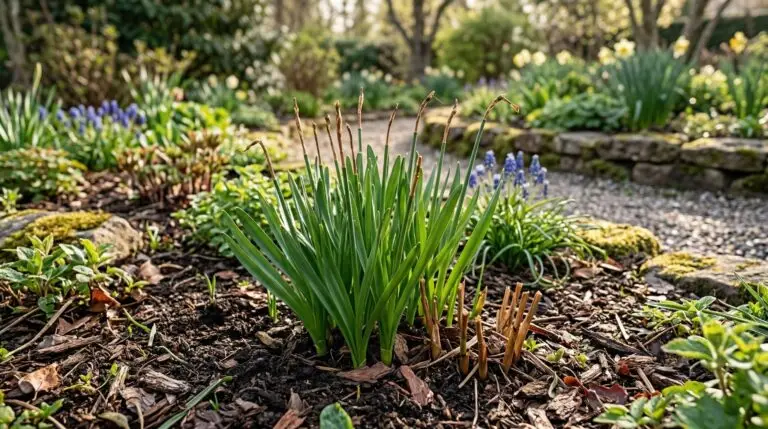
The most significant maintenance commitment for a continuous daffodil display involves managing the foliage after the flowers fade. Every bulb you plant must keep its leaves intact for at least six weeks after it finishes blooming to photosynthesize and rebuild its internal energy reserves for the following spring. Because you are planting a succession that lasts three months, you will have green and yellowing foliage in your garden beds from March all the way through June or even July. You must resist the urge to cut, tie, or braid these leaves, as doing so restricts their ability to gather sunlight and will result in fewer flowers next year. If you find untidy foliage frustrating, you need to plant your bulbs behind emerging herbaceous perennials like hostas or daylilies that will grow tall enough to hide the declining daffodil leaves by early summer. Understanding and accepting this long foliage dieback period is a mandatory part of the planning process.
You should set realistic expectations for the timeline of this project as it matures over several years. The first spring after planting, you will see exactly what you put in the ground, and the flowers will bloom in the precise sequence you planned. By year three, the bulbs will have multiplied underground, creating much thicker clumps and producing twice as many flowers as the first year. Around year five, you will likely notice a decrease in flower production, which is a clear signal that the bulbs have become overcrowded and need your attention. At this stage, your maintenance task will be to dig up the clumps after the foliage dies back in summer, divide the bulbs, and replant them with proper spacing. This division process requires a heavy afternoon of physical labor, but it will yield hundreds of free bulbs that you can use to start a brand new succession planting in another part of your yard.
Your immediate action plan
To get this project moving, your task for this week is to go outside and measure the exact dimensions of the bed where you want your daffodils to grow. Calculate the square footage so you know your capacity, keeping in mind that you can fit about five large bulbs or ten small bulbs per square foot. Next, open a spreadsheet and create a budget that divides your total bulb count into three equal categories for early, mid, and late varieties. Once you know your numbers, request three physical catalogs from reputable bulb growers or browse their online inventories to start selecting your specific varieties. Writing down your order now ensures you will secure the exact cultivars you need for a perfect succession before the rare late-blooming varieties sell out in late summer.
More About Daffodils (Narcissus)
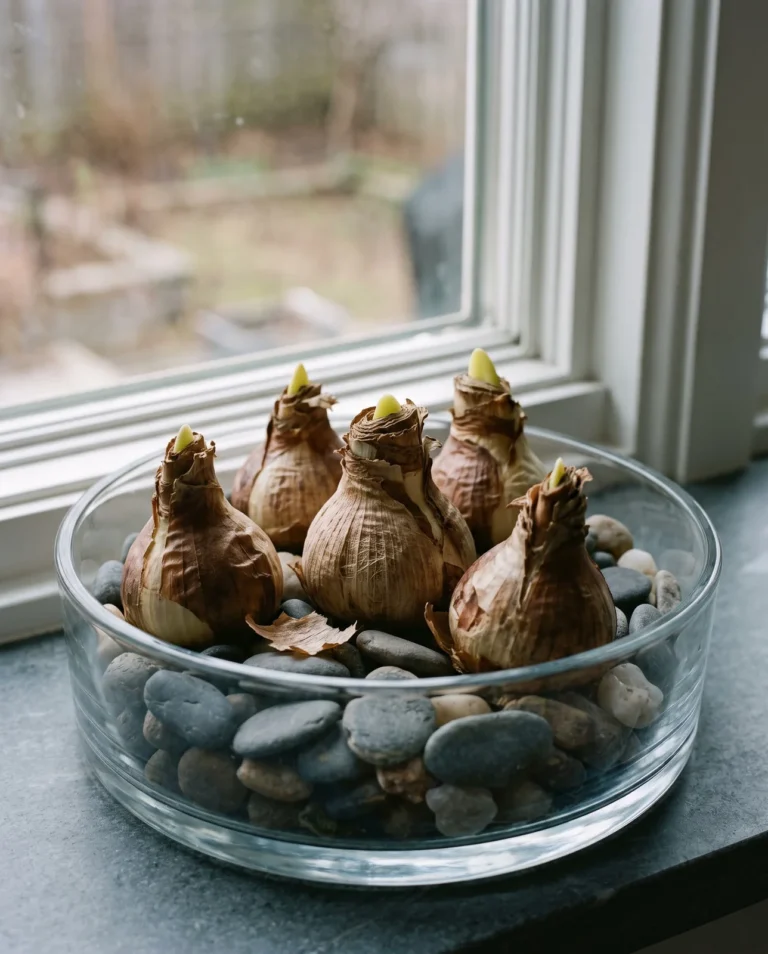
Paperwhites indoors: water, timing, and the flop fix
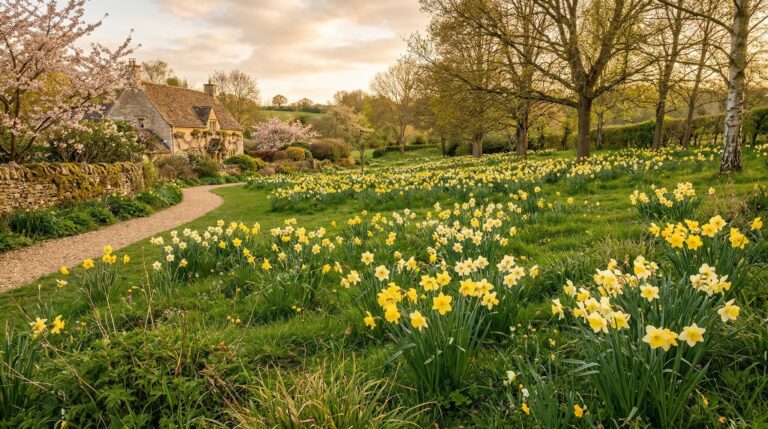
Naturalizing daffodils in lawns and woodland areas for wild spring beauty year after year
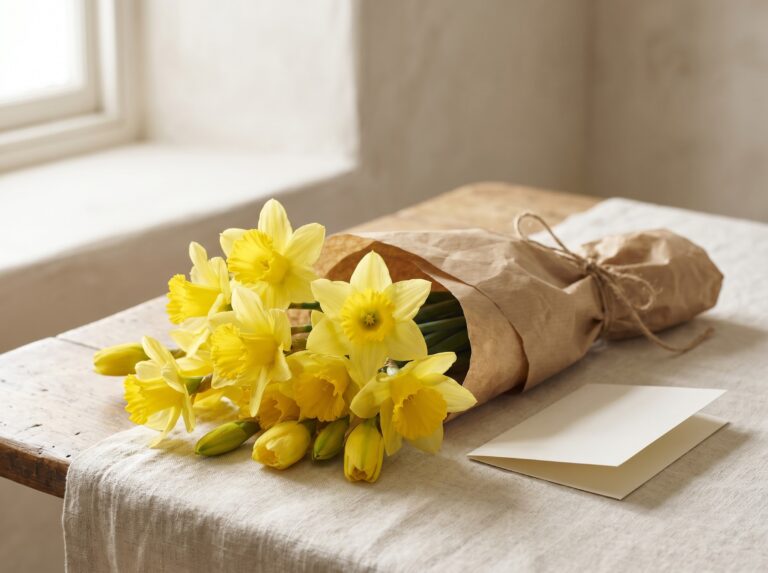
Daffodil meaning, from new beginnings to the Narcissus myth, honestly explained
Growing daffodils in containers and pots for spring color on patios and porches
Why daffodils stop blooming after the first year and how to get flowers back
How to force daffodil bulbs indoors for cheerful winter blooms on your windowsill
How to plant daffodil bulbs in fall for a golden carpet of spring flowers
What to do with daffodil foliage after blooming and why you must leave it alone
Daffodils as deer-proof and squirrel-proof bulbs that nothing wants to eat
Best daffodil varieties for every garden from tiny Tete-a-Tete to giant King Alfred
Enjoying our flower guides? Add YourFlowersGuide as a preferred source on Google. It helps more readers find us.
Add to Preferred Sources