Tulip bulbs go into the ground in autumn, but the signal to start is the soil, not the date: plant once the soil at planting depth has cooled and holds below 60°F. Across most of the country that falls somewhere between October and December, and the window stays open as long as a trowel still pushes into unfrozen ground. Go in too early, while the dirt is still warm, and the bulbs can sprout that same fall; wait for frozen ground and the roots never form at all.
A bag of bulbs on a garage shelf in late September gives no clue which of those two mistakes is closer, because the packaging says only to plant in fall. A soil probe thermometer settles it, pushed four to six inches down where the bulb will actually sit rather than read off the warm surface. What follows covers how that threshold translates into a rough calendar window by zone, how to tell a surface frost from ground that has closed for the year, how deep and how far apart the bulbs go, how to keep squirrels from lifting them back out, and what changes when tulips go into pots instead of open ground.
On this page 7 sections
The real signal: soil temperature, not a date on the calendar
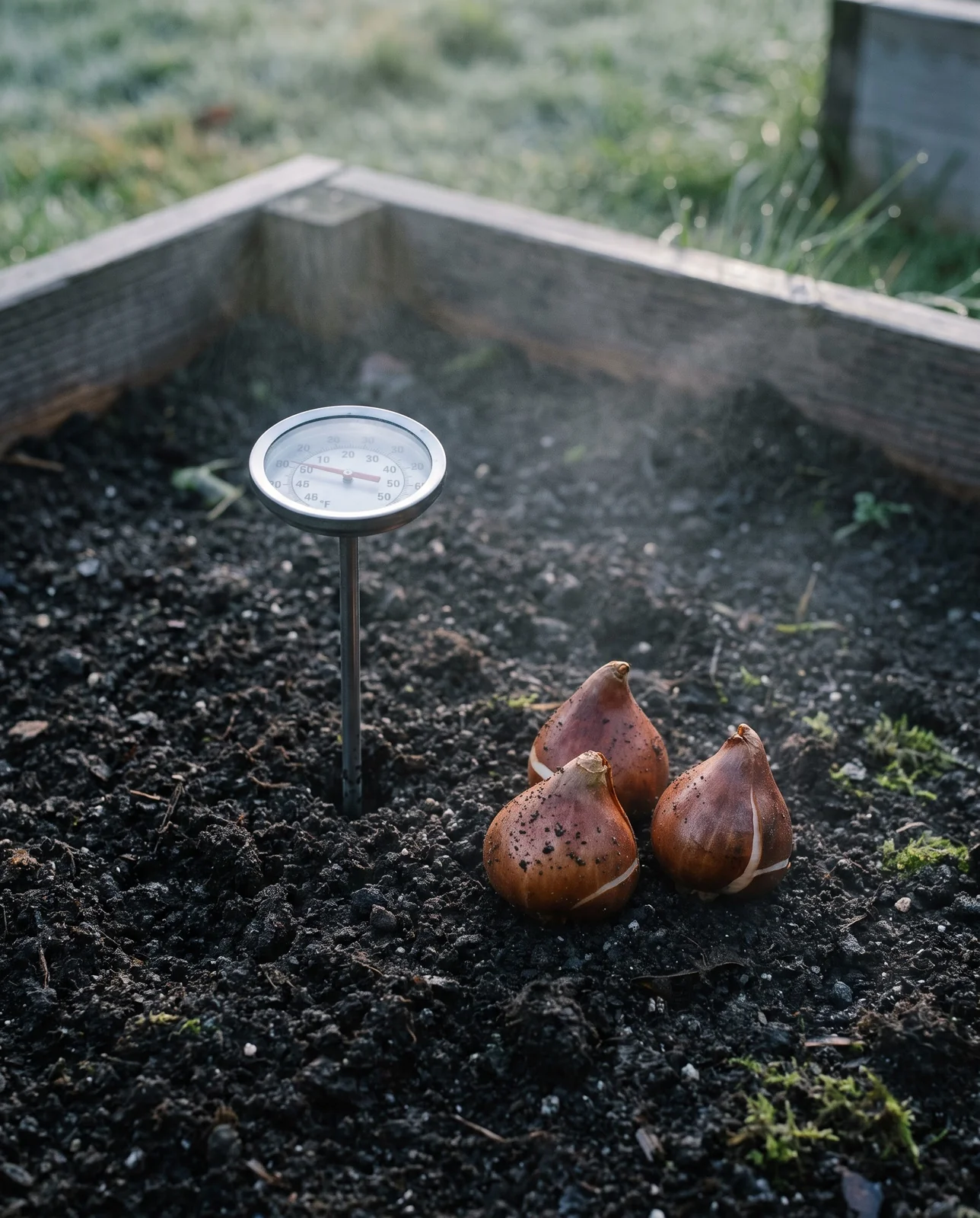
Clemson University Extension tells gardeners to hold spring-flowering bulbs back until the soil temperature at planting depth stays consistently below 60°F. That is a physical trigger, and a calendar date is only a proxy for it: an unseasonably warm October keeps topsoil warm long after the air has turned crisp. Push a soil probe thermometer four to six inches into the bed, down where the bulb will sit rather than at the warm surface. Popular garden media usually quotes an ideal window of 40°F to 50°F, while university research sets 60°F as the safety ceiling below which planting can begin. Warm soil costs you twice over. It can trick bulbs into emerging in fall instead of the following spring, and North Carolina State University Extension sets the upper limit for the plant itself, which loses floral vigor once soil temperature reaches 70°F.
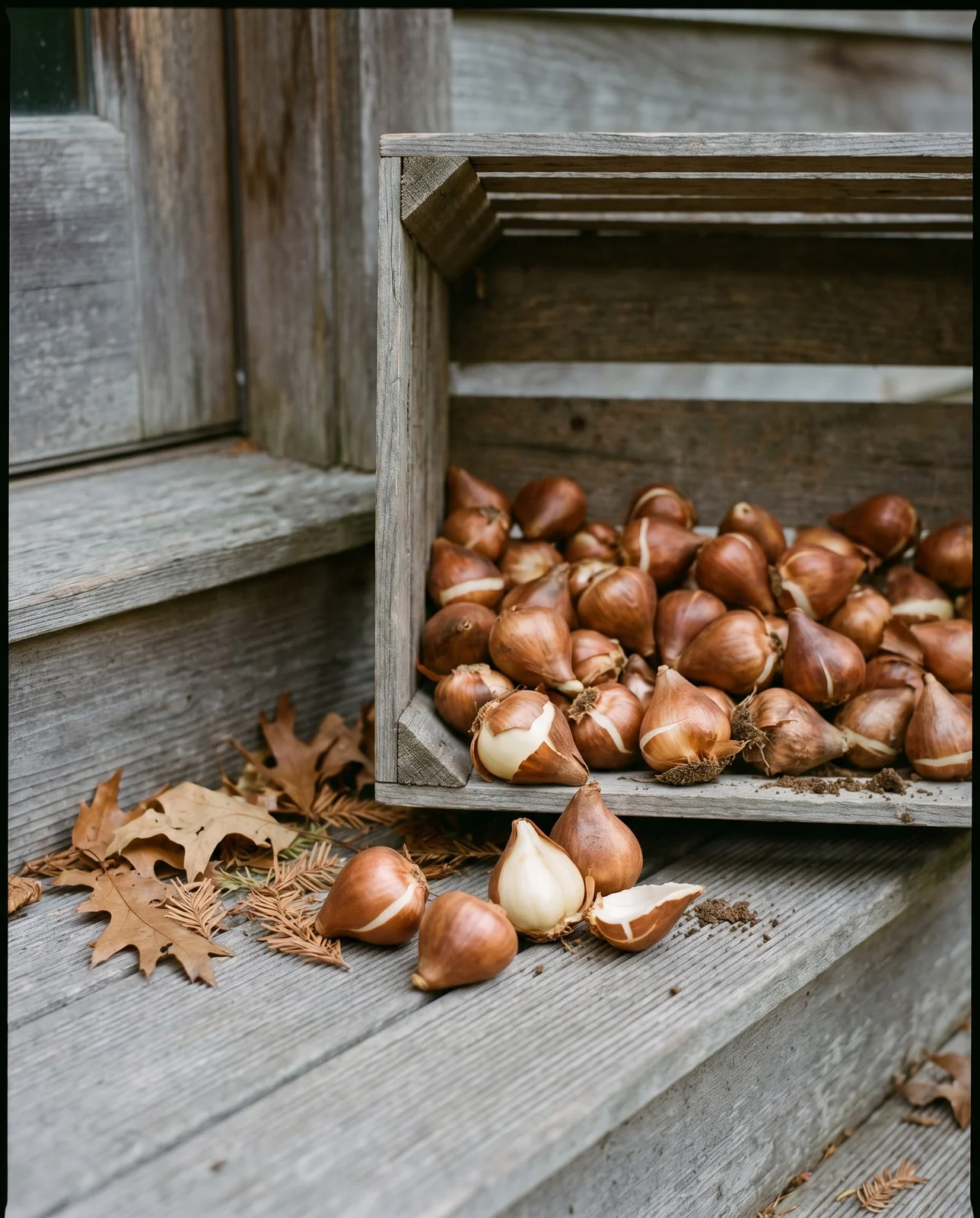
While the ground finishes cooling, the bulbs need somewhere below that same 60°F. Clemson University Extension asks for a cool, well-ventilated spot: a dry, dark basement or a climate-controlled shed, with the bulbs in mesh bags that breathe rather than a sealed sack. Warm storage burns through reserves the bulb is meant to spend on next spring’s flower. One storage rule catches people out. Keeping bulbs anywhere near apples, pears, or other ripening fruit exposes them to ethylene gas, which damages the flower bud developing inside the dormant bulb and can wipe out bloom entirely the following spring.
What that looks like by zone
Where you garden decides how early that reading arrives. The USDA Plant Hardiness Zone Map sorts the country by average annual extreme minimum winter temperature into 10°F zones and 5°F half zones, and its quick zip code search is the fastest way to find yours instead of guessing. North Carolina State University Extension puts tulips across USDA zones 3a through 8b, and the practical planting month slides later as the zones warm. In the Midwest, across zones 4 and 5, Iowa State University Extension names October as the ideal month. In South Carolina, Clemson University Extension moves planting into November and late December, and pushes coastal gardens as far as late December or early January, waiting on ground that holds its summer heat well into fall.
Planting dates by zone band
Soil temperature is the trigger, not the calendar. Plant once soil at 6-inch depth reads below 60°F, and treat the months below as the stretch when that reading usually arrives. Find your own zone through the USDA quick zip code search.
Mild winters bring a second problem, and it is not timing but chill hours. Clemson University Extension puts the chilling period most spring-flowering bulbs need to build a normal flower stem at 12 to 16 weeks, and a bulb that gets less than that blooms close to the ground on a stub. The Clemson answer for Central and Coastal South Carolina is the refrigerator: hold the bulbs in ventilated packages from the day they are bought until planting in late fall or early winter, then get them down on the schedule above. The rest of tulip care, once the bulbs are in, picks up in how to grow and care for tulips.
Is it too late? A real test, not a guess
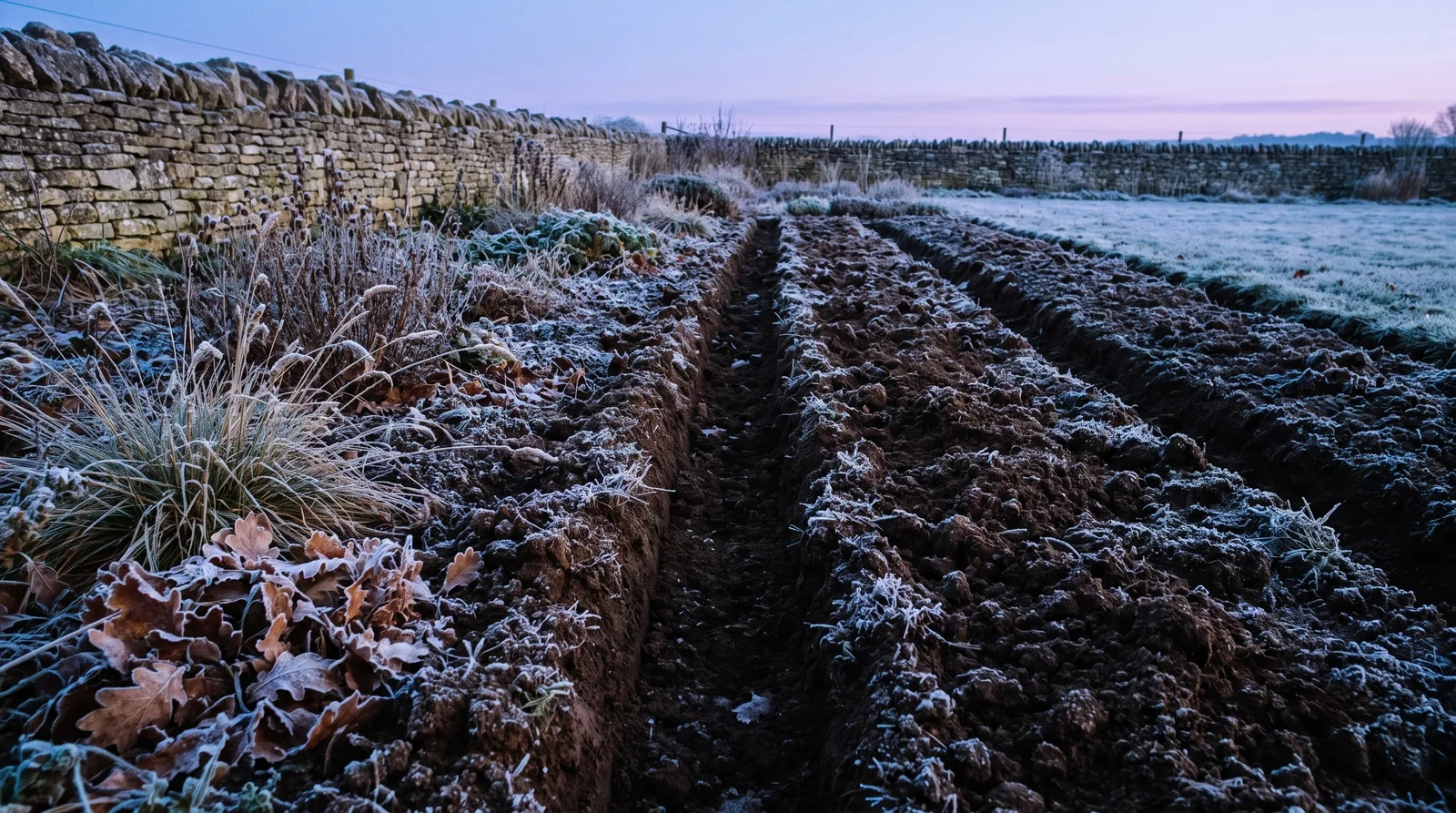
Missing October does not write off the bag. Iowa State University Extension puts the real cutoff at December, as long as the ground remains unfrozen, and the test is physical rather than calendar-based: if a spade or trowel still pushes into the dirt without hitting solid frost, the bed will take bulbs. Once they are tucked into unfrozen soil, roots keep growing through the mild stretches of early winter and lay the foundation the plant draws on in spring. Anyone planting a mixed spring display can run that late session alongside the timing for when to plant daffodil bulbs in fall, before hard freezes lock the soil for good.
Should you plant your tulip bulbs today
Four conditions, checked in order, decide whether the ground is ready or the bulbs should wait.
The two failure modes sit on opposite sides of that window. Planting in September, before the soil has cooled, can send tulips up in fall and leave the foliage exposed to winter injury. Holding the bulbs in storage until spring is the worse of the two. Iowa State University Extension reports that tulip bulbs kept unplanted rarely perform when they finally go in, because they never built root systems over winter, and without those roots they cannot pull up enough water and nutrients to flower. Bulbs in workable late-autumn ground beat bulbs held in storage until spring every time.
One myth about missing the planting window
The myth: Miss October and the planting window is closed, so the bulbs have to be thrown out.
The reality: Iowa State University Extension puts the cutoff at December, as long as the soil is unfrozen. Roots keep forming slowly in cold ground while a trowel still goes in, which is enough to set the bulb up for normal flowering the following spring.
Depth, spacing, and how to actually plant
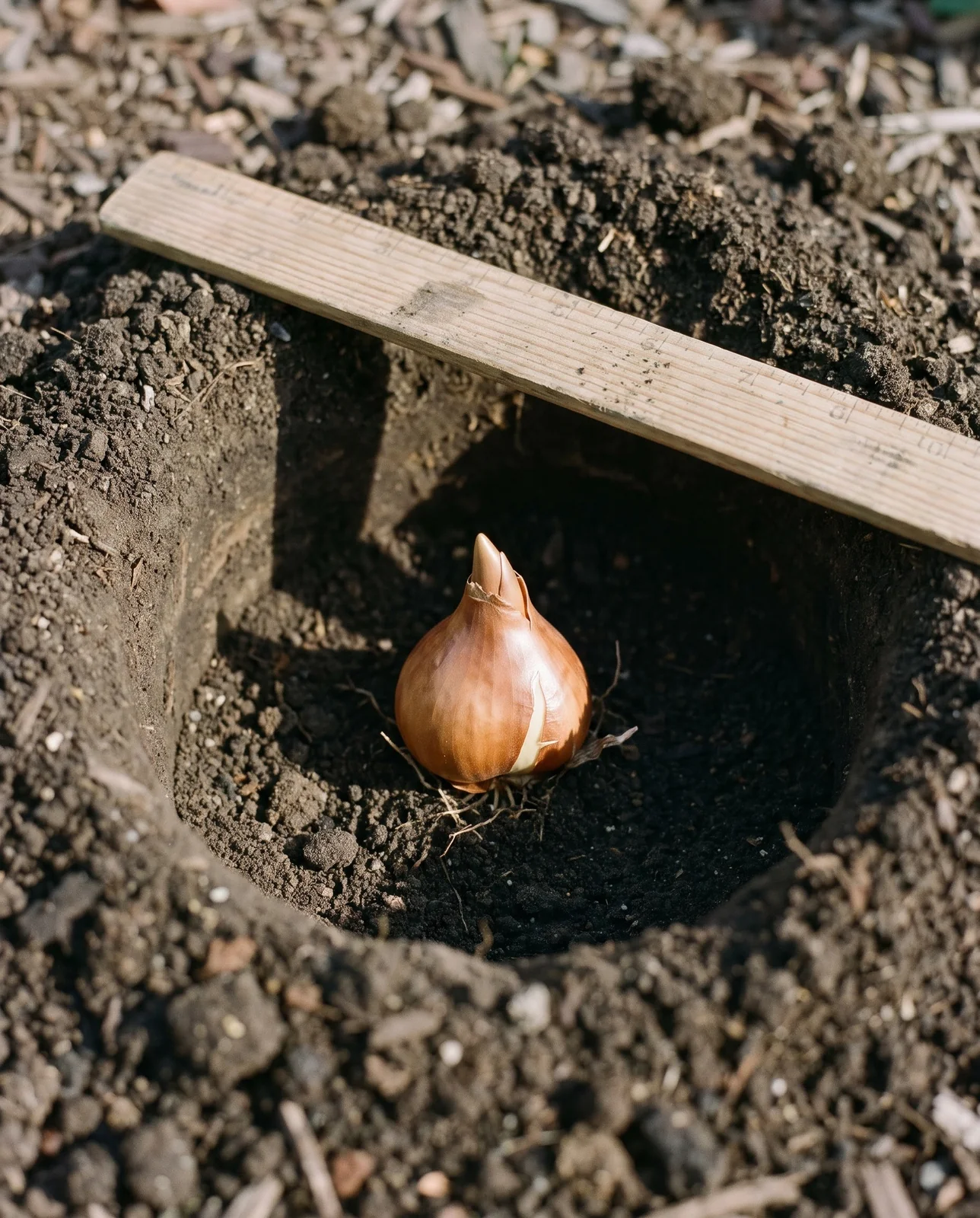
Depth is measured from the base of the bulb to the soil surface, and the rules of thumb disagree slightly. Clemson University Extension says three to four times the bulb’s width, Iowa State University Extension says two to three times the bulb’s diameter, and North Carolina State University Extension says three times the depth of the bulb. For standard hybrid tulips the three land in the same place: 6 to 8 inches. Set each bulb pointed end up and 4 to 6 inches from its neighbors, which leaves room for roots without crowding.
The bed matters as much as the hole. Tulips want full sun and organically rich, well-drained soil at a pH between 6.0 and 7.0. Where drainage is poor, mix 2 to 3 inches of compost or shredded pine bark 10 to 12 inches down into the bed before anything is planted. For fertility, Iowa State University Extension calls for an all-purpose 5-10-5 worked into the bed at 2 to 3 pounds per 100 square feet, or 3 to 4 pounds of bonemeal over the same area; planting bulbs one at a time, work a tablespoon of bonemeal into the bottom of each hole. Finish with a 2 to 3 inch layer of mulch, which steadies both soil temperature and moisture through winter.
Whether the planting comes back is a climate question. Tulips do best where winters run cool and moist and summers run warm and dry, and in most American gardens hybrid performance drops off sharply from the second year on. Clemson University Extension counts southern plantings like South Carolina’s for a single season of color and treats them as annuals. Gardeners who want the same show every spring either replant fresh hybrid bulbs each autumn or switch to botanical species types, which handle regional summer moisture better.
Keeping squirrels and other animals from digging them up
Clemson University Extension and North Carolina State University Extension both note that squirrels and other animals dig up and eat freshly planted tulip and crocus bulbs through the winter. Daffodil bulbs the same foragers almost always leave alone, which is why daffodils as deer-proof and squirrel-proof bulbs earn a place as a border companion or a straight substitute where wildlife pressure is heavy. The appetite is strange, because North Carolina State University Extension puts the tulip’s highest concentration of toxin in the bulb itself, enough to cause stomach pain, excess salivation, depression, diarrhea, sweating, nausea, and vomiting in a pet or a grazing animal that eats one.
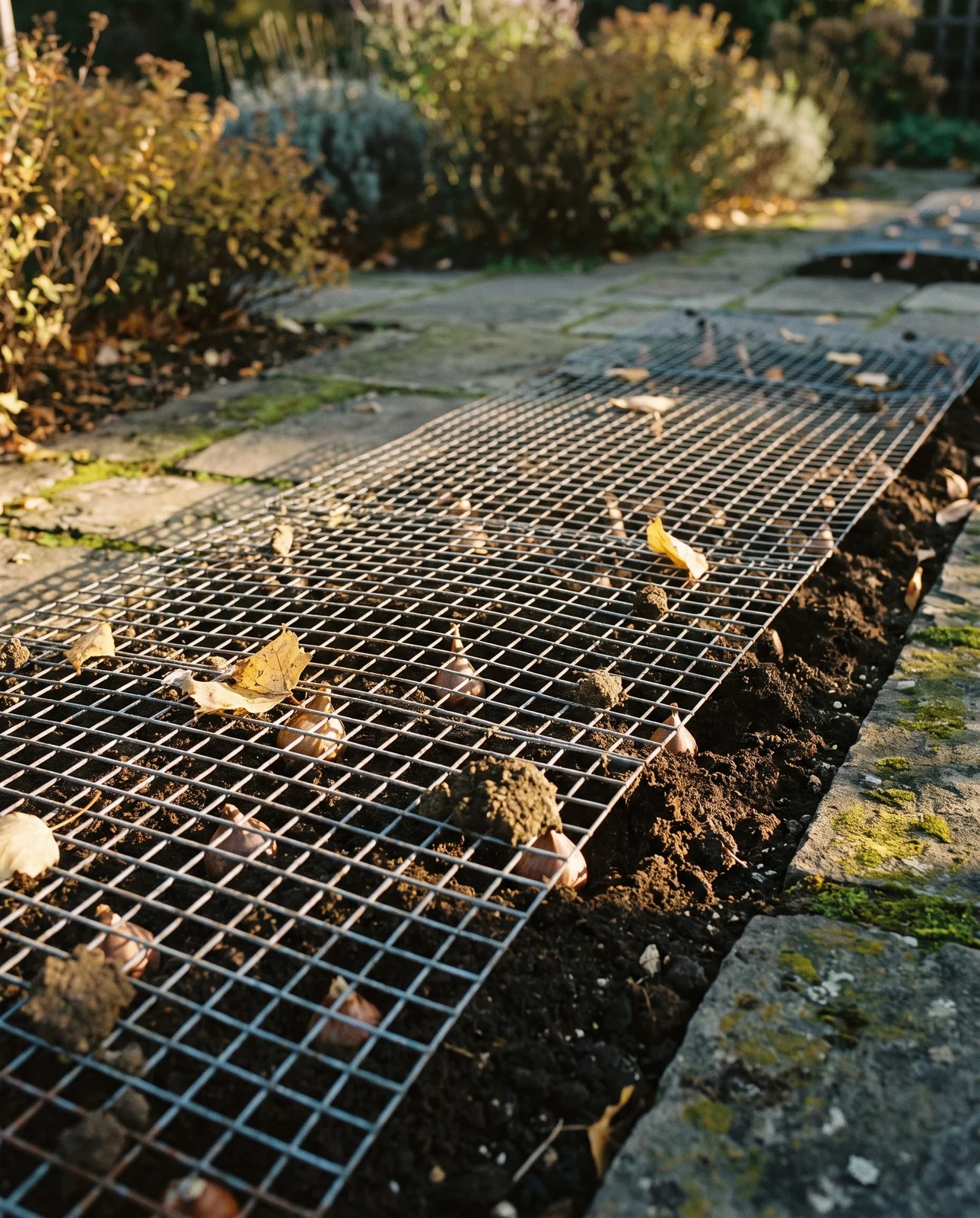
Physical exclusion is the only method the extension services will vouch for. Clemson University Extension is blunt about it: enclosing the bulbs in wire mesh at planting is the only sure way to protect them. For a whole bed, Iowa State University Extension recommends rolling hardware cloth or chicken wire across the soil surface after planting and pinning it down with landscape staples or bricks. Taste and scent repellents sell well, but Iowa State rates them well below a barrier for actually preventing damage. Mesh stops paws and claws while spring shoots come up through the openings.
Planting tulip bulbs in containers
Pots put tulips on a courtyard, a balcony, or any paved space with no bed to dig. North Carolina State University Extension rates them as good outdoor container plants, and the same bulbs can be forced in pots for an early indoor display. The setup follows the same rules as growing daffodils in containers and pots: pots with working drainage holes, a loose, well-drained, organically rich mix, and bulbs set pointed end up with mix around them rather than pressed against the pot wall.
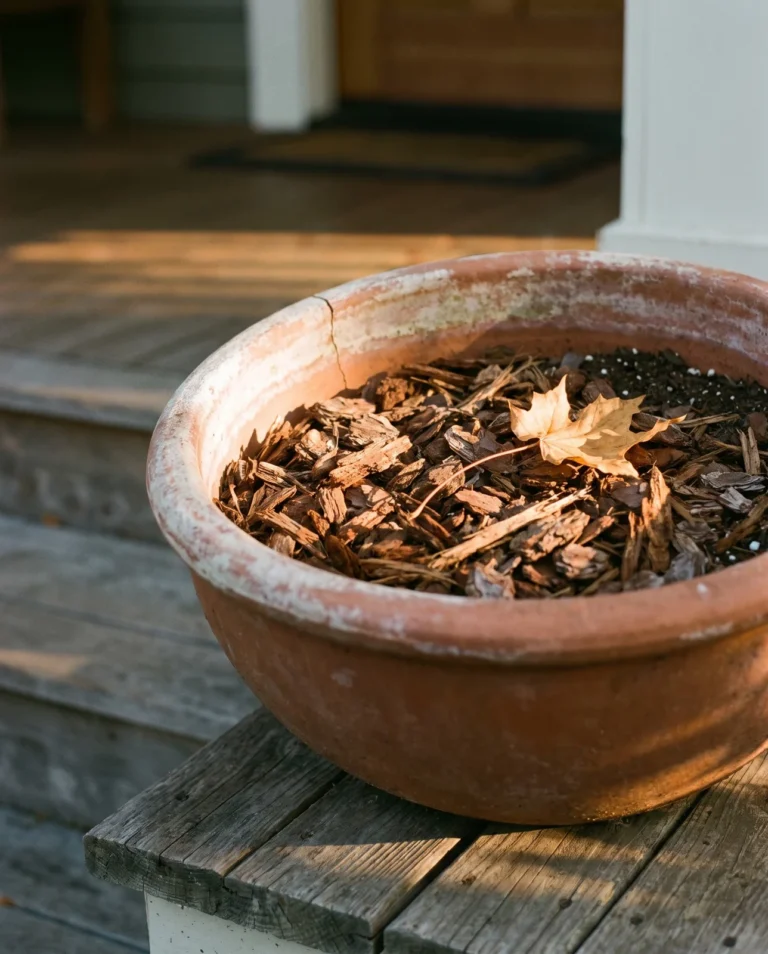
Winter is where containers get difficult. Cold reaches a pot from every side, so the mix freezes faster and swings harder than open ground does. The bulbs still owe their 12 to 16 weeks of cold, so the aim is a sheltered spot that stays below 60°F without dropping into hard freeze and thaw cycles: an unheated garage, a cold frame, a sheltered basement. Pots that have to stay out on an exposed patio do better pushed against an exterior wall or wrapped in insulation until growth starts in spring.
FAQ
Is it too late to plant tulip bulbs in December?
No. Iowa State University Extension puts the cutoff at December, provided the ground is still unfrozen and workable with a trowel.
What soil temperature is right for planting tulip bulbs?
Clemson University Extension’s threshold is a soil temperature at planting depth that stays consistently below 60°F: cool enough for roots to grow, cold enough that the bulb stays dormant.
Can I plant tulip bulbs after a frost?
Yes. A surface frost does not freeze deep soil. If you can still dig six to eight inches down, the bed will take bulbs.
How do I stop squirrels from digging up my tulip bulbs?
Enclose the bulbs in wire mesh as you plant, or pin hardware cloth over the finished bed. Clemson University Extension calls that the only sure way to prevent animal damage.
Do tulip bulbs need to be refrigerated before planting in warm climates?
Yes. In warm regions such as coastal South Carolina, Clemson University Extension has bulbs held in ventilated packages in the refrigerator for their 12 to 16 weeks of chill. Without it, tulips bloom on very short stems close to the ground.
More About Tulips
Enjoying our flower guides? Add YourFlowersGuide as a preferred source on Google. It helps more readers find us.
Add to Preferred Sources