in bloom
now
through Oct
Bloom calendar
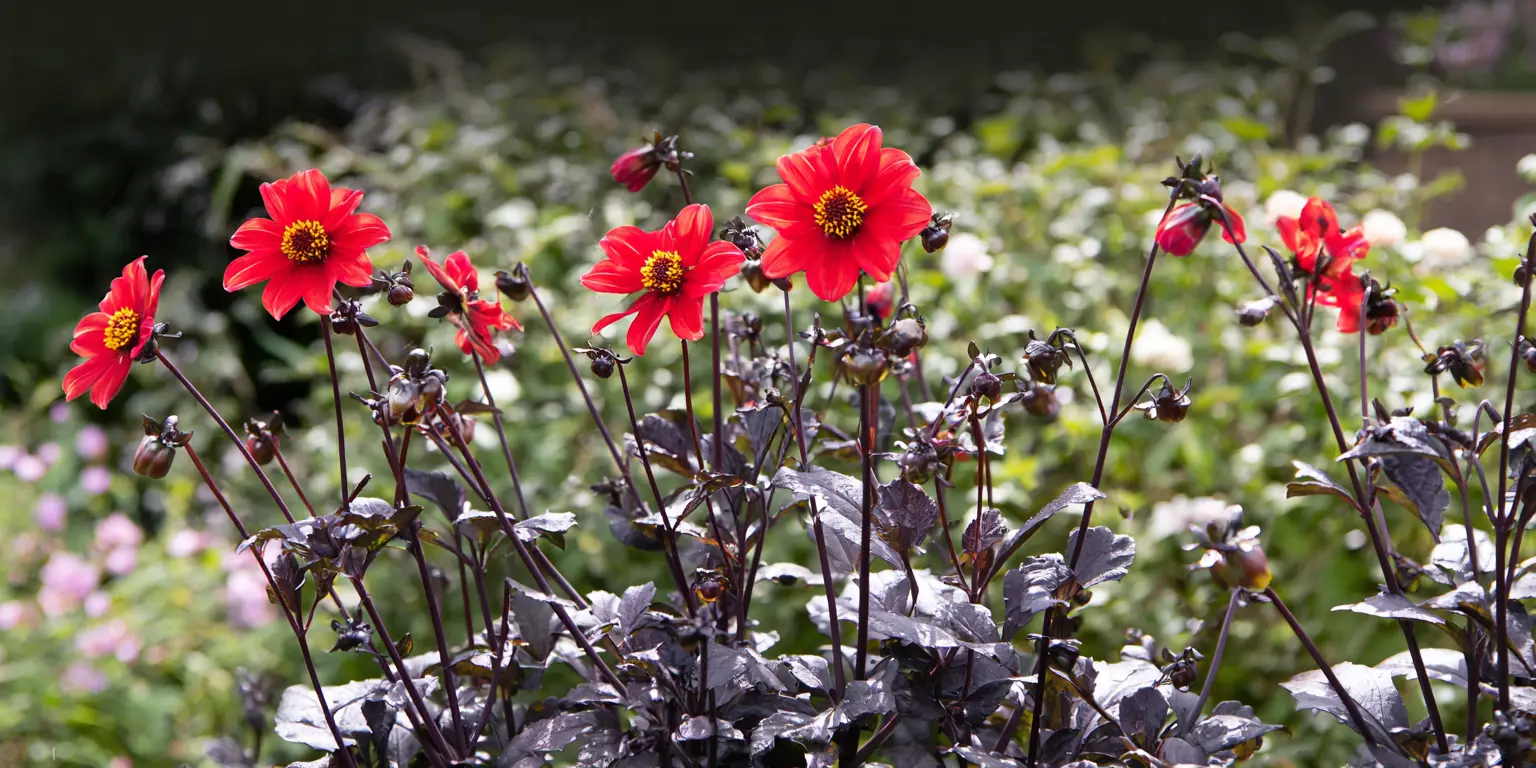
Bishop of Llandaff
Peony‑flowered (semi‑double) · Treseder, 1928, United Kingdom
At‑a‑glance
- Group/Class: Peony‑flowered (semi‑double)
- Height × spread: 3-3.5 ft × 1.5-2 ft (0.9-1.1 m × 45-60 cm)
- Bloom window: summer to frost
- Color & flower form: bright red; semi‑double peony type with dark foliage
- Fragrance: 0 none
- USDA hardiness: grown as annual in most regions; may overwinter in ground in Zone 7 to 10 where soils are well‑drained
- Breeder / Year / Origin: Treseder, 1928, United Kingdom
- Awards/registration: RHS Award of Garden Merit
- Cut‑flower notes: moderate stem length; vase life about 4 to 6 days when cut early and conditioned.
- Pet safety: avoid
How it differs
- Single to semi‑double flowers offer pollen access unlike many fully double dahlias.
- Dark bronze foliage gives strong contrast compared with green‑leafed forms.
- Recognized by the RHS for consistent garden merit.
Strengths
- Useful to pollinators thanks to open centers.
- Dependable summer‑to‑frost bloom with deadheading.
- Dark foliage adds season‑long structure.
Care in one minute
Site: full sun; fertile, humus‑rich, well‑drained soil; neutral pH.
Water: steady moisture; avoid soggy conditions.
Feeding: moderate fertilizer; avoid excess nitrogen that reduces flowering.
Training: pinch once at 12 to 18 in; stake if exposed; deadhead to prolong bloom.
Overwintering: lift after frost and store around 40 to 45°F (4 to 7°C), or mulch and risk in‑ground only in mild, well‑drained Zone 7 to 10 sites.
Watch‑outs
- May need staking in wind despite moderate height.
- Leaves can scorch in reflected heat without adequate moisture.
- Frost‑tender tubers require winter storage outside mild zones.
Best uses (tags)
Provenance note
Raised by the Treseder nursery in Cardiff and introduced in the late 1920s; long grown in UK and US gardens.
References
- Royal Horticultural Society – Dahlia ‘Bishop of Llandaff’ (AGM plant profile)
- RHS – Top plants for autumn pollinators (includes ‘Bishop of Llandaff’)
- ASPCA – Dahlia toxicity to pets
Similar Flowers
Enjoying our flower guides? Add YourFlowersGuide as a preferred source on Google. It helps more readers find us.
Add to Preferred Sources