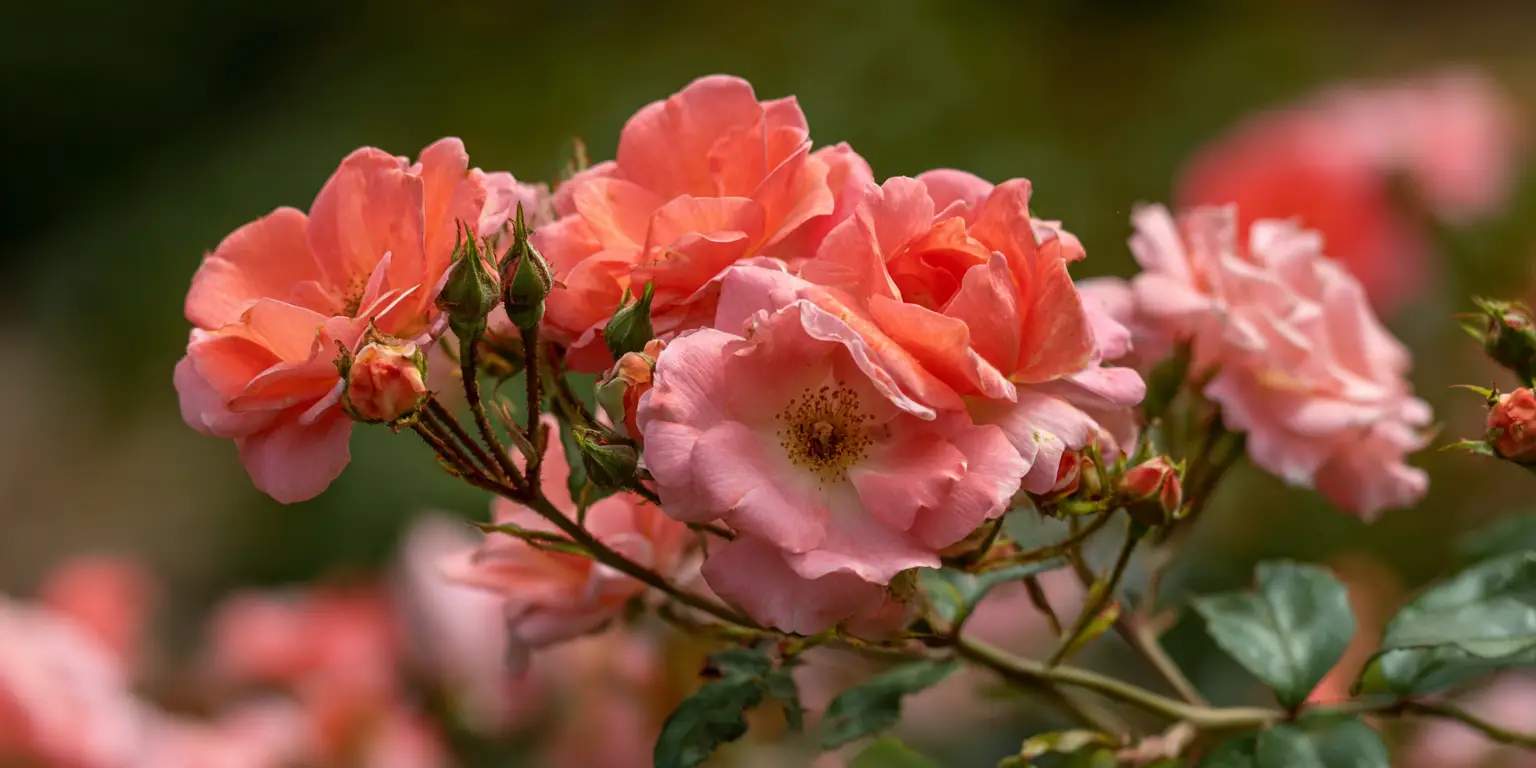
Rosa (Floribunda Group)
Floribunda
At‑a‑glance
- Group/Class: Floribunda
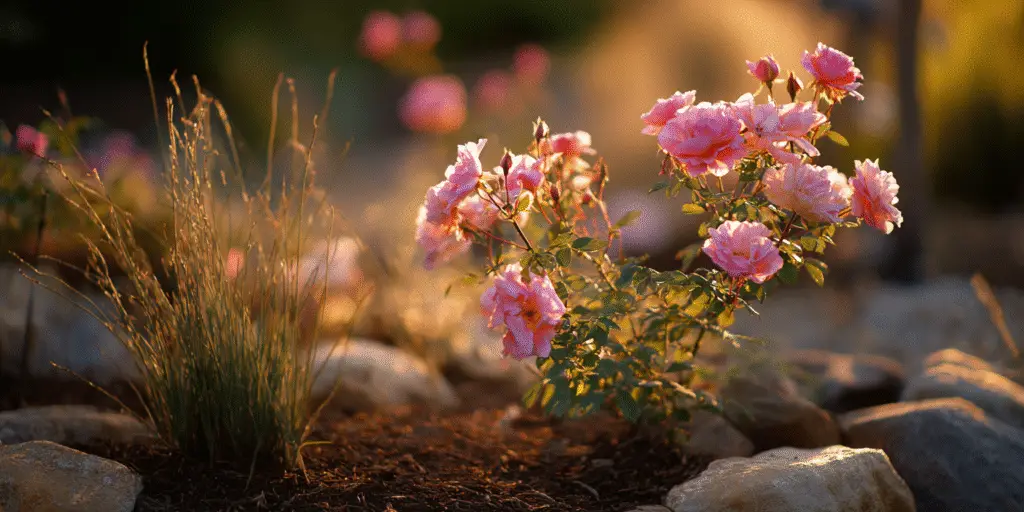
- Height × spread: 3–4 ft × 2–3 ft (0.9–1.2 m × 0.6–0.9 m)
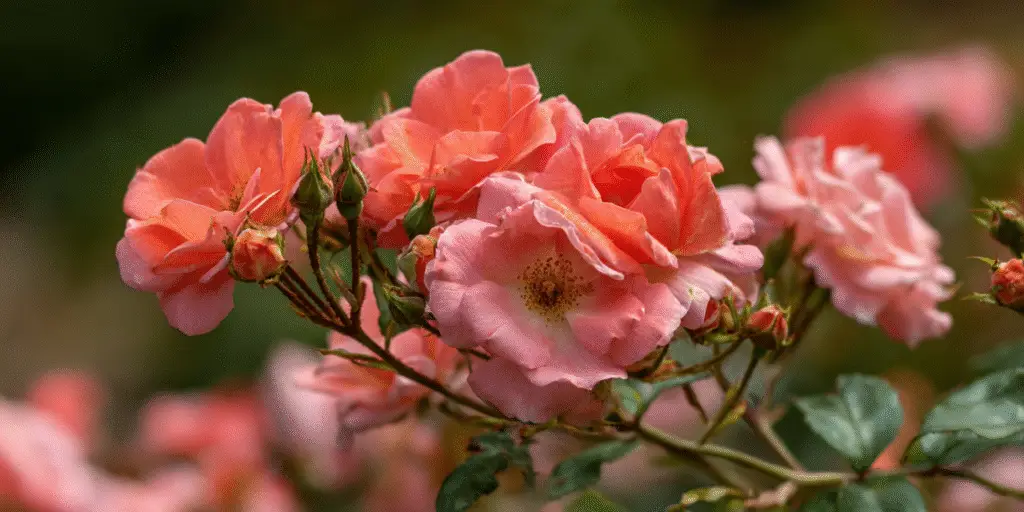
- Bloom window: late spring to frost; flowers in generous clusters
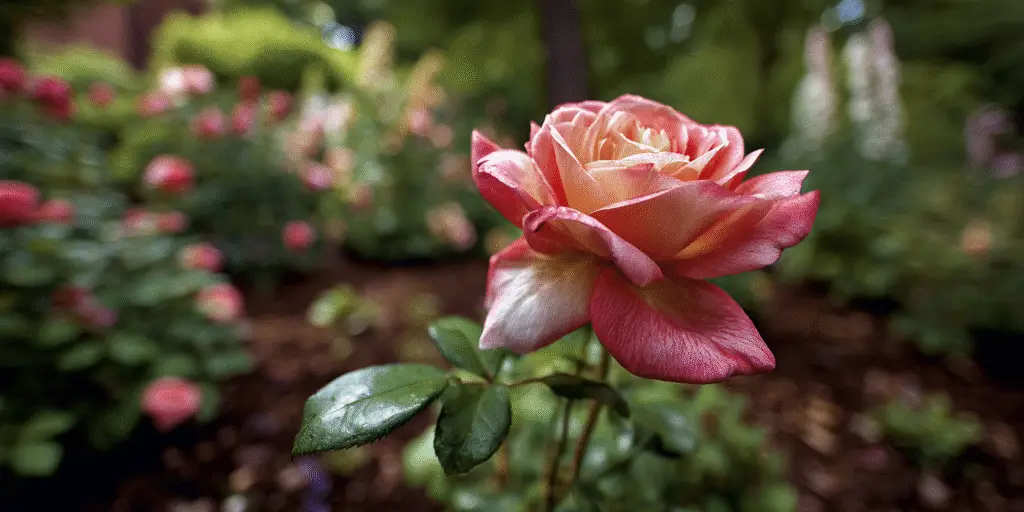
- Color & flower form: wide palette; cup to double; cluster‑flowered
- Fragrance: 1 trace
- USDA hardiness: zones 5 to 9 (varies by cultivar)
- Breeder / Year / Origin: term “Floribunda”: J. N. Nicolas, 1930, USA; early crosses by D. Poulsen, Denmark
- Cut‑flower notes: medium stems; vase life comparable to other roses with proper conditioning
- Pet safety: safe
How it differs
- Blooms in showy clusters rather than single stems
- More compact habit than many hybrid teas
- Often selected for steady repeat and garden performance
- Good color massing with less staking or disbudding
Strengths
- Long flowering season with consistent clusters
- Compact size suits hedges and smaller beds
- Many cultivars noted for improved disease tolerance
- Reliable rebloom with routine deadheading
Care in one minute
Site: full sun; good air movement helps foliage stay clean
Soil and pH: fertile, well drained soil at pH 6.5 to 7.0; mulch to hold moisture
Water: deep, regular watering; allow the surface to dry slightly between soakings
Feeding: balanced fertilizer in spring and midsummer to support repeat bloom
Pruning: late winter shape; remove oldest canes over time; deadhead to keep clusters coming
Overwintering: mound mulch over crown where winters are severe
Watch‑outs
- Fragrance is often lighter than hybrid teas
- Can develop black spot in humid climates without airflow
- Expect winter dieback near zone limits
Best uses (tags)
Provenance note
Floribundas arose from early 20th century crosses between polyanthas and hybrid teas. The name was coined in 1930 as breeders refined the class for clustered, repeat flowering.
References
- Colorado State University Extension – Selecting and Planting Roses (class definitions).
- Royal Horticultural Society – Modern bush roses (hybrid tea vs floribunda traits).
- UC Davis Postharvest – Roses: Spray Rose, Sweetheart Rose (vase life).
- ASPCA – Rose (Rosa spp.) non‑toxic to pets.
Similar Flowers
Enjoying our flower guides? Add YourFlowersGuide as a preferred source on Google. It helps more readers find us.
Add to Preferred Sources