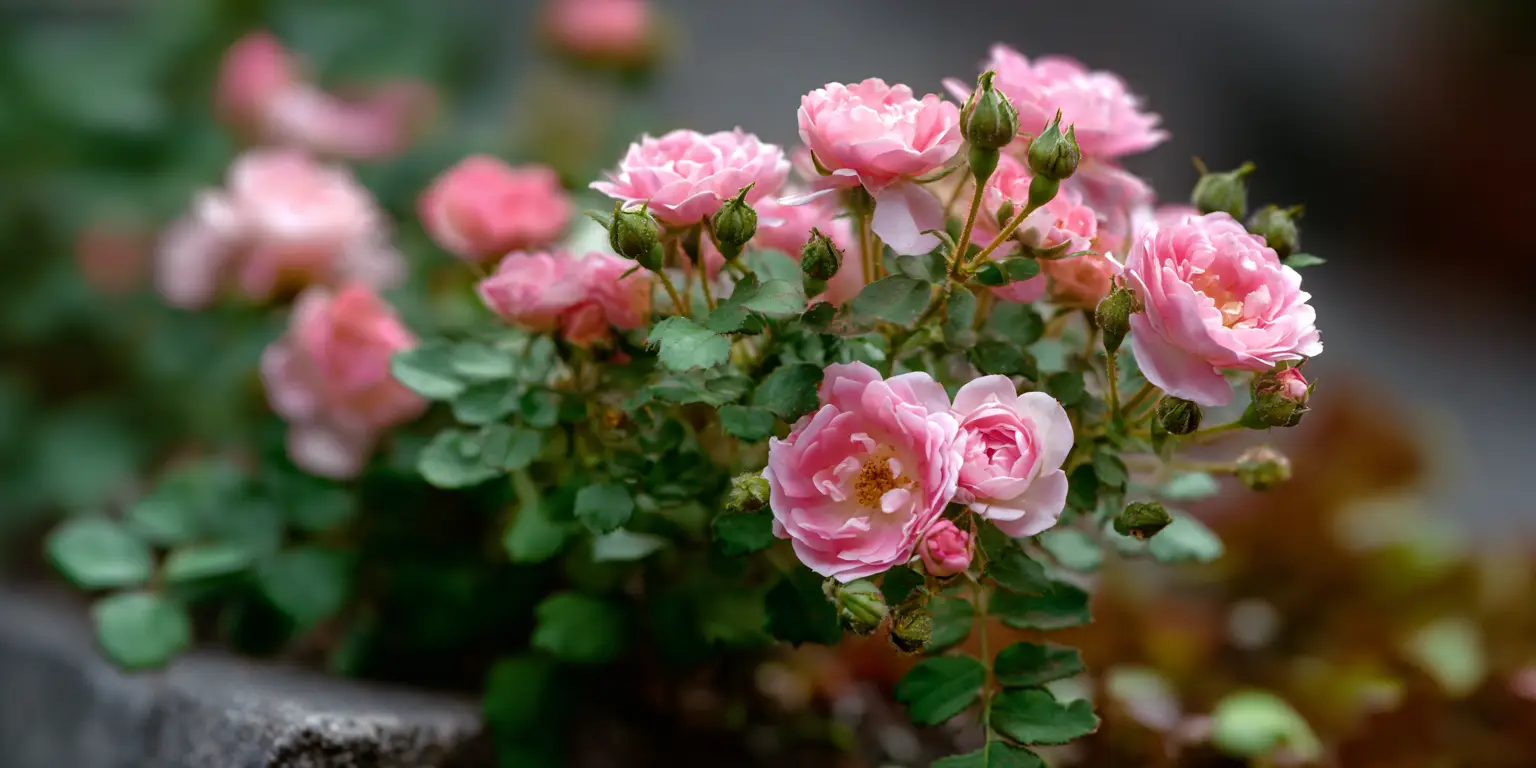
Rosa (Miniature Rose Group)
Miniature Rose
At‑a‑glance
- Group/Class: Miniature Rose
- Height × spread: 8–24 in × 8–18 in (20–60 cm × 20–45 cm)
- Bloom window: late spring to frost; continuous with deadheading
- Color & flower form: broad palette; single to double; scaled‑down hybrid tea or floribunda forms
- Fragrance: 1 trace
- USDA hardiness: zones 5 to 9 typical in ground; protect containers in winter
- Breeder / Year / Origin: ‘Rouletti(i)’: H. Correvon, 1922, Switzerland (early miniature in commerce)
- Pet safety: safe
How it differs
- Dwarf habit fits containers, edging, and tight beds
- Smaller flowers and leaves but true rose forms
- Often more cold hardy in ground than expected for size
- Frequent rebloom keeps color constant in season
Strengths
- Space efficient with long flowering window
- Good in pots and small gardens
- Often tolerant of pruning and shaping
- Useful for gift plants and patio color
Care in one minute
Site: full sun with airflow; morning sun is helpful in hot summers
Soil and pH: well drained mix; in beds use loam near pH 6.5 to 7.0
Water: keep evenly moist, especially in containers; avoid waterlogging
Feeding: light, regular feeding during active growth to sustain rebloom
Pruning: shear lightly to shape and deadhead to keep flowers coming
Overwintering: sink pots or store just above freezing where winters are severe
Watch‑outs
- Potted plants dry quickly and need steady moisture
- Spider mites can build in hot, dry weather
- Winter protect containers to avoid root damage
Best uses (tags)
Provenance note
Modern miniatures trace to small forms such as the Swiss plant introduced as ‘R. rouletti(i)’ in 1922. Breeders later expanded the class with many colors and forms for patio and garden use.
References
- UC ANR – The Versatile Miniature Rose (care and planting).
- Iowa State University Extension – Care for miniature roses.
- Oregon State University Extension – Landscaping with roses (site, soil pH).
- ASPCA – Rose (Rosa spp.) non‑toxic to pets.
Similar Flowers
Enjoying our flower guides? Add YourFlowersGuide as a preferred source on Google. It helps more readers find us.
Add to Preferred Sources