Winterizing a rose means insulating the graft union and holding the plant frozen until spring, not keeping it warm. Cold on its own rarely kills an established bush. Bad timing does: a cover thrown on during a mild autumn spell, or a hard pruning before the dormant season sets in that wakes latent buds right before the freeze. When a modern grafted rose dies over winter the rootstock usually pulls through while the named cultivar above the union does not, so the whole job comes down to protecting one swollen knot of wood at the base of the plant.
Protection works by keeping conditions steady rather than mild. A rose left exposed to bright February sun over dark soil warms up, breaks dormancy, pulls water into its canes, and splits that tissue when the temperature drops again after dark. The covering exists to block that swing, which is why the goal is uniform cold rather than shelter. Getting there starts in late summer, when the last nitrogen goes on and the last flowers are left on the bush to ripen into hips, both of which tell the plant to stop pushing soft growth and thicken the wood it already has. What follows covers which roses actually need protecting, the fall habits to drop, why the real pruning waits for spring, how deep to mound and when, climbers and containers, how the rules shift by region, and how to take it all back off.
On this page 8 sections
Do you actually need to winterize this rose?
Not every rose in the garden needs a mound of soil over it. What settles the question is the class of rose and whether it grows on its own roots or on a grafted rootstock. University of Illinois Extension puts the split plainly: many of the roses classed as old garden roses tolerate extreme cold, while hybrid teas take considerable damage through the same winter. Alba, Gallica, Centifolia, Damask, and Moss roses came out of hard continental climates and come through severe lows without any mounding at all, and tough species selections and rugosas do the same. Modern shrub roses on their own roots are nearly as safe, because a freeze that kills the top growth to ground level still leaves roots that push up shoots true to the same plant the following spring.
Grafted roses fail in a different way. A budded rose carries a tender, highly prized cultivar joined to a hardy rootstock at an enlarged junction, the graft union, and one planted improperly runs a higher risk of severe injury or outright death in a hard winter than an own-root rose does. If the cold reaches through to that union, the cultivar is gone. What comes up the next spring is rootstock: wild, thorny shoots that either refuse to flower or carry poor ones. For hybrid teas, floribundas, and grandifloras in USDA zone 7 and colder, the entire winter job is keeping that union covered until growth restarts.
Which winter protection does your rose actually need
Match the rose type against the USDA zone to land on the right protection level, from full mounding down to none at all.
Stop these fall habits first
Winterizing starts in late summer, and it starts with things you stop doing. Feeding late is the most common slip. University of Illinois Extension sets the cutoff at August 15 in cold climates, because anything applied after that pushes soft, succulent growth that winter damages on sight. Clemson Cooperative Extension, working with a longer season, ties the same decision to local weather instead and stops fertilizer six weeks before the expected first frost date. The two rules guard the same thing from opposite ends of the country. Late nitrogen sends stored carbohydrates into new shoots rather than into thickening the canes already standing and packing starch into the crown. Potassium is the exception worth knowing: a feed high in potassium, applied once the plant is dormant, raises winter hardiness without waking any top growth.
Cutting flowers is the second habit to drop. Illinois Extension puts the line at October 1, after which spent blooms stay on the bush and swell into hips. That is the plant’s own signal that the flowering season is finished, and the hormonal shift behind it slows sap flow and hardens the bark on the canes. A rose still being deadheaded in late October is a rose still being told to bloom. Clearing the bed comes last, before anything goes over the crown: fallen foliage and garden debris carry fungal spores and insect eggs straight into next season, so rake the bed clean rather than mounding on top of the mess, and give nearby peonies and chrysanthemums the same treatment while the rake is out. One thing does not stop. Roses want water during dry spells even in winter, and a bush that goes into a hard freeze with dry roots comes out of it with dieback.
The fall-pruning mistake
Hard autumn pruning kills more roses in cold country than the cold itself does. University of Illinois Extension keeps fall cuts to an absolute minimum: dead wood, diseased wood, broken canes, nothing else. A heavy cut in late autumn wakes latent buds into growth right before freezing weather arrives, and that growth has no chance of surviving it. There is a second, simpler reason to leave the canes long. Winter always burns some wood back from the tips downward, and a tall cane gives that dieback somewhere to happen other than the crown. The real pruning waits for spring, and growers time it by eye rather than by date: when forsythia comes into bloom nearby, the pruning season has opened. For modern ever-blooming roses that spring cut takes off one-half to two-thirds of the plant’s height and thins the number of canes.
Milder winters change the arithmetic. In South Carolina, Clemson Cooperative Extension has growers shorten canes by about one-third in late fall, and cut large bushes back to 3 feet, for a reason that has nothing to do with cold: winter gusts catch a tall, top-heavy bush, rock the whole root ball loose in wet ground, and snap the delicate feeder roots below the surface. Where deep freezes are the threat that cut is a mistake; where wind is the threat it is insurance. Once-blooming old garden roses sit outside both rules. Alba, Gallica, Centifolia, Damask, and Moss roses flower on old wood, so all their pruning waits until after they bloom in early summer. Cutting them in autumn or early spring takes off the flower buds themselves, the same way an autumn tidy-up strips a season of bloom from bigleaf hydrangeas. Any cut that goes through wood thicker than a pencil gets sealed with wood glue or nail polish, which keeps cane borers out of the exposed pith.
Mounding and mulching by zone
Covering too early does more damage than not covering at all. University of Illinois Extension waits for a hard killing frost to bring most of the foliage down, then suggests holding off further still, until nighttime temperatures have sat in the teens for several nights running. That stretch of sustained cold drives dormancy deep into the crown, so the buds under the mound stay shut instead of stirring. Pile soil and leaves over a bush while afternoons are still mild and the mound holds warmth and ground moisture against green wood, which invites fungal cane blight and stops the canes hardening at all. The season runs on a different clock for tender summer tubers such as dahlia, which come out of the ground as soon as the first light frost blackens the tops.
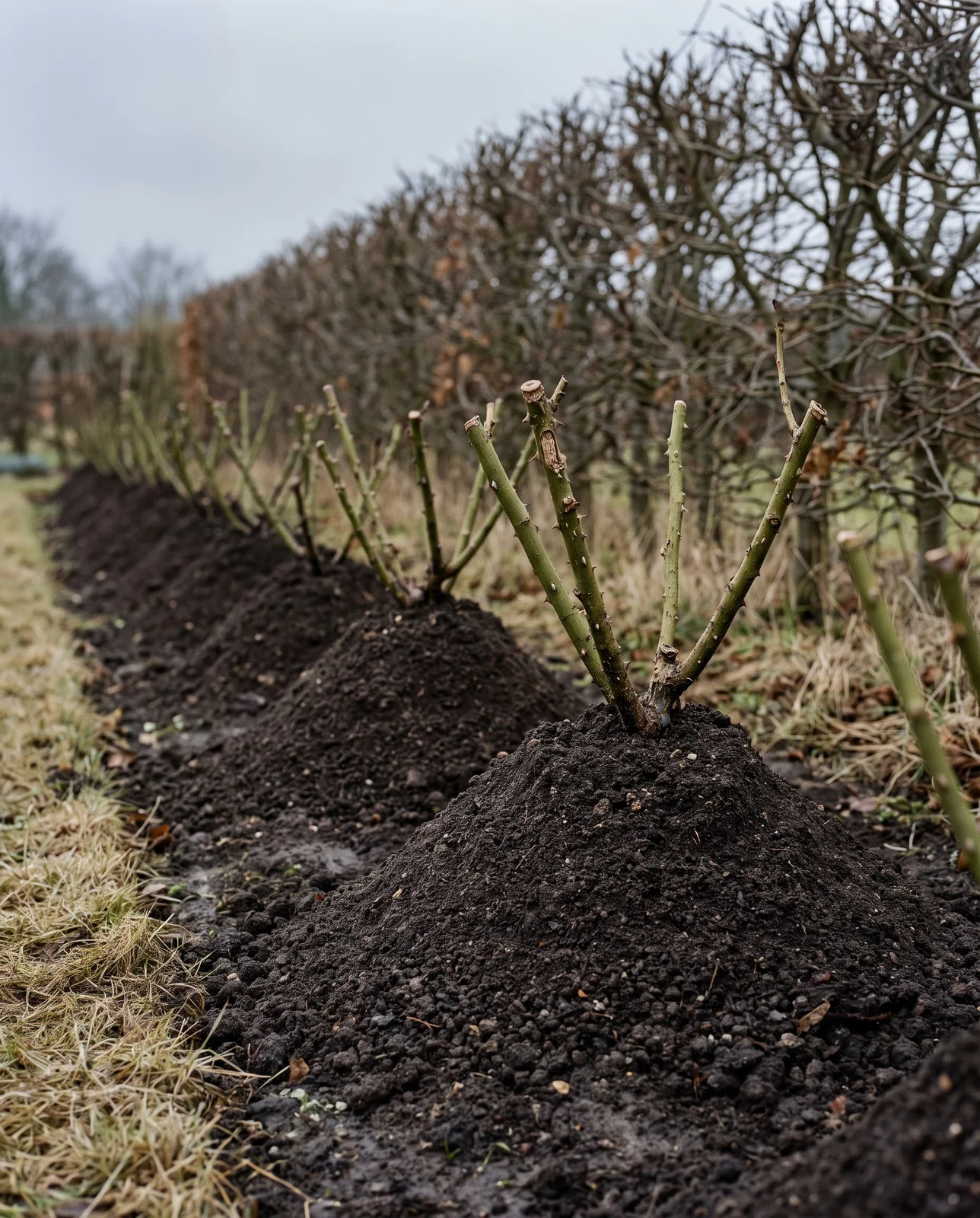
For grafted roses in USDA zones 5 through 7 the standard protection is a mound, or a hill, built directly over the base. Illinois Extension calls for 10 to 12 inches of a loose, well-drained soil and compost mix piled around and over the crown, and where that soil comes from matters: bring it in from outside the rose garden rather than scraping it up from around the plant. Scraping strips surface feeder roots and leaves them in freezing air, which costs the bush its odds of coming through. An 18-inch circle of chicken wire or hardware cloth set around the plant before the mix goes in holds the mound together through winter rain and wind. Colder ground calls for a second layer: in the Chicago region, wait until the soil hill has frozen solid, then add another 10 to 12 inches of straw, leaves, or evergreen boughs on top.
Styrofoam rose cones are the shortcut, and left alone they cook the plant. Soil still has to be mounded around the crown before the cone goes over the bush, and the cone itself needs air: cut four to five 1-inch holes around both the top and the bottom. Without them, a clear afternoon in January turns the inside into a greenhouse, breaks the canes out of dormancy, and hands the new growth to that night’s freeze. Flat mulch across the bed asks for the same restraint. Keep it loose and free-draining rather than packed into the dense wet mat that rots crowns on plants like lavender.
Special cases: climbing roses and container roses
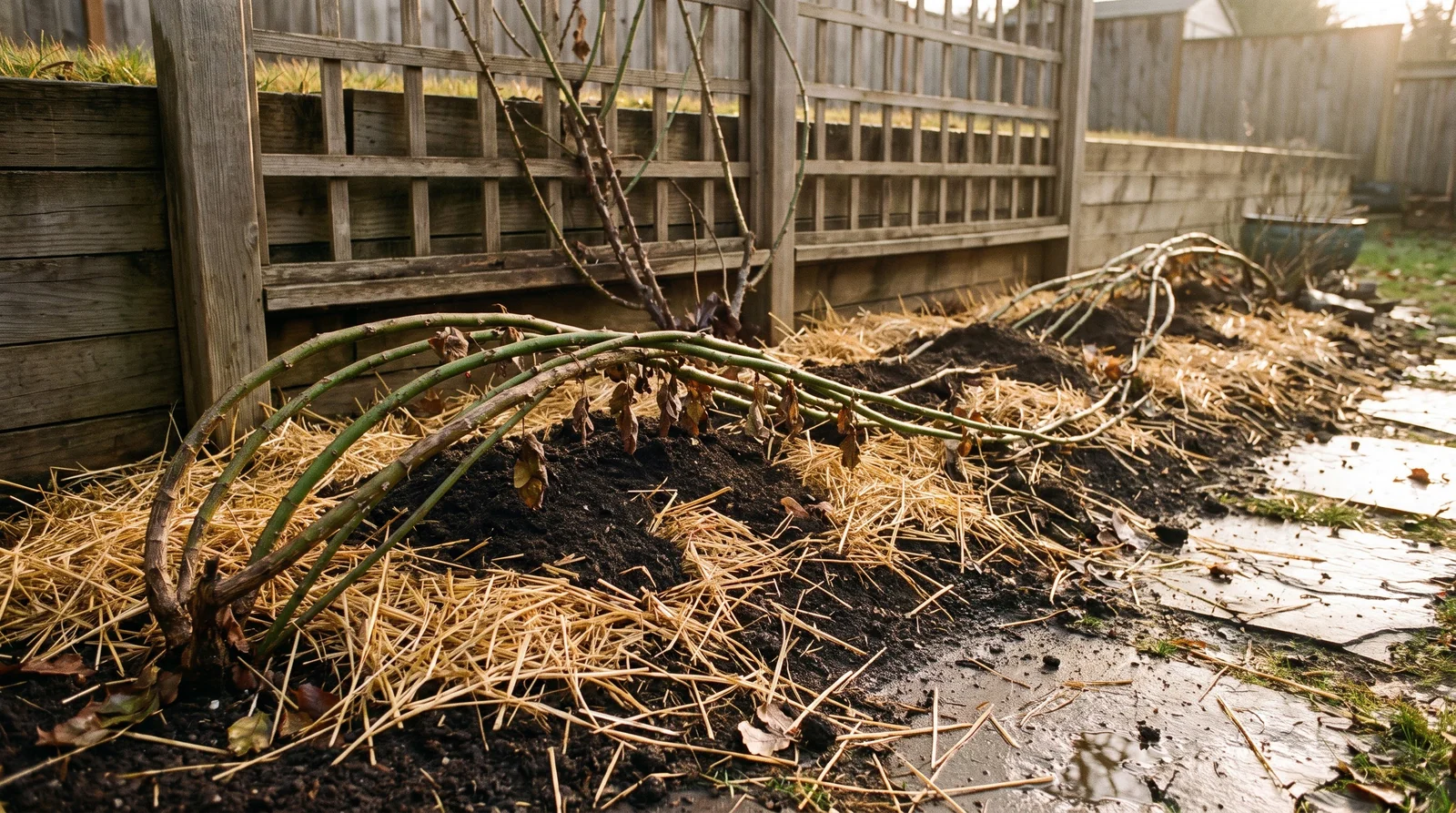
A climbing rose cannot be sheltered by a 12-inch mound, because the wood that needs protecting runs the whole length of the trellis. For marginally hardy climbers in severe winter regions, University of Illinois Extension takes the canes off their supports entirely: untie them, bend them gently flat against the ground, then cover them with 6 inches of soil and a layer of mulch. Timing is the hard part of this one. Cold makes those long stems brittle, and a cane that cracks while being bent is a cane lost outright, so the work belongs to a mild late-autumn afternoon while the wood still gives. Landscape staples hold the lowered canes against the soil until the covering goes on.
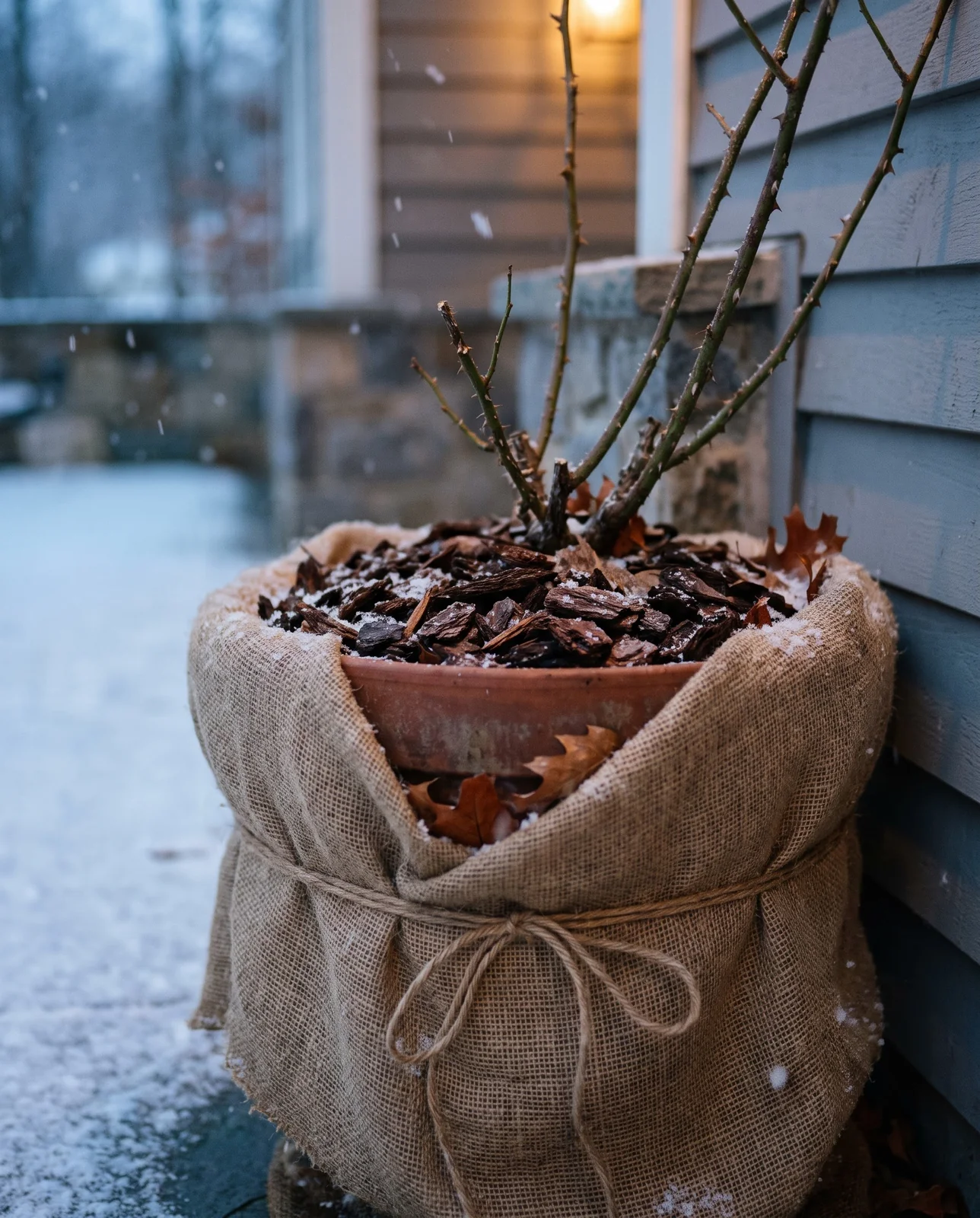
Container roses freeze from every side. Potting mix in an above-ground pot drops rapidly to match the ambient air temperature, so the root ball takes the full winter low with none of the buffering that surrounding earth gives a plant in the ground. Clemson Cooperative Extension solves it by putting the pot in the ground: dig a trench in a vegetable bed or a sheltered corner of the yard and sink the container to its rim for the winter, so native ground heat does the insulating. A light mound of shredded leaves or compost over the top of the pot and the crown finishes the job until spring.
Where winter protection actually varies by region
The advice splits because the threats do. The USDA Plant Hardiness Zone Map sorts North America by average annual extreme minimum winter temperature, drawn as 10-degree Fahrenheit zones and 5-degree half zones, and that number tells you which failure mode you are guarding against. Across zones 4 through 6 it is the depth and duration of cold: soil freezing down past the graft, and midwinter thaws that let it cycle back and forth before refreezing. Everything in the Midwest protocol points at that single problem, which is why the covering there is thick, why it goes on late, and why the pruning shears stay in the shed until spring, since canes left standing keep the plant’s carbohydrate reserves high and stop cold dieback short of the crown.
Across the warmer southern regions, USDA zones 7 through 9, wind and rapid spring warming take over as the main risks. That is where the late-fall trim makes sense and where northern advice does not apply. Even inside one state the calendar moves: Clemson Cooperative Extension puts spring pruning anywhere from mid-to-late February near the South Carolina coast to mid-April up in the mountains. Rose classes vary along the same lines. Noisettes grow strongly but have no hardiness in cold winters and belong near the coast, rugosas are tough, disease-resistant shrubs that take cold well, and damasks struggle in the heat of the coast and lower Piedmont.
When to remove winter protection in spring
Uncovering runs on weather, the same as covering did. Pull the mounds off too soon and a late spring freeze catches the swelling crown buds; leave them on too long and the new shoots come up pale and soft in the dark, damp soil, then rot. Take the mounds apart gradually once the ground has thawed through and nights have stopped dropping to a hard freeze, washing or gently raking the imported soil away from the crown a little at a time so the base warms in the spring sun without the fat new basal eyes getting knocked off in the process.
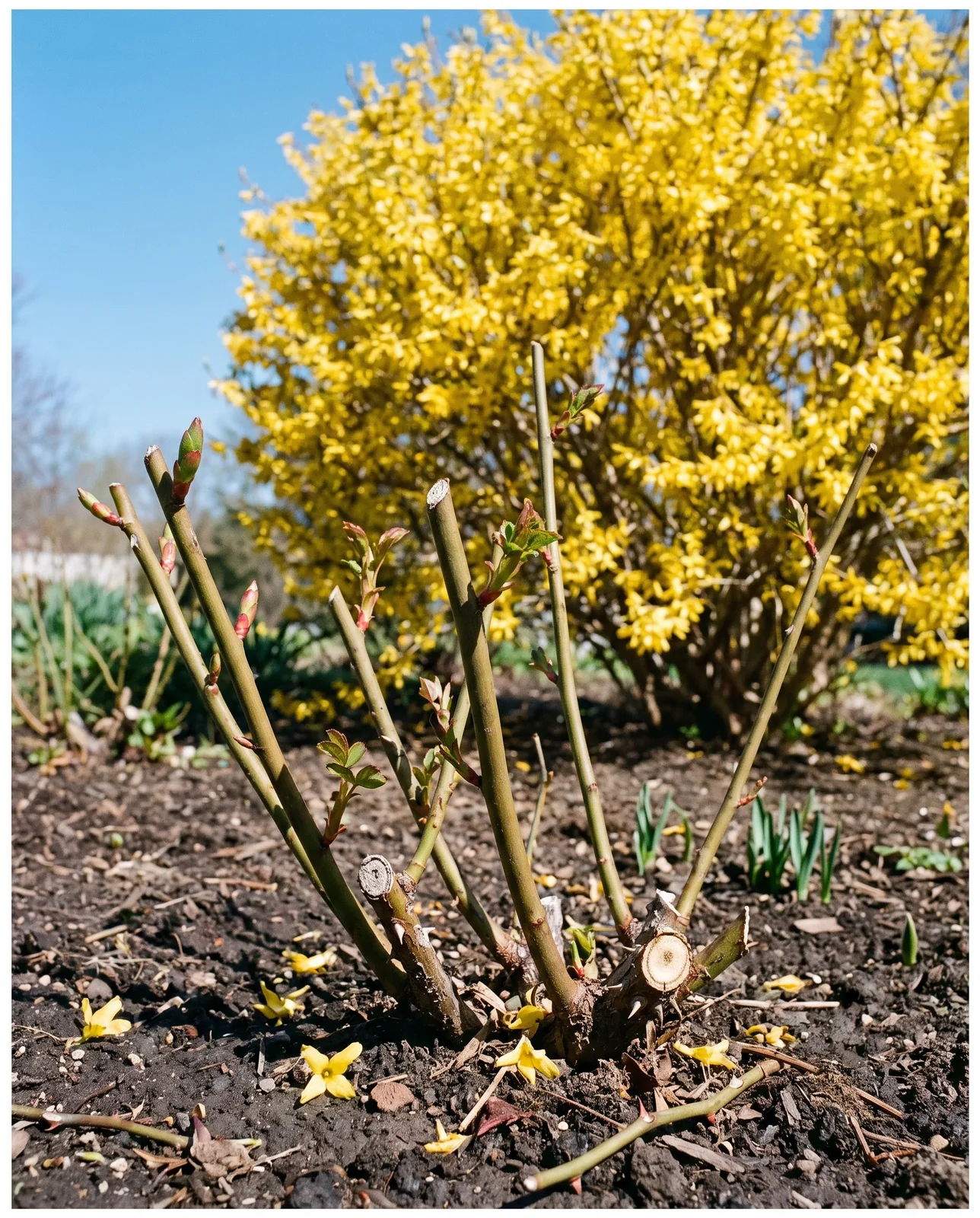
Forsythia sets the schedule for what comes next. University of Illinois Extension treats those yellow flowers on a nearby shrub as the sign that the pruning season has begun. Once the mounds are clear and vegetative buds are swelling, Clemson Cooperative Extension puts the heavy annual cut on repeat-blooming floribundas and hybrid teas right at bud break, taking hybrid tea canes down to 15 to 18 inches above ground level. Cut back into clean, creamy-white pith, so that the whole season grows out of wood the cold never reached.
Seasonal rose winterization and spring recovery schedule
Five checkpoints carry the routine from late-summer prep through the spring uncovering, each tied to a visible cue rather than a fixed calendar date.
Common misconceptions about winter rose care
The myth: Roses must be cut back hard in autumn to withstand winter cold.
The reality: University of Illinois Extension keeps fall pruning to a minimum. A hard autumn cut pushes tender growth that freezes, while waiting for spring lets you see exactly which wood the cold took and remove only that.
The myth: Roses can be mounded using the soil immediately surrounding the plant base.
The reality: Scraping soil from around the bush injures the shallow feeder roots and lowers its chance of survival. Illinois Extension calls for mounding soil brought in from outside the rose garden.
The myth: Styrofoam rose cones provide complete protection right out of the box.
The reality: An unventilated cone overheats on a sunny day and starts growth mid-winter. Cut four to five 1-inch vent holes around the top and bottom, and mound soil over the crown inside before the cone goes on.
Frequently asked questions
Do you need to winterize roses in every growing zone?
No. It comes down to your USDA zone and whether the rose is grafted. In zone 7 and colder, grafted hybrid teas, floribundas, and grandifloras need mounding over the graft union, which is the part that dies in a deep freeze. In zone 8 and warmer that union is rarely at risk, though a tall bush in an exposed spot can still be rocked loose by winter wind. Own-root shrub roses, rugosas, and once-blooming heritage classes generally hold through zones 4 to 7 on nothing more than ordinary mulch.
When should you start mounding and covering roses for winter?
Not on a date, and not after the first light frost. University of Illinois Extension waits for a hard killing frost to drop most of the foliage, and suggests waiting further until nighttime temperatures have been in the teens for several nights in a row. Covering earlier traps warmth and ground moisture against wood that has not hardened yet, which is how canes rot or come down with cane blight under a mound meant to save them.
Should you cut rose bushes back before winter?
In northern and central regions, only far enough to take out dead, diseased, or broken wood. Illinois Extension saves the real pruning for spring, because heavy fall cuts push out cold-sensitive growth and let winter dieback run further down toward the crown. Farther south the answer flips: Clemson Cooperative Extension shortens canes by about one-third in late fall, not to shape the plant but to keep winter wind from rocking the plant and damaging roots.
How do you protect climbing roses in cold climates?
Not with an upright mound. Untie the long canes from the trellis in late autumn while the wood is still pliable, bend them down to the ground, and cover them with 6 inches of soil topped with mulch. Leave the job until hard cold has set in and the canes turn brittle, and they crack as you bend them, which costs you the whole cane.
When should you remove rose winter protection in spring?
Gradually, once the surrounding soil has thawed and the threat of hard freezes has passed. University of Illinois Extension uses forsythia coming into bloom as the natural sign that winter has broken and pruning can start. With the mounds cleared and the buds swelling, hybrid teas and floribundas get their heavy annual cut back to healthy wood.
How should container-grown roses be protected during winter?
A pot above ground puts the root ball at air temperature, with none of the insulation a garden bed provides. Clemson Cooperative Extension has gardeners dig a trench in a sheltered spot and bury the rose, container and all, in the ground for the winter, letting the surrounding earth hold the temperature steady.
More About Roses

How to grow roses for beginners with disease-resistant varieties that practically care for themselves

Climbing roses that cover walls arbors and fences with cascading blooms

Growing roses in containers for patios balconies and small-space rose gardens

Rose meaning and rose colour meanings, honestly explained

Roses in wedding flowers and the timeless tradition of the bridal rose bouquet

Best David Austin English roses for old-fashioned fragrance and modern disease resistance

Making rose water and rose petal recipes from your garden’s fragrant harvest

Companion plants for roses: what to grow and what to avoid

Pruning roses at the right time and the basic cuts every gardener needs to know

Black spot on roses and the organic approach to the most common rose disease
Enjoying our flower guides? Add YourFlowersGuide as a preferred source on Google. It helps more readers find us.
Add to Preferred Sources