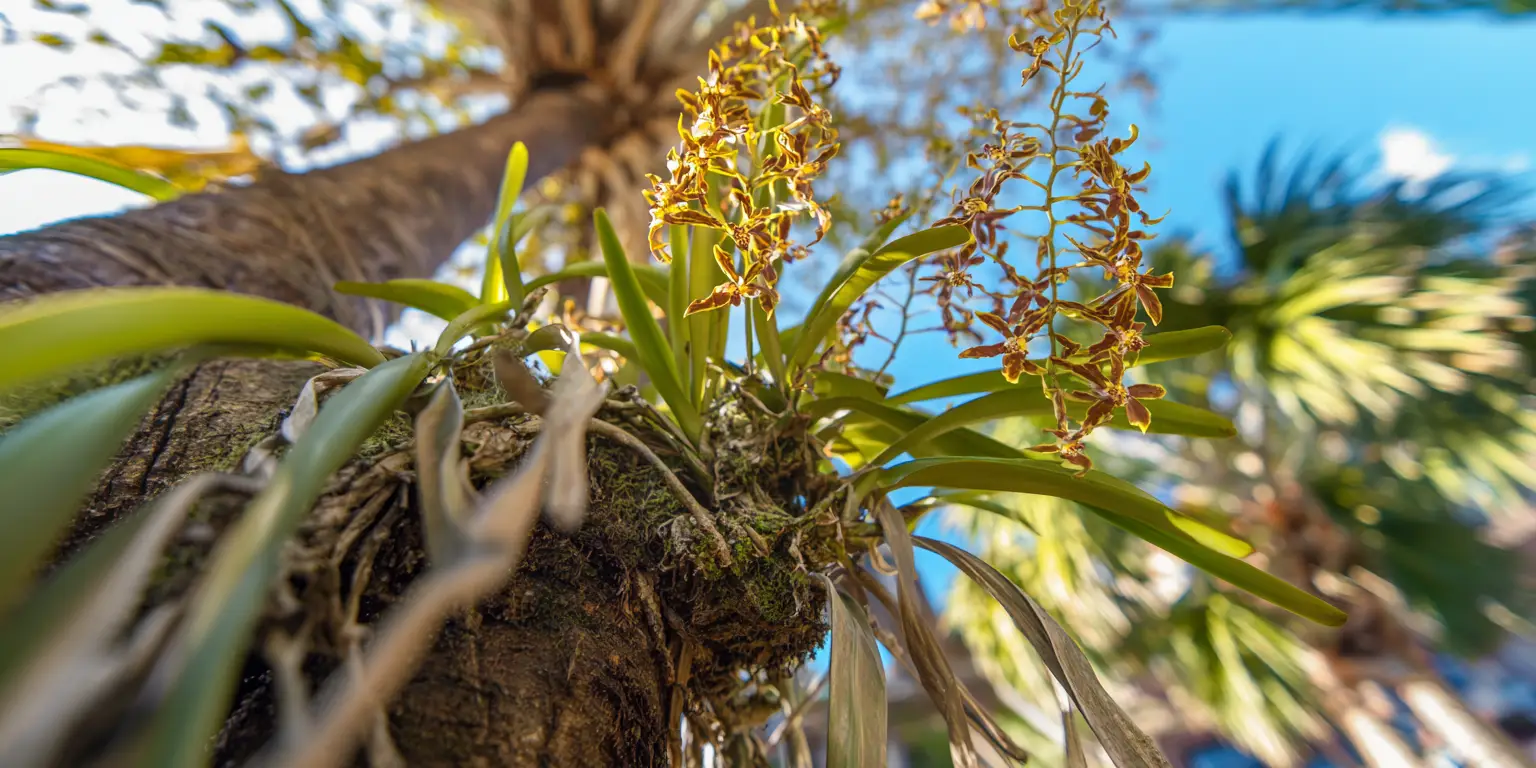
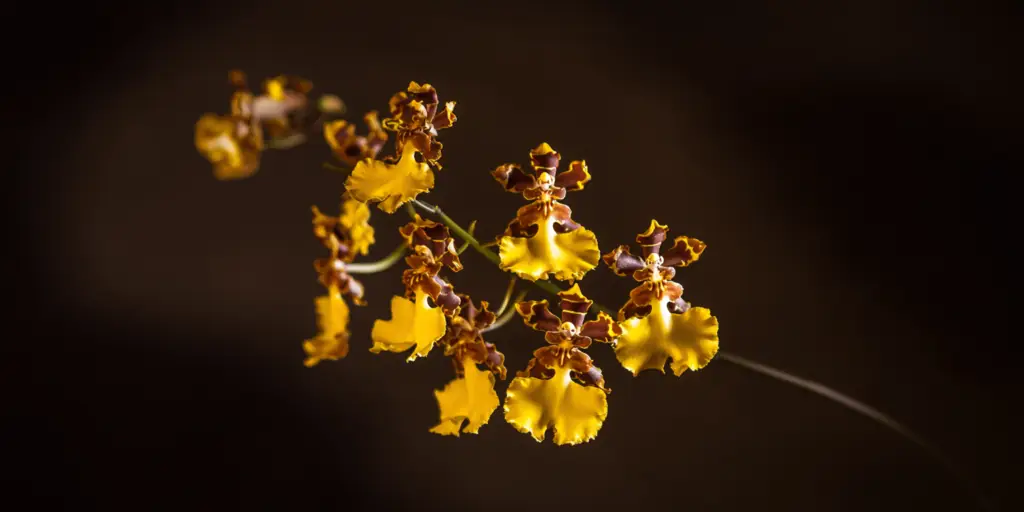
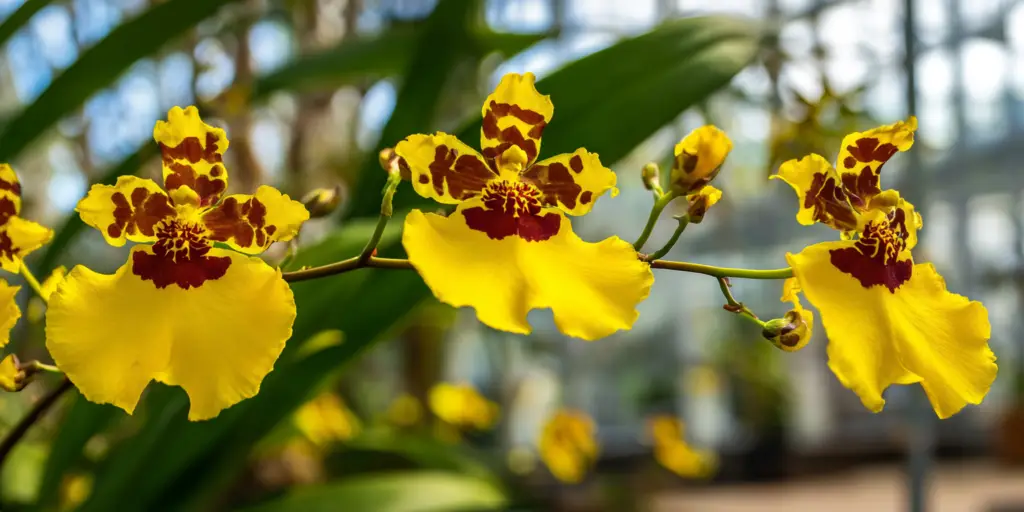
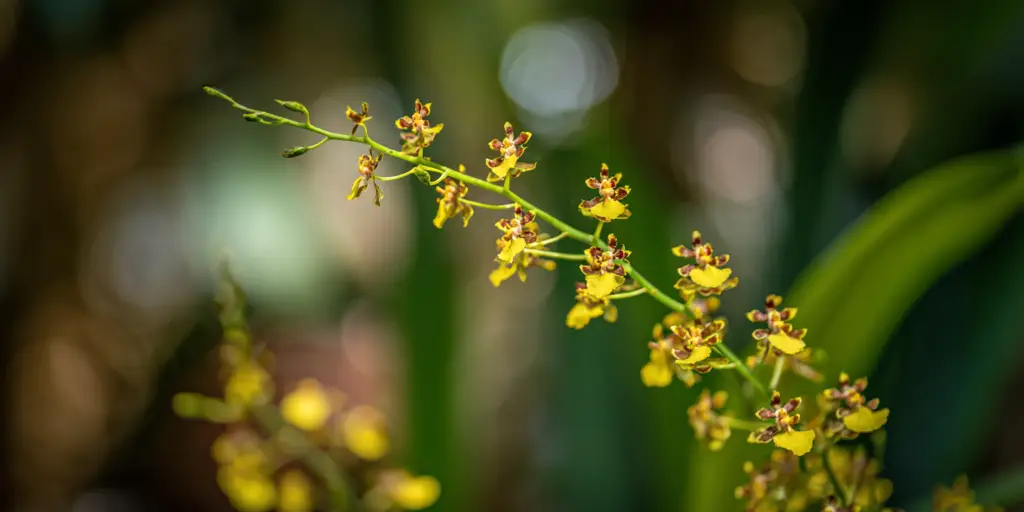
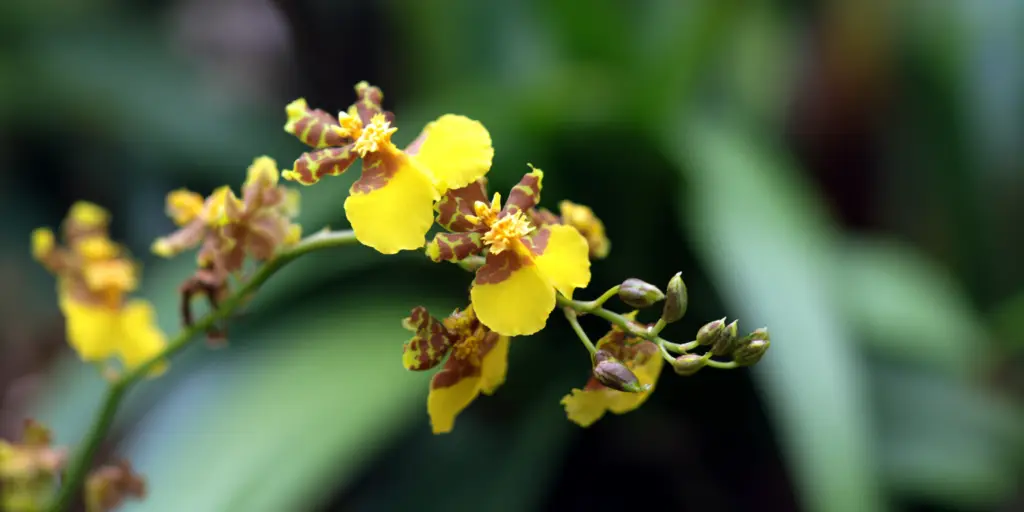
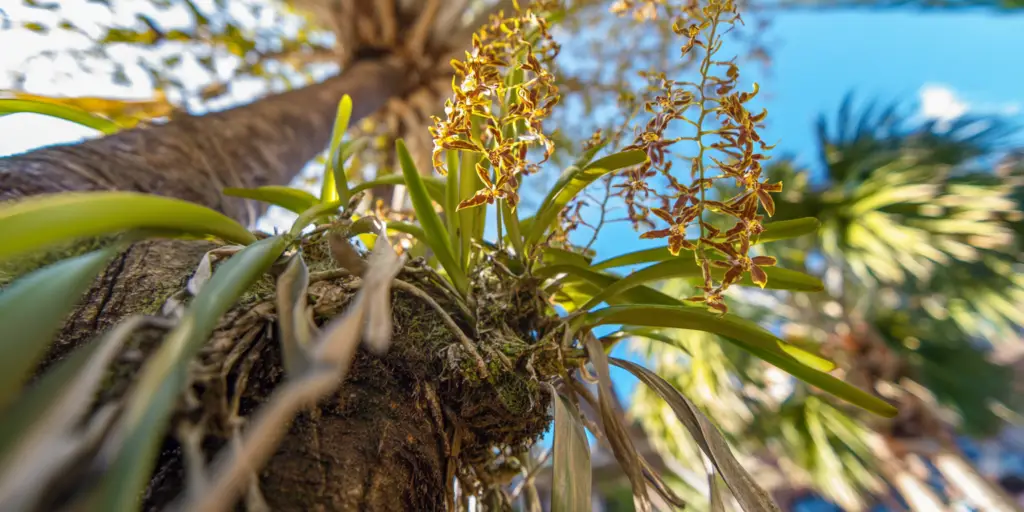
This Caribbean species is the conserved type of the genus Oncidium. It bears tall, branching spikes with many small yellow flowers and brown markings. Plants prefer bright filtered light and warm conditions. It is best grown as a houseplant or greenhouse orchid in North America. Outdoor year round culture is limited to frost free zones.
At‑a‑glance
· Group/Class: Oncidium species (Oncidiinae)
· Height × spread: 2 to 6 ft tall including spike (0.6 to 1.8 m); 1 to 2 ft wide (30 to 60 cm)
· Bloom window: spring and fall; varies by climate
· Color & flower form: yellow with brown spotting; many small flowers on tall branched spikes
· Fragrance: 0 none
· USDA hardiness: grown as houseplant in most of North America; outdoors year round only in zones 10 to 12
· Breeder / Year / Origin: unknown, 1800, Caribbean
· Pet safety: safe
How it differs
Tall spikes compared with most Oncidium grown indoors.
Warm growing habit rather than cool.
Represents the type species of the genus.
Strengths
Graceful branching display.
Performs in warm, bright rooms.
Responds well to basket culture.
Care in one minute
Site: bright indirect light; some morning sun helps.
Medium: medium bark with perlite; fast drainage and air at roots.
Water: soak and drain; allow mix to approach dryness between waterings.
Feed: quarter strength fertilizer every 2 to 4 weeks in growth; flush monthly.
Watch‑outs
Stems need support to avoid bending.
Sensitive to cold drafts.
Overwatering in dense media leads to root rot.
Best uses (tags)
containers, specimen, heat tolerant
Provenance note
Range and name accepted by Kew. The species has been treated as the conserved type for the genus in taxonomic literature.
Written by: Your Flowers Guide editorial team We are a small independent group of flower lovers who research and review each guide using trusted horticultural and educational sources. Learn more about us