first bloom in
31
days
Bloom calendar
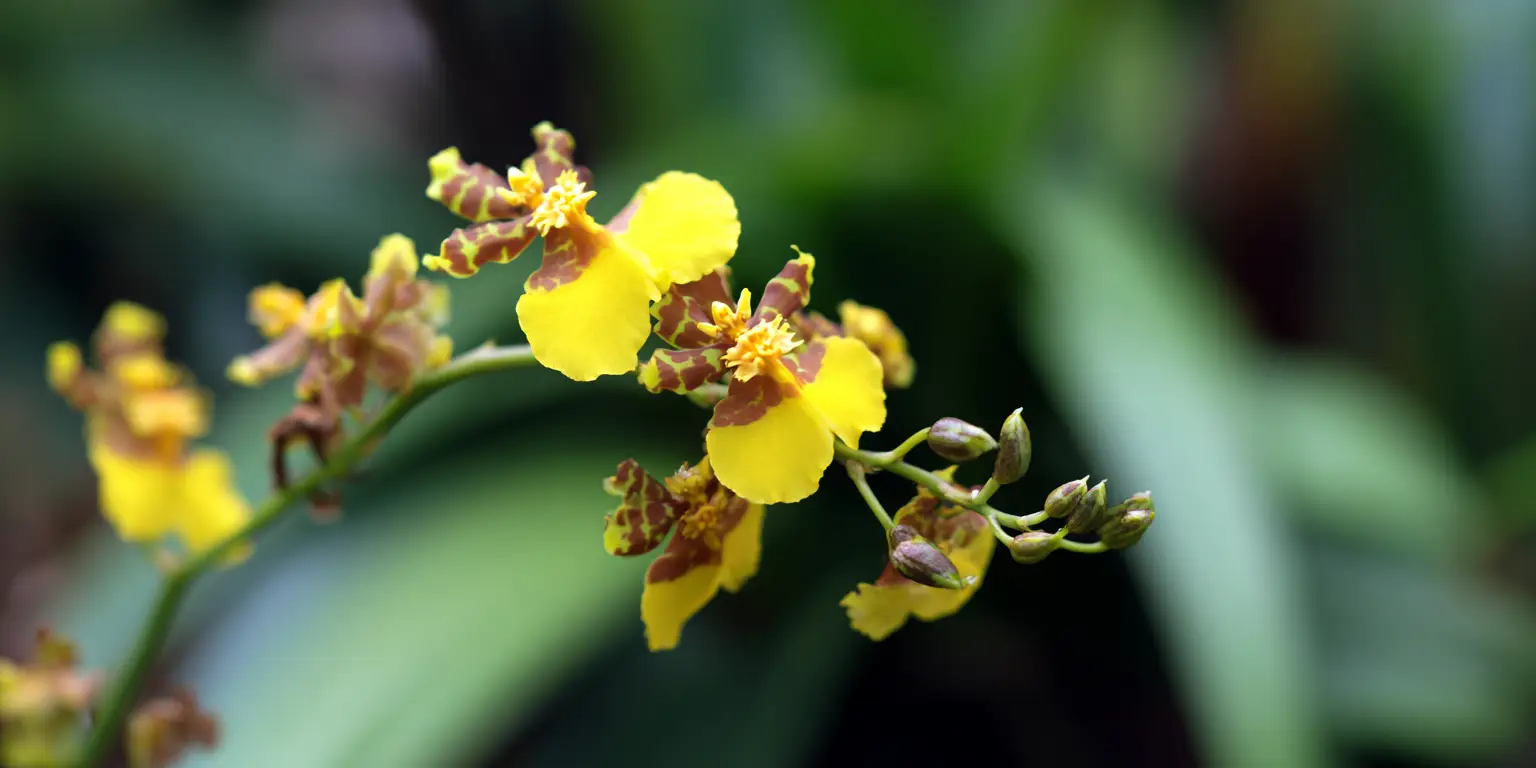
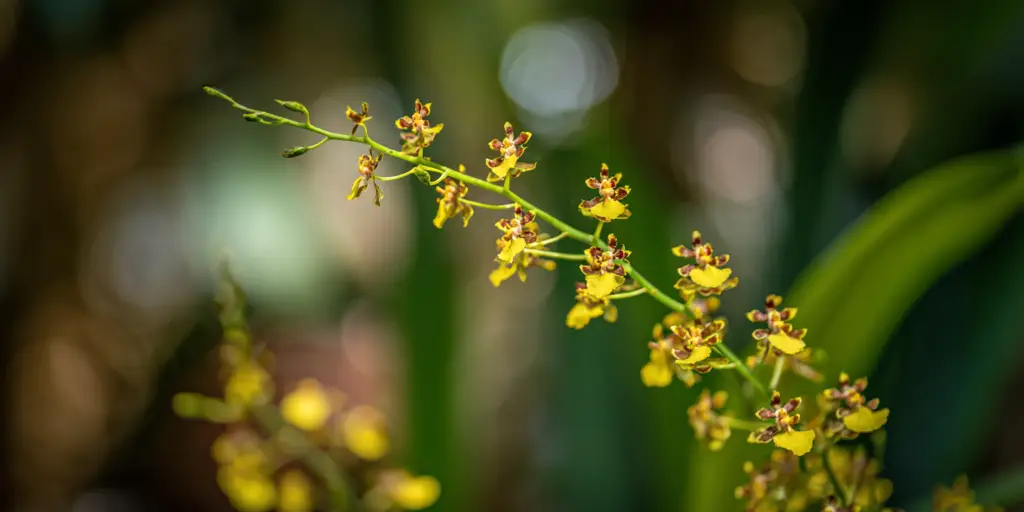
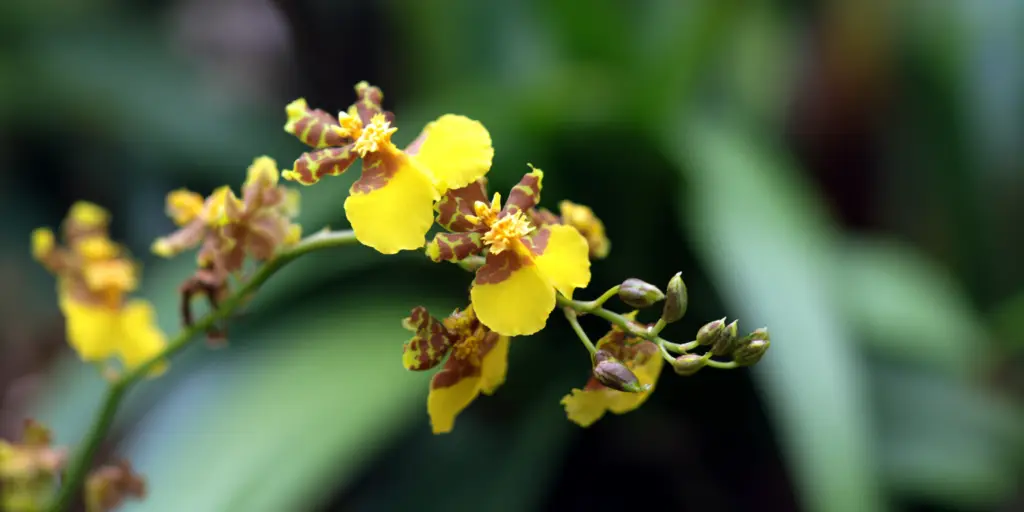
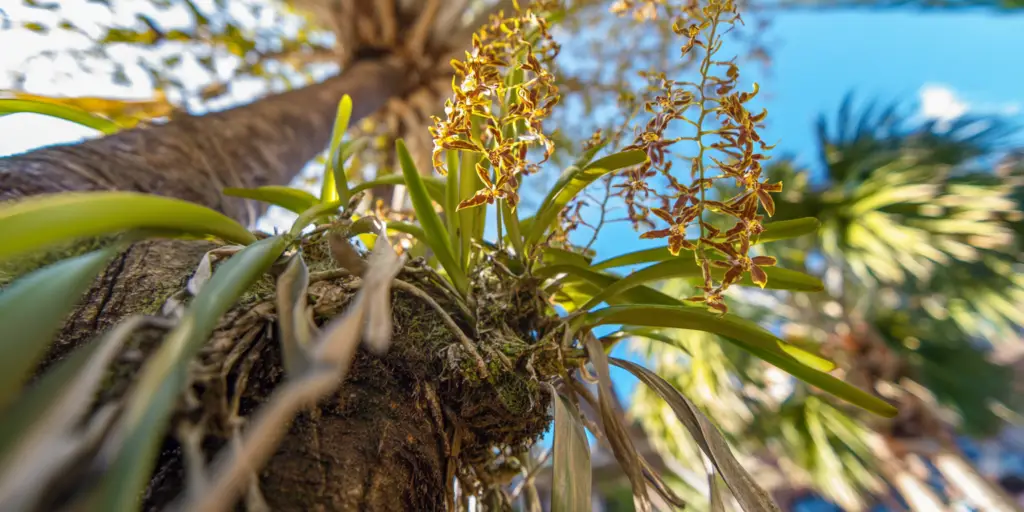
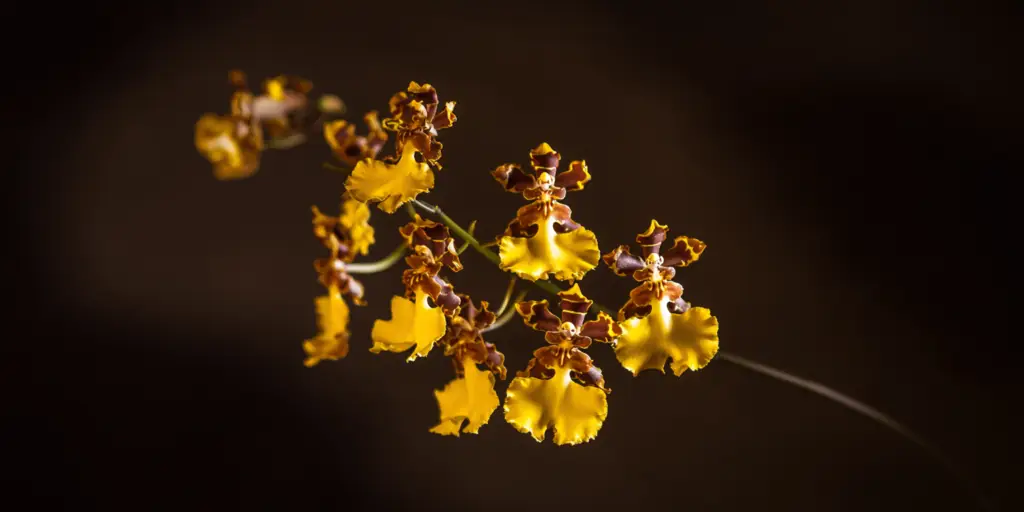
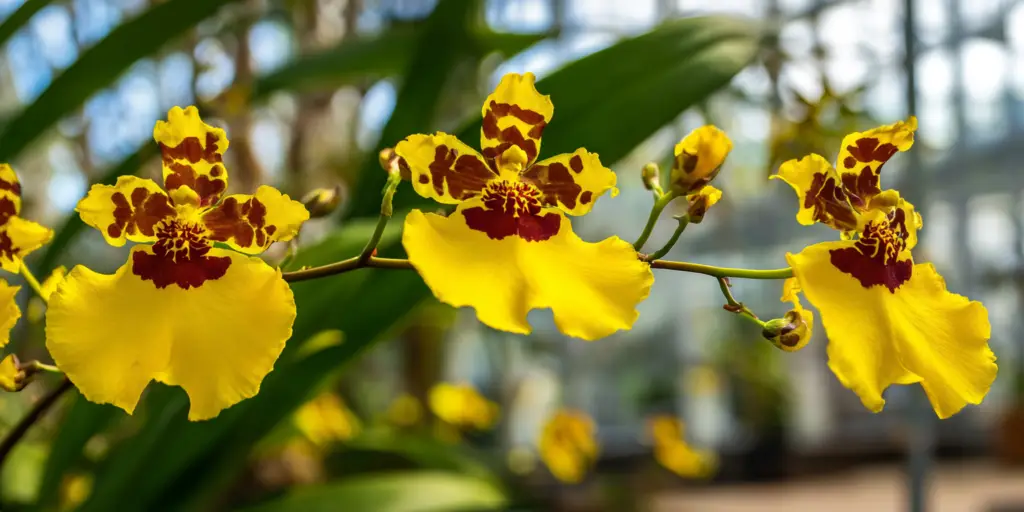
Oncidium cheirophorum
Oncidium species (Oncidiinae)
At‑a‑glance
- Group/Class: Oncidium species (Oncidiinae)
- Height × spread: 8 to 12 in tall including spikes (20 to 30 cm); 6 to 10 in wide (15 to 25 cm)
- Bloom window: fall and winter; sometimes spring; varies by climate
- Color & flower form: bright yellow, glossy small flowers on compact sprays
- Fragrance: 2 noticeable
- USDA hardiness: grown as houseplant in most of North America; outdoors year round only in zones 10 to 12
- Breeder / Year / Origin: unknown, 1852, Mexico to Colombia
- Pet safety: safe
How it differs
- Much smaller than a typical Oncidium.
- Noticeable lemon like scent.
- Short spikes fit tight spaces.
Strengths
- Compact habit for limited space.
- Can flower more than once per year.
- Adapts to indoor light with careful watering.
Care in one minute
Site: bright filtered light near an east or south window with sheer curtain.
Medium: fine bark mix; excellent drainage; slightly acidic.
Water: water when the top half inch is nearly dry; avoid constantly wet mix.
Feed: quarter strength fertilizer every 3 to 4 weeks in growth; flush monthly.
Watch‑outs
- Small pots dry quickly.
- Bud drop if humidity swings.
- Avoid overpotting to keep roots aerated.
Best uses (tags)
Provenance note
Accepted by Kew. Native from Mexico through Central America into Colombia. Parent of the well known ‘Twinkle’ hybrid.
References
- Kew – POWO, Oncidium cheirophorum
- NC State Extension – Oncidium genus page with O. cheirophorum note
- American Orchid Society – Oncidium culture sheet
- Smithsonian Gardens – Oncidium care
Similar Flowers
Enjoying our flower guides? Add YourFlowersGuide as a preferred source on Google. It helps more readers find us.
Add to Preferred Sources