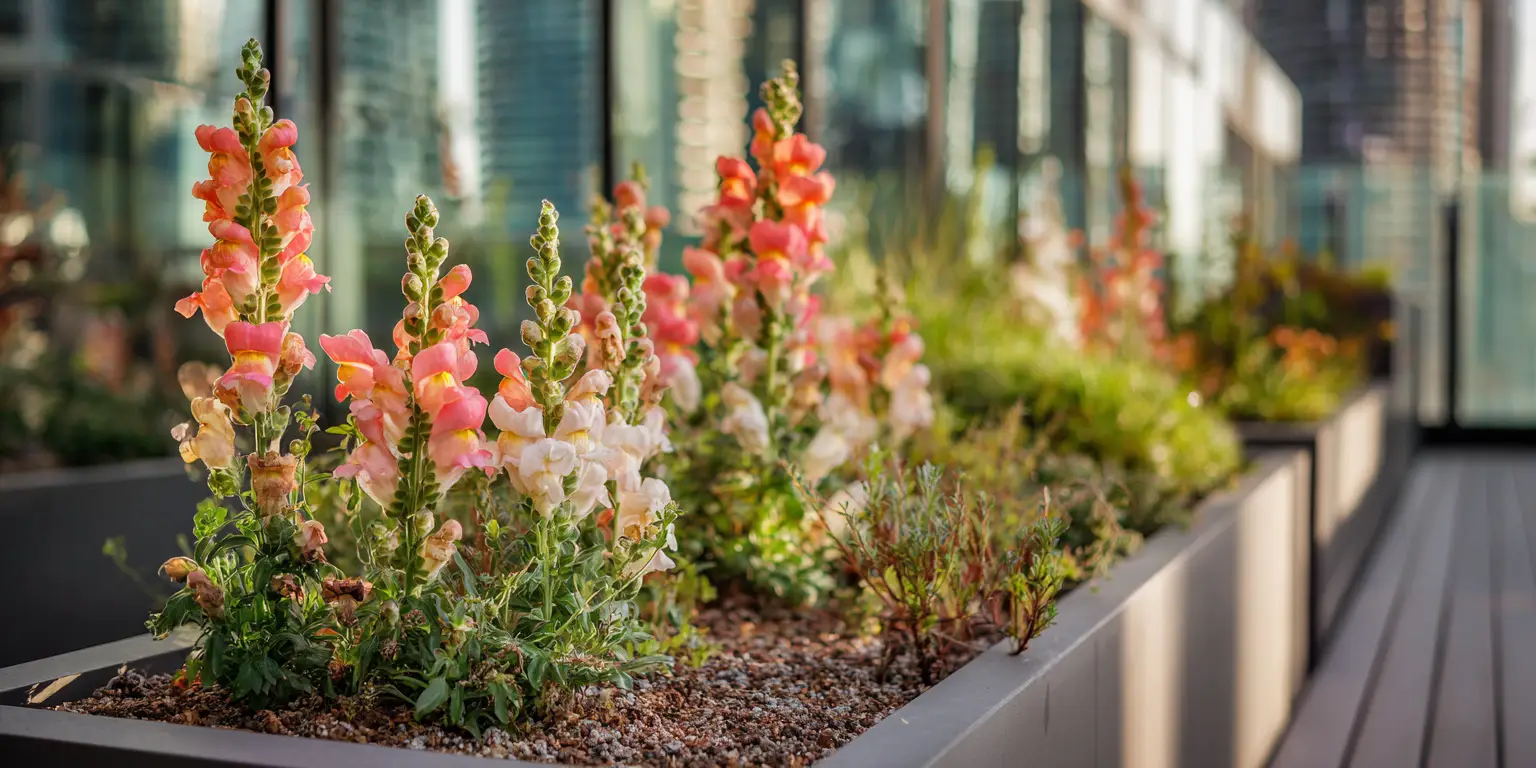
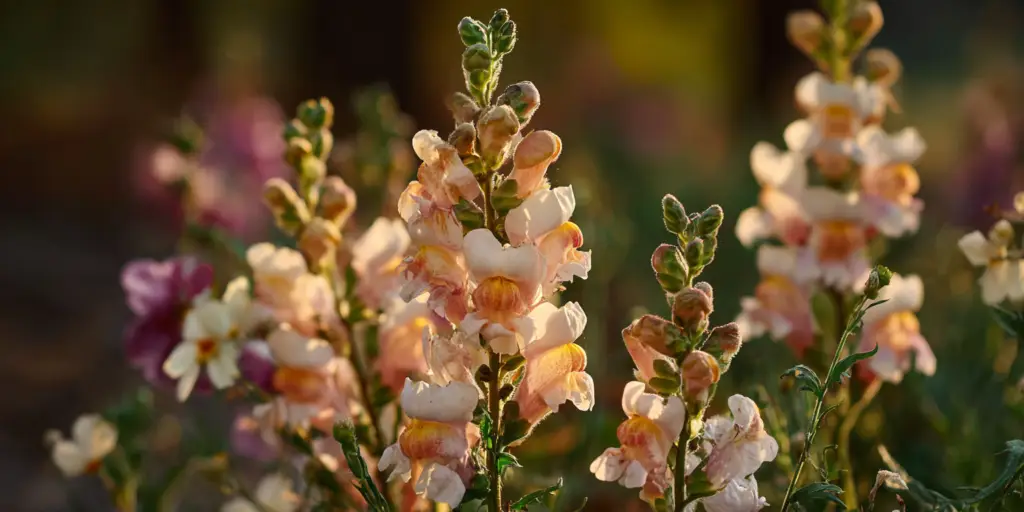
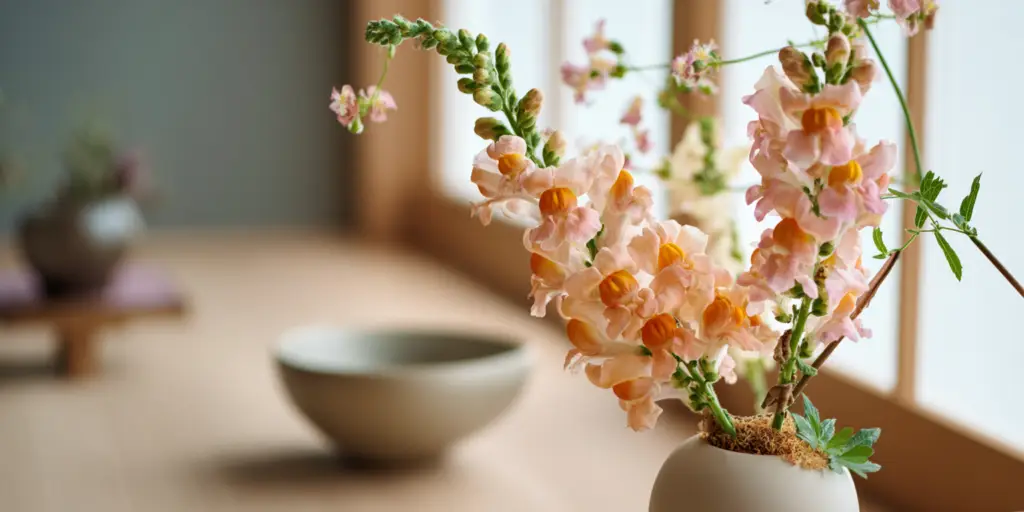
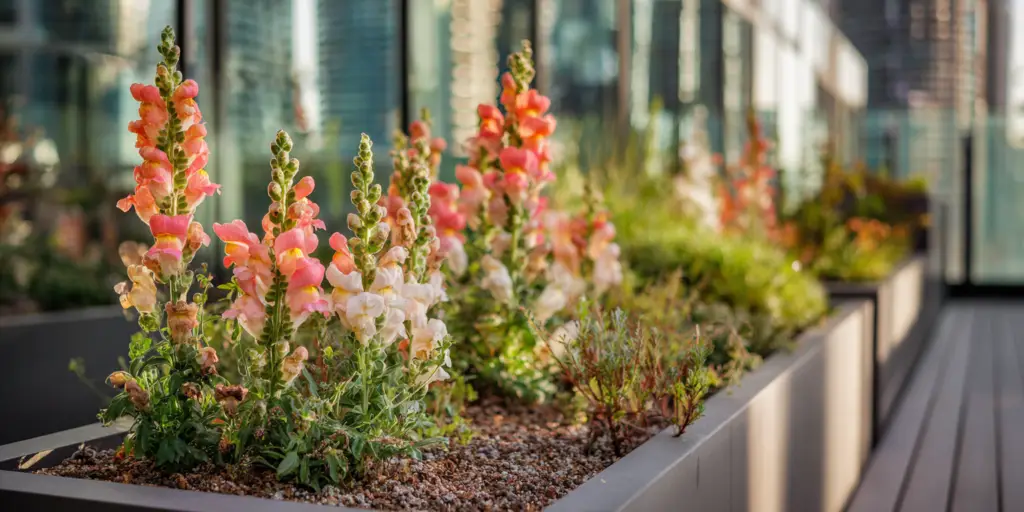
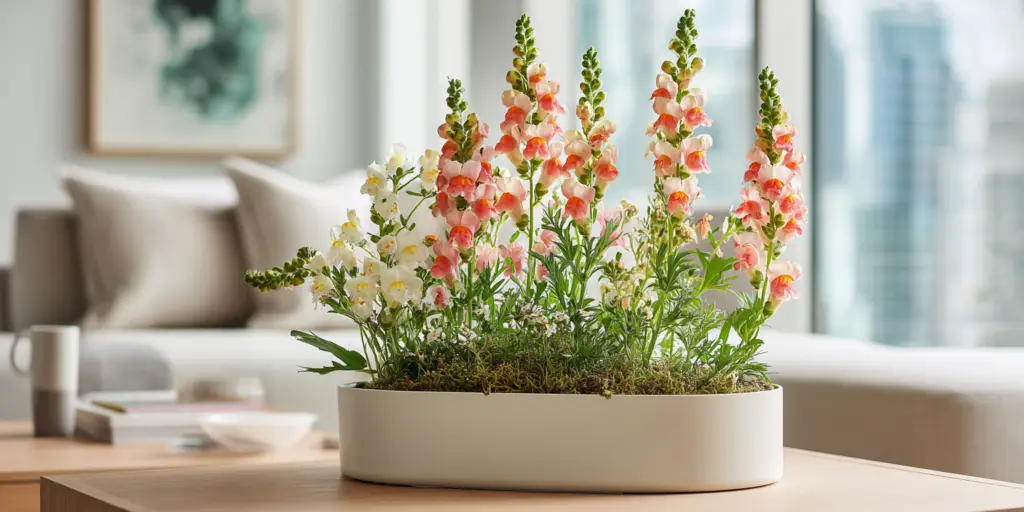
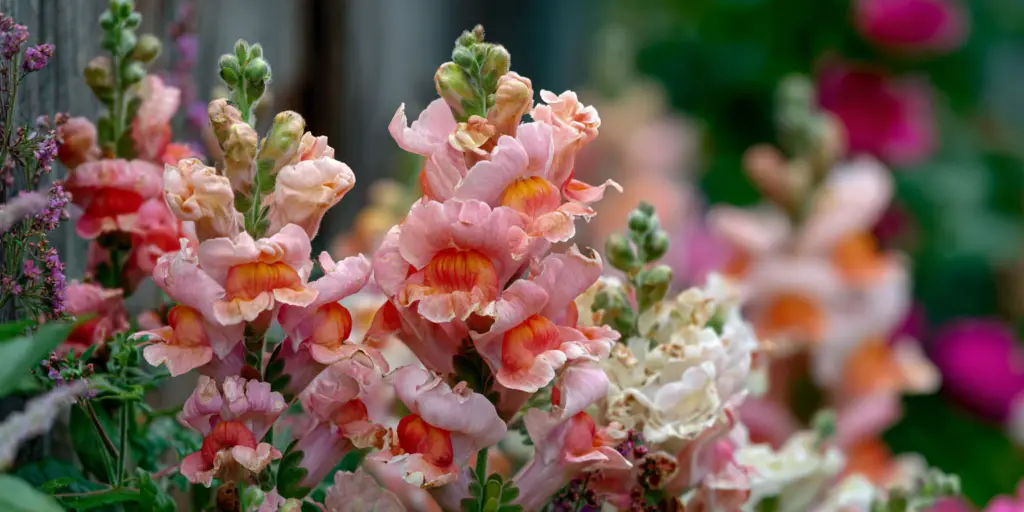
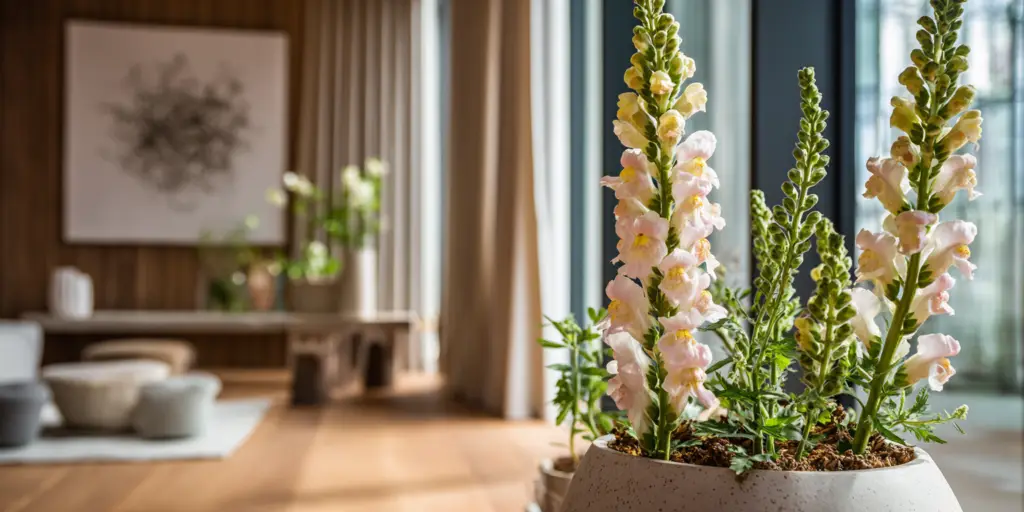
Antirrhinum majus ‘Liberty’ (Liberty Classic) is an intermediate F1 bedding series with classic spikes. It stands out for sturdy stems that hold well in landscape beds. Plants are sized for borders and also suit small bouquets. They perform best in cool spring weather and can rebloom after trimming.
At‑a‑glance
Group/Class: F1 series; intermediate bedding type
Height × spread: 18-22 in (45-55 cm) × 12-14 in (30-35 cm)
Bloom window: spring to early summer; repeat with deadheading
Color & flower form: classic spikes across a broad color range
Fragrance: 1 trace
USDA hardiness: grown as annual in most of North America; short-lived perennial in zones 7-10
Breeder / Year / Origin: Syngenta Flowers, unknown, origin unknown
Cut-flower notes: usable for small cuts; typical vase life about 7-10 days
Pet safety: safe
How it differs
More compact than tall cut strains like ‘Rocket’.
Sturdy central spikes show well at retail and in beds.
Uniform timing within the series for coordinated displays.
Strengths
Strong stems for weather-exposed plantings.
Fits borders and mid-bed placements.
Can be pinched to encourage side shoots.
Care in one minute
Site: full sun; light shade in hot summers.
Soil and pH: well-drained garden soil; production guides suggest pH near 5.5 to 5.9 while many gardens succeed close to neutral.
Water: regular moisture without waterlogging.
Feeding: moderate, steady nutrition.
Pinch and groom: pinch once; remove spent spikes to keep plants compact.
Watch‑outs
Deadhead to prevent lankiness after first flush.
Susceptible to rust and foliar diseases in wet weather.
Peak summer heat can slow flowering until nights cool.
Best uses (tags)
borders
massing
small cuts
pollinators
Provenance note
Marketed worldwide by Syngenta Flowers as Liberty Classic; positioned as a classic, sturdy snapdragon series for landscape use.
Written by: Your Flowers Guide editorial team We are a small independent group of flower lovers who research and review each guide using trusted horticultural and educational sources. Learn more about us