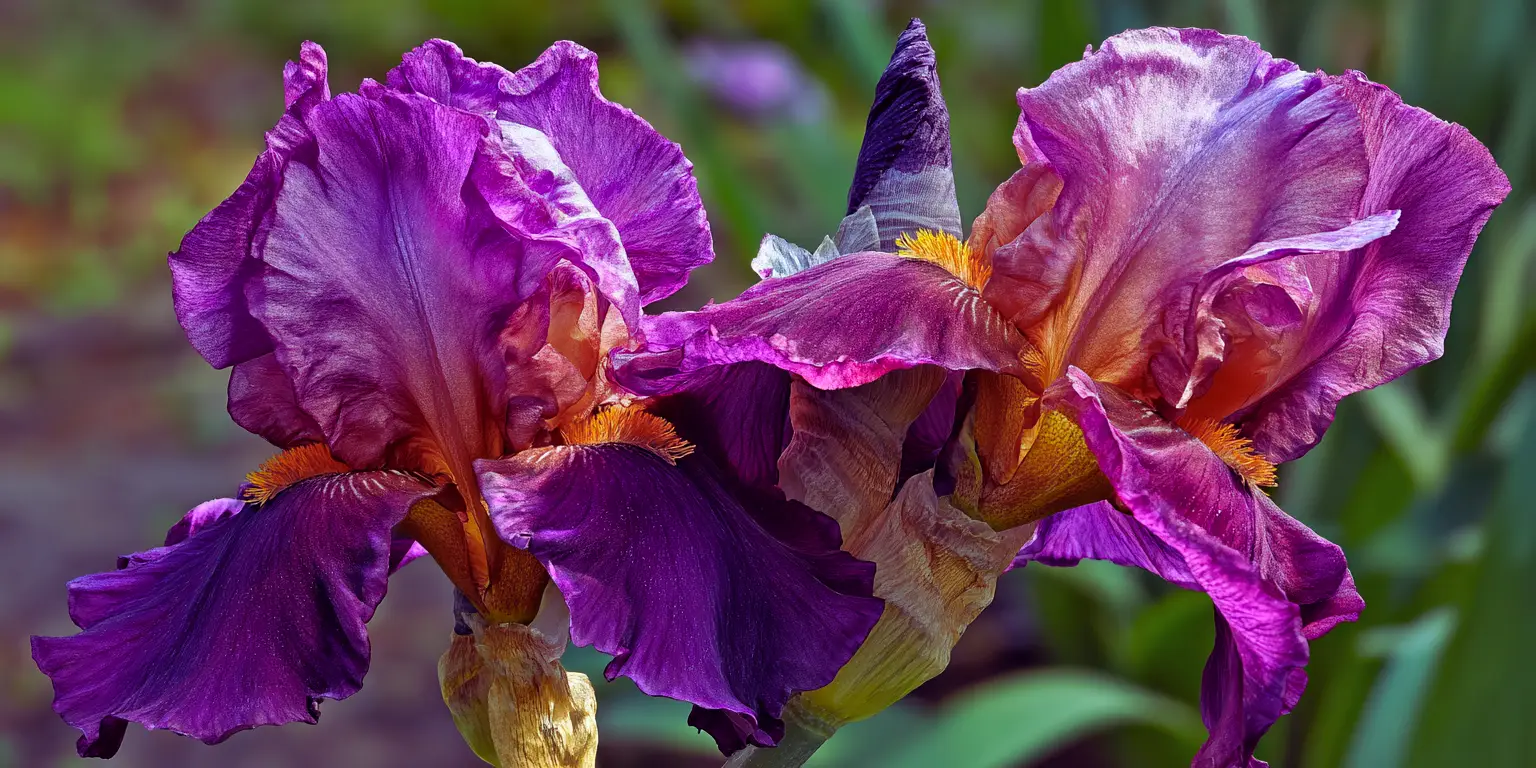
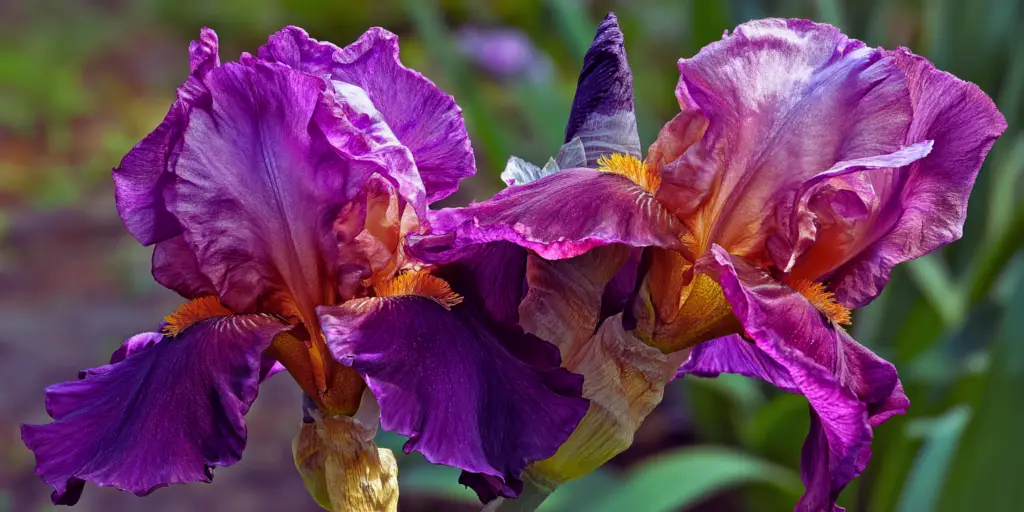
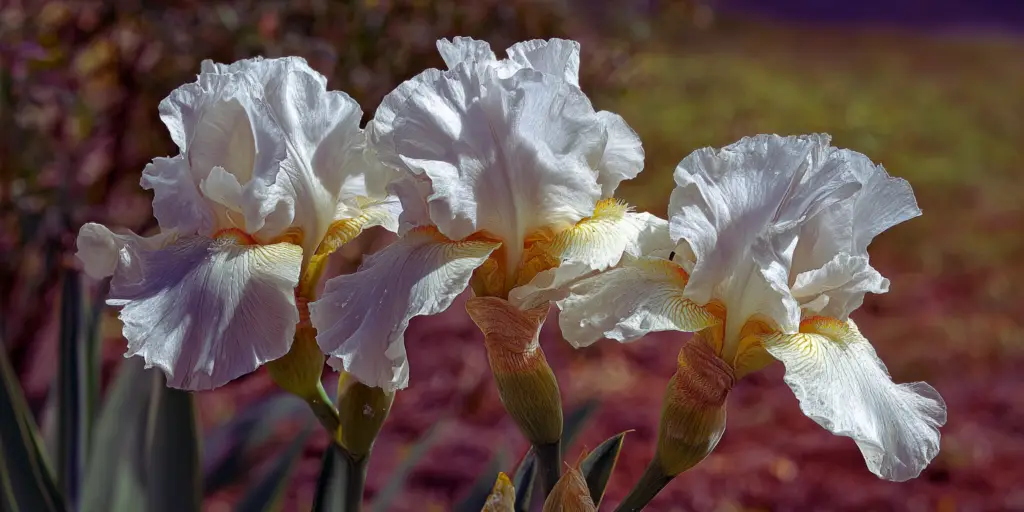
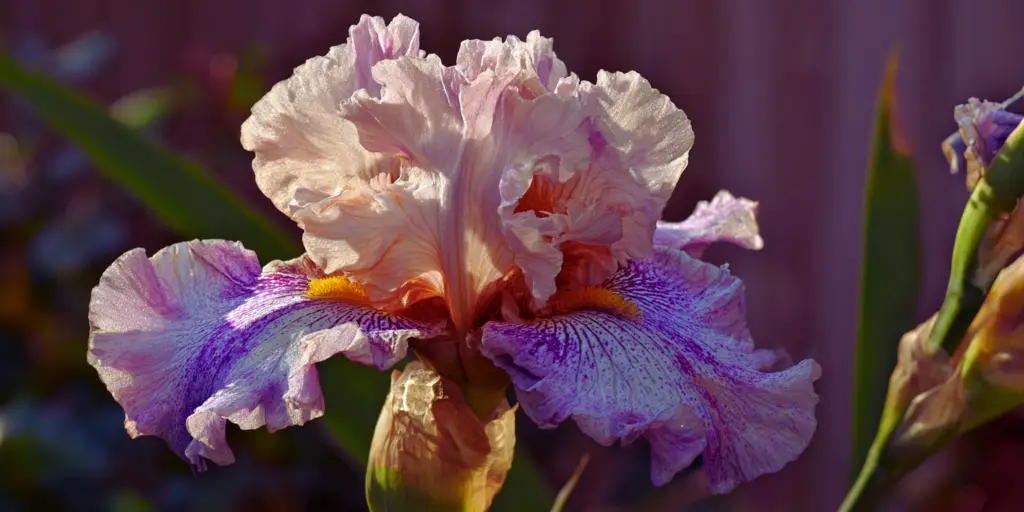
Iris germanica ‘Dusky Challenger’ is a tall bearded iris prized for saturated dark purple flowers and strong branching. It blooms from midseason to late and performs best in full sun with sharp drainage. Plants reach about 39 inches and show sturdy stalks in average garden conditions. Flower color reads nearly black at a distance and adds depth in mixed borders. This cultivar is noted for an inviting chocolate scent in many gardens. Rebloom is uncommon and is reported mainly in warm zones.
At‑a‑glance
Group/Class: Tall Bearded (TB)
Height × spread: 39 in tall × about 18 to 24 in wide (99 cm × 45 to 60 cm; varies with clump age)
Bloom window: midseason to late spring
Color & flower form: rich dark purple ruffled flowers; deep violet to black beard
Fragrance: 2 noticeable
USDA hardiness: zones 3 to 10
Breeder / Year / Origin: Schreiner, 1986, USA
Awards/registration: American Dykes Medal 1992; AIS Award of Merit 1990; Honorable Mention 1988
Cut-flower notes: well-branched, sturdy stems; cut at pencil stage for best opening
Pet safety: avoid
How it differs
Deeper purple saturation than typical tall bearded iris.
Blooms extend into the late tall-bearded window.
Stems are notably well branched for display quality.
Fragrance is noticeable in many plantings.
Strengths
American Dykes Medal winner with multiple AIS awards.
Tall, showy scapes that present many buds well.
Color holds depth in sun.
Care in one minute
Site: full sun for 6 to 8 hours each day.
Soil: well drained and lean to neutral or slightly alkaline; keep rhizome tops just at or slightly above the soil surface.
Water: water to establish and during extended dry spells; avoid waterlogged soil to prevent rot.
Feeding: apply a low-nitrogen fertilizer such as 5-10-10 in early spring and again just after bloom; keep granules off the rhizomes.
Grooming: remove spent blooms and cut stalks after flowering; divide clumps every 3 to 5 years.
Winter: in cold regions cut foliage to 3 to 6 inches in late fall and avoid mulching over rhizomes.
Watch‑outs
Not a reliable rebloomer in most climates.
Requires full sun and very good drainage to avoid rot.
Divide clumps every three to five years to prevent crowding.
Best uses (tags)
borders
cutting
massing
Provenance note
Registered and introduced by Schreiner in 1986. Recipient of the American Dykes Medal in 1992.
Written by: Your Flowers Guide editorial team We are a small independent group of flower lovers who research and review each guide using trusted horticultural and educational sources. Learn more about us