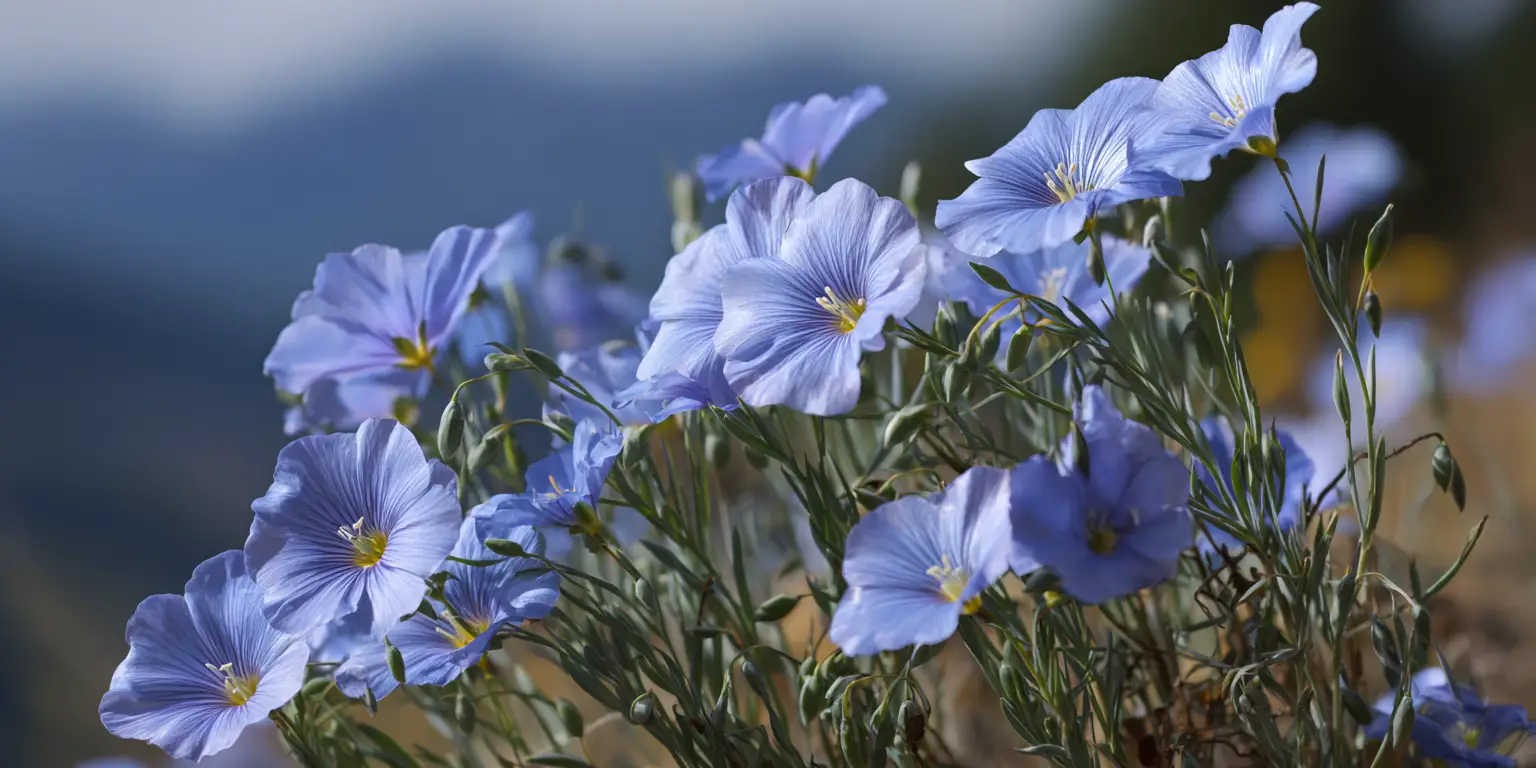
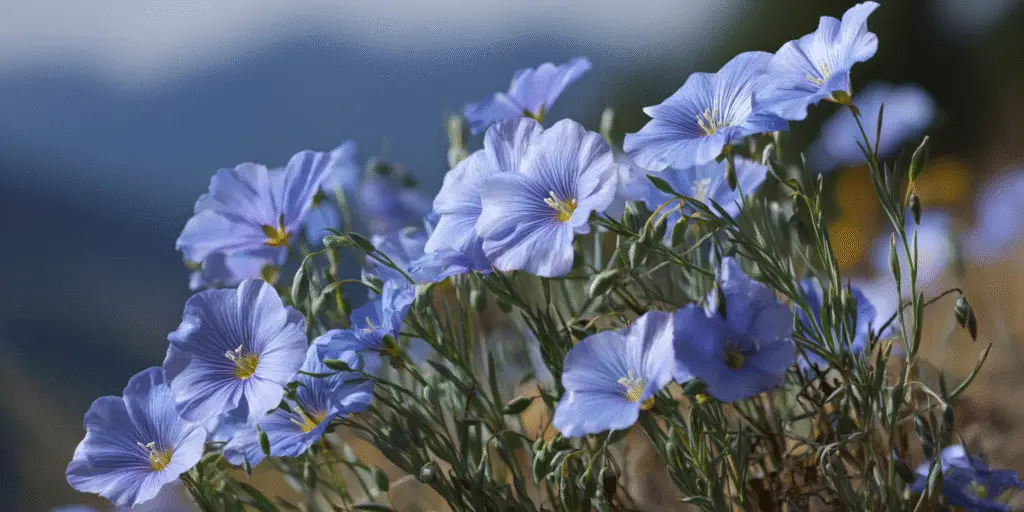
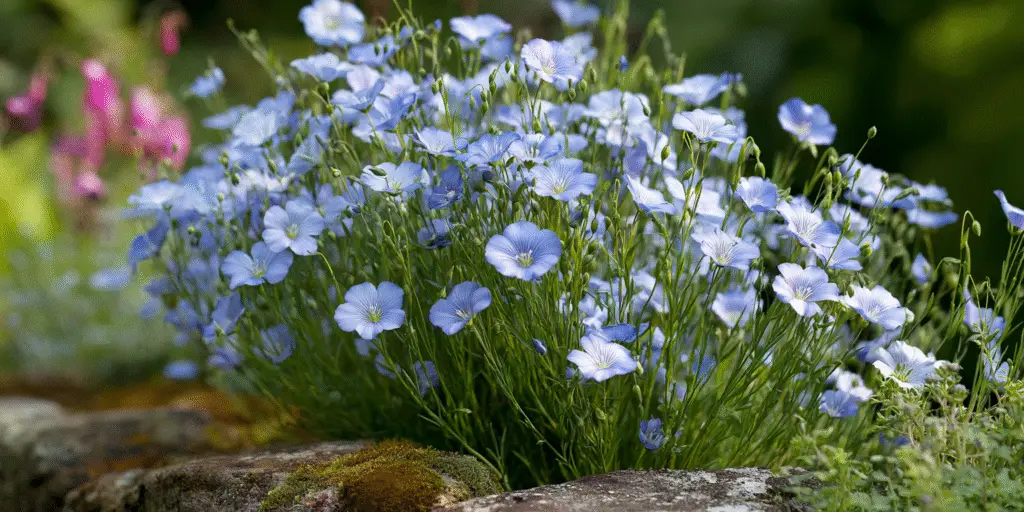
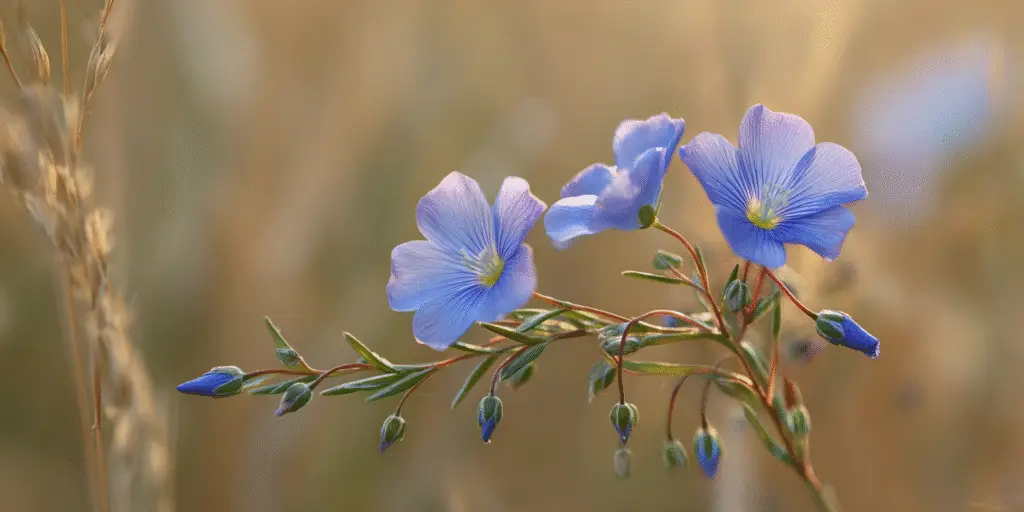
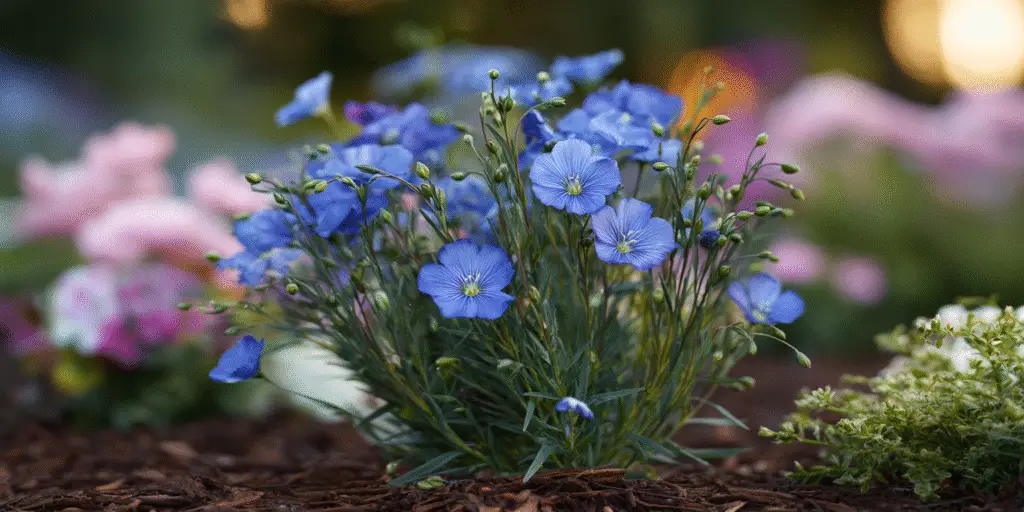
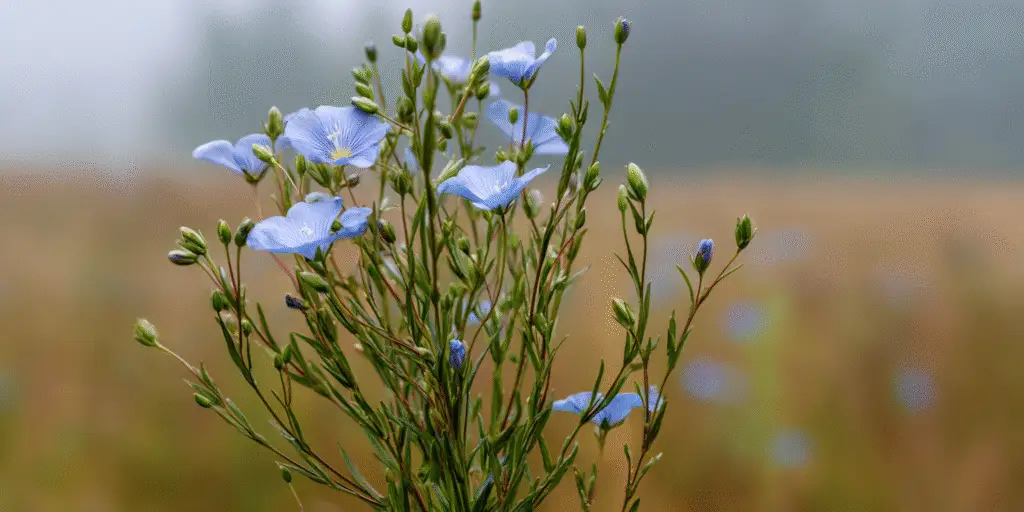
Linum lewisii is the North American blue flax native to open, well drained sites from Alaska to the Southwest. It is grown for sky blue flowers that open in the morning and drop by midday. Plants are short lived but they self sow in lean soils. This species stands out for cold and drought tolerance in sunny sites. It performs best in full sun with fast drainage in the western and northern United States.
At‑a‑glance
Group/Class: Species
Height × spread: 18 to 30 in (45 to 75 cm) × 12 to 18 in (30 to 45 cm)
Bloom window: late spring to midsummer
Color & flower form: pale to sky blue; five petaled, saucer shaped
Fragrance: 0 none
USDA hardiness: zones 4 to 8
Breeder / Year / Origin: unknown; native to western North America
Cut‑flower notes: Slender stems; research on perennial flax reports about 8 days with preservative for L. lewisii cuts.
Pet safety: unknown
How it differs
Native species; most seed mixes use the Eurasian Linum perenne.
Often a bit taller than garden blue flax in lean mountain soils.
Flowers are homostylous; L. perenne is usually heterostylous.
Handles poorer soils and cold snaps in the interior West.
Strengths
Cold and drought tolerant in sunny, well drained sites
Reliable from fall or very early spring sowing
Naturalizes lightly without running
Minimal pest pressure in dry climates
Care in one minute
Site: full sun with wind exposure for dry down after rain
Soil: fast drainage; sandy or rocky loam; pH slightly acidic to moderately basic
Water: light once established; deeper but infrequent soaks in drought
Feeding: minimal; avoid high fertility that causes flop
Grooming: deadhead to extend bloom; leave some pods to self sow; cut back in late winter
Watch‑outs
Short lived; allow some seed set to maintain stands
Can sprawl in rich or moist soil
Rust may appear in wet springs
Dislikes poor drainage or high water tables
Best uses (tags)
pollinators, meadows, slopes, rock gardens, low water borders
Provenance note
Named for Meriwether Lewis and described by Frederick Pursh in 1814 from Rocky Mountain material.
Written by: Your Flowers Guide editorial team We are a small independent group of flower lovers who research and review each guide using trusted horticultural and educational sources. Learn more about us