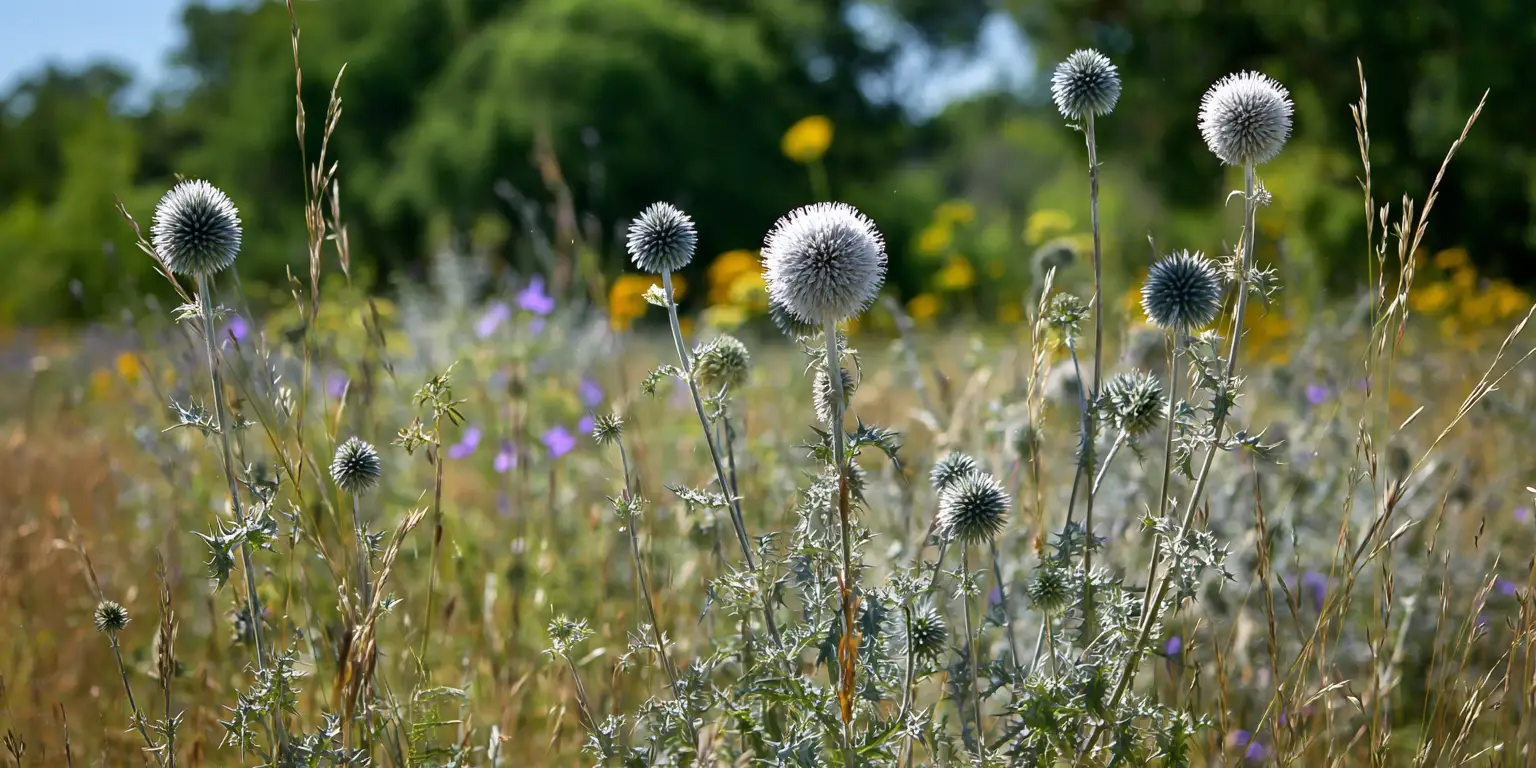
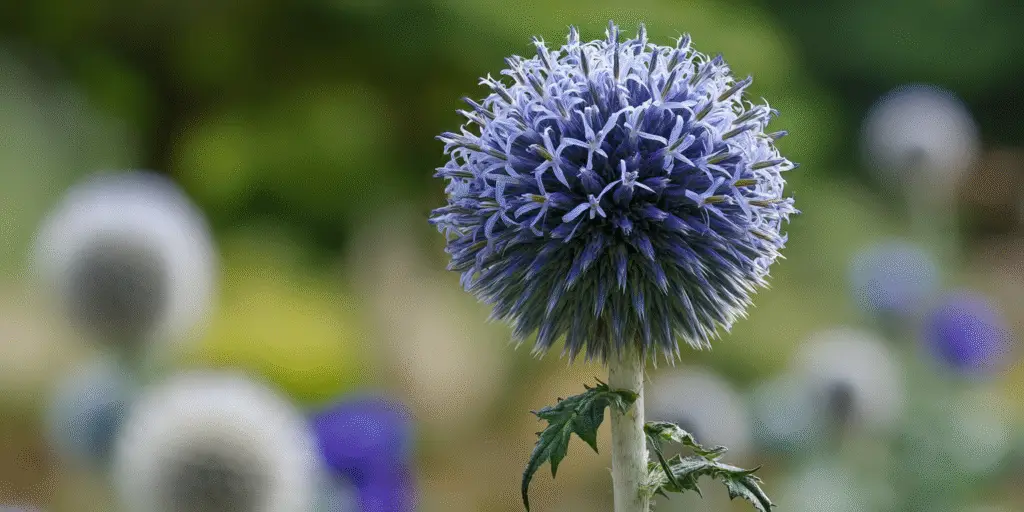
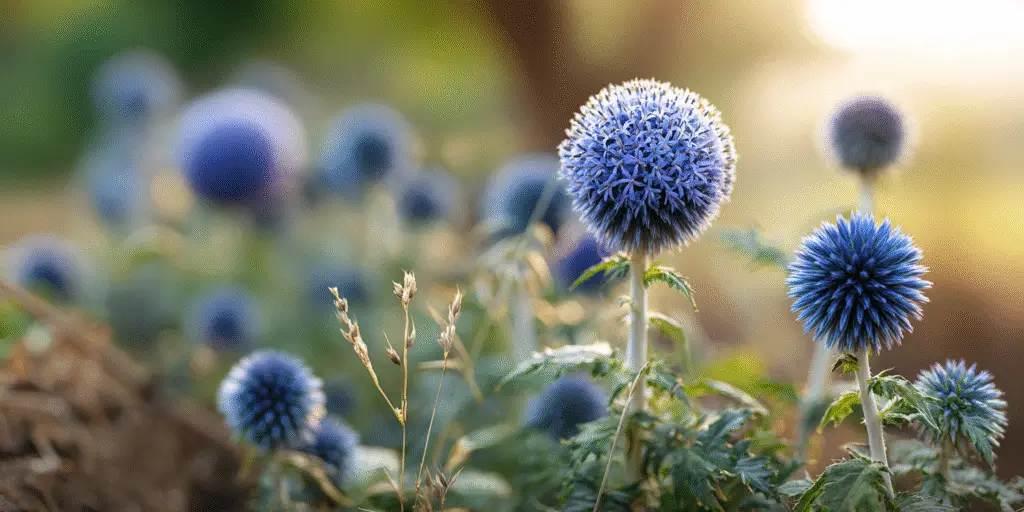
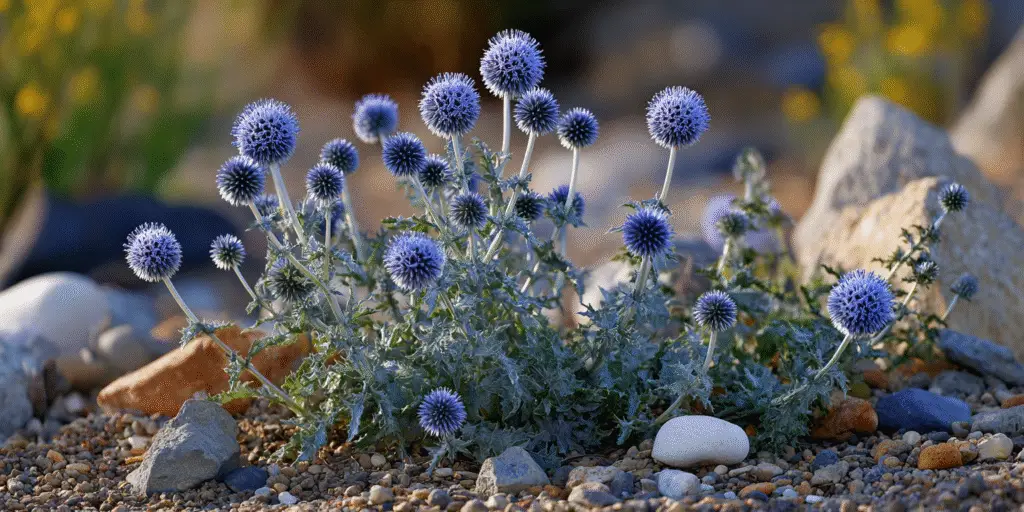
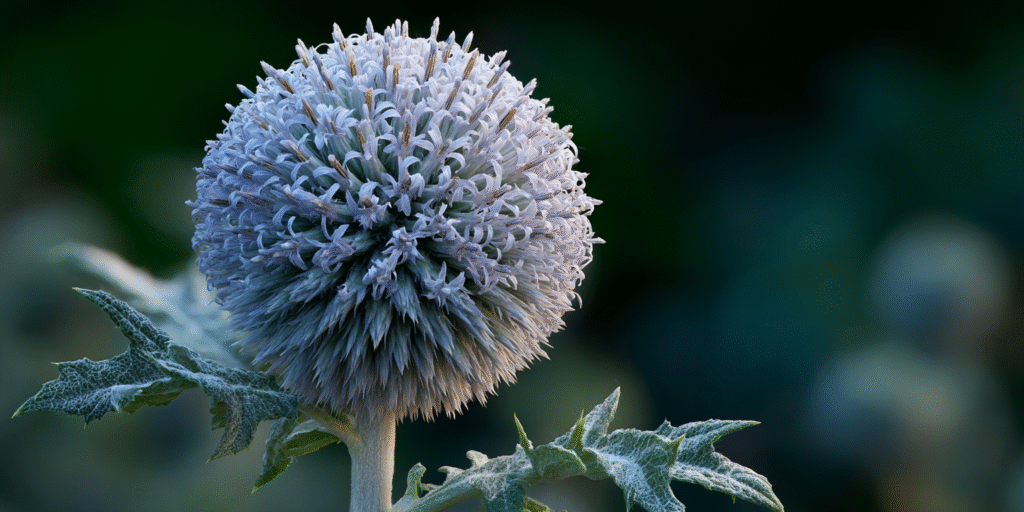
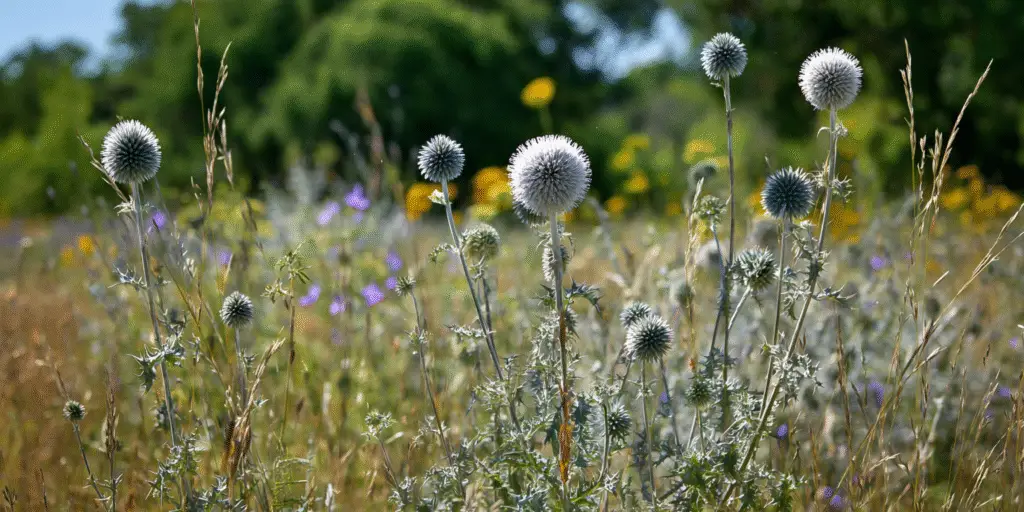
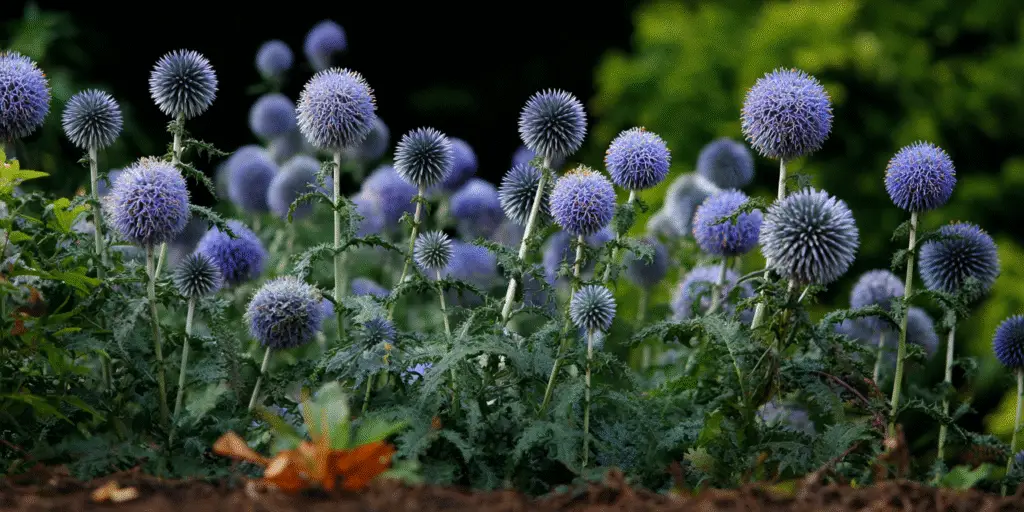
Great globe thistle is a bold, tall species with silvery white flower heads on stout, gray stems. It is taller and more vigorous than small globe thistle and suits open, sunny sites. Plants adapt to poor, dry soils after establishment and need sharp drainage. Bloom is mid to late summer on stems that rise above many border perennials. Heads dry well for winter texture.
At‑a‑glance
Group/Class: Herbaceous perennial
Height × spread: 48–78 in (1.2–2.0 m) × 24–36 in (60–90 cm)
Bloom window: mid to late summer
Color & flower form: silvery white spherical heads
Fragrance: 1 trace
USDA hardiness: zones 3–9
Breeder / Year / Origin: species; native to Europe and western Asia
Cut‑flower notes: Good cut and dried; strong stems support large heads.
Pet safety: safe
How it differs
Much taller than typical E. ritro selections
Paler heads than most blue globe thistles
Architectural stature for the back of the border
Coarser stems and foliage need space
Strengths
High visual impact
Tolerates drought and poor soils after establishment
Pollinator magnet
Deer and rabbit resistant foliage
Care in one minute
Choose full sun and sharp drainage.
Avoid high fertility to keep growth sturdy.
Water to establish; then water deeply but infrequently.
Deadhead before seed ripens if spread is not desired.
Watch‑outs
Can self‑seed in favorable sites
Spiny foliage can snag clothing and skin
Tall stems may lean in rich soil or partial shade
Best uses (tags)
back borders; naturalized areas; pollinators; dried flowers
Provenance note
A Eurasian species recognized by major references and naturalized in parts of North America.
Written by: Your Flowers Guide editorial team We are a small independent group of flower lovers who research and review each guide using trusted horticultural and educational sources. Learn more about us