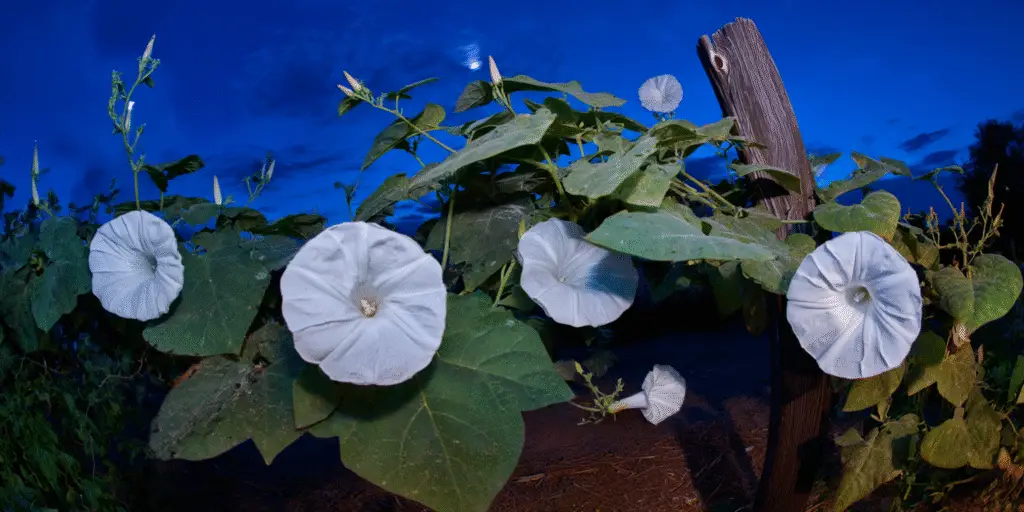
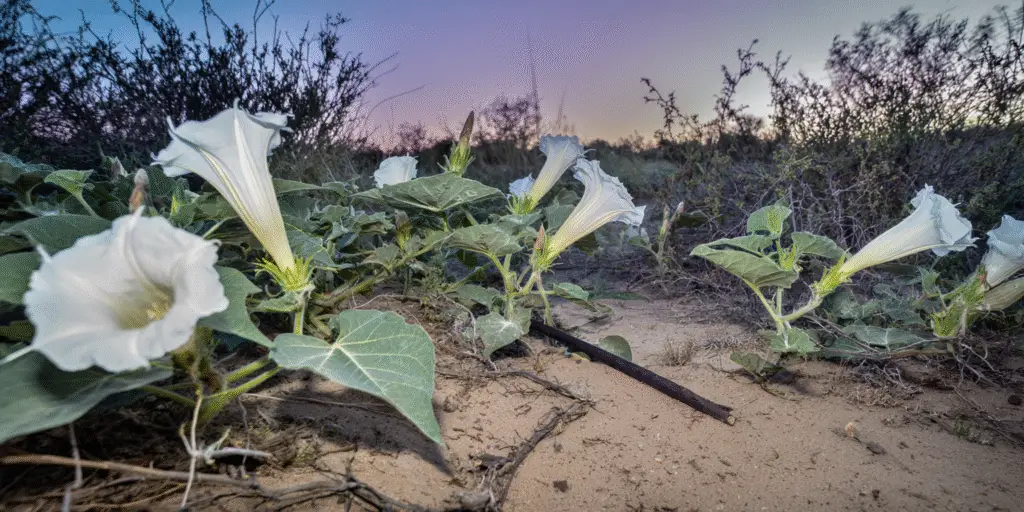
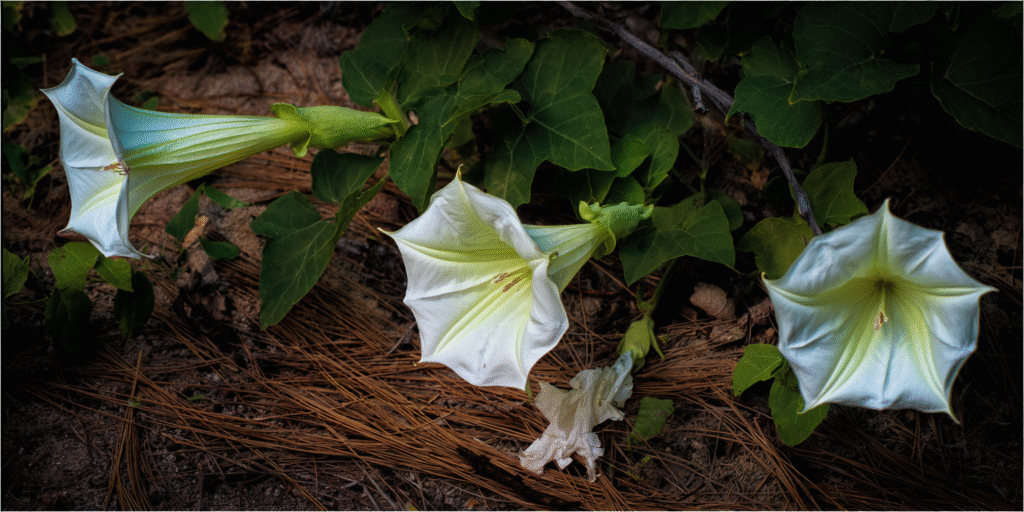
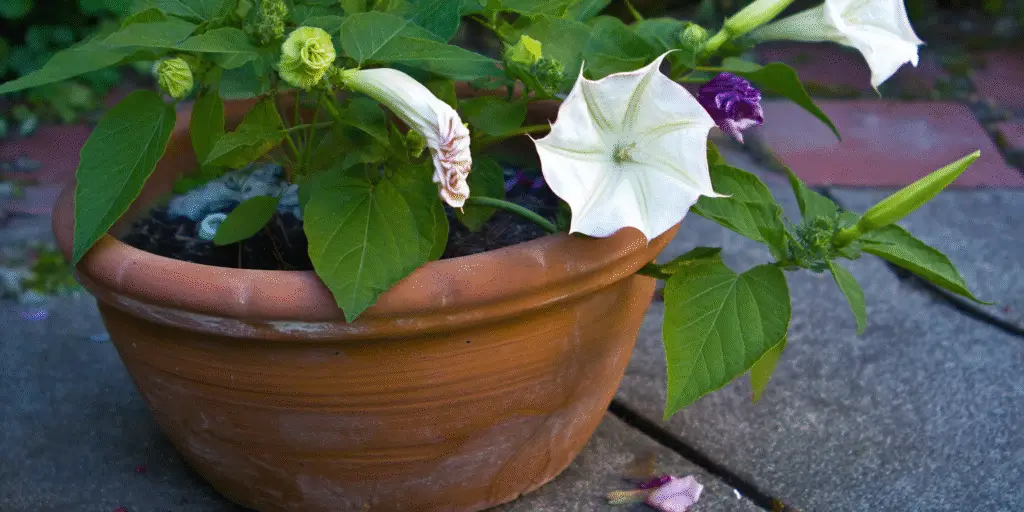
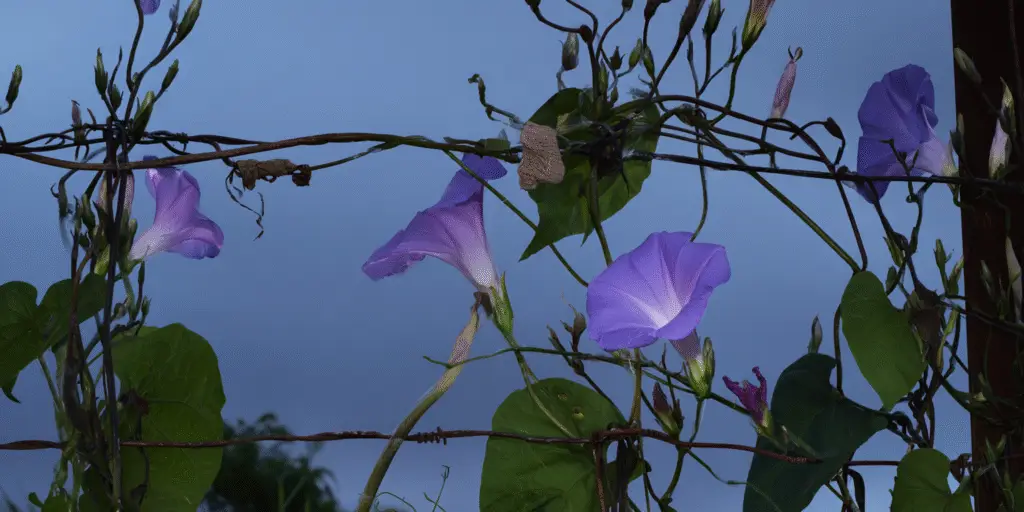
Datura inoxia is a heat loving thorn apple with large upright white to lavender trumpets that open in the evening and fade by midday. It stands out for a strong perfume and spiny globe fruits that follow the blooms. Plants form a low, spreading mound that thrives in full sun and lean, well drained soils. It is winter hardy only in mild regions and is grown as an annual in most of North America. Flowering runs from mid summer to frost in warm weather.
At‑a‑glance
Group/Class: thorn‑apple
Height × spread: 2 to 3 ft × 3 to 6 ft (0.6 to 0.9 m × 0.9 to 1.8 m)
Bloom window: mid summer to frost
Color & flower form: cream to pink to lavender upright trumpet about 7 to 8 in long
Fragrance: 3 strong
USDA hardiness: zones 9 to 11; grown as annual elsewhere
Breeder / Year / Origin: unknown
Pet safety: avoid
How it differs
Forms a mounded shrub instead of a climbing vine.
Better drought tolerance than most moon garden vines.
Produces spiny seed pods after bloom.
Opens in late afternoon and continues into the night in warm weather.
Strengths
Handles heat and dry spells once established.
Long bloom period in warm summers.
Intense evening fragrance.
Deer resistant foliage.
Care in one minute
Site: full sun with excellent drainage and reflected heat if possible.
Soil and pH: sandy to loamy soil; tolerates a wide pH range with good drainage.
Water: water to establish; then water deeply but infrequently.
Feeding: light feeding during peak growth.
Pinch and stake: pinch to reduce sprawl; staking can help keep flowers off the ground.
Overwintering: outside zones 9 to 11 grow as an annual or overwinter container plants indoors in bright light.
Watch‑outs
All parts are highly toxic if ingested.
Self seeding can occur in favorable sites.
Can be susceptible to nightshade viruses; avoid planting next to tomatoes or potatoes.
Poor performance in shade or wet soils.
Best uses (tags)
night garden
xeriscape
containers
specimen
pollinators
Provenance note
The species is widely naturalized in warm regions and is often spelled Datura innoxia in references.
Written by: Your Flowers Guide editorial team We are a small independent group of flower lovers who research and review each guide using trusted horticultural and educational sources. Learn more about us