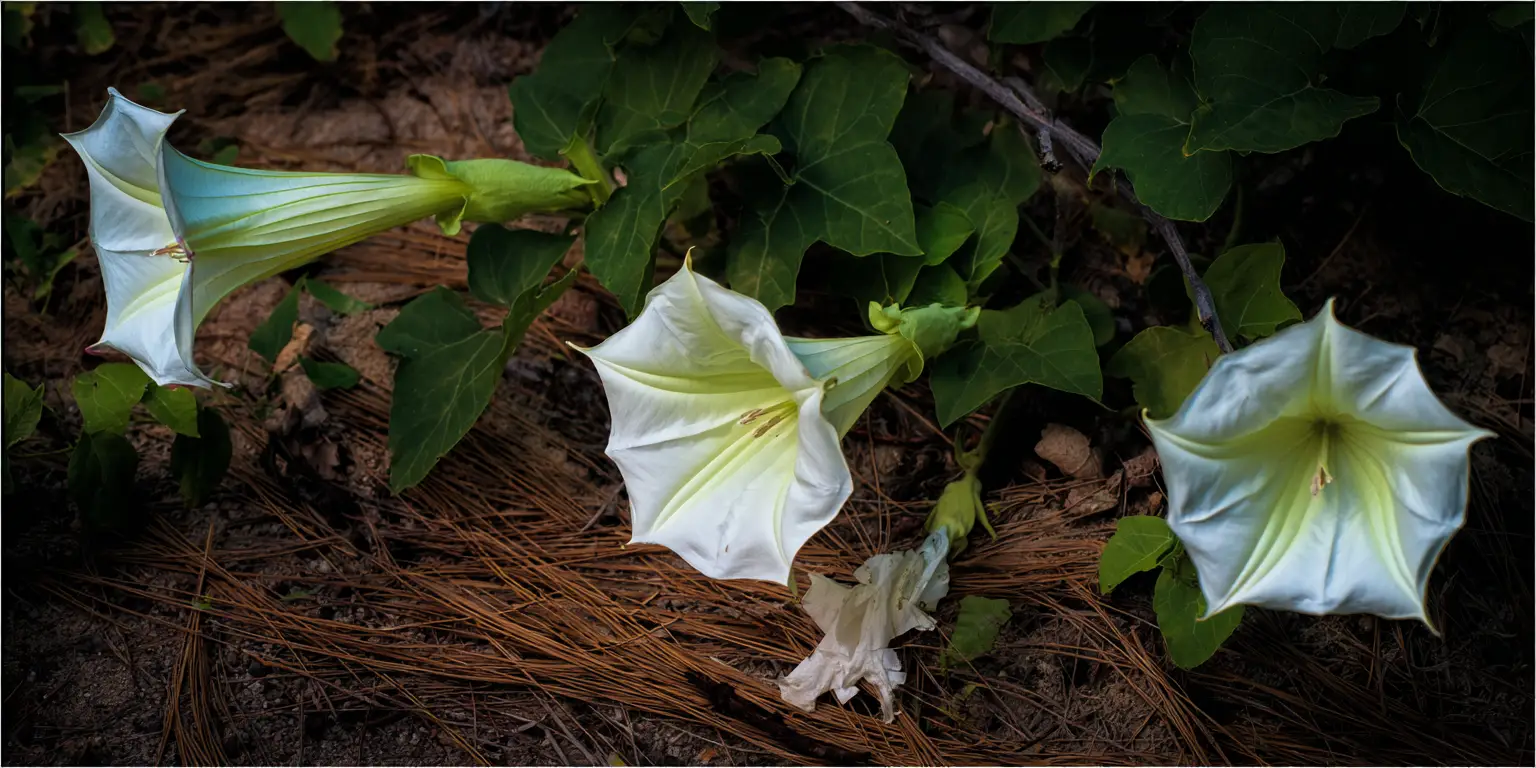
in bloom
now
through Oct
Bloom calendar
Datura wrightii
thorn‑apple
At‑a‑glance
- Group/Class: thorn‑apple
- Height × spread: 2 to 5 ft × 3 to 6 ft (0.6 to 1.5 m × 0.9 to 1.8 m)
- Bloom window: spring to fall in warm regions
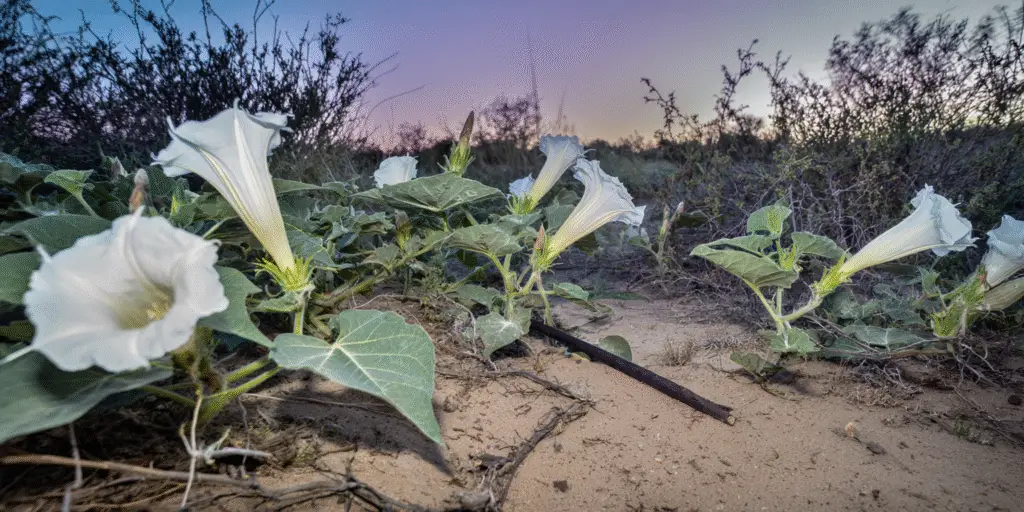
- Color & flower form: white trumpet up to about 6 in long; sometimes purple edged
- Fragrance: 3 strong
- USDA hardiness: zones 8 to 12; grown as annual in colder zones
- Breeder / Year / Origin: unknown
- Pet safety: avoid
How it differs
- Starts blooming earlier than many night bloomers in hot deserts.
- Builds a wide, low mound rather than a vine canopy.
- Very tolerant of drought and poor soils once established.
- All parts are poisonous and the spiny capsules persist after bloom.
Strengths
- High heat and drought tolerance once established.
- Long bloom in warm climates.
- Deer resistant foliage.
- Supports night moths and evening garden interest.
Care in one minute
Site: full sun with very good drainage; heat reflecting surfaces help.
Soil and pH: sandy or gravelly soils; neutral to alkaline.
Water: water deeply to establish; then water sparingly.
Feeding: minimal feeding in poor soils.
Grooming: remove spent blooms and seed pods if you wish to limit reseeding.
Overwintering: mulch crowns in zone 8; treat as annual in colder zones.
Watch‑outs
- All parts are toxic to people and animals.
- May self sow and spread in disturbed sites.
- Can cause skin irritation in sensitive people when handled.
Best uses (tags)
Provenance note
This species is native to the southwestern United States and northern Mexico and has long been documented as a desert and roadside plant.
References
- North Carolina Extension Gardener Plant Toolbox: Datura wrightii
- UC ANR IPM: Sacred datura (Datura wrightii)
- US Forest Service: Sacred Datura
- USDA PLANTS Profile: Datura wrightii (DAWR2)
Similar Flowers
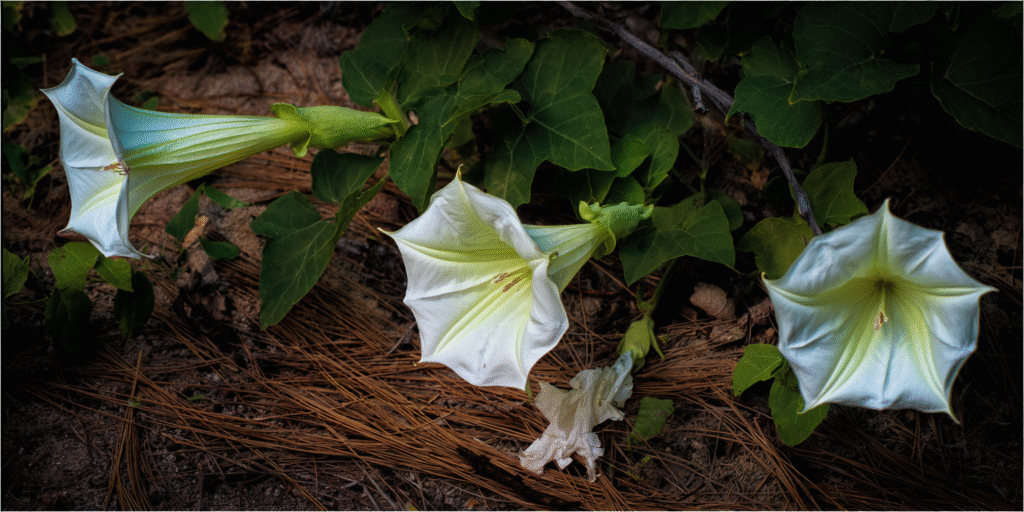
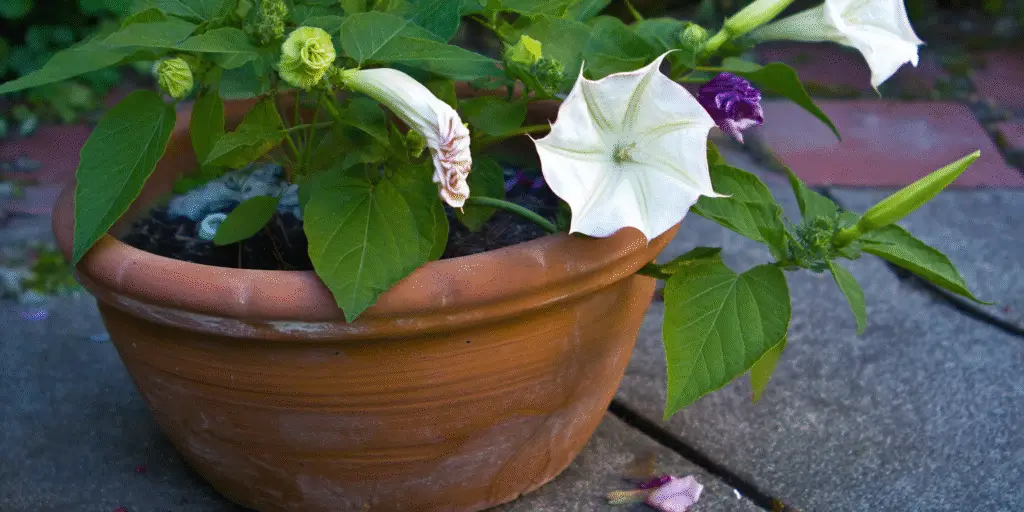
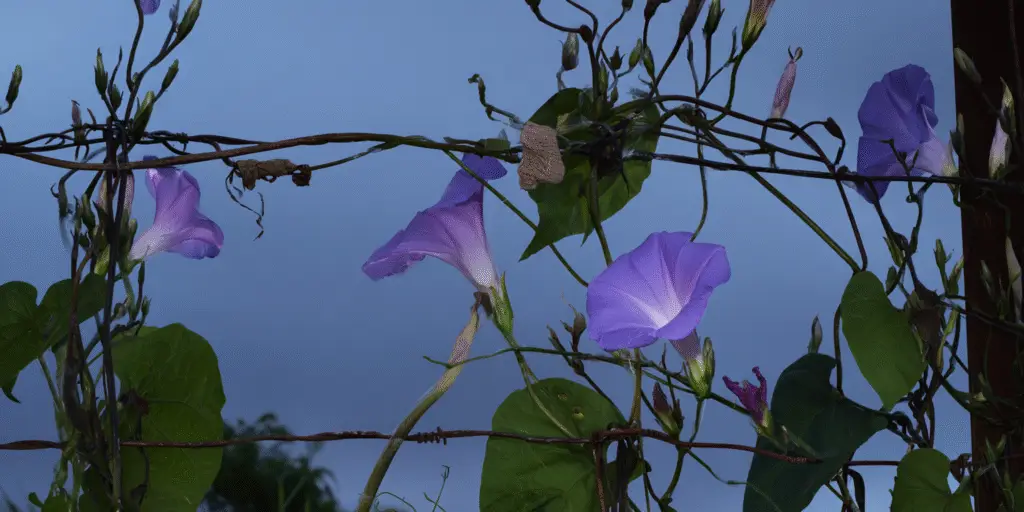
Enjoying our flower guides? Add YourFlowersGuide as a preferred source on Google. It helps more readers find us.
Add to Preferred Sources