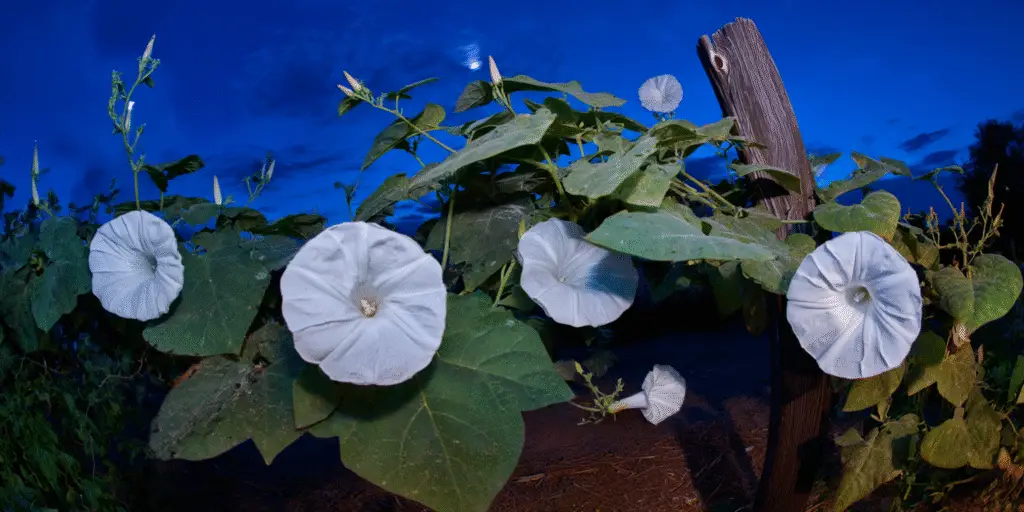
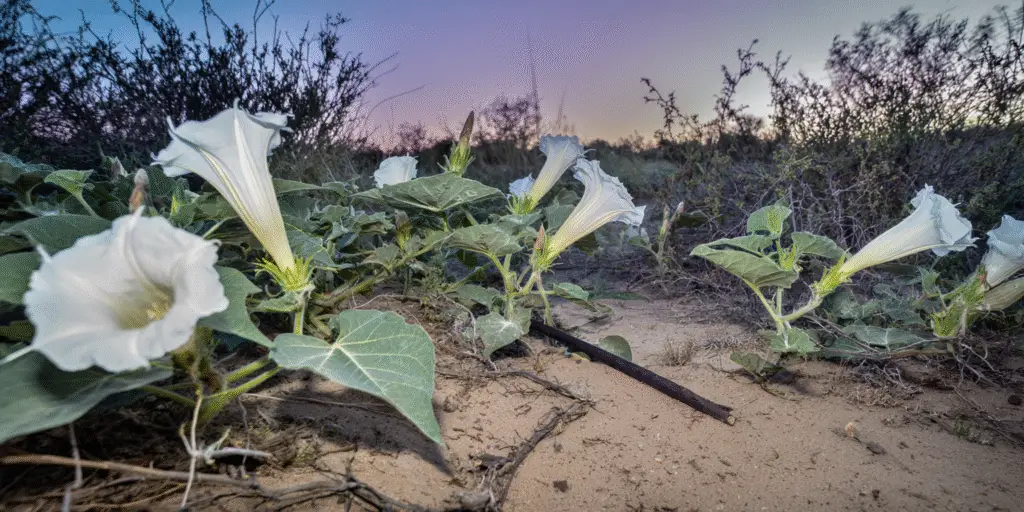
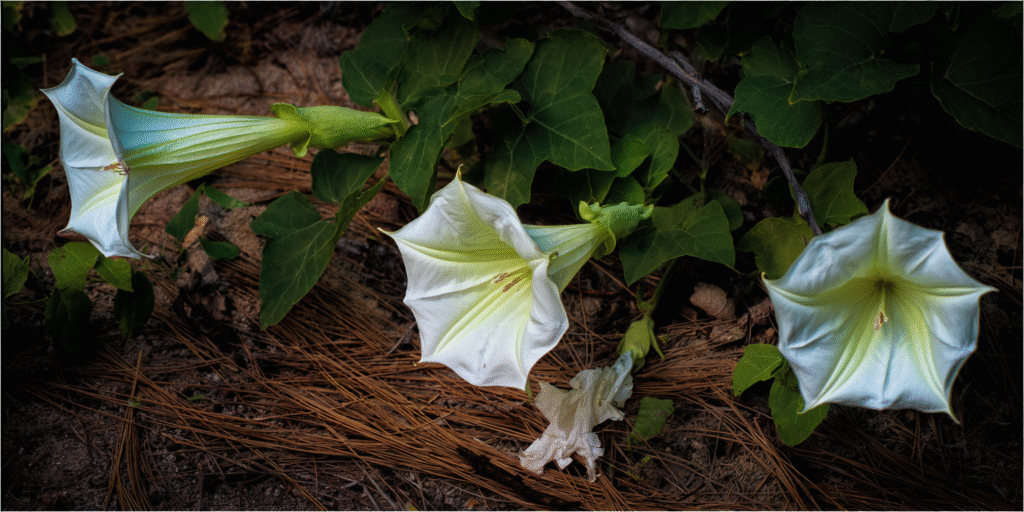
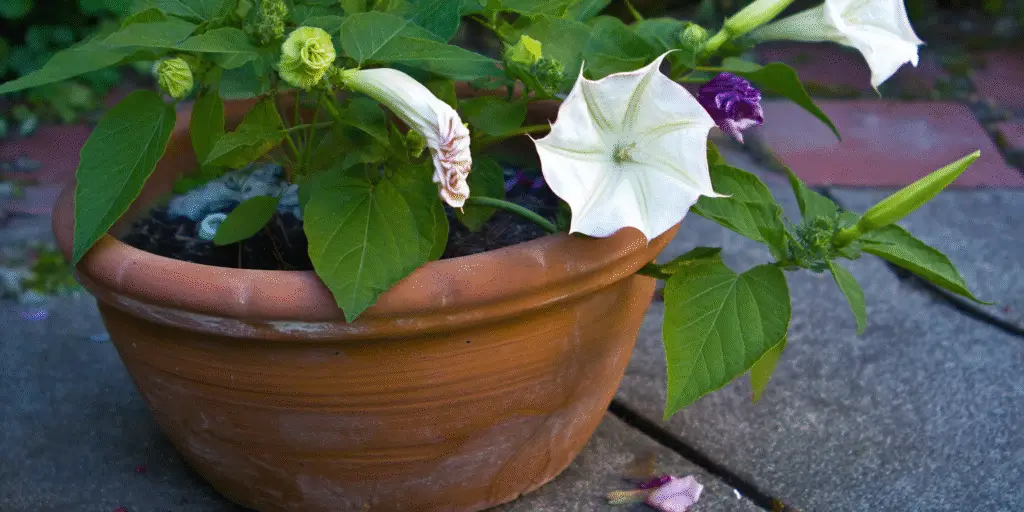
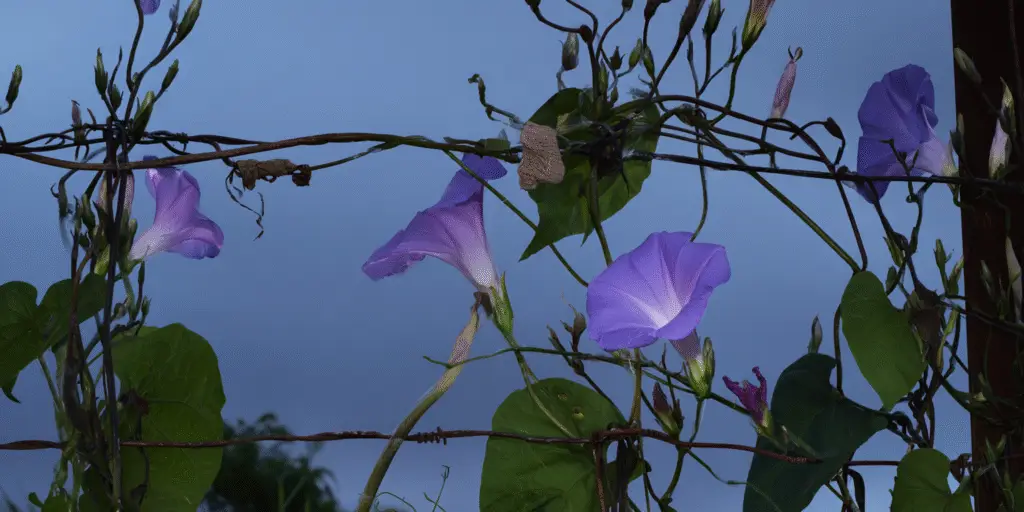
Datura metel is a showy thorn apple grown for its large single or double trumpets in white, purple, or yellow. It stands out for striking flower forms and strong evening fragrance on compact, shrubby plants. It prefers sun, heat, and well drained soils and is often grown in containers. It is winter hardy only in mild climates and is treated as an annual in much of North America. Blooms unfold in late afternoon and often continue to early morning in warm weather.
At‑a‑glance
Group/Class: thorn‑apple
Height × spread: 3 to 4 ft × 3 to 4 ft (0.9 to 1.2 m × 0.9 to 1.2 m)
Bloom window: mid summer to frost
Color & flower form: white to gold to purple upright trumpets; often double
Fragrance: 3 strong
USDA hardiness: zones 8 to 11; grown as annual elsewhere
Breeder / Year / Origin: unknown
Pet safety: avoid
How it differs
More compact than many thorn apples and well suited to large containers.
Often offers double flowers and deeper colors than other species.
Fragrant evening display with blooms that are showy even in twilight.
All parts are poisonous and the seed capsules are warty to sparsely spiny.
Strengths
Striking flowers and fragrance.
Good heat performance with moderate drought tolerance.
Blooms over a long warm season.
Care in one minute
Site: full sun with protection from cold winds.
Soil and pH: rich but well drained soil; neutral to alkaline tolerated.
Water: water when the top inch is dry; avoid soggy conditions.
Feeding: light monthly feeding during bloom.
Grooming: remove spent blooms; wear gloves when handling.
Overwintering: outside zones 8 to 11 grow as an annual or overwinter a container indoors in bright light.
Watch‑outs
All parts are highly toxic if ingested.
May attract whiteflies, mealybugs, and spider mites.
Needs sharp drainage to avoid root problems.
Best uses (tags)
containers
night garden
specimen
heat tolerant
Provenance note
This long cultivated species has uncertain wild origins and is treated by Kew as a cultigen from the Americas.
Written by: Your Flowers Guide editorial team We are a small independent group of flower lovers who research and review each guide using trusted horticultural and educational sources. Learn more about us