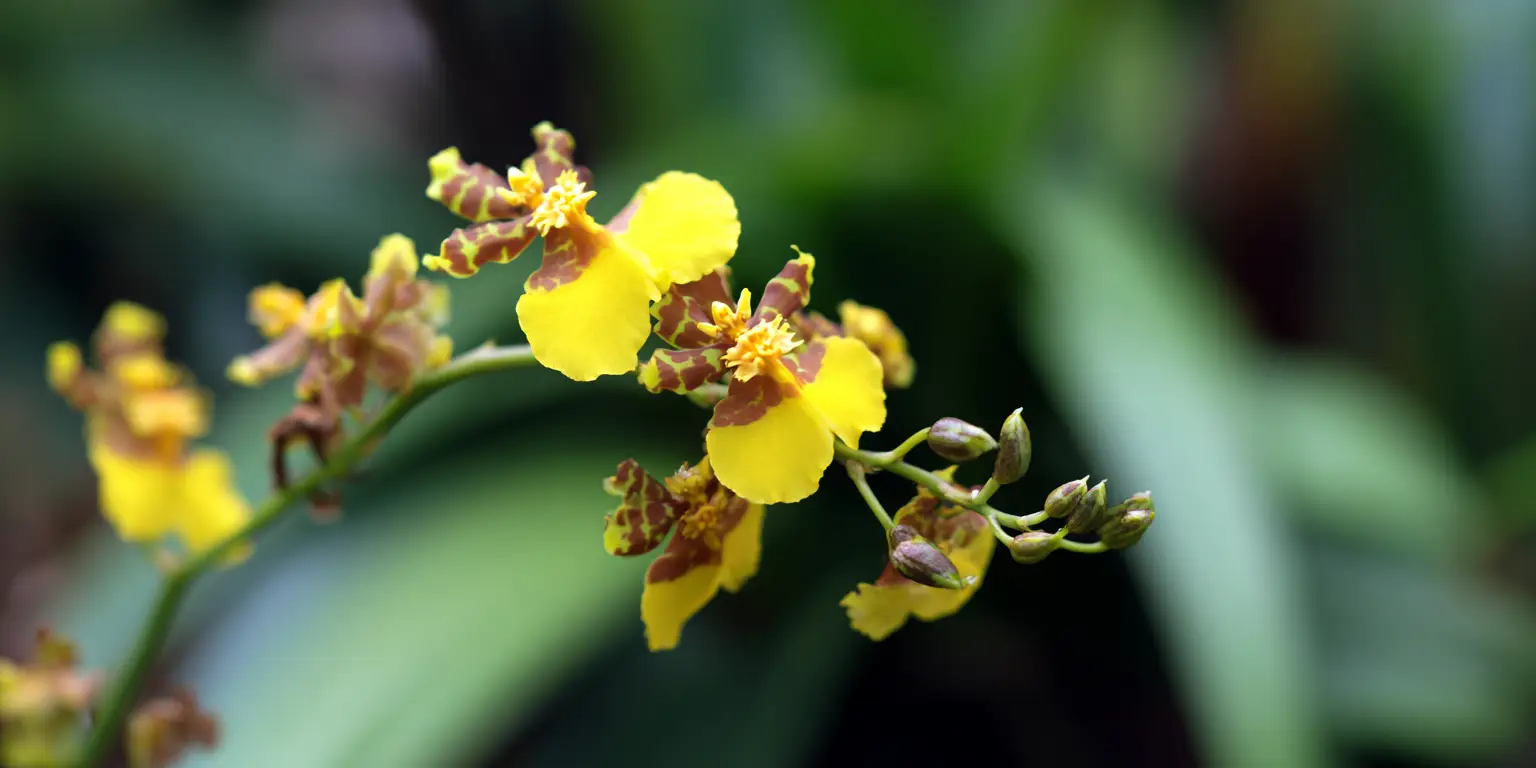
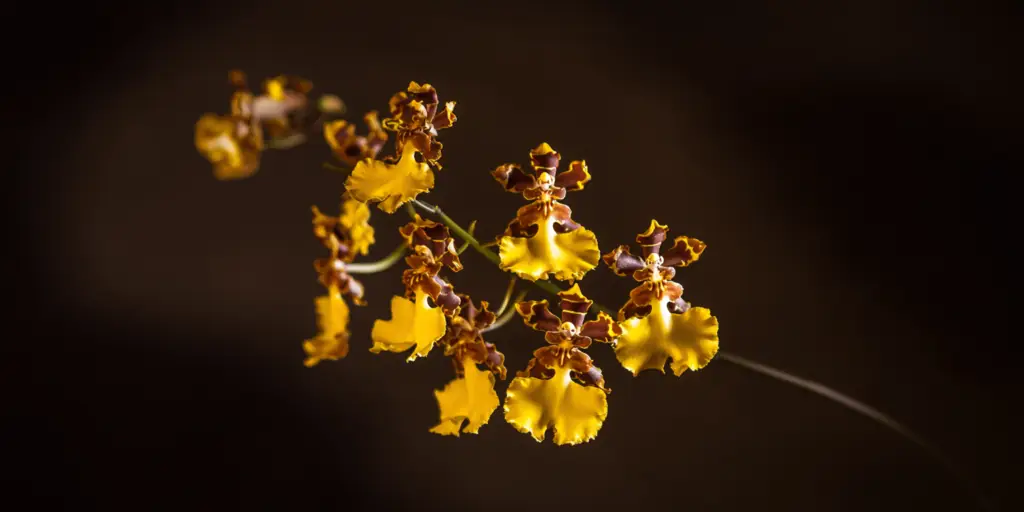
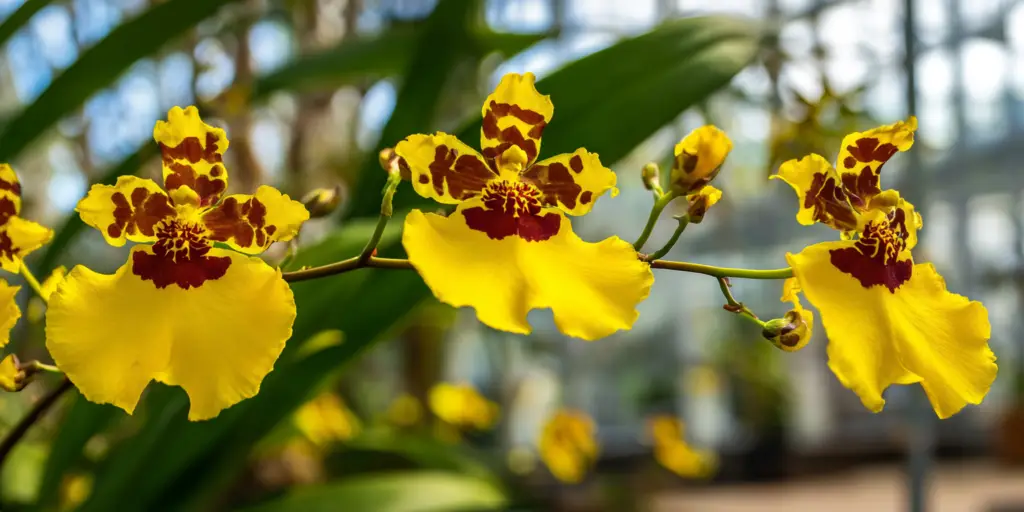
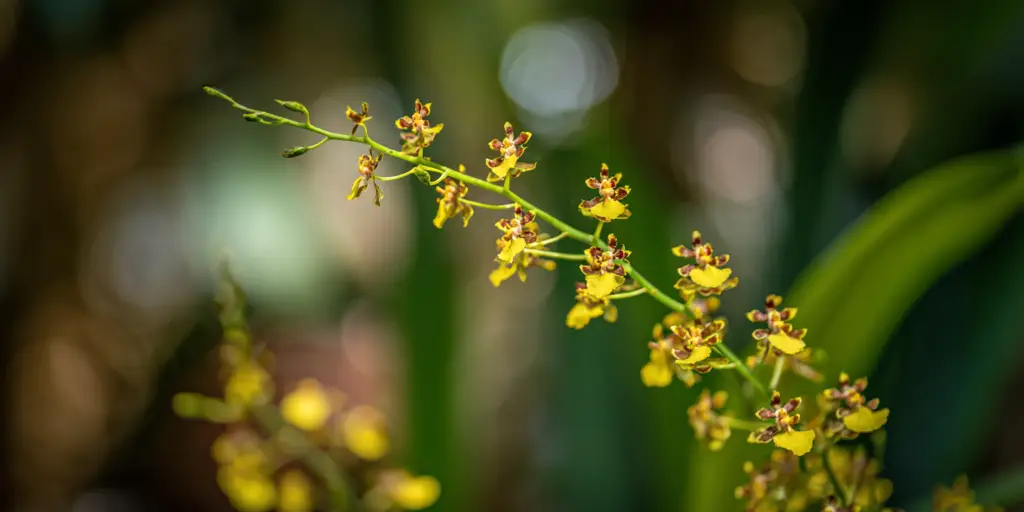
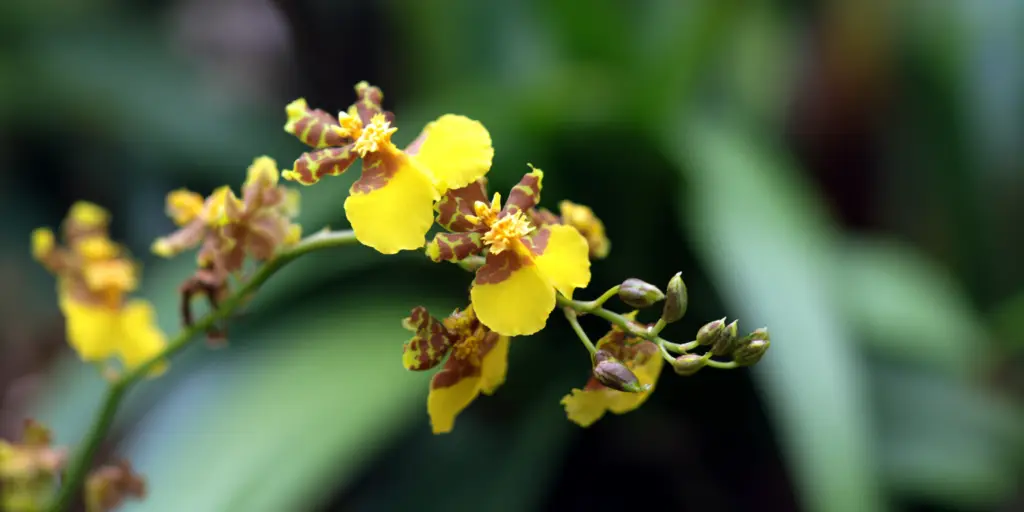
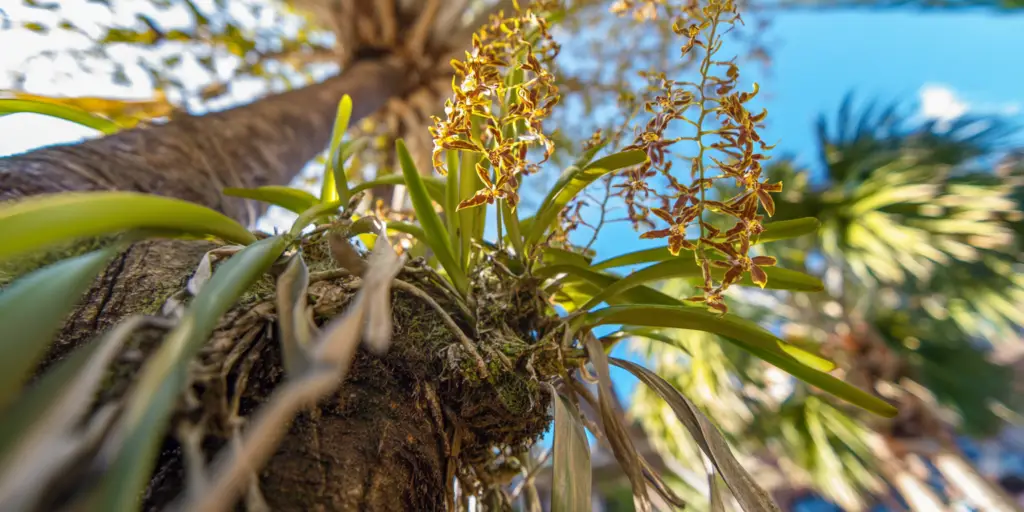
This miniature species makes glossy yellow flowers on short, erect to arching stems. Plants stay compact and suit bright windowsills. It prefers cool to intermediate temperatures and good air movement. In North America it is grown indoors except in frost free zones. Blooming can occur more than once per year under stable light.
At‑a‑glance
Group/Class: Oncidium species (Oncidiinae)
Height × spread: 8 to 12 in tall including spikes (20 to 30 cm); 6 to 10 in wide (15 to 25 cm)
Bloom window: fall and winter; sometimes spring; varies by climate
Color & flower form: bright yellow, glossy small flowers on compact sprays
Fragrance: 2 noticeable
USDA hardiness: grown as houseplant in most of North America; outdoors year round only in zones 10 to 12
Breeder / Year / Origin: unknown, 1852, Mexico to Colombia
Pet safety: safe
How it differs
Much smaller than a typical Oncidium.
Noticeable lemon like scent.
Short spikes fit tight spaces.
Strengths
Compact habit for limited space.
Can flower more than once per year.
Adapts to indoor light with careful watering.
Care in one minute
Site: bright filtered light near an east or south window with sheer curtain.
Medium: fine bark mix; excellent drainage; slightly acidic.
Water: water when the top half inch is nearly dry; avoid constantly wet mix.
Feed: quarter strength fertilizer every 3 to 4 weeks in growth; flush monthly.
Watch‑outs
Small pots dry quickly.
Bud drop if humidity swings.
Avoid overpotting to keep roots aerated.
Best uses (tags)
containers, houseplant, fragrant
Provenance note
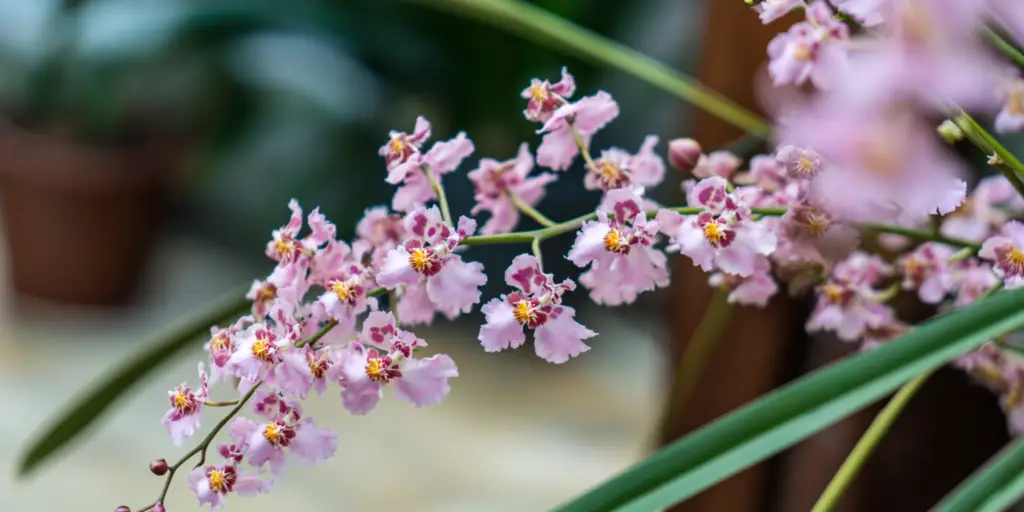
Accepted by Kew. Native from Mexico through Central America into Colombia. Parent of the well known ‘Twinkle’ hybrid.
Written by: Your Flowers Guide editorial team We are a small independent group of flower lovers who research and review each guide using trusted horticultural and educational sources. Learn more about us