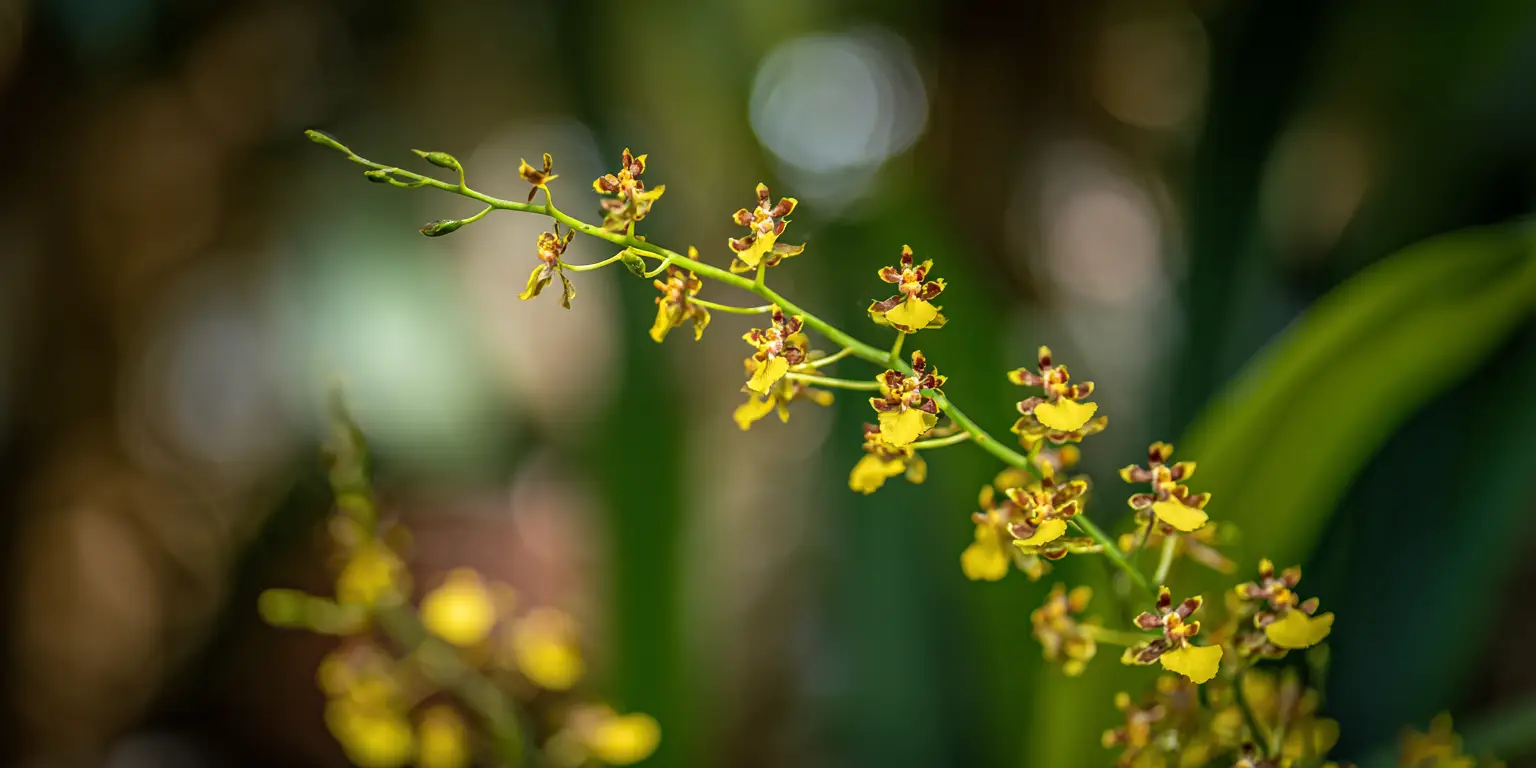
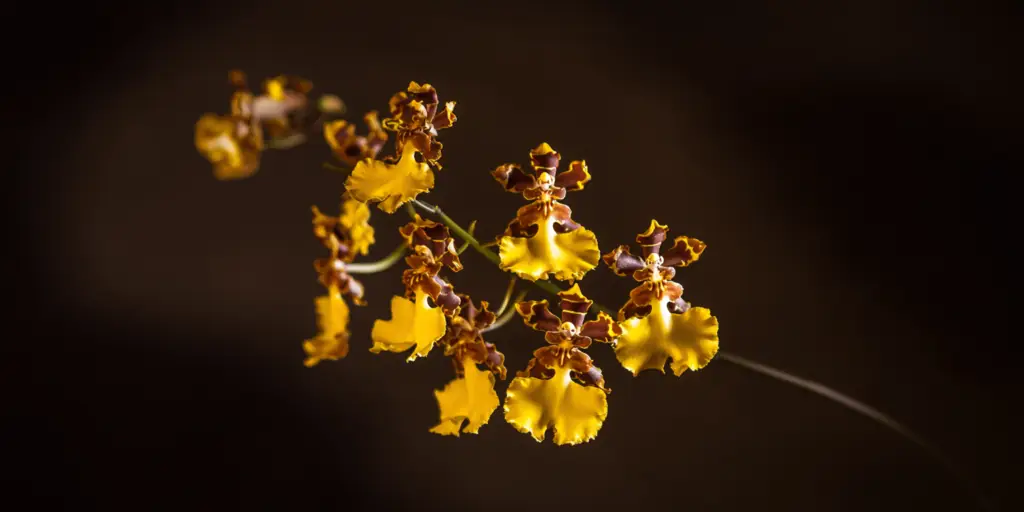
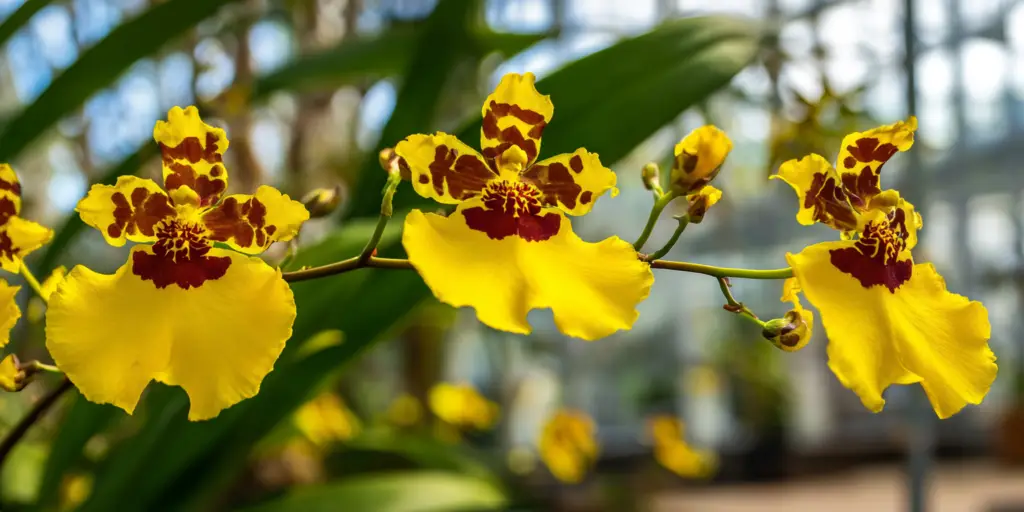
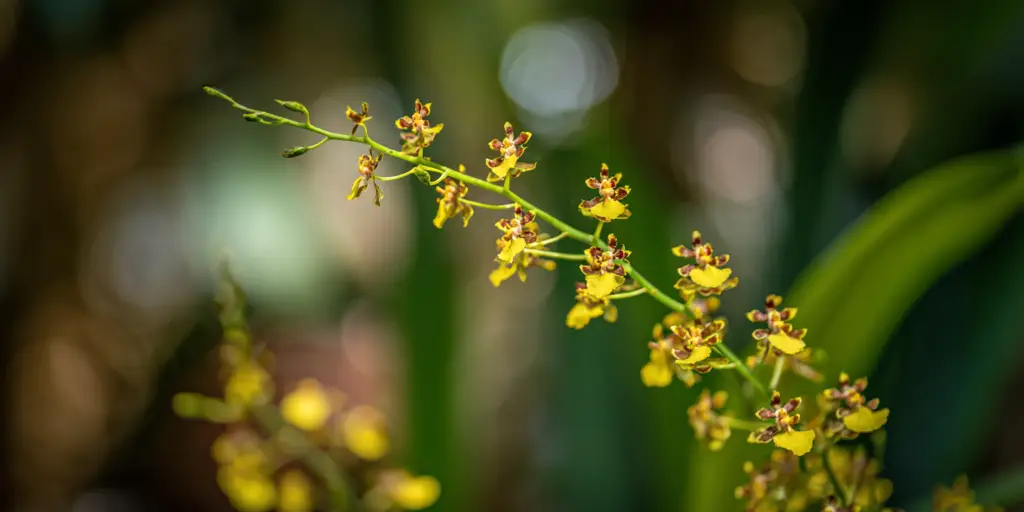
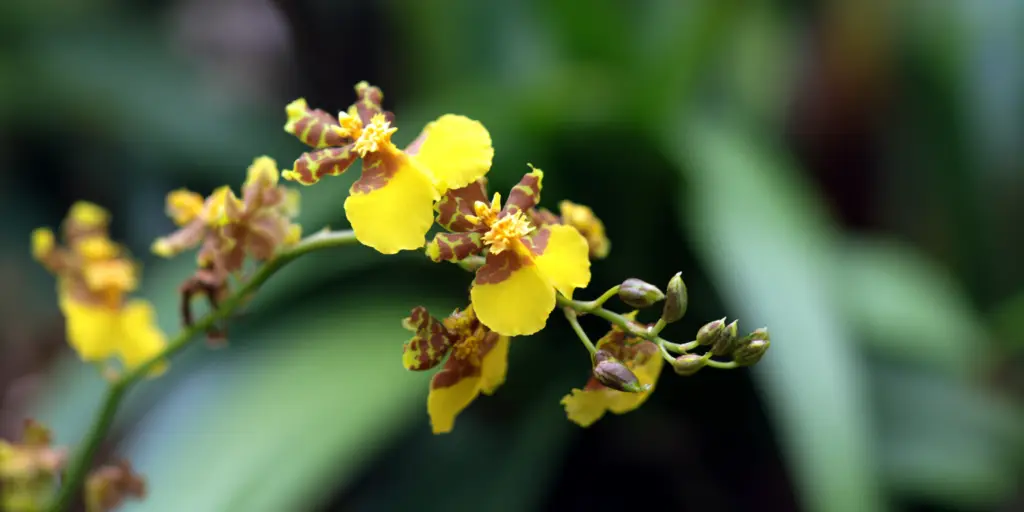
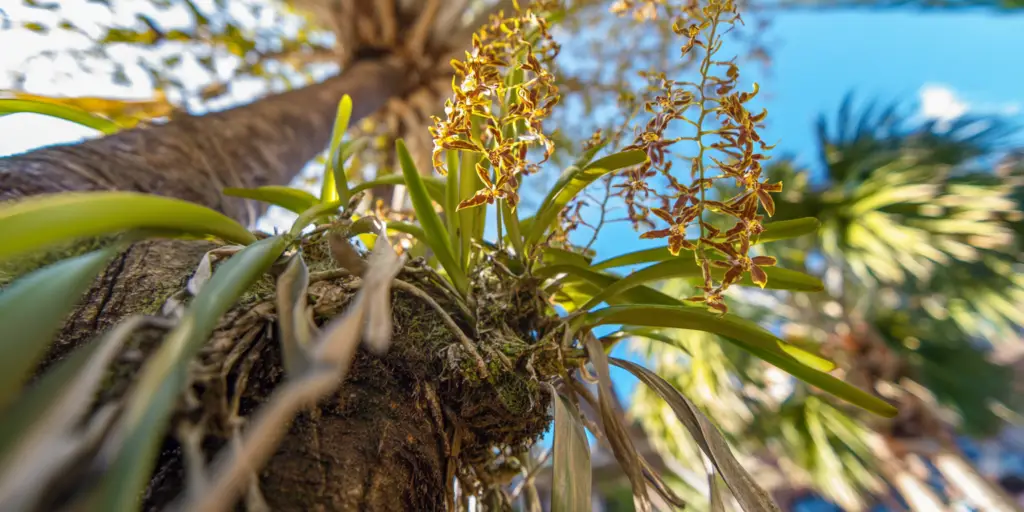
This South American species makes long sprays of small yellow flowers on wiry stems. It is listed as Gomesa flexuosa in current references. Plants climb and grow well mounted or in baskets. They prefer bright filtered light and intermediate to warm conditions. Blooming is most common from fall to winter. Grow it indoors in most of North America and outdoors year round only in frost free zones.
At‑a‑glance
Group/Class: Oncidium species; accepted as Gomesa flexuosa (Oncidiinae)
Height × spread: 18 to 30 in tall including spikes (45 to 75 cm); 12 to 18 in wide (30 to 45 cm)
Bloom window: fall to winter; varies by climate
Color & flower form: sprays of small yellow flowers with brown markings on flexible stems
Fragrance: 0 none
USDA hardiness: 10 to 12; grown as a houseplant elsewhere
Breeder / Year / Origin: unknown, 1820, eastern and southern Brazil to northern Argentina
Pet safety: safe
How it differs
Climbing habit more evident than in many Oncidium types.
Wiry stems sway in light air movement.
Often grown mounted for best form.
Strengths
Adapts to mounts and baskets.
Tolerates bright light with acclimation.
Reliable flowering in good light.
Care in one minute
Site: bright indirect light such as an east window or shaded south window.
Medium: medium bark with perlite or mount on cork; excellent drainage.
Water: water thoroughly; allow to approach dryness between waterings; mounted plants need more frequent water.
Feed: quarter strength fertilizer every 2 to 4 weeks in growth; flush to avoid salts.
Watch‑outs
Roots are sensitive to stale, compact media.
Spikes can kink if moved after buds form.
Avoid overwatering in cool conditions.
Best uses (tags)
containers, mounts, houseplant
Provenance note
Accepted as Gomesa flexuosa by Kew. Native to eastern and southern Brazil into northern Argentina.
Written by: Your Flowers Guide editorial team We are a small independent group of flower lovers who research and review each guide using trusted horticultural and educational sources. Learn more about us