Peony Wedding Bouquets: 2026 Styles, Colors & Combinations
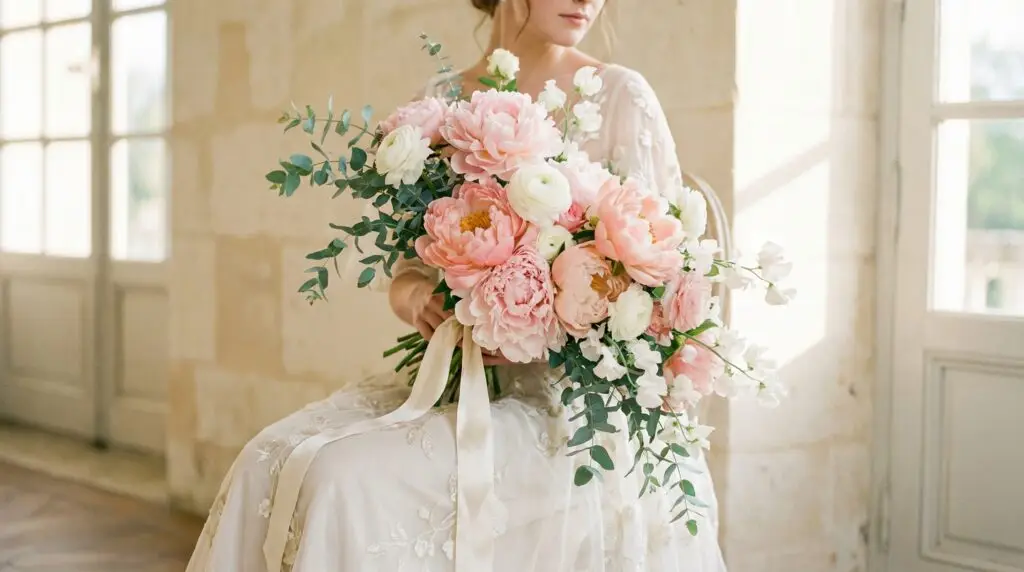
If there is one flower that keeps showing up in wedding photos year after year, it is the peony. Big, full, almost impossibly soft – they photograph beautifully, carry a scent that stops people mid-conversation, and have a romantic quality that no other flower quite matches. In 2025, peonies are not just popular. Brides are building entire color palettes around them.
This guide covers what you actually need before talking to your florist: bouquet styles that work, color combinations trending right now, which varieties hold up best, what to pair them with, and how to plan around the season without blowing your budget.
5 bouquet styles worth knowing
Loose garden style
This is the most-requested look right now. A loose garden-style bouquet is intentionally imperfect – stems at slightly different heights, a few soft foliage pieces trailing out, blooms that look freshly gathered from a cottage garden. It feels effortless, even though a skilled florist puts real work into making it look that natural. Peonies are ideal here because their petals are already soft and unstructured.
Dome / round bouquet
Classic and polished. A dome bouquet keeps everything at the same height, creating a clean ball of blooms. It suits formal venues and structured gowns. Sarah Bernhardt peonies work perfectly in this shape because their heads are round and consistent.
Cascading bouquet
A cascading bouquet flows downward, often with trailing greenery, sweet peas, or orchids. More dramatic, suits larger ceremonies. Peonies anchor the top beautifully, though their weight means the arrangement needs careful wiring.
Monofloral bouquet
All peonies, nothing else. A monofloral peony bouquet is bold and makes a strong statement. It works best when you choose a variety with interesting color variation. Coral Charm, for example, opens from a rich coral orange to a soft blush, so even a single-variety bouquet has movement and depth.
Boho bouquet
Earthy, textural, relaxed. A boho bouquet mixes peonies with dried elements, pampas grass, garden roses, and wildflower-style foliage. Softer pink and cream peonies tend to work better here than bold reds or hot corals.
Color combinations that are working in 2026
Coral and blush
Coral Charm peonies paired with soft blush Sarah Bernhardts, white ranunculus, and pale peach sweet peas. Warm, feminine, and very photogenic in both indoor and outdoor settings. This is the combination you see most often on wedding blogs right now.
Burgundy and white
Karl Rosenfield or Red Charm peonies alongside Duchess de Nemours whites, with dark greenery like eucalyptus or myrtle. Reads moody and romantic – especially striking in autumn light. Popular for evening ceremonies and candlelit receptions.
All-pink
Different shades of pink layered together – deep magenta, soft blush, mid-tone rose. Dr. Alexander Fleming mixed with Sarah Bernhardt and a few sprigs of pink astilbe creates real depth without introducing a second color family. Simpler than it sounds and very hard to get wrong.
Which peony varieties to choose
Not all peonies are equal as cut flowers. Three varieties come up consistently in florist recommendations:
Sarah Bernhardt is the most widely available wedding peony. Soft pink, very full, with a strong fragrance. It is predictable in the best sense – you know exactly what you are getting, and it photographs reliably. Vase life is around 5-7 days once fully open.
Coral Charm is the color-changer. Buds open in deep coral orange and fade to soft peach and cream as the bloom matures. A bouquet with stems at different stages of opening looks alive. Order in bud stage so the color shift happens on your wedding day.
Duchess de Nemours is the classic white peony – clean, large-headed, and slightly fragrant. It pairs with everything. Florists love it because it holds well under warm lighting without going transparent or yellow.
What to pair peonies with
Peonies carry a lot of visual weight, so the best pairings are light and textural rather than competing large blooms.
Garden roses in small or medium sizes – David Austin varieties like Juliet or Olivia – add a similar softness without competing. Keep them slightly smaller than your peonies so the eye knows which flower is the focal point.
Ranunculus in cream or pale peach fill gaps beautifully and last well. Delicate without looking fragile.
Sweet peas trail gently and add lightness, extending the fragrance of the bouquet. They are short-lived though – get them conditioned well the night before.
Eucalyptus (seeded or silver dollar) adds structure and a slight silvery tone that cools down warm peony pinks and corals. Sturdy and holds well through a long reception.
Avoid pairing peonies with other large focal flowers like dahlias or sunflowers in a bridal bouquet. The scale gets crowded and neither flower reads clearly in photos.
Seasonal availability and budget planning
Peony season in the US runs roughly from late April through June, with the peak in May. During those weeks, locally grown peonies are at their best – full heads, strong stems, reasonable prices. Outside that window, peonies come from South America or Dutch importers, and prices jump considerably.
If your wedding falls in July or later, talk to your florist early about sourcing. Getting peonies in August is possible – it just costs more and requires advance planning.
Budget tip: book your florist by January if you are getting married in May or June. Florists who specialize in peonies sell out their spring allocation fast.
If peonies are outside your budget for the full wedding, use them as the focal flower in the bridal bouquet only, and build bridesmaids bouquets and centerpieces around garden roses, ranunculus, and lisianthus – all of which give a similar soft, full look at a lower cost per stem.
A few practical notes before you meet your florist
Bring a clear color reference. Pinterest boards help, but a specific variety name is even better. Saying ‘coral peonies’ is less useful than saying ‘Coral Charm, ideally in bud stage.’
Ask about stem grade. Wholesale peonies come in grades A, B, and C – relating to head size and stem length. For a bridal bouquet, you want grade A. For centerpieces, a mix of A and B works fine.
Peonies are sensitive to heat. If your ceremony is outdoors in June, make sure your florist delivers the bouquet in a cooled container and keeps it refrigerated until the last possible moment. Blooms that have been sitting in a warm car for two hours will look very different from ones that were properly stored.