Tree Peonies vs Herbaceous Peonies vs Itoh Peonies: Full Comparison
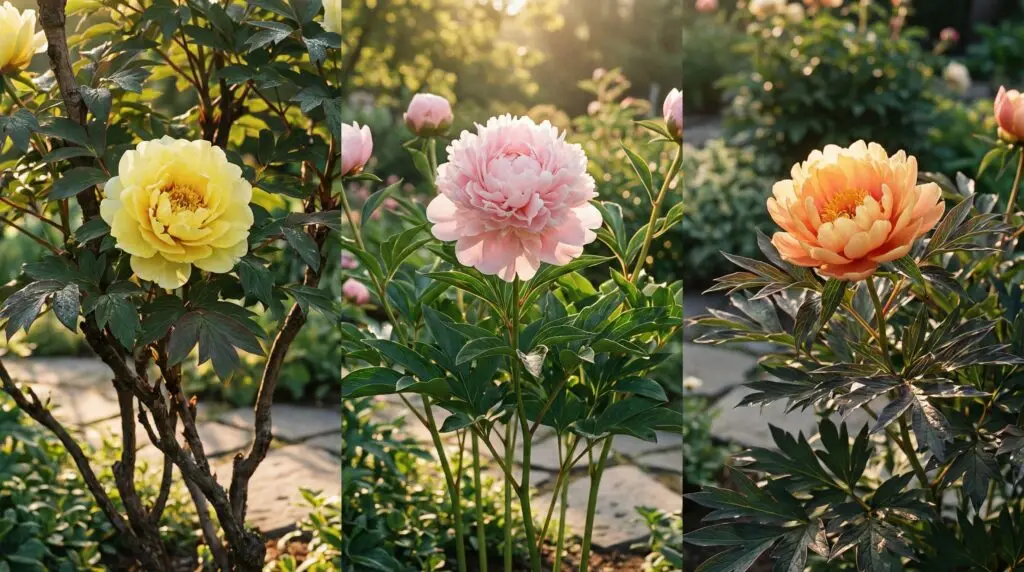
Three types, very different plants
Most people think of peonies as one thing: the big, fluffy pink flower. But there are three distinct categories of garden peony, and they differ in how they grow, when they bloom, how long they live, and what kind of care they need. Knowing which type you are buying before you plant saves a lot of confusion later.
Herbaceous peonies: the classic choice
Herbaceous peonies are the most widely grown type. They die back completely to the ground each winter and send up fresh stems in spring. This cycle repeats every year, and the plants can live for decades – some garden specimens are 50 to 100 years old.
Blooms are typically large, double or semi-double, and fragrant. They come in shades from white and cream through every shade of pink to deep magenta and near-red. The blooming window is two to three weeks in late spring (May to early June in most of the US).
Care is relatively straightforward. They need full sun, good drainage, and the correct planting depth (eyes no deeper than 1-2 inches below soil surface). Beyond that, established plants are quite low maintenance. They benefit from staking if you grow heavy double-flowered types, since large blooms in rain can cause stems to bend.
Best varieties: Sarah Bernhardt (blush pink, fragrant), Festiva Maxima (white with red flecks), Karl Rosenfield (deep red), Coral Charm (coral-orange, color-changing).
Tree peonies: slow, stunning, and permanent
Tree peonies are shrubs. They do not die back in winter – they form a permanent woody structure that grows larger each year. In mild winters they may keep some leaves; in cold zones they go dormant but the woody framework remains.
Blooms are extraordinary. Tree peony flowers are often larger than herbaceous types – 8 to 12 inches across is not unusual – and they come in a broader color range including yellow, burgundy-black, and orange tones not found in herbaceous peonies. Many varieties have a distinctive tissue-paper petal texture that is uniquely beautiful.
The trade-off is time. Tree peonies are slow to establish – expect three to five years before you see substantial flowering. They are also more expensive to buy and more vulnerable to late spring frosts, since the woody buds emerge earlier than herbaceous types.
They are hardy to zones 4-8, though woody stems may die back in harsh zone 4 winters, re-sprouting from the base. In these cases, growth is slower than in milder zones.
Best varieties: ‘High Noon’ (yellow semi-double), ‘Shimane Chojuraku’ (soft pink, ruffled), ‘Black Pirate’ (deep burgundy-maroon).
Itoh peonies: the modern hybrid
Itoh peonies (also called intersectional hybrids) are crosses between herbaceous and tree peonies. They were first developed by Japanese breeder Toichi Itoh in the 1940s and became widely available commercially in the 1990s.
They combine the best features of both parents: they die back to the ground like herbaceous peonies (so no winter wood to manage), but they produce flowers in the yellow, orange, and coral tones that tree peonies offer. Itoh plants are also notably disease-resistant and tend to produce many more stems per plant than either parent type.
Blooming period is often longer than herbaceous types – two to four weeks rather than two to three – and some varieties rebloom or have staggered blooming within the same plant.
The main drawback is price. Itoh peonies are expensive – $30 to $80 or more per bare root division is common, compared to $10-20 for herbaceous varieties. This is because they are propagated by division rather than seed, the plants grow slowly, and demand has consistently exceeded supply.
Best varieties: ‘Bartzella’ (yellow, citrus-scented, extremely popular), ‘Cora Louise’ (white with lavender center), ‘Kopper Kettle’ (rusty-orange, unusual color).
Which is easiest to grow
For beginners: herbaceous peonies are the most forgiving and the most predictable. They are widely available, relatively inexpensive, and well-documented. If you follow basic planting instructions – correct depth, full sun, good drainage – success is close to guaranteed.
Itoh peonies are also relatively easy once planted. They tend to be more disease-resistant than herbaceous types and tolerate slightly more conditions variability. The main challenge is cost, not care.
Tree peonies require the most patience and carry more risk around late frost damage. They reward experienced gardeners who can plan for their specific needs and wait out the slow establishment period.
Quick comparison at a glance
Herbaceous: dies back to ground each winter, blooms May-June (2-3 weeks), lifespan 50+ years, price $10-20 per division, fragrant.
Tree peony: woody shrub, keeps structure in winter, blooms April-May (2-3 weeks), lifespan 100+ years, price $30-100+, very large flowers in unique colors.
Itoh hybrid: dies back like herbaceous, blooms May-June (2-4 weeks), lifespan 20-30+ years, price $30-80+, disease-resistant, unique yellow and orange tones.