I wish you could stand beside me on the gravel path this morning and see how the creeping phlox has completely swallowed the old retaining wall. The morning dew is still clinging to the petals, turning the entire slope into a shimmering sheet of saturated magenta that looks almost purple in the early shadows. Phlox subulata pours over the ground like spilled paint, finding every crevice in the rocks and tumbling downward in a thick, heavy cascade. If you kneel close to the flowers, you can catch their scent, a faint, sugary sweetness mixed with the sharp, clean smell of damp earth warming in the sun. The five-petaled blooms are packed so tightly together that the foliage beneath is entirely hidden from view. You cannot see the stones, the soil, or the stems, only a solid mass of color that drinks in the spring light.
When the afternoon sun hits this spring ground cover, the flowers take on a papery, almost translucent quality. The individual blossoms are small, perhaps the size of a dime, but they gather by the thousands to create an unbroken surface that ripples slightly when the breeze moves through the yard. I often think of how a patch of sweet alyssum behaves, softening the edges of a garden bed with a cloud of white, but creeping phlox possesses a heavier, more grounding presence. It hugs the earth tightly, rooting down wherever a stem touches the soil, forming a dense mat that feels surprisingly firm beneath an open palm. Walking past it, you notice how the color shifts depending on the angle of the sun, moving from a bright, flat pink at noon to a deep, shadowed rose as evening approaches.
Painting the spring slope with light and color
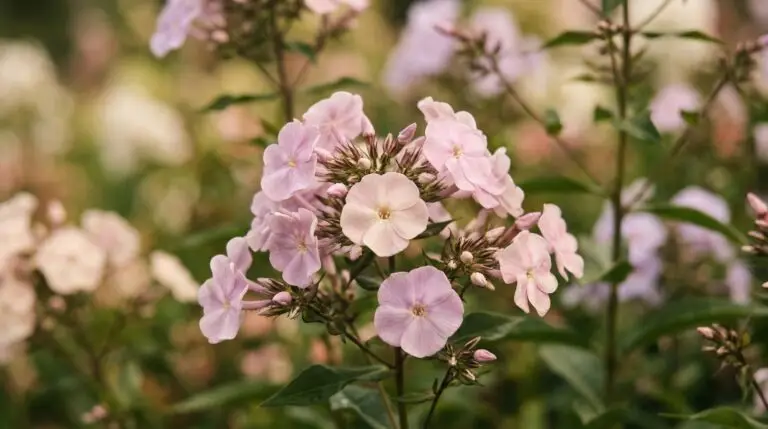
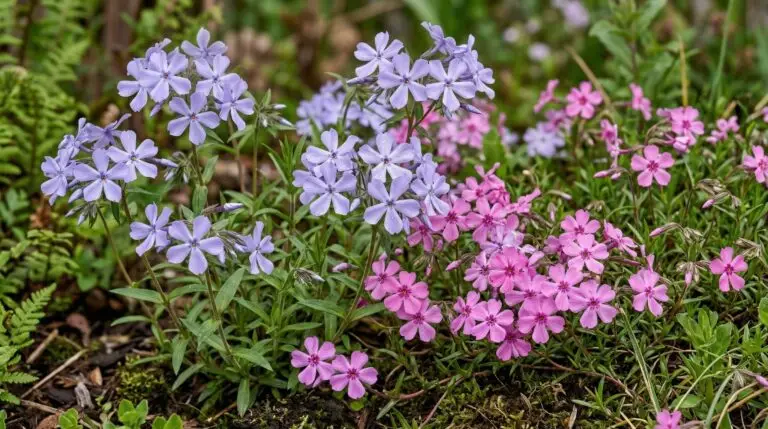
The color palette of creeping phlox reads like a collection of watercolors left out in the rain. There is a specific shade of cool, icy blue that looks like a reflection of the morning sky, and a pure, blinding white that glows against the dark soil even on overcast days. Some varieties bloom in the soft blush pink of early morning clouds, their petals marked with tiny, darker pink eyes at the center that draw you closer to inspect the detail. You can plant different colors side by side on a steep bank, watching them weave together over the years into a continuous wash of pastel and neon hues. The visual weight of these blooming mats anchors the lighter, taller spring bulbs that emerge around them. The flowers last for weeks, holding their pigment through spring showers that leave the petals heavy and drooping until the sun emerges to dry them.
Even before the buds open, the anticipation builds as the tight, green clusters swell at the tips of every stem. The transition from the dark, needle-like foliage of winter to the sudden explosion of spring color happens quickly, often catching the gardener entirely by surprise. You walk out one morning to find a few scattered blooms, and by the end of the week, the entire slope is consumed by the floral tide. The sheer volume of flowers makes the creeping phlox a favorite destination for early bees, their low hum becoming a constant background noise whenever you stand near the bank. The insects crawl over the papery petals, searching for the shallow nectar tubes, adding movement and sound to the visual experience. It is a complete sensory event that defines the peak of the spring garden, leaving a memory of color that persists long after the petals finally drop.
Finding the right soil and stone for deep roots
To understand what creeping phlox needs to thrive, you must feel the earth where it grows best. You will know the soil is right when it feels like a wrung-out sponge in your hand, gritty with sand or small pebbles, crumbling easily between your fingers rather than clumping into heavy clay. These plants despise sitting in cold, wet mud, requiring the kind of sharp drainage you find on a natural hillside or a constructed rock garden. I like to tuck the young plants directly into the pockets between large fieldstones, packing the roots with coarse soil and letting the stems rest against the rough, sun-baked surface of the rocks. The stone absorbs the heat of the day and radiates it back into the foliage overnight, creating a warm microclimate that encourages the stems to stretch further. The contrast between the soft, delicate flowers and the hard, unyielding granite makes both elements look more distinct and alive.
Planting on a slope lets gravity shape the growth habit of the phlox. You dig a shallow hole, settling the root ball so the crown sits just level with the surrounding soil, pressing the gritty earth firmly around the base to eliminate air pockets. Water the new plant deeply, watching how the moisture sinks immediately into the well-draining soil rather than pooling on the surface. As the roots establish themselves, the stems will naturally creep downward, seeking the path of least resistance over the edge of the retaining wall or down the face of the hill. Later in the season, when you plant coreopsis nearby to carry the yellow tones of summer, the phlox will have already formed a solid, protective skirt over the bare soil. The creeping stems form a living mulch, shading the ground and keeping the root zones of neighboring plants cool during the hottest months.
The quiet rhythm of late summer and winter
When the grand floral display finally fades in late spring, creeping phlox reveals its second, quieter identity. The spent petals dry and blow away on the wind, exposing the dense, needle-like foliage that gives Phlox subulata its specific character. The leaves are stiff and slightly prickly to the touch, resembling tiny pine branches woven together into a tight, green rug. This is the moment to take a pair of sharp shears and cut the entire mat back by half, removing the old flower heads and encouraging a flush of fresh, bright green growth. The newly shorn plant feels bristly under your hand, but within a few weeks, the fresh shoots soften the edges again. This simple act of grooming prevents the center of the plant from becoming woody and bare, ensuring the carpet remains thick and healthy through the heat of the summer.
The true value of this evergreen ground cover becomes apparent when the rest of the garden goes dormant for the winter. While other perennials melt away into the cold earth, creeping phlox holds its ground, turning a deep, moody olive green that sometimes takes on a purplish or bronze cast in freezing temperatures. On mornings when the frost is heavy, the tiny, pointed leaves catch the ice crystals, glittering sharply in the low, pale winter sun. The dense mats protect the soil on steep banks from washing away during heavy winter rains, their roots holding the earth firmly in place. You can brush the snow off the stiff foliage and see the promise of spring waiting patiently beneath the cold white layer. The rigid stems refuse to collapse under the weight of the snow, maintaining the structure of the garden even in the darkest months.
I walked out to the garden just as the sun was slipping below the tree line, casting long, cool shadows across the yard. The creeping phlox, still holding the day’s warmth in its dense mat of stems, seemed to glow from within, the bright magenta flowers resisting the approaching dark. The scent of warm soil and sweet nectar hung heavily in the still evening air, a quiet reminder of the life pulsing through the rocky slope. You can run your hand over the soft surface of the blooms, feeling the coolness of the petals contrasting with the residual heat of the stone wall beneath. It is a plant that asks for little more than a bit of gritty earth and open sky, yet it gives back a hillside transformed by light, texture, and an absolute flood of spring color. You leave the garden with the image of those cascading flowers fixed in your mind, anticipating the moment the sun will rise and light them up all over again.